Learning how to reintroduce dogs after a fight can prevent any significant damage from happening in your dogs’ relationship. Knowing what to do after a dog fight, how long you should separate your dogs for, knowing the baby steps to take when reintroducing dogs, and solving the very root cause of dog fights can stop the cycle of fighting for good.
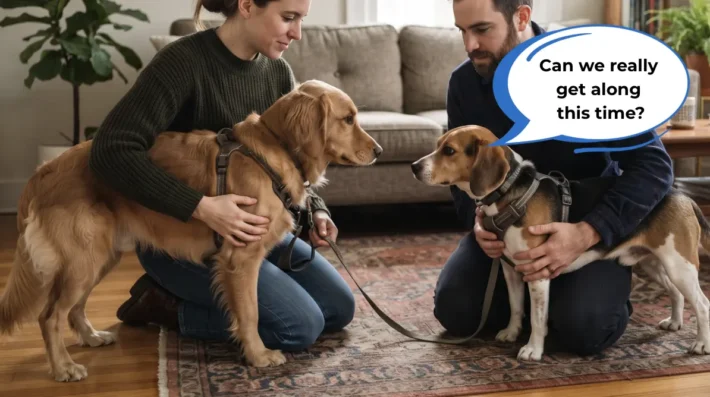
One of the biggest mistakes I see dog owners make is trying to reintroduce their dogs way too soon after a fight. It’s natural to want things to go back to normal, but rushing it is a recipe for disaster—it usually just leads to more bickering and reinforces the bad behavior. On the flip side, if you wait too long, that tension and distrust can really settle in.
So, the golden question is: when is the right time to reintroduce them, and more importantly, how do you actually do it?
(A quick heads-up: I’m not just going to talk about timing. I’m going to show you exactly what you need to do to stop the fighting for good, so make sure you read this right to the end.)
In this guide, I’m going to walk you through everything you need to know about separating and reconnecting your dogs safely and effectively.
Let’s dive in.
LEARN HOW TO BE THE LEADER YOUR DOG NEEDS. JOIN MY FREE WEBINAR.Key Takeaways
- When reintroducing dogs after aggression, avoid relying on a rigid calendar. While a baseline separation of 48 to 72 hours helps stress hormones clear, always base your progression on actual decompression markers—such as relaxed body postures, normal eating habits, and the absence of pacing—before starting any rebuilding trust between dogs after a fight.
- A major key in learning how to get dogs to get along again after fighting is addressing the root cause: a lack of clear guidance. When you establish calm, consistent leadership through everyday routines, you remove the pressure for dogs to police their environment, which is vital for what to do after dogs fight in the same household.
- Mastering how to safely reintroduce two dogs requires moving slowly through controlled phases. Progress sequentially from full separation and barrier introductions to leashed, parallel walks on neutral territory, ensuring you never force proximity or rush the process too soon.
When Is The Best Time To Reintroduce Dogs After A Fight?
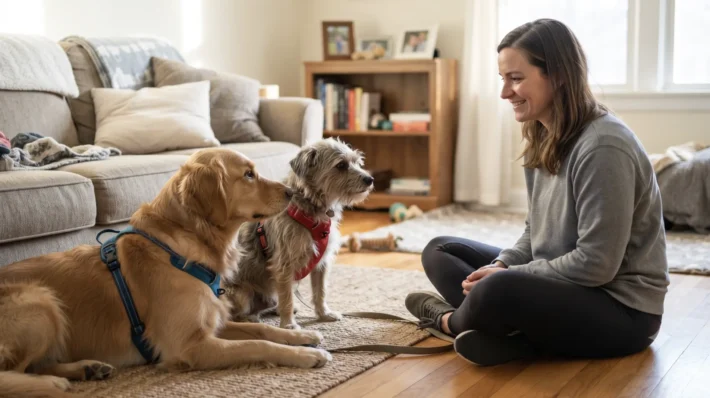
There's no fixed timeline that works for every pair of dogs; timing depends entirely on their behavior, not the calendar. That said, there are clear signals you can watch for to know when your dogs are actually ready, rather than just guessing and hoping for the best.
Recommended Separation Time To Cool Down
While there's no single fixed number that works for every dog, here's practical guidance on separation length depending on the severity of the fight:
- Right after a fight, dogs should be separated immediately and kept apart at least long enough for adrenaline and stress hormones to clear. This is often called the “cooling-off period,” and it should happen every time, regardless of how minor the incident seemed.
- Some dogs settle within a few hours to a day. If the fight was brief, showed minimal escalation, and both dogs seem to recover quickly on their own, a shorter separation may be enough, but only if the decompression markers below are fully met.
- For more intense altercations, plan for several days to a few weeks of full separation. This typically involves structured management, like the crate and rotate method, before you even begin scent swapping or visual reintroduction steps.
The real answer isn't a number, it's a state. Rather than counting hours or days, separate them until both dogs consistently show calm, relaxed behavior in their own space. That's the true signal it's time to move forward, not a specific point on the clock.
GIVE YOUR DOGS THE GIFT OF LEADERSHIP… THEY WILL STOP FIGHTING!Wait Until Both Dogs Are Fully Decompressed
The single most important marker is decompression. Both dogs need to be showing consistently calm, relaxed behavior in their separate day-to-day lives before you even think about reintroduction. This means:
- Loose, relaxed body posture (not stiff or tense)
- Normal appetite and eating habits
- Normal sleep patterns
- No lingering stress signals like pacing, excessive vigilance, or startling easily
It is recommended that dogs be initially separated for 48-72 hours. After this timeframe, observe how both dogs behave.
If either dog is still on edge in their own space, it is too early to begin. Pushing forward before this baseline calm is established is one of the most common reasons reintroductions fail and a second fight happens.
Confirm There's No Medical Reason Behind the Behavior
Before setting any reintroduction timeline, both dogs should be medically cleared. Pain is a very common trigger for irritability and aggression, and rushing a reintroduction while an underlying medical issue is masking behavioral cues is risky. If a vet hasn't ruled out injury or pain, that needs to happen first.
Don't Rush the “Feels Fine Now” Trap
Many owners see a few good days and assume the crisis has passed. But dog aggression after a fight doesn't disappear just because the dogs seem calm on the surface. Watch closely for signs dogs will fight again, such as:
- Stiffening when the other dog enters the room
- Avoiding eye contact, or the opposite, prolonged staring
- Refusing to settle when the other dog is nearby
- Guarding a person, doorway, or piece of furniture
If any of these signs are present, even subtly, it's not the right time yet. Slow down.
The Real Answer: Look At The Behavior, Not The Time
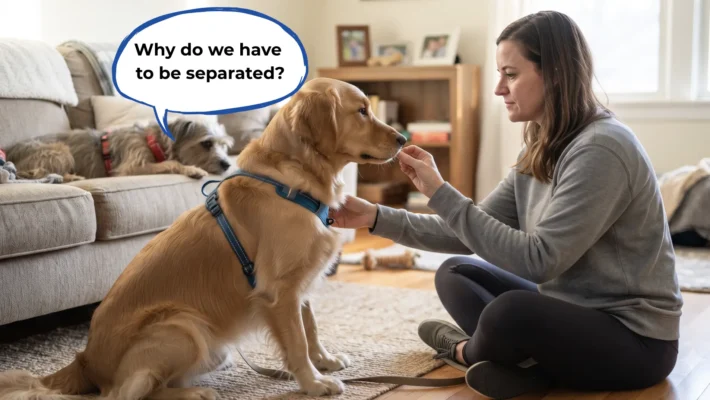
Here's the deeper truth: the right time to reintroduce isn't really about hours or days passed since the fight, it's about whether you've rebuilt calm, capable leadership with each dog individually first.
If your dogs don't yet see you as a clear, calm leader one-on-one, they won't suddenly look to you for guidance in a more tense, shared situation.
This is the same principle behind the Dog Calming Code™. Calm leadership has to be established in the small, everyday moments first (feeding, attention, basic obedience) before you ask your dogs to navigate anything as charged as being back in the same space.
In short: the best time to reintroduce is when both dogs are calm at baseline, medically cleared, showing no residual stress signals around each other, and each dog is individually responding to you as a clear leader. Whether that takes a few hours, a few days, or a few weeks matters far less than seeing all of these markers in place before you move forward.
What Happens When You Reintroduce Dogs Too Early?
Rushing the reintroduction process is one of the most common (and most damaging) mistakes owners make. Here's what tends to happen when dogs are brought back together before they're actually ready.
A Second, Often Worse, Fight
When dogs are reintroduced before both have fully decompressed, the lingering tension from the first fight is still simmering beneath the surface.
Any small trigger, a shared toy, a sudden movement, or competing for your attention, can be enough to set off a second altercation. And second fights tend to be worse than the first, because now both dogs have a fresh, reinforced memory that the other dog is a threat.
Increased Fear and Distrust
Every early, poorly managed interaction teaches your dogs the opposite lesson of what you're hoping for. Instead of learning “we can coexist calmly,” they learn “being near this other dog leads to danger.”
This deepens the fear and distrust between them, making the eventual, real reintroduction even harder and slower.
Missed or Ignored Warning Signs
When owners rush the process, they're often so focused on getting back to normal that they overlook or dismiss early stress signals: stiffening, whale eye, lip licking, prolonged staring.
These are the dog's way of communicating discomfort. Missing these signals because you're moving too fast means you lose the chance to intervene before things escalate again.
Erosion of Your Own Leadership
Here's the deeper issue: every time a reintroduction goes wrong, your dogs learn that being near each other is chaotic and unsafe, and that you weren't able to prevent it. This undermines the calm, confident leadership your dogs need to feel secure. Dogs look to their leader for safety and clear direction. If reintroductions keep failing, that trust erodes, making future training harder across the board, not just around the other dog.
A Longer Road to Recovery Overall
Ironically, rushing to “get it over with” almost always extends the total time needed to rebuild peace. A failed early reintroduction often means starting the whole process over, sometimes from further back than where you began, because now there's additional trauma to work through on top of the original fight.
DON’T LET DOGS FIGHT DISCOURAGE YOU. FIX IT FAST. JOIN MY WEBINAR,What Happens When You Reintroduce Dogs Too Late?
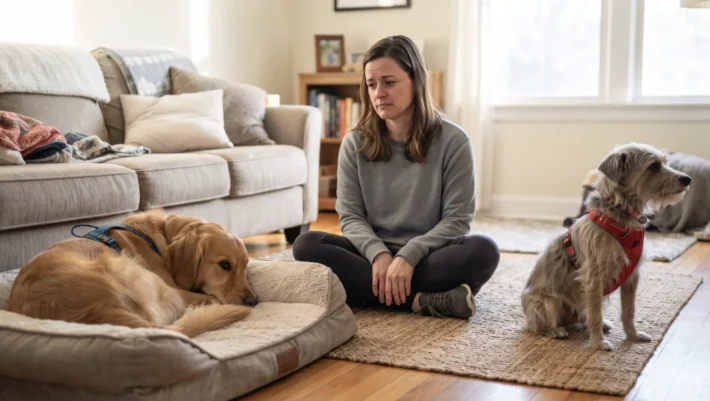
While rushing is dangerous, waiting too long or being overly cautious can create its own set of problems.
Prolonged, Unnecessary Stress from Isolation
Extended separation, especially in a smaller home, can be stressful in its own right. Dogs are social animals, and prolonged isolation from a housemate they were previously bonded with can lead to signs of stress like restlessness, changes in appetite, or excessive vocalization. If decompression markers were met weeks ago but reintroduction never began, you may unintentionally be creating a new source of tension.
Increased Anxiety Around Management Routines
The longer a household relies on strict management (crate and rotate, baby gates, constant separation), the more that structure can start to feel like the new normal stressor, particularly if it drags on well past the point where both dogs are ready to move forward. Dogs can pick up on prolonged tension in the household routine itself, even if the original conflict has faded from their memory.
A Missed Window of Readiness
There's often a window where both dogs are genuinely calm, decompressed, and ready to begin the gradual reintroduction steps. If that window is missed, either because the owner is too fearful to try, or simply unsure how to begin, dogs can begin to settle into a permanently separated routine.
Over time, this makes it harder to introduce even the earliest gradual steps (scent swapping, visual access), because the pattern of “we are never together” has become deeply ingrained.
Weakened Bond and Missed Socialization
If dogs were previously close companions, waiting too long to safely reintroduce them can weaken that bond permanently. Dogs that go a long time without any positive shared experiences may simply grow apart, making future coexistence feel more like introducing two unfamiliar dogs than reuniting two housemates.
Owner Anxiety Compounding the Problem
Delaying reintroduction indefinitely, without a clear plan, often comes from a place of fear rather than genuine caution. And that fear doesn't stay hidden. Dogs are remarkably perceptive of their owner's energy. An anxious, hesitant owner unintentionally signals to the dogs that something is wrong, even during otherwise calm moments, which can create new tension that has nothing to do with the original fight at all.
How To Reintroduce Dogs After A Fight
When it comes to how to reintroduce dogs after a fight, most owners want a simple checklist. But reintroducing dogs after aggression is really about layering small, calm interactions on top of each other until trust rebuilds naturally.
Below is a full breakdown of what to do after dogs fight in the same household, expanded with the reasoning behind each step, so you understand not just what to do, but why it works.
1. Establish the Five Golden Rules First
Before any reintroduction begins, get the Dog Calming Code™'s Five Golden Rules solidly in place, ideally for at least a few days to a week. This isn't a step to rush past. Both dogs need to see you as the calm decision-maker in the house, not each other, before they get together again.
Here's the WHY behind this: your dogs carry roughly 99.98% of the same DNA as wolves. In a wolf pack, someone always leads and everyone else follows; that's what keeps the group calm and cohesive.
If your dogs don't feel like there's a clear leader in charge, they will step in and try to fill that role themselves, and two dogs both trying to lead is exactly what fuels ongoing multi-dog household tension.
Most owners assume fights are about “dominance” or working out who's alpha. In reality, it's rarely that simple; most fighting stems from anxiety and a lack of clear leadership, not a genuine battle for rank.
Once both dogs consistently look to you for guidance, individually, the pressure to compete with one another for that role naturally drops away. This is the real foundation for rebuilding trust between dogs after a fight, and it has to be in place before you move on to physical reintroduction.
2. Let Them See Each Other Through a Barrier First
Once the Golden Rules are established, begin with visual access only, through a fence, gate, or wire barrier. This step allows the dogs to use all of their senses, sight, smell, and sound, to reacquaint themselves without any risk of direct contact.
Watch closely here. This is where reading dog body language warning signs matters most. Calm, loose body posture, relaxed ears, and easy breathing are all good signs you can continue.
Stiffening, staring, or growling are stress signals in dogs telling you it's too soon, and that's valuable information, not a failure. If you see any of these, stop and give the process more time. Rushing past this stage is one of the most common reasons a second fight happens.
3. Walk Them Parallel to Each Other on Neutral Territory
Once barrier introductions are calm and consistent, move to a neutral territory dog introduction, ideally with one handler per dog, walking side by side in the same direction rather than face to face.
This works because side-by-side movement is fundamentally non-confrontational. In the wild, moving together in the same direction is exactly how a pack naturally travels, it signals “we're on the same team,” not “who are you, and what do you want?” Choosing neutral ground also removes the territorial pressure that can build up at home, giving both dogs a fresh, low-stakes setting to practice being calm around each other again.
4. Keep the Lead Loose (Leash Control During Reintroduction)
Leash control during reintroduction is one of the most overlooked details in this entire process. A tight lead communicates tension straight down the line to your dog, and that tension can trigger the exact reaction you're trying to prevent.
Wait until both dogs are genuinely relaxed, loose bodies, soft eyes, easy movement, before allowing them to get any closer. The moment the lead is slack and both dogs are calm, that's your signal it's safe to shorten the distance between them. Don't rush this based on how much time has passed since the fight; let their actual behavior guide the pace.
5. Let Them Sniff, Then Step Back
When you do allow closer proximity, let the dogs sniff briefly, then create a bit of space again. Avoid hovering over them or staring intently, dogs pick up on your focus and energy far more than most owners realize. If you're tense and hyper-focused, they will mirror that tension right back.
Instead, relax your own body language. Look away, chat to another person, keep your energy calm and unbothered. When you relax, they relax, this is calming dogs after a fight in action, using your own state as the model for theirs.
6. If a Scuffle Starts, Stay Calm and Use the Calm Freeze
A quick growl or grumble as two dogs sort out their space is completely normal and shouldn't alarm you, that's simply dogs communicating with each other. But if things escalate further, stay calm, step in using the Calm Freeze, and separate them without shouting or panic.
Real aggression, as opposed to a passing grumble, is one of the clearest signs dogs will fight again if you push forward too quickly. Treat it as useful feedback: slow things down, go back a step, and try again once both dogs have settled. Rushing back in immediately after a scuffle almost always backfires.
7. Use a Muzzle for Safety If Needed
If one dog is particularly dominant, has a bite history, or the risk of injury feels real, consider fitting the more reactive dog with a muzzle for the initial meetings. This lets both dogs interact and communicate naturally without the risk of a serious injury if things go wrong. Once they've relaxed around each other consistently, the muzzle can come off.
This step matters especially when dog resource guarding behavior or a history of serious injury is part of the picture. Safety always comes first. A muzzle isn't a sign you've failed, it's a responsible tool that buys you the safety margin needed to work through the process properly.
LEARN MORE ABOUT WHAT LOVING LEADERSHIP IS IN MY FREE WEBINAR!What If My Dog Is Now Scared of the Other Dog?
Here's something almost nobody talks about: the victim dog. After a fight, it's very common for one dog to become fearful, withdrawn, or “act weird” around the other. They may hide, flinch, avoid rooms, or freeze when the other dog approaches. This is trauma, and it deserves just as much attention as the aggressor's behavior.
If your dog is scared of the other dog after the fight, do not force interactions. A frightened dog needs to rebuild confidence at their own pace — which is exactly why the phased protocol above works so well. Let the fearful dog set the distance. Reward calm, relaxed moments. Never drag them toward the other dog to “prove it's fine.” Our strategies on how to socialize a fearful dog apply beautifully here — the foundation is helping your dog feel safe, which, as you'll see, comes back to your leadership.
DISCOVER THE STRATEGIES THAT STOP DOG FIGHT FOR GOOD!What NOT to Do During Reintroduction
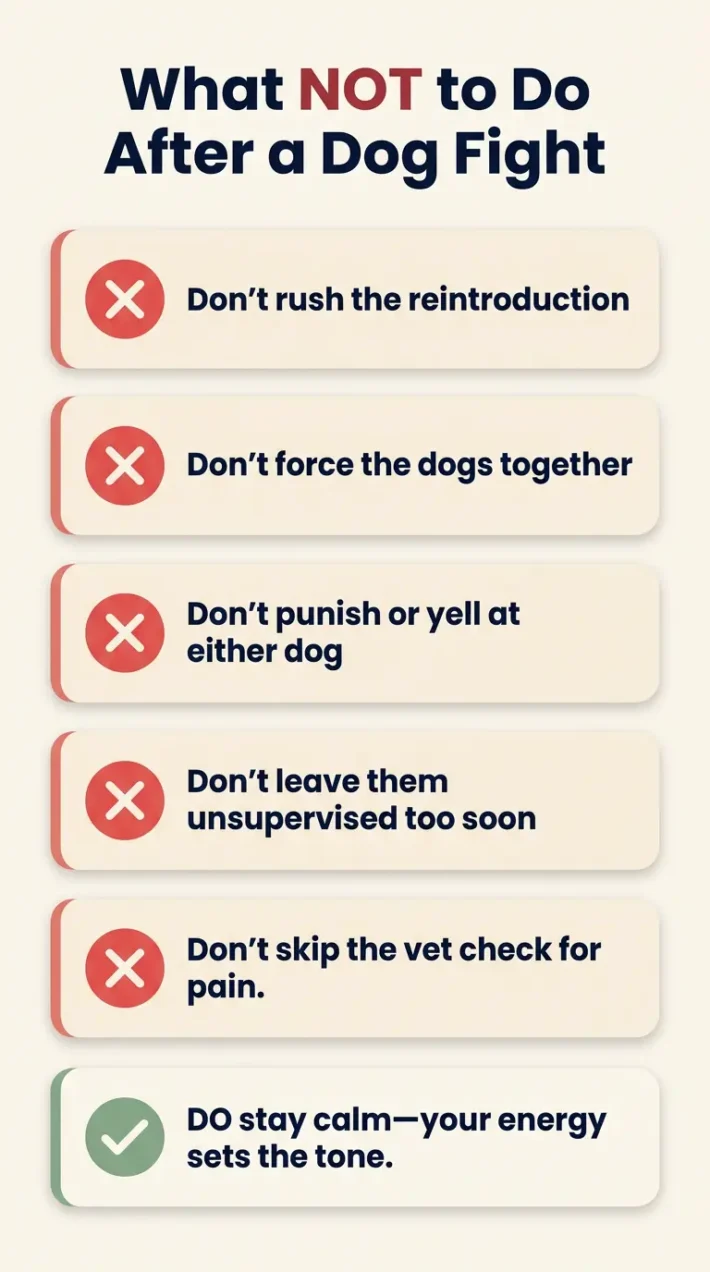
Avoid these common mistakes during reintroduction. Rushing, forcing, or punishing sets progress back—staying calm and patient keeps both dogs safe.
These are the mistakes that undo everyone's hard work:
- Don't rush the timeline. The single most common cause of a second fight is reintroducing too fast. When in doubt, slow down.
- Don't force proximity. Dropping the dogs together to “see how it goes” is a gamble you don't need to take.
- Don't punish tension. If a dog growls, that growl is information — it's the dog telling you they're uncomfortable. Punish the growl and you remove the warning, not the feeling. Learn more about why in our piece on the difference between reactive and aggressive dog behavior.
- Don't leave them unsupervised. Not until you are genuinely, thoroughly confident. Use gates and crates to manage the times you can't watch.
- Don't skip the vet check. Pain hides. Rule it out.
When to Recognize Your Dogs Can't Live Together Safely
If, despite following each of these steps patiently, you're still seeing consistent aggression, no improvement in stress signals, or an ongoing risk of serious injury, it's important to be honest with yourself about whether these dogs can safely coexist.
This is where reaching out to a professional trainer becomes essential; not every situation resolves with time and structure alone, and recognizing that early protects both dogs and your household.
LEARN HOW TO STOP DOG FIGHTS FOR GOOD. JOIN THIS FREE WEBINAR.Fix Your Leadership, Know the Timing, Reconnect Effectively
Preventing future dog fights at home isn't about one single fix, it's the cumulative effect of calm leadership, careful management (like the crate and rotate method), and a gradual, patient reintroduction process that respects each dog's pace.
Follow these steps in order, watch your dogs closely at every stage, and resist the urge to rush. That's how to get dogs to get along again after fighting, and how to rebuild a household where both dogs feel safe, calm, and led.
If you want to learn more about how The Dog Calming Code™ can help you reintroduce dogs effectively, join my FREE webinar where I talk about the best strategies around this issue.
JOIN THIS FREE WEBINAR TO GET THE DOG CALMING CODE™ FOR FREEYour dogs deserve harmony. With your help, they can have it!

— Doggy Dan
FREQUENTLY ASKED QUESTIONS
1. How long should I keep the dogs separated?
Separate them completely for a minimum of 48 to 72 hours. This is the time required for stress hormones like cortisol to return to baseline. In more severe cases, this period may extend to two weeks. Do not treat this as a countdown; only begin reintroduction when both dogs are consistently calm, eating normally, and showing no signs of distress in their separate spaces
2. Can two dogs who have fought ever live together harmoniously again?
Yes. In the vast majority of cases, dogs who have fought seriously go on to live peacefully together once the underlying cause—often a leadership vacuum, resource guarding, or unaddressed physical pain—is identified and resolved. Through slow, intentional reintroduction, they can rebuild their bond.
3. Do dogs hold grudges after a fight?
Fortunately, no. Dogs do not hold grudges or harbor resentment in the way humans do; they live firmly in the present moment. Their reactions are based on how they feel right now. By prioritizing their sense of safety and providing steady, calm leadership, you can help them reset their behavior.
4. What are the “Do Nots” of post-fight management?
To ensure a safe recovery, avoid these critical mistakes:
- Do not punish either dog, as this increases fear and exacerbates aggression.
- Do not force them together to “make up.”
- Do not rush the timeline or skip steps.
- Do not leave them unsupervised prematurely.
- Do not skip a vet check to rule out underlying pain.
- Do not panic, as your calm energy is the foundation of their ability to relax.
5. How does the 3-3-3 rule apply to this situation?
While originally for rescue dogs, the 3-3-3 rule (3 days to decompress, 3 weeks to settle into a routine, 3 months to feel at home) is a perfect reminder that behavioral change is gradual. Do not expect instant results; view your reintroduction as a long-term process of rebuilding trust and structure.
6. Is rehoming necessary after a fight?
For most families, rehoming is not required. A fight is usually a solvable behavioral issue rooted in household dynamics rather than an inherent character flaw. Before considering drastic measures, commit to a phased reintroduction and work to address the root cause of the tension.
7. Why is a veterinary visit so important after a fight?
Physical pain is a frequent, silent trigger for aggression. A dog suffering from an injury, dental issue, or chronic discomfort may lash out to protect themselves. A thorough vet exam is a mandatory first step to ensure your dog’s behavior isn't being driven by physical agony.
8. What does a “phased reintroduction” look like?
Reintroduction is a marathon, not a sprint. It begins with physical separation, moves to scent swapping (trading bedding or items), proceeds to visual contact through a barrier (like a baby gate), and eventually leads to controlled, leashed interactions in neutral territory. Each step must be mastered without tension before moving to the next.
9. How can I act as a leader to prevent future conflicts?
Your dogs look to you to set the tone of the household. If you are anxious, they will be reactive. Establish clear rules, provide consistent routines, and manage resources (like food, toys, and sleeping spots) so that competition is removed. By providing a calm, structured, and secure environment, you effectively remove the need for them to “police” each other.