✨ Ask Doggy Dan AI About Your Dog Now  🐶
Dan's AI Chat Widget

How Do I Socialize A Fearful Dog: These Strategies Build Dog Confidence!

dog training to build a strong bond and better behavior.

Last Updated: September 2026

Last updated: September 2026

ā€œDoggy Dan, teach me how to socialize a fearful dog?ā€ A dog scared to socialize doesn’t have the emotional and mental capacity to do so because they’re stressed and on guard 24/7. They’ve taken on the role as your leader and protector, so socializing goes down the bottom of the list because protecting you and ensuring your survival is priority number one.
How to socialize a fearful dog
LEARN HOW TO FINALLY GET YOUR DOG’S ATTENTION OUTDOORS IN THIS FREE WEBINAR!

You've tried everything: encouraged your dog to approach other dogs, brought them to the park, and introduced them to friendly strangers. And yet, every single time, your dog retreats, shakes, hides, or barks like the world is ending.

It's heartbreaking, especially when all you want is for your dog to enjoy life.

Here's the truth most blogs won't tell you: socializing a fearful dog isn't just about exposure. It isn't just about treats and patience (although those help). The real answer goes much deeper than that.

If you haven't established yourself as your dog's leader, socialization will always feel like an uphill battle. Why? Because in your dog's mind, socializing isn't the priority. Protecting you is. Guarding you is. Watching out for danger is.

And here's the good news: once you understand this and put the right strategies in place, your dog can go from trembling in the corner of a dog park to becoming what I like to call the dog town’s social butterfly.

That transformation is absolutely possible, and I'll show you exactly how to make it happen.

Read on, because this blog is going to change how you look at your fearful dog forever.

Key Takeaways

  • A fearful dog isn't just shy. They're overwhelmed by the responsibility of keeping you safe. Leadership is the missing piece.
  • Socializing a fearful dog starts at home, not at the dog park.
  • Force never works. Calm, confident, consistent leadership does.
  • Once your dog trusts you as their leader, they can finally relax around other people and dogs.

Socializing a Fearful Dog: Why They Shake When They Try to Socialize
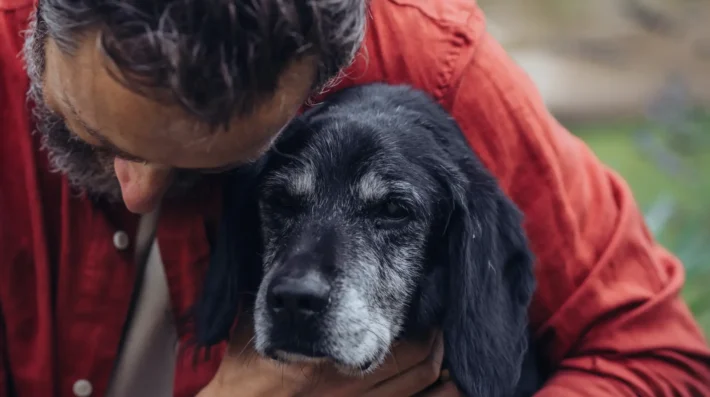
calming an anxious dog

Let me start with this simple but powerful truth: a dog scared to socialize is not a broken dog. They're a dog without a leader.

What does this mean?

When your dog steps outside, they're not thinking, “Oh great, I can't wait to meet new dogs and make friends!”

They're thinking, “I need to keep an eye on everything. Protecting my owner comes first. No, I cannot cannot let my guard down.”

That, right there, is the cause of fearful behavior in dogs. 

Your dog has taken on the role of your protector. They've assumed the responsibility of keeping you safe from any and all perceived threats. So when they see a stranger walking toward you, a new dog sniffing around, or even a child running in their direction, their immediate reaction isn't curiosity.

It's “Oh, we're in danger.”

That is why socializing a fearful dog feels impossible if leadership isn't addressed first. 

When a dog thinks they're the pack leader, their survival instincts completely take over. Each outing becomes a security mission, and every new person is a potential threat. Every unknown dog is a risk to the “pack” (which, in your dog's mind, is you).

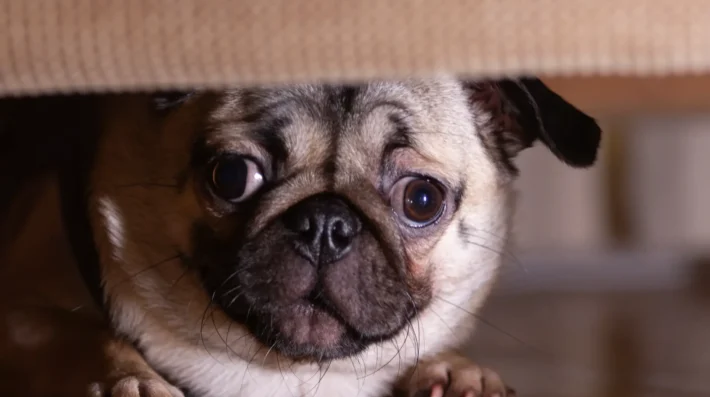
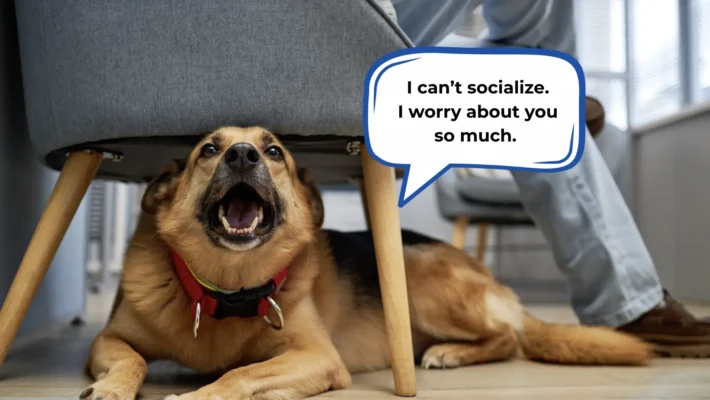
This is the reason your fearful dog shakes and shivers under the table. Their overprotectiveness makes them refuse to come out despite your commands and pleas. When your dog has entered this zone of protectiveness, no amount of gentle coaxing will get through to them.

In their mind, the world is not a safe place, because nobody has told them they don't have to be the one in charge of safety.

Once you change that, everything changes.

Instead of approaching a new dog with “Here's a threat, I will lunge and bark,” your dog begins to think, “My owner has this. I can relax. Maybe this dog is okay.”

That shift, from fear to calm curiosity, is the foundation of genuine socialization.

How to Socialize a Fearful Dog: The Story of Sandy

Let me tell you about Sandy.

Sandy was a three-year-old Golden Retriever, and by all accounts, she should have been one of the friendliest, most social dogs around. Her breed is practically famous for it. But every time her owner, Claire, brought her to the dog park, it was the same story.

Sandy would freeze the moment they walked through the gate. Her tail would drop and her body would tense up. And before Claire could even get her bearings, Sandy would be pressed against her legs, trembling, refusing to move.

The other dogs would trot over curiously, and Sandy would bark. Not playfully. Frantically. Like she was warning them off.

Claire was at her wits' end. She'd tried treats, long exposure sessions, and she'd even tried ignoring the behavior, hoping Sandy would “figure it out.” Nothing worked. Every trip to the park ended the same way, with Claire apologizing to other dog owners and Sandy refusing to engage.

How I Helped Sandy Become More Confident To Socialize

One afternoon, I happened to be at the same park. I watched Claire and Sandy for a few minutes, and I could see exactly what was happening.

Claire was nervous. The moment they walked in, her grip on the leash tightened. Her shoulders tensed up. She was already anticipating the meltdown. And Sandy, picking up every single one of those signals, went straight into protection mode.

I walked over and introduced myself. Claire almost laughed when I told her what I observed.

“But I'm nervous because of her,” Claire said. “Not the other way around.”

“I understand that,” I told her. “But Sandy doesn't know that. All she knows is that her owner is tense, which tells her the world outside is dangerous, and since no one else is stepping up to handle it, she has to.”

We talked for a while. I asked Claire some questions about Sandy's behavior at home. Was Sandy the first one out the door? Did she bark at the doorbell or pace and fuss before walks?

The answer to every question was yes.

Sandy didn't just think she was in charge at the park. She thought she was in charge everywhere.

The park wasn't Sandy's problem. Leadership was Sandy's problem.

I encouraged Claire to start at home, not at the park. I told her to work on being the calm, confident presence that Sandy desperately needed. To establish the kind of leadership that would tell Sandy, without a single word, “I've got this. You can relax.”

A few weeks later, Claire sent me a message. Sandy had made her first dog park friend. It wasn't perfect yet; she was still a little hesitant at times. But she wasn't trembling, and she wasn't barking. She was, for the first time, actually sniffing around and engaging.

That's what leadership does. It doesn't just change behavior, but it changes the entire world your dog lives in.

The Real Reason Your Dog Is Scared to Socialize: It's Not What You Think

Socializing a fearful dog

Most dog owners assume their fearful dog was either born timid or had a bad experience in the past. And while those factors can certainly play a role, they're rarely the whole story.

Here's what I've seen after training over 125,000 dogs: the most common reason a dog is scared to socialize is they believe it's their job to keep you and your family safe.

Think about it from your dog's perspective.

Every day, they wake up and the first thing on their mind is survival. Their own, yes, but more importantly, yours. Because in their mind, they are the leader of the pack. 

Leaders don't get to relax. In the wild, leaders don't get to play. Pack leaders don't get to sniff around and make friends because leaders are always, always on duty.

So when you bring your fearful dog to a social gathering full of unfamiliar faces and unknown dogs, you're essentially bringing your security guard to a party and asking them to put down their radio and dance.

It's not going to happen. Not until they trust that someone else has taken charge.

That someone needs to be you.

When your dog sees you as a calm, capable leader, they finally feel they can let their guard down. They feel safe. And a dog that feels safe is a dog that can finally, genuinely, socialize.

Why Force Never Works When Socializing a Fearful Dog
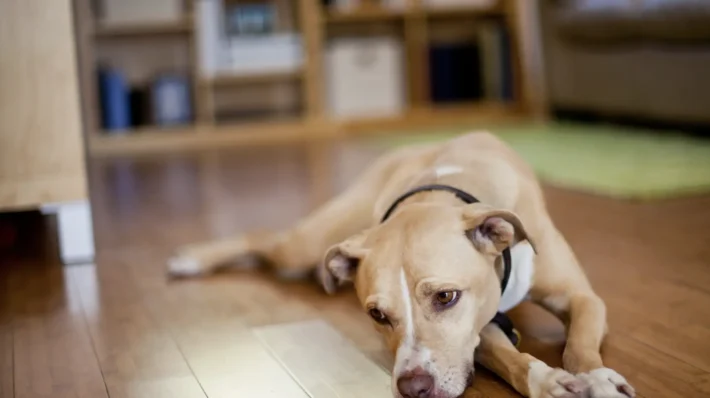
Make fearful dog more confident

Before we get into what to do, I want to be very clear about what NOT to do.

Do not force your dog to socialize.

I know it's tempting because you want to help them. You think that maybe if you just push them a little closer to that other dog, they'll realize there's nothing to be scared of. You pull the leash forward and nudge them gently. As an attempt to convince your dog, you stand right next to the other dog and say, “See? It's fine.”

But here's what your dog hears: “My owner is dragging me toward the threat. My owner is not protecting me. I have to protect myself.”

Forcing a fearful dog into social situations without the foundation of trust and leadership doesn't teach them confidence. It teaches them that the world is scary and that their owner can't be counted on to read the situation.

It makes things worse, not better.

The right approach is calm, patient, and rooted in leadership. And it starts long before you ever arrive at the dog park.

How to Socialize a Fearful Dog: Step-by-Step Strategies That Build Real Confidence
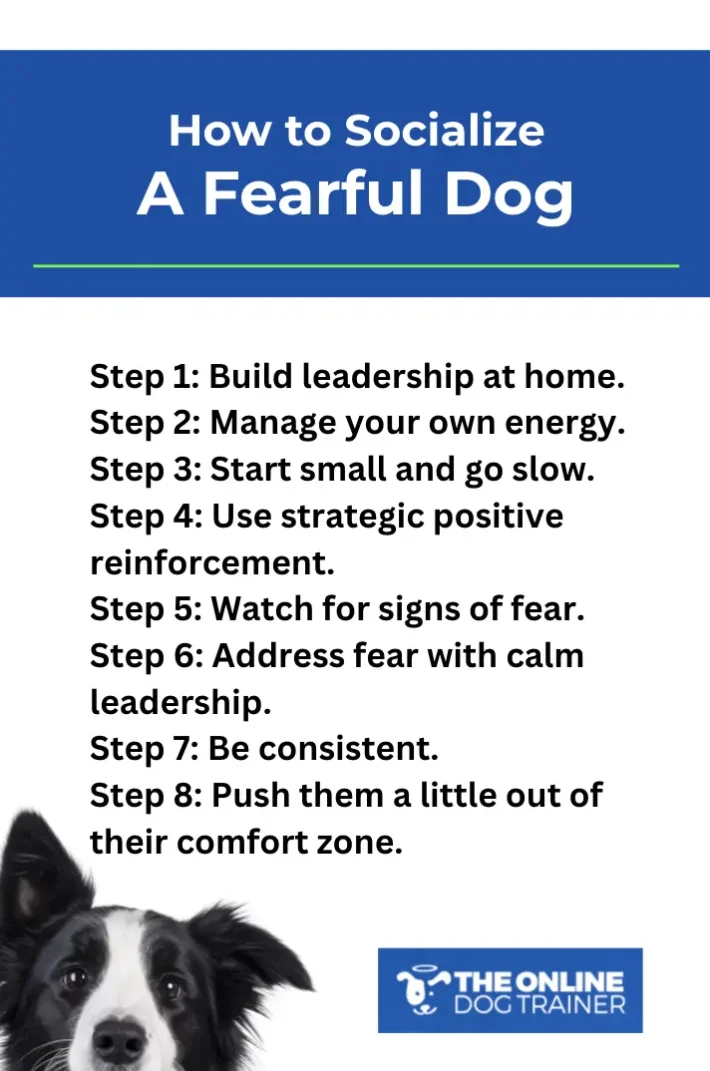
How to socialize a fearful dog

Step 1: Build Leadership at Home First

Here's the thing most people miss: socialization doesn't start at the park. It starts in your living room.

Before you can build your dog's confidence around other dogs and people, your dog needs to trust you completely in the environment they already know: the home, your backyard, and your street.

Leadership means showing your dog, in every interaction, that you are calm, consistent, and capable of handling whatever comes your way. This includes:

  • Feeding: You decide when and how your dog eats. Food is not left out all day. Mealtimes are structured.
  • Affection: You choose when to give attention, not the other way around. Don't reward anxious behavior with cuddles; it reinforces the idea that being fearful gets a response.
  • Doorways: You go first. Every time.
  • Responding to perceived danger: When your dog barks at the doorbell or a noise outsid, respond calmly and confidently. Don't panic or rush to reassure them. You simply handle it.
  • All the decisions connected to your dog. In essence, your dog should look at you as the decision maker. 

Every one of these small moments communicates to your dog: “I'm in charge. You don't need to be.”

When your dog feels this at home, they'll start to carry it with them outside too.

I talk more about these strategies in my bestselling course, The Dog Calming Code™. Dog owners will learn how to become the leader their dog needs through the Five Golden Rules of dog leadership. These rules are simple but,  when put in place, can solve all dog behavior issues. 

Step 2: Manage Your Own Energy

Make fearful dog more confident

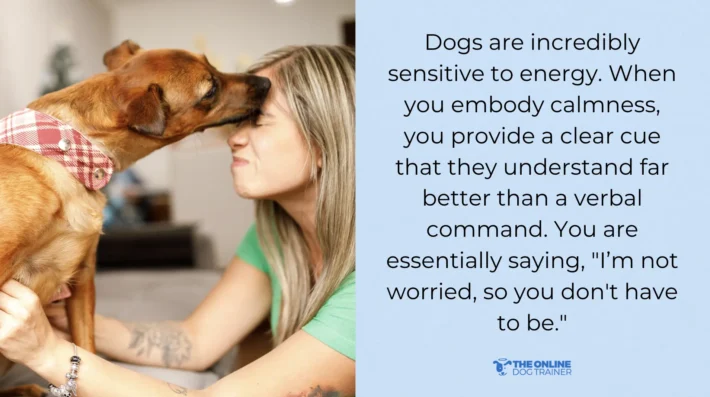
Here is something I cannot stress enough: your dog reads you like a book.

If you walk into the park tense and anxious, your dog will feel it. That tight hold on the leash every time another dog appears, your dog feels it. Your voice goes high and tight when you say “It's okay!”? your dog knows it's not okay.

You have to be the calm one first.

I know that can be hard, especially when you've been through many failed socialization attempts and you're already bracing for the next one. But the anticipation of a problem creates tension, and that tension travels straight down the leash to your dog. Take a breath. Relax your shoulders. Loosen your grip on the lead. Walk with purpose and calm confidence.

Your dog will notice. And slowly but surely, they'll begin to mirror your energy back to you.

Step 3: Start Small and Go Slow

Socializing a fearful dog is not a sprint. It's a slow, steady walk in the right direction.

Don't start at the dog park. The dog park is the final exam, not the first lesson.

Start in quiet, low-stimulation environments. A calm street. Your neighbor's yard. A friend's home with one well-behaved dog. Let your dog observe from a distance where they feel safe. Don't push them closer until they show you, through their body language, that they're ready.

Watch for the signs: a loose, relaxed body, a soft tail, curiosity without tension. These tell you your dog is in a good headspace to explore further.

If they stiffen, tuck their tail, or start to fixate, you've gone too far too fast. Take a step back, literally and figuratively.

The goal is not to expose your dog to as much as possible. It is to build one small moment of calm confidence at a time.

Step 4: Use Positive Reinforcement, But Strategically

Yes, treats work. But not in the way most people use them.

Don't use treats to lure your dog toward something that terrifies them. That's bribery, and it doesn't actually change how your dog feels about the thing they're scared of.

Instead, use treats to reward calm, confident behavior. 

When your dog glances at another dog and then looks back at you, that's calm leadership acknowledgment. Reward that. If your dog takes a curious step toward a new person without being prompted, reward that. When your dog sits calmly while another dog passes by, reward that.

You're not rewarding the absence of fear, but rewarding the presence of trust.

That distinction matters enormously.

Step 5: Watch for the Subtle Signals

Leadership means being the eyes and ears for your dog. Before a situation escalates, you need to spot the early warning signs that your dog is becoming overwhelmed.

Look for:

  • Stiff body posture
  • Fixated staring at a trigger
  • Tail tucked or raised rigidly
  • Lip licking or yawning suddenly (stress signals)
  • Leash pulling in the direction of, or away from, a trigger

When you see these signs, act. Step in front of your dog calmly. Change direction. Create distance from the trigger. Don't wait for the meltdown.

By acting on the early signals, you're telling your dog: “I see what you see. I've got this. You don't need to react.”

Over time, your dog will start to trust that you'll always step in. And when that trust is established, their reactivity and fear begin to soften.

Step 6: Don't Comfort Fear, Address It With Calm Leadership
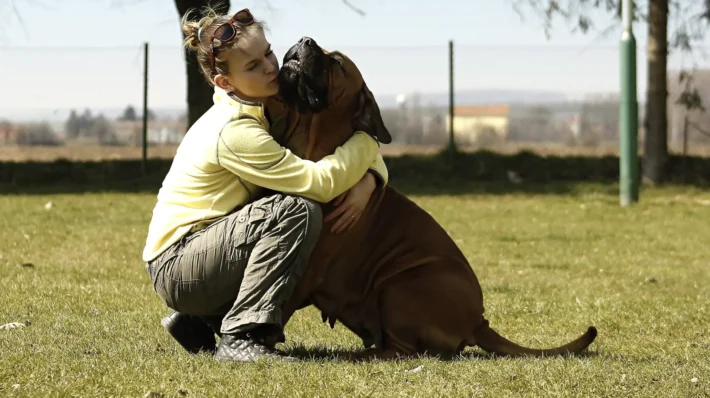
Build dog confidence

This one is hard for loving dog owners, but it's important.

When your dog is trembling and scared, every instinct in you says “hold them, cuddle them, tell them it's okay.”

But when you respond to fear with anxious reassurance, your dog interprets it as confirmation that there is indeed something to be scared of. You're inadvertently saying, “Yes, you're right to be afraid.”

Instead, respond with calm confidence. Stand tall. Breathe steadily. Move with purpose. Your composed presence is far more reassuring to your dog than any words you can say.

This is what real leadership looks like. And this is what truly builds confidence in a fearful dog.

Step 7: Be Consistent

Leadership isn't something you switch on for the dog park and switch off when you get home. It's a complete, 24/7 shift in how your dog sees you.

Every meal, every walk, every moment at the door, every time your dog barks at a noise, is an opportunity to reinforce or undermine your role as their leader.

Consistency is everything. The more consistently you show up as a calm, capable leader, the faster your dog will trust you enough to let go of their fears.

Step 8: Help Push Them a Little Out of Their Comfort Zone

Make fearful dog more confident

Not forcing your dog to socialize does not mean you sit back and wait for socialization to magically happen on its own.

That's not how this works.

The goal is to actively find opportunities for your dog to socialize, even just a little. Our keyword here is encourage, not force. And there is a very important difference between the two.

Forcing looks like this: dragging your dog toward another dog while they're trembling, pulling their leash toward a group of strangers while they're clearly overwhelmed, or pushing them into a situation they are absolutely not ready for.

Encouraging looks like this: reading your dog's body language, assessing where they are emotionally, and when you see a window of calm, gently nudging them one small step forward.

That window of calm is your green light. 

Assess Before You Act

Before you create any opportunity for socialization, you need to assess your dog's readiness. Ask yourself:

  • Is my dog's body loose and relaxed, or stiff and tense?
  • Is their tail neutral or soft, or is it tucked or rigidly raised?
  • Are they looking around with curiosity, or are they fixating on a trigger?
  • Are they breathing calmly, or are they panting with stress?

If the answers point to tension and anxiety, this is not the moment. Wait. Create more distance. Let your dog settle. Come back to it another day.

But if your dog is calm, relaxed… and looking around with soft eyes and a loose body… that is your moment. 

Find the Opportunities
Dog anxiety on walks

Socialization opportunities are everywhere, once you start looking for them.

It doesn't have to be a full-blown dog park trip. In fact, I'd encourage you to think much smaller than that, especially in the beginning.

  • A neighbor walking their calm, friendly dog down the street.
  • Your friend visiting who loves dogs and knows how to approach them gently.
  • The quiet corner of the park where one other dog is playing peacefully at a safe distance.
  • A gentle stranger who asks if they can say hello to your dog.

These are golden opportunities and your job is to be ready for them, to be present enough to spot them, and to be calm and confident enough to guide your dog through them.

When the opportunity arises, don't rush it. Let your dog observe first. Allow them to sniff the air. Let them take it in from a distance that feels safe to them. Then, when you see that soft curiosity starting to surface, encourage them. A calm step forward, or a gentle, confident cue from you. Let them know, through your energy and your leadership, that this is safe, you’ve assessed the situation, and it's okay to take one small step closer.

That one small step is everything. 

Introduce Socialization One Step At A Time

Here is what I want you to remember: you are not trying to turn your fearful dog into a social butterfly overnight.

You are stacking small wins.

A calm glance at another dog without reacting. Win.

One slow, relaxed sniff of a stranger's hand. Win.

A moment of standing near another dog without trembling. Win.

Each of these moments tells your dog something incredibly important: “The world is not as scary as I thought. And my owner helped me figure that out.”

That is how real confidence is built, not in one dramatic breakthrough, but in dozens of quiet, small, successful moments that your dog carries with them.

Don't let the fear of forcing your dog talk you out of creating opportunities. There is a middle ground between force and avoidance. That middle ground is gentle, leadership-led encouragement, and it is where transformation happens. 

So go out there. Find the opportunities. Assess your dog. Lead with calm confidence. And when the moment is right, take that one small step forward together.

What Not to Do When Socializing a Fearful Dog

  • Never force interactions. It backfires every time.
  • Avoid flooding your dog with stimulation. Too much too soon pushes them over the threshold.
  • Stop punishing fear. Punishment increases anxiety and makes the behavior worse. Reactivity Blog Creation Guide
  • Don't rely on treats alone. Treats won't fix a leadership problem.
  • Avoid skipping the foundation work at home. The dog park is not where socialization is built. Home is.

When to Ask for Professional Help
Dog scared to socialize

If your dog's fear is severe, if they're becoming aggressive or injuring themselves trying to escape triggers, it may be time to work with a professional dog trainer or behaviorist who understands dog psychology.

The key is finding someone who goes beyond surface-level training and addresses the real root cause: your dog's need for calm, trustworthy leadership.

The Dog Calming Code™ Prepares Your Dog For Socialization

A dog scared to socialize isn't a lost cause. They're a dog who hasn't yet felt safe enough to put their guard down.

Once you give them that safety, through consistent, calm, confident leadership, everything changes. The shaking stops. Their barking softens. Even the hiding gives way to curiosity. And slowly, one small interaction at a time, your dog begins to discover that the world isn't something to be feared.

This is what The Dog Calming Code™ can do for your dog. Once you take the lead as their confident leader, your dog will become confident, too. You get to be there for every moment of that transformation.

Ready to take the first step? Join my reactivity class where I talk about The Dog Calming Code™ for FREE! 

Doggy Dan Signature
~Doggy Dan šŸ™‚

Frequently Asked Questions

Your dog isn't scared to socialize because they're broken or because something is wrong with them. They're scared because, in their mind, socializing is simply not the priority.


When a dog believes they are the leader of the pack, every outing becomes a protection mission. Unknown dogs are a potential threat. Every stranger is someone they need to assess and guard against. There is no mental or emotional room left for making friends, because their brain is completely consumed by the job of keeping you safe.


This is the real reason your dog trembles at the park, hides behind your legs, or barks frantically at approaching dogs. It's not shyness nor a bad personality. You have a dog who has taken on a job that was never meant for them.


The moment you step in and take that job back, your dog finally has permission to relax. And a relaxed dog is a dog that can socialize.

Absolutely, yes. And I say this after working with over 125,000 dogs, many of them fearful, reactive, and seemingly beyond help.


A fearful dog is not a lost cause. They are a dog who hasn't yet been given a reason to feel safe.  The moment you establish yourself as a calm, capable leader, your dog's entire world changes. What looks like a constant state of high alert begins to soften. Your dog's hypervigilance fades. And slowly, curiosity starts to replace fear.


It doesn't happen overnight. It happens one small, successful interaction at a time. One calm glance at another dog. A relaxed sniff of a stranger's hand. That moment of standing near another dog without shaking.
Stack enough of those moments together, and you have a transformed dog.

It is never too late.


I want you to hear this clearly, because so many dog owners come to me believing their adult dog's fearful behavior is permanent. It isn't.


Dogs don't need to be puppies to change. What they need is a leader who is consistent, calm, and committed to helping them feel safe. The Dog Calming Code™ works for dogs of all ages because it addresses the root of the behavior rather than just the surface symptoms.


Yes, older dogs may take a little more time and patience. The fear patterns are more deeply ingrained. But the process is the same, and the transformation is just as real.


Start where you are. Today.

This is one of the most common things I hear, and the answer comes back to leadership.


At home, the environment is familiar and controlled. Your dog has learned the rules of the house, and in that predictable space, they feel relatively safe. But the moment you step outside, the world becomes unpredictable. There are unknown dogs, unfamiliar smells, and strangers moving in every direction.


If your dog doesn't fully trust you to navigate that unpredictable world, they step up to do it themselves. And a dog on a protection mission cannot simultaneously be a dog enjoying a social outing.


The good news is that this tells you exactly where to focus. No, you don't have a broken dog. You have a dog who needs to see your leadership extended beyond the living room, out the front door, and into the world beyond.

I completely understand the impulse to hold your dog, reassure them, and tell them everything is okay. You love them.

Watching them tremble is heartbreaking.


But here is the hard truth: when you comfort a fearful dog in the middle of their fear, you are actually confirming to them that there is something to be scared of. Your dog reads your response as evidence. If you rush to soothe them, their brain registers it as, “My owner is worried too.

The threat must be real.”
What your dog needs in those moments is not sympathy. It's leadership.


Stand tall. Breathe steadily. Move with calm purpose. Your composed, unshaken presence tells your dog far more than any words can. It tells them, “I have assessed the situation. There is no danger here. You can relax.”
That is what true comfort looks like for a dog. Not a cuddle in the middle of a meltdown, but a leader who doesn't flinch.

There is no single answer to this, and I want to be honest with you rather than give you a number that sets you up for disappointment.


Some dogs begin to show noticeable improvement within days of their owner establishing consistent, calm leadership. Others take weeks or months, depending on how deeply ingrained the fearful patterns are and how long the dog has believed they were in charge.


(Those who used The Dog Calming Code™ reported seeing change in just days of dedicated and consistent training.)


What I can tell you is this: every single consistent interaction you have with your dog is either building or undermining their trust in you. That calm moment at the door and every structured mealtime. Each time you step between your dog and a trigger with quiet confidence. It all adds up.


The most important thing you can do is stop measuring progress by dramatic breakthroughs and start celebrating the small wins. A calm glance at another dog without reacting, that's progress. The relaxed sniff of a stranger's hand, that's progress. Those quiet moments are where real change happens.

Yes, and they deserve the chance to try.


Past trauma, whether from abuse, a frightening encounter with another dog, or a stressful environment early in life, can certainly shape how a dog responds to the world. It can deepen fear and lower the threshold for overwhelm.
But trauma is not destiny.


What a dog who has been through difficult experiences needs more than anything is a leader they can genuinely trust.

Not someone who forces them through situations they aren't ready for, and not someone who wraps them in so much protection that they never have to face the world. They need someone who is steady, calm, consistent, and patient enough to let them build confidence one small step at a time.


That is exactly what the leadership approach is designed to do. And it works, even for dogs who have had a hard start.

Become their leader.
I know that might sound too simple. You might be expecting a specific technique, a particular exercise, or a magic sequence of steps. And while the practical strategies in this blog absolutely matter, none of them will work without this foundation.
A fearful dog is a dog that doesn't feel safe. And a dog that doesn't feel safe cannot socialize, no matter how many treats you bring to the park or how many times you try to expose them to other dogs.
When you establish yourself as a calm, capable, trustworthy leader, you give your dog the one thing they've been desperately searching for: a reason to let their guard down. You take the weight of protection off their shoulders. You tell them, without a single word, “I've got this. You don't have to.”
And that, more than anything else, is what unlocks socialization in a fearful dog.
Start at home. Be consistent. Be calm. Be the leader your dog needs. Everything else follows from there.

Gentle journey for your puppy.

Doggy Dan

Doggy Dan stands out through his “five golden rules” that focus on canine psychology rather than repetitive drills or force. Unlike traditional trainers, he teaches owners to become the “calm leader” their dogs need. Over the last two decades, his methods have helped transform over 136,934 dogs worldwide. As the founder of TheOnlineDogTrainer.com blog and podcast and creator of the Dog Calming Codeā„¢, he has become a trusted voice in dog psychology and training. His philosophy is simple: reactive dogs don’t need punishment or endless treats. They need a leader they can trust.

FREE TRAINING:

How to Solve Dog Reactivity WITHOUT Food Bribes, Tricks, or Force

Limited spaces!

FREE webinar:

How to Solve Dog Reactivity WITHOUT Food Bribes, Tricks, or Force

dog training to stop unwanted jumping and barking

Limited Spaces!

Recent Posts

Excellent rating
Based on 156 reviews
Google star 1Google star 2Google star 3Google star 4Google star 5
+0
Ridley is my 4th dog. After listening to and learning from Doggy Dan, I was happy to see that I did pretty well with my first 3 dogs while raising my kids and having my husband with me. Not perfect - but pretty good! Now I am raising a new dog by myself, and I feel like I'm not doing this really "alone." I really am so happy with all the information Dan has offered... and all his techniques work well!!
Carol Ann Ferrari Rogers profile picture
Carol Ann Ferrari Rogers
21 September 2026
Google star 1Google star 2Google star 3Google star 4Google star 5
Two months ago I adopted a 7 year old Morkie, a very nervous but loving little fellow. I tried several different training techniques and even purchased a program that was lengthy and very time consuming before I discovered Doggy Dan. I've been using his program for two weeks and am astounded by the change in my Dexter. He is calmer, more obedient and friendlier to others than I imagined possible. Dan's training is concise. It differs from others I found, Dan trains you to become the leader of your pack through a dog's perspective. I like that the training is specific yet compassionate. This is a program that works if you are consistent. Thanks Doggy Dan!
Kathy Fore profile picture
Kathy Fore
17 September 2026
Google star 1Google star 2Google star 3Google star 4Google star 5
+0
Susie in the UK. I am only 10 days in but took in a 9 yr old emergency rescue from Romania who had been in kennels for 6 years and then had 3 failed foster placements in the UK. Luca is a big powerful mixed breed with huge stress and anxiety and very reactive, he bounded into my home and took over - aggressive with my 2 others, and visitors and pulling and pushing on walks. I thought I couldn't handle him but saw an advert for Doggy Dan on line and signed up - we've had a wonderful turnaround and he is finally decompressing, being polite with my dogs and responds excellently to the time-out if reactive with guests. Walks are much better and all 5 rules are in place. I believe he will continue to improve but only if I remain 100% consistent with him for the rest of his life. He is 9 years old and deserves a happy old age being loved and looked after with no further upsets in his life so fingers and toes are crossed for him
SoBS Truro profile picture
SoBS Truro
15 September 2026
Google star 1Google star 2Google star 3Google star 4Google star 5
+2
I started. The course 3/4 weeks ago. As Dan says you have to work on things if you get stuck. I have a Staffordshire x cane corso who is now six months old. She is very intelligent but sometimes she just doesn’t listen. Doing the five codes I’m finding it’s going pretty well except trying to get her calm so I am persevering with it again with my own space. I have a trainer call shortly which I will ask for advice on this. It’s great also that you can ask anything you’re not sure of on line. It’s so great to have someone there to help. I’m looking forward to having a relaxed girl instead of hyper most of the time as she gets so excited about almost everything. I would truly recommend doggy Dan and just wished I would have come across him much earlier. Thanks again for everything so far.
Hazel Coad profile picture
Hazel Coad
12 September 2026
Google star 1Google star 2Google star 3Google star 4Google star 5
I ā¤ļø my dog. Such a good girl! 5 Golden rules, really work.
Victoria van Sommeren profile picture
Victoria van Sommeren
9 September 2026
Google star 1Google star 2Google star 3Google star 4Google star 5
+0
This program is amazing!. We have a VERY reactive rescue dog that has bitten his previous owner and as well, myself 3x and my husband 4 x's. He had never been around people or other animals, and had never been walked on a leash. (in fact never run off-leash either, just tied to the front steps). We began with traditional treat-based training with a professional, but the progress was frustrating. A reactive dog does not want treats; it wants comfort. With the 5 Golden Rules and and some of the other training we have received with our subscription, in just 3 weeks, we can let him off leash at the dog park, he has not growled at any stranger, and he has not attacked any other animals. He is still a work in progress, but we see progress!!!! He has become a cuddly, sweet dog and for a greyhound, he even has recall! This program is amazing to say the least. We were at our wits end, but now we have hope.
susan kent profile picture
susan kent
8 September 2026
Google star 1Google star 2Google star 3Google star 4Google star 5
Okay, he says it’s not magic, but the results and the peace in so little time with so little effort sure feels like magic! My 11 month old pup was a 60lb highly reactive, very loud disaster waiting to happen. Now we are both calm, the house is quiet and I don’t live in absolute fear of his reactivity towards others. There’s always still work/training to do of course, but wow are we in a much better place to get on with that!
Theresia Travers profile picture
Theresia Travers
8 September 2026
Google star 1Google star 2Google star 3Google star 4Google star 5
Just started with the 5 rules. It's only been a week and a half and I'm noticing less stress, and a reduction in reactivity. We still have a way to go. But finally something I can work with. I went for the online course.
Fiona Bower profile picture
Fiona Bower
31 August 2026
Google star 1Google star 2Google star 3Google star 4Google star 5
I watched the free Webinar and joined at the end. I am up to No.3 atm and I’m actually feeling hopeful 🤞🏼
Jackie Grimmer profile picture
Jackie Grimmer
29 August 2026
Google star 1Google star 2Google star 3Google star 4Google star 5
The program is great. I started to see the changes in my cocker spaniel from day one.
Joy Winnington profile picture
Joy Winnington
18 August 2026
Google star 1Google star 2Google star 3Google star 4Google star 5
+3
My Lab mix puppy and I are on Day 3 , but, I do feel a stronger connection. She appears calmer overall / looking forward to consistently following these five rules. Doggy Dan is clear, concise, comprehensive and compassionate . Very pleased with his program. Diane
Diane Patterson profile picture
Diane Patterson
16 August 2026
Google star 1Google star 2Google star 3Google star 4Google star 5
+0
We have an 8 month old Goldendoodle who has fear issues outside the home and gets easily overwhelmed going into panic/flee mode if several triggers coincide (people, loud dog barking and noises like motorcycles/construction). So pleased to find Doggy Dan and seeing positive changes after just two weeks. Feeding time is calm after using the gesture eating and "thank you" when he barks works a treat. I realized I'm babying my dog too much and trying to be his best pal instead of a leader so I'm working hard on that. We've changed to the no pull harness and love that. Doggy Dans video clips really help bring the philosophy together and I love his attitude. He is calm, clear, firm but so kind and loving with dogs and very down to earth and relatable. I've got great help too from the AI coach and the daily emails and videos help keep us on track and feeling positive. We've still got a mountain to climb with our pup but I finally feel hopeful and supported. We'd tried trainers, behavior specialists and all sorts before finding Doggy Dan and this is by far our best investment. Can't recommend you trying this highly enough. Photo of our boy.
Jackie Ward profile picture
Jackie Ward
13 August 2026
Google star 1Google star 2Google star 3Google star 4Google star 5
Absolutely amazing transformation in just a few days. Just need to stick to the 5 Golden rules 🙂
Martine Adkin profile picture
Martine Adkin
13 July 2026
Google star 1Google star 2Google star 3Google star 4Google star 5
+0
I couldn’t believe my dog’s problem resolved completely within a week! Easy but not easy if you are inconsistent with the 5 rules. I highly recommend this method! Somethings don’t seem important or relevant but they are!
Dawn McCordic profile picture
Dawn McCordic
13 July 2026
Google star 1Google star 2Google star 3Google star 4Google star 5
+0
I just started my training about 2 weeks ago, and I do mean MY training. My 2 girls are really responding to my changes in how I am relating to them better. Thank you Doggy Dan, I really needed this win, 2 reactive dogs and we have made progress with the 5 golden rules and we have not with anything else. Crystal Gayle the Red Heeler and Sadie the Border Collie.
Betty Nicholl profile picture
Betty Nicholl
11 July 2026
Google star 1Google star 2Google star 3Google star 4Google star 5
+3
For three years, I tried every treat-based method and expensive course to stop my large, powerful male dog from pulling on the leash, barking, and stressing out when his energy got too high on our walks. (So while he is a farm dog who enjoys total freedom off-leash on our farm most of the day, on-leash in the city, he totally lost it). He was practically hanging from the leash, two feet in the air (almost strangling himself), always demanding to walk in front and make all the decisions. Absolutely nothing worked—until I found Doggy Dan! 🏆 After just a couple of weeks implementing The 5 Golden Rules, the transformation is absolutely mind-blowing!!! By focusing on connection and calm leadership rather than rigid commands, my dog has FINALLY reconnected with his natural calmness (that has actually always been there inside him) ā¤ļøā¤ļø When we walk through town now, I look down at my dog walking in a perfect "heel." The leash hangs completely loose, and that loose leash really says it all 👍👍👍 He does not pull, bark, or growl AT ALL when other dogs bark at him!😱 Yes, he looks at them and is interested, but he remains completely calm. We pass shouting people, groups of kids on scooters, and dogs barking aggressively behind gates—he is interested, but he remains entirely unfazed. Just yesterday, we stopped in front of a fence with chickens walking in a garden, and he just stood there watching curiously, staying completely still. And as we walked across a large, grassy schoolyard, we suddenly crossed paths with two rabbits—when I told him to, he immediately sat down. Of course, he was highly interested, but he sat completely, utterly still! I constantly find myself thinking: This can NOT be my dog, LOL! 🐇🐓 Dan refers to himself as a dog trainer, but in my humble opinion he is a dog philosopher. The course is incredibly generous, filled with hundreds of real-life videos from every situation imaginable, offering a massive toolkit for an amazing price. I am so excited to continue this course, so happy about the progress, and so looking forward to the future with this beloved dog of mine. I HIGHLY recommend it! ⭐⭐⭐⭐⭐
Ingrid-Tove Astrup profile picture
Ingrid-Tove Astrup
8 July 2026
Google star 1Google star 2Google star 3Google star 4Google star 5
+0
I've only been working the program for a week and already are seeing some great improvements with an overexcitable, energetic, barking at everything, and fun Maltipoo. I'm focusing on the 5 golden rules and watching the training videos. Thanks Doggy Dan!
Rebecca Cheney profile picture
Rebecca Cheney
4 July 2026
Google star 1Google star 2Google star 3Google star 4Google star 5
In a matter of days my 5 year old Frenchie is calmer and seems happier, albeit not happy that I'm ignoring him but it works! I live alone so he thinks he should be boss and protect me from every visitor but he didn't even bark at the window cleaner yesterday, just followed him around each window. My life might be my own soon, thank you!
Shauna profile picture
Shauna
2 July 2026
Google star 1Google star 2Google star 3Google star 4Google star 5
+4
The Golden rules i now understand are NOT called GOLDEN RULES FOR NO REASON! WOW , JUST WOW, I WAS DOING ALL 5 WRONG !
Tim Waldner profile picture
Tim Waldner
2 July 2026
Google star 1Google star 2Google star 3Google star 4Google star 5
+0
We have adopted a Poodle and he us very high energy, anxious and insecure. I joined the online program after I watched the free online webinar about the 5 Golden Rules. While watching the webinar all 3 of my dogs ran off barking... I calmly called out "thank you" and they all came back to me.. from that moment I was hooked. I love the fact that we use minimal sound in this technique as I can become anxious and unsure in my tone. I have seen results with the new Poodle and I am exited about our future. Thanks Doggy Dan, you are a gem 👌🐾🐾🐾
Jane Uprichard profile picture
Jane Uprichard
22 June 2026
FREE webinar:

How to Solve Dog Reactivity WITHOUT Food Bribes, Tricks, or Force

dog training to stop unwanted jumping and barking

Limited Spaces!