If you’re working so hard to make reactive dog training work, you only need to focus on three essential steps: uncover what truly triggers their big emotions, choose a method that builds genuine trust, and ditch the harsh shortcuts that wreck your progress over time.
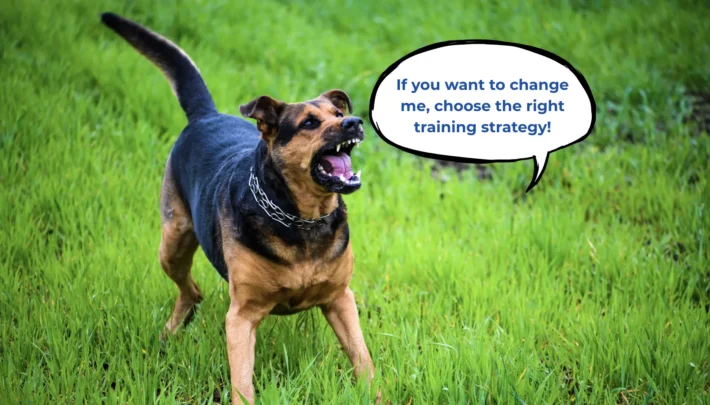
Your dog lunges at other dogs on walks, barks at cyclists, and freezes when strangers approach. You’ve tried everything from treats and commands to different routes, and nothing sticks.
You feel like nothing works, and then you start thinking that you have a hopeless dog.
But the truth is, most training programs for reactive dogs just help you treat the symptoms, NOT the source of reactive behavior.
Most owners think the problem is the barking or lunging itself. It’s not.
Dog owners, please understand: your dog’s reactive behavior is a symptom. Until you address what’s actually causing it, you’re fighting an uphill battle without hope in sight.
This guide walks you through the exact strategies for training a reactive dog using the method that’s transformed thousands of dogs without force, without endless drills, and without the guilt that comes from shouting or punishment.
Let’s dive in.
Key Takeaways
- Reactivity stems from fear, anxiety, and confusion when a dog feels forced to act as the pack protector; long-term resolution requires taking on the leadership role so the dog can relax, rather than suppressing symptoms with obedience tricks or harsh punishment.
- Effective training relies on regulating your own nervous system (since dogs absorb human tension), maintaining distance just under your dog’s emotional threshold to gradually shift their reaction, and redirecting focus through trust rather than food bribes.
- Lasting emotional rewiring takes weeks to months of gradual exposure to triggers in real environments, celebrating incremental wins while accepting that progress is non-linear and requires consistent, calm leadership.
What Is Dog Reactivity?
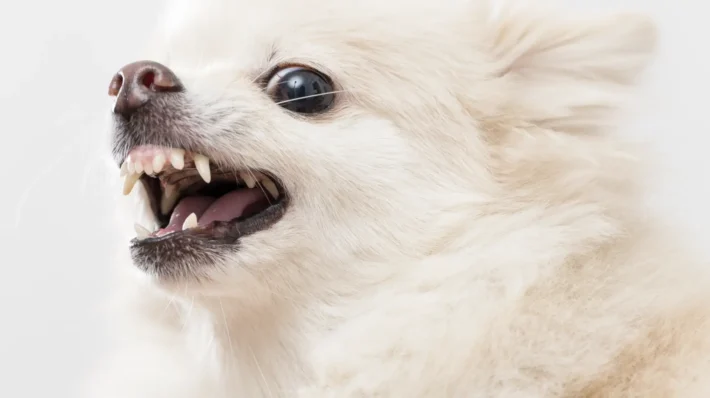
Reactivity occurs when a dog unleashes an extreme, overwhelmed reaction toward ordinary triggers that other dogs easily ignore. A passing stroller, a rustling bush, or another dog across the street instantly trips an internal alarm that your reactive dog cannot shut off.
To bring peace back into your home and in your walks, look at how a healthy, balanced response contrasts with complete system overload.
A Healthy, Balanced Response Of A Normal Dog
A balanced dog keeps everyday reactions small, quiet, and brief. Your dog spots another dog across the street, hears a sudden knock, or watches a runner jog past. They lift their head, assess the movement, and immediately move on. They glance up at you, take your quiet cue, and settle their body back down.
When visitors knock on the front door, your dog wags their tail and greets your guests with calm excitement, completely free of panic. They never bark frantically, pace the floor, bulge their eyes, or bounce off the walls. On an energy meter from 0 (deep sleep) to 10 (the red zone), a balanced response merely nudges them from a 2 up to a 4. They acknowledge the world, but their energy settles right back down because they completely trust you to run the show.
How A Reactive Dog Responds
The moment another dog appears fifty yards away, your dog freezes. Their body stiffens like iron, their tail locks upright, and their eyes widen into a hard, unblinking glare. Before you can take a step back, the explosion hits: violent lunging, frantic barking, and teeth snapping at empty air. Adrenaline floods their veins, spikes their energy straight into the red zone, and shuts down their thinking brain. They become completely deaf to your voice and blind to your presence.
You feel the heartbreak of this red zone every time it unfolds. Your dog barks straight through your gentle words. They strain against the leash and fight your physical cues. You shout their name into the wind, yet they stare forward as if you do not exist.
Your dog does not ignore you out of defiance. In that red zone, sheer adrenaline deafens them to the outside world. Force and frustration cannot reach them there. They need only one thing: a calm, steady leader who steps forward and says, Clock out, my friend—I have this handled.
Signs Your Dog Struggles with Reactivity
- They fixate on a trigger from a distance and refuse to break eye contact, stiffening every muscle in their body.
- They ignore their name, high-value treats, and familiar commands because adrenaline blocks out your voice.
- They charge to the end of the leash on hind legs or spin around and mouth the lead out of pure, panicked frustration.
- They erupt into sharp, continuous barking or high-pitched whining that you cannot soothe or interrupt.
- They pant, pace, tremble, and remain on high alert long after the trigger vanishes from sight.
What Causes A Dog To Turn Reactive?
Almost every single time, reactivity comes from pure fear, quiet worry, and total confusion about who is keeping everyone safe.
To really see what’s happening, come sit inside your dog’s mind for just a second.
At the end of the day, dogs care about one thing above all else: survival. Every natural instinct they carry ties directly back to staying alive. They hide food to survive. They guard their favorite chew to survive. When they feel terrified, they lunge and bark to survive.
Because dogs share nearly all of their DNA with wild wolves, they look for clarity and structure. In a wild pack, life feels peaceful because one trusted leader carries the ultimate responsibility. The rest of the pack can take a deep breath and snooze in the sun because they know someone else handles the safety, the food, and the danger.
Then we invite them into our busy human world, and they get confused. They look at us, love us to pieces, but constantly wonder: “Wait… who’s running things here?”
If your dog doesn’t clearly see you as that calm, confident protector, their instincts kick in. They step up and take the job themselves.
This filling of the leadership role isn’t because your dog wants power, but because they think they must do it to survive.
Imagine living like that every single day. The moment your dog takes on the responsibility of keeping the whole family safe, their ability to rest simply vanishes. They can’t switch off. They carry the overwhelming stress of guarding the front door, monitoring every noise, and scanning every walk like a bodyguard on high alert. Eventually, that heavy pressure boils over into barking, lunging, and panic (behavior that people tag as “reactive.”)
This is the real heart of reactivity. You don’t have a bad, stubborn dog. You have a tired, anxious, hyper-alert dog who is buckling under the weight of a job they were never meant to carry… and they desperately need you to gently take the wheel so they can finally relax.
What Is Reactive Dog Training? (And Why Standard Obedience Fails)
Now that you know what causes reactivity, you need to know that regular training may not work. Why? Because you have to address the REAL cause.
Your dog genuinely believes they’re the one in charge. And that means they’re responsible for assessing and responding to every threat they encounter. That’s an enormous, exhausting job. And it shows up as stress and reactivity.
I once worked with a dog named Jack, a fourteen-month-old Beagle who’d come first in his puppy school class. His owner’s fridge had his award stuck to it. Jack could perform every command flawlessly: sit, lie down, stay, high five, the lot.
But Jack had become aggressive to other dogs. He didn’t want any dog within twenty meters of him or his owner.
His owner kept saying the same thing: He knows all the commands. He’s so well-trained.
But the truth? Jack had acquired the position of decision-maker in their relationship. His owner had become the follower. And all the treats and commands in the world couldn’t change that dynamic.
Without the pack leader foundation in place, all the tricks Jack had learned counted for nothing.
If you are training a reactive dog, always ask this question: Am I targeting the real issue or Am I just treating the symptoms?
The Problem With Traditional Dog Training
Classic dog training teaches your dog to sit, and stay, and come. Those are useful skills. But a dog who can sit perfectly on command while vibrating with anxiety about the approaching dog across the street hasn’t actually been trained. They’ve been taught a trick. The underlying issue of “who’s actually leading the pack” remains completely untouched.
OUR FREE WEBCLASS WILL CHANGE YOUR DOG'S BEHAVIOR FOR GOODThe Three Pillars of Reactive Dog Training
Fixing reactivity requires more than just doing drills. It requires understanding why your dog is reacting, then systematically changing their emotional response to the trigger, not just suppressing the behavior.
I build this around three core pillars. Get these right, and reactivity loses its power.
Pillar 1: Your Nervous System as the Primary Tool
This is the part most owners miss.
Dogs read tension before they read commands. If you’re anxious about the approaching dog, your dog feels it. If you’re tense on the lead, your dog knows something’s wrong. Your state becomes their state.
When I’m working with a reactive dog, the first thing I assess isn’t the dog’s behavior. I check the state of the owner’s nervous system. Are they tensing the lead? Holding their breath? Bracing for impact? The moment that dog sees the trigger, they’re already getting a message from you: This IS something to worry about.
Consider how hard training becomes when you’re carrying so much worry. Dogs pick up on that immediately, and rather than learning, they often get caught in an endless cycle of our own anxious energy.
By contrast, when you walk calmly, breathe normally, and genuinely believe that you’ve got this handled, your dog’s nervous system settles. Not because you’ve said a magic word, but because their leader is calm. And if the leader is calm, there’s nothing to fear.
This is why so many owners see their dogs improve dramatically the moment a professional trainer takes over the lead—not because the trainer is using some secret technique, but because the dog is picking up on a completely different energy. The trainer isn’t anxious. The dog feels it. Everything shifts.
Pillar 2: Distance and Threshold Management
Every reactive dog has a threshold, or the distance at which a trigger will set them off.
If your dog reacts to other dogs, there’s a specific distance at which they can see the trigger but stay calm enough to think. Closer than that, they can’t. Further than that, they’re fine.
Your job is to work always in that sweet spot where they’re close enough that they notice the trigger, but far enough that they can remain calm and listen to you.
This might mean starting half a football field away. That sounds extreme until you realize: this is where success lives. Every time your dog sees the trigger at this distance and doesn’t react, their brain is learning something new. They learn not through force or fear, but through genuine experience.
Over weeks, that threshold can move closer because your dog’s emotional response to the trigger is slowly shifting.
Most owners make the mistake of either flooding (exposing too soon) or avoiding altogether (staying home). Flooding creates more fear. Avoiding makes the dog stuck. The threshold sweet spot is the narrow path between.
Pillar 3: Redirecting Attention Without Bribing
Here’s where treats come in, and where most owners get it wrong.
Using food to stop reactive behavior teaches your dog to bark in order to get the treat that follows. You’ve now trained them to be reactive. You’ve unintentionally made the problem worse.
Here’s what I tell dog owners all the time: make the dog understand that they can trust you, and they will follow.
When your dog has genuinely learned to focus on you — not for food, but because you’re interesting and you make good things happen— then redirection becomes powerful. You don’t need endless treats or endless drills. You need a dog who, when a trigger appears, naturally looks to you for guidance because that’s become their habit.
The foundation work matters more than the specific technique.
BRING BACK THE CALM TO YOUR HOUSE: JOIN THIS FREE REACTIVITY CLASSStep-by-Step: How to Start Training Your Reactive Dog
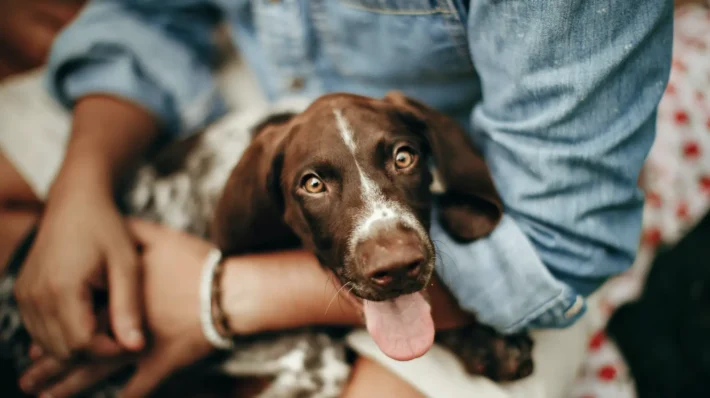
Step 1: Identify Your Dog’s Specific Triggers
Before you can do anything else, you need to know exactly what sets your dog off.
Is it movement? Proximity? Certain dogs and not others? Sounds? Specific contexts (like a busy park versus a quiet street)?
Spend one week just observing. Keep a simple log. Write down:
- What triggered the reaction
- How close the trigger was
- How intense the reaction was (mild alert vs. full explosion)
- Where it happened
- What time of day
This isn’t just data collection. It teaches you to see your dog’s world from their perspective, and it clarifies where to start in your training journey.
Step 2: Create a Training Plan Based on Distance
Once you know the triggers, rank them by intensity. Your worst-case scenario goes at the bottom of your training list. Your mildest triggers go at the top.
Start with the mildest trigger at a distance where your dog notices it but doesn’t react. Document that distance. That’s your starting line.
This is where patience becomes your greatest tool. You’re not rushing. You’re setting your dog up to succeed every single time.
Step 3: Practice Calm Attention in Low-Stress Settings First
Before you introduce triggers, your dog needs a solid foundation in what calm focus looks like.
This doesn’t mean endless repetition of commands. It means: can your dog choose to engage with you without being forced or bribed? Can they check in with you on a walk just because they like you?
If the answer is no—if your dog barely acknowledges your existence except when treats appear—then you’ve found your starting point. Build this foundation first. Everything else will be easier.
Step 4: Introduce Triggers at Safe Distance
Now bring in a real trigger. At the distance you’ve identified as safe (where your dog notices but doesn’t react).
The first time, success isn’t “perfect calm.” Success is “less reactive than usual.” Success is “they looked at the trigger, acknowledged it, and looked back at me.” Success is “one bark instead of five.”
Celebrate small wins. They matter.
If your dog does react and truly goes over threshold, you’ve learned something valuable: you were too close. Move further away and try again. There’s no failure here, only information.
Step 5: Gradually Close the Distance
Over weeks, gradually reduce the distance. Not by rushing. By building. By ensuring consistent success at each stage before moving closer.
This takes time. Real time. Weeks. Months, depending on severity. But here’s what you’re doing: you’re rewiring your dog’s emotional response to the trigger. Not through punishment or suppression. Through genuine learning.
When your dog sees a trigger and their first instinct is to look at you instead of lunging, something fundamental has shifted. That’s not obedience. That’s leadership. That’s trust.
Common Reactive Dog Training Mistakes
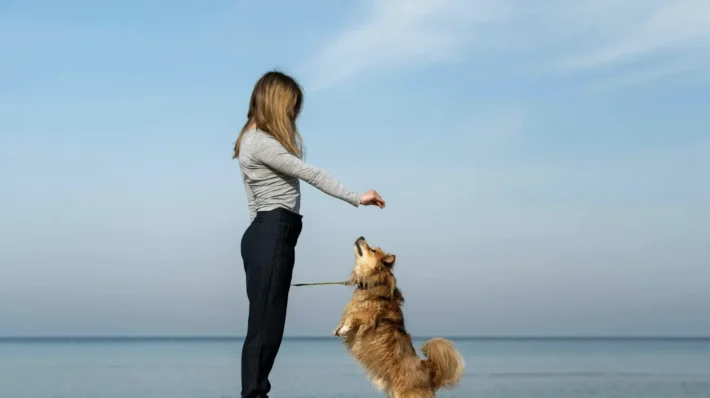
Mistake 1: Punishing the Bark Instead of Changing the Response
Shouting “NO” when your dog lunges teaches them to be afraid of you, not to feel differently about the trigger. The trigger is still scary. You’ve also become scary. You’ve damaged trust and solved nothing.
Mistake 2: Flooding
Throwing your reactive dog into a busy dog park because “they need to learn” is like throwing someone who’s afraid of water into the deep end. You’ve created trauma, not training.
Mistake 3: Treating As A Substitute for Leadership
Treats can play a role. But if your dog only listens when high-value food appears, you’re bribing, not training. And when you don’t have treats? Your dog reverts.
Mistake 4: Skipping Your Nervous System Work
I cannot overstate this. If you’re anxious, your dog will be anxious. No amount of training the dog will fix this until you address yourself first.
Mistake 5: Expecting Linear Progress
Your dog will have setbacks. Bad days. Days where everything you’ve built seems to vanish. This is normal. It’s not a failure. It’s part of the process. Stay consistent through it.
Mistake 6: Training Only in Controlled Settings
You can teach perfect calm in your backyard. Then take your dog on a real walk, and they fall apart. Real-world training matters. Introduce variations gradually: different locations, different times of day, different trigger distances.
LEARN HOW TO BE THE KIND OF LEADER THAT YOUR DOG NEEDS: FOR FREEHow Long Does Reactive Dog Training Take?
Let’s be honest: this isn’t a two-week fix.
Depending on severity, expect weeks to months. A mildly reactive dog might show real improvement in 4-6 weeks of consistent work. A severely reactive dog might take 3-6 months before you see substantial change.
What speeds things up:
- Your consistency. Remember, daily practice beats occasional effort
- Your calm energy. Anxiety slows progress
- Starting early. Don’t wait until the problem is severe.
- Having a clear plan and not just random attempts.
What slows things down:
- Inconsistency
- Punishing the dog
- Avoiding triggers instead of gradually working with them
- Continuing methods that aren’t working
The real question isn’t “how long?” It’s “how committed am I?” Because this method works, but it requires you to show up, stay calm, and keep going even when progress feels invisible.
Progress isn’t always visible in the first week. But I promise you: if you’re doing this right, change is happening. Your dog’s nervous system is rewiring. Their trust in you is deepening. Their threshold is expanding.
Keep going.
Reactive Dog Training for Specific Triggers
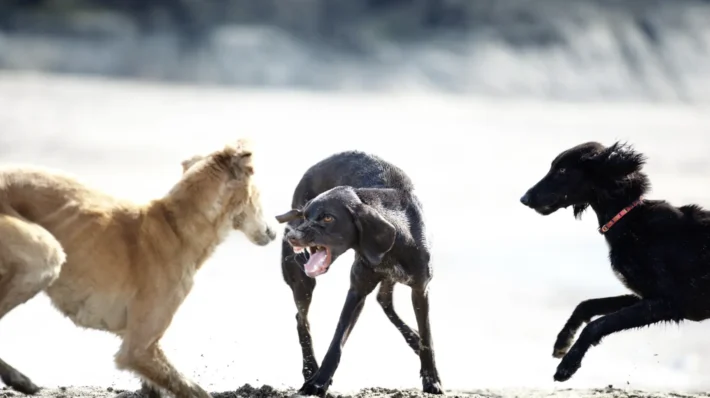
Principles are universal, but context matters. Here’s how to adapt:
Dog Reactive to Other Dogs
Start at a distance where your dog sees the other dog but doesn’t react. Don’t force interaction. Let your calm energy do the work. Gradually decrease distance over weeks. Some dogs will eventually be friendly. Others will simply learn to coexist calmly. Both are wins.
Dog Reactive to Cyclists, Joggers, or Fast Movement
Movement triggers a chase instinct in some dogs. Start further away (cyclists-triggers can activate from 50+ meters). Build from there. The goal isn’t friendship with cyclists. It’s: “Oh, a cyclist. Mum’s calm. I can be calm too.”
Dog Reactive to Sound (Fireworks, Trucks, Construction)
You can’t control when sounds occur. But you can desensitize. Play recordings at low volume during calm moments. Pair them with good things (treats, play, calm energy). Gradually increase volume. The goal is: sound happens, dog looks to you, dog settles.
LEARN HOW TO CALM YOUR DOG FOR GOOD IN THIS FREE WEBINARWhat Reactive Dog Training Is NOT
Not Punishment-Based
Shouting, hitting, shock collars, prong collars—these suppress behavior. They don’t change the underlying fear or frustration. They damage trust. And they often make reactivity worse because now your dog is scared of two things: the trigger AND you.
Not About Endless Drills or Treats
You don’t need to drill sit-stay fifty times a day. You don’t need a pouch full of premium treats. You need consistency, clarity, and calm leadership.
Not “Dominance” Theory
Your dog isn’t reacting because they’re trying to be the most powerful at home. That’s a misunderstanding of dog psychology. They’re reacting because they’re stressed, unsure, or feel responsible for the decision-making. Actual leadership—calm, consistent, kind—solves this.
Not a Quick Fix
If someone promises to “fix” your reactive dog in two weeks, they’re either lying or they’re suppressing behavior (which isn’t fixing). Real change takes time.
Not One-Size-Fits-All
Every dog is different. Every situation is different. What works for one dog might need tweaking for another. That’s why a clear plan and consistency matter more than any specific technique.
Not Something You Hire Someone Else to Do and Then Forget
A trainer can show you how. But you have to do the work. You have to stay calm. You have to show up consistently. You have to rebuild that relationship with your dog. No one else can do that for you.
The Real Work: It’s Not Magic, It’s Leadership
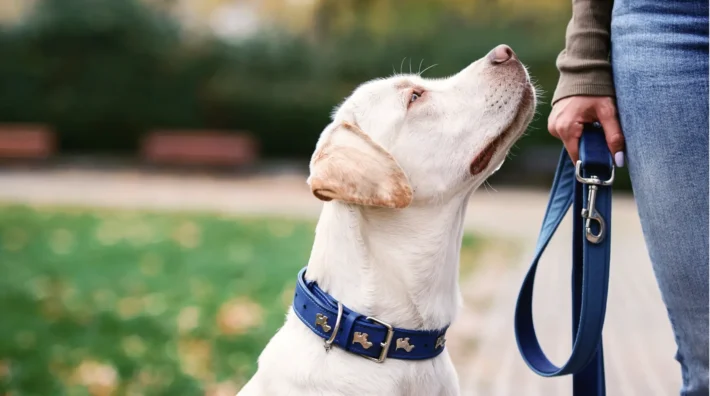
Here’s what I want you to understand: fixing reactivity isn’t about finding the right command or the perfect treat or a special technique.
It’s about becoming the leader your dog genuinely wants to follow.
When your dog trusts that you’re calm, confident, and in control (and they see that you’ve got the big decisions handled and they can stand down from that job), their nervous system settles. Reactivity loses its grip because the thing causing it in the first place is gone.
This is why a dog can be “well-trained” and still reactive, and why a dog with a calm, clear leader can be “untrained” and still peaceful.
The training isn’t the foundation. Leadership is. And leadership is built through consistency, calm energy, and genuine presence over time.
That’s the real work. And that’s why it works.
OUR FREE WEBCLASS WILL CHANGE YOUR DOG'S BEHAVIOR FOR GOODReady to Transform Your Reactive Dog?
Watch this free masterclass that walks you through exactly how the nervous system fuels reactivity and the first steps you can take this week. Thousands of owners have used these principles to transform their dogs without force, shock collars, or endless training sessions.
Ready to go deeper? The Dog Calming Code™ is the complete step-by-step system that teaches you everything, from establishing calm leadership to working through specific triggers to rebuilding trust with your dog. It’s the method that’s transformed thousands of reactive dogs into calm, confident companions.
BRING BACK YOUR CALM DOG – THIS WEBINAR WILL HELP STOP REACTIVITY TODAY.Your dog isn’t impossible. They’re just waiting for you to step into the role they’ve been hoping you’d take all along.
You got this!

— Doggy Dan
FREQUENTLY ASKED QUESTIONS
Q: Can all reactive dogs be trained?
A: The vast majority can improve significantly. Some will become completely calm around triggers. Others will learn to coexist peacefully. Either way, the constant stress and fear can be dramatically reduced. I’ve rarely seen a case where nothing improves with the right approach.
Q: Do I need a professional trainer?
A: Not necessarily. This method is something you can learn and apply yourself. But working with a qualified trainer can accelerate progress, especially if you’re new to this. What matters more is that whoever guides you understands that reactivity is rooted in leadership and emotional response, not just behavior.
Q: What if my dog gets worse during training?
A: First, make sure you’re not flooding. If you’re introducing triggers too quickly, back off. Second, stress can temporarily increase behavior before it improves—your dog is learning something new and their nervous system is processing. If things genuinely deteriorate over weeks, seek professional guidance. You might be missing something.
Q: How do I know if I’m doing it right?
A: Signs you’re on the right track: your dog’s reactions are less intense, they happen less frequently, your dog recovers faster afterward, your dog looks to you more often. These aren’t dramatic overnight changes. They’re subtle shifts that compound over time.
Q: Is reactive dog training humane?
A: Yes. This method is grounded in dog psychology and natural instincts. It’s about calm leadership, not force. Your dog learns to trust you more, not fear you more. That’s the whole point.