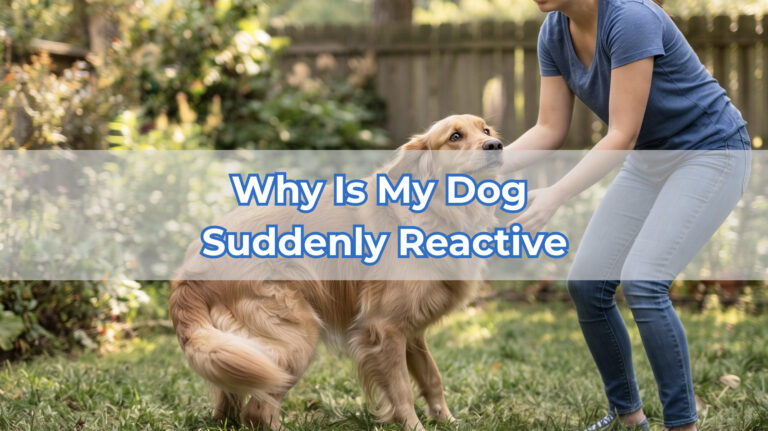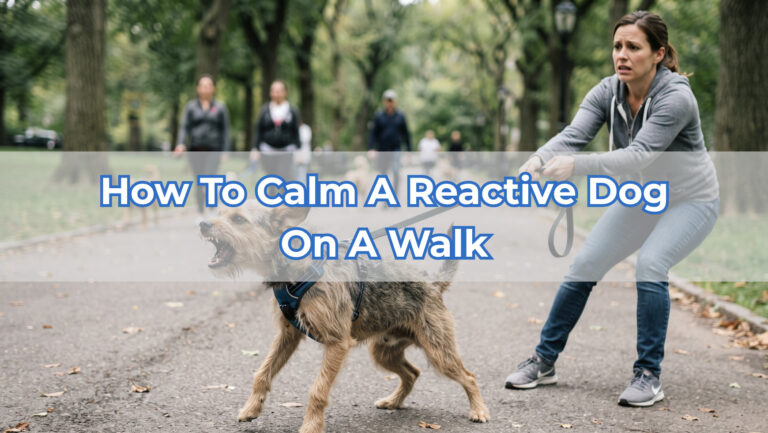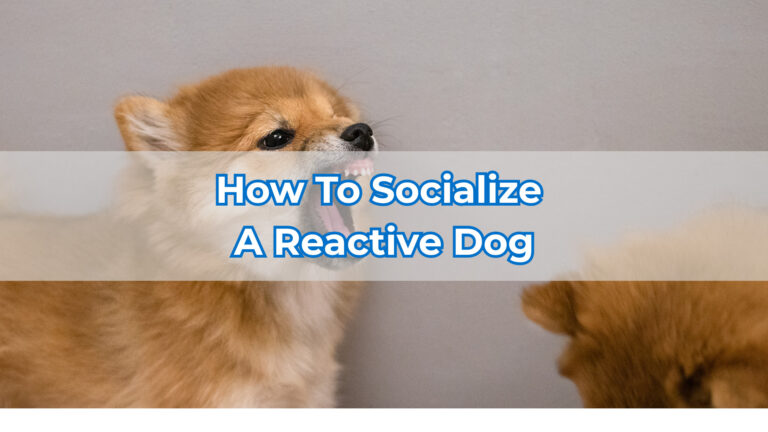
Are you currently looking at your dog and asking, “Why is my dog suddenly reactive?” A dog showing signs of sudden reactivity is a dog that has been carrying this issue for a long time. Right now, this reactivity has finally spilled over and manifested in your dog’s increased reactive barking, aggression, and anxiety. Only one thing can fix it: your leadership.
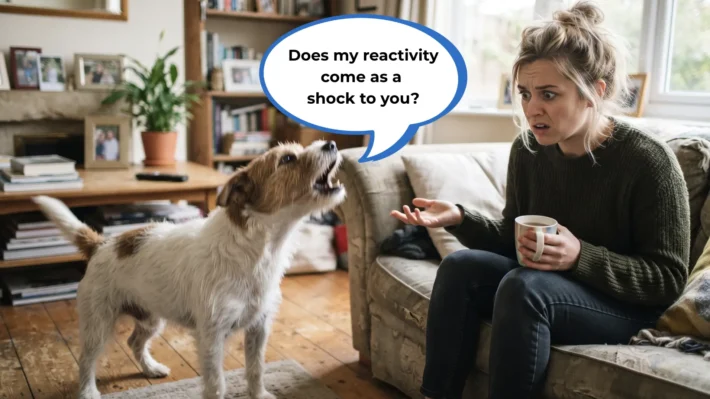
Sudden-onset reactivity is one of the most disorienting behavior shifts dog owners face. One day your dog is calm and friendly. The next, they’re barking frantically, lunging, or completely unable to hear you when a trigger appears. It feels random, and it seems like your dog is just getting worse!
Sudden reactivity almost always signals that something has shifted either in your dog’s world, in their body, or in how they see their role in your household.
Although reactivity can come as a complete surprise for you, you have the key to turn this behavior around.
Let’s explore this further!
FREE WEB CLASS THAT’LL TEACH YOU THE BEST DOG TRAINING FOR REACTIVE DOGSKey Takeaways
- Sudden reactivity signals a leadership vacuum. Your dog believes they’re responsible for protecting your household, creating chronic stress. When you establish calm, consistent leadership through the Five Golden Rules, your dog’s nervous system settles and reactivity often decreases without specific training.
- Rule out medical causes first. Pain, thyroid imbalances, ear infections, and neurological changes commonly trigger sudden reactivity. A vet checkup is non-negotiable before behavior training, as punishing a dog in pain worsens the problem significantly.
- Management prevents practice; leadership prevents the problem. While temporarily avoiding triggers protects your dog’s nervous system, sub-threshold exposure combined with established leadership—not avoidance alone—creates lasting change in how your dog responds to the world.
What Sudden Reactivity Actually Is
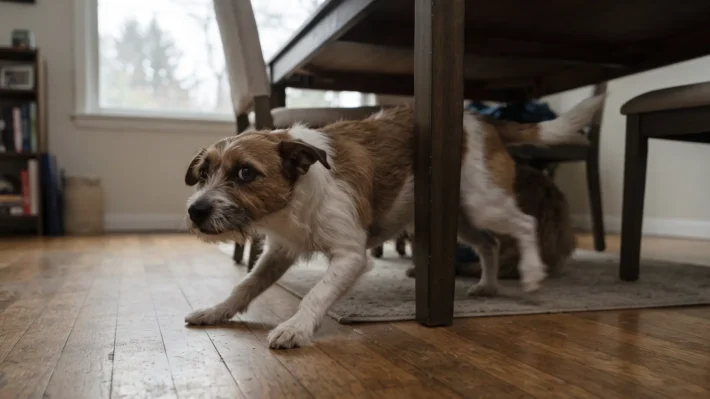
Sudden-onset reactivity is when your dog begins barking, lunging, or showing extreme reactions to triggers (other dogs, people, bikes, sounds) seemingly out of nowhere. Unlike lifelong fear-reactivity, which develops gradually from poor socialization, sudden reactivity usually signals a recent change: increased stress, medical pain, a frightening incident, or—most commonly—a growing sense that your dog believes they’re in charge and must now protect the household.
The key difference: sudden reactivity often responds faster to training because the dog hasn’t spent years reinforcing the pattern. But without addressing the root cause (the strong lack of leadership), surface training alone won’t stick.
Why Dogs Suddenly Become Reactive: The Five Main Causes
Cause #1: Stress & Environmental Changes
Dogs often manage anxiety quietly for months or even years, holding things together through pure effort. Then one day, there’s a big move, a new pet, a change in routine, or a loud trauma (fireworks, construction, a frightening encounter). The overwhelming weight of these triggers becomes too much. Their system tips. What looked like mild alertness before suddenly explodes into full reactivity.
Environmental triggers include:
- Moving to a new home (unfamiliar territory, new dogs in the neighborhood)
- Addition of a new pet or family member
- Major routine disruption (owner returning to office, schedule change)
- Traumatic noise events (fireworks, thunderstorms, construction)
- Loss of a companion dog or person
Cause #2: Medical Pain or Health Issues
This is the first place to look because a dog in pain becomes defensive. A dog with thyroid imbalance becomes anxious. A dog with ear infections becomes touch-sensitive and irritable. Before you do anything else, rule out the physical issues.
Common medical causes of sudden reactivity:
| Health Issue | Signs to Watch For | Action Required |
| Arthritis / Joint Pain | Defensive when touched; reactive on walks; limping; reluctance to jump | Vet exam + imaging |
| Ear Infection | Head shaking; sensitivity to touch on head/ears; sudden sound reactivity | Ear check at vet |
| Dental Disease | Difficulty eating; bad breath; sensitivity around muzzle; irritability | Dental exam |
| Thyroid Imbalance | Sudden anxiety; mood shifts; weight changes; coat changes | Blood work (TSH, T4) |
| Neurological Changes | Especially in older dogs; confusion; loss of hearing; cognitive decline | Senior blood panel + neuro exam |
Why this matters: A reactive dog that’s actually a dog in pain will worsen with punishment-based training. Medical clearance is non-negotiable.
Cause #3: A Single Traumatic Incident
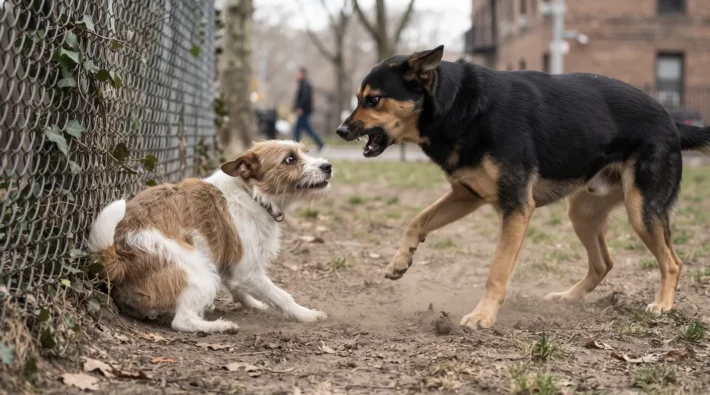
One bad encounter can reprogram your dog’s entire worldview. A dog fight. Being chased by a cyclist. Cornered by an aggressive stranger. A leash yanked unexpectedly during a vulnerable moment. One event plants a seed: “This situation is dangerous, and I need to react first next time.”
Within weeks, that learned reactivity becomes automatic. Your dog isn’t being difficult. They’re actually protecting themselves based on what they’ve learned.
The trauma imprint pattern to look for:
- Single incident (fight, chase, scare)
- Dog’s brain creates fear association
- Dog begins reacting to anything similar to the original trigger
- Each reactive episode reinforces the belief that reactivity “works” to keep them safe
- Reactivity escalates because the dog is practicing it
Cause #4: Learned Reactivity Or The Feedback Loop
Here’s what often happens: Your dog barks at another dog once. You’re surprised but not too worried. The other dog moves away. Your dog’s brain registers: “My barking worked. I controlled the situation.”
Next walk, your dog reacts again, hoping for the same result. Again, the other dog or person leaves. Your dog’s confidence grows. By week three, your dog is expecting to react because it’s been working. The stress builds. The reactivity escalates. And now you have a genuinely reactive dog who learned it because the system reinforced them.
How the cycle deepens:
As the pattern calcifies, your dog begins reacting at greater distances. What started as a reaction at 50 feet now triggers at 100 feet, then 150 feet because they’ve learned that vigilance and early warning are effective strategies.
The cumulative effect is chronic stress: your dog exists in a constant state of high alert, always scanning for potential threats, always ready to react, because relaxation now feels dangerous. Their nervous system never truly settles. This hypervigilance becomes their default state, and the reactivity that once seemed manageable has now evolved into an exhausting, self-reinforcing cycle that touches every walk, every outing, and every moment your dog spends in the world.
Cause #5: The Leadership Vacuum: The Core Reason
This is where most sudden reactivity actually comes from, and it’s what I always emphasize in my training: reactivity is almost always a sign that your dog has stepped into a leadership role they were never meant to fill.
Dogs are hardwired to look for a calm, capable leader. When one isn’t there (or when it’s unclear) your dog’s brain defaults to: “I guess that’s me. I have to make the decisions. I have to protect us. I have to assess every threat.”
That’s an enormous burden. A dog managing the household’s safety is a dog under constant stress. That stress shows up as:
- Hypervigilance (always scanning for danger)
- Reactivity (responding intensely to anything ambiguous)
- Inability to relax (because relaxing might mean missing a threat)
- Chronic anxiety (the weight of responsibility never lifts)
Then something small tips the balance: a stressful incident, a change in routine, a health issue. These things cause sudden reactivity in your dogs. It’s not that they just recently became reactive. It’s that they were carrying too much weight already, and finally, they broke.
JOIN OUR FREE CLASS AND LEARN THE BESTSELLING DOG CALMING DOG™ FOR FREESudden Reactivity Is NOT Aggression (Understanding the Difference)
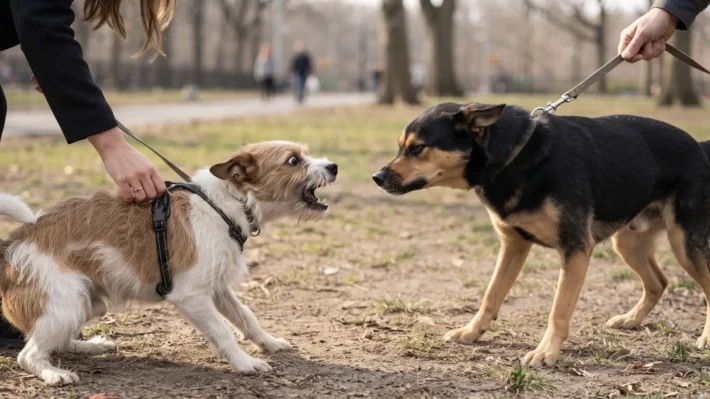
This distinction matters because how you respond is completely different. Being able to distinguish the difference between reactivity and aggression allows you to come up with better training strategies that will cause a change in behavior faster.
Reactivity is an involuntary emotional response to a trigger. Your dog sees another dog, and their nervous system goes into fight-or-flight. They bark, lunge, or fixate. But here’s the truth: often they’re scared, and not trying to cause harm.
Aggression, on the other hand, comes with an intent to cause harm. An aggressive dog’s body is tense and purposeful. Their eyes are hard. They’re not reacting… they’re calculating. They prepare for a clash. They want to hurt.
A reactive dog can become aggressive if they feel trapped, if they’ve learned that reactivity isn’t working anymore, or if years of untreated reactivity have hardened into genuine fear-based aggression. But at the sudden stage, most dogs are reactive out of stress or fear, not malice.
Punishing a reactive dog makes it worse because you’re increasing their fear. Praising a reactive dog (comforting them) also makes it worse because you’re rewarding the aroused state. The path forward is calm, consistent leadership, and not force, not excessive treats, not avoidance.
The Signs of Sudden Reactivity (What to Watch For)
If you’re noticing these changes, your dog is likely becoming reactive:
| Sign | What It Looks Like | What It Means |
| Fixated Stare / “Lock-On” | Eyes forward, ears pitched, body stiff; trigger appears and your dog freezes and stares | Your dog has left the present moment; mental connection with you is lost |
| Distance Sensitivity | Reacts at 100 feet this week, 50 feet next week, 30 feet the week after | Threshold is lowering; reactivity is becoming habitual; this is a red flag for worsening |
| Inability to Recover | After seeing a trigger, your dog stays panting, pacing, or reactive for 10+ minutes | Nervous system is stuck in high alert; dog cannot self-regulate |
| Escalating Intensity | First week: barking. Second week: barking + lunging. Third week: barking + lunging + growling | Pattern is intensifying; urgency to intervene increases |
| Frequency Increase | Was reacting once or twice per walk; now reacting to almost everything | Reactivity is becoming the default state |
| Pre-Reaction Signals | Stiffness, lip licking, yawning, tail tucking before the big reaction | Your dog is stressed even when trigger isn’t visible; anxiety is building |
| Loss of Focus on You | Normally your dog checks in; now they don’t even flick an ear when you call | Leadership has shifted; your dog no longer trusts you as the decision-maker |
Why this matters: The longer these signs go unaddressed, the more entrenched the reactivity becomes. A dog who has reacted 50 times and gotten some “success” from it (trigger left, owner got stressed, etc.) is harder to retrain than a dog caught in the first week. Early intervention is everything.
What To Do If Your Dog Suddenly Becomes Reactive
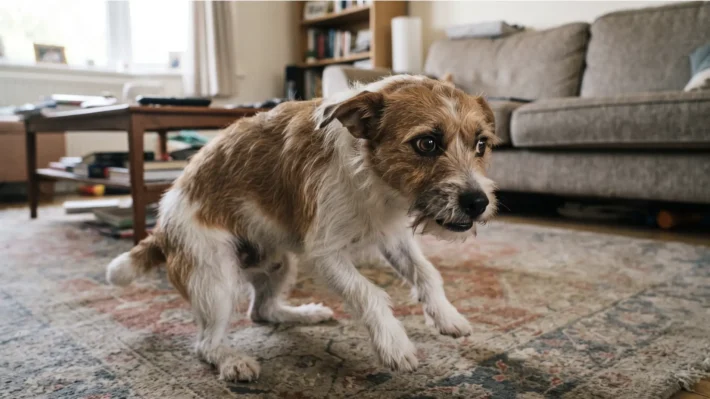
Step 1: Rule Out Medical Causes (Do This First)
Before you do anything else, schedule a vet checkup. Tell your vet: “My dog has suddenly become reactive. I want to rule out pain, thyroid issues, ear infections, and neurological changes.”
A dog being “trained” while in pain or medical distress will worsen, not improve. The guilt you feel later won’t change the damage. Get this checked first.
Step 2: Identify the Trigger Pattern (Keep a 2-Week Log)
To understand what’s driving your dog’s reactivity, you need clarity. For the next 14 days, track these five key elements every time you notice a reaction:
| Element | What to Track | Example |
| Trigger (What) | What specifically sets your dog off? | Other dogs, cyclists, strangers, loud noises, specific situations |
| Distance (How Far) | How close does the trigger need to be? | 100 feet away, 50 feet away, right next to you |
| Timing (When) | Does it happen at the same time each walk, or randomly? | Always at 3 PM, only in the evening, unpredictable |
| Location (Where) | Does it happen in specific places or everywhere? | Same street, only near parks, the neighborhood in general, all locations |
| Intensity (Scale) | How severe was the reaction? | Rate 1–10 (1 = mild alert, 10 = full meltdown) |
Example log entry:
Tuesday 3 PM, Maple Street near park, golden retriever 100 feet away, my dog barked and lunged for 2 minutes, wouldn’t respond to my call, I turned around and left. Intensity: 7/10.
After two weeks, patterns emerge. Maybe your dog only reacts to dogs, not people. Maybe they only react on busy streets, not quiet residential ones. Maybe mornings are better than evenings. This data becomes your roadmap for everything that follows.
Step 3: Establish Your Leadership With The Five Golden Rules
Your dog’s reactivity exists because they believe the job of protection, decision-making, and threat assessment falls on them. No amount of “stay calm” cues, counter-conditioning, or distance work will stick if your dog still thinks they’re responsible for keeping you safe. The Five Golden Rules address this at the root.
Once your dog trusts that you are genuinely in control of the big decisions—food, danger, attention, timing, and walks—they stop needing to react. The pressure lifts. Then, specific walk techniques and trigger work become finishing touches on a dog that’s already predisposed to follow your lead.
This is where the Dog Calming Code™ comes in. It’s not a reactive-dog training program but one that establishes a leadership foundation that makes all other training work.
The Dog Calming Code™ teaches the Five Golden Rules, and they work silently in the background to reshape your dog’s perception of who is leading the way.
OUR FREE WEBCLASS WILL CHANGE YOUR DOG'S BEHAVIOR FOR GOODStep 4: Introduce Triggers Slowly
Exposure done wrong, like pushing too hard, too fast, or without the leadership foundation, actually makes reactivity worse, not better.
The foundation must come first. This is non-negotiable. The root cause of reactivity isn’t the trigger itself… It’s your dog believing they’re in charge and responsible for managing every threat they encounter. They’re in “protection mode,” carrying weight they were never meant to carry.
Until that dynamic shifts through the Five Golden Rules, exposure work alone won’t stick. You can introduce triggers from now until next year, but if your dog still believes they’re the decision-maker, the exposure will only reinforce their sense of responsibility, and their reactivity.
Step 5: Manage Your Own Stress Because Your Dog Mirrors You
Dogs are emotional sponges that constantly read and respond to their handler’s internal state. They pick up on far more than most owners realize. They feel the tension you hold in your leash, the rigidity in your posture, the shallow quality of your breathing, and whether your overall energy projects anxiety or groundedness.
When you walk in a state of fear or anticipation, expecting a reactive episode to happen, your dog absorbs that anxiety as environmental data.
To your dog, your stress becomes context: “My human is worried, so this situation must actually be dangerous. I need to react more intensely to protect us both.” This creates a feedback loop where your anxiety inadvertently signals to your dog that the trigger is genuinely threatening, which escalates their reactivity, which increases your stress… and the cycle deepens.
Step 6: Never Punish, Yell, or Use Aversive Tools
This is non-negotiable. Punishment like yelling, leash corrections, prong collars, e-collars, citronella sprays teaches a reactive dog one thing: “My fear was justified. This IS dangerous. I need to react harder next time.”
Additionally:
- Don’t comfort or coddle. Soft words and petting when your dog is reactive = rewarding the aroused state
- Don’t use treats to stop the reaction. If you reward a reaction with a treat, you’ve taught your dog to react in order to get the treat
- Don’t rely on avoidance alone. Avoiding triggers forever keeps your dog stuck in fear; gradual, supported exposure is what changes beliefs
Calm leadership through the Dog Calming Code™️is what actually works. Establishing yourself as the decision-maker so your dog can finally relax and trust that you’ve got this sends a stronger message than punishment or force.
When to Seek Professional Help
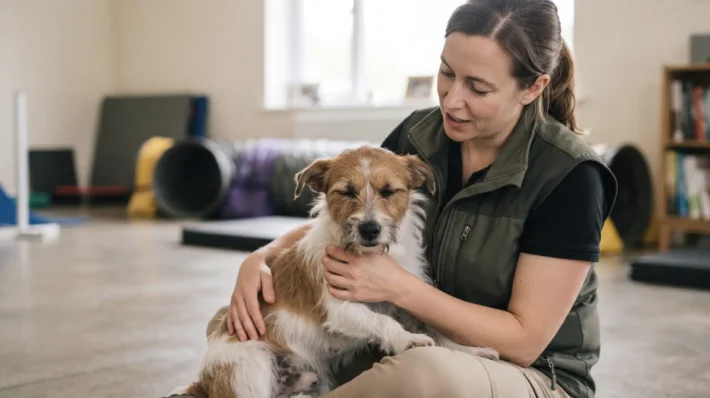
It’s important to recognize when professional support becomes necessary. Reaching out to a certified dog behavior consultant (not just a trainer) is the right move if any of these situations apply to your situation:
- Reactivity is escalating despite your consistent efforts
- Your dog has injured another dog or person
- You’re afraid to take your dog outside
- You’re starting to avoid walks entirely
- Your dog is reactive in multiple contexts, not just one specific trigger
When reactivity continues to worsen or begins affecting your daily life and safety, a qualified professional can provide the specialized guidance and assessment your specific situation requires.
BRING BACK THE CALM TO YOUR HOUSE: JOIN THIS FREE REACTIVITY CLASSWhat to Look For in a Professional
Not all trainers are created equal, and choosing the right professional makes all the difference. When evaluating a behavior consultant, look for these key credentials and approaches:
Essential qualifications:
- Uses force-free, science-based methods grounded in dog psychology
- Asks detailed questions about your dog’s history, environment, and your home dynamics
- Doesn’t promise “quick fixes” or unrealistic timelines
- References dog psychology and nervous system state, not just surface behaviors
A qualified professional will spend time understanding your dog’s complete picture—not just the reactive moment, but the underlying stress, your household structure, and your leadership dynamic. They’ll view your dog’s reactivity as a symptom of something deeper that needs addressing, not a problem to be band-aided. How to Train A … Articles
Red Flags to Avoid
Some trainers use outdated or harmful methods that can make reactivity worse, not better. Be cautious of anyone who:
- Recommends prong collars, e-collars, or alpha-roll techniques
- Focuses only on stopping the reactive moment, not the underlying dynamic causing it
- Doesn’t ask about your leadership role or home structure
- Uses force, punishment, or intimidation as primary training tools
These red flags often signal a trainer who doesn’t understand the root cause of reactivity and is attempting to suppress symptoms rather than address the problem. Punishment-based methods may create a quieter dog temporarily, but they increase fear, damage your relationship, and often make reactivity worse long-term.
The Five Golden Rules: Your Foundation for Calm Leadership
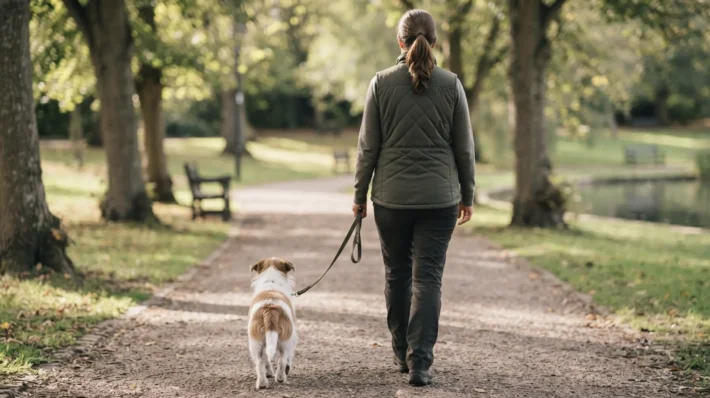
Most reactivity training fails because it skips the foundation. Trainers jump straight to “here’s a technique for the reactive moment” without addressing why the dog feels responsible for making all the decisions in the first place.
The Five Golden Rules are how you communicate (in your dog’s language) that you are the calm, capable leader. When your dog genuinely believes this, their nervous system settles. Reactivity often decreases on its own because your dog no longer feels the pressure to react.
Rule 1: Feeding (Control the Resource)
In dog psychology, food is survival. Your dog’s brain is hardwired by millions of years of evolution to understand one simple truth: whoever controls food controls life itself. A dog that doesn’t know where their next meal comes from lives in chronic low-level stress, always scanning for opportunities, always on edge.
When you control feeding through structured mealtimes, you’re not being mean or withholding. You’re communicating something profound in your dog’s own language: “I have you covered. Your survival is secure. You don’t have to worry about this.”
This single act removes one of the largest sources of anxiety from your dog’s life.
LEARN HOW TO CALM YOUR DOG FOR GOOD IN THIS FREE WEBINARRule 2: Handling Danger (Be the Decision-Maker)
This is the rule that most directly addresses reactivity. When your dog barks at the mailman, a noise outside, or another dog, they’re not being annoying. They’re doing their job as they understand it: flagging a threat and waiting for the leader to respond.
If you yell at them to be quiet, your dog’s brain interprets this as: “My leader didn’t see the danger. I have to warn them louder.” If you ignore them, the message is the same: “Leadership failed. The threat is still out there. I have to escalate.” Each time you don’t calmly assess and handle the “danger,” your dog’s anxiety about that threat increases. They learn that threats don’t get managed; they just keep escalating.
But when you calmly look at the mailman, the noise, or the other dog, and then communicate through your calm body language that you’ve seen it and it’s handled, something shifts in your dog’s nervous system.
The threat assessment just transferred from your dog to you. Your dog can finally relax because the job isn’t theirs anymore.
Rule 3: Holding Off Attention
Reactivity is fueled by arousal. A reactive dog is a dog living in a state of elevated activation. Their nervous system is primed, their adrenaline is ready, their body is prepared for action.
If you reward high arousal with attention (petting, talking, eye contact) every time your dog gets excited, you’re essentially telling their nervous system: “This is the energy I want. Keep running hot.”
Over time, your dog’s baseline arousal level rises. They’re always a little bit “on.” That elevated state spills onto walks. That’s where reactivity shows up.
But when you ignore your dog until they reach total calm, (example: sitting, lying down, breathing normally, eyes soft) and then reward them with affection, you’re sending the opposite message: “This calm state is what I want. This is when good things happen.” Your dog’s nervous system begins to learn that calm is the target state, not arousal.
Rule 4: Doing Everything on Your Terms (You Initiate)
A dog that demands things like attention, plays, and walks, and gets them has learned one crucial lesson: they control outcomes.
In dog psychology, control equals leadership. A dog that controls when interactions happen believes they’re the one making the decisions about the household.
This creates a subtle but profound shift in their worldview. If they’re making decisions, then they’re responsible for outcomes. If they’re responsible for outcomes, they have to stay vigilant. Vigilance creates reactivity. But when you decide when petting starts, when play begins, and when walks happen, you’re sending a different message: “I’m making the decisions here. You can relax. I’ve got this.”
Your dog learns to wait for your invitation. That waiting (that moment of deferring to you) is where the real shift happens.
Rule 5: Managing the Walk
Walks are where reactivity usually peaks. But the problem starts at the front door. If your dog is spinning, whining, and pulling before you even leave, they’re already “red-lining.”
Rule 5 is about starting from absolute stillness so your dog’s nervous system begins in a calm state.
This fifth rule teaches your dog that the leash goes on only when they are calm and sitting, not when they’re whining or jumping.
The door opens only when your dog remains calm; if they start bouncing again, you close it and wait.
You exit first, which communicates that you’re leading and your dog is following, not the other way around.
Walking begins at your pace, not your dog’s pace. They follow your rhythm, not vice versa. If pulling or lunging happens during the walk, the consequence is calm and measured: you pause and wait, or you do a U-turn and head in the opposite direction. These consequences are never angry or punitive; they’re simply matter-of-fact responses that communicate, “This behavior doesn’t move us forward.”
When all five rules are applied consistently, your dog’s entire worldview shifts. They stop believing the job of protection and decision-making falls to them. They can finally relax because the weight of responsibility has been lifted.
Reactivity often settles significantly without any specific “reactive dog training” because the underlying pressure that fueled the behavior in the first place is gone.
OUR FREE WEBCLASS WILL CHANGE YOUR DOG'S BEHAVIOR FOR GOODThe Root of It All: Leadership, Not Techniques
Here’s what most reactive dog owners get wrong: they focus on the reaction.
“How do I stop the barking? What’s the perfect leash technique? What treat will work?”
But the reaction is just a symptom. The actual problem is usually simpler and deeper: your dog doesn’t believe you’re in charge, so they’ve taken the job themselves. And that job is wearing them down and turning them into a reactive machine.
The shift happens when your dog genuinely understands that you are the calm, reliable decision-maker. Not through force or fear. Not through endless treats. Through consistent, calm leadership that shows your dog: I’ve got this. You can relax now. The job isn’t yours.
When that shift happens, reactivity often settles without specific reactive-dog training because your dog no longer needs to react. The underlying pressure is gone.
Your Next Step
If this sounds like your dog, the first move is to know about the Dog Calming Code™ for free. It explains exactly why your dog is reactive and gives you the Five Golden Rules to start shifting the dynamic today.
Thousands of owners have watched their suddenly reactive dog settle back into calm within weeks of consistent application. Not through endless training drills or expensive equipment—through genuine leadership that removes the pressure your dog has been carrying.
Your dog doesn’t want to be reactive. They’re reactive because they believe they have to be. Your job is to show them calmly, consistently, and with patience that you’ve got this now.
They can finally relax.
Join my free webinar and get to learn the dog training program that changed over 125,000 dogs!
BRING BACK YOUR CALM DOG – THIS WEBINAR WILL HELP STOP REACTIVITY TODAY.
— Doggy Dan
FAQ: Common Questions About Sudden Reactivity
Q: Can sudden-onset reactivity be reversed?
A: Yes, absolutely. In fact, sudden-onset reactivity often responds faster than lifelong fear-reactivity because the dog hasn’t spent years reinforcing the pattern. Most dogs show noticeable improvement within 4-8 weeks of consistent leadership and management; deeper change typically takes 3-6 months.
Q: How long does it take to fix sudden reactivity?
A:
Noticeable improvement: 4-8 weeks (with consistent application of the Five Golden Rules)
Significant progress: 3-4 months (with daily practice)
Lasting change: 6+ months (the new normal becomes stable)
The timeline depends on: how long the reactivity has been happening, how consistently you apply leadership, your dog’s age and health, and the specific triggers. Early intervention speeds everything up.
Q: Is my dog suddenly reactive because of something I did?
A: Rarely. Guilt doesn’t help. Sudden reactivity usually signals: a medical issue, a stressful incident, a change in environment, or a gradual build-up of stress that finally tipped over. The most productive response is: “What can I do differently starting today?” not “How did I cause this?”
Q: Should I rehome my suddenly reactive dog?
A: Almost never in the early stages. Sudden reactivity is one of the most treatable behavior problems. Rehoming should only be considered after: comprehensive vet check, consistent leadership training for at least 3 months, and professional behavior support. In most cases, the dog settles dramatically once the household leadership shifts.
Q: My dog was never reactive before. Is this permanent?
A: No. The fact that your dog was calm before means they have the capacity to be calm again. They haven’t spent years building identity as a reactive dog. That’s a huge advantage. With the right approach (leadership, consistency, patience), most dogs return to their previous baseline or better.
Q: What if my dog is suddenly reactive only to other dogs?
A: That’s a common pattern, often rooted in: a single bad encounter with another dog, barrier frustration (on-leash encounters where they can’t move away), or a learned behavior (they’ve realized barking makes the other dog leave). Management + consistent leadership + gradual, controlled exposure is the pathway.
Q: Can I train my suddenly reactive dog myself, or do I need a professional?
A: You can start with the fundamentals such as the Five Golden Rules. If your dog responds well to leadership shifts within 3-4 weeks, you may not need a professional. If there’s no improvement, or if the reactivity is severe/escalating, professional support is worth the investment. A good behavior consultant will teach you how to train, not just train for you.