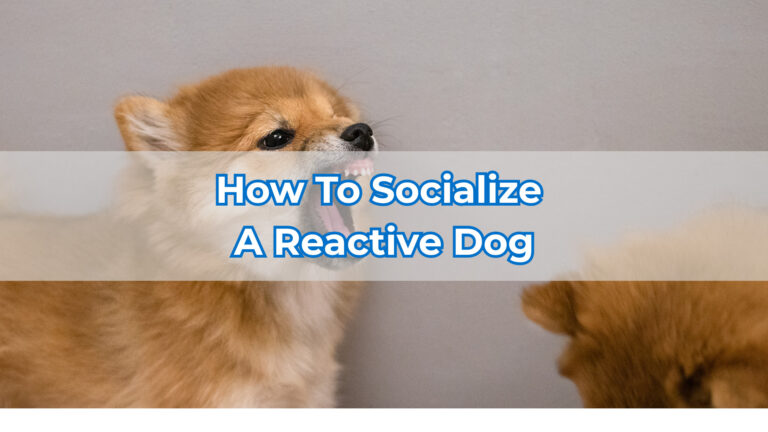
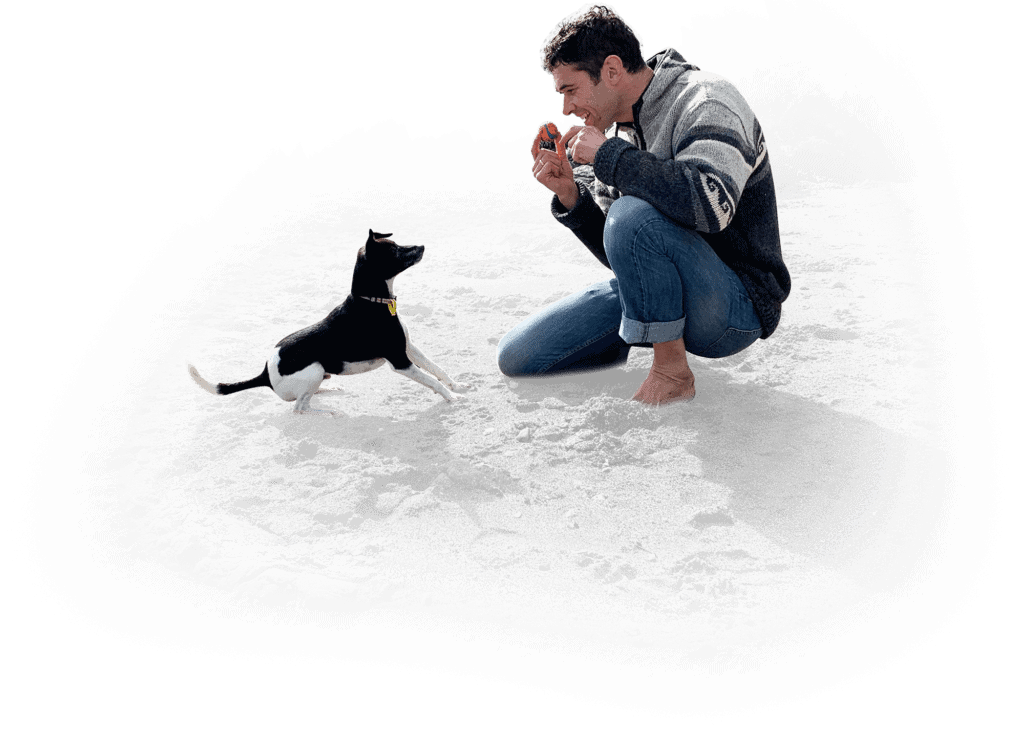
If you have a dog who’s overprotective during walks, it’s because they’ve taken on the burden of being the pack leader. Your dog doesn’t believe you are capable of handling the environment yourself. They feel an enormous amount of pressure to step up, watch your back, and neutralize every perceived threat. Until you show them that you are the one in charge, your overprotective dog can’t relax and simply enjoy being a dog.
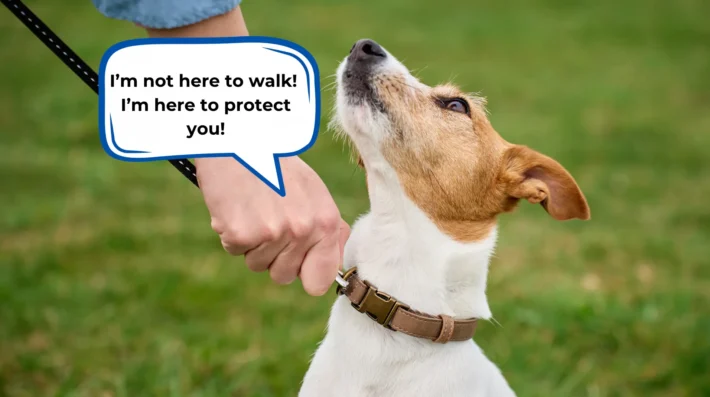
We all have a vision of the perfect stroll: our dogs socializing, exploring, and simply enjoying the fresh air. But for many, the reality is far more stressful. Instead of a relaxed companion, you have a dog overprotective during walks.
You see it in their body language—they are constantly scanning the horizon, a dog on guard during walks who views every stranger as a threat and every approaching pup as an intruder. When they bark or lunge, it’s not because they’re “mean”; it’s because they are stuck in a state of high alert.
You might wonder, “Why is my dog acting this way? Have I not shown them they are safe with me?”
The honest answer, based on my experience with over 125,000 dogs, is that your dog hasn’t yet seen enough leadership to trust you with the “big decisions.” This weight of responsibility is exactly what creates an anxious dog outdoors. They aren’t trying to be difficult—they are just overwhelmed.
In this blog, I’ll show you how to shift that burden from their shoulders to yours, so your dog can finally stop working and start enjoying their walk.
Key Takeaways
- Anxious dogs often view the outdoor environment as a series of threats, leading them to stay “on guard” rather than enjoying the walk.
- What looks like overprotective behavior is frequently a manifestation of the dog’s own underlying fear and insecurity.
- The combination of being outdoors and feeling anxious creates a defensive mindset, causing the dog to react proactively to perceived triggers.
Is My Dog Overprotective During Walks?
Is your dog showing signs that they’re overprotective while you’re on walks? Here are the telltale signs that your dog isn’t simply walking with you… they’re watching over you to make sure you’re safe.
Sign #1: Tugging On The Leash
Your dog pulls relentlessly the moment you step outside.
When a dog believes they’re the protector of the pack, they feel the need to go ahead of you, scout the environment, and control the direction of the walk. You assume you have an excited dog, but in reality, you have an anxious dog outdoors that is very protective.
Think about it from your dog’s perspective. A leader doesn’t follow. A leader goes first.
When your dog is tugging on the leash at every turn, they’re telling you: “I need to be up front. I’m in charge of keeping us both safe.” It’s your dog taking their self-appointed job very seriously.
Sign #2: Stopping And Not Listening To Your Commands
When your dog stops dead and stares at something in the distance, completely ignoring you, it’s not stubbornness. It’s not them being difficult. It’s your dog in full protection mode — and in that state, listening to you genuinely feels impossible for them.
Here’s why: if your dog believes they’re the pack leader, then their job is to protect you. Every walk becomes a patrol. The unfamiliar sights, sounds, or movements in the distance are something they feel responsible for assessing and responding to. Their brain locks onto that thing — and you simply stop existing in that moment.
Sign #3: Showing Signs of Restlessness and Inattention
A dog who is meant to enjoy the walk looks tense, uneasy and distracted.
They’re constantly scanning their surroundings. Their eyes dart from one thing to another, and their body stiffens. They can’t settle into a calm, relaxed pace beside you. This restlessness is exhausting for them, and heartbreaking to witness. They’re not enjoying the walk because they are patrolling it.
An overprotective dog cannot truly rest during a walk because resting means dropping their guard, and dropping their guard means danger might slip through. So they stay wound up, tense, and inattentive to anything you’re trying to communicate.
Sign #4: They Bark At Strangers
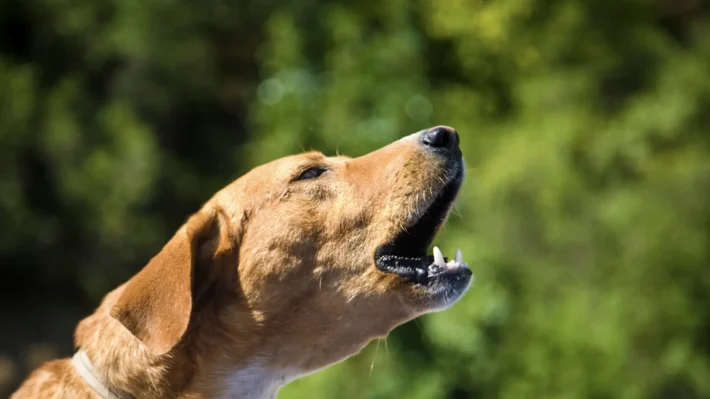
Every unfamiliar face becomes a target.
A jogger passes by, a neighbor waves hello, a child runs across the path… these things make your dog erupt.
Barking happens because your overprotective dog has assessed every stranger as a potential threat to the pack. Their barking sounds are their way of saying, “Stay back. I’m in charge here, and I will defend what’s mine.”
What looks like aggression or rudeness to the outside world is, for your dog, a sincere act of protection. But it becomes a real problem when every walk turns into a series of confrontations with harmless people simply going about their day.
Sign #5: They Don’t Socialize
An overprotective dog struggles to engage positively with the world.
While other dogs sniff around curiously or greet strangers with a wagging tail, your dog hangs back, positions themselves between you and the other person or dog, and refuses to relax.
Their social interactions are guarded, cautious, and sometimes hostile.
For a dog anxious during walks, socializing requires lowering defenses, which feels synonymous with inviting danger. This protective instinct inadvertently builds a wall between them and the rest of the world.
Sign #6: They’re Reactive
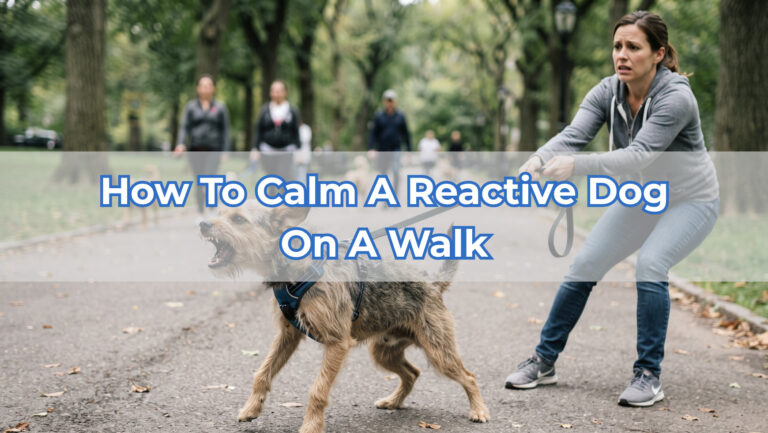
Dog reactivity is an overwhelming response to external stimuli. Reactive dogs overreact to triggers far beyond what the situation actually calls for.
And overprotective dogs? They tend to be highly reactive.
Why? Because they are always on guard. They are always scanning for threats. When you are always looking for danger, you will find it everywhere, even when it isn’t really there. A passing bicycle becomes a threat. Each rustling plastic bag becomes an emergency. Another dog across the street becomes a battle to prevent.
The reactivity isn’t random. It’s the direct result of a dog who has taken on too much responsibility.
Sign #7: They Have Anxious Energy
Before you’ve even left the house, your dog is already spinning, pacing, whining, and working themselves up.
This anxious energy doesn’t disappear once you’re outside. It follows them through the entire walk. An overprotective dog is always mentally “on.” They can’t switch off. They’re perpetually alert, perpetually stressed, and perpetually carrying a burden they were never meant to carry.
This anxiety isn’t a personality flaw. It’s the inevitable consequence of a dog who believes that everything depends on them.
Dog Anxious During Walks: Why You Have A Dog On Guard During Walks
Here’s where it might get a little uncomfortable.
You probably think you’re in charge of your walks because you hold the leash, decide the route, and even give the commands.
But here’s the truth: your dog might not see it that way at all.
And that’s not your fault. The way dogs perceive leadership is fundamentally different from how we as humans understand it. You might be doing everything you think a responsible owner should do, and your dog still walks out that door believing they’re the one in charge.
This is one of the most frustrating realizations for dog owners, because it means the rules you’ve tried to set and the commands you’ve carefully trained aren’t working the way you expected. Not because you failed, but because you may have been solving the wrong problem. Here are the major reasons why your dog is on guard every single time you walk out together.
Reason #1: They Don’t See You As Their Leader
This is the big one, and it underpins everything else.
You might provide the food. The shelter, the warmth, the love, and still, your dog doesn’t see you as their leader.
Why? Because in the world of dog psychology, leadership isn’t just about resources. It’s about something far more primal: the ability to make decisions, project calm confidence, and handle threats without flinching.
Leadership is everything in the wild. Before a dog can relax, let their guard down, and before they can trust that the world is safe, they first ask one question: “Is the leadership role filled? Is there someone in charge who can protect me?”
If the answer is no, they don’t hesitate to step into that role themselves. And once they do, the overprotectiveness, the anxiety, the reactivity, all of it begins.
The frustrating part is that your dog isn’t trying to be difficult. They’re trying to survive because they are wired this way. And until the leadership question is answered clearly and consistently, their guarding behavior will continue, no matter how many commands you issue.
Reason #2: They Think Everyone and Everything Is A Threat
To an overprotective dog, the outside world is full of danger.
Other dogs, strangers, cyclists, children, loud noises, unfamiliar smells – all of it registers as a potential threat that needs to be assessed and, if necessary, neutralized.
This hypersensitivity isn’t irrational from your dog’s point of view. When you believe you’re responsible for someone’s safety, you can’t afford to miss a single threat. So your dog’s brain stays locked into a constant state of threat detection, which means they are never truly at ease during walks.
Every trigger, big or small, demands their full attention. And when they’re fully absorbed in protecting you, your voice simply can’t compete.
Reason #3: They Assume That Your Survival Relies On Their Protection
Your dog genuinely believes that without their watchfulness, something bad could happen to you.
This belief, rooted deep in their instincts, means that the walk is never just a walk. It’s a mission and a responsibility. Protecting you is a duty they take more seriously than almost anything else.
When another dog approaches, your overprotective dog doesn’t think, “Oh, another dog. How interesting.” They think, “Threat detected. I need to act before this gets to my person.”
The weight of that perceived responsibility keeps them in a permanent state of high alert. And a dog in high alert cannot calm down, cannot listen, and cannot enjoy the very walk you both set out on together.
Reason #4: They Can’t Trust You To Protect Them
Here’s a hard truth: if you’re tense, anxious, or stressed on your walk, your dog knows.
Dogs are extraordinarily attuned to human emotion. They can feel the tension in your shoulders, sense the tightness in your grip on the leash, and pick up on the subtle shift in your breathing when you spot a potential problem approaching.
And when they sense that you’re nervous? They draw one conclusion: “My owner can’t handle this. I need to step in.”
Your anxiety doesn’t just affect you. It travels down the leash like a signal, confirming every fear your dog already had. If you don’t project calm confidence, you become, in your dog’s eyes, someone who needs protecting rather than someone who can do the protecting.
The result? Their guard goes up even higher and their overprotectiveness intensifies. And the cycle continues.
How To Calm An Overprotective Dog
The good news is this: overprotectiveness can be addressed. Your dog isn’t broken. They’re just waiting for someone to take charge, and that someone is you.
Here is how you can begin to shift the dynamic on your walks.
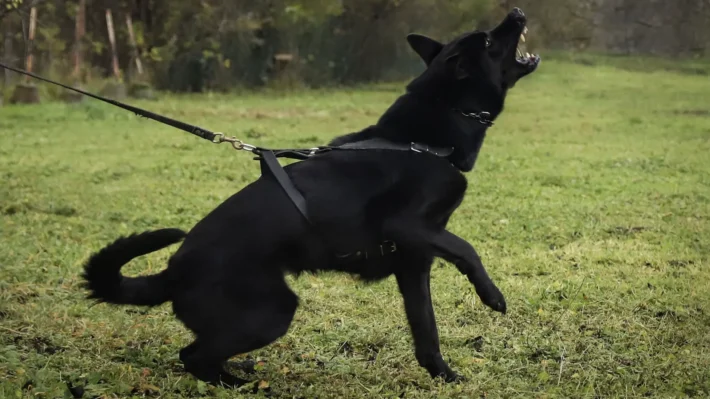
#1: Show Your Overprotective Dog That You’re The Leader
Before you can expect your dog to relax on a walk, you need to answer the question they’re always asking: “Is there a leader here who can protect me?”
That answer has to come from you, and it has to be clear and consistent.
Establishing yourself as the leader doesn’t mean being harsh or domineering. It means being calm, decisive, and reliable. It means showing your dog, through your behavior and your energy, that you have surveyed the situation and everything is under control.
When your dog sees that you are leading confidently, the need for them to step into that role begins to dissolve. The pulling, the barking, the hypervigilance gradually quiets because the job they were desperately trying to do is finally being done by you.
#2: Make Your Dog See That You Can Handle Danger
Your dog on guard during walks is watching how you respond to the things that scare them.
When another dog appears, and you tense up, pull the leash tight, or start anxiously calling their name, you’re sending a message: “This is dangerous. I don’t have this handled.”
But when you stay calm, give a clear signal to move on, and don’t make a scene, you’re sending a completely different message: “I see that. It’s not a problem. Follow me.”
The more consistently you respond to perceived threats with calm authority, the more your dog begins to trust that you can manage the situation. And the more they trust that, the less they feel the need to manage it themselves.
This doesn’t happen overnight. But every calm response you model teaches your dog something new about your capability as a leader.
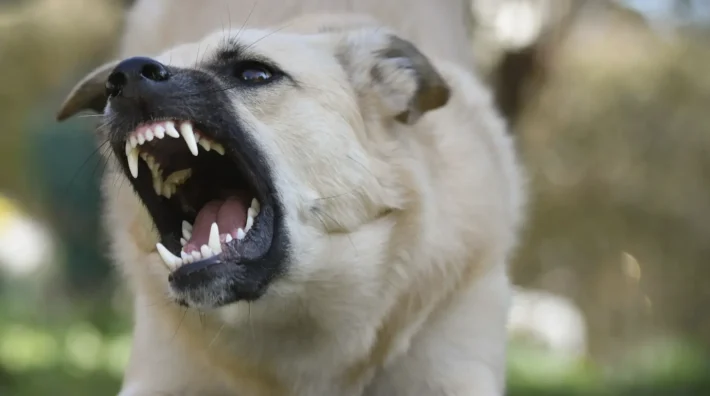
#3: Show Calm Energy
Your energy is one of the most powerful tools you have.
A tense, anxious owner produces a tense, anxious dog. But a calm, grounded owner? They produce a calmer dog.
This is not about pretending everything is fine. It’s about genuinely cultivating the kind of steady, quiet confidence that tells your dog: “I’ve got this.”
Before you even walk out the door, check in with yourself. Are you bracing for the walk to go badly? Are you already anticipating conflict? Your dog will sense that anticipation, and it will set the tone for everything that follows.
Take a breath. Relax your grip on the leash. Move at a pace that says you’re in charge of this adventure, not just along for the ride.
#4: You’re Not Swayed By Your Dog’s Anxiety
Your dog anxious during walks might insist that danger is lurking around every corner.
They might bark, lunge, whine, or freeze to tell you that something is wrong. And in those moments, your instinct might be to react, to apologize to passersby, to jerk the leash, to try to soothe them, or to simply give in and turn back.
But here’s what that communicates to your dog: “You were right. That was dangerous. Good thing you were on guard.”
The most powerful thing you can do is stay steady. Don’t mirror your dog’s panic. Don’t reward the reaction with heightened energy of your own. Acknowledge their concern, and then show them through your calm, consistent behavior that you’ve assessed the situation and everything is fine.
Your dog needs to learn that you won’t be rattled. That nothing can shake your calm authority. When they see that again and again, they gradually stop trying to protect you from things that they don’t need protecting against.
Anxious Dog Outdoors: How to Make Your Protective Dog Trust You
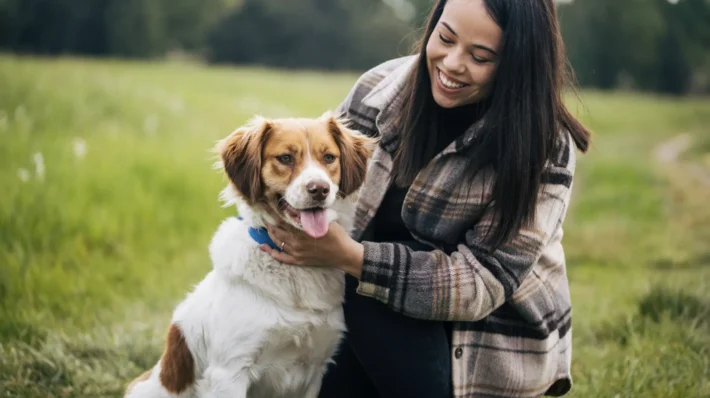
Calming an overprotective dog isn’t just about managing individual moments on a walk. It’s about building something deeper: genuine trust.
And trust doesn’t come from commands. It comes from leadership.
This is the heart of The Dog Calming Code™, a training approach built on one foundational insight: a dog who thinks they’re in charge is a dog that cannot calm down.
The Dog Calming Code™ teaches you how to establish yourself as your dog’s calm, capable leader, not just on walks, but in every area of your dog’s life. Because true leadership isn’t compartmentalized. It doesn’t just switch on when you grab the leash and switch off when you come home.
Your dog is watching you all the time. During feeding. During greetings. During moments of uncertainty. They are constantly asking: “Is this person someone I can trust to lead me?”
The Dog Calming Code™ answers that question through the Five Golden Rules of Leadership.
Rule #1: Feeding
How and when you feed your dog is one of the earliest and most consistent ways you establish your leadership role. The leader controls the food. This isn’t about being harsh or withholding; it’s about communicating through one of the most primal channels your dog understands.
Rule #2: Greeting and Attention
How you respond when your dog demands attention shapes their understanding of who is in charge. Delayed acknowledgment, where you choose when to give affection rather than responding to every demand, is a subtle but powerful leadership signal.
Rule #3: Obedience and Following Your Lead
Once your dog sees you as their leader in the home, commands begin to carry real weight. They listen not because they have to, but because they trust you.
Rule #4: Dealing With Danger
This is perhaps the most directly relevant rule for overprotective dogs. When your dog perceives a threat, how you respond tells them everything about your leadership capability. If you take control calmly and confidently, you prove that the threat is handled. You relieve your dog of the burden of doing it for you.
Rule #5: Walks
The walk is where all of this leadership comes together. Your dog should be following you, physically and psychologically. Who leads the walk communicates who leads the pack.
What makes the Dog Calming Code™ so effective is that it works across all of these areas simultaneously. When your dog experiences consistent, calm leadership in every area of their life, they begin to relax at a foundational level. The constant hypervigilance softens. The overprotectiveness eases. They no longer feel the pressure of believing everything depends on them.
Why Your Leadership Is More Important Than Your Commands
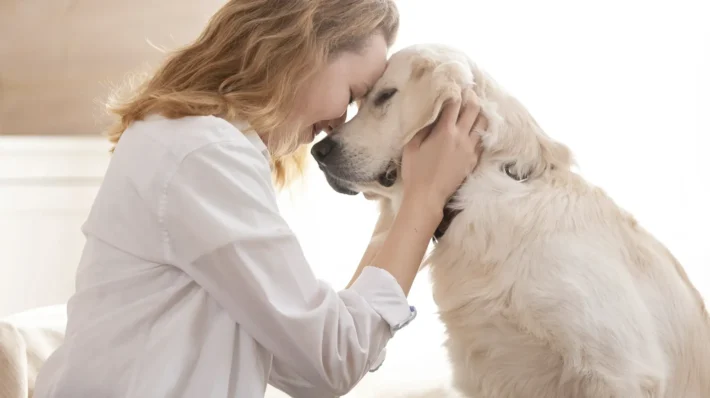
Here is something worth sitting with: you can know every command in the book. You can have perfect timing for treats. Your dog can have a well-fitted harness and the ideal leash length. And still, if your dog doesn’t see you as their leader, none of it will work outside.
Commands have power when the relationship behind them carries authority. But if your dog has already decided they are the one in charge, your command is just noise.
Think of it this way: if a colleague tried to tell you what to do while you believed you outranked them, you wouldn’t just comply because they asked nicely. You’d need to see evidence that they had the authority, the capability, and the calm confidence to lead.
Your dog on guard during walks operates the same way.
Once your dog genuinely sees you as their calm, capable leader, something remarkable happens: they stop needing to be told. They follow your energy, and they look to you for guidance instead of taking matters into their own paws. A glance from you carries more weight than a shouted command ever could.
Commands become effective when leadership is already established. Not the other way around.
This is why so many dog owners feel stuck, trying harder and harder with training techniques while the underlying dynamic never changes. The commands aren’t the problem – the leadership gap is.
The Dog Calming Code™ Will Help You Become That Trustworthy Leader
If your dog is overprotective on walks, barking at strangers, pulling relentlessly, and unable to calm down, the answer isn’t stricter commands or more treats.
The answer is becoming the leader your dog has been waiting for.
The Dog Calming Code™ was built for exactly this. It has helped over 100,000 dog owners finally understand why their dogs behave the way they do, and more importantly, what to do about it.
It works because it addresses the root cause. Not the symptoms.
Your dog doesn’t need to be forced into calmness. They need to be given permission to relax, and that permission only comes from a leader they trust.
When you use The Dog Calming Code™ and apply the Five Golden Rules consistently, your dog begins to see you differently. The constant anxiety begins to lift, and the hypervigilance on walks softens. The barking at strangers, the lunging, the overprotectiveness… these behaviors begin to fade because the reason for them is gone.
They no longer have to protect you. Because now, you’re protecting them.
And that changes everything.
In my free webinar, I talk more about The Dog Calming Code™ and The Five Golden Rules of dog leadership. Don’t miss this webinar – save your seat to get the best strategies for free!

~Doggy Dan 🙂