The Pack Leader Theory (sometimes referred to as the Alpha Theory, or Dominance Theory) in dog training is always a controversial topic. The main reason? Most audiences claim it’s debunked and no longer effective in training dogs.
But is it?
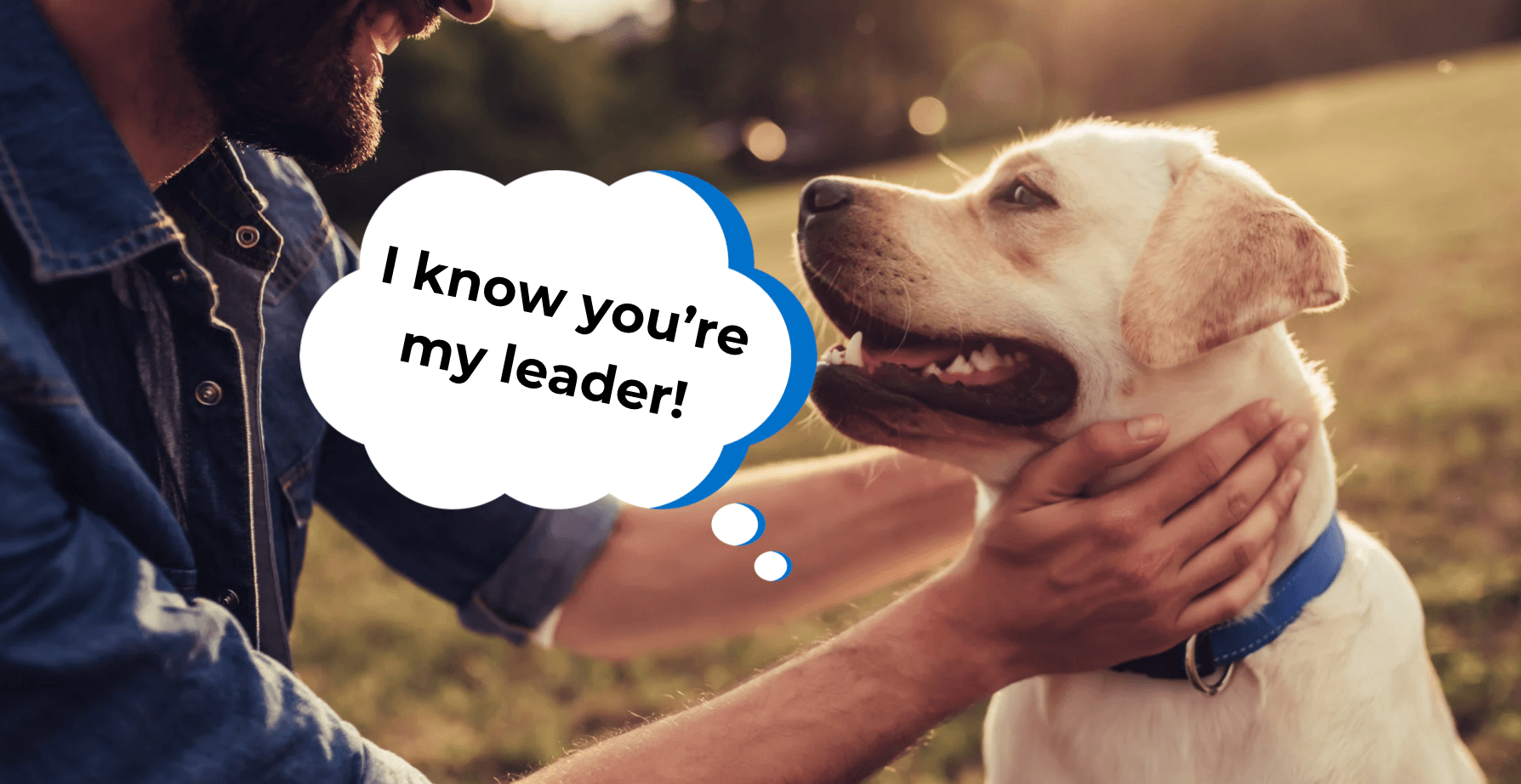
In my years as the beloved Doggy Dan, I have found immense success in the training style I teach my clients: Establish outstanding leadership your dog can trust, and the rest will fall into place.
But why is the training principle that helps dog behavour improve so dramatically, now criticized and dismissed?
In this blog, we will talk about why the Pack Leader Theory is getting so much flack, the misinformation attached to it, and how you can use it to SEE TRANSFORMATION in your dog.
Key Topics
- The Pack Leader Theory, although criticized, remains effective and crucial in dog training, emphasizing the importance of establishing trustworthy leadership for dogs.
- Research by biologist David Mech reveals that while the term “alpha” may be outdated, the concept of pack leaders as loving parental figures is fundamental to wolf and dog behavior
- Without effective leadership, relying solely on rewards and incentives like clickers and treats can lead to challenges in dog training, emphasizing the necessity of leadership in addressing behavioral issues and ensuring long-lasting results.
Table Of Contents
The Pack Leader Theory in Dog Training: Effective BUT Misunderstood
Prior to the mid-20th century, it was largely believed that wolf packs were led by an “alpha male”. This suggested they were governed by a merciless dictator, lending itself to a shorthand for a kind of dominant masculinity.
But in recent years wildlife biologists have largely dropped the term “alpha.” In the wild, researchers have found that most wolf packs are simply families, led by a breeding pair, and bloody duels for supremacy are rare.
It’s worth noting that the term “Alpha” simply refers to the leader. An uncle may become a “Beta” wolf who takes care of the pups when Mum and Dad are away hunting for example, and the wolf at the bottom of the pack who eats last and sometimes gets picked on, is referred to as the “Omega” (the last letter of the Greek alphabet).
JOIN MY FREE REACTIVITY CLASSThankfully, more extensive research on the topic of wolf hierarchy was conducted by American biologist and wolf behavior expert David Mech. He began his studies in 1986 by watching a pack of wild wolves in natural settings on Ellesmere Island in Northwest Canada. His 13 Summers spent there, carefully observing the pack’s interactions, brought a different picture to the table.
David Mech—a senior research scientist at the U.S. Geological Survey—proved that with wolves:
- There are Pack Leaders: a breeding pair,
- Acknowledges they are the ‘dominant pair’ (where the word ‘dominant’ is more a reflection of leadership as opposed to bullying-type behaviors),
- They operate in a hierarchy with leaders and followers,
- The leaders lead in a loving parental way.
Basically he’s saying that within a pack of wolves there is not really an “alpha male”, but there is a distinct parental pair that leads, and the rest of the pack follows.
This is hard-wired into the wolve’s DNA, and because dogs share 99.99% of their DNA with wolves, it applies to our domesticated dogs too.
This means that our dogs have a very strong basic instinct to either be a leader, or be a follower. Wolves act as a coordinated unit, and therefore, our dogs know that SOMEONE has to be in charge. If they don’t see us behaving like Mama or Papa wolf, then they will feel OBLIGATED to take on the role of leader. Believe me, they don’t want the job!
For example, consider if you were thrown into the wilderness and were responsible for taking care of a pack of wolves… How would you feel?
Well, I don’t know how to hunt, I can’t run fast enough to catch a deer, and I can’t find water with my nose. I’d be pretty stressed out. I am responsible for caring for these wolves and I am simply not up to the task. This is how many of our dogs feel in our human world when we don’t pick up this leadership role for them. They try their best to be good leaders, but in our eyes, they consistently exhibit unwanted behavior. That’s because their wolf-style leadership behaviors in the wild simply don’t fit into our human world.
“What would be the value of calling a human father the alpha male?” says David Mech, “He’s just the father of the family. And that’s exactly the way it is with wolves.”
So, has the “Pack Leader Theory” been debunked? A quick answer: NO.
(I talk more about this in the video below.)
The term “alpha male” may be outdated (largely due to misinterpretation of the term), but what David Mech observed of wolf packs reveals the very heart of the “Pack Leader Theory:”
- Dogs DON’T thrive under AGGRESSIVE leadership
- Dogs need a trustworthy leader to make decisions
- Leadership MATTERS to dogs
This is all wonderfully true and scientifically proven (read his white paper here).
However there are two problems that have arisen…
First, the outdated word “alpha” has become intertwined with Mech’s proven theory that the pack is led by a parental pair — leading to confusion about what is true and what is not.
Further to this, there were experiments done back in the 1940s whereupon recognising dogs and wolves were so closely related, unrelated captive wolves were observed in an enclosure that was too small. (In the wild they live in families, and are generally spread out to reduce competition over territory and prey.) They saw a significant amount of dominance and aggression, and from this came the practice of bullying, forceful and aggressive training that, sadly, some trainers still practice today. Mech recognized this error of not observing them in their natural environment and has been working hard to correct the resulting dogma that led to these not-so-nice, and potentially damaging, training methods.
It was these earlier incorrect conclusions that have been debunked, not leadership itself.
Second, some people have confused what he said about the “dominant pair.” Yes, they are the leaders of the pack, but they don’t lead through DOMINANCE.
The debunkers have seen the word “dominant” and misunderstood it to mean leaders should lead through overly harsh and aggressive parental behavior — which of course is NOT true.
This is why a lot of dog-lovers don’t like this theory — because they mistakenly think it promotes aggressive, dominant force over our dogs — which is utter rubbish. They’ve associated “pack leader theory” with dominant and aggressive training, and thrown the baby out with the bathwater, so to speak, mistakenly discarding the fact that there is a hierarchy of leaders and followers within wolves and dogs, along with correctly discarding aggressive training methods.
Unfortunately, Mech’s claims have been misinterpreted by many dog training professionals as if dogs don’t really — ever — need a leader.
I feel there must be some cognitive dissonance involved here, as personally, in my decades of dog training, I’ve rarely entered a home with two or more dogs where the owners can’t immediately tell me which of their dogs is the boss.
And isn’t it true that even we — human beings — will only thrive with exemplary leadership?
It seems to me, a little naive to assume our dogs — one of the smartest animal breeds — will change with zero leadership, and a load of cheese and clickers.
Why Not Using the Pack Leader Theory is Dangerous in Dog Training
Let me introduce this concept through a story.
Imagine going on a hike with your kids. They’re rowdy, excited, and want to run and play.
But you know better. Even though the hike has breathtaking scenery, you’ve been through the trail enough to know you need to guide your kids carefully so they won’t get into any danger.
You can’t simply say “Well, kids, IF you follow me, you’ll get cheese. If you don’t, I’ll punish you” then you go your merry way, no longer thinking about what decisions will be made.
And just like every classic story, we know that kids will choose fun without proper guidance. And fun doesn’t always mean safety.
Kids don’t understand why they shouldn’t get too close to the cliff or avoid some cute-looking insects.
YOU — their parent, the decision-maker — should guide them on what to do.
It’s the same with dogs.
LEARN THE DOG CALMING CODE (FOR FREE)Dogs don’t understand why they shouldn’t chew your shoes or electrical wires, or whether they should bark at the stranger bringing a package to your front door.
They need a leader to show them the do’s and don’ts in order to keep them safe, just as Mama wolf will nudge her pup away from a poisonous plant. And that’s why YOU’RE THERE.
Without Leadership, You’ll Rely On Clickers and Cheese… Which Can Only Work for a While
I’m all for rewards and incentives; I know how it can make dogs listen and pay attention.
But how far can cheese and clickers work if they don’t see you as the leader they must obey and follow?
It’s like being in a company/business. Sure, bonuses and incentives are nice to have. But if your boss is always absent, or they don’t take the time to guide you when you’re having a hard time, how long will you stay?

Not using the pack theory is dangerous because if you don’t become the leader your dog knows THEY MUST FOLLOW, and the clickers and cheese don’t work anymore, what else can you do?
Unfortunately, several dog owners fall into this trap of thinking, “Oh, so rewards don’t work anymore. My dog has become difficult to discipline. How about I try shock collars and punishments?”
And from experience, shock collars and punishment make things worse.
Don’t fall into that trap.
Without The Pack Theory, You Don’t Get to the Heart of Dog Psychology… And Dogs Won’t Change
If you want dog training to work, you must think like a dog. You must get into their psyche to make them say, “Ohh, so that’s how I should do it.”
The only way for training to work is to go back to the observations from David Mech: Leadership matters to dogs.
If you become a leader in your dog’s eyes (something I emphasize in my training and online program, The Dog Calming Code™), THEY WILL FOLLOW. They will obey.
You’re the leader. You’re putting down rules. Once dogs will see the rules set by you — their leader — they will follow.
This is how dog psychology works, and it’s something cheese and clickers cannot copy.
With cheese and clickers, you’re activating the reward stimuli that make dogs obey for a while.
But if your dog doesn’t see you as the leader, then our dogs will make the choice between sitting for a treat, versus barking at the stranger – because they are deciding if they have a more important job to do.
… so this is the crux of the matter. A dog who feels they are responsible for the family will always make the decision they feel keeps their family safe. Unfortunately, in our human world, the decision the dog makes is not the decision we want the dog to make, and this is the cause of nearly all dog behavior problems.
Therefore, the ONLY WAY TO REALLY CHANGE OUR DOG’S BEHAVIOR is to relieve them of their leadership position (the role they really don’t want anyway).
FREE REACTIVITY MASTERCLASSWhy The Pack Leader Theory Is What You Need in Dog Training
The Pack Leader Theory Clicks With Dog Psychology
Understanding the essence of the Pack Theory is crucial in comprehending the intricate workings of dog psychology.
This theory resonates deeply with the fundamental instincts and behaviors ingrained in our dogs.
By acknowledging and embracing the principles of pack dynamics, we get real insights into how dogs perceive and respond to leadership within their social structures.
It’s Founded in Loving Leadership, Not Aggression
Contrary to common misconceptions, the Pack Leader Theory emphasizes nurturing relationships based on trust, respect, and affection rather than coercion and aversive training methods.
At its core, it advocates for compassionate and empathetic leadership between the alpha pack leader and the followers.
By embodying the qualities of a benevolent leader, we create a supportive environment where dogs feel secure, valued, and motivated to learn and grow.
The Pack Leader Theory Gives Long-term, Long-lasting Results
One of the most compelling aspects of the Pack Leader Theory is its ability to yield enduring transformations in dogs.
By establishing ourselves as reliable guides and mentors for our dogs, we lay the foundation for sustainable progress and development.
By consistently applying leadership principles, we empower our dogs to make positive choices and adapt to various challenges confidently and resiliently.
The results speak for themselves – a well-balanced and contented dog who thrives in our care for years to come.
How I Incorporate the Pack Leader Theory to My Training
Throughout my years as a dog trainer, people always ask me, “Hey Dan, the Pack Leader Theory has been debunked for years, and you still base your training there?”
I usually smile and say I do. The successes of over 90,000 dogs and dog owners are a testament that my method works.
Here are some ways I incorporate the Pack Leadership Theory into my dog training (and why it works).
GET MY 5 GOLDEN RULES FOR FREE!I Help Dog Owners Show Their Dogs Who’s In Charge
For dogs, it matters that leadership is in place. Your dog will immediately assume leadership when they see no leadership has been established.
When your dog thinks they’re the leader, you can’t easily expect them to listen to you because they believe they are in charge, and what you want doesn’t really matter to them.
This leadership role is why your dog needs to pay more attention, or why it’s so hard for them to respond to training. It’s not because they’re inherently disobedient; they just don’t see a reason to respond to you.
When dog owners struggling with dog obedience come to me, I introduce to them the concept of leadership theory that’s founded in love and gentleness but firm in showing to the dogs in charge.
My online dog training program, The Dog Calming Code™, introduces the Five Golden Rules to dog leadership.
The training style features showing your dog authority without aggression or harsh techniques.
I Guide Dog Owners in Reinforcing Discipline That Doesn’t Include Hitting, Shouting, Or Scaring Dogs
Those professional dog trainers who misunderstood the Pack Leader Theory think everything is done by force.
When you lead with gentleness and consistency, and when you show your dog they can trust you, you can reinforce discipline.
Like parenting, we need to be firm, loving, wise, and gentle.
My Training Style Educates Dog Owners on The Right Approach to Positive Reinforcement and Timeouts
If I believe in the Pack Leader Theory, does that mean I disagree that rewards and timeouts work?
Not at all!
Rewards and timeouts are valuable components of our dog training toolkit… but without leadership, these tools yield only limited and short-term results.
I support what David Mech said — dogs that lead the pack aren’t the ones leading with aggression.
But the lines can get blurry, and some dog trainers — because cheese and clickers don’t do the trick anymore — feel the need to go for the harsh options because nothing seems to work.
I want to stop aversive training methods by basically saying: we don’t need extreme punishments or pain. If our dog knows we’re the leaders who protect and make decisions for them, WE CAN BE ASSURED THEY WILL LISTEN TO US.
I Teach Them The Power of Leadership in Solving ALL Dog Behavior Issues
Most dog behavior problems can be traced back to leadership issues.
Take, for example, separation anxiety. It’s not a boredom issue, as most dog trainers will have you think. Some trainers promote only using rewards and punishment as remedy for separation anxiety issues.
REVERSE REACTIVITY (FREE WEB CLASS)However, if you’ve used everything and nothing works, your dog is likely dealing with leadership issues. Most of the time, the underlying problem is the dog thinks they’re in charge.
And because they think they’re in charge, they take the role of the protector seriously. Thus, they panic when you’re out of their sight. It’s like you realizing your child has walked out into the street and you’re locked in the house — you would be panicking too!
Leadership is always a big deal for dogs, and if you ignore it and do not take it into consideration, training your dog will become more challenging.
The Pack Leader Theory Is Not About Aggression and Abusive Dominance
When done right, putting leadership roles in place can transform your dog in ways clickers and cheese can never replicate.
If you want to learn how to use the Pack Leader Theory, check out The Dog Calming Code.

~Doggy Dan