What does heel mean in dog training? In this blog, you’ll find the effective strategies to help you quickly master this powerful command.
You’ve got your furry best friend by your side, ready to take on the world! Of course, you want them to learn some cool tricks, maybe even fetch you a drink from the fridge (a dog owner can dream, right?).
But amidst all the fun stuff, there’s one command that stands out as a real game-changer: “heel.”
Sure, your dog might not be a master at fetch, and that’s OK. But if they haven’t mastered walking politely by your side when you ask them to, well, that can turn a relaxing stroll into a wrestling match!
Helping your dog master the heel command during your training sessions can create a HUGE difference in the training process.
Read on to learn more.
Key Takeaways
- Heel training is one of the simple obedience commands your dog has to know at a young age. Heel training teaches impulse control which can help you take control of your dog even if you are in distracting environments.
- Include “Heel” in your basic obedience commands. This is important once your dog starts to walk with a leash on. This training curbs behavioral issues; especially if you’re outdoors.
- Start your training session away from more distracting environments. Start slow, and gradually increase the training once your dog finds its footing. Reward good behavior with positive reinforcement.
Table of Contents
Definition of The Heel Command
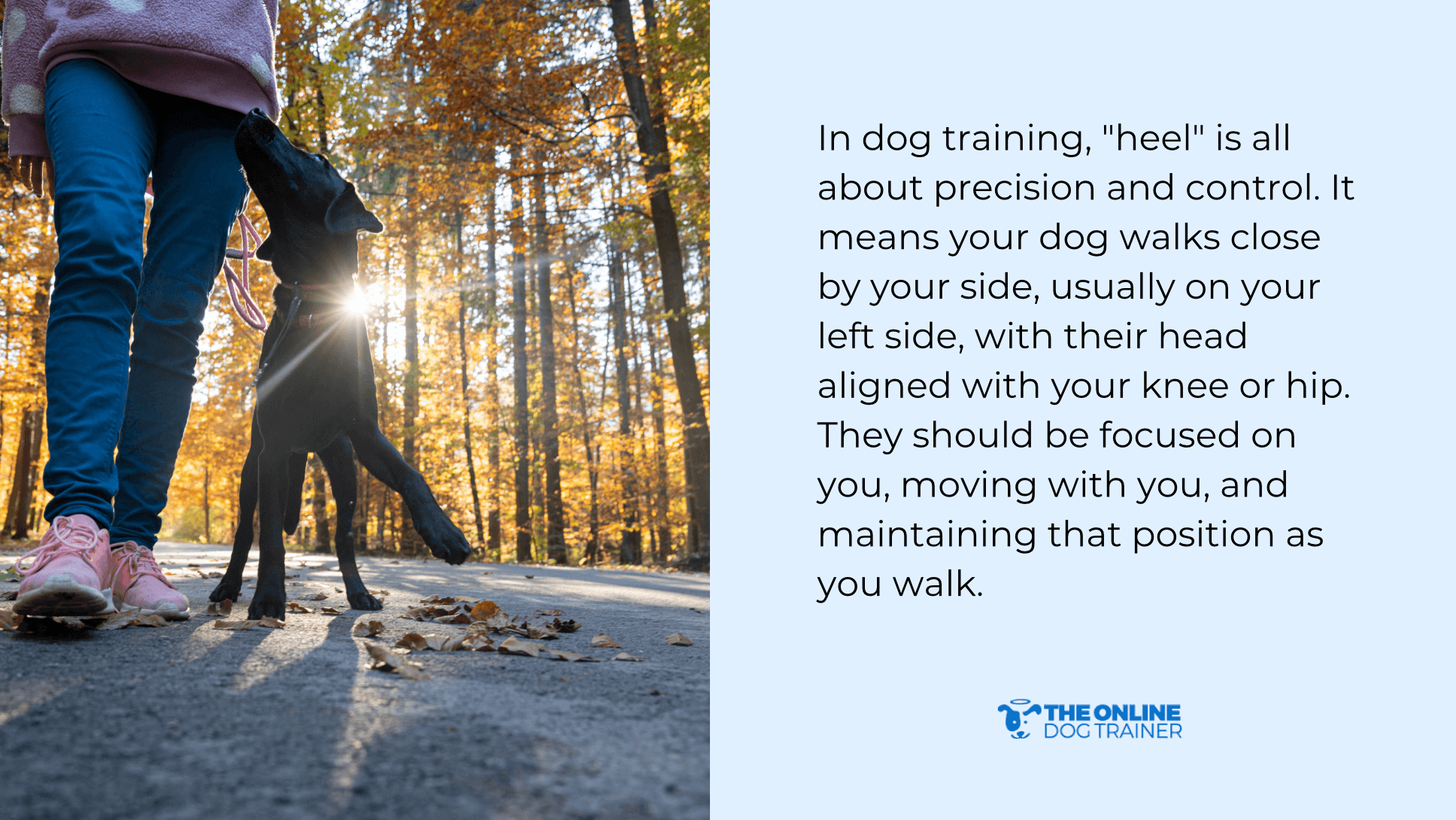
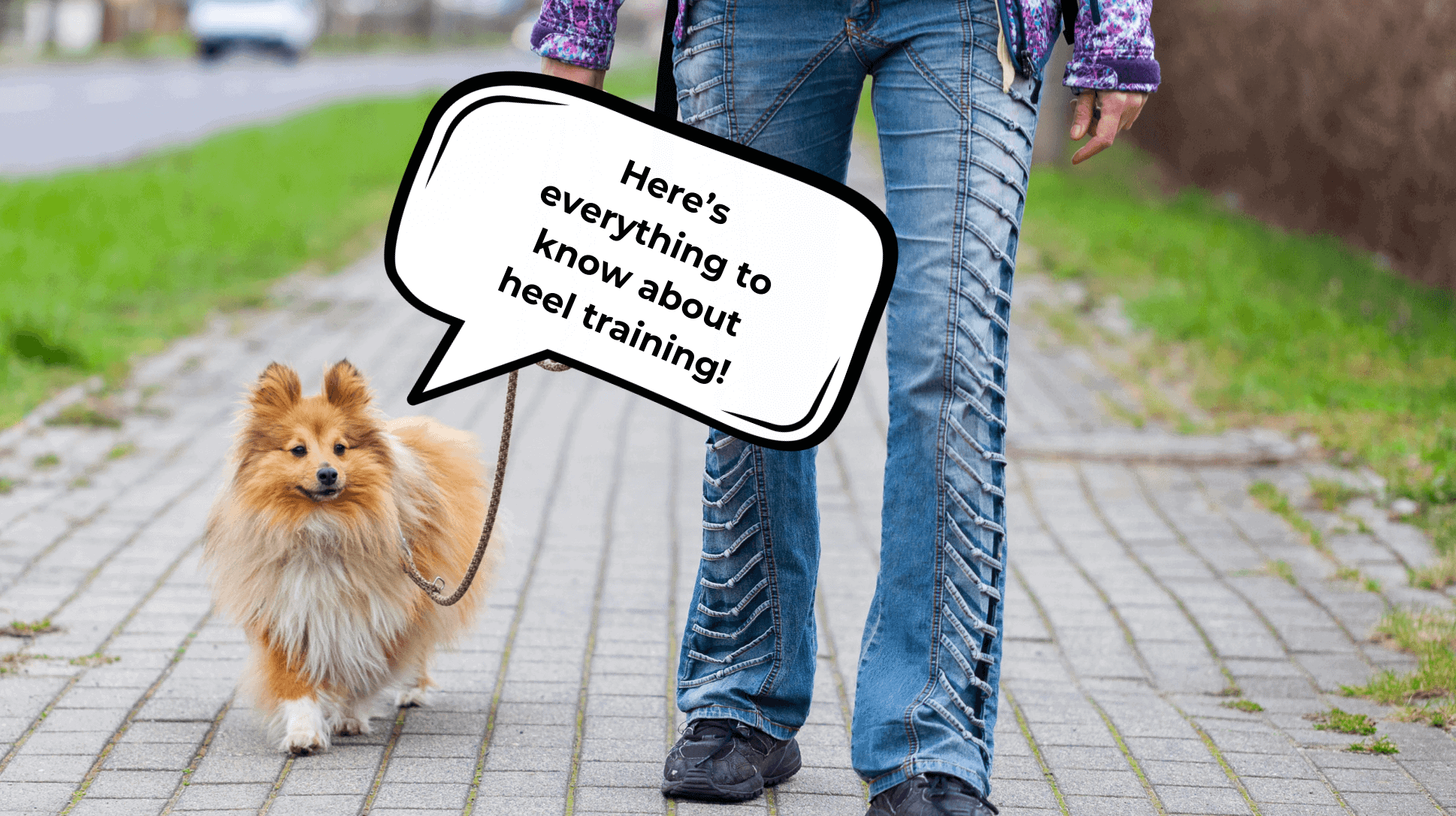
In dog training, “heel” is all about precision and control. It means your dog walks close by your side, usually on your left side, with their head aligned with your knee or hip. They should be focused on you, moving with you, and maintaining that position as you walk.
This is different from loose-leash walking, where your dog has more freedom to explore and sniff around while still keeping the leash slack. It’s also a step beyond casual walking, where your dog might be out in front, lagging behind, or criss-crossing in front of you.
“Heel” is about teaching your dog to walk politely and attentively by your side, like a well-mannered walking partner. It requires more focus and control from your dog, making it a valuable tool for navigating tricky situations and maintaining order during your walks.
Why Is The Heel Command Important?
Why is “heel” such a big deal in dog training? Let’s break it down!
Imagine you’re strolling down the street with your dog. Suddenly, they spot something fascinating maybe a discarded burger wrapper or that irresistible lamppost — and bam, they lunge towards it, pulling you off balance. Or maybe they slam on the brakes to investigate an interesting scent, nearly giving you whiplash. Not fun, right?
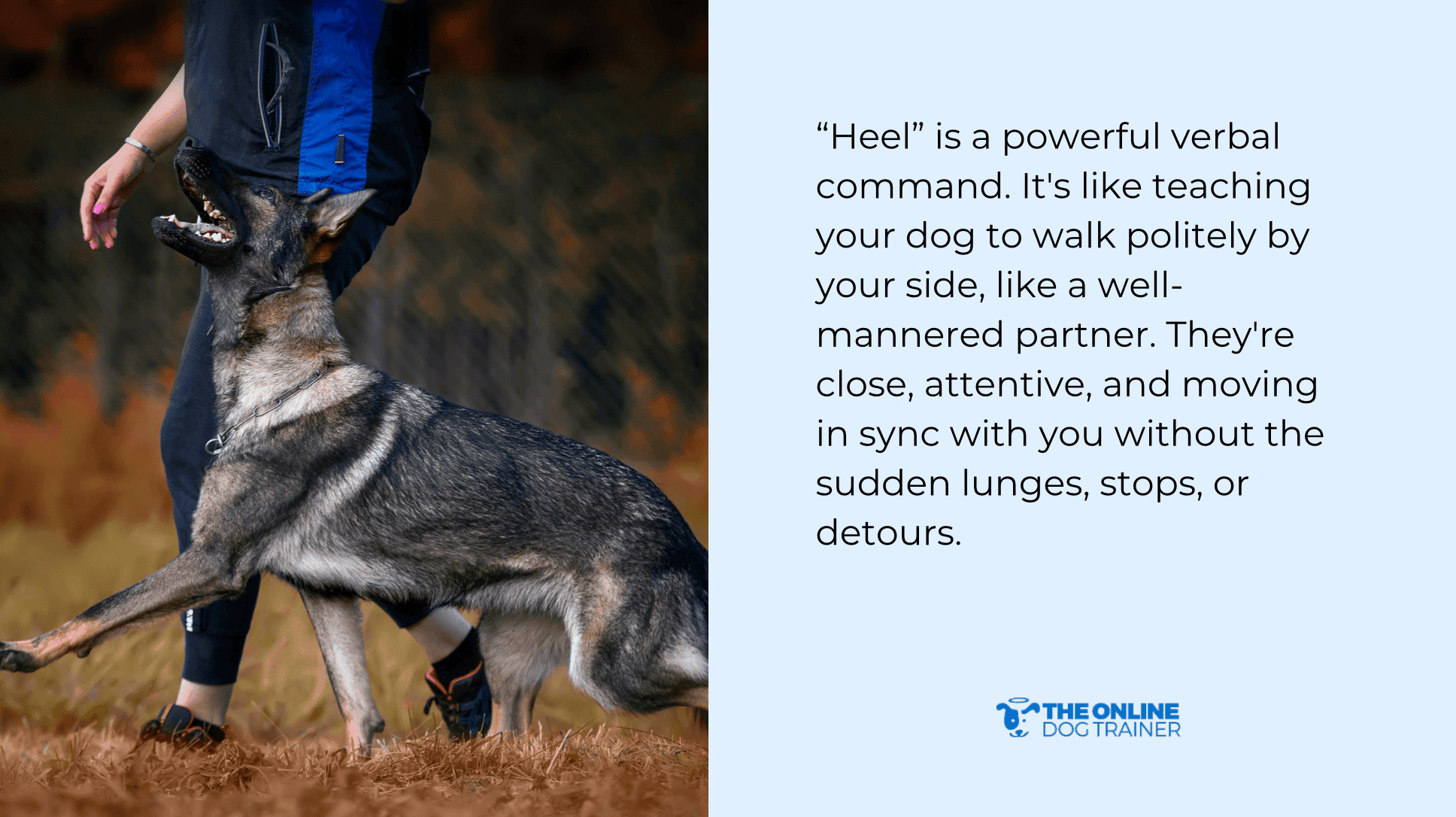
That’s where “heel” comes in. It’s a powerful verbal command. It’s like teaching your dog to walk politely by your side. They’re close, attentive, and moving in sync with you without the sudden lunges, stops, or detours.
Now, this doesn’t mean your dog can never have fun on walks! Think of it like this:
- “Heel” is for structured walking. It’s like training time, where your dog learns to focus and walk politely beside you. It’s great for busy sidewalks, crossing roads, or any situation where you need them close and under control.
- “Social walking” is for relaxed fun. This is where your dog can sniff around, explore, and enjoy a bit more freedom.
The key is to clearly communicate the difference to your dog. You might use a specific command like “heel” or “walk” for structured walking and then give them a release cue like “Okay, go sniff” when it’s time for social walks.
This “contract” between you creates trust and understanding. Your dog learns that there’s a time for focus and a time for fun, and you get the peace of mind knowing you can rely on them to walk politely when needed. It’s a win-win for both of you!
FREE WEBINAR: CONTROL OF THE WALKWhen Should You Start Training The Heel Command?
When can you start teaching your dog the magic of “heel”? The good news is you can begin introducing the foundations of polite walking surprisingly early!
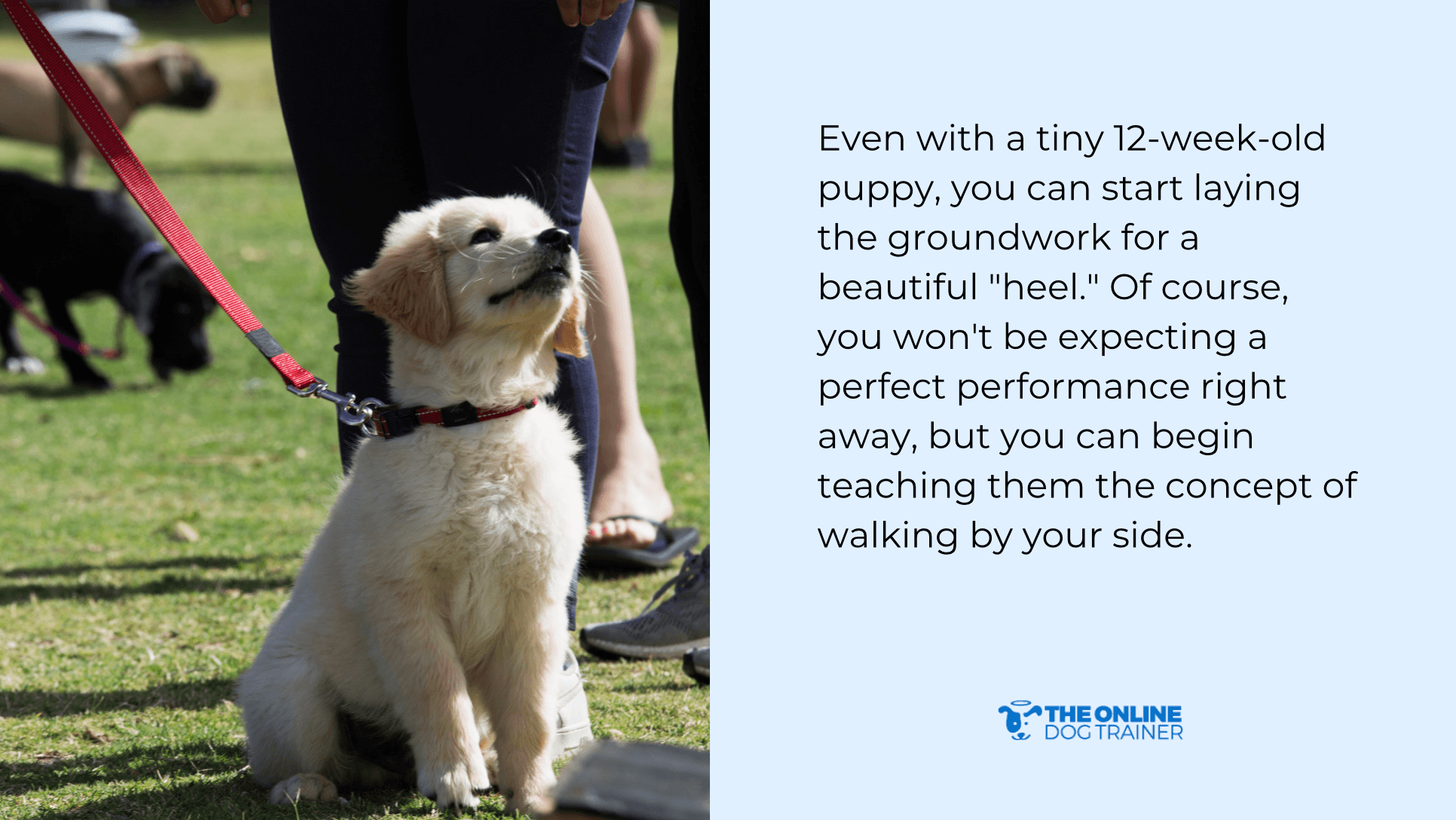
Even with a tiny 12-week-old puppy, you can start laying the groundwork for a beautiful “heel.” Of course, you won’t be expecting a perfect performance right away, but you can begin teaching them the concept of walking by your side.
Here’s the key: tailor your approach to your dog’s age and experience.
- Puppy Training: With young puppies, keep it gentle and fun. Start indoors, without a leash, and use encouragement and rewards to guide them. Think of it as building a positive association with being close to you while walking.
- Adult Dog Training: Older dogs, especially those well-trained dogs that can walk on a leash can begin their “heel” training outside. Gradually introduce them to the concept of walking politely by your side, using positive reinforcement and clear communication.
No matter your dog’s age, a distraction-free environment is crucial for successful “heel” training. This means minimizing things that might pull their attention away, like:
- External distractions: Busy streets, loud noises, other dogs, or exciting smells can all make it harder for your dog to focus on you.
- Internal distractions: Puppies are naturally curious and easily overwhelmed by the world around them. Even the simple act of walking down the street can be a sensory overload!
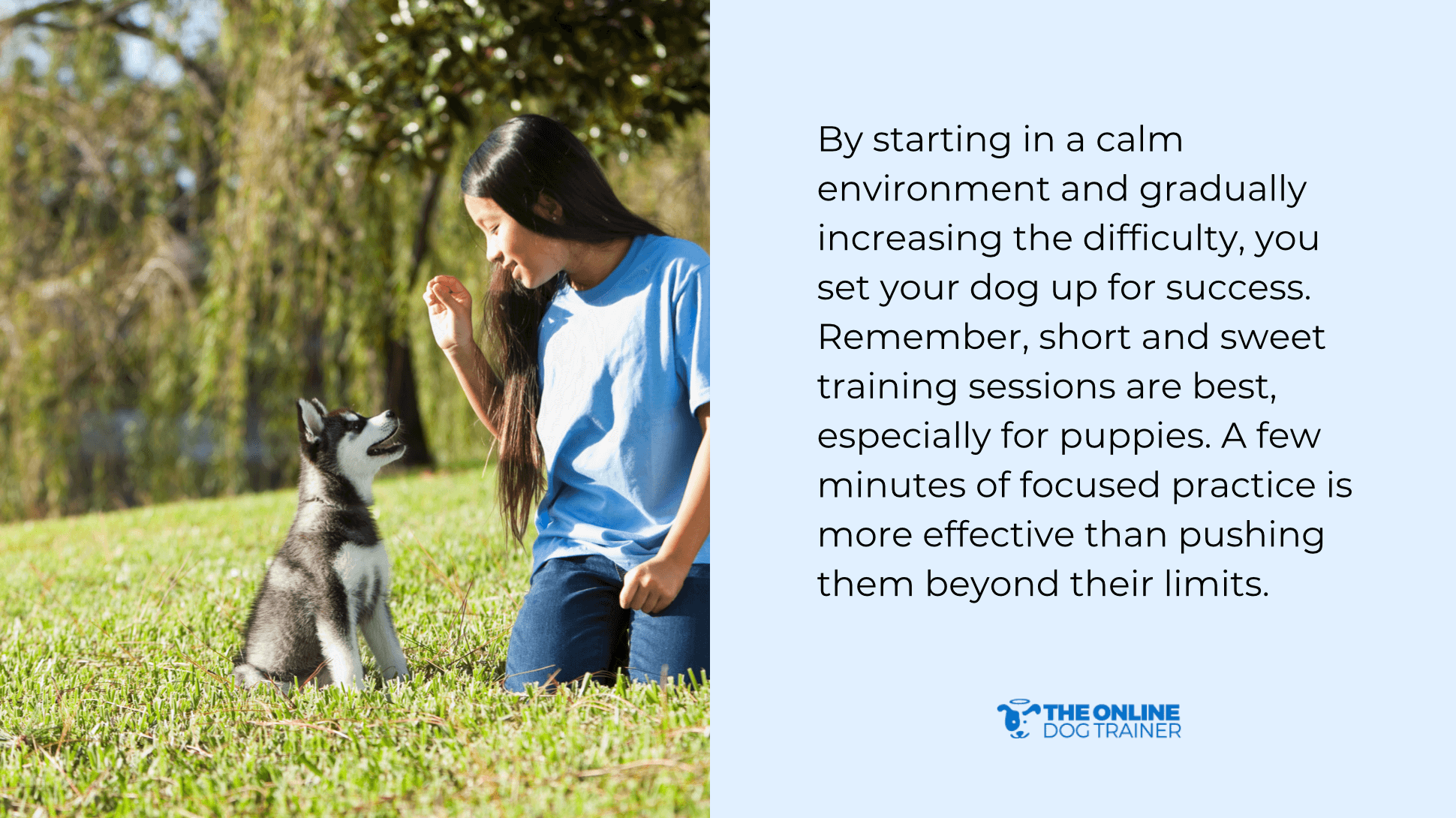
By starting in a calm environment (or in a quiet room) and gradually increasing the difficulty, you set your dog up for success. Remember, short and sweet training sessions are best, especially for puppies. A few minutes of focused practice is more effective than pushing them beyond their limits.
As your dog progresses and their focus improves, you can gradually increase the duration of your walks and introduce them to more challenging environments. With patience and consistency, you’ll be enjoying those picture-perfect “heel” walks in no time!
GET DOGGY DAN'S WALKING RULES FOR FREEHow to Teach Heel Training
While treats aren’t always necessary for dog training, they can be valuable tools for teaching basic commands like “heel.” This guide outlines a clear, step-by-step approach to instill a reliable heel in your canine companion.
Step 1: Introducing the Concept of “Walk”
- Begin in a calm, familiar environment like your home or garden, without a leash, especially for puppies.
- Use a small, soft, and tasty treat like chicken, cheese, or bacon.
- Hold the treat close to your puppy’s nose and say “walk” while gently guiding them to follow your hand beside you. Start with a few steps.
- Pat your thigh and repeat “walk” or “heel” to reinforce the association between the word and the action of walking by your side. Practice correct heel position.
This initial step focuses on creating a positive association with the command and encourages your puppy to stay relaxed while following your lead.
STOP YOUR DOG'S REACTIVITY: FREE WEBINARStep 2: Building Duration
- Gradually increase the distance you walk with your puppy, starting with short distances and gradually extending the time.
- Begin with 3-5 yards, then progress to 10, 20, and eventually up to a minute of continuous healing.
- Be mindful of your dog’s attention span and adjust the session length if they show signs of boredom.
This step aims to build your dog’s trust and patience while reinforcing the desired behavior.
Step 3: Introducing the Leash
- Once your dog understands the concept of heeling, introduce a collar and leash, especially for larger dogs.
- Continue using treats and the “walk” or “heel” command while maintaining the leash connection.
- For small puppies, ensure the collar and leash are lightweight to avoid discomfort or strain.
This step helps your dog adapt to heeling while on a leash, preparing them for walks in various environments.
Step 4: Fading the Treats
- Start reducing the frequency of treats during the heeling exercise.
- Begin by offering treats intermittently, then gradually transition to rewarding only at the end of the walk.
This step encourages your dog to heel out of trust and respect, rather than solely relying on food motivation.
Step 5: Adding Distractions and Varying Environments
- Gradually introduce distractions and practice heeling in different environments to generalize the behavior.
- Continue using the “walk” or “heel” command and keep the sessions engaging and stimulating.
- Avoid pushing your dog beyond their limits and provide breaks to prevent boredom and frustration.
This step helps your dog maintain focus and obedience even with external stimuli, ensuring a reliable heel in any situation.
Important Considerations:
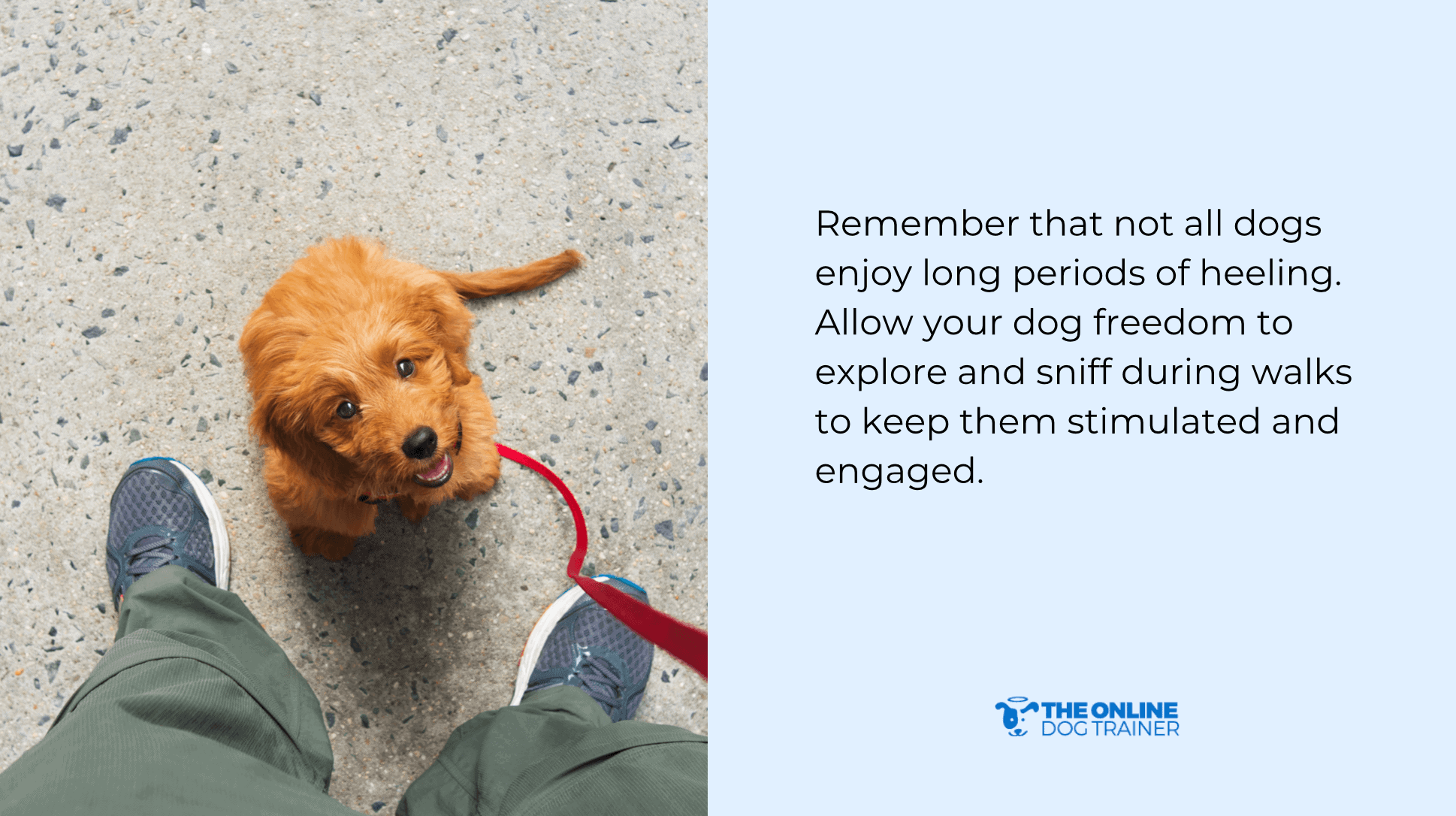
- Remember that not all dogs enjoy long periods of heeling. Allow your dog freedom to explore and sniff during walks to keep them stimulated and engaged.
- Gradually increase the duration and difficulty of heeling exercises to build your dog’s patience and trust.
- Prioritize building a positive relationship with your dog based on trust and understanding.
By following these steps and remaining patient and consistent, you can effectively teach your dog to heel and enjoy pleasant walks together.
JOIN MY FREE REACTIVITY CLASSChallenges in Heel Training
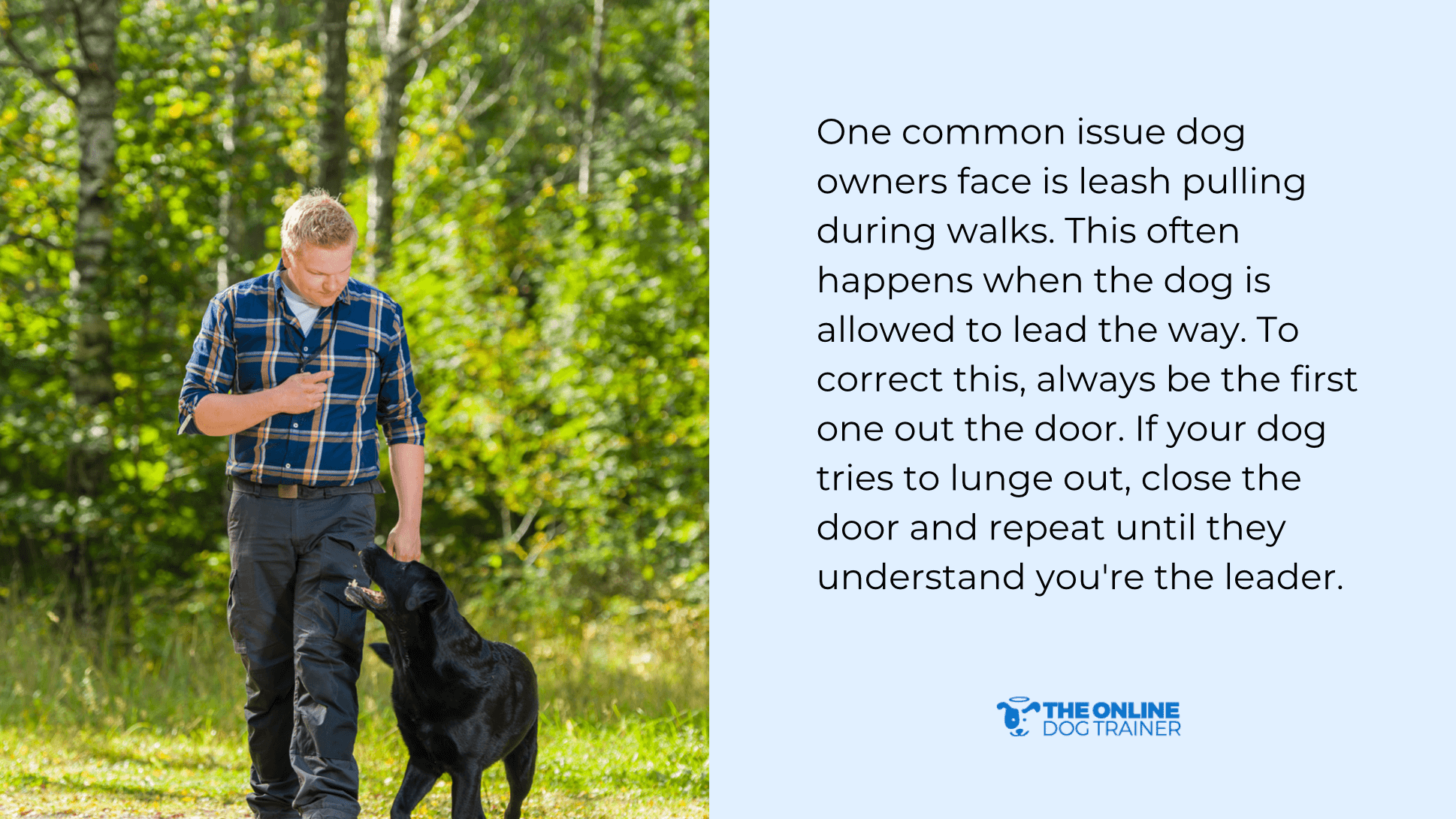
One common issue dog owners face is leash pulling during walks. This often happens when the dog is allowed to lead the way. To correct this, always be the first one out the door. If your dog tries to lunge out, close the door and repeat until they understand you’re the leader.
#1: Distractions and Maintaining Focus
When encountering distractions like other dogs, shift your dog’s line of sight away from the distraction. Walking directly towards another dog can trigger their predatory instincts. Angling away or crossing the road helps them stay calm. You can also offer a treat to redirect their attention.
#2: Handling Stubborn Dogs
Strong-willed or stubborn dogs might resist following commands. This often stems from them believing they’re in charge. To address this, establish clear leadership before walks. This involves training exercises that reinforce your role as a leader.
For more guidance on establishing leadership and addressing specific dog behavior challenges, consider exploring resources like the Dog Calming Code™️. This program offers valuable insights and techniques for effective dog training.
GET THE DOG CALMING CODE FOR FREEChoosing the Right Equipment for Heel Training
Using the right equipment can make a big difference in heel training. Here’s what you should and shouldn’t use:
Avoid:
- Retractable leashes: These leashes have too much give, making it difficult to control your dog’s position.
- Bungee leashes: Similar to retractable leashes, bungee leashes offer too much flexibility and don’t provide the consistent feedback your dog needs.
- Flat collars: Flat collars can hurt your dog’s neck if you have to pull on the leash. They can also cause choking if your dog pulls.
- Head collars/harnesses: While these can control your dog’s head, they often cause discomfort and agitation. Many dogs try to rub them off, indicating they don’t like them.
- Back-clip harnesses: These harnesses actually encourage pulling, as the clip is positioned on the back, allowing the dog to lean into it and pull forward like a sled dog.
Choose:
- Standard leash: A standard, non-flexible leash provides clear communication and control.
- Front-clip harness: This type of harness discourages pulling by redirecting the dog’s forward momentum. When your dog pulls, the front clip turns them around, effectively stopping the pulling.
Recommendation:
For a highly effective front-clip harness, consider the “Doggy Dan No Pull Harness.” It’s available in various sizes to fit different dogs and has received excellent feedback from users. You can find a link to this harness below.
Using Positive Reinforcement
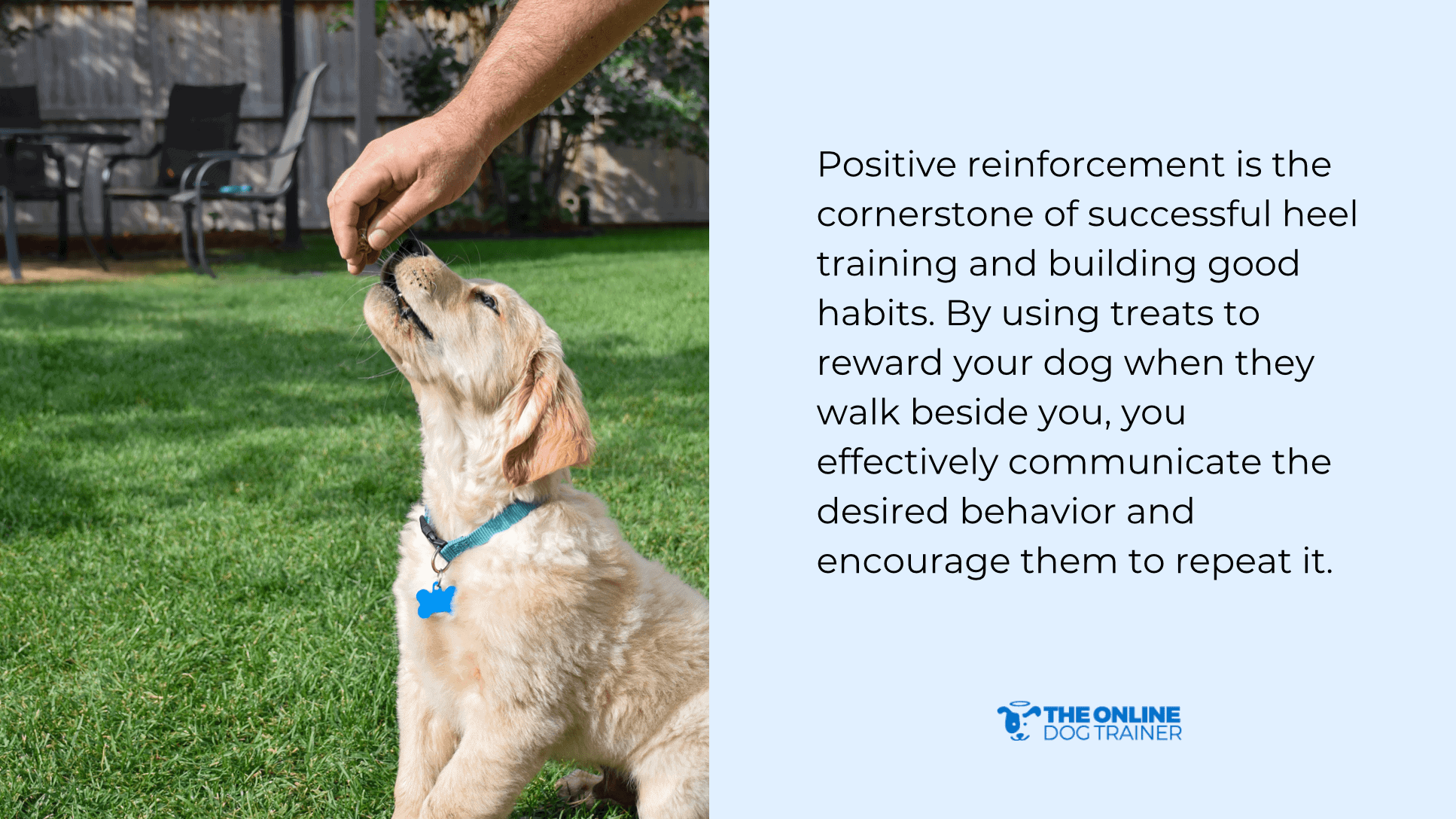
Positive reinforcement is the cornerstone of successful heel training and building good habits. By using treats to reward your dog when they walk beside you, you effectively communicate the desired behavior and encourage them to repeat it.
To maximize learning, aim for frequent short training sessions throughout the day, lasting anywhere from 30 seconds to 2 minutes.
Start simple by practicing in a low-distraction environment like your home or garden. You can even begin without a leash.
The goal is to establish a clear association between the command “heel” and the action of your dog walking with their head aligned with your thigh. Use a treat to lure them into position and gradually increase the distance they walk before rewarding them.
STOP YOUR DOG'S REACTIVITY: FREE CLASSHow Long Will It Take Me To Teach Heel Training?
The time it takes to train a dog to heel varies significantly. Factors like your dog’s age, temperament, and previous training all play a role. A hungry, food-motivated dog will generally learn faster. Your demeanor is also crucial; remaining calm and relaxed will help your dog stay focused.
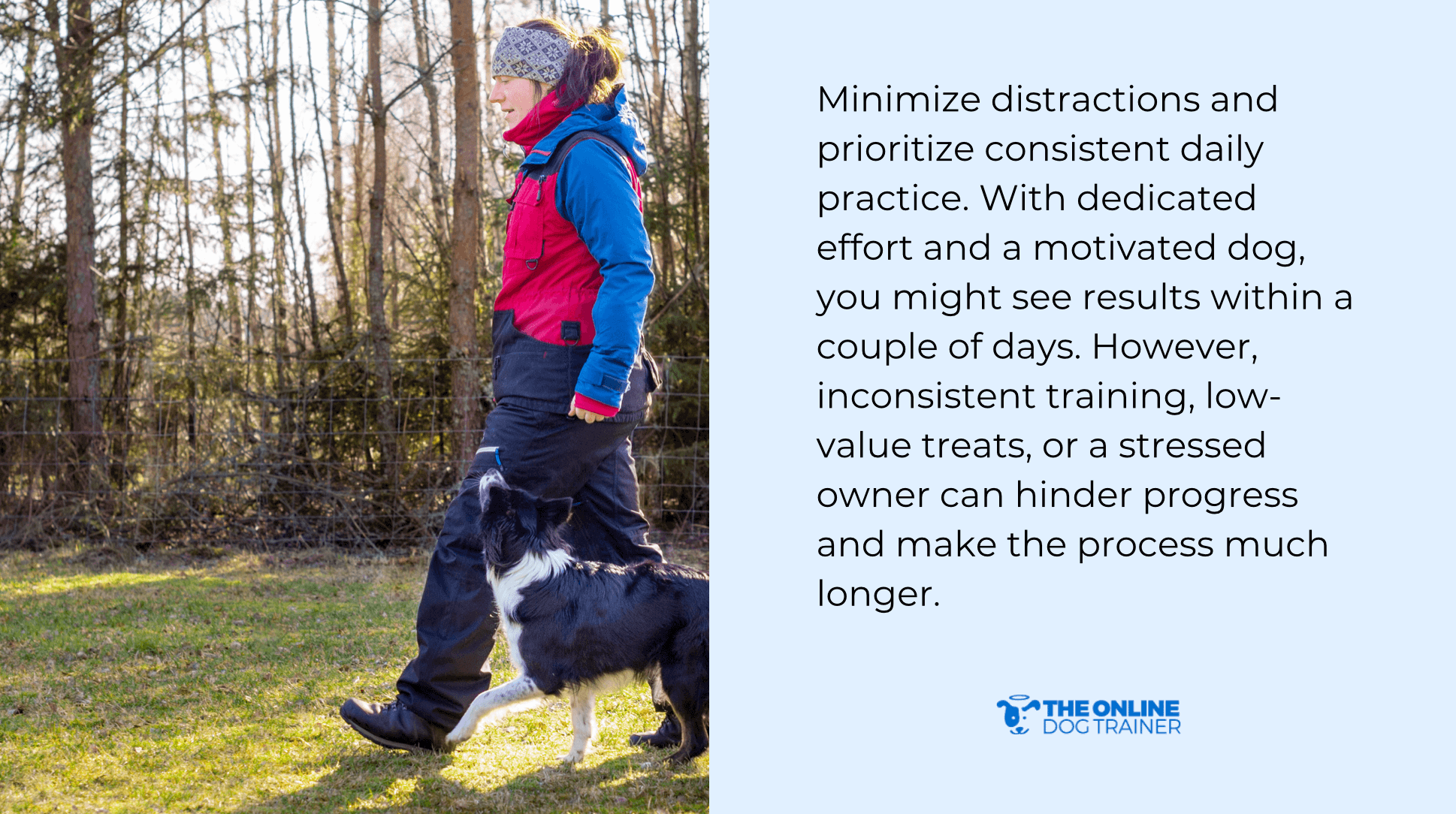
Minimize distractions and prioritize consistent daily practice. With dedicated effort and a motivated dog, you might see results within a couple of days. However, inconsistent training, low-value treats, or a stressed owner can hinder progress and make the process much longer.
If you’re facing significant challenges, it might indicate an underlying issue with leadership. Your dog may be attempting to assert dominance, making them less receptive to your commands. In such cases, the “Dog Calming Code” can be a valuable tool to help you establish clear leadership and improve your dog’s responsiveness.
UNDERSTANDING DOG REACTIVITY: FREE WEBINARWhen To Use Heel Command Vs. Loose Leash Training
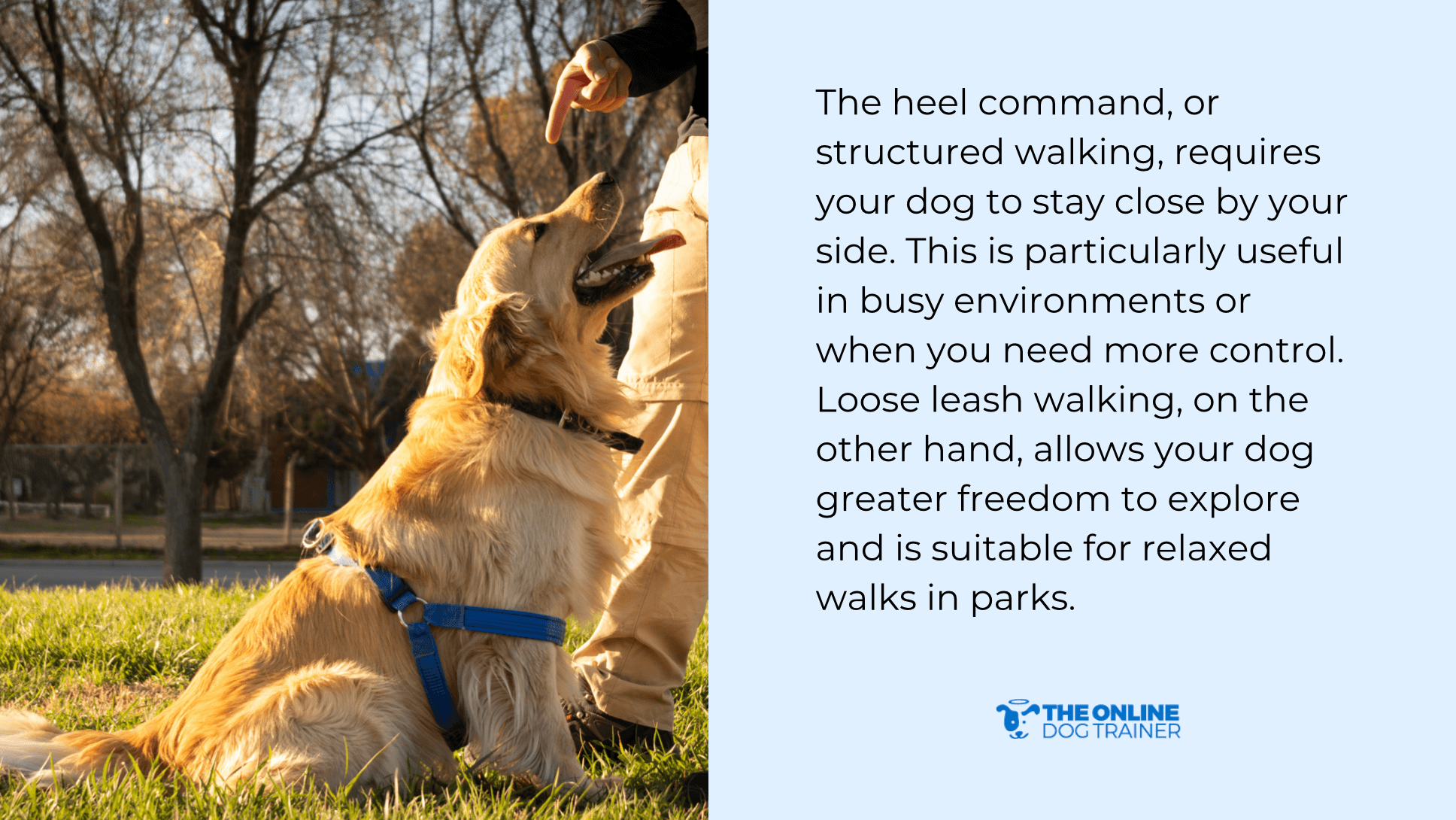
It’s important to distinguish between the heel command and loose leash walking. The heel command, or structured walking, requires your dog to stay close by your side. This is particularly useful in busy environments or when you need more control.
Loose leash walking, on the other hand, allows your dog greater freedom to explore and is suitable for relaxed walks in parks. The ideal balance between the two depends on the environment and your individual dog’s needs.
To avoid confusion, use clear commands to signal transitions between heel and loose leash walking. When you want your dog to walk by your side, use the command “heel” or “walk.” To give them more freedom, say something like, “OK, go free,” “Social time,” or “Go sniff.”
Consistent use of these commands will help your dog understand your expectations.
In conclusion, remember to choose consistent terms for both heel and loose leash walking, and above all, be patient and calm throughout the training process.
Starting with off-leash training at home and using treats can make learning more enjoyable for your dog. If you encounter difficulties, the “Dog Calming Code” can be instrumental in establishing leadership and enhancing your dog’s responsiveness.
A calm and consistent approach paves the way for a positive and successful training experience.
GET THE DOG CALMING CODE FOR FREE