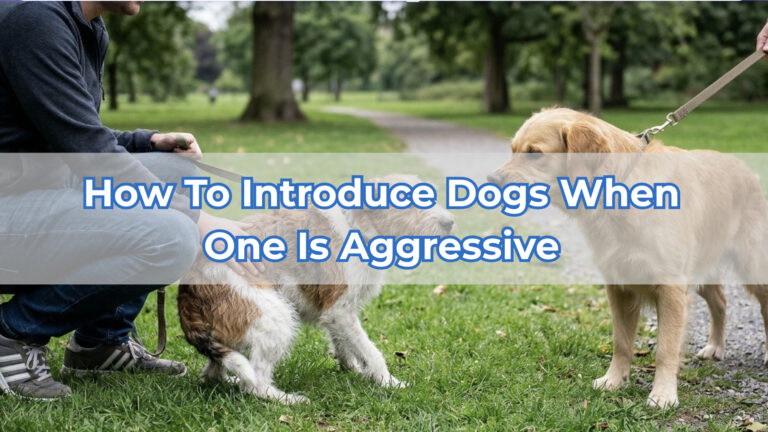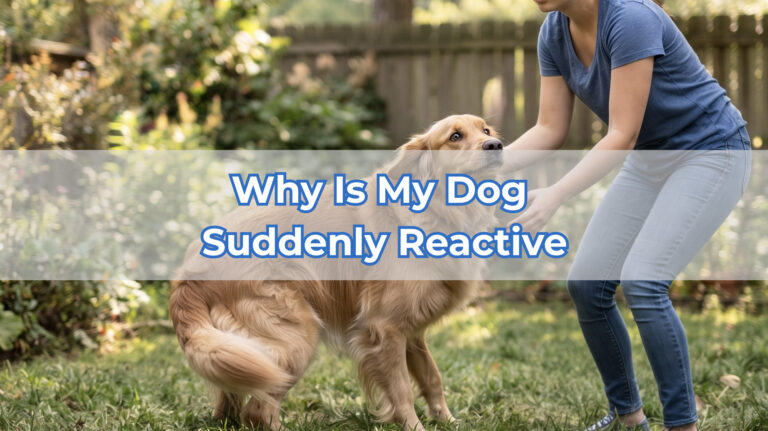
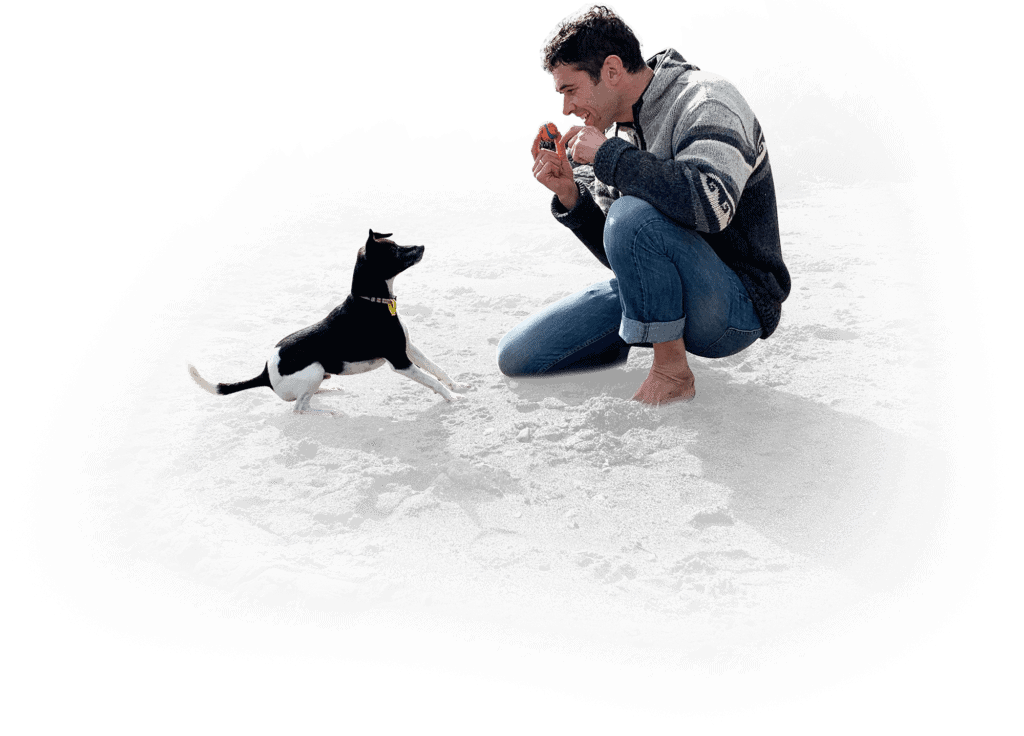
To introduce dogs safely when one is aggressive or reactive, you must shift their underlying mindset before attempting any physical meeting, because canine reactivity is fundamentally driven by stress, fear, and a misplaced sense of responsibility for the safety of the pack. When an owner establishes calm, consistent leadership at home through everyday routines, the dog no longer feels compelled to assess and neutralise incoming threats on their own. Only once that internal shift begins to take hold should physical introductions proceed, starting with indirect exposure and parallel movement at a non-confrontational distance rather than the kind of head-on greetings that almost always set a reactive dog of.
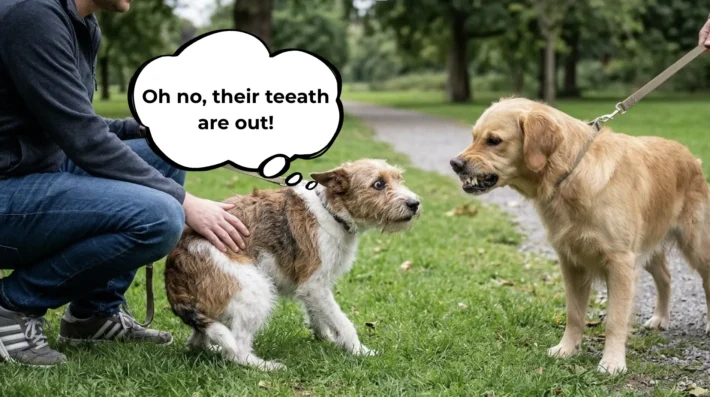
When a dog lunges, growls, or snaps at another dog, the instinctive human assumption is that the dog is dangerous, dominant, or simply badly behaved. In the vast majority of cases, that interpretation is wrong.
Almost all aggressive displays during greetings stem from one underlying emotional state: fear.
Dogs share approximately 99.98% of their DNA with wolves. In any pack structure, survival depends entirely on clarity and protection. When a dog senses that their human is not actively and confidently making the large decisions regarding safety and territory, the dog feels a biological obligation to fill that role themselves.
A dog who believes it is their job to keep the household safe wakes up every single morning under enormous pressure. Every approaching person, every passing vehicle, every unfamiliar dog is perceived as a potential threat requiring immediate assessment and action. Their explosive display at another dog is what animal behaviorists call a distance-increasing behavior. It is the dog communicating, as loudly as they possibly can: “Stay away. I am not okay with this, and nobody else is handling it, so I have to.”
This is the psychology that drives aggression in introductions. The dog is not being malicious. They are utterly exhausted by a job they were never meant to carry.
Understanding this distinction changes everything about how you approach the introduction process. You are not trying to train away behavior. You are trying to relieve a dog of a burden.
Read below to know more about this behavior (that you can totally change!)
Key Takeaways
- Canine aggression and lunging rarely stem from dominance or maliciousness; they are distance-increasing behaviors rooted in fear and anxiety when a dog feels responsible for pack safety.
- Successful socialization starts by establishing calm human leadership and daily routines indoors (governing resources, guiding movement, keeping relaxed leash tension) to lower the dog’s overall baseline arousal before any meeting occurs.
- Safe meetings must move through deliberate stages — scent swapping, barrier visuals, parallel walking on neutral ground, staggered trailing, curved brief greetings, and managed home entries — always keeping both dogs in a low-arousal “neutral zone.”
The Leadership Foundation: Where Introductions Really Begin
True canine sociability does not begin in a public park or on a neutral sidewalk. It begins in the quiet, predictable routines of your own home.
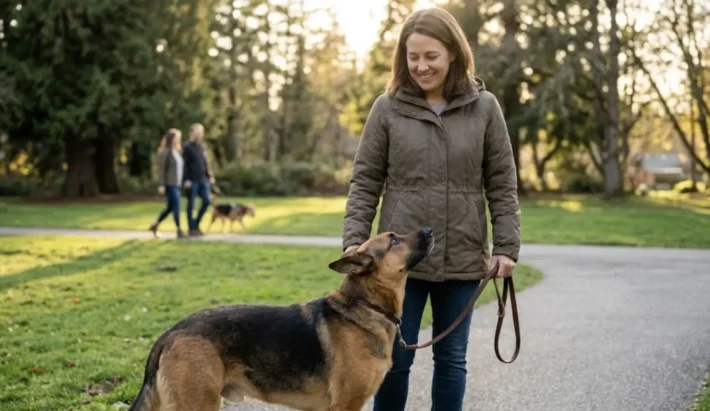
If your dog does not view you as a calm, capable decision-maker in low-stress environments, they will never trust your judgment when another animal enters the picture outdoors. The goal of establishing daily leadership is not about control for its own sake. It is about communicating to your dog, consistently and clearly, that the big decisions belong to you.
When your dog genuinely internalizes that message, their nervous system begins to settle. The chronic vigilance softens. The hair-trigger reactivity fades. And for the first time, they are in an emotional state where a social introduction has any realistic chance of success.
Key psychological pillars that reshape this dynamic include the following:
Resource Clarity
When food and access to resources are clearly governed by the human, the dog recognises through one of the most instinctively powerful signals available who sustains and protects the group.
Responding to Perceived Danger with Calm.
When your dog alerts to a sound outside or a knock at the door, how you respond sends an immediate message.
Shouting, tensing up, or rushing over with anxious energy confirms to your dog that something threatening is indeed happening. A calm, unhurried response communicates that you have evaluated the situation and determined it requires no action.
Affection Given Intentionally
Soothing a tense or anxious dog with physical comfort feels natural but works against you. In canine communication, being stroked and reassured during a state of anxiety rewards and reinforces that state. Calm, purposeful affection given when the dog is already settled communicates something entirely different.
Guiding Movement.
A dog that charges ahead through doorways or pulls their handler down the street believes they are scouting for hazards. When the human guides the direction and pace, the dog begins to adopt the psychological posture of a relaxed follower rather than an anxious protector.
These are not tricks. They are daily signals that cumulatively reshape how a dog understands their role in the household. Once that reshaping takes hold, the internal stress level that drives reactivity begins to genuinely decline.
JOIN OUR FREE CLASS AND LEARN THE BESTSELLING DOG CALMING DOG™ FOR FREEUnderstanding Canine Arousal: The Internal Scale That Governs Everything
Before attempting any introduction, it is critical to understand how emotional arousal works in the canine brain. Dogs do not leap from total relaxation to explosive aggression without moving through distinct internal states first.
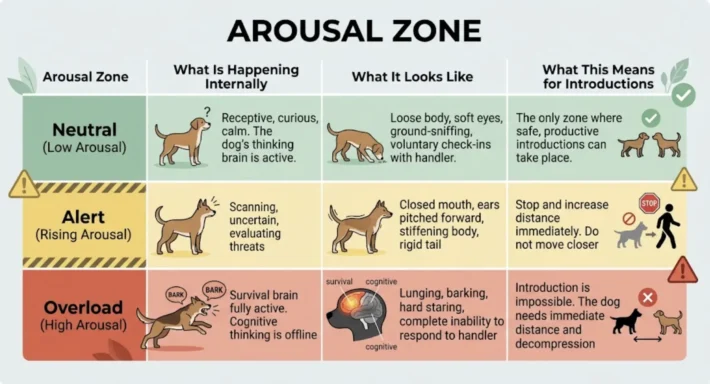
| Arousal Zone | What Is Happening Internally | What It Looks Like | What This Means for Introductions |
| Neutral (Low Arousal) | Receptive, curious, calm. The dog’s thinking brain is active. | Loose body, soft eyes, ground-sniffing, voluntary check-ins with handler. | The only zone where safe, productive introductions can take place. |
| Alert (Rising Arousal) | Scanning, uncertain, evaluating threats | Closed mouth, ears pitched forward, stiffening body, rigid tail | Stop and increase distance immediately. Do not move closer |
| Overload (High Arousal) | Survival brain fully active. Cognitive thinking is offline | Lunging, barking, hard staring, complete inability to respond to handler | Introduction is impossible. The dog needs immediate distance and decompression |
When a dog reaches the overload zone, their nervous system is flooded with adrenaline and stress hormones. Attempting an introduction at that point does not build social skills or resilience. It deepens trauma and reinforces every defensive habit the dog already has. All successful introductions take place exclusively when both animals remain comfortably in the neutral zone.
The Leash as a Telegraph Wire: What Your Body Is Communicating
Dogs possess an extraordinary ability to read human physiology. When a handler spots another dog approaching and responds by holding their breath, tightening their grip, shortening the leash, and tensing their shoulders, every one of those signals travels directly to their dog.
To the canine mind, physical tension in the leash simultaneously restricts their ability to move away from a perceived threat while communicating that the handler is alarmed. The dog draws the only logical conclusion available to them: something dangerous is approaching, and the person in charge is worried about it.
Maintaining a completely loose leash and physically relaxed posture achieves the opposite. It tells your dog that you have seen the approaching animal, assessed the environment, and concluded that nothing requires defensive action. Your composed physical presence becomes the primary model for your dog’s emotional state at that moment.
This is why I always teach that the energy comes before the meeting. Every time. Without exception.
The Step-by-Step Psychology of a Safe Introduction
OUR FREE WEBCLASS WILL CHANGE YOUR DOG'S BEHAVIOR FOR GOODIntroducing two dogs when one displays aggression must be understood as a patient process of rewiring emotional associations. It is not a test to see what happens. It is a carefully staged sequence designed to build a positive emotional history between two animals who have not yet learned to trust each other.
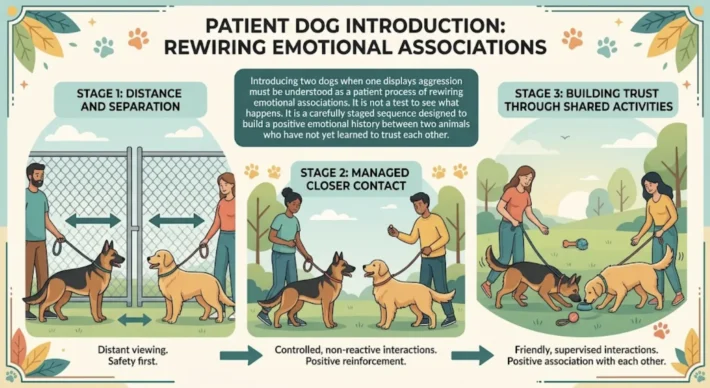
Step 1: Scent Familiarisation Before Any Visual Contact
In the canine world, scent is the primary language of identity and safety. Allowing dogs to exchange information through scent before ever seeing one another removes the startling novelty of a first visual encounter.
Swapping bedding, towels, or sleeping items allows each dog to process the other’s full scent profile while they are in a calm, secure environment. When a dog later encounters that familiar scent in a social setting, their brain has already begun pairing it with safety rather than alarm.
Step 2: Visual Contact Through a Secure Barrier
Direct contact forces an immediate social decision. Observing through a secure boundary, such as a wire gate or a fence, allows each dog to look, sniff the air, and assess the other without any risk of physical contact.
The goal at this stage is not engagement. It is voluntary disengagement. When a dog notices the other animal and then calmly looks away on their own, they are demonstrating that their brain has categorized the other dog as non-threatening. That is meaningful progress.
If either dog fixates, postures, or stiffens at any point, the response is always the same: quietly increase distance until the dog softens.
Step 3: Parallel Movement on Neutral Ground
Head-on approaches between dogs are inherently confrontational. Two unfamiliar animals walking directly toward each other must sustain prolonged eye contact while closing the distance between them, which naturally triggers suspicion and defensive posturing.
Moving side by side in the same direction, separated by a wide and comfortable buffer, taps into something fundamentally different in canine psychology. It mirrors natural pack travel. When dogs move in parallel, they are engaged in a shared activity without any social pressure attached to it. The other dog shifts from being a potential collision to simply another presence moving through the same landscape.
Neutral territory is important for precisely this reason. Neither dog carries territorial ownership of the space, removing one of the most powerful triggers for defensive behavior.
Step 4: Staggered Following and Scent Trail Investigation
Once parallel walking is consistently calm, adjust the formation so one dog walks ahead while the other follows in their wake. Alternating positions allows each dog to investigate the other’s ground scents without any direct visual confrontation. This is the canine equivalent of reading someone’s biography before meeting them. It builds familiarity quietly and without pressure.
Step 5: The Curved Approach and the Brief Greeting
Canines naturally greet one another in wide, curved arcs rather than straight lines. When handlers finally permit proximity, the approach must mirror this natural pattern.
Guide each dog in a gentle curving trajectory so they approach each other’s flanks and hindquarters rather than meeting nose-to-nose. Keep initial contact brief, no more than a few seconds, before both handlers cheerfully change direction and resume walking. This separation before arousal has a chance to build teaches both dogs that interactions are calm, predictable, and non-threatening.
Step 6: Managed Entry into the Home
The household represents the most psychologically charged environment for an aggressive or reactive dog. Territorial instincts and resource guarding tendencies are strongest here.
Remove all high-value items before any shared access begins, including food bowls, chew toys, favorite sleeping spots, and dog beds. Walk both dogs into the house together following a successful outdoor session, rather than having one dog already inside and waiting. Use structured separation indoors for the first week or two, allowing both dogs genuine downtime and decompression before building up to longer supervised periods together.
BRING BACK THE CALM TO YOUR HOUSE: JOIN THIS FREE REACTIVITY CLASSBody Language: Reading the Signs Before the Explosion
Understanding subtle canine signals allows handlers to intervene long before a reactive episode takes place.
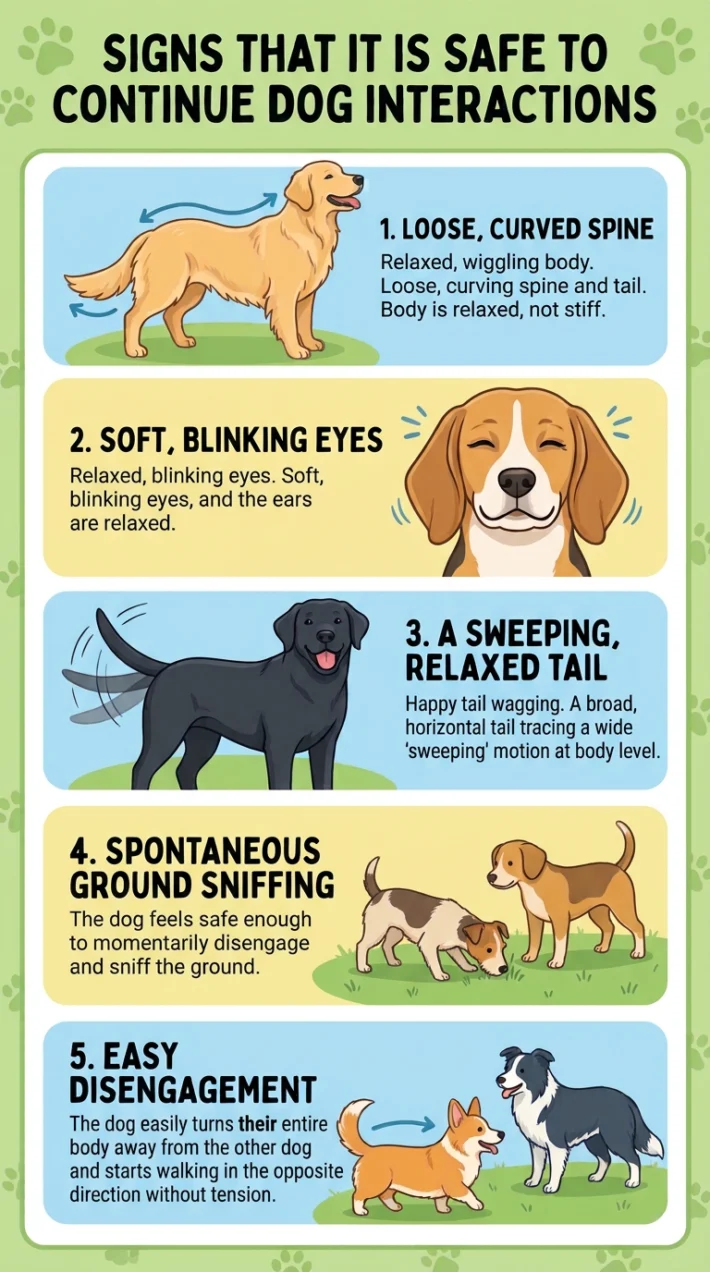
Signs That Say It Is Safe To Continue
- Loose, curved spine.
- Soft, blinking eyes.
- A sweeping, relaxed tail.
- Spontaneous ground sniffing.
- Easy disengagement from the other dog.
Signs that say stop and create distance:
Rigid, locked spine.
High, stiff, vibrating tail.
Hard, unblinking fixation.
Sudden postural freeze.
Showing the whites of the eyes.
A sudden postural freeze is the single most critical warning signal in canine communication. It indicates that the dog’s internal coping mechanisms have reached their limit and that a lunge or strike is imminent. The moment a dog goes motionless while staring at another dog, handlers must act immediately by smoothly and calmly creating distance.
It is also essential never to punish a growl. Growling is fundamental canine communication. It is a polite signal that the dog is uncomfortable and needs space. Suppressing the growl does not remove the underlying fear. It simply eliminates the warning system, producing a dog that bites without notice.
What Not to Do: Common Mistakes That Deepen Aggression
Well-intentioned owners often make subtle psychological errors that inadvertently make aggression worse.
Forcing the introduction.
Dropping two unfamiliar dogs together to see what happens puts immense survival pressure on both animals. It almost always results in a traumatic altercation that solidifies lasting fear and distrust.
Using Food To Overcome Fear.
Luring a frightened dog closer to another animal using treats forces a direct conflict between their desire for food and their survival instincts. The dog stepping forward for the treat suddenly finds themselves far closer to the threat than it can tolerate, and explodes in panic.
Comforting Tension With Physical Affection
Speaking softly and stroking a tense or reactive dog in the presence of a trigger validates their alarm. In canine communication, being comforted during fear confirms that the handler is equally concerned, and that the threat is real.
Soothing With Anxious Energy
Your dog reads your nervous system like a detailed map. An anxious, tense handler tells a reactive dog that every worry they have about the situation is completely justified.
JOIN MY FREE REACTIVITY WEBINARIntroducing a Reactive Dog to New People
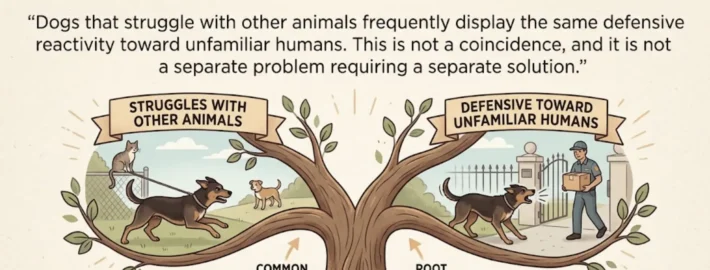
Dogs that struggle with other animals frequently display the same defensive reactivity toward unfamiliar humans. This is not a coincidence, and it is not a separate problem requiring a separate solution.
The psychology driving both responses is identical.
When a dog has taken on the role of protector, every unfamiliar presence entering their space triggers the same internal question: Is this a threat to my pack? Whether that presence arrives on four legs or two makes no difference to a dog operating from a place of chronic vigilance. Their nervous system has one job, and it applies to that job universally.
What makes human introductions particularly challenging is the way people naturally behave around dogs they want to meet. Direct eye contact, reaching forward, crouching down, speaking in animated tones — all of these feel friendly and warm from a human perspective. From the dog’s perspective, however, they read as confrontational pressure. They signal an incoming social demand that the dog, in their current state of hypervigilance, is not equipped to receive calmly.
The same principle that governs canine introductions applies here. Pressure creates resistance. Removing pressure creates the conditions for genuine curiosity to emerge on the dog’s own terms.
When a visitor removes the social expectation entirely, something significant happens inside the dog. The anticipated confrontation does not arrive. The unfamiliar person enters the space and simply… exists there, quietly and without demand. The dog’s nervous system, which was braced for an interaction it would need to manage, receives no signal requiring a defensive response.
That absence of pressure is where trust quietly begins to form.
The dog chooses, in their own time and at their own pace, to investigate. And a choice freely made by the dog carries far more psychological weight than any proximity achieved through coaxing or luring. It is the difference between a dog that tolerates a visitor and a dog that has genuinely decided, on their own terms, that the visitor is safe.
This is why the foundation of calm leadership matters so deeply here too. A dog who trusts that their owner has evaluated the incoming person and determined there is no threat is already halfway there before the visitor has crossed the threshold. The owner’s composed, unhurried response to a knock at the door communicates something the dog cannot ignore: I have assessed this. It does not require your attention.
That message, delivered through calm energy rather than words, is the most powerful introduction any visitor could ever receive on their behalf.
LEARN HOW TO BE THE KIND OF LEADER THAT YOUR DOG NEEDS: FOR FREEThe Path Forward
Helping an aggressive or reactive dog learn to coexist peacefully with another dog is not about physical force, punishment, or shock collars. It is not about flooding them with exposure they are not ready for or engineering enough positive experiences to outweigh their fear.
It is about one thing: showing your dog, consistently and quietly, day after day, that the job of protecting the pack is yours.
(This is what my bestselling program, The Dog Calming Code™ teaches to dog owners!)
When that message finally lands, you will see it in their body before they ever take a step toward another dog. The shoulders soften. The breathing slows. The scanning stops. And at that moment, you are not looking at an aggressive dog anymore.
You are looking at a dog who has finally been given permission to relax.
If you are ready to address reactivity and aggression at its root, join the free masterclass where the complete psychology of calm, loving leadership is laid out in full, and the transformation begins from the inside out.

— Doggy Dan
FREQUENTLY ASKED QUESTIONS
Can two dogs ever live peacefully together after a serious fight?
Yes, in the vast majority of cases. Fights between dogs typically stem from a leadership vacuum in the household, resource guarding, or undiagnosed physical pain rather than an inherent incompatibility between the animals. When owners re-establish calm leadership, control resources, and proceed through a patient phased reintroduction, trust between the dogs can be rebuilt. One fight, however serious, does not define the long-term relationship.
How long does the introduction process take?
Progress is governed by genuine decompression markers rather than a calendar timeline. While stress hormones require a minimum of 48 to 72 hours to clear after any altercation or significant arousal event, some dogs need several weeks of structured parallel work before sharing a space feels comfortable for them. The right pace is always determined by watching for consistent loose body language and voluntary relaxation, not by counting days.
Why does my dog react aggressively with other dogs outdoors but seem perfectly calm at home?
Your home is a predictable, familiar environment where variables are controlled and routines are established. The outside world is dynamic and unpredictable, filled with unfamiliar scents, fast movements, and dogs appearing without warning. If your dog does not fully trust that you can navigate those outdoor hazards, they instinctively take on the protector role the moment they step through the front door. The solution is not to avoid the outside world. It is to extend the leadership your dog already trusts at home out into the environment beyond it.
What is the most important thing to remember if an altercation breaks out?
Maintain composure and avoid screaming or shouting, as high-arousal vocalization from the handler fuels the intensity of the conflict rather than reducing it. Use physical barriers where possible to separate the animals calmly. Once both dogs are separated, place them in quiet, low-stimulation spaces and allow a full decompression period before attempting any further proximity. What happened is information, not failure. Use it to assess which stage of the introduction process needs to be revisited.
Is it ever too late to change an aggressive dog’s behavior?
No. The psychology behind reactivity and aggression is not fixed. What drives the behavior is a dog’s belief that they are responsible for safety decisions that belong to their owner. That belief was learned, and it can be shifted. Older dogs may take more time because the patterns are more deeply ingrained, but the process is identical and the outcome is just as achievable. Begin where you are. Begin today.