A reactive dog is a dog that overreacts to triggers. They are the ones prone to barking, lunging, growling, fixating, often at other dogs, people, bikes, or loud noises. Reactivity is not disobedience and is different from aggression. This is a fact every dog owner should know: a reactive dog has a nervous system that has gone into overdrive because their threshold has been exceeded.
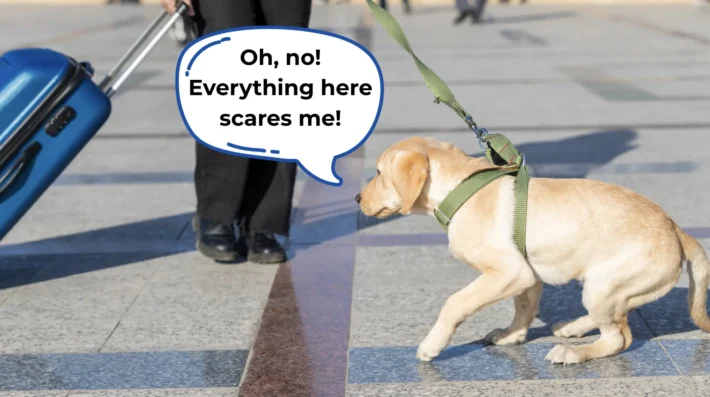
Let me get this out before anything else: reactivity is a symptom that says your dog is feeling unsafe and vulnerable. Your dog’s reactive behavior is not the main problem; it’s just a symptom of a deeper issue.
Many dog owners pay thousands to address the symptoms but never touch the cause.
They hire trainers to stop the barking. They buy equipment to stop the lunging. They do endless drills, endless treats, endless corrections. But nothing sticks.
What they don’t know is they’re solving the wrong problem because the barking and lunging aren’t the issue. The owner trains the symptom away for a week. The dog finds another trigger. Or they live on such a hair-trigger that anything sets them off. The owner starts to think that training doesn’t work.
But training does work… but only if it targets the real issue.
The moment you shift from “how do I stop my dog barking” to “why does my dog react this way,” everything changes.
This is what we’re going to talk about today. Let’s jump in.
Key Takeaways
- Understanding what a reactive dog is starts with knowing that reactive dog behavior is not aggression or disobedience. A reactive dog is simply a dog whose nervous system is overwhelmed, causing them to overreact to everyday triggers when their stress threshold is exceeded.
- The signs of a reactive dog range from obvious displays like barking, lunging, and growling to subtle indicators such as unseasonal panting, rigid body language, “eyeballs on stalks,” displacement behaviors, and a complete lack of check-in with their owner.
- Knowing how to help a reactive dog requires looking past the triggers and addressing the leadership gap using The Dog Calming Code™ and the Five Golden Rules to establish clear, gentle boundaries at home so your dog can step down from protecting the household.
- Learning how to calm a reactive dog relies on tracking their stress on the Energy Meter to keep them below Level 6, avoiding high-adrenaline explosions (Level 7+), and using calm tools like the Calm Freeze, time-outs, and owner stillness to lower their overall arousal.
What Is A Reactive Dog: Reactive Dog Meaning
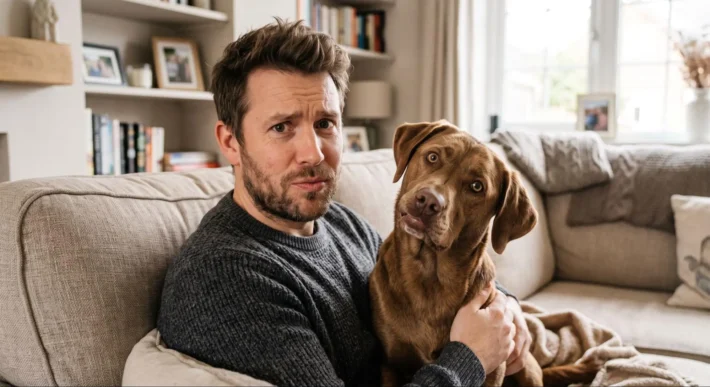
A reactive dog is one who overreacts to everyday situations, triggers, or stimuli in an exaggerated or over-the-top way. Things, people, and events you consider harmless may set off intense barking, lunging, spinning, and straining the lead.
Let me be clear: the signs may look like it, but your dog isn’t being disobedient. They’re also not aggressive (yet). They’re reacting with more intensity than the situation calls for — and that’s the key to understanding what’s actually happening.
Compared to a calm, settled dog that barely registers other dogs, or animals, or people, a reactive dog sees the same thing from 50 meters away and erupts. Reactivity can cause dogs to either act frenzied, or freeze and stare at triggers like a laser.
Signs of A Reactive Dog: Reactive Dog Behavior
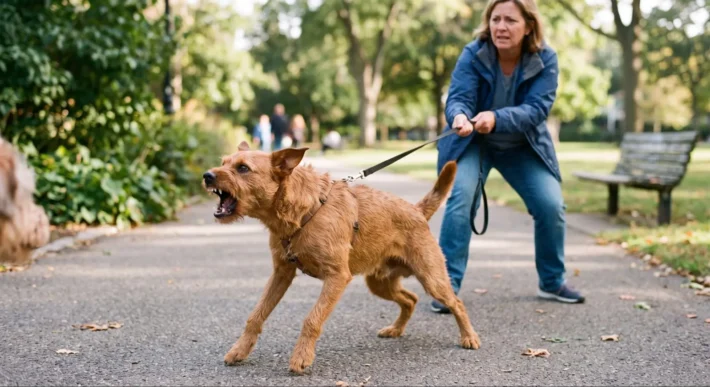
The problem is most people only see the obvious stuff like the barking, the lunging, the drama when it comes to figuring out if their dog is showing reactive behavior. But the obvious signs are just the tip of the iceberg.
The real issue starts happening before the explosion. In all the cases I’ve handled, dogs have always shown both subtle and explosive signs that tell their owners they’re reactive.
Let’s talk about these signs.
The Obvious Signs Of Dog Reactivity
Barking Intensely At A Trigger From A Distance.
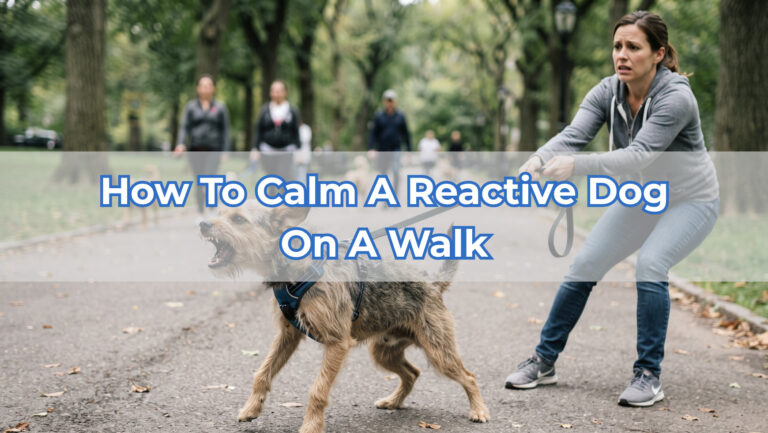
A reactive dog will bark at someone or something 50, 100, even 200 meters away. Your dog loses it before you’ve even properly registered what they’ve seen. The majority of reactive dogs have very keen senses, and anything that they deem a trigger, they will fight or react to.
A common scenario is when a dog is terribly uneasy during walks or socialization. A slight movement in the grass causes them to be on full alert mode. Being approached by another dog in the park causes them to panic and bark. The leash tightens when people approach.
If you’ve ever said to yourself, “I think my dog is overreacting!” they probably are.
Lunging Toward (Or Away From) The Trigger
Observe your dog whenever a trigger comes near. Are they scrambling, desperate to run from it? Or do they turn very protective and ready to lunge at the trigger to defend themselves?
Some dogs lunge at a trigger because they’re trying to control the threat. Some lunge away because they’re terrified. Either way, your dog has already decided the situation is their responsibility.
Growling At People, Dogs, Animals, or Objects
Growling is your dog’s way of letting you know that someone or something has to back off. This is your dog saying, “I’m uncomfortable, and I need space.”
Is growling automatically a sign of reactivity? Not all the time! Dogs use this sound cue to communicate many things. But when is growling considered a reactivity symptom?
Here are some examples:
- While growling at strangers happens, regularly growling at housemates or children indicates a serious boundary or hierarchy issue that requires immediate attention.
- Balanced dogs escalate slowly (stiffening, staring, growling, snapping). If a dog skips early warning signs and growls or snaps abruptly, their predictability has
- Growling over furniture, dog beds, or food bowls means the dog claims ownership of those resources and believes they are enforcing control within the home.
- Moving from growling to snapping or making physical contact—even without breaking skin—signals that the warning system has broken down and urgent intervention is required.
Correcting or punishing a dog for growling does not fix the underlying discomfort; it simply removes the warning. This creates a dangerous situation where the dog eventually bites without prior signal. Always address the root cause, never the communication itself.
Jumping Up At Strangers On The Walk
Here’s what most people miss: a dog pulling the leash is showing a dominance signal. Your dog is asserting themselves as the one in charge, and from their point of view, something has to be done whenever a trigger appears. Reactivity is a major reason that your dog pulls on the leash.
The Subtle Reactivity Signs
“Eyeballs on Stalks”
This sign includes an intense, locked-on stare accompanied by a rigid body and stiff legs. This freeze indicates climbing energy right before an explosion. Think of this as a dog preparing to be in defense mode.
Unseasonal Panting
Panting on a cold day or without prior physical exertion is a classic nervous system stress signal, not a temperature response.
Also look for a complete absence of fluid movement. A calm dog moves like water, while a stressed dog is always tense.
Targeted Pulling
Scrambling, digging claws in, or dragging the handler toward or away from a specific trigger. This indicates the dog has already decided on an action and is actively executing it. They become more agitated when the one holding the leash doesn’t do what they want to happen.
Hidden Stress Signals
Displacement Behaviors
Excessive chewing, scratching, itching, or licking often serve as outlets for internal pressure and anxiety.
Inability to Settle
Hyperactivity and hypervigilance at home occur when a dog feels responsible for keeping the household safe. Their perceived job never stops, so they stay perpetually alert.
The Ultimate Signal
Lack of Check-In
The single clearest indicator tying all reactive behaviors together is that your dog does not look to you when a trigger appears. A calm dog glances at their handler to ask, “What do we do here?” A reactive dog has already assumed responsibility and executed their own plan without looking for guidance.
BRING BACK PEACEFUL WALKS: THIS FREE WEBINAR TEACHES YOU HOW!What Causes Dog Reactivity
If you want to understand why your dog is barking, lunging, or losing their mind at the end of the leash, you have to look at the real foundation of the problem. It almost always comes down to one fundamental issue: your dog genuinely believes they are the pack leader. They believe it is their job to make all the big decisions in life — who is allowed near you, what constitutes a threat, when to move, and how to respond to anything new or surprising.
Dogs share over 99% of their DNA with wolves, and their instincts are completely hardwired around pack structure and hierarchy. In every single pack, you have a leader, and you have followers. In the pack, the leader decides who approaches, when it’s time to move, and what is dangerous. The followers simply relax and trust the leader’s judgment.
They know that when the leader is around, they are safe. They know their survival chances are high.
Now, in the household setting, things can be different. When no human steps up to take that lead role clearly and calm-assertively in the home, nature takes over. Your dog fills the vacancy. They don’t do it to be mean, spiteful, or dominant. They do it because the role is open, and the instincts for survival won’t let it stay empty.
Once your dog assumes the role of pack leader, their entire experience of the world shifts.
Every stranger walking down the street becomes a potential danger they have to assess and handle. Every passing dog becomes a rival or a threat they must manage. Every strange sound, vehicle, or new environment becomes a hazard they are solely responsible for evaluating without a trusted guide, in a complex human world they weren’t built to understand. It is a massive, exhausting burden for a dog to carry.
That overwhelming pressure is what you see spilling out on the surface as reactivity.
Why the Human World Escalates the Stress
Out in nature, a dog’s environment is relatively quiet and predictable. But in our modern human environment, a dog who thinks they are in charge is constantly bombarded. Think about what they face daily: rushing traffic, bicycles, delivery trucks, screaming kids, sudden doorbells, fireworks, and strange dogs passing right by them on tight leashes. A dog was never designed to process or manage all of these modern triggers on their own.
When a dog believes they are in charge, their natural drive is to protect the pack and control the environment.
The more they try to control things they can’t manage, the higher their stress levels climb. As that stress builds up day after day, their tolerance drops through the floor, making them react faster and harder. It becomes a vicious, self-fueling cycle, and it has almost nothing to do with the actual object or trigger they are barking at.
Two Different Kinds of Reactivity
Even though the root cause is always that missing leadership, reactivity usually displays itself in two distinct ways. Recognizing which style your dog uses helps you understand their behavior, even though the cure remains the exact same.
Dominant Reactivity
This comes from a naturally confident dog who has taken the leadership role. You’ll see them stand tall, chest out, tail up, weight pushed onto their front paws. They don’t wait for things to come to them… they charge forward to proactively handle the situation. This dog isn’t acting out of fear. They are acting as the decision-maker, stepping up to deal with what they believe is their personal responsibility.
Fearful Reactivity
This happens when a dog believes they have to be the leader, but temperamentally, they aren’t built for the job. These dogs are naturally more sensitive, insecure, or nervous, and they feel utterly crushed by the weight of having to make the decisions. You’ll see their tail tucked, body lowered, staying close to you, looking for an escape route. But when they are trapped — on a short leash or backed into a corner — they explode outward. It isn’t because they want to fight; it’s because they feel overwhelmed, responsible, and out of options.
Contributing Factors That Make Reactivity Worse
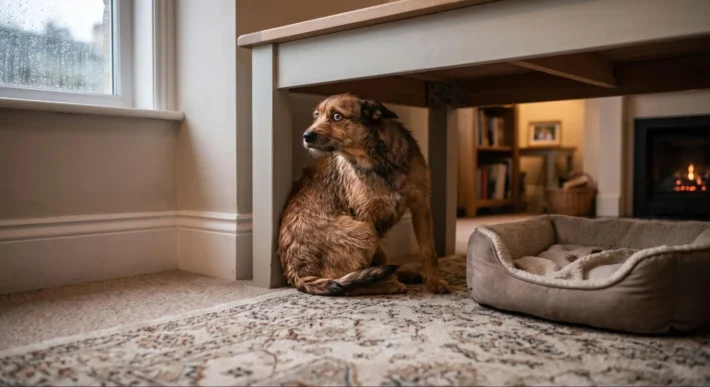
While the lack of leadership is the true cause, several everyday factors can make the reactivity much worse.
Natural Temperament
A bold, confident dog and a shy, sensitive dog will react differently under the same pressure. Temperament shapes how the stress looks on the outside, but it doesn’t change the underlying cause.
Exhaustion and Chronic Stress
Being the pack leader 24/7 is exhausting. Dogs in charge never truly turn off or sleep deeply because they are always on duty. This constant state of alertness leaves them irritable, on edge, and quick to snap. A tired, stressed dog has zero patience compared to a dog that feels safe enough to rest deeply.
Space Invasion
A dog who feels in charge expects others to respect their space. When strangers, excited children, or off-leash dogs run straight up to them without an invitation, the dog feels compelled to enforce boundaries and set limits, often resulting in an aggressive display.
Owner Energy and Tension
Dogs read our body language and energy instantly. The moment you tighten the leash, hold your breath, or feel your heart rate spike when you see a trigger, your dog feels it. To your dog, your tension is absolute proof that the approaching trigger is dangerous, which accidentally validates their need to react.
Avoidance Tactics
Trying to fix the issue by walking at midnight, dodging every dog, or hiding inside only makes your dog’s world smaller. It increases their sensitivity over time and stops them from ever learning that the world is safe when a real leader is in charge.
Relying Solely on Treat Distractions
While treats are great for teaching trick behaviors to a calm dog, using them on a highly reactive dog rarely solves the core issue. When a dog is over threshold — adrenaline surging, locked onto a trigger — their brain completely shuts down to food. More importantly, bribing a dog with food doesn’t answer the big question in their mind: “Who is the leader here?” In many cases, feeding a dog while they are tense just rewards and cements the stressed state of mind.
Why Focusing Only on the Triggers Fails
The biggest trap in dog training is focusing entirely on the trigger — whether it’s another dog, a skateboard, or a stranger — instead of addressing the root cause. You can spend months trying to desensitize a dog to a specific trigger, but if the dog still thinks they are the pack leader at home, the underlying pressure remains. They will simply transfer that reactivity onto something else, or remain so stressed that the slightest thing sets them off. The trigger is just the surface outlet where the pressure escapes; the leadership vacuum is what builds up the pressure in the first place.
What Triggers Dog Reactivity?
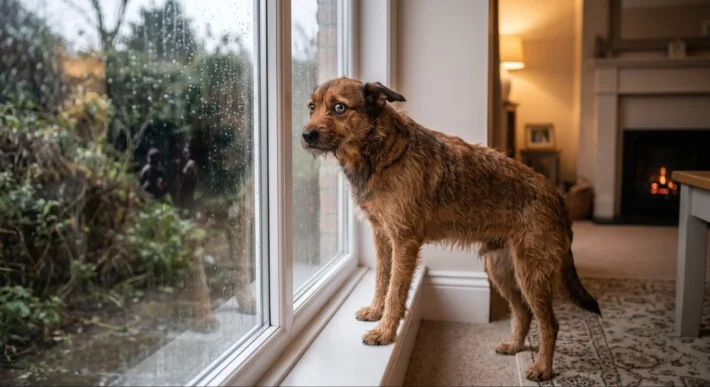
Before diving into specific triggers, there is a fundamental principle most people miss: Triggers are not the underlying cause of reactivity, but are the factors that flip the switch.
However, if you’re teaching your dog to be calmer, managing triggers is just as important. Why? Managing triggers isn’t a crutch — it is the training. Every time your dog gets overwhelmed, their body floods with adrenaline, reinforcing their fear and completely shutting down their ability to learn.
Think of it like nearly getting into a car crash. Your heart races, your hands shake, and you can’t just shake it off and focus two minutes later. It takes time for those stress hormones to leave the system. If your dog is stuck in that high-adrenaline state, no actual learning can take place.
Common Triggers That Make Dogs Reactive
Other Dogs
This is the most common trigger. Whether lashing out in fear, dominance, or lunging to make contact, the root cause is the same: your dog believes they — not you — need to manage the encounter.
Strangers and People
Be aware of strangers approaching the front door, on a walk, or entering the home. A confident reactive dog will approach directly to assert control, while a fearful reactive dog will stay close, tail tucked, lashing out only when feeling trapped.
Other Animals (Cats, Horses, Livestock)
Whether viewed as prey, a threat, or something to herd, the underlying stress stems from a dog who doesn’t trust their handler to make the call.
Moving Objects (Cars, Bikes, Skateboards)
Fast movement triggers chase instincts. In a dog carrying the perceived responsibility of a pack leader, it triggers the urge to attack or drive the threat away to protect the group.
Noisy Equipment (Vacuums, Lawnmowers, Power Tools)
Loud noise combined with sudden movement creates high stress in unpredictable situations. A guided dog checks in and settles; a dog who believes they are in charge feels forced to intervene.
Loud Sudden Noises (Fireworks, Thunder, Construction)
These feel life-threatening without a trusted leader to look to for guidance.
Young Children
Unpredictable movements, high-pitched sounds, and erratic energy can be read by a protective dog as chaotic and requiring management.
Barrier Frustration (Fences or Gates)
Being able to see or smell a stimulus without being able to reach or control it winds up arousal rapidly, creating intense frustration paired with unfulfilled responsibility.
People Approaching You on a Walk
A dog that views itself as your protector will react when someone approaches you directly. The perceived threat becomes personal.
Handler Stress and Body Language
Dogs read physical tension. One notable example includes a dog that attacked a fly swatter simply because the owner became visibly stressed whenever flies appeared. The dog was directly responding to the human’s elevated energy.
The Common Thread
Every trigger becomes significantly easier to manage—or ceases to be an issue entirely—when your dog has a calm, trusted leader to look to. What changes is not the trigger itself, but who the dog believes is responsible for handling it.
How Establishing Leadership Stops Dog Reactivity
JOIN THIS FREE WEBINAR AND GET EXPERT TIPS FROM DOGGY DAN!If you try to tackle reactivity without changing how you interact with your dog inside the home, you’re setting yourself up for frustration. Techniques and outdoor training tactics will almost always be ignored if the foundational leadership structure isn’t established first.
This foundation relies on The Dog Calming Code™, built around The Five Golden Rules of Pack Leadership. These rules communicate to your dog, in a language they naturally understand, that you are the decision-maker in the household:
- Controlling the Resources (Food): In a natural pack, the leader controls the food, establishing priorities without confrontation or force.
- Managing Danger and Space: The pack leader evaluates potential threats and dictates how the group responds to danger. You take full responsibility for safety so your dog doesn’t have to.
- Re-establishing Leadership After Separation: How you handle reunions after being apart determines who is leading. Ignoring demanding, pushy energy when you return home teaches your dog that you set the terms of interaction.
- Setting Terms for Attention: Affection, touch, and play are given on your terms, not when demanded through nudging, barking, or pawing.
- Walking on Your Terms: Leadership is constantly reinforced on the walk, ensuring the dog follows your direction rather than taking charge at the front of the leash.
Dog reactivity isn’t just a surface-level behavioral glitch. This behavior is an emotional reaction driven by stress, perceived responsibility, and hyper-vigilance. When a dog believes they are the pack leader, they feel compelled to scan the environment, evaluate strangers, and deal with approaching dogs.
When every person in your household consistently applies the Five Golden Rules, your dog realizes that deciding what is safe or dangerous is no longer their job. They can step down from the exhausting role of pack protector.
Because they no longer carry the weight of protecting the household, their overall stress levels decrease significantly. A calmer dog inside the house has a much higher tolerance for triggers outdoors.
Once your dog views you as a calm, capable leader, they look to you for direction when a trigger appears instead of taking matters into their own hands.
When leadership is established at home, other training tools around barking, separation anxiety, or outdoor walks become effective because your dog trusts your guidance under pressure.
How to Train and Calm a Reactive Dog
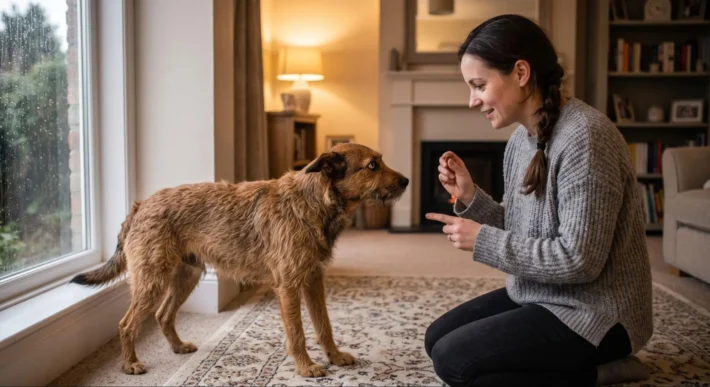
Training and calming a reactive dog does not begin at the moment a trigger appears on a walk. It begins at home, every single day, in how you live with your dog. The key is showing them they’re not the one in charge, and allowing them to step down as the self-appointed pack leader.
A dog who knows they’re not the pack leader is a fundamentally different animal everywhere else. They arrive at every situation already calmer, lower on the energy meter, and carrying less of the hyper-vigilance that triggers reactivity in the first place.
Step 1 — Establish the Foundation Through the 5 Golden Rules
This is not a warm-up; it is the core of the program. The 5 Golden Rules of The Dog Calming Code™ communicate to your dog — in a natural language they instantly understand — that you are the calm, decision-making leader. Everyone in the household must apply all five rules consistently.
Step 2 — Your Energy Is Part of the Training
Dogs read human body language and internal energy instantly. A correction delivered with frustration or anger teaches nothing except that the situation is chaotic. The exact same physical action done from a place of quiet, settled authority lands entirely differently in a dog’s mind.
If your dog starts whining at the back door, slamming the door or raising your voice adds noise to noise. Instead, slow your breathing, lower your posture, say nothing, and gently use your body to block them from the door until they step back and relax. Silence communicates control far more powerfully than yelling.
Step 3 — Make Nothing of Triggers
Whether a trigger appears at the window, in the garden, or across the street, a powerful leader’s response is simple: make nothing of it. Turn your back, ignore it, and carry on with your day.
Step 4 — Use the Calm Freeze in the Moment
When your dog’s energy starts to rise — inside the house or out — step in quietly with the Calm Freeze before they go over threshold.
To know more about The Calm Freeze, check out this blog.
Step 5 — Stop And Change Direction When Needed
When your dog gets fixated, restless, or overexcited, pick up a short lead and redirect their focus through silent, physical movement.
Step 6 — Use Isolation/Time-Out
When a dog actively challenges your leadership, repeats unwanted behaviors, or refuses to settle, a time-out provides a way to both calm them down, and learn which behavior is acceptable or not.
Step 7 — Gradual, Controlled Exposure to Triggers
Once your dog’s stress level at home has dropped, you can introduce triggers in controlled setups, keeping their energy below level 6 on a 1–10 scale.
If your dog is reactive to other dogs, don’t walk directly past a busy dog park. Park 200 yards away in a quiet corner of a field. Let your dog see another dog far in the distance. The moment your dog notices the other dog, check that their body remains soft.
Reward that calm awareness, turn, and walk away before they get tense. Gradually shorten the distance over weeks, never pushing past their comfort zone.
Step 8 — Never Add Energy to Energy
Whenever your dog is in a reactive, anxious, or hyper-excited state, avoid talking to them, making direct eye contact, or petting them — even saying “it’s okay” in a soft voice adds attention that reinforces the heightened energy.
What Is The Energy Meter in Reactive Dog Training
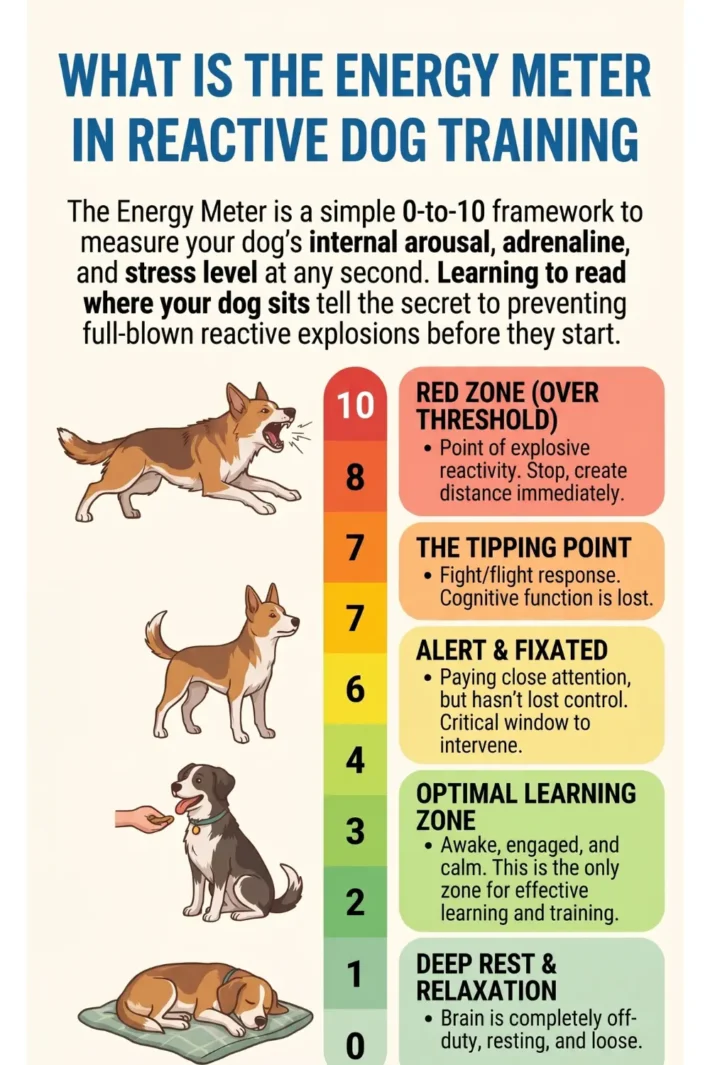
The Energy Meter is a simple 0-to-10 framework used to measure your dog’s internal arousal, adrenaline, and stress level at any given second. Learning to read where your dog sits on this meter is the secret to preventing full-blown reactive explosions before they start.
The 0–10 Energy Scale Breakdown
Levels 0–2 (Deep Rest & Relaxation)
Your dog is either sound asleep, napping, or lying down in a completely relaxed, floppy state. Their breathing is slow and steady, muscles are loose, and their brain is completely off-duty.
Levels 3–5 (The Optimal Learning Zone)
Your dog is awake, engaged, and aware of their surroundings, but mentally calm and settled. They can take direction, process food treats, and look to you for guidance. This is the sweet spot where all effective learning, conditioning, and training must take place.
Level 6 (Alert & Fixated)
Your dog notices something in the environment—a dog across the street, a passing stranger, or a strange sound. Their ears prick up, their head raises, and their body stiffens slightly. They are paying close attention, but they haven’t lost control yet. This is your critical window to intervene.
Level 7 (The Tipping Point / Point of No Return)
This is the threshold. Adrenaline and cortisol flood into your dog’s bloodstream. The brain shifts out of its thinking state and into survival mode (fight or flight). They stop listening, their vision narrows into tunnel vision, and they lose the ability to process commands or food.
Levels 8–10 (The Red Zone / Over Threshold)
Full reactivity. This is where you see frantic barking, lunging, spinning, growling, or attempts to bolt. Your dog is completely flooded with stress hormones, operating purely on instinct and adrenaline. Zero learning can happen here.
Why Level 7 Is the Most Critical Threshold
Crossing level 7 is a biological point of no return. Just like a human experiencing a near-miss car crash, a dog at level 7 or higher experiences a massive release of adrenaline that immediately jacks up their heart rate, dilates their pupils, and shuts down their logical brain.
Once that chemical flood hits their system, you cannot simply reason with them, bribe them with a high-value treat, or give a basic command like “sit.” The brain is biochemically incapable of processing new information. Furthermore, those stress hormones don’t vanish the moment the trigger walks away! It can take hours, or even days, for a dog’s cortisol levels to return to a baseline 3.
What This Means for Practical Training
- Work Exclusively Below Level 6: If you want to train your dog around triggers, you must keep them in the 3–5 zone. If your dog hits a 6, create distance immediately before they hit 7.
- Aim for Incremental Wins: The goal of a training session isn’t to take a dog from a level 9 down to a level 1 instantly. Expecting a dog in the Red Zone to suddenly act completely relaxed is unrealistic. Bringing a dog from an 8 down to a 7, or keeping a dog at a 5 when they usually spike to a 9, is a massive victory.
- Manage the Stacking Effect: Stress accumulates throughout the day. A doorbell ring at home (spiking energy to a 5), followed by a fence-barking neighbor’s dog (spiking to a 6), means your dog is starting to stress out.
The Owner’s Energy Factor
Dogs are master observers of human physiology. They feel the leash tighten, notice your breath shorten, and sense your heart rate spike the moment you spot a potential trigger ahead.
If your internal meter climbs from a 3 to a 7, your dog reads that sudden shift as absolute confirmation that danger is present, accelerating their own climb up the meter. Maintaining a calm, grounded, and steady presence is an active component of helping your dog stay below threshold.
Signs of Progress in a Reactive Dog
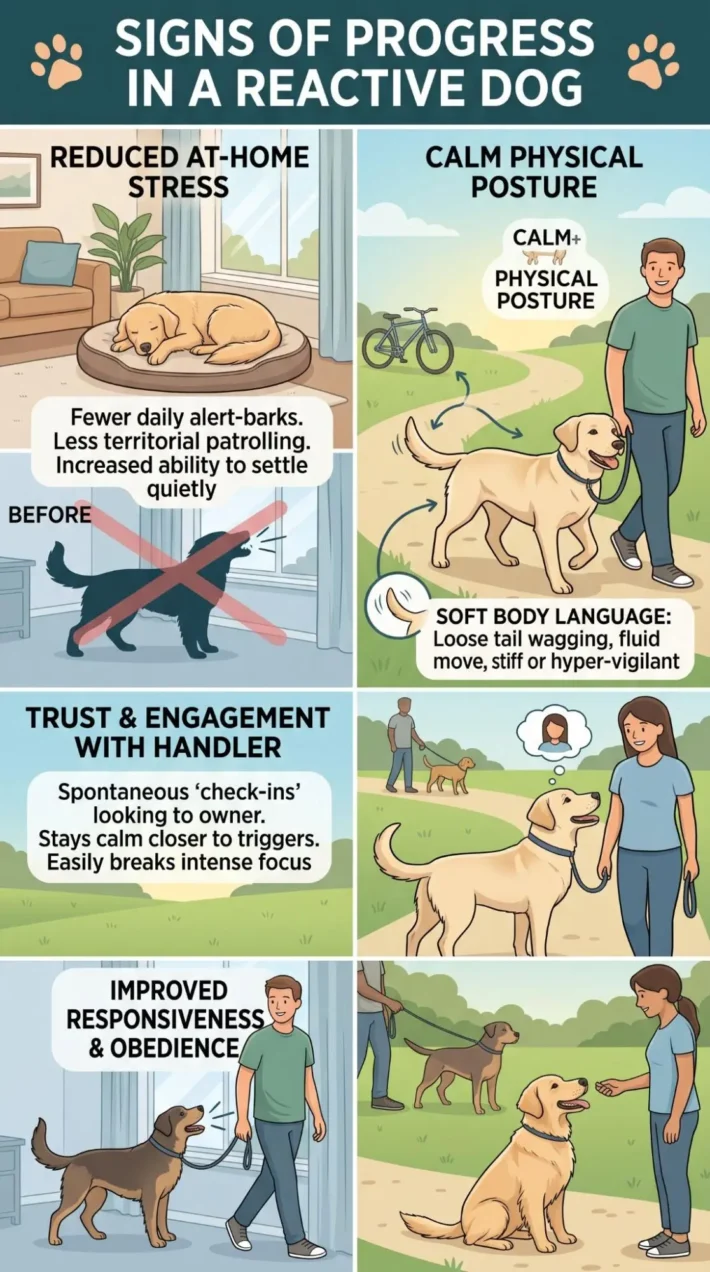
Progress in managing reactivity begins at home with subtle shifts in your dog’s daily stress levels. You’ll notice reduced territorial patrolling and alarm barking, replaced by an increased ability to settle quietly.
Outdoors, this internal calm shows up as a softened physical posture—a loose tail, fluid movement, and relaxed weight distribution rather than stiff, hyper-vigilant bracing.
As their trust in your leadership grows, your dog will start looking to you instead of hyper-fixating on distractions. They’ll begin spontaneously checking in, staying calm at much closer distances to triggers, and easily breaking their gaze with a light prompt.
Their overall responsiveness improves, allowing them to hear and obey cues like “sit” even when a trigger is nearby.
Finally, long-term progress is proven by how quickly your dog resets after a stressful encounter. Instead of remaining flooded with adrenaline for hours, a recovering dog displays a dramatically faster recovery time, returning to a baseline calm within minutes. These combined shifts show that the underlying stress pressure is truly dissolving.
OUR FREE WEBINAR WILL HELP STOP REACTIVITY BEFORE IT’S TOO LATEWhy the Dog Calming Code™ Works In Managing Dog Reactivity
Instead of just masking the symptoms with treats or punishment, The Dog Calming Code™ approach gets right to the root of the problem: lifting the heavy burden off your dog’s shoulders so they no longer feel like they have to control everything around them.
It works with your dog’s natural instincts, using simple, clear boundaries and gentle leadership rather than harsh tools or constant bribing. Having helped tens of thousands of dogs and their owners, I’ve seen firsthand how this shift transforms the relationship—building deep trust, lasting calm, and a real partnership from the inside out.
If you want to learn more about The Dog Calming Code™ and The Five Golden Rules of Dog Leadership, join my FREE webinar that tackles the most important training principles 100% free of charge.
You got this,

— Doggy Dan
FREQUENTLY ASKED QUESTIONS
What is a reactive dog, and how is it different from an aggressive dog?
Understanding what a reactive dog means comes down to intent and emotion. A reactive dog is overreacting to everyday situations because their nervous system is overwhelmed by stress, fear, or a perceived need to control the environment. While the signs of a reactive dog—like barking, lunging, or growling—can look intimidating, reactivity is driven by panic and hyper-vigilance rather than a genuine desire to cause harm.
What are the subtle signs of a reactive dog I might be missing?
Beyond obvious behaviors like lunging on the lead, subtle reactive dog behavior includes a rigid “eyeballs on stalks” freeze, unseasonal panting when it isn’t hot, excessive itching or licking as displacement behaviors, an inability to settle at home, and failing to check in with you when something unfamiliar appears.
Why do treat distractions often fail when trying to calm a reactive dog?
When learning how to calm a reactive dog, treats only work if the dog stays below Level 6 on the Energy Meter. Once a dog crosses Level 7 into the “Red Zone,” adrenaline floods their bloodstream, shutting down their logical brain and making them physically unable to process food or commands. Bribing an over-threshold dog also fails to answer the core question in their mind: “Who is actually in charge here?”
How does establishing leadership at home help a reactive dog on walks?
Knowing how to help a reactive dog starts indoors because outdoor reactivity is usually caused by a leadership vacuum. When a dog believes they are the pack leader at home, they feel obligated to make big safety decisions everywhere else. Implementing The Dog Calming Code™ and the Five Golden Rules at home removes that heavy burden, lowering their baseline stress so they arrive at walks already calmer and willing to follow your guidance.
What should I do at the exact moment my dog starts reacting to a trigger?
If your dog begins to fixate or show rising energy, intervene before they cross the threshold by staying completely calm and quiet. Use techniques like the Calm Freeze (a gentle underhand grip on the collar while turning away from the trigger) or Stop, Start & Change Direction to redirect their focus. Avoid yelling, pulling aggressively, or repeating “it’s okay,” as adding human energy to a reactive state only validates their fear.
How long does it take to see progress in a reactive dog?
While complete transformation takes consistent application of the Five Golden Rules, you will often notice subtle progress within days. Early indicators include faster recovery times after a stressful event, reduced alarm barking at home, softer body language outdoors, and your dog spontaneously glancing up at you for direction when a trigger appears in the distance.