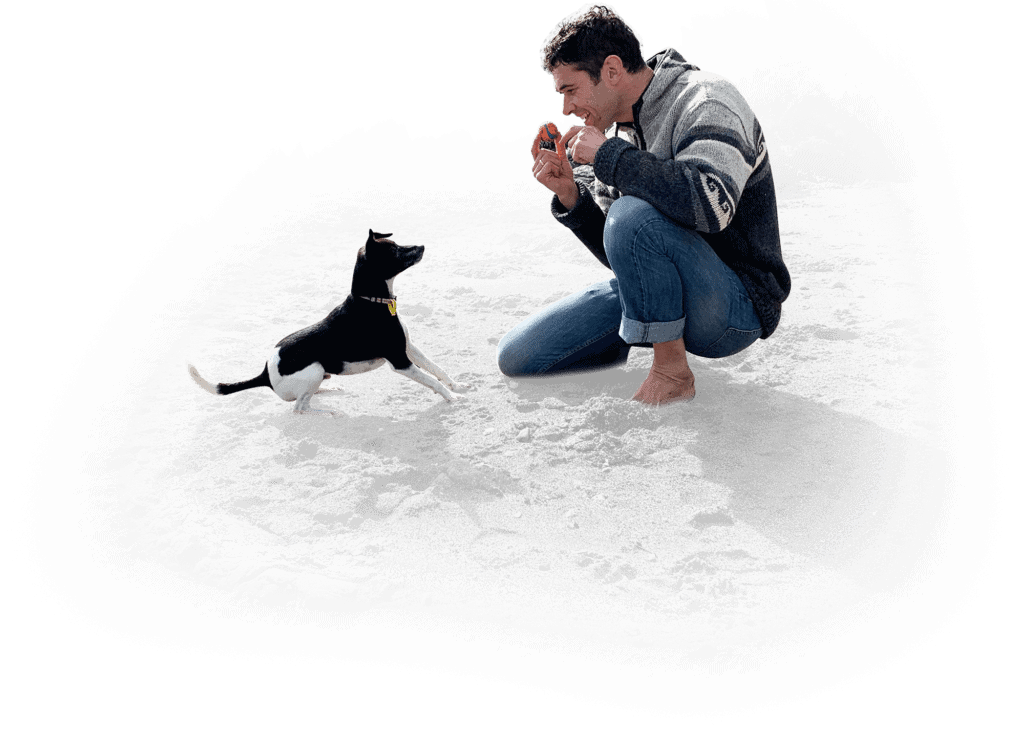
Understanding a growling dog is the first step to correcting behavior. In this blog, you will learn more about the growling dog, and what you can do as your dog’s trainer.
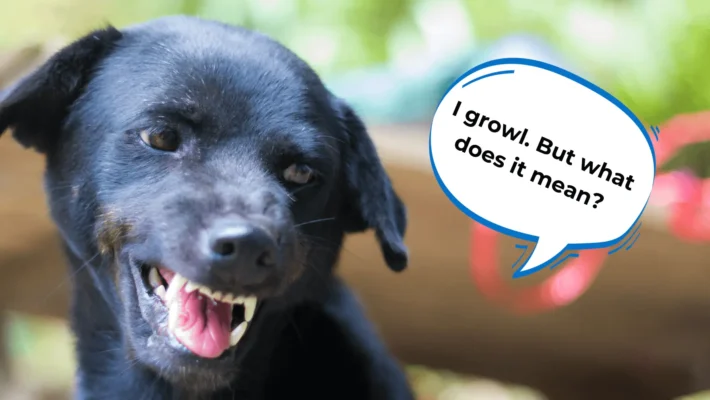
When a dog growls, what’s actually going on? Is it a bad thing? Can it be dangerous?
It’s VERY important to know, so let’s dive in and discover what dog growling is all about!
FROM REACTIVE TO OBEDIENT: FREE WEB CLASS TEACHES YOU THE PROVEN SECRETS TO CALMER DOGSIntroduction to Dog Growling
Dog growling is one of the main forms of communication dogs use. This low, rumbling sound signals various emotions, from fear to playfulness. Growling can mean so many things; understanding its types helps you interpret it better.
Typically seen as a warning or defense, growling can also indicate a need for space or discomfort.
When a dog is growling, what do they want you to know?
For most pet owners, when dogs growl, it’s a sign of something terrible. When not understood, a growl will almost always be associated with “Oh no, my dog is going to hurt us!”
FREE TRAINING: END REACTIVITY FEAR & FIND PEACE TOGETHER (7 DAYS TO ZERO REACTIVITY)But there’s more to a dog’s growl than just aggression. As a dog trainer, my goal is to help dog owners understand and approach a growling dog.
In this blog, we will talk about the types and triggers of dog growling and how you can help your dog calm down.
Key Takeaways
- Recognize that growling often stems from a perceived leadership challenge in dogs. It’s their way of expressing anxiety and defensiveness when they don’t see you as their pack leader.
- Steer clear of the “Carrot and Stick” method, which relies on treats and shock collars. These approaches fail to address the root issue of leadership and may worsen behavioral problems in the long run.
- Foster a deeper connection with your dog by establishing calm and loving leadership. By showing consistent control and understanding your dog’s energy levels, you can help them feel secure and reduce growling tendencies.
Table Of Contents
Understanding the Types and Triggers of Dog Growling
Play Growling
Play growling is your pup’s ruff sound when they’re roughhousing with another dog or even with you. It’s the sound that comes with fun! When a dog is growling during playtime, it can be startling!
Play growling is normal and natural.
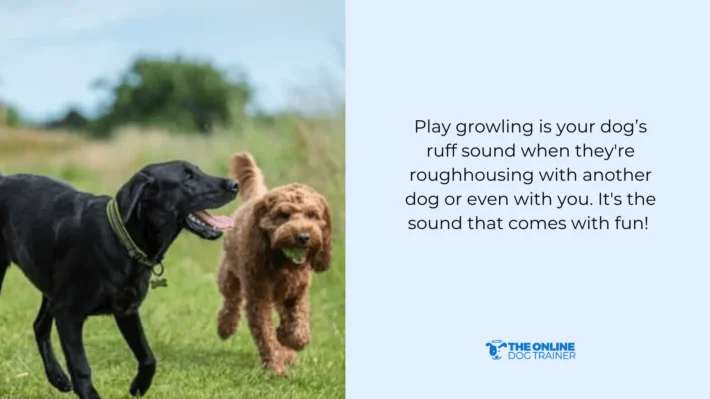
Making the growling sound is a dog’s way of communicating during fun and social interactions. It’s like when we humans laugh or make playful banter. When dogs play, they might mimic what sounds like an actual growl, but in the context of play, it’s just part of their doggy language. Usually, play growling comes with a higher pitched growl.
What Triggers Playtime Growling
Imagine your pup saying, “I’m gonna get you!” in a playful tone. It’s all part of the game. They’re having fun, expressing excitement, and engaging with their playmates. It’s their way of saying, “This is fun; let’s keep playing!”
Now, sometimes, during play, things get too intense. If a dog feels discomfort or pain, they might switch from a playful growl to a real one. This is their way of saying, “Hey, that hurt! Back off a bit! I need more space” We need to recognize this shift.
FREE WEBINAR: BRING BACK PEACE AND QUIET IN YOUR HOME IN 7 DAYS OR LESS!To know whether or not it is a playful growl, check your dog’s body language. Wagging tails and bouncy movements usually accompany this type of growl, while a real growl might come with a stiff body or a direct stare.
So, don’t worry if your dog growls during play. It’s just part of their joyful communication. But always watch to ensure it stays friendly and fun for everyone involved. Happy playing!
Warning Growling
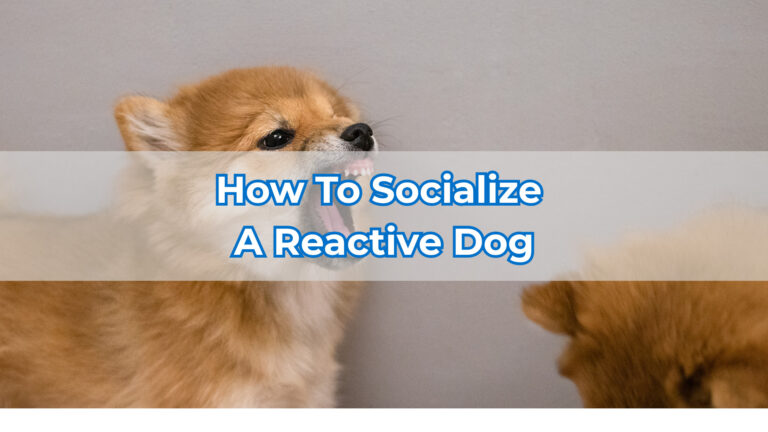
Another type of growling is the warning growl. This occurs when a dog feels uncomfortable or threatened. Essentially, the this canine body language is signaling for someone to stay away.
For example, if a dog is tied up on a leash outside a shop — a situation I don’t recommend for this reason— the dog might growl at approaching people. The growl is the dog’s way of communicating, “Please stay away from me. I feel threatened.”
This behavior indicates that the dog doesn’t like certain types of people or situations. It could be that the dog doesn’t like being petted or has an aversion to specific individuals, such as men or people on bikes. The dog uses a low growl to express its discomfort and desire for space.
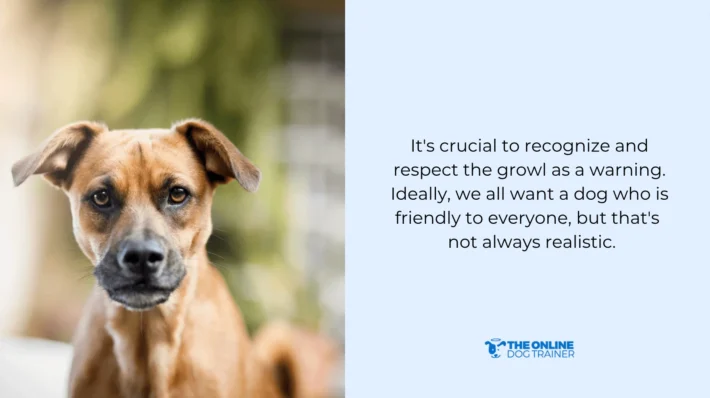
In such scenarios, it’s crucial to recognize and respect the growl as a warning. Ideally, we all want a dog who is friendly to everyone, but that’s only sometimes realistic.
Think about it from a human perspective: no one enjoys being approached and touched by strangers without consent. It’s unreasonable to expect dogs to tolerate such behavior, either. Thus, a warning growl is a perfectly normal and acceptable response. Some dogs simply do not want affection from strangers, and that’s okay.
Dogs who think of themselves as leaders exhibit independence, much like a boss who doesn’t need constant validation from colleagues. Just as you wouldn’t invade your boss’s personal space, respecting your dog’s boundaries is important.
REGISTER FOR OUR FREE CLASS AND SAY GOODBYE TO STRESSFUL BARKING AND GROWLING ISSUESIt’s entirely appropriate for a dog to communicate discomfort with a warning growl. This growl is their way of saying, “Please respect my space,” much like a boss might assert boundaries with a stern word.
Territorial Growling
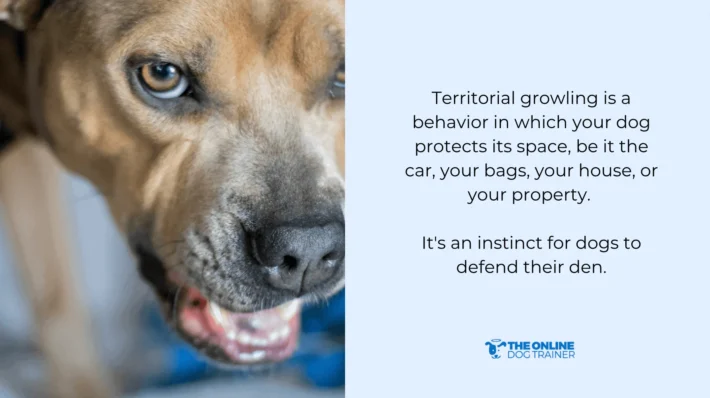
Territorial growling is a behavior in which your dog protects its space, be it the car, your bags, your house, or your property.
It’s an instinct for dogs to defend their den. When your dog thinks they are the one in charge of the household, they can absolutely be territorial. They will always be on the edge. You don’t want your dog constantly patrolling the fence line, barking and growling.
You still have to determine the level of growling that is acceptable on your circumstances. If you frequently have visitors or live in an urban area, you might prefer a friendly dog who doesn’t react aggressively to new people. Conversely, a certain amount of territorial growling may be desirable in a rural setting or if you need a guard dog.
Understanding and managing territorial growling involves recognizing your dog’s perception of its role in the household hierarchy.
Factors like your dog’s position in the “pack,” its temperament (fearful or dominant), and its training all influence this behavior. I’ve worked with many dogs to help them find the right balance, making them comfortable and secure while ensuring they don’t become overly protective.
Fear-Based Growling
Fear-based growling occurs when a dog reacts to frightening stimuli, such as noise or unfamiliar sight. It’s their way of questioning or warning about something that scares them.
JOIN OUR FREE CLASS: TURN REACTIVE ANXIETY INTO CALM CONFIDENCE AND ENJOY A STRESS FREE DOGWhat do you do when your fearful dog growls all the time? Or when they bark at non-threatening things like the toys at the dog park? It would help if you constantly reassured them that there’s no threat.
By calmly guiding them and providing positive reinforcement, you can reduce their fear and help them feel more secure in various situations. This approach fosters trust and confidence, ensuring your dog can navigate the world without undue fear.
Possession Growling
Your dog can be very possessive because guarding their possessions — if you consider dog psychology — is about survival. Dogs guard their toys, food, and other resources! For instance, if one dog growls with bared teeth at another approaching their food bowl, they’re saying, “Approach with caution, this is mine.”
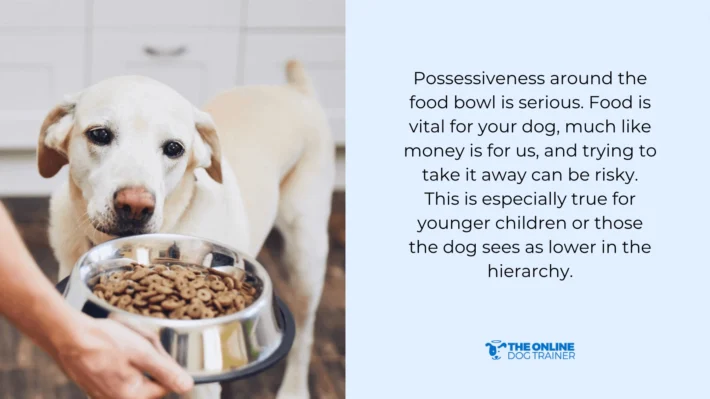
Possessiveness around the food bowl is serious. Food is vital for your dog, much like money is for us, and trying to take it away can be risky. This is especially true for younger children or those the dog sees as lower in the hierarchy.
If your dog is possessive with food, it’s likely a symptom of a deeper issue. Before addressing this, consider my free webinar, “Solving Dog Reactivity and Aggression.” Understanding leadership and hierarchy is crucial so your dog knows you’re in charge.
People often make the mistake of trying to take food from a dog, but imagine how you’d feel if someone took your meal at a café. You’d react strongly. That’s how your dog feels.
There’s an intelligent way to handle this. Start by waiting until the bowl is empty. When your dog is comfortable with you taking the empty bowl, reward them by putting something in it. This way, you’re teaching your dog to be happy about you being around their food bowl.
JOIN THIS FREE WEBINAR TO HELP YOUR REACTIVE DOG FIND CALMRemember, never try to remove your dog’s bowl while they’re eating. It’s dangerous and can escalate the issue. Always approach with understanding and patience, and consider seeking professional guidance to ensure safety and effectiveness.
Pain-Related Growling
Growling associated with discomfort or pain can manifest when you touch specific areas of your dog’s body, such as their leg, back, or neck, eliciting a defensive response. Even gentle actions like brushing can provoke growling if the dog is experiencing discomfort or injury.
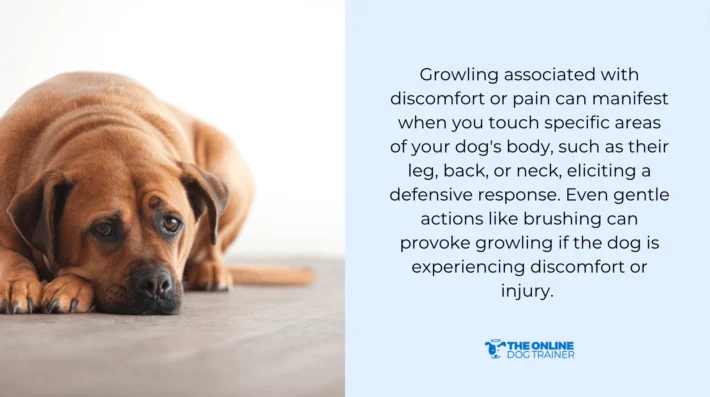
This behavior signals potential pain or discomfort, necessitating your attention. If your dog consistently reacts negatively to being touched in a particular spot, it’s crucial to consider the possibility of underlying pain. Seeking veterinary care for an evaluation is advisable in such cases.
The Reason Behind Why Dogs Growl
What exactly makes dogs growl?
Before I introduce the right way to train a dog that is prone to growling, I want to discuss first what causes this behavior in your dog.
In the previous section, I talked about different types of growling.
There are dog growling you can consider safe. For example, a playful growl you’ll often catch when two dogs are playing. Or growling because there’s real danger and your dog is warning you.
But what do you do with a growling spree you know is problematic?
I always advise pet owners to focus their attention on the main problem causing every behavior issue they see. For growling dogs, hierarchy is always an issue.
REGISTER TO OUR FREE WEB CLASS TO EXPERIENCE COMPLETE TRANSFORMATION FOR YOUR DOGSWhat do I mean by this? Simply put, your dog thinks they are the leader and should do the defending.
Your dog doesn’t see you as their pack leader, so they’re anxious, very defensive, and overly protective.
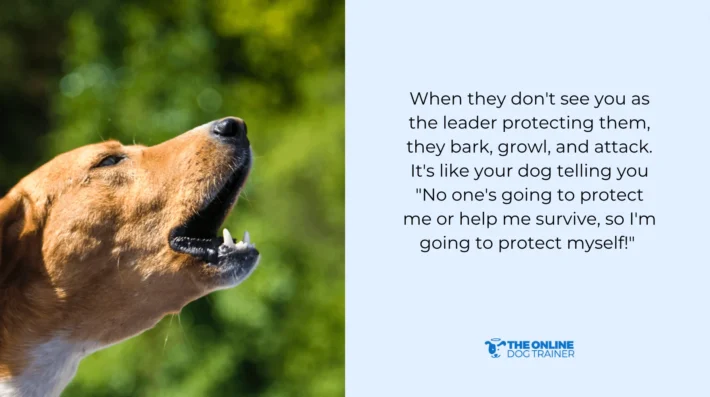
When they don’t see you as the leader protecting them, they bark, growl, and attack. It’s like your dog telling you “No one’s going to protect me or help me survive, so I’m going to protect myself!”
In my bestselling online dog training course, , I always emphasize leadership to help dogs overcome behavior issues including reactivity, excessive barking, and constant growling. Once the leadership issue in the home is sorted out, your dog can be calmer.
Training Mistake You Should Not Make When Dealing with Dog Growling: Using The Carrot and Stick Method
Now that we have established that a growling dog is struggling with leadership, let’s talk about the training mistakes most dog owners make when solving a growling dog problem: using the Carrot and Stick strategy.
The Carrot and Stick strategy involves pet owners using treats (carrots) and shock collars (sticks) excessively in the hopes of improving dog behavior.
This strategy doesn’t work because it uses band-aid solutions that don’t go to the root of the problem: the leadership issue.
Let’s discuss more below.
The Problem with Shock Collars
As a dog trainer for over a decade, I’ve never advocated for shock collars.
Why?
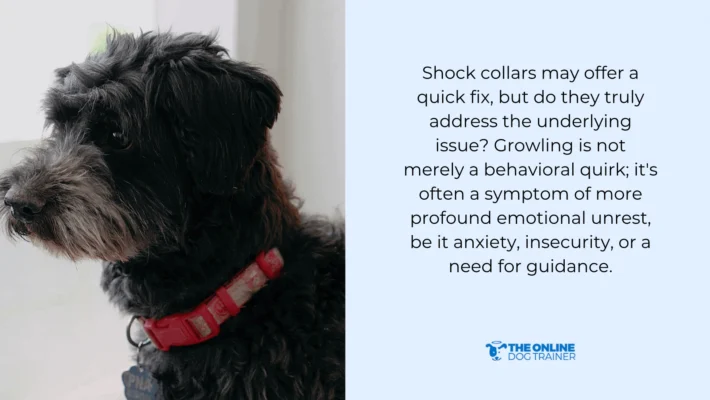
Shock collars may offer a quick fix, but do they truly address the underlying issue? For most dogs, growling is not merely a behavioral quirk; it’s often a symptom of more profound emotional unrest, be it anxiety, insecurity, dog reactivity or a need for guidance.
Shock collars just hurt your dog because it didn’t do what you wanted them to do.
The Problem with Using Treats All The Time
As for the “carrot,” while treats may yield short-term compliance, they fail to tackle the root of the problem – our dogs’ perception of their role in our dynamic.
Think of this example: You’re teaching your dog not to growl at everyone. You tell your dog, “Don’t bark at this person,” and to make the message stick, you give treats over and over again. You make treats your dog’s motivation to change.
For a while, your dog might show progress. But when you put them with different people and under a different circumstance, their old growling issue will resurface?
DOGGY DAN'S FREE WEBINAR WILL GIVE YOU THE CALM DOG YOU'VE ALWAYS WANTEDWhy? Because treats don’t treat the hierarchy concern.
Treats are fantastic training tools, but they are not the main solution.
So, where does this leave us? It’s time to pivot our approach. Instead of relying on quick fixes or temporary solutions, let’s strive for understanding.
Let’s decode the language of growling, recognizing it as a form of communication from our beloved dogs.
Instead of thinking that growling is the main problem, consider it a symptom. Growling should make us ask questions like:
- Is my dog scared?
- Is my dog struggling to survive?
- Is something making my dog anxious?
- Is my dog terrified of socializing?
Dog Growling: Dog Reactivity Can Be A Cause
One of the factors for dog growling is dog reactivity.
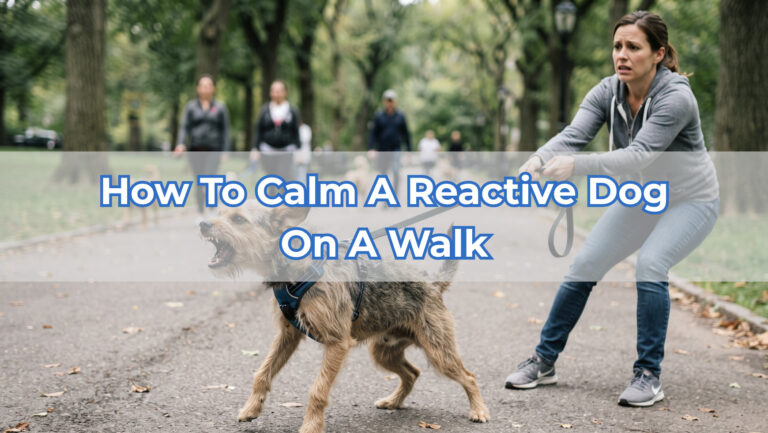
Dog reactivity occurs when dogs overreact to common, harmless stimuli. They can become so preoccupied by their fear and excitement that they become hard to control. Reactive dogs are usually fearful dogs; growling is a sign they’re triggered by something.
Reactivity in dogs can’t be resolved with just treats and punishment. Reactive dogs believe real threats are nearby. It would help if you looked deeper to solve that. Dealing with dog reactivity requires truly understanding dog psychology.
Signs of growling due to reactivity include:
- intense growling to harmless triggers
- uncontrollable growling
- showing fearful body language
- consistent growling to specific triggers
- unable to hear your commands once growling starts
For dog owners who are dealing with a reactive dog, I have a free reactivity webinar you can join. This webinar is not just another resource; it’s a powerful tool that can help your dog overcome reactivity and growling.
JOIN OUR FREE WEB CLASS AND END REACTIVE BEHAVIOR IN LESS THAN A WEEK!How to Address and Manage Dog Growling
Establish Calm Leadership
When it comes to managing your dog’s fears, it’s all about being the leader—the one they can look up to and trust.
But here’s where things often go off the rails: people need to remember to establish themselves as the leader of the pack.
Picture this: your pup is feeling jittery and anxious, and it’s looking around for someone to take charge. But if it doesn’t see you as that someone, well, it’s left feeling even more on edge.
That’s where loving leadership comes in. It’s like laying down the law with a side of affection. You show your pup that you’ve got their back, that you’re there to guide them through whatever’s got them spooked. And once they see you as the one steering the ship, you’ll notice those nerves start to calm down, bit by bit.
Always Show You’re in Control
Show your dog you’re in control. Show them you handle food, protection, danger, and even walking outdoors. When your dog sees this, it will become more confident in you and learn how to relax and calm down.
Be Aware of Your Dog’s Energy Levels
Once you’ve got the leadership issue sorted out, it’s time to tackle the next hurdle: recognizing just how scared your dog really is.
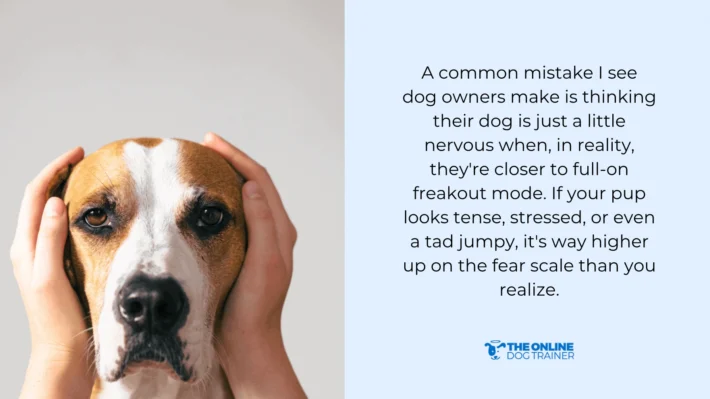
A common mistake I see dog owners make is thinking their pup are just a little nervous when, in reality, they’re closer to full-on freakout mode. If your dog looks tense, stressed, or even a tad jumpy, it’s way higher up on the fear scale than you realize. Without catching the early signs of fear, your dog can end up being so wracked with fear and with a surge of adrenaline that it’s hard to control it!
I wrote a blog, “Seven Steps to Stopping Unwanted Behavior.” You should check out if you want to learn more about helping your dog overcome growling.
THIS FREE WEBINAR REVEALS THE QUICKEST WAY TO TRANSFORM DOG BEHAVIOR EFFECTIVELYWhen to Seek Professional Help for a Growling Dog
If your dog’s reactivity or aggression is worsening over time or if they’ve attempted to bite someone, it’s a clear sign you should seek professional help.
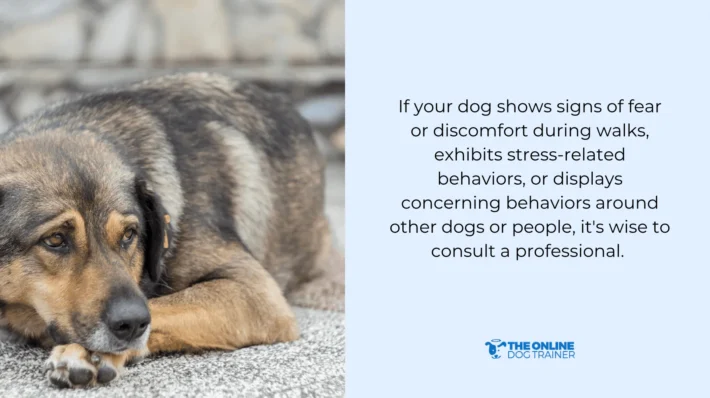
If your dog shows signs of fear or discomfort during walks, exhibits stress-related behaviors, or displays concerning behaviors around other dogs or people, it’s wise to consult a professional.
When seeking assistance, prioritize trainers who
- Focus on building a strong bond with your dog rath
- Don’t resort to shock collars or solely treat-based training
- Understand dog psychology and the root of the growling problem
While consulting a veterinarian is essential to rule out medical issues, relying exclusively on medication may not address the underlying causes of behavior problems and can lead to dependency and harmful side effects.
Join My Reactivity Webinar to Understand Dog Growling Better
I want to help you resolve dog growling through a more effective way.
Hundreds who have joined my webinar have seen some amazing changes in, often in just a few days or weeks.
What makes this webinar stand out? It tackles the real heart of the issue. No treats, no shock collars—just genuine understanding. In this webinar, I share methods that help us truly connect with our dogs, getting into their mindset instead of just handing out rewards or punishments.
If you’re interested in building a stronger bond with your dog, exploring compassionate leadership, and addressing behavior issues (you know, when your dog thinks they’re the boss), click on this link.

~Doggy Dan