“Dan, will muzzles stop dogs from fighting?” Although muzzles prevent puncture wounds and severe bite injuries, they do not eliminate the emotional arousal, territorial drive, or impulse to attack. Muzzles help manage the harmful consequences of dog fights, but they’re not enough to resolve conflicts. Addressing the leadership issue at home is still the top solution.
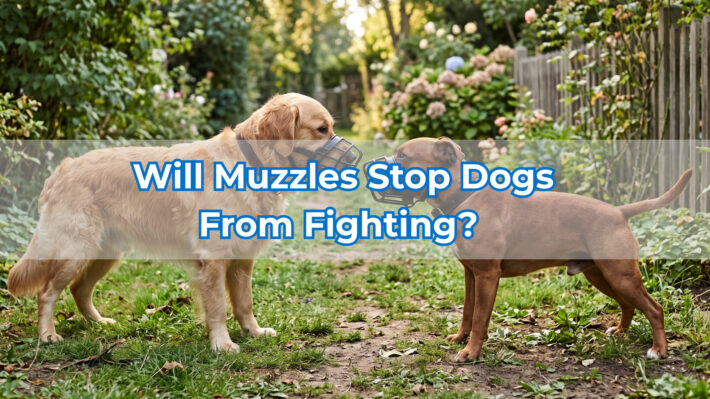
I see a lot of owners put a muzzle on their dogs and think the problem is solved. The dogs can’t bite anymore, so it must be safe now, right?
But this misconception can put your dogs in riskier situations.
After a fight, your dogs will still be emotionally aroused. They’re still territorial, and still driven to attack. The muzzle only masks the symptom, but it doesn’t address what’s actually happening inside.
Think of it this way: if your dog is reactive, fearful, or aggressive, those feelings don’t disappear because of a piece of equipment. They’re still there, intensifying. Without addressing the real root cause of fights, a muzzle will make your dog feel frustrated and confined, which often makes things worse.
You can still use muzzles. They’re genuinely helpful for preventing wounds and serious injury during a crisis. I’m not saying throw them away. But I am saying this: if a muzzle is your only solution, you’re treating the wound, not healing the dog.
In this blog, I’m going to talk about the real benefits of muzzles in dog fights, and the training tip that will ACTUALLY stop dog fights for good.
Key Takeaways
- Muzzles are a temporary safety net, not a cure: A basket muzzle provides a vital physical barrier that prevents bite injuries and lowers handler stress, but it only manages the symptom—it does not resolve the fear, arousal, or motivation behind the fighting.
- Calm leadership solves the root cause: Dogs fight when they sense a leadership vacuum and feel the primal burden to control resources, territory, and safety; stepping up as the calm pack leader (using principles like the Dog Calming Code™) removes that pressure and stops conflict for good.
- Timing, fit, and proper conditioning are essential: Always use a breathable basket muzzle (never a clamping fabric sleeve), condition your dog to wear it voluntarily, and only put it on when you are already ~99% confident in the setup as an extra layer of protection.
Do Muzzles Prevent Dog Fights? Its Role in Dog-on-Dog Conflict
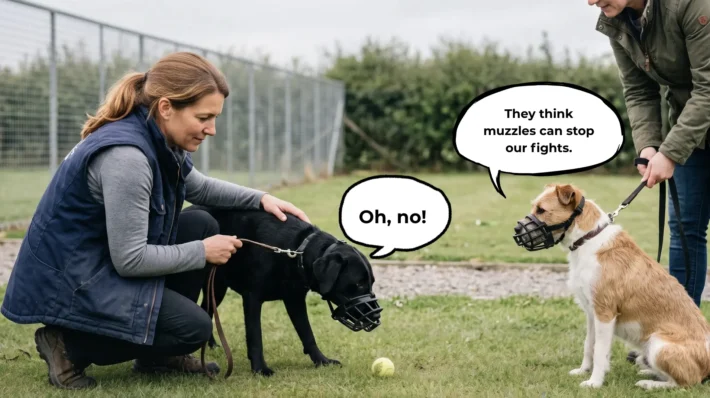
To know the real role of muzzles and dog fights, it’s best to know what it can and can’t do.
What Muzzles Can Do
When you’re doing a controlled reintroduction (example: two dogs with high tension, and a lot of uncertainty), a muzzle is a genuinely useful tool. It creates a physical safety barrier that gives you room to breathe and work.
A dog muzzle stops you from worrying about one dog inflicting serious injury to the other. Your mind can say, “My dogs have muzzles on. At least there’s a protective barrier just in case biting happens again.”
Also, most dog owners tend to feel safer when their aggressive dogs have muzzles on. And when you feel safer, your dogs feel it too.
Your dogs can feel the tension and anxiety in the way you hold the leash. If you’re stressed, your dogs’ stress levels elevate, too. A muzzle can reduce your stress, which means less agitation traveling down the lead and into your dogs. That matters more than people realize.
It also buys you precious seconds. If things escalate, you can step in and safely separate two dogs without risking a bite to your hands. In that moment, that’s everything.
I have also observed that dogs and dog owners often give more space to dogs that use muzzles. If you want minimal interaction while you’re out with your reactive dogs, a muzzle is a must.
So yes, muzzles have a place in managing dog fights. I want to be clear about that.
However, there are also serious consequences when you only rely on muzzles to remove your dogs’ urge to fight.
LEARN HOW THE DOG CALMING CODE™ CAN BRING PEACE BACK FOR GOODWhat Muzzles Can’t Do
A muzzle doesn’t address the WHY behind dog conflicts.
It doesn’t address fear-based reactivity. It doesn’t resolve resource guarding. It doesn’t calm a dog who is frustrated, overstimulated, or locked into predatory drive. Those things are still happening — underneath the equipment and behind the behavior — and no physical tool reaches them.
There’s something else worth knowing too.
A muzzled dog is a dog who can’t defend themselves. If an off-leash, unmuzzled dog approaches and things go wrong, your dog has no way to protect themselves. That’s a real risk that’s easy to overlook.
Moreover, if you’ve ever introduced a muzzle too quickly without letting your dog adjust, or without proper desensitization, you may have made things worse without realizing it. A dog who associates the muzzle with stress or sudden restriction can become more frustrated, not less.
Best Muzzles For Dog Aggression
If you’ve decided a muzzle is part of your management plan, I want to make sure you’re using the right one.
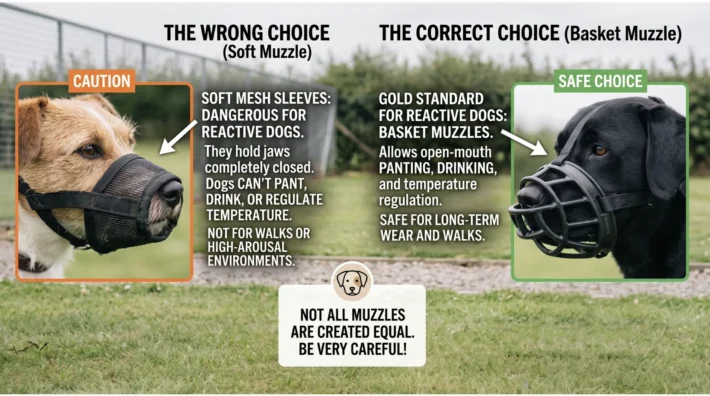
Be very careful when choosing a muzzle for your dog because not all muzzles are created equal, and the wrong choice can actually make dog fights even worse.
Basket Muzzles vs. Soft Mesh Sleeves
Let me start with the one I see causing problems most often: the soft mesh or fabric sleeve muzzle.
I understand why people reach for them. They look gentle and feel less intimidating. But here’s a fact about them: these muzzles hold your dog’s jaw completely closed. Your dogs can’t pant, drink, or regulate their temperature.
This type of muzzle works for a brief vet procedure when your dog needs to stay still and calm. But for reactive or high-drive dogs on a walk, or dogs that are in an environment that already triggers arousal, they’re dangerous.
The gold standard for reactive dogs is the basket muzzle.
A well-fitted basket muzzle allows your dogs to pant freely, drink water, and even take treats during training. Your dogs can be comfortable, safe, and still manageable.
Which Material Is Right for Your Dogs?
This comes down to your dog’s size, drive, and how serious the fighting is.
Wire Basket Muzzles
These are the strongest options on the market. Maximum airflow, completely bite-proof, and rigid enough that there’s zero risk of the basket collapsing under pressure. If you have a large, powerful, high-drive dog with a serious bite history, start here.
Biothane or Heavy-Duty Vinyl Muzzles
Lightweight and easy to clean, these are highly bite-resistant with reinforced nose guards, making them a solid choice for strong dogs, though they don’t offer the same bite resistance as the wire option.
Molded Rubber Muzzles
This is the most common muzzle you’ll see, and for good reason.
It’s comfortable, practical, and works well for mild reactivity and general training walks. But I want to be honest: it’s flexible. A strong, determined dog can fold or compress the basket under real pressure. For most dogs, it’s absolutely fine. For a serious fighter? Consider one of the sturdier options above.
THIS FREE WEBINAR WILL TEACH YOU HOW TO BE A TRUSTWORTHY LEADERWhat Muzzle Is Recommended By Doggy Dan?
For dogs showing aggressive tendencies, my top recommendation is always a basket-style muzzle, specifically the Baskerville.
The basket design fits securely over the snout while keeping the front open, which is essential for your dog’s well-being. It allows them to pant freely to regulate their body temperature, drink water, and take treats during training. Baskerville muzzles also feature multiple built-in safety straps for a locked-in, escape-proof fit without sacrificing comfort. I’ve relied on them in my training for over a decade, and they remain the most dependable tool for keeping everyone safe.
How to Muzzle Train Your Dogs Safely
If a muzzle is going to be part of your toolkit in making sure dog fights don’t turn bloody and dangerous, this part matters enormously.
A muzzle forced onto anxious dogs is unpleasant and can make reactivity worse. You’re adding stress on top of stress, and that never ends well.
The good news? Done properly, most dogs can learn to accept a muzzle calmly. And the key word there is learn.
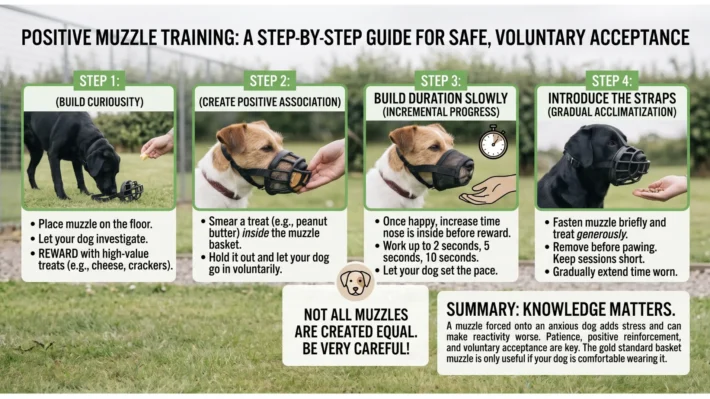
Step 1: Start with sight and scent.
Don’t put the muzzle anywhere near your dog’s face yet. Just place it on the floor. Let your dog sniff it, investigate it, and walk away. Every time they show curiosity, reward them. High-value treats like crackers or cheese work best here.
Doing the routine above will help your dog learn that the muzzle is not a threat.
Step 2: Let Your Dog Go In Voluntarily.
Smear something irresistible inside the basket and hold it out. Don’t push it toward your dog, just let them push their nose in. That’s the difference between a dog who tolerates a muzzle and a dog who accepts one. Voluntary is everything.
Step 3: Build Duration Slowly
Once your dog is happily nosing into the basket for treats, start increasing how long they stay there before you reward them. A second. Then two. Then five. There’s no rush here. Just let your dog set the pace.
Step 4: Introduce The Straps
Fasten the muzzle briefly, treat generously, and remove it before your dog can paw at it. Keep the first sessions short. End on a good moment. Gradually extend the time as your dog’s confidence grows.
A Few Safety Rules Worth Remembering
Never rush this process. Reactive dogs who have a muzzle forced on them don’t forget that experience, and it will make every future session harder.
Please make sure the fit is right. Measure your dogs’ snout length, circumference, and the full height of their open-mouth pants. A muzzle that’s too tight prevents panting. A muzzle that’s too loose comes off at the worst possible moment.
The Right Way To Use Muzzles
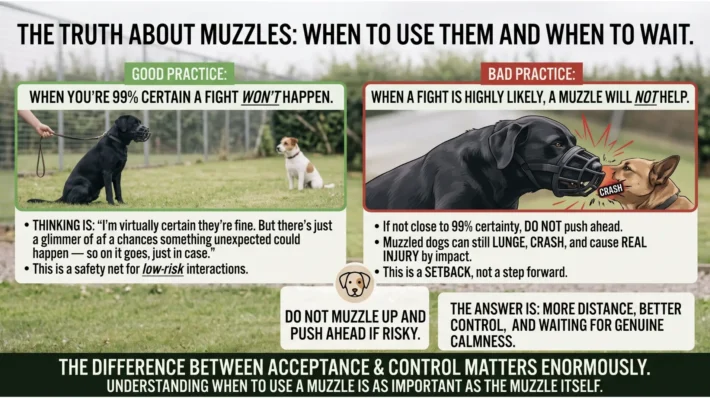
Before you consider using muzzles, I want you to understand the truth about them.
A muzzle goes on when you’re already about 99% certain a fight isn’t going to happen, not when you think one probably will.
The thinking isn’t: “This dog might bite so they better muzzle up and go for it.” The thinking is: “I’m virtually certain they’re fine. But there’s just a glimmer of a chance something unexpected could happen — so on it goes, just in case.”
This distinction matters enormously.
If a Fight Is Highly Likely, A Muzzle Will Not Help
If you’re not already close to that 99% certainty, the answer isn’t to muzzle up and push ahead anyway.
The answer is more distance, better control, and waiting until your dog has genuinely calmed down before you try again.
Here’s why: a muzzled dog that’s ready to fight can still lunge. They can still crash into another dog and cause real injury through sheer impact alone. The whole interaction becomes a setback rather than a step forward.
JOIN OUR FREE WEBINAR AND LEARN HOW TO STOP DOGS FROM FIGHTING WITHOUT FORCE!Muzzles Don’t Stop Fights… Fixing The Leadership Issue Can
To stop a fight between your dogs, you have to look at the world through canine psychology. To a dog, leadership equals survival.
Why Do Dogs Fight?
Dogs are hardwired pack animals. In the wild, the pack leader secures food, anticipates danger, and keeps everyone safe. Without a clear leader, the pack falls into chaos. The dogs feel vulnerable, terrified, and desperate to survive on their own.
Even in a warm, loving home with full food bowls, that primal instinct doesn’t shut off. You might think, “My dogs have everything they need… why are they so anxious?” But if your dogs don’t clearly see you taking charge, a leadership gap forms. An uneasy question takes over: Who is keeping this pack safe?
When dogs constantly clash over food, high-value toys, or affection, it isn’t just petty jealousy or random aggression. It is an anxious, instinct-driven bid for control.
- Fighting over a favorite spot isn’t stubbornness but a claim on territory. It’s a signal that says “this is where I belong in this pack.”
- Fighting over toys isn’t possessiveness; it’s resource guarding. It’s the same ancient instinct that kept their ancestors alive when resources were scarce and had to be earned.
- Fighting when excitement peaks — at the front door, before a walk, when a stranger arrives — isn’t misbehavior. It is overstimulation for dogs who think they are in charge of everything in the home.
This is the crucial part: if your dogs are going to scan the home for the leader of the pack, will they know it’s you?
Why Your Leadership Matters In Stopping Dog Fights
If they don’t see calm, confident direction from you, every single dog in your home will feel the primal urge to step up and claim it. This is where things turn genuinely dangerous: when multiple dogs believe they alone must take charge to keep the pack safe, clashes are inevitable.
Dogs settle their conflicts through the only way they know how: fighting.
The only way to break this exhausting cycle is to lift that burden off their shoulders. Multi-dog household harmony begins the moment you step up as the undisputed guide.
When your dogs realize that you have everything completely under control, their anxiety fades, their guard drops, and they can finally relax into being peaceful companions.
Before You Use A Muzzle, Fix The Leadership Issue First
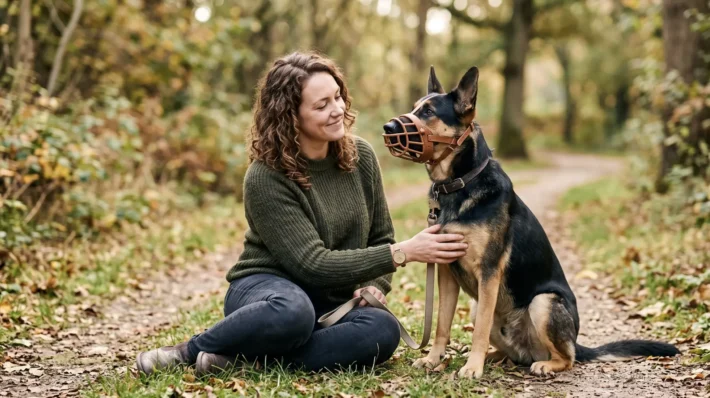
It’s vital to understand what a muzzle can and cannot do for your dog’s emotional world.
It prevents a bite, but it doesn’t quiet the storm inside their chest. Behind the basket, your dog is still carrying the crushing weight of believing that every threat, every decision, and the safety of the entire family rests squarely on their shoulders. They aren’t trying to be “bad” or aggressive for the sake of it—they are terrified and convinced that no one else is handling the danger.
Establishing Your Leadership Using The Dog Calming Code™
True peace happens only when your dog realizes they no longer have to carry that burden.
My bestselling program, The Dog Calming Code™, teaches the Five Golden Rules of dog leadership. These rules speak directly to their instincts, gently reassuring them that you are stepping up to protect and provide.
The rules allow you to show your dogs you are the leader through the following:
- Food & Resources: You control mealtimes with calm confidence, reassuring them that their survival is completely secure in your hands.
- Danger & Barking: When they alert you to something scary outside, you calmly take over and investigate. You show them you are in charge of handling danger.
- Reunions: Greeting them with grounded, quiet energy so they never feel the chaotic pressure of high-arousal greetings.
- Affection & Interaction: Giving love and play on your terms, showing them that a steady, loving leader is in charge.
- The Walk: Guiding the path and calmly navigating the world ahead so they don’t feel the need to march out front on guard duty.
When you put these pieces in place, your dogs will finally relax. Aggression and reactivity begin to melt away because the fear behind them has vanished. Your dog no longer has to be a bodyguard; they can finally be a dog.
Safety and Healing Go Hand in Hand
Fixing leadership is the real cure, but keeping everyone safe in the meantime is also your responsibility. Using a muzzle. At the same time, building this foundation is like having a safety net. It protects your dog and the community while you work together, and once your dog feels safe, calm, and trusting, you can take the tool off for good.
A muzzle manages the symptom so everyone stays safe today. Calm, loving leadership heals the root cause so you can both enjoy tomorrow.
HELP YOUR DOGS BECOME CALM AGAIN. JOIN THIS FREE WEBINAR TODAY.When It’s Time to Bring in Professional Help
Sometimes, love, patience, and good intentions aren’t enough to solve the problem—and that is okay. Living in a home thick with tension, where you walk on eggshells and dread the next outburst, takes an immense emotional toll. Recognizing that a situation has moved beyond what you can safely handle on your own is not a failure, nor is it a sign of weakness. It is an act of deep responsibility and courage.
Canine behavior is complex, and when fear, panic, or survival instincts run deep, the margin for error shrinks dramatically. You should reach out for qualified, professional support immediately if you notice:
- Escalating Intra-Household Fights: Clashes between dogs that are no longer just noisy posturing, but intentional, dangerous attempts to inflict physical harm.
- Redirected Aggression: A dog that turns its frustration or panic onto you, family members, or other pets when prevented from reaching a trigger.
- Increasing Bite Severity: Scuffles that progress from air-snapping and minor nicks to deep puncture wounds or repeated, clamping bites.
- Persistent Hyper-Vigilance: A dog that cannot relax, sleep deeply, or disengage from scanning the environment for threats inside the home.
- Overwhelming Fear and Isolation: When your household has to be divided by baby gates, closed doors, and constant schedules to keep everyone physically safe.
Living this way keeps you and your dogs trapped in a chronic fight-or-flight state.
Bringing in an experienced, qualified professional gives you an objective eye, a tailored safety plan, and the guidance you need to navigate high-stakes moments.
JOIN THIS FREE WEBINAR AND LEARN THE DOG CALMING CODE™ FOR FREEThe Dog Calming Code™ Brings Back Real Peace In The Home
Healing a home caught in conflict doesn’t come from harsh corrections, loud commands, or using dog muzzles forever. It comes from speaking directly to your dogs’ primal need for security. The Dog Calming Code™ gives you the step-by-step foundation to show every dog in your care that you are calmly, completely in control.
When your dogs see steady leadership in you, they no longer have to guard the home, fight for resources, or compete for survival. The internal pressure lifts, their guard drops, and the fighting stops for good—allowing your household to finally return to the calm, safe, and joyful sanctuary it was always meant to be.
If you want to learn the life-changing principles taught by The Dog Calming Code™, you can join my FREE webinar. Hundreds of thousands of dog owners have seen changes in their dogs… I’m sure it can help you, too.

— Doggy Dan
FREQUENTLY ASKED QUESTIONS
1. Will putting a muzzle on my dog stop dog fights from happening?
No. While a muzzle prevents punctures and severe bite injuries, it only manages the physical symptoms. It does not eliminate underlying emotional arousal, fear, territorial drives, or the impulse to attack. To stop fights permanently, you must address the root cause, such as establishing calm human leadership and resolving resource guarding or anxiety.
2. What are the main benefits of using a muzzle for reactive dogs?
- Physical Safety Barrier: Protects other animals and people from bite injuries during controlled reintroductions or desensitization.
- Lowers Leash Tension: Relieves handler stress and breaks the anxious loop where human tension travels down the lead to the dog.
- Safe Separation: Buys crucial seconds to intervene safely without risking bites to your hands.
- Encourages Distance: Signals to other dog owners in public to give your dog the space it needs.
3. Why shouldn’t soft mesh or fabric sleeve muzzles be used on walks?
Fabric sleeve muzzles clamp the dog’s jaws completely shut. This prevents them from panting, drinking water, taking treats, and regulating body temperature. While suitable for brief, stationary veterinary procedures, they are dangerous during exercise or high-arousal situations. Basket muzzles are the standard because they allow unrestricted panting and hydration.
4. How do I choose the best basket muzzle material?
- Wire Basket: Rigid, maximum airflow, and 100% bite-proof; best for large, high-drive dogs with serious bite histories.
- Biothane / Heavy-Duty Vinyl: Lightweight, easy to clean, and highly bite-resistant with reinforced nose guards.
- Molded Rubber: Flexible and comfortable for mild reactivity and everyday training, but can compress under extreme force.
5. Can dog muzzles be used as a long-term solution?
No. A muzzle is a temporary safety net designed for transitions, desensitization, and crisis prevention, not a permanent lifestyle. Leaving a dog muzzled long-term or unsupervised can cause pressure sores, strap injuries, and increased frustration. The goal is always to address the underlying behavioral drivers so the muzzle can eventually come off.
6. When is the right time to put a muzzle on?
A muzzle should go on when you are already roughly 99% confident that a fight will not happen, serving as an added safety net for unexpected variables. If high arousal or a fight is likely, forcing an interaction with a muzzle on can lead to blunt-force trauma from lunging, heightened frustration, and training setbacks. Increase distance and de-escalate first.
7. Why does establishing leadership reduce fighting in multi-dog homes?
Dogs instinctively seek safety in a structured hierarchy. If they sense a leadership vacuum, each dog feels the survival burden of protecting resources, claiming territory, and making safety decisions. When you establish calm leadership (such as through the 5 Golden Rules in The Dog Calming Code™), the internal pressure lifts, their guard drops, and they no longer feel compelled to fight for control.
8. When should I seek qualified professional help instead of managing at home?
You should immediately consult a professional dog behaviorist once you see these:
- Escalating intra-household fights with intent to inflict severe harm.
- Bites progressing from minor nicks to deep punctures or clamping holds.
- Aggression redirecting onto human family members.
- Chronic hyper-vigilance where dogs cannot settle or rest safely in the home.