✨ Ask Doggy Dan AI About Your Dog Now  🐶
Dan's AI Chat Widget

Difference Between Reactive And Aggressive Dog: Knowing This Helps You Train Better

dog training to build a strong bond and better behavior.

Last Updated: May 2026

Last updated: May 2026

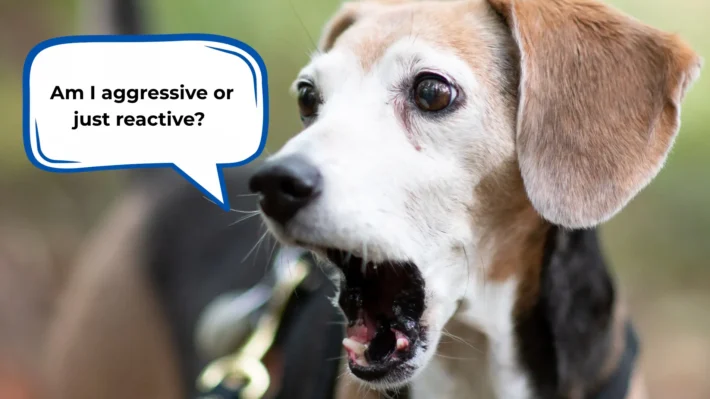
What is the main difference between reactive and aggressive dog? This blog will help you understand the differences so you won't be left asking “Is my dog really aggressive or just reactive?”
difference between reactive and aggressive dog
GET MY DOG CALMING CODE FOR FREE: JOIN HERE

Knowing the difference between a reactive and aggressive dog is the first step toward effective support.

A common misconception is that a barking, lunging dog is “vicious,” when in reality, they may simply be terrified or over-excited.

With over ten years of experience helping more than 100,000 dogs overcome behavioral challenges, I understand that distinguishing between stressful behaviors is rarely black and white.

When a dog begins to bark or lunge, many owners are left wondering: Is this reactivity, or is it aggression? Understanding this distinction is vital for your dog's well-being. In this article, I will guide you through the key differences and equip you with proven strategies to manage and improve your dog's behavior.

Let's jump in!

Key Takeaways

  • Reactivity is an emotional “explosion” driven by fear or over-stimulation with no intent to harm, whereas aggression is a functional tool used to resolve a crisis or eliminate a perceived threat.
  • Reactive dogs typically recover quickly once a trigger passes and struggle mostly in high-stimulus areas; aggressive dogs have longer “cool-down” periods and show consistent behaviors regardless of the environment.
  • Both require “stress bucket” management (distance and barriers), but while reactivity is often solved through positive rewiring (counter-conditioning), aggression requires specialized safety measures like muzzle training and professional intervention.

What Is Dog Reactivity?
leash reactivity dogs

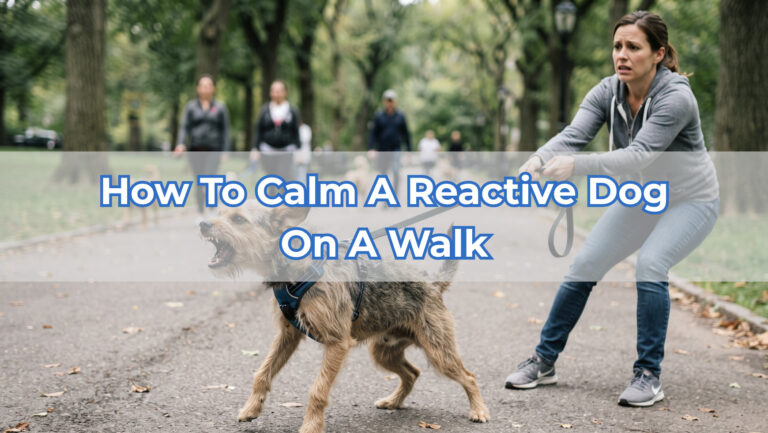
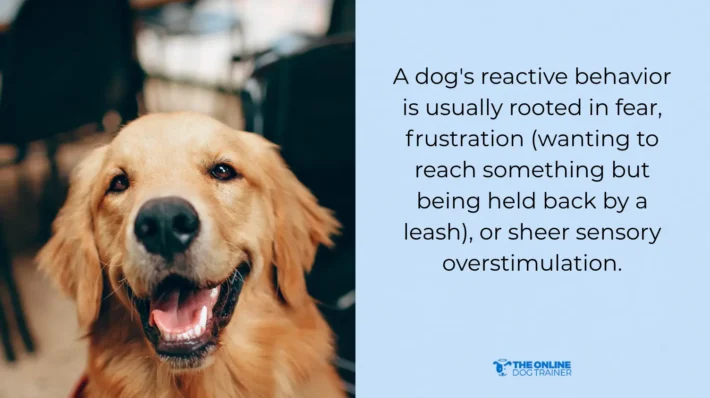
Reactivity is an abnormal or over-the-top response to a normal stimulus. It is an emotional “explosion” caused by a nervous system that has reached its limit. A dog's reactive behavior is usually rooted in fear, frustration (wanting to reach something but being held back by a leash), or sheer sensory overstimulation.

Reactivity can be seen in frantic barking, lunging, whining, or “spinning” when they see a particular trigger. What other dogs see as ordinary, the reactive dog sees it as a big deal! The intent of these reactive outbursts is to create space or release pent-up energy, not necessarily to cause physical harm.

What Is Dog Aggression?
difference between reactivity and agression

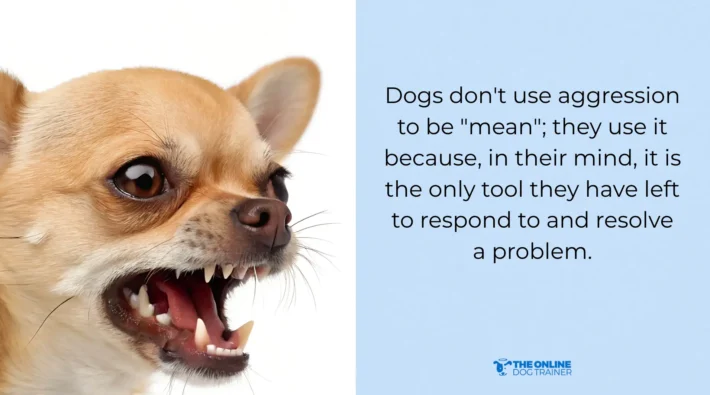
To truly help an aggressive dog, we have to look past the “scary” behavior and identify the function of the aggression. Dogs don't use aggression to be “mean”; they use it because, in their mind, it is the only tool they have left to respond to and resolve a problem.

Here is a comprehensive breakdown of the types of aggression, the specific behaviors they manifest, and how they escalate. To truly help an aggressive dog, we must look past the “scary” behavior and identify the function of the aggression. Dogs don't use aggression to be “mean”; they use it because, in their mind, it is the only tool they have left to resolve a crisis. By categorizing these behaviors into distinct sections, we can better understand the motivation and provide the correct support.

The Core Types of Aggression

A dog's aggressive behavior is usually a symptom of an underlying emotional state. Dog owners, understanding the “Why” dictates the training approach and determines how you manage your dog's environment.

leash reactive dogs can turn aggressive

Fear-Based Aggression

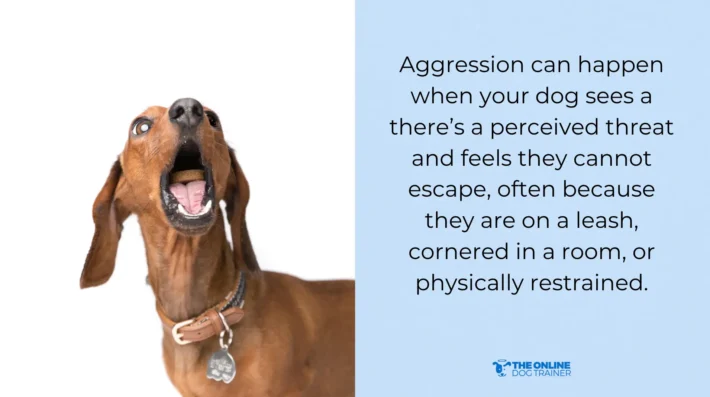
Fear-based aggression is the most common form of aggression. The dog perceives a threat and feels they cannot escape, often because they are on a leash, cornered in a room, or physically restrained.

The Mindset: “I’m terrified, so I will act big and scary to make you leave before you can hurt me.”

Imagine a dog that snaps at a stranger who leans over them to pet their head. The dog isn't being malicious; they are experiencing a panic response because their personal space was invaded and they felt unable to retreat.

Territorial Behavior & Resource Guarding (Defensive Aggression)

This stems from a deep-seated survival instinct to protect valuable “assets” that the dog believes are necessary for their safety or well-being.

The Mindset: “This is mine, and your presence threatens my access to it.”

A dog in a heightened state may lunge frantically at the window only when the mailman walks onto the porch, yet remain perfectly friendly when meeting the same person at a neutral park.

A dog might also “freeze” and growl if you walk near their food bowl or a favorite “stolen” item, like a sock or a bone. They are communicating a boundary regarding their possessions.

Predatory Aggression (Prey Drive)

Unlike other forms of aggression, this is often silent. It is not driven by anger or fear, but by biological fulfillment and the instinct to hunt.

The Mindset: “That moving object is something to be chased and captured.”

This is seen in a dog that intensely stalks, chases, and grabs a neighbor’s cat, a squirrel, or even a fast-moving bicycle. Because this is a high-arousal “hunting” state, it can be extremely difficult to interrupt once the chase has begun.

Social or Conflict Aggression

Sometimes mislabeled as “dominance,” modern behavior science views this more as a lack of social coping skills or high frustration levels.

The Mindset: “I don't like what you are doing, and I will use my teeth to make you stop.”

This often occurs during “handling” moments, such as an owner trying to clip a dog's nails or moving them off a comfortable sofa. The dog uses aggression to resolve a conflict of interest in their favor.

Examples of Aggressive Body Language
understanding dog's triggers

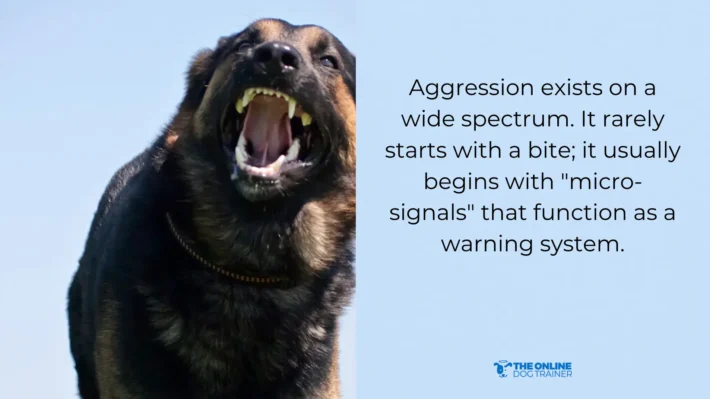
Aggression exists on a wide spectrum. It rarely starts with a bite; it usually begins with “micro-signals” that function as a warning system. Identifying these early can prevent an escalation to physical contact.

The “Hard” Stare

This is a fixed, unblinking gaze where the dog locks onto a target. The dog’s eyes may look “glassy,” and you might see the whites of their eyes, a phenomenon known as Whale Eye. This is a high-intensity signal that the dog is prepared to act to whatever trigger that captured your dog's attention.

The Low Growl

A vibrating sound produced deep in the chest. While many owners find this scary, a growl is actually a good thing—it is a clear, honest communication that says, “I am uncomfortable; please stop what you are doing.” Punishing a growl often leads to a dog that bites without warning.

Snarling (The Lip Curl)

This is a vertical lift of the upper lips to expose the canine teeth. It is a purely visual “Keep Out” sign. It serves as a final warning that the dog’s patience or tolerance has been exhausted.

Snapping (Air Snapping)

In this snapping behavior, the dog bites the air near the target but deliberately avoids making contact. This is a “warning shot.” It indicates that the dog is trying very hard not to bite the person or animal, but is signaling that they will do so if the threat does not retreat.

The Full-Contact Bite

This is the final stage of the aggression cycle. Bites are measured by the Ian Dunbar Bite Scale, ranging from a “nip” (Level 1–2, no skin broken) to a deep puncture with tearing or multiple bites (Level 4–5).what you are doing (like clipping my nails), and I will use my teeth to make you stop.”

  • Example: A dog that snaps at an owner when they try to move the dog off the sofa.

Key Behavioral Differences Between Reactive and Aggressive Dogs

FeatureReactive DogsAggressive Dogs
IntentDriven by big feelings (anxiety/excitement). No inherent goal to bite.Driven by a goal to eliminate a threat or control a resource.
TriggersOften specific stimuli (bikes, hats, dogs). Usually calms when the trigger leaves.May persist or search for the trigger even after it has moved away.
Body LanguageHigh arousal, “trance-like” staring, frantic movement.“Hard” unblinking stare, stiff “freeze,” lowered head, or lip curls.
InterventionOften redirected with high-value treats or a change in direction.Highly difficult to redirect; often requires physical barriers and expert intervention.

Reactivity vs. Aggression: Determining the Difference
dogs aggression towards other animals

Recovery Time and Refractory Periods

The hallmark of reactivity is a quick recovery.

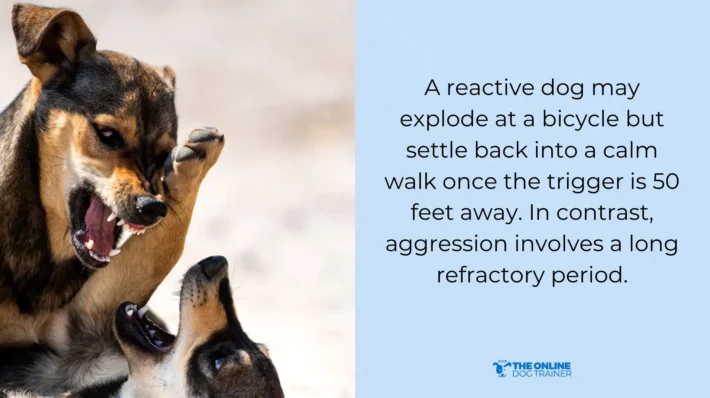
A reactive dog may explode at a bicycle but settle back into a calm walk once the trigger is 50 feet away. In contrast, aggression involves a long refractory period.

An aggressive dog may continue to lung, pace, or growl for ten minutes after a “threat” has left, indicating a persistent intent to drive the trigger away.

Professional Assessment for Reactivity and Aggression

Distinguishing between “barking to keep the world away” and a genuine intent to harm is complex.

A Certified Applied Animal Behaviorist (CAAB) uses controlled temperament tests to identify whether a dog is acting out of “leash frustration” or true “fear-aggression.”

Professional insight is the safest way to determine if a dog is trying to close the gap for physical contact.

Environmental Context

The environment acts as a “volume knob.”

Reactive dogs typically struggle only in high-stimulation “noisy” environments, like busy city sidewalks, and may appear perfectly calm in a secluded field.

Aggressive dogs show directed behaviors regardless of the setting. Resource guarding or territorial aggression will manifest even in a quiet, controlled home.

Addressing Reactive Behaviors
positive reinforcement dogs

Environmental Management For Reactive or Aggressive Dogs

Management is about preventing the “stress bucket” from overflowing. You cannot train a dog during a meltdown. Use visual barriers (frosted window film) and escape blocks (hedges or parked cars) to keep your dog below their threshold. This ensures they remain in a state where they are actually capable of learning.

The Science of Desensitization

This process involves exposing your dog to triggers at such a low intensity—usually through great distance—that they notice the trigger but do not react. Over months, you slowly decrease that distance, “toughening up” the nervous system until the trigger becomes boring background noise.

Counter-Conditioning

While desensitization handles distance, Counter-Conditioning rewires the internal emotion. By immediately pairing a trigger with a high-value reward (like chicken), you change the dog's reflex from “I'm scared” to “Where's my treat?” This positive emotional shift is the key to long-term healing.

Addressing Aggression in Dogs

Safety and Muzzle Training

Muzzle training is a vital act of love. A well-fitted basket muzzle allows a dog to pant and take treats while preventing a “bite record.” It removes the physical risk, allowing the handler to stay calm and focused during training exercises.

Veterinary Behaviorist
veterinary behaviorist

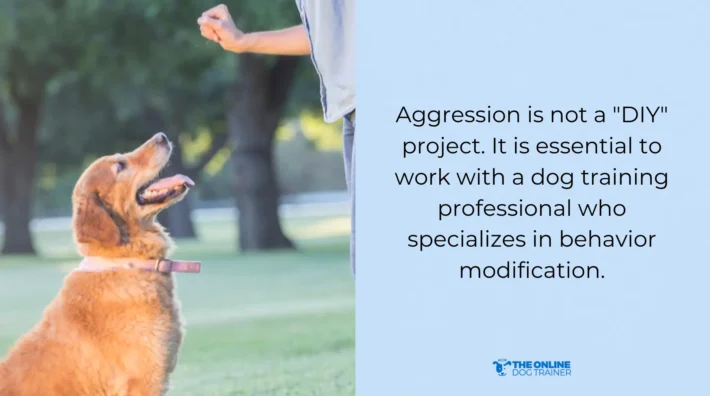
Aggression is not a “DIY” project. It is essential to work with a dog training professional who specializes in behavior modification. They identify the emotional root of the aggression and ensure you don't misread subtle signals that could lead to a bite.

The Danger of Punitive Methods

Avoid using force, prong collars, or shock collars. If a dog is aggressive because they are afraid, punishment confirms the world is dangerous. Punishing a “warning” (like a growl) is particularly hazardous, as it can teach a dog to skip the warning and go straight to a bite.

The Ultimate Reason For Your Dog's Reactive and Aggressive Behavior

Most dog owners find themselves trapped in a cycle of endless “sit,” “stay,” and “heel” commands, yet the moment a stranger walks by, the training evaporates into lunging and barking. This happens because most traditional methods treat the symptoms rather than the root cause.

True behavioral change doesn't come from drilling commands; it comes from addressing the biological instincts of the dog. Reactivity and aggression are rarely “bad” behaviors—they are symptoms of a dog that lacks a clear leader. When a dog doesn't perceive a calm, capable decision-maker at the helm, their instinct compels them to take over. They aren't trying to dominate you; they are trying to ensure the pack’s survival.

The Stress of the Security Detail

When a dog assumes they are in charge, they inherit a massive amount of responsibility. In their mind, they have been promoted to Chief of Security, a role they are often ill-equipped to handle. This self-appointed promotion manifests in ways that owners find frustrating: hyper-vigilance, proactive protection of the “pack,” and territorial guarding of the home.

This isn't just a behavior problem; it’s a quality-of-life issue. Living as a constant guardian is incredibly stressful. A reactive and aggressive dog is often just an overwhelmed dog who is struggling under the weight of a job they were never meant to have.

The Shift: Connection Over Command

To transform your dog’s behavior, you must move away from “drilling” and toward psychological alignment. The goal is to shift the dynamic until your dog fundamentally understands that you are the primary decision-maker. When you are the one who decides if a situation is safe, your dog is finally allowed to “clock out” of their security job.

This shift requires consistency. A true leader isn't manipulated by whining or nudging; they serve as a calm, steady anchor. When the bond is built on this level of trust, your dog obeys because they value your judgment, not because they are afraid of a correction.

Mastering the Dog Calming Code
doggy dan dog calming code

To bridge the gap between human logic and canine instinct, we utilize the Five Golden Rules—the core of The Dog Calming Code. This isn't about using force or “showing them who's boss.” Instead, we use subtle, non-verbal communication to signal that you are in control of the environment.

By addressing the essentials—specifically how you handle resources, perceived dangers, and pack hierarchy—you effectively empty your dog's “stress bucket.” When the underlying pressure of leadership is removed, the lunging stops and the barking fades. Your dog can finally stop scanning the horizon and start looking to you for guidance.

Conclusion

Whether your dog has “big feelings” or “protective intent,” they aren't being difficult—they are having a hard time. Patience, distance, and understanding are the foundations of improvement. There is no shame in a dog that struggles, and great wisdom in seeking help.

Doggy Dan Signature
~Doggy Dan šŸ™‚

Gentle journey for your puppy.

Doggy Dan

Doggy Dan stands out through his “five golden rules” that focus on canine psychology rather than repetitive drills or force. Unlike traditional trainers, he teaches owners to become the “calm leader” their dogs need. Over the last two decades, his methods have helped transform over 137,555 dogs worldwide. As the founder of TheOnlineDogTrainer.com blog and podcast and creator of the Dog Calming Codeā„¢, he has become a trusted voice in dog psychology and training. His philosophy is simple: reactive dogs don’t need punishment or endless treats. They need a leader they can trust.

FREE TRAINING:

How to Solve Dog Reactivity WITHOUT Food Bribes, Tricks, or Force

Limited spaces!

FREE webinar:

How to Solve Dog Reactivity WITHOUT Food Bribes, Tricks, or Force

dog training to stop unwanted jumping and barking

Limited Spaces!

Recent Posts

Excellent rating
Based on 157 reviews
Google star 1Google star 2Google star 3Google star 4Google star 5
So far, so good! We started the Calming Dog a few weeks ago and while we humans have not been perfect at it, we are seeing differences in our dog. He is an incredibly reactive and protective dog, so the changes we have had to date are a huge blessing. I'm impressed at the approach, the actual simplicity of it combined with the science of dog behavior. Thank you, Doggy Dan and team!
Kellie Fuller profile picture
Kellie Fuller
2 October 2026
Google star 1Google star 2Google star 3Google star 4Google star 5
+0
Ridley is my 4th dog. After listening to and learning from Doggy Dan, I was happy to see that I did pretty well with my first 3 dogs while raising my kids and having my husband with me. Not perfect - but pretty good! Now I am raising a new dog by myself, and I feel like I'm not doing this really "alone." I really am so happy with all the information Dan has offered... and all his techniques work well!!
Carol Ann Ferrari Rogers profile picture
Carol Ann Ferrari Rogers
21 September 2026
Google star 1Google star 2Google star 3Google star 4Google star 5
Two months ago I adopted a 7 year old Morkie, a very nervous but loving little fellow. I tried several different training techniques and even purchased a program that was lengthy and very time consuming before I discovered Doggy Dan. I've been using his program for two weeks and am astounded by the change in my Dexter. He is calmer, more obedient and friendlier to others than I imagined possible. Dan's training is concise. It differs from others I found, Dan trains you to become the leader of your pack through a dog's perspective. I like that the training is specific yet compassionate. This is a program that works if you are consistent. Thanks Doggy Dan!
Kathy Fore profile picture
Kathy Fore
17 September 2026
Google star 1Google star 2Google star 3Google star 4Google star 5
+0
Susie in the UK. I am only 10 days in but took in a 9 yr old emergency rescue from Romania who had been in kennels for 6 years and then had 3 failed foster placements in the UK. Luca is a big powerful mixed breed with huge stress and anxiety and very reactive, he bounded into my home and took over - aggressive with my 2 others, and visitors and pulling and pushing on walks. I thought I couldn't handle him but saw an advert for Doggy Dan on line and signed up - we've had a wonderful turnaround and he is finally decompressing, being polite with my dogs and responds excellently to the time-out if reactive with guests. Walks are much better and all 5 rules are in place. I believe he will continue to improve but only if I remain 100% consistent with him for the rest of his life. He is 9 years old and deserves a happy old age being loved and looked after with no further upsets in his life so fingers and toes are crossed for him
SoBS Truro profile picture
SoBS Truro
15 September 2026
Google star 1Google star 2Google star 3Google star 4Google star 5
+2
I started. The course 3/4 weeks ago. As Dan says you have to work on things if you get stuck. I have a Staffordshire x cane corso who is now six months old. She is very intelligent but sometimes she just doesn’t listen. Doing the five codes I’m finding it’s going pretty well except trying to get her calm so I am persevering with it again with my own space. I have a trainer call shortly which I will ask for advice on this. It’s great also that you can ask anything you’re not sure of on line. It’s so great to have someone there to help. I’m looking forward to having a relaxed girl instead of hyper most of the time as she gets so excited about almost everything. I would truly recommend doggy Dan and just wished I would have come across him much earlier. Thanks again for everything so far.
Hazel Coad profile picture
Hazel Coad
12 September 2026
Google star 1Google star 2Google star 3Google star 4Google star 5
I ā¤ļø my dog. Such a good girl! 5 Golden rules, really work.
Victoria van Sommeren profile picture
Victoria van Sommeren
9 September 2026
Google star 1Google star 2Google star 3Google star 4Google star 5
+0
This program is amazing!. We have a VERY reactive rescue dog that has bitten his previous owner and as well, myself 3x and my husband 4 x's. He had never been around people or other animals, and had never been walked on a leash. (in fact never run off-leash either, just tied to the front steps). We began with traditional treat-based training with a professional, but the progress was frustrating. A reactive dog does not want treats; it wants comfort. With the 5 Golden Rules and and some of the other training we have received with our subscription, in just 3 weeks, we can let him off leash at the dog park, he has not growled at any stranger, and he has not attacked any other animals. He is still a work in progress, but we see progress!!!! He has become a cuddly, sweet dog and for a greyhound, he even has recall! This program is amazing to say the least. We were at our wits end, but now we have hope.
susan kent profile picture
susan kent
8 September 2026
Google star 1Google star 2Google star 3Google star 4Google star 5
Okay, he says it’s not magic, but the results and the peace in so little time with so little effort sure feels like magic! My 11 month old pup was a 60lb highly reactive, very loud disaster waiting to happen. Now we are both calm, the house is quiet and I don’t live in absolute fear of his reactivity towards others. There’s always still work/training to do of course, but wow are we in a much better place to get on with that!
Theresia Travers profile picture
Theresia Travers
8 September 2026
Google star 1Google star 2Google star 3Google star 4Google star 5
Just started with the 5 rules. It's only been a week and a half and I'm noticing less stress, and a reduction in reactivity. We still have a way to go. But finally something I can work with. I went for the online course.
Fiona Bower profile picture
Fiona Bower
31 August 2026
Google star 1Google star 2Google star 3Google star 4Google star 5
I watched the free Webinar and joined at the end. I am up to No.3 atm and I’m actually feeling hopeful 🤞🏼
Jackie Grimmer profile picture
Jackie Grimmer
29 August 2026
Google star 1Google star 2Google star 3Google star 4Google star 5
The program is great. I started to see the changes in my cocker spaniel from day one.
Joy Winnington profile picture
Joy Winnington
18 August 2026
Google star 1Google star 2Google star 3Google star 4Google star 5
+3
My Lab mix puppy and I are on Day 3 , but, I do feel a stronger connection. She appears calmer overall / looking forward to consistently following these five rules. Doggy Dan is clear, concise, comprehensive and compassionate . Very pleased with his program. Diane
Diane Patterson profile picture
Diane Patterson
16 August 2026
Google star 1Google star 2Google star 3Google star 4Google star 5
+0
We have an 8 month old Goldendoodle who has fear issues outside the home and gets easily overwhelmed going into panic/flee mode if several triggers coincide (people, loud dog barking and noises like motorcycles/construction). So pleased to find Doggy Dan and seeing positive changes after just two weeks. Feeding time is calm after using the gesture eating and "thank you" when he barks works a treat. I realized I'm babying my dog too much and trying to be his best pal instead of a leader so I'm working hard on that. We've changed to the no pull harness and love that. Doggy Dans video clips really help bring the philosophy together and I love his attitude. He is calm, clear, firm but so kind and loving with dogs and very down to earth and relatable. I've got great help too from the AI coach and the daily emails and videos help keep us on track and feeling positive. We've still got a mountain to climb with our pup but I finally feel hopeful and supported. We'd tried trainers, behavior specialists and all sorts before finding Doggy Dan and this is by far our best investment. Can't recommend you trying this highly enough. Photo of our boy.
Jackie Ward profile picture
Jackie Ward
13 August 2026
Google star 1Google star 2Google star 3Google star 4Google star 5
Absolutely amazing transformation in just a few days. Just need to stick to the 5 Golden rules 🙂
Martine Adkin profile picture
Martine Adkin
13 July 2026
Google star 1Google star 2Google star 3Google star 4Google star 5
+0
I couldn’t believe my dog’s problem resolved completely within a week! Easy but not easy if you are inconsistent with the 5 rules. I highly recommend this method! Somethings don’t seem important or relevant but they are!
Dawn McCordic profile picture
Dawn McCordic
13 July 2026
Google star 1Google star 2Google star 3Google star 4Google star 5
+0
I just started my training about 2 weeks ago, and I do mean MY training. My 2 girls are really responding to my changes in how I am relating to them better. Thank you Doggy Dan, I really needed this win, 2 reactive dogs and we have made progress with the 5 golden rules and we have not with anything else. Crystal Gayle the Red Heeler and Sadie the Border Collie.
Betty Nicholl profile picture
Betty Nicholl
11 July 2026
Google star 1Google star 2Google star 3Google star 4Google star 5
+3
For three years, I tried every treat-based method and expensive course to stop my large, powerful male dog from pulling on the leash, barking, and stressing out when his energy got too high on our walks. (So while he is a farm dog who enjoys total freedom off-leash on our farm most of the day, on-leash in the city, he totally lost it). He was practically hanging from the leash, two feet in the air (almost strangling himself), always demanding to walk in front and make all the decisions. Absolutely nothing worked—until I found Doggy Dan! 🏆 After just a couple of weeks implementing The 5 Golden Rules, the transformation is absolutely mind-blowing!!! By focusing on connection and calm leadership rather than rigid commands, my dog has FINALLY reconnected with his natural calmness (that has actually always been there inside him) ā¤ļøā¤ļø When we walk through town now, I look down at my dog walking in a perfect "heel." The leash hangs completely loose, and that loose leash really says it all 👍👍👍 He does not pull, bark, or growl AT ALL when other dogs bark at him!😱 Yes, he looks at them and is interested, but he remains completely calm. We pass shouting people, groups of kids on scooters, and dogs barking aggressively behind gates—he is interested, but he remains entirely unfazed. Just yesterday, we stopped in front of a fence with chickens walking in a garden, and he just stood there watching curiously, staying completely still. And as we walked across a large, grassy schoolyard, we suddenly crossed paths with two rabbits—when I told him to, he immediately sat down. Of course, he was highly interested, but he sat completely, utterly still! I constantly find myself thinking: This can NOT be my dog, LOL! 🐇🐓 Dan refers to himself as a dog trainer, but in my humble opinion he is a dog philosopher. The course is incredibly generous, filled with hundreds of real-life videos from every situation imaginable, offering a massive toolkit for an amazing price. I am so excited to continue this course, so happy about the progress, and so looking forward to the future with this beloved dog of mine. I HIGHLY recommend it! ⭐⭐⭐⭐⭐
Ingrid-Tove Astrup profile picture
Ingrid-Tove Astrup
8 July 2026
Google star 1Google star 2Google star 3Google star 4Google star 5
+0
I've only been working the program for a week and already are seeing some great improvements with an overexcitable, energetic, barking at everything, and fun Maltipoo. I'm focusing on the 5 golden rules and watching the training videos. Thanks Doggy Dan!
Rebecca Cheney profile picture
Rebecca Cheney
4 July 2026
Google star 1Google star 2Google star 3Google star 4Google star 5
In a matter of days my 5 year old Frenchie is calmer and seems happier, albeit not happy that I'm ignoring him but it works! I live alone so he thinks he should be boss and protect me from every visitor but he didn't even bark at the window cleaner yesterday, just followed him around each window. My life might be my own soon, thank you!
Shauna profile picture
Shauna
2 July 2026
Google star 1Google star 2Google star 3Google star 4Google star 5
+4
The Golden rules i now understand are NOT called GOLDEN RULES FOR NO REASON! WOW , JUST WOW, I WAS DOING ALL 5 WRONG !
Tim Waldner profile picture
Tim Waldner
2 July 2026
FREE webinar:

How to Solve Dog Reactivity WITHOUT Food Bribes, Tricks, or Force

dog training to stop unwanted jumping and barking

Limited Spaces!