If your dog is growling at your new puppy, this blog will help you understand the reasons and provide practical solutions for a harmonious dog-and-puppy relationship.
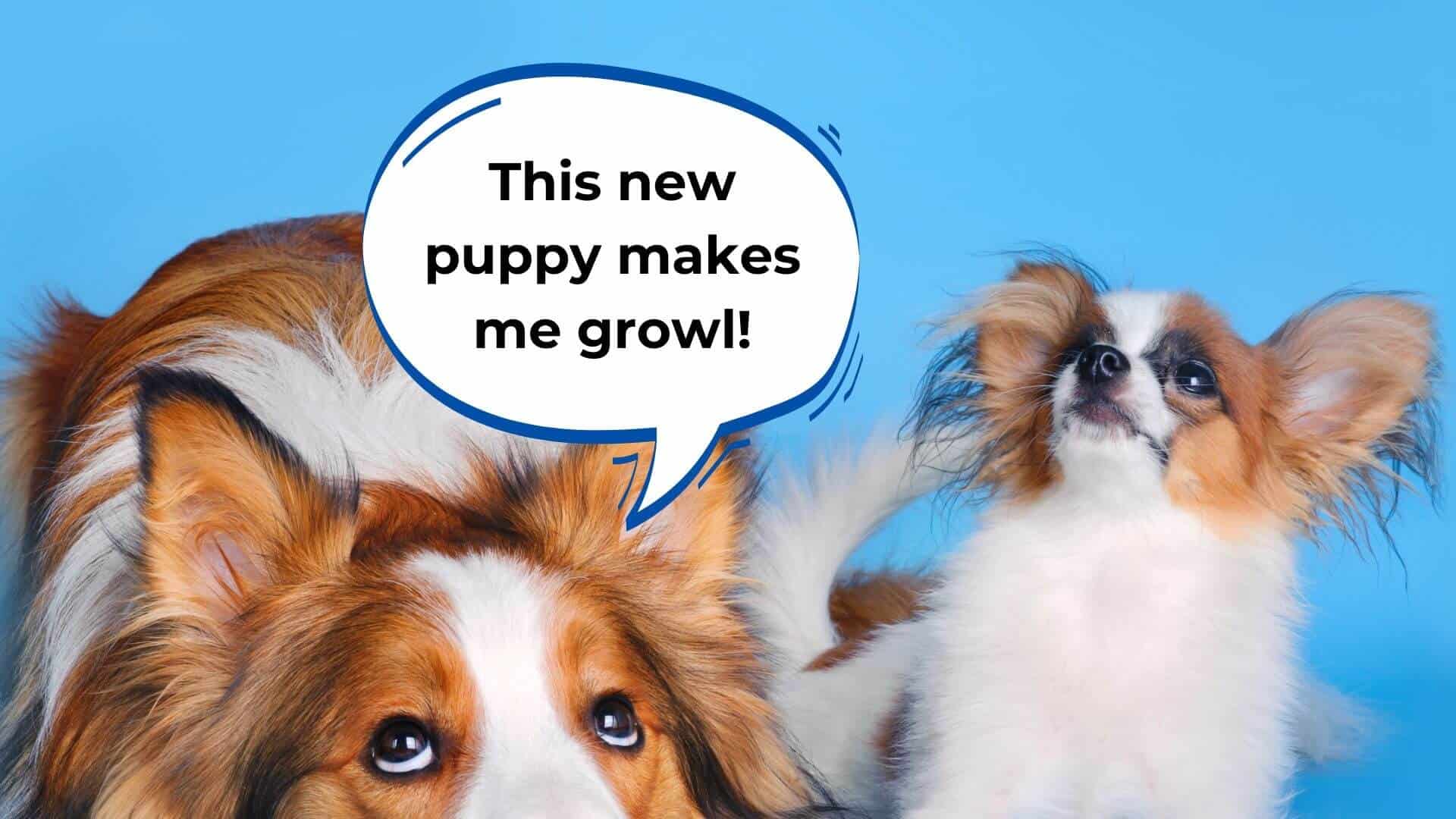
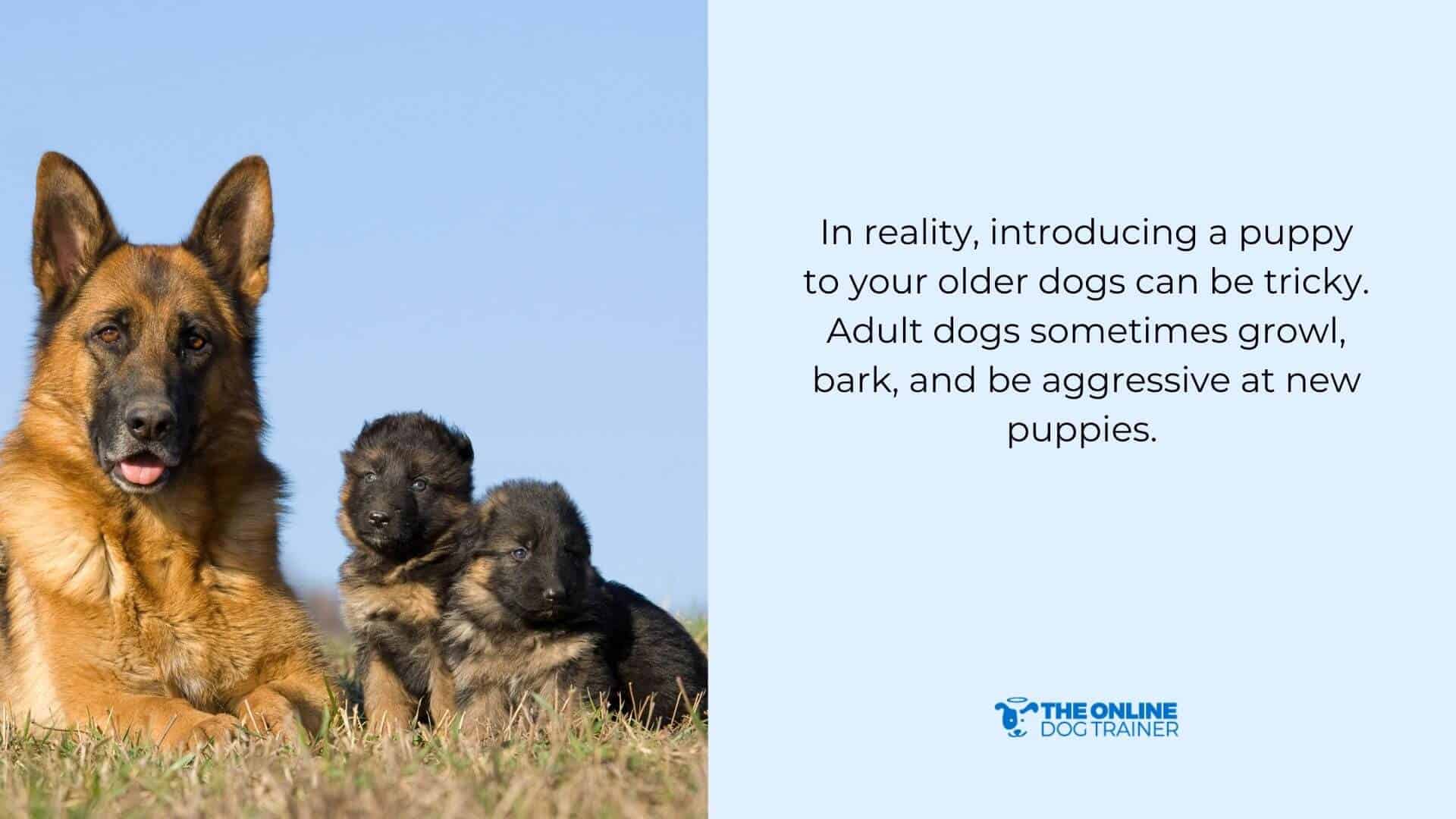
In an ideal world, when you bring home a new puppy, your existing dog will be excited about the newcomer. In reality, introducing a puppy to your older dogs can be tricky. Adult dogs sometimes growl, bark, and be aggressive towards new puppies.
STOP GROWLING: FREE REACTIVITY CLASSIn a dog's world (and their psychology), growling is a straightforward way to communicate their feelings. When an adult dog growls at a puppy, it could mean three things: they're so excited, anxious, or threatened.
A growl from your older dogs comes with a message you should pay attention to.
Read on to learn more about what you can do if you have an adult dog growling at new puppies.
Key Takeaways
- Growling is how dogs talk, and it doesn't always mean they're angry. Dogs growl for different reasons, like when they're playing, scared, worried, or protecting something they like. It's important to look at what's happening around them and how they're acting to figure out why they're growling and what to do about it.
- Helping dogs get along is easier if you start early. Introducing a new puppy to an older dog the right way, and training them consistently can stop growling from becoming a problem. Figuring out what makes them growl and rewarding good behavior helps them live together peacefully.
- If the growling gets worse, happens more often, or looks like it could turn into a fight, it's time to ask for help. A dog trainer or expert can tell you what's going on and make a special plan to help your dogs get along better.
Table of Contents:
Understanding Why An Adult Dog Growls at Puppies
For our beloved dogs, growling isn't just a sound; it's their primary language for expressing a wide range of emotions and intentions.
Think of it as their way of talking to us, using vocalizations ranging from a soft grumble to a deep, resonant roar.
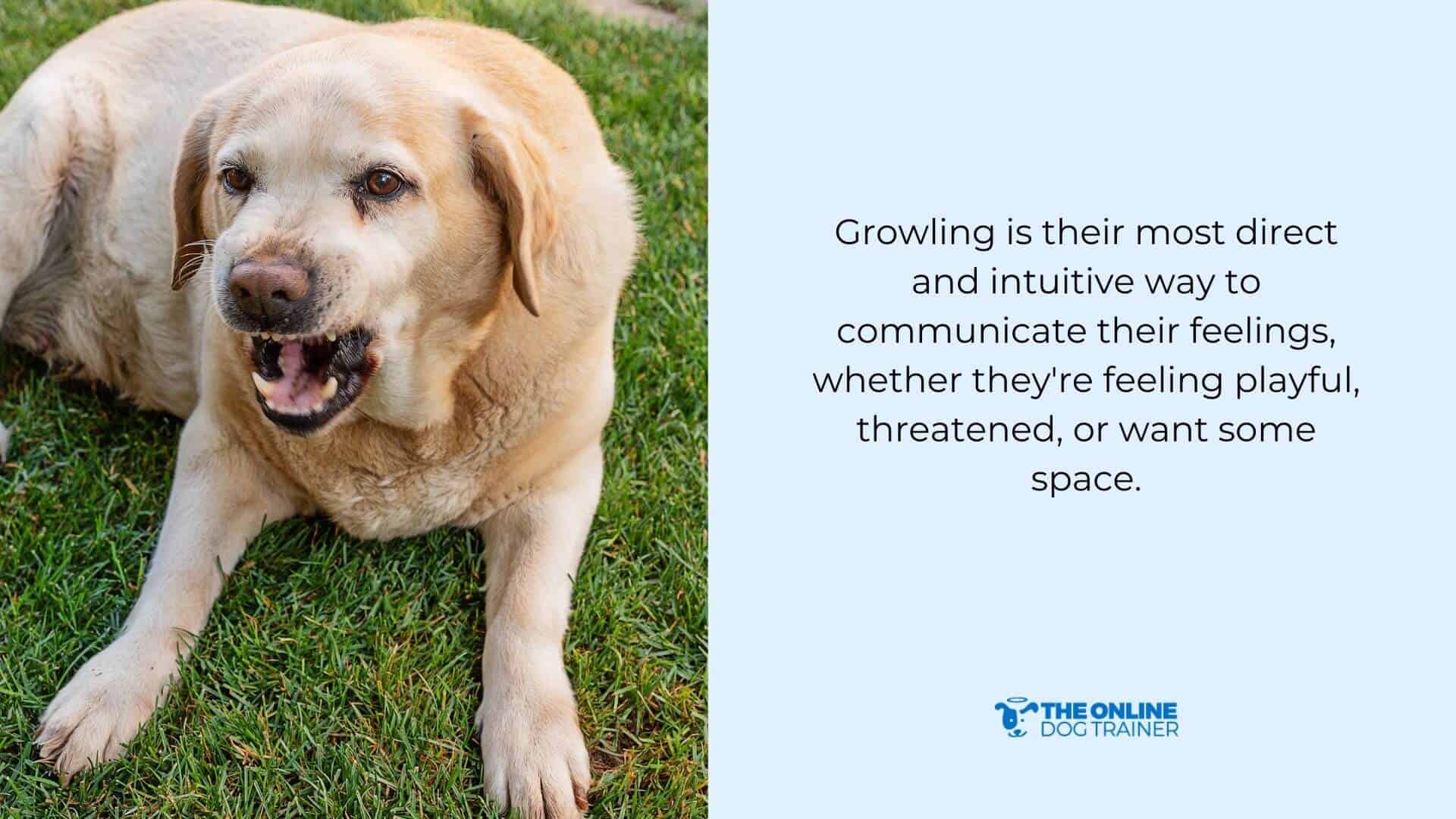
Growling is their most direct and intuitive way to communicate their feelings, whether they're feeling playful, threatened, or want some space. I highly encourage you to take growling seriously to avoid accidents.
Definition of Growling
Imagine two dogs hanging out together. Suddenly, one of them starts to growl. You quickly look over to see what's happening. You might notice a change in how the dog looks. The hairs along its back (called hackles) might be standing up. Its ears might be flattened against its head if it feels scared or they might be pointing forward if it's ready to defend itself. The tail might be stiff, high in the air, or tucked between its legs if it's frightened.
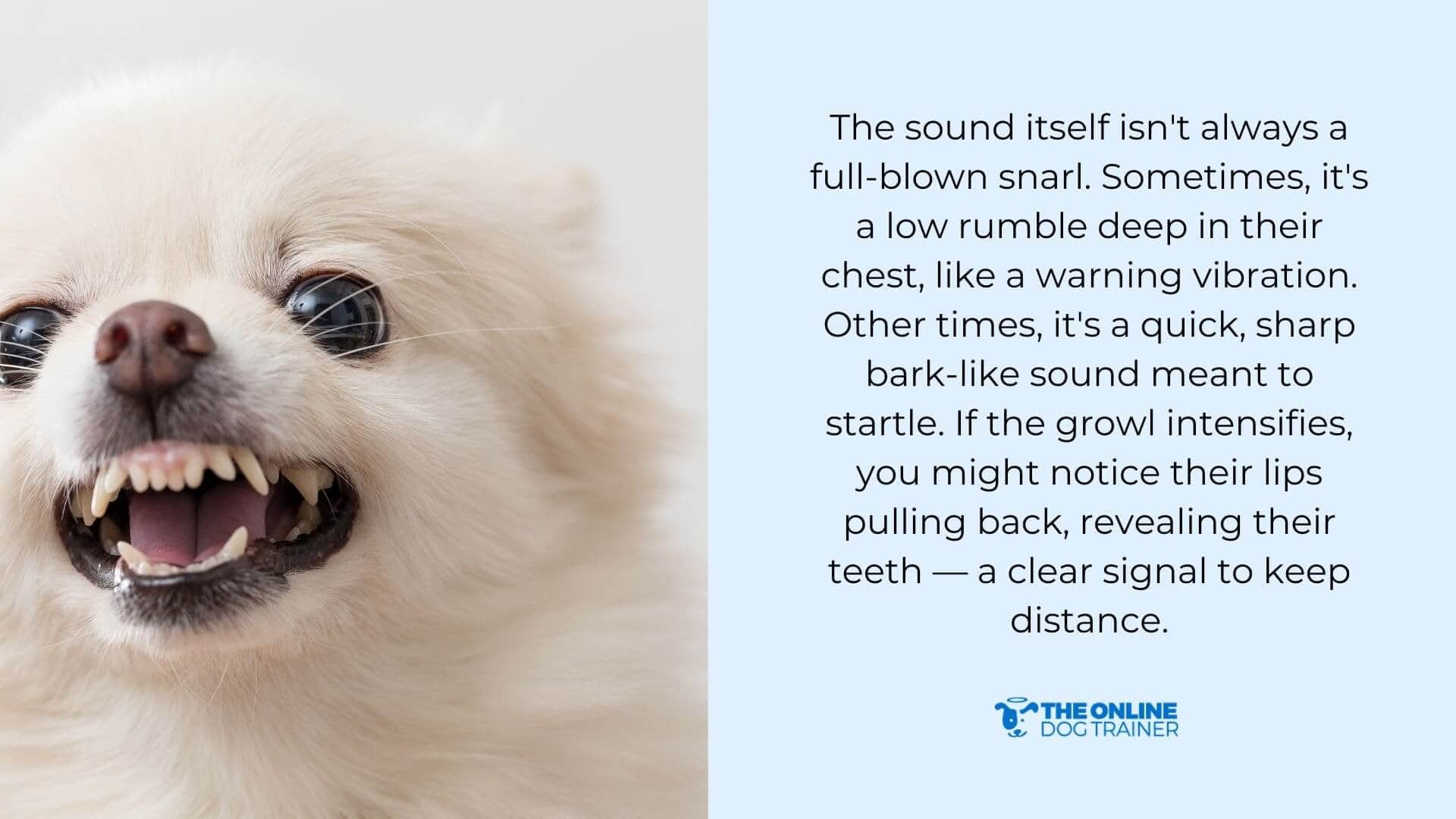
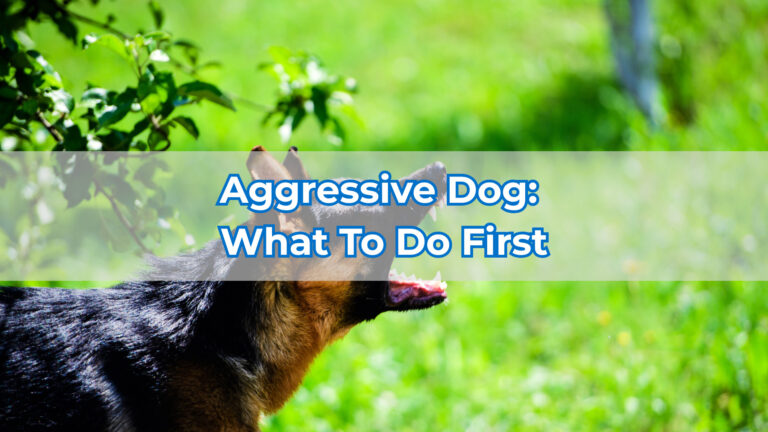
A growl isn't always a loud snarl. Sometimes it's a low rumble deep in their chest, like a warning. Other times, it's a quick, sharp bark meant to surprise. If the growl gets stronger, you might see their lips pull back, showing their teeth — a clear sign to back off.
But there's more to a growl than just sound and a scary face. Watch how your dog stands. A growling dog might stand tall and stiff, trying to look bigger. Or it could crouch low, ready to jump if it needs to. The whites of their eyes might show more as their pupils get bigger. Their movements might become stiff and careful, like every step is planned.
LEARN THE DOG CALMING CODE (FOR FREE)Why Dogs Growl at a New Puppy
Growling can be associated with multiple reasons, including:
- Communication: Growling is a way dogs talk to other dogs and to us. It's their way of saying, “I'm feeling uncomfortable,” “I'm scared,” or “Please give me some space.”
- Defense: Growling can also be a natural way for a dog to protect themselves, especially if they think they're the leader who needs to look out for you and the rest of the family. Think of it as their alarm system, warning everyone to “Back off!” This might happen when they're guarding you, their food, their bed, or other things they think are important.
- Play: Believe it or not, growling can even be part of play! Sometimes dogs growl when they're having fun, showing excitement, or wanting to play even more. This kind of growl usually comes with a loose, wiggly body, and a happy expression. If your dog gives a little growl to your playful puppy, they're probably just having a good time!
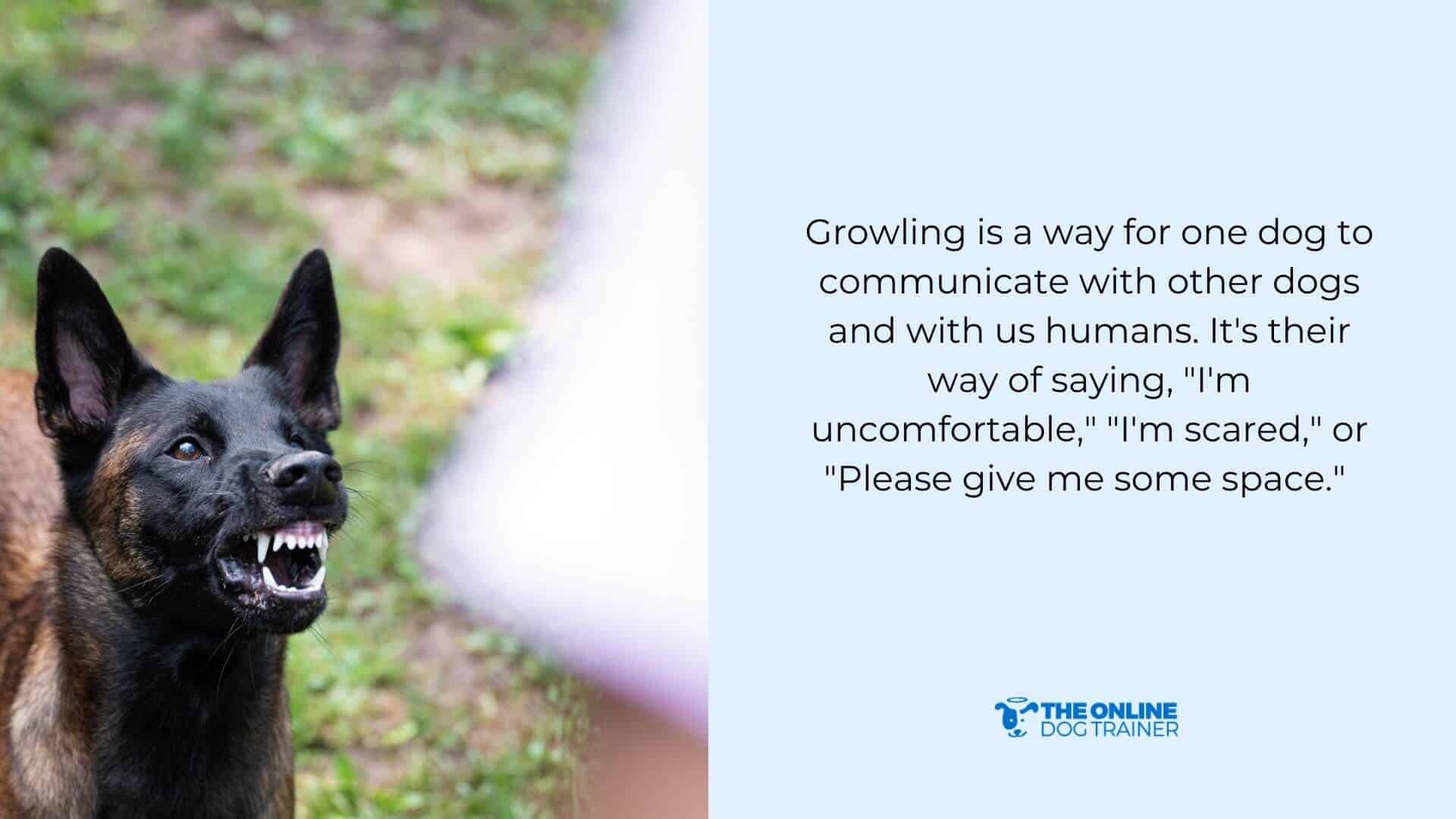
Decoding the Growl of an Older Dog: Playful vs. Aggressive
It's crucial to distinguish between playful and aggressive growling so you can respond appropriately. Here's what to look for:
- Playful Growl: This type of growl often sounds higher-pitched and almost singsong. Your dog might have a relaxed body posture, a wagging tail, and an open mouth. It's all part of the fun! They aren't in defense mode.
- Aggressive Growl: This growl is usually lower and more guttural. Your dog might show tense body language, like stiff legs, raised hackles (the hair along their back), and a tucked tail. Their lips might be pulled back, revealing their teeth. This is a severe warning sign.
Common Reasons for a Dog Growling at a New Puppy
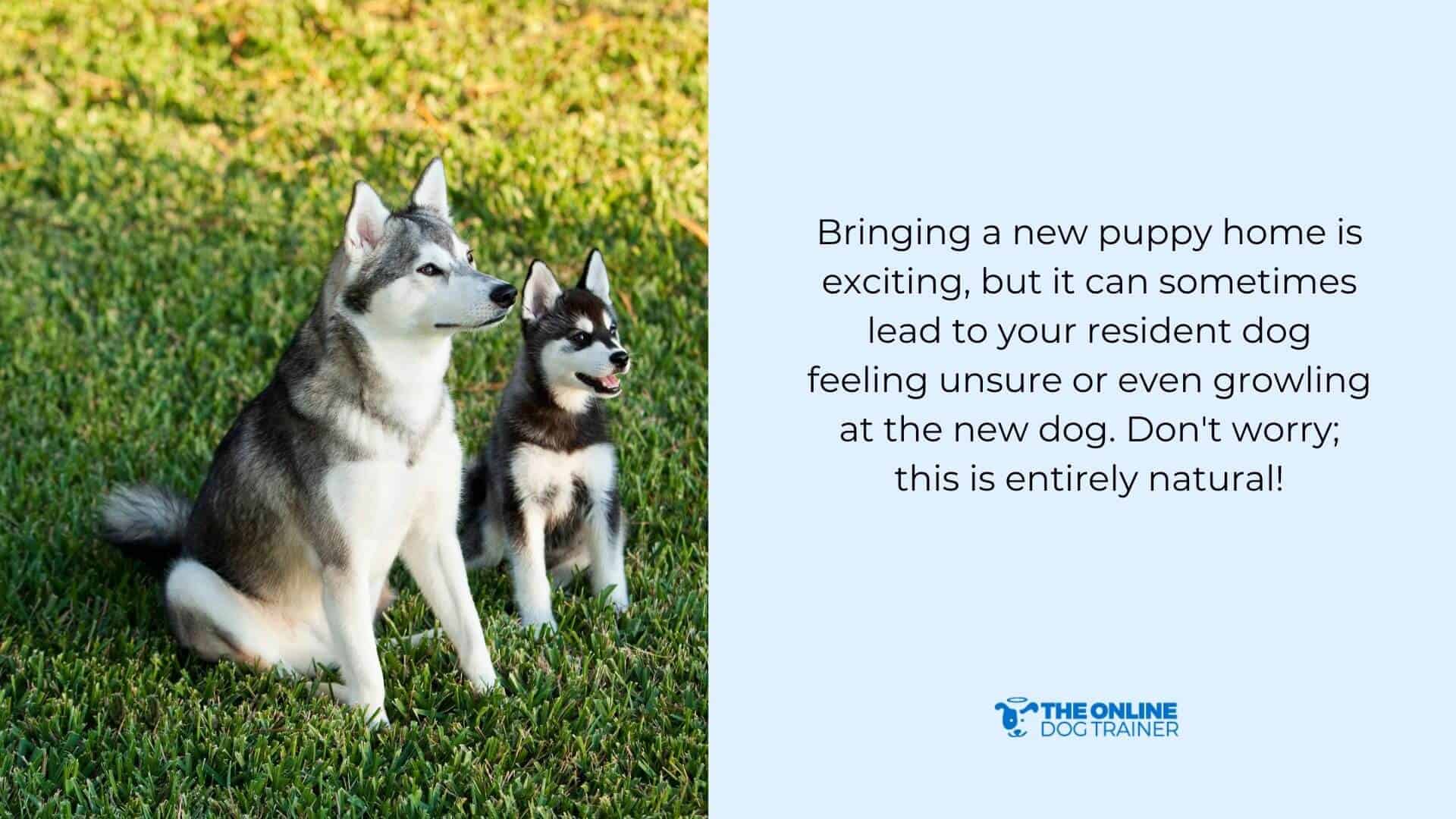
Bringing a new puppy home is exciting, but it can sometimes lead to your resident dog feeling unsure or even growling at the new dog. Don't worry; this is entirely natural!
Let's explore some of the reasons why your furry friend might be reacting this way:
Why Your Adult Dogs Might Be Growling at the New Puppy:
- They Feel Responsible: Your established dog might take it upon themselves to protect you and your home from the new puppy. They might see the newcomer as a threat and think it's their job to keep everyone safe.They might growl and bark at the puppy to show who's boss and warn the “threat” to back off. This behavior can come from feeling anxious and wanting to protect you, your home, and your family.
- Protecting Their Space: Dogs are like us — they like their familiar spots and routines. A new puppy in the same room can feel like an intruder at first. Your dog's growl might be their way of saying, “Hey, this is my space; let's take things slow.” If your dog has a history of feeling insecure about food or having their safe space invaded, they might see your puppy as a threat.
- Feeling Anxious: Imagine having a new roommate suddenly move in – it can be overwhelming! Your dog might feel anxious about the changes, and a growl is their way of expressing these worries.
- A Touch of Jealousy: Just like siblings, dogs can get jealous when a new puppy gets attention.Their growl might mean,”Hey, don't forget about me!”
- Guarding Their Things: If your dog growls when the puppy comes near their food, toys, or favorite bed, they're simply saying, “This is mine!” It's a natural instinct to protect what's important to them. Keep a close eye on the puppy, as they can sometimes push boundaries and wander into the other dog's space.
- Unsure How to Play: If your dog hasn't been around a lot of other puppies, they might not know how to play or interact.A growl could be their way of asking for space while they figure things out.
Assessing the Situation: What To Do To Maintain Safety and Peace
When your older dog growls at your puppy, it's essential that you understand their body language. Knowing the cause and context of the growling can help you assess the situation and identify the underlying causes and the best training strategies to follow.
Observing Body Language and Context
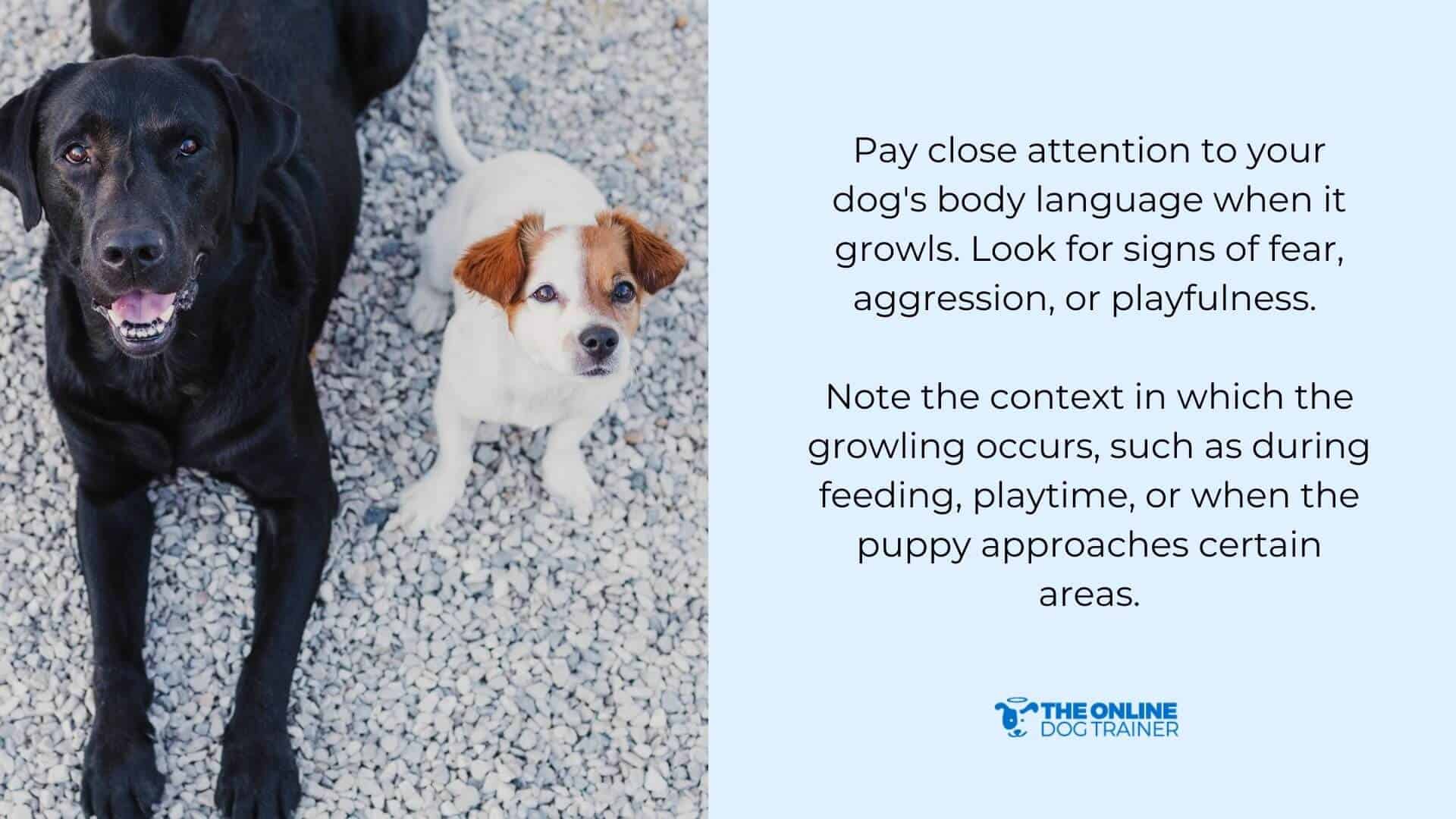
Pay close attention to your dog's body language when they growl. Look for signs of fear, aggression, or playfulness.
Note the context in which the growling occurs, such as during feeding, playtime, or when the puppy approaches certain areas.
Identifying Triggers for Growling
Identify any specific triggers that cause your dog to growl.
The growling episodes could be triggered when the new puppy approaches the older dog's food bowl, tries to play with their toys, or invades personal space. Understanding these triggers can help you address the behavior more effectively.
One of the significant reasons for growling is reactivity. If your older dog is reactive, addressing their reactivity is priority number one.
Even if you teach the puppy to respect boundaries, a reactive older dog will still be agitated and anxious towards the pup.
If you want to correct reactivity, I have a free class you can join.
JOIN MY FREE REACTIVITY CLASSEvaluating the Severity of the Growling Behavior
Assess the severity of the growling behavior to determine the appropriate course of action.
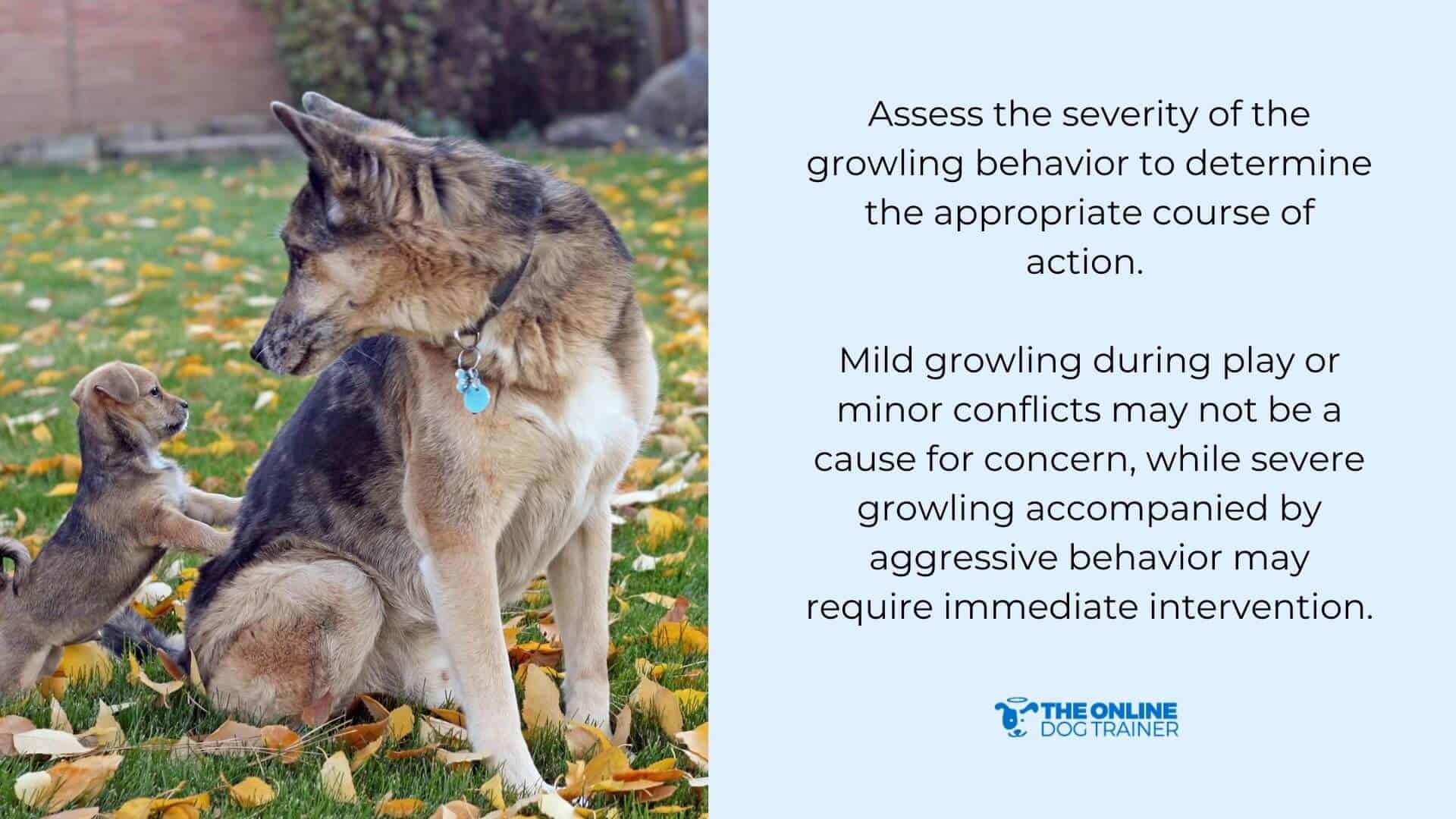
Mild growling during play or minor conflicts may not be a cause for concern, while severe growling accompanied by aggressive behavior may require immediate intervention.
GET MY 5 GOLDEN RULES FOR FREE!Immediate Steps to Take When Growling Happens
When your dog growls at the new puppy, I encourage you to take immediate steps to ensure the safety of both animals and to address the behavior appropriately.
- Ensuring Safety for Both Dogs
Safety should be your top priority.
If the growling escalates to aggressive behavior, separate the dogs to prevent potential harm. This can help prevent conflicts and give both dogs time to adjust to the new situation. Use baby gates or crates to create safe spaces for each dog.
- Ensuring Safety for Both Dogs
I recommend you remain calm and composed when addressing growling behavior. Avoid punishing your dog for growling, which can escalate the problem and create more anxiety. Instead, focus on positive reinforcement and redirection.
- Redirecting the Growling Dog's Attention
Use their favorite toy, treats, or commands to redirect your dog's attention away from the new puppy. This can help diffuse the situation and create a positive association with the puppy's presence.
REVERSE REACTIVITY (FREE WEB CLASS)Introducing the New Puppy Properly
Introducing a new puppy to a resident dog requires careful planning to ensure a positive experience for both animals.Proper introduction techniques can help prevent growling and establish a harmonious relationship.
Preparing a Welcoming Home
Before bringing the puppy home, prepare the environment to minimize stress for both dogs. Create separate spaces for each dog, complete with individual feeding areas, beds, and toys. This helps reduce territorial instincts and resource guarding.
Gradual Introduction Techniques
Introduce the dogs gradually in neutral territory, such as a park or a friend's yard. Start with short, supervised interactions,gradually increasing the duration and frequency as both dogs become more comfortable.
Controlled Initial Interactions
During initial interactions, keep both dogs on leash to maintain control and prevent conflicts. Puppies, especially, tend to test boundaries, so monitor their behavior closely. Allow them to sniff and interact at their own pace, and carefully observe their body language before allowing unsupervised interaction.
Positive Reinforcement
Reward both dogs for calm and positive behavior during interactions. Use treats, praise, and affection to reinforce desirable behavior and create a positive association with each other's presence.
REACTIVITY SOLVED (NO FOOD, NO FORCE)Training and Behavior Modification
Training and modification techniques can help address growling behavior and promote a harmonious relationship between your dogs.
Showing Your Dog You Are the Leader Who is In Charge
relationship. Your dog is a pack animal hardwired to seek a strong leader. By confidently assuming this role, you provide a sense of security and structure, reassuring them that someone is confidently taking charge.
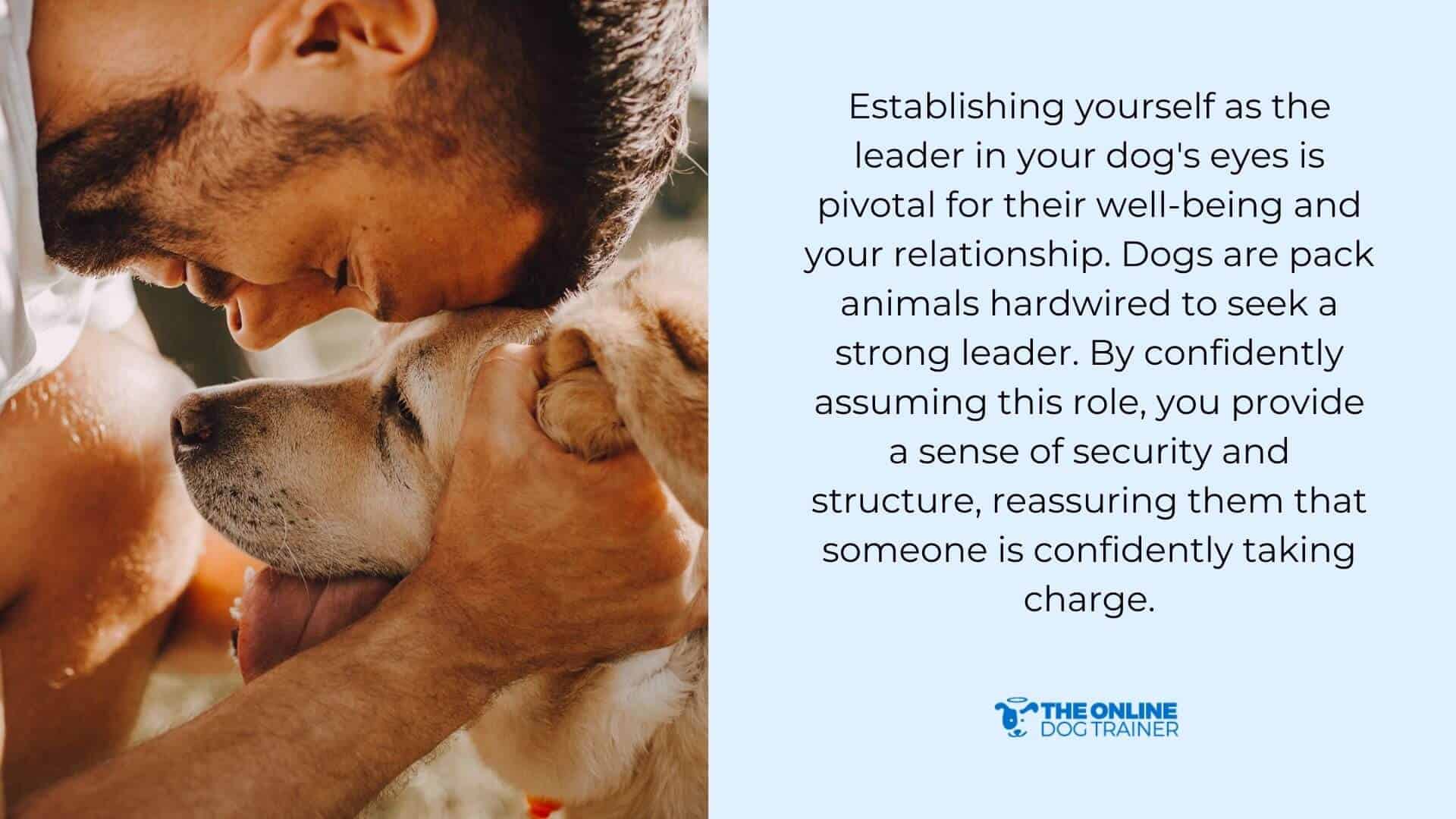
If you don't take charge, your dog will. When your dog takes on the role of the pack leader, they become anxious and very defensive.
With clear leadership, you pave the way for addressing or even preventing behavioral issues. Excessive barking, aggression, and separation anxiety are significantly reduced when a dog feels secure under your guidance.
A dog who recognizes you as the leader is naturally more inclined to listen attentively and respond to your commands. This significantly streamlines the training process, making it a smoother and more enjoyable experience for both of you, ultimately strengthening the bond between you and your dog.
Through my best-selling program, The Dog Calming Code, dog owners can learn the principles of establishing themselves as the pack leader without having to use force or bribes!
GET MY 5 GOLDEN RULES FOR FREE!Basic Obedience Training for Both Dogs
Teach basic obedience commands such as “sit,” “stay,” and “leave it” to both dogs. This can help establish control and prevent conflicts during interactions.
Desensitization and Counterconditioning Techniques
Desensitization involves gradually exposing the dogs to each other in a controlled manner to reduce fear and anxiety. Counterconditioning consists in changing the dog's emotional response to the other dog's presence by associating it with positive experiences.
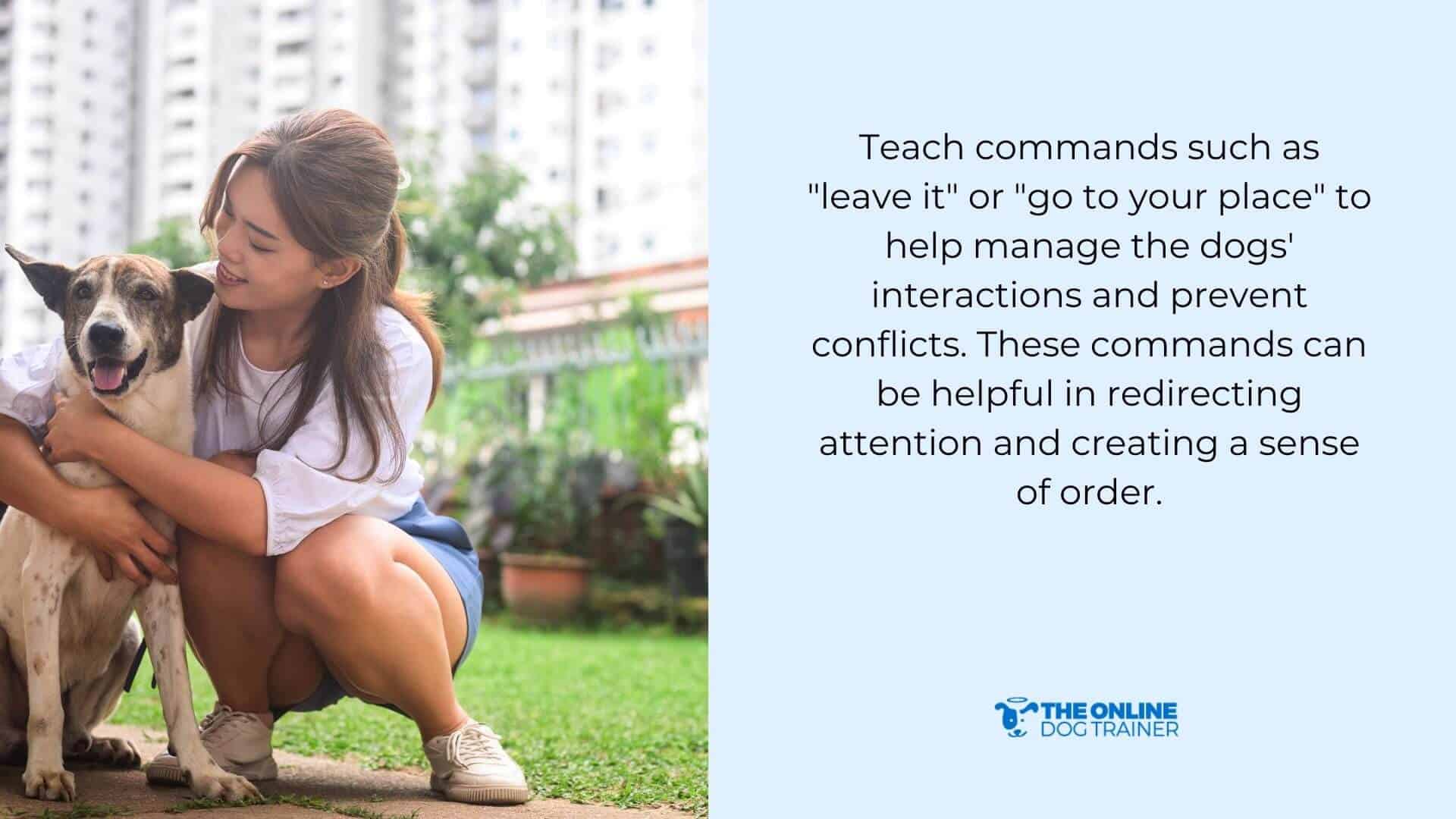
Teaching Commands Like “Leave It” or “Go to Your Place”
Teach commands such as “leave it” or “go to your place” to help manage the dogs' interactions and prevent conflicts. These commands can be helpful in redirecting attention and creating a sense of order.
Encouraging Calm Behavior with Rewards
Use treats and praise to reward calm and positive behavior during interactions. This can help reinforce good behavior and create a positive association with the other dog's presence.
Creating a Harmonious Environment for Both Your Older Dog and Your Puppy
Creating a harmonious environment for both dogs is essential to prevent conflicts and promote positive interactions. Until your puppy learns to interact with the rest of the household, it's necessary to ensure these things are in place.
REACTIVITY SOLVE (NO FOOD, NO FORCE)Establishing Separate Spaces for Each Dog
Give each dog their own space and own bed where they can retreat and feel secure. This can help reduce territorial behavior and prevent resource guarding. Dogs will feel safer and less protective when their space is not always threatened.
Providing Equal Attention and Resources
Ensure both dogs receive equal attention, food, and toys to prevent jealousy and resource guarding. Most adult dogs react negatively when the new puppy gets all the attention.
Ensure both dogs receive equal attention, food, and toys to prevent jealousy and resource guarding. Most adult dogs react negatively when the new puppy gets all the attention.
You can provide attention to the puppy without totally neglecting your older dog.
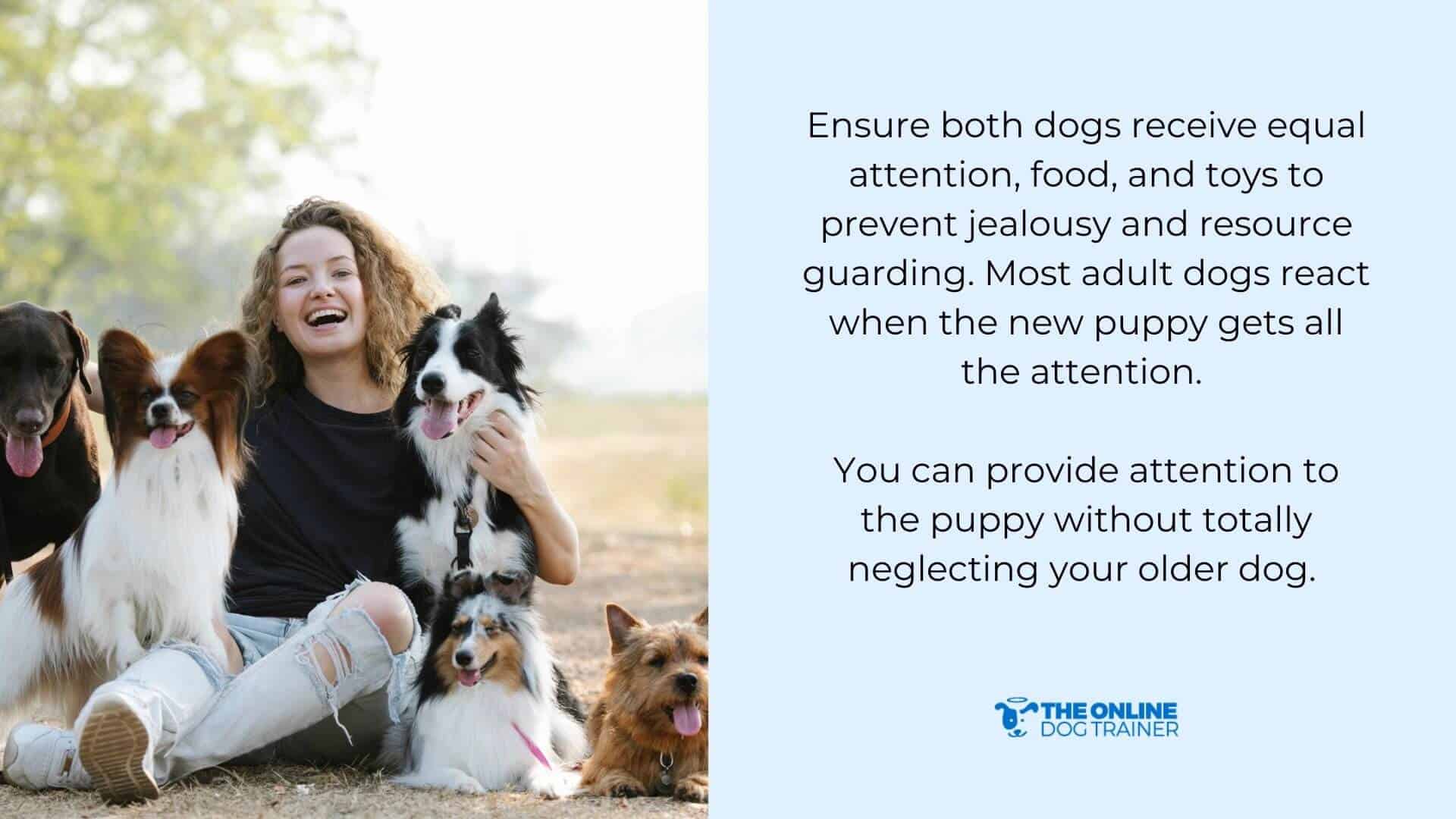
For example, while you care for the puppy, you can have the other dog at a safe distance instead of shutting them outside.
This can help create a sense of balance and reduce conflicts.
Routine and Structure to Reduce Stress
Consistent routines, house rules, and structure can help reduce anxiety and promote a sense of security for both dogs. Establish regular feeding, exercise, and playtime schedules to create a predictable environment for both.
Your puppy needs routine just like your older dog. You can check out my bestselling puppy course that'll help you train your puppy to become calmer dogs.
Ensuring Adequate Physical and Mental Stimulation
Engage both dogs in regular exercise and mental activities to prevent boredom and reduce stress. This can help promote positive behavior and prevent conflicts.
Signs That Indicate the Need for a Professional Trainer or Behaviorist
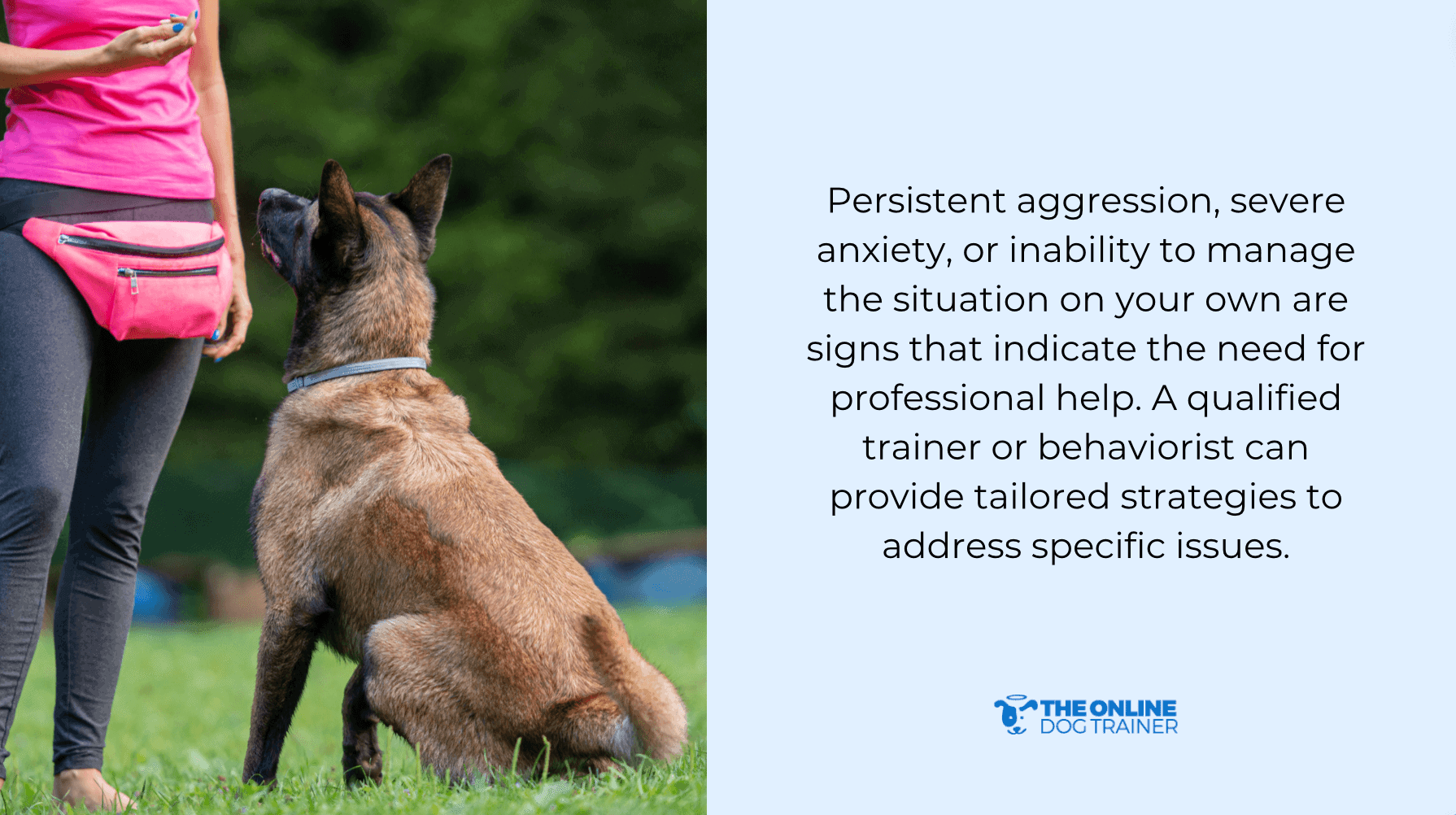
Persistent aggression, severe anxiety, or inability to manage the situation on your own are signs that indicate the need for professional help. A qualified trainer or behaviorist can provide tailored strategies to address specific issues.
Your veterinarian or local pet community can often provide excellent recommendations. Professional training sessions equip you with the tools and techniques to address growling and foster positive interactions between your dogs. Remember,your active participation in the training process and consistent practice at home are key to success.
Promoting Positive Behavior:
Establishing consistent routines and training are essential for a harmonious relationship between your dogs. Here's how you can encourage a calm bond:
- Ongoing Socialization: Gradually introduce your adult dog and new puppy, allowing them to become familiar with each other at their own pace. Continue exposing both dogs to various environments, people, and other dogs to promote positive socialization. This helps prevent future conflicts and teaches them to view new experiences as non-threatening. Prioritize socialization activities in your puppy's schedule.
- Monitoring Interactions Between the Dogs
Regularly supervise interactions between your dogs to prevent conflicts and reinforce positive behavior. Be proactive in addressing any signs of tension or aggression.
- Reinforcing Positive Behaviors Consistently
Maintain a consistent approach to rewarding positive interactions and addressing negative behaviors. Consistency is key to promoting positive interactions and preventing future conflicts between your dogs.
Show Your Dogs That You're the Pack Leader With The Dog Calming Code
LEARN THE FIVE GOLDEN RULES FOR FREE