
Getting a new pet is a really exciting event! Whether it be a second family dog, a new bunny, or a flock of chickens there’s nothing better than opening your home to a new furry (or feathery or scaly) family member!
But what happens when your new and current pets don’t get along? More specifically, what do you do when your current or new dog suddenly becomes a threat to the animals you bring into your home?
Dogs are very much like people. Some dogs are very gentle and social and get along well with other animals. Other dogs prefer their space or have strong prey instincts, which makes integrating them as new animals into your existing environment a lot more complicated.
If you’re contemplating getting another dog, are considering adopting a new pet, or are currently struggling with animals that don’t get along in your home, I have a few tips I want to pass along that might help the situation.
Here’s what I suggest…
Socialization Tip #1: Start with a Safe and Slow Introduction
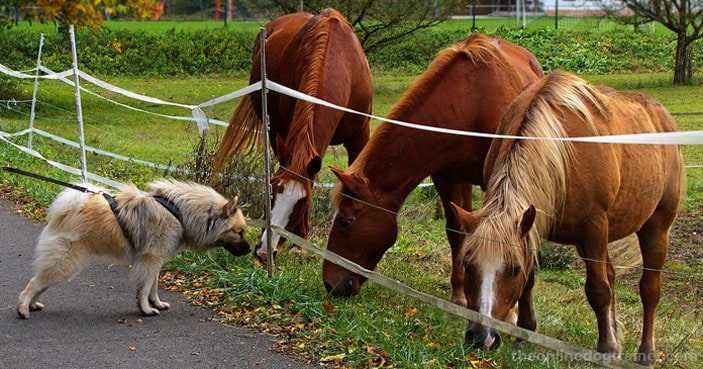
Bringing a new animal into your home is a big adjustment for everyone.
Some dogs tend to get overexcited, thinking “Oh boy! A new friend to play with!” Others might get nervous or scared. For this reason it’s important to SLOWLY introduce your new pets.
If you have a gated area in your home, perhaps your first step might be letting your dog and new pet “meet” each other on opposite sides of the gate. This way both animals will feel safe while getting to see, smell, and hear each other.
Give your dog and other pet a while to acclimate before removing the barrier.
This can also be done with one animal in a crate. The key is allowing your dog and other pet to see each other and interact in a safe manner without feeling threatened.
Socialization Tip #2: Use a Lead Line

If your dog and new pet seem to be doing well, you can give them a little more freedom while allowing them to meet on a lead line.
Make sure your dog and other pet are securely harnessed and on separate leashes, then give them the freedom to get close to each other to sniff and introduce themselves. You will want two people involved…one to hold each pet.
In the event that a friendly “hello” turns into a squabble, you can quickly separate both animals and walk away in different directions.
Socialization Tip #3: Have Your Animals Meet on Neutral Turf
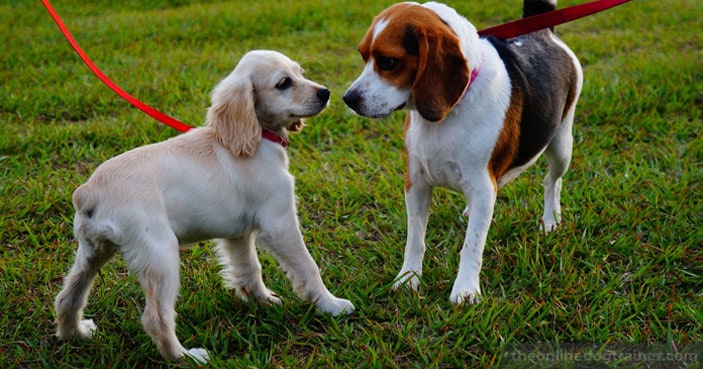
Some dogs have a difficult time when introduced to another animal because they feel as though their “turf” or “property” is being invaded, and they get defensive.
An easy solution to this is to have your dog meet his new fur-sibling outside of your home, perhaps somewhere like a park! Let them get to know each other in a neutral area. Go for a walk in the park, throw a ball at a dog park, and let them play/chase each other, etc.
After an initial meeting, take them back to your home and introduce your dog and new pup on lead lines and see how that goes.
Socialization Tip #4: Use Safety Precautions

If you’re concerned about the safety of your animals, use safety precautions like a muzzle.
I 100% believe that it’s better to be safe than to be sorry. I even use muzzles when working with some of my clients’ dogs who have aggressive tendencies. There is nothing wrong with using this kind of tool as long as you choose a muzzle variety that is safe and gentle for your dog.
I prefer the Baskerville muzzle. This specific muzzle allows your dog to open his mouth, drink water, and breathe easily. It’s also made of a strong, but lightweight rubber material that won’t hurt your dog’s snout. The best part…you can purchase this type of muzzle for under $15!
If you’re thinking of investing in a muzzle, here’s a link to the one I recommend!
Socialization Tip #5: Set Your Dog Up to Win

Successfully introducing your dog to new animals is dependent on setting your dog up to win so that no one (you or your other animals) ends up stressed out, injured, or unhappy.
What does this look like? In a nutshell, it’s all about having the patience and putting in the effort to help your dog adjust.
The best thing you can do is put a solid training program in place for your dog before he/she ever meets another animal. I personally recommend my program, the Dog Calming Code™.
The Dog Calming Code is designed to help you teach your dog that he/she can follow your lead and look to you for guidance and direction. When your dog understands that you are in control, he or she will learn that it’s not necessary to become overexcited, anxious, stressed, or fearful when a new situation arises…such as bringing a new animal into your home.
Learn more about how the Dog Calming Code can help your dog!
A Final Thought on Bringing Together Your Dogs and Your Other Pets…
Before I wrap up, I want to make it completely clear that not all animals are going to get along.
Dogs are just like people, and, unfortunately, sometimes no matter what you do, the animals in your home aren’t going to enjoy each other’s company.
Furthermore, there are some animals that simply shouldn’t be left alone together…or introduced at all. For example, if you have a dog with a high prey-drive instinct, it’s simply not smart to leave him/her in a coop with chickens.
While you can put in place training (like the Dog Calming Code) that makes it possible for most animals to co-exist peacefully, in some situations it’s simply not worth the risk. And, let’s be honest…does your new dog really need to be left alone with your cute, cuddly baby rabbit?
The answer is likely a big NO.
It’s up to you as a dog owner to make common-sense decisions about bringing new animals into your home.
For example:
- If you’ve recently adopted a dog with a history of attacking cats, it’s not wise to go out and bring home a new kitten from the shelter. It’s your responsibility to put some serious training into your dog before you make that kind of decision.
- If you know your dog has a strong hunting instinct, don’t leave him/her alone with smaller animals that look like tasty snacks.
- If there’s no reason for your pets to have to interact (perhaps you have a pet snake that you keep in a tank in your room) maybe it’s best that they never meet. After all, is your dog really going to become best friends with a reptile? It’s unlikely…
Be smart. Take precautions. And be sure to set up all of your animals (especially your dog) to win!
Best of luck,

~Doggy Dan 🙂