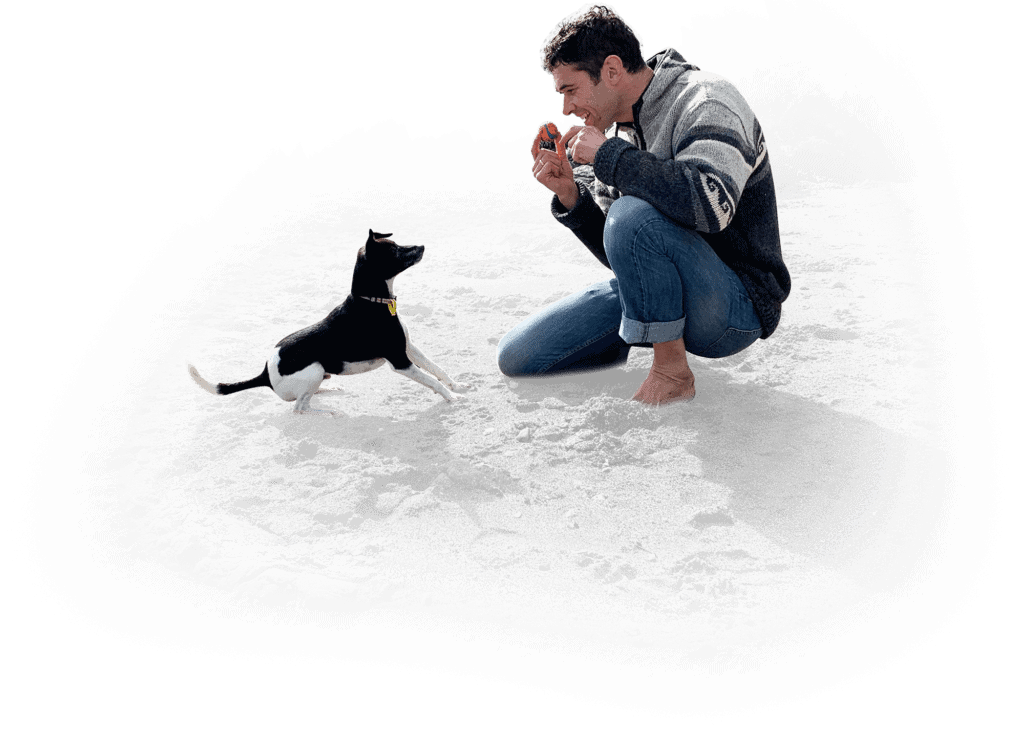
To truly understand an aggressive dog, we have to look past the behavior itself and see it for what it really is: a form of communication. Aggression is your dog’s natural, instinctual, and survival response to defend themselves against threats, protect valuable resources, or guard against physical pain. In almost every case I see, the root cause is the same: the dog feels unsafe, overwhelmed, and forced to handle a situation they believe they cannot survive without baring their teeth.
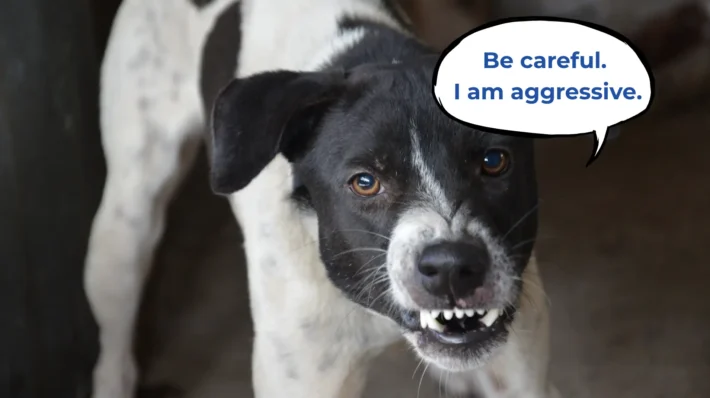
It’s a different kind of fear and heartbreak when you watch the dog you love bare their teeth. When a low growl or sudden snap becomes part of daily life, fear, shame, and constant hypervigilance quickly take over. You find yourself wondering if loving your dog wasn’t enough, asking, “Is my dog dangerous?” and agonizing when a dog is too aggressive to keep.
Though it can feel completely hopeless in the trenches, aggression in dogs is not a permanent life sentence, but a behavior that, when addressed with proper solutions, totally improves. With the right root-cause approach and calm management, aggressive dogs can change. Peace and calm in your home can come back!
I’m sharing the best strategies with you today to make that possible. Let’s dive in.
PUT A STOP TO DOG LEASH REACTIVITY: JOIN THIS FREE WEBINAR NOW!Key Takeaways
- Canine aggression is a natural communication tool and survival response driven by fear, feeling unsafe, or carrying the perceived burden of “pack leadership.” Because it is a symptom of underlying anxiety rather than a fixed personality flaw, aggressive dogs—even those with a history of biting—can be rehabilitated once the root cause is addressed.
- Reactivity is over-arousal driven by excitement, frustration, or sudden fear without the intent to cause harm. True aggression involves deliberate intent to intimidate, deter, or physically injure a target due to a breached psychological or physical threshold.
- Growling is a crucial safety mechanism signaling that a dog feels overwhelmed. Punishing a growl removes the “smoke detector” without putting out the fire, teaching the dog to suppress warnings and escalate directly to an unannounced bite.
What Is Dog Aggression?
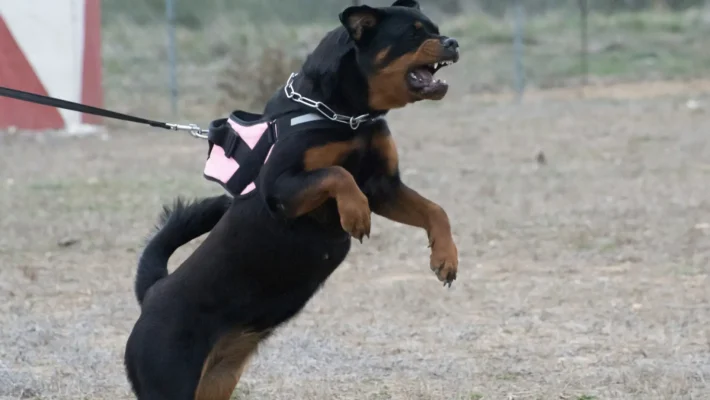
At its core, canine aggression is a behavior that includes hard staring, stiffening, growling, snapping, and biting. Your dogs do all these things to increase distance between them and a perceived threat. The aggression your dog is showing is for the sake of their survival, not an act of spite, rebellion, or calculated malice.
The problem with aggression in domestic dogs is widely misunderstood, frequently demonized, and heavily misdiagnosed. Some dog owners would exhaust all training programs they know, and give up when nothing works. But it is truly more heartbreaking when, after everything, a trainer would say, “Your dog needs to be rehomed.”
This issue comes from the fact that dog owners only target the symptoms, and not the root cause.
To resolve aggressive behavior safely, we must first strip away any labels like “mean,” “vicious,” or “dominant” and examine what is really going on in your dog’s nervous system.
Here’s what I want to address first: dog aggression is often mistaken for reactivity which leads to dog owners not using the correct training methods for their dog. To heal aggression, we must differentiate it from reactivity.
Reactivity vs. True Aggression: Understanding the Difference
Many guardians mistake canine reactivity for genuine aggression. While they share similar behavioral presentations, the reasons behind their actions differ a lot.
Reactivity
Dog reactivity is your dog’s over-arousal state where they respond abnormally or disproportionately to normal everyday stimuli.
You can pick up the sign right away. It’s easy to notice your dog reacting excessively towards triggers that normal dogs won’t really worry about!
A reactive dog barks furiously, lunges on the leash, whines, or spins when seeing another dog, a passing cyclist, or a stranger approaching. This behavior is typically driven by intense frustration or sudden fear. The dog’s primary goal is either to access the trigger or to create noise to force it to go away, but without intentional harm.
True Aggressive Dog
Aggression happens when a dog intends to deter, intimidate, or physically damage a target because a critical psychological or physical threshold has been breached.
Aggression displays direct, offensive, or defensive intent.
It manifests in:
- resource defense
- territorial boundary enforcement
- self-preservation against physical violation
- extreme panic
When we mistake a reactive dog for an aggressive one, we miss what's really going on inside their head. Most dogs aren't looking for a fight; they're simply stressed, overwhelmed, and completely lacking the calm coping skills they need when big distractions pop up.
If we jump straight to heavy corrections, shouting, or forcing them into submission, we aren't helping them feel safe. Instead, we're ratcheting up their anxiety. When a fearful or overstimulated dog realizes that speaking up gets them punished, and that you aren't calmly taking charge of the danger, they feel backed into a corner. That's the moment they stop just reacting and start defending themselves for real.
JOIN OUR FREE CLASS AND GET THE BESTSELLING DOG CALMING DOG FOR FREEWhat Is The Root Cause Of Dog Aggression?
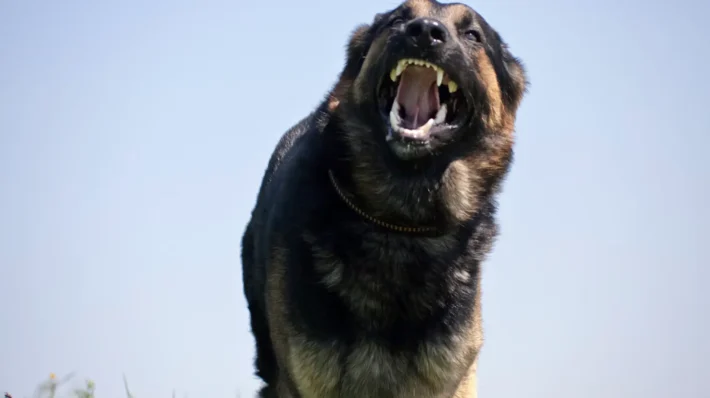
When most owners reach out to me, they’re completely focused on the surface behavior like the furious barking at the fence, the lunging on the walk, or that sudden, terrifying growl. Naturally, the first question is always: “Dan, how do I stop this aggression?”
The truth is, aggression isn't actually the problem. It’s just the smoke. The real fire sitting underneath is almost always the exact same thing: your dog believes they’re the pack leader.
In a wild pack, the leader carries a massive responsibility. Their job is to protect the family, make executive decisions, and face down every potential danger. A member of that pack will most likely feel calm and safe because they know there’s one who oversees their survival.
Now drop that instinct into our frantic human world filled with postal vans, skateboards, loud doorbells, and strange dogs on tight sidewalks. For an animal trying to keep you safe because they think they’re the leader of your home, that is an exhausting, terrifying weight to shoulder.
Aggression isn't a personality flaw, but it is what happens when a dog is desperately trying to do a job that’s too much for them to carry.
When a dog takes on the role of looking after the pack, that responsibility generally shows up in one of two ways:
- Confident Taking Charge: This is the dog marching out front with their chest out, tail held high, ready to meet perceived trouble head-on. They aren't trembling because they genuinely believe it’s their duty as the pack leader to step up and handle things before danger reaches you.
- Fear-Based Defense: This is the nervous, unsure dog. They don't actually want a scrap, but when they feel trapped and flight isn't an option, they lash out in panic. They might be shaking inside, but because no one else is taking charge of the danger, they feel forced to act as the last line of defense.
On the outside, these two dogs look completely different. But underneath, the underlying psychology is identical: both dogs believe they are running the show, both perceive a threat, and both feel the heavy weight of keeping everyone safe.
Barking, lunging, and hyper-arousal aren’t random behavioral glitches. They are powerful warning lights on the dashboard showing that the foundation isn't set.
Drilling obedience commands on an aggressive dog won't fix it either. A dog can have a picture-perfect “sit” in the living room, but if they believe your survival rests on their shoulders, they’ll break that sit the second they spot a trigger down the street.
That’s where the Five Golden Rules come in. By making tiny, gentle shifts in how you handle everyday moments (like food, meeting danger, and setting boundaries around attention), you speak directly to their canine instincts. Without any force, you deliver that vital message: “I’ve got this handled, mate. You can relax now.”
The moment that penny drops, everything changes. The pressure lifts right off their shoulders, their nervous system settles, and the aggression naturally falls away not because you forced them into submission, but because they finally feel safe enough to switch off.
Aggressive Dog: What Causes This?
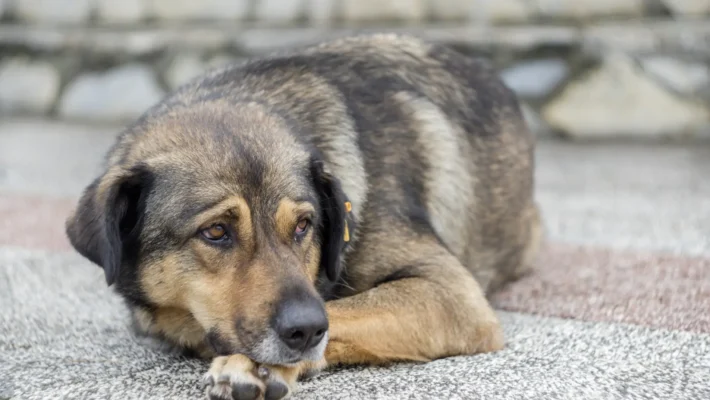
Whenever an aggressive incident happens, the first thing people ask is, “What set them off?” We point the finger straight at the trigger like the passing postman, the delivery van, the skateboard rattling down the path, or another dog walking across the street.
Here is the vital distinction every dog owner needs to grasp: triggers are never the root cause of aggression, but they are the spark that causes the explosion.
Think of your dog’s nervous system like an overflowing bucket. The real issue is the pressure sitting underneath the surface: the underlying stress, fear, confusion, or the heavy burden of believing they are responsible for protecting the pack. That hidden pressure is the gunpowder. The trigger is simply the match. If the gunpowder isn't there, the match harmlessly fizzles out. But if the bucket is already full to the brim, that one tiny spark sets off an uncontrollable blast.
That’s why managing triggers before things escalate is so critical. Every time a dog is pushed over their threshold into a full-blown aggressive reaction, that neural pathway deepens. Adrenaline floods their body, cortisol spikes, and the behavior becomes a rehearsed habit. If you don't step in early to protect your mate, relieve the daily pressure, and calmly manage those external sparks, that internal stress keeps building until it's too late, and a simple bark turns into a dangerous bite.
Here are the most common triggers for dog aggression:
Medical & Physical Causes First
Before attempting any behavioral modification program, a comprehensive veterinary workup is an absolute necessity. Clinical studies indicate that a substantial percentage of sudden or escalating behavioral issues in dogs are directly linked to undiagnosed pain or medical disease.
Undiagnosed Pain
Orthopedic issues such as early-stage hip dysplasia, osteoarthritis, torn cruciate ligaments, and spinal pain (intervertebral disc disease) commonly present as touch-sensitivity or unprovoked snapping. Dental abscesses, chronic ear infections (otitis), and gut discomfort can make ordinary physical handling excruciating.
Endocrine and Neurological Disorders
Behavioral shifts, including increased fearfulness, irritability, and unprovoked aggression are signs of Hypothyroidism. Neurological conditions like idiopathic epilepsy, intracranial tumors, or structural brain abnormalities alter emotional regulation. In older dogs, Canine Cognitive Dysfunction (CCD), the canine analog to Alzheimer’s, erodes spatial awareness, disrupts sleep-wake cycles, and breeds severe confusional aggression.
Sensory Decline
Progressive vision loss (cataracts, progressive retinal atrophy) or hearing loss strips away a dog’s early warning radar. When touched while resting or approached from a blind angle, their startle response is amplified, frequently manifesting as a reflexive defensive snap.
OUR FREE WEBCLASS WILL CHANGE YOUR DOG'S BEHAVIOR FOR GOODThe Core Types of Dog Aggression
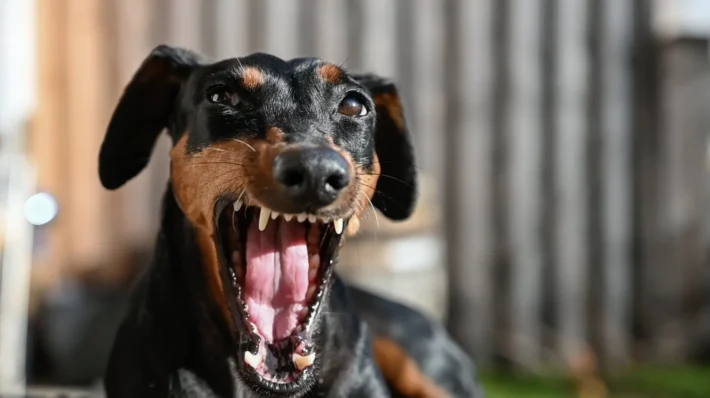
Once you clear medical issues, identify the behavioral classification that will guide the rehabilitation strategy:
Fear Aggression
Here's what I want you to understand: over 70% of the aggression cases I see come down to fear. Pure, simple fear.
You have a scared dog. And when a dog genuinely believes they can't get away from what they see is a threat, they make a choice. They switch from running to fighting. Their teeth become their only tool to make the scary thing go away.
Possessive Aggression (Resource Guarding)
This one runs deep. It goes back to wild instinct, and to survival itself.
When your dog sees their food bowl, bone, even that dirty sock they love, they’re not being stubborn or bratty. On some level, they’re thinking about survival.
What if this is the last meal? What if someone takes this away?
So they guard it. And when they felt that threat, they showed their teeth to say, “This is mine. Don't take it.”
It's not spite. It's not dominance. It's fear dressed up as possession.
Territorial and Barrier Aggression
Imagine being trapped. Or being able to see a threat but not reach it.
That's what your dog feels behind the fence, at the window, in the car, or on a six-foot leash. They're aroused, and frustrated. They can't do what their instincts are telling them to do, so all that energy builds and builds. And then it explodes outward as aggression. Again, all this aggression is just confinement and confusion finally blowing up.
Redirected Aggression
This one is heartbreaking because owners often get caught in the crossfire. Your dog is already wound up. Maybe another dog is barking through the fence, or someone's at the door, or there's commotion they can't reach. They're hyper-aroused. Their nervous system is maxed out. And then you reach down to grab their collar or touch their side, trying to help. But at that moment, they don't see you. They don't consciously choose to bite you. They're so flooded that you become the nearest target because you’re the nearest thing to redirect all that chaos onto.
The Role of Stress & the “Trigger Stacking” Effect
Here's something that breaks my heart because owners blame themselves for it: a dog snaps at their owner for doing something completely innocent, like reaching down to pet them, and they think, “My dog hates me. My dog is aggressive.”
But that's not what happened at all.
What actually happens is trigger stacking. When your dog has endured so many triggers for days, they simply snap.
It's rarely one big thing that sets a dog off. It's usually a bunch of small things stacked on top of each other, all happening within a short window of time.
Think about it like an emotional bucket. Every stressor your dog experiences (a loud noise, an uncomfortable moment, someone at the gate, even just tension in the air) that all goes into the bucket. And here's the thing: cortisol (the stress hormone) takes 24 to 72 hours to completely leave your dog's system.
So imagine Monday rolls around. Your dog hears a startling noise. The bucket gets some water in it. Tuesday morning comes, maybe you're cleaning their ears and it's uncomfortable. More water in the bucket. Tuesday afternoon, a delivery driver comes to the gate and rattles it. Even more water.
By Tuesday evening, that bucket is nearly full to the brim.
Then you reach down to give your dog a gentle pet. Just a loving moment between you and your dog.
The snap wasn't about the pet. The pet was just the final drop that overflowed the bucket. But you didn't know the bucket was already full. So you think your dog attacked you out of nowhere. You think something's wrong with your dog.
And that guilt? That confusion? That's the hardest part.
Your dog wasn't trying to hurt you. Your dog was overloaded. Their nervous system was maxed out. They were communicating the only way they knew how: “I can't handle any more right now.”
That's not aggression. That's a dog telling you they're stressed.
The Real Shift
Once you understand trigger stacking, you start seeing your dog’s behavior differently. You start managing their environment, and start being gentler with them during stressful periods. Your understanding about reactivity changes. There’s now a new understanding that what looks like a sudden explosion is actually a story that started days before.
And that changes everything.
Signs Your Dog Is Becoming Aggressive
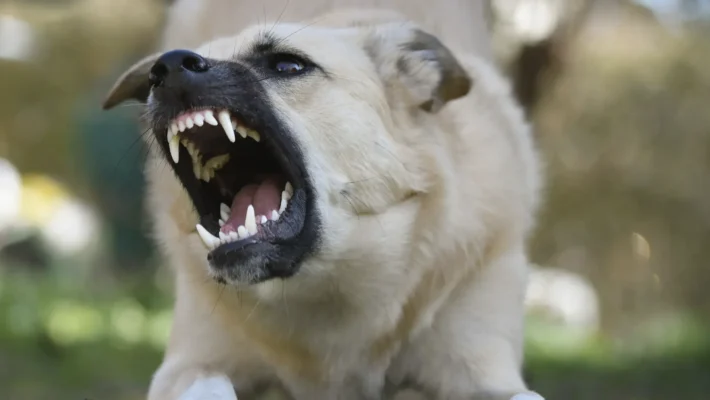
Before labeling a behavior as aggressive, make sure you aren't misreading high arousal. The response you need to give depends entirely on knowing the difference:
- An excited dog barking and straining toward another dog on a walk has a lighter, higher-pitched, almost celebratory ring to it. An aggressive bark is distinctly harder, deeper, and locked in with intense focus. It’s a subtle shift in tone, but a massive shift in intent.
- Snarls, loud vocalizations, flashing teeth, and hard wrestling during play are completely natural. What matters is the dog's overall energy and body language. If the body is loose, bouncy, and the tail is fluid, it’s just healthy play.
Dominant Aggression: The High-Alert Leader
This is often the more dangerous type of aggression because owners mistake it for pure confidence or “protectiveness.” A dominant dog moves forward to control the environment:
A Rigid Tail
This is not a happy, loose wag. The tail is held straight up like an antenna, stiff to the touch, and often vibrating with tight, rapid twitches rather than a wide sweep. A dog with their tail pointing vertically upward is in a state of high alert and emotional arousal. A pointed tail signals to the world that they are prepared to enforce their authority and will not easily back down if challenged.
The Strut
The body becomes tall, rigid, and deliberately imposing. The chest is thrust forward, the head is held high, and the legs move with a stiff, deliberate gait, almost like an exaggerated parade march. You will see this when an unfamiliar dog appears across the street; instead of continuing a relaxed trot, your dog stiffens, puffs up their chest, and parades forward as if they own every inch of the pavement.
Advancing Instead of Retreating
In the wild, avoiding unnecessary conflict preserves life, and a balanced dog will gladly ignore or walk away from tension. A dominant dog, however, deliberately closes the physical distance. If a jogger approaches, another dog enters the park, or a delivery driver walks up the driveway, this dog steps forward into their path rather than stepping back beside you.
Holding Ground
When face-to-face with a perceived threat or trigger, a dominant dog refuses to yield territory. If you try to pull them away or if the other party steps forward, they plant all four paws firmly into the dirt. Their center of gravity drops slightly, their muscles lock, and they prepare to stand and fight rather than give up an inch of ground.
Vocal Warnings
Rather than a startled yelp or a playful bark, these vocalizations are deliberate commands meant to dictate the other party's movement. You will hear a low, rumbling growl that vibrates deep in the chest, a sharp, piercing snap of the teeth in the air, or a single, booming bark directed squarely at a person's face to forcefully say, “Back off right now.”
Space and Resource Control
A leader naturally controls the high-value territory and resources within the home. This shows up when a dog growls or snaps if you attempt to gently nudge them off the sofa, blocks a hallway so guests cannot pass freely, stiffens over a chew bone, or lunges if someone steps near their food bowl. The more a dog views themselves as the leader, the lower their tolerance becomes for anyone entering what they consider their personal domain.
Pushy Jumping
While jumping up on visitors is commonly brushed off as an overly affectionate greeting, it frequently carries an assertive, controlling undertone. A dominant dog rushes the front door, springs up onto the guest’s chest, and uses their front paws to physically control the interaction. In their mind, they are not saying “Hello, pet me!” they are declaring, “I control who enters this home, and I am vetting you before you step past me.”
Guarding The Owner
This is classic “protective” behavior that owners often misinterpret as pure loyalty. When someone extends a hand to shake yours, a dominant dog wedges their body in front of your legs, shows teeth, or lets out a sharp bark. If a friend sits beside you on the couch, the dog jumps between you. They are not protecting a helpless leader; they are guarding a valued asset that belongs to their pack.
Fearful Aggression: The Overwhelmed Defender
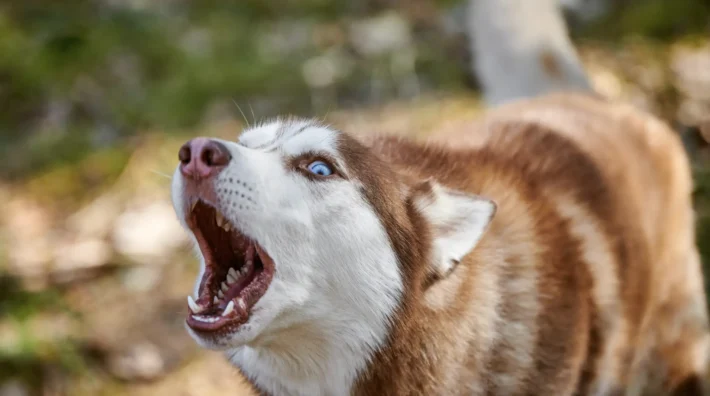
Fear-based aggression looks entirely different on the outside, but it stems from the same core conflict: an insecure dog who feels forced to make leadership decisions they aren't equipped to handle.
Tucked Tail
Your dog pulls their tail tightly down between the hind legs, often pressed flat against the underside of the belly. By clamping the tail, the dog is instinctively covering their scent glands to avoid drawing attention. It is the clearest physical signal of submission, extreme vulnerability, and a desperate desire to avoid confrontation.
Velcro Behavior
On walks or in unfamiliar environments, a fearful dog does not sniff around, explore, or range ahead. Instead, they press their flank directly against your calf, walking almost underneath your feet. They seek constant physical contact not out of quiet calm, but because they are hyper-vigilant and clinging to you for a sense of safety.
Straining Away
The moment an unfamiliar person or dog appears on the horizon, a fearful dog hits the end of the leash, not to lunge forward, but to pull in the exact opposite direction. They frantically scan for an exit route, digging their claws into the ground to drag you away from the encounter and put as much physical space between themselves and the trigger as possible.
Freezing In Place
When an escape route isn't immediately obvious, a fearful dog’s first survival instinct is often tonic immobility. They lock their joints, stop breathing rhythmically, and stare blankly with wide, glassy eyes. For example, if a stranger crouches down to pet them, the dog may freeze completely still like a statue, desperately hoping the threat simply loses interest and moves along.
Reacting Only When Trapped
A fearful dog does not want to fight; they want to flee. However, if you ignore their signals— such as an owner tightening the leash, or a stranger reaching over their head in a tight hallway — the dog realizes their flight option is gone. With nowhere left to run, their survival instinct flips instantly from flight to fight, resulting in a sudden, explosive snap or bite born purely of panic.
Calming Signals: The Silent Early Warnings
Long before a dog barks, lunges, or bites, they offer subtle appeasement gestures to defuse tension and ask for space:
Avoiding Direct Eye Contact
In canine communication, a locked, direct stare is an active challenge. When a dog feels tension mounting, they deliberately avert their gaze, rolling their eyes to the side so you can see the whites of their eyes (often called “whale eye”). They are actively trying to communicate non-threatening intent and keep the peace.
Turning Away
If an approaching dog or human feels too intense, an uncomfortable dog will deliberately rotate their head 90 degrees or pivot their entire body sideways. For instance, if an excited child runs straight toward them, the dog will present their shoulder or back to the child, using their body orientation to break the confrontational energy.
Sniffing The Ground
This is a classic displacement behavior. When two dogs approach on lead and the tension spikes, one dog may suddenly drop their nose directly into a patch of grass and sniff intently, ignoring the other dog entirely. They aren't actually tracking a fascinating scent; they are using the ground to break eye contact, hit the pause button, and say, “I am busy minding my own business, please do not approach.”
Yawning
Yawning when a dog has just woken up is physical; yawning in the middle of a social interaction is emotional. If you bend over your dog to put on their harness, or if a stranger leans down to talk to them, and the dog lets out an exaggerated, wide yawn, they are experiencing an internal spike in stress and are attempting to self-soothe and discharge tension.
Walking Away
Given adequate physical space and a loose lead, an uncomfortable dog will simply disengage. They will turn on their heels and take slow, deliberate steps in the opposite direction. This is a polite, clear statement of, “This interaction is too much for me, so I am removing myself before things escalate.”
A dog giving calming signals is telling you that pressure is mounting. However, other dogs (and most humans!) routinely ignore these polite requests. When those quiet signals fail to create space, the dog feels forced to escalate straight to a growl or a bite.
LEARN HOW TO BE THE KIND OF LEADER THAT YOUR DOG NEEDS: FOR FREEWhy You Must Never Punish a Growl
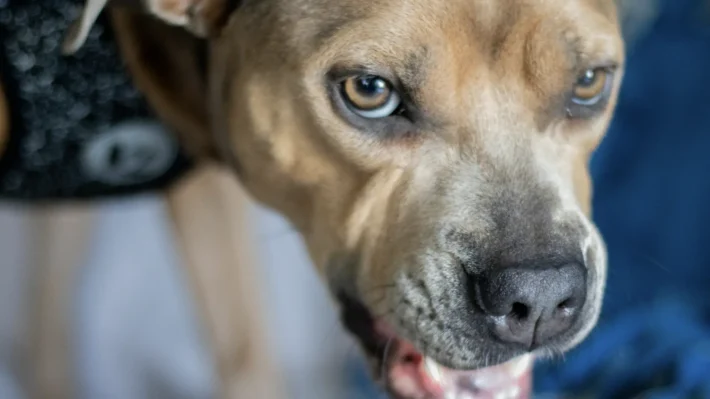
One of the absolute worst pieces of advice floating around the dog world is that you should tell off, smack, or yell at a dog for growling.
People think, “I can't let my dog get away with that. I need to show them who's boss!” But here’s the truth: a growl isn't defiance. A growl is a fire alarm.
Think about what's actually happening. Your dog has a powerful set of teeth, yet instead of using them, they're showing incredible restraint. They're making a sound to say, “Hey, mate, I am really not comfortable right now. Please give me some space.” They are trying to communicate with you without resorting to violence.
When you shout, correct, or try to silence that growl, you haven't fixed the underlying fear or stress one bit. All you've done is take the batteries out of the smoke detector.
Your dog quickly learns: Right, when I try to warn them, I get attacked. So the next time they feel pushed past their limit, they simply swallow the growl, skip the warning, and go straight to an out-of-the-blue bite. That is how dangerous situations happen.
Whenever your dog growls, don't get angry. Stay calm, step back, and remove the pressure. Listen to what they're telling you, because a dog who feels heard never has to use their teeth to make their point.
My Dog Is Aggressive Towards Me: What To Do First?
When tension is high, and you cannot predict your dog’s next move, this is not the moment to “prove a point,” stand over them, or try to win a standoff. Safety always comes first.
Stay Calm, Quiet, and Still
Do not yell, stomp, or try to dominate the dog physically. Shouting adds emotional fuel to an already volatile fire. If you raise your energy, your dog will match it. Take a deep breath, drop your shoulders, avoid direct eye contact, and move slowly. Calmness is contagious.
Clip On A Short Line
This is one of the most effective, stress-free tools for de-escalating home tension. Clip a light lead with the handle cut off to your dog's collar and let it trail behind them on the floor indoors.
The moment you need to move your dog away from a trigger, you simply step on the line or calmly pick up the end. This completely eliminates reaching toward their collar (which is when defensive bites most commonly happen) and removes the temptation to corner or chase them.
Use Quiet Physical Barriers
If the energy builds, calmly guide your dog behind a baby gate or into another quiet room using the trailing line, and never by grabbing their scruff. Close the door gently. Slams indicate frustration and panic; a soft, silent door closure signals that everything is handled and under control, giving both you and your dog a safe space to decompress.
Never Turn It Into A Chase
If your dog runs off with something they shouldn't have, or retreats into a defensive corner, chasing after them instantly turns the situation into a high-stakes standoff. Step back, lower the tension, and use space or high-value redirection rather than pursuing them into a corner where they feel forced to bite.
What to Never Do When Your Dog Is Aggressive
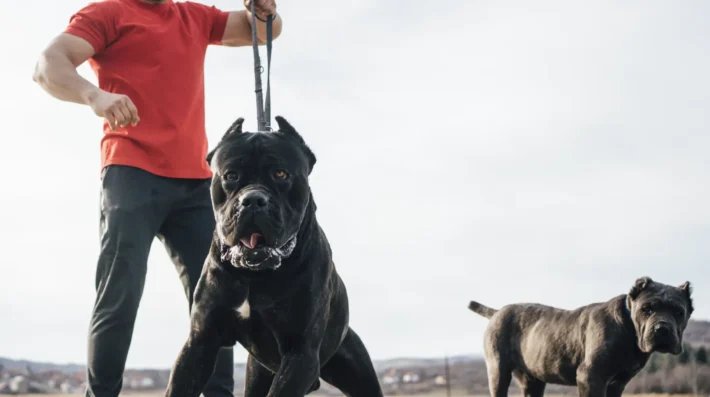
When facing aggression from a dog you love, panic often leads to methods that make the problem significantly worse.
Do Not Use Physical Force
Pinning a dog down, striking them, or forcing them into submission does not teach respect; it teaches fear and self-defense. At best, it temporarily suppresses the growl, which is your dog's vital early warning system. At worst, it forces an insecure or defensive dog to bypass growling entirely and go straight to an unheralded bite the next time they feel threatened.
Do Not Engage In Tug-of-War Standoffs
Prying an item out of an aggressive dog’s jaws with your bare hands directly triggers their instinct to guard. If they have grabbed an item they shouldn't have, never wrestle them for it. Use a calm swap for an irresistible treat tossed a few feet away, or use the trailing line to calmly separate them from the item.
Do Not Shout Or Issue Frantic Commands
A true leader does not scream, panic, or show frustration. Shouting communicates to the dog that the human pack member has lost emotional control, which only validates the dog’s belief that they need to step up and handle the situation themselves.
LEARN HOW TO CALM YOUR DOG FOR GOOD IN THIS FREE WEBINARThe Real Solution: Loving, Calm Leadership
Tackling food guarding on Monday, furniture snapping on Wednesday, and door barking on Friday will leave you exhausted, because those behaviors are merely symptoms of the same root cause.
Your dog is not inherently aggressive. They are simply stressed out from trying to carry the leadership of your household. The moment you implement clear, calm communication through the Dog Calming Code™ and live by the Five Golden Rules, your dog realizes they are no longer in charge of protecting the territory, deciding who enters, or managing the pack.
When that invisible backpack of responsibility is lifted off their shoulders, the tension disappears. They no longer need to guard, posture, or defend because they can finally relax, exhale, and happily return to just being your pet.
If you have experienced an actual bite, or if you have young children in the house, do not try to navigate this alone. Seek hands-on, expert guidance through a live coaching call or a dedicated private consultation to ensure everyone under your roof remains completely safe while the dynamic resets.
Can Aggressive Dogs Be Rehabilitated?
Yes. And I want you to really hear that.
Aggressive dogs can absolutely come back from this. I've seen it happen over and over again—transformations that honestly still move me. Dogs that people had given up on. Dogs that were scheduled to be put down. And they changed. Completely.
Here's what I know breaks people's hearts the most: that story you hear about dogs “tasting blood” and becoming permanently broken. That myth. It keeps owners from even trying, and it keeps good dogs from getting a second chance. The truth is, that's not how dogs work. That's how fear talks.
When a dog bites, he's not a machine that's switched on. He's a dog under pressure. Scared. Confused about his role. And when you understand why that pressure built up in the first place, when you change what's actually driving the behavior, your dog doesn't need to bite again. He doesn't want to.
Real Transformation: My Own Dog, Inca
I think about my little dog Inca a lot. She wasn't an easy dog. Not at all. She tested me relentlessly. Pushed me to the limit. There were times I genuinely didn't know if I had it in me to get through to her.
But here's the thing: she taught me more than any easy dog ever could.
Inca showed me that the most challenging dogs (the ones who seem impossible) often have this incredible spirit inside them. They have this drive, determination, refusal to quit! These characteristics aren't always pointing to aggression. It comes naturally for a dog who's calling out for real leadership, real clarity, real calm authority.
When I finally stopped fighting against who she was and started leading her instead, everything shifted. Not because I intimidated her. Not because I shocked her into submission. But because she finally understood her role, she could rest.
Within every dog is a good dog. And within every good dog is a great dog. That's what I learned from Inca. And that's what's possible for your dog too.
Why the Shift Happens
Aggression is never the core problem; it is simply a symptom.
When a dog believes they are the pack leader, they carry the crushing responsibility of keeping everyone safe. They have to assess every stranger, defend every resource, monitor every doorway, and neutralize every perceived threat. That is an enormous burden for a domestic dog. The growling, lunging, and snapping are just the natural tools a canine leader uses to manage that stress.
When you step up and establish calm, gentle leadership, the entire dynamic inverts:
- You take the decision-making off their shoulders: The dog realizes you are handling the perimeter, the visitors, and the danger.
- The internal pressure disappears: Without that invisible backpack of responsibility, the anxiety that fuels the aggression evaporates.
- The need to fight vanishes: You haven't just suppressed a symptom with treats or a shock collar; you've removed the very reason the aggression existed in the first place.
This is why traditional obedience training alone fails to fix true aggression. You can drill a dog to sit, stay, and heel with pinpoint precision, and they will still snap at a guest entering your home. Obedience trains surface behavior; calm leadership shifts the underlying belief.
What This Journey Requires from You
This isn't magic, and it doesn't happen with the flick of a switch. Turning an aggressive dog around takes patience, consistency, and a deliberate shift in your own mindset:
Your Energy Is Everything.
Dogs don't lie. They feel what you feel. When you're gripping that leash, shoulders tight, waiting for something to go wrong… your dog knows it. He picks up on that tension and thinks, “Yeah, something bad is coming.” So he reacts. The shift? It starts with you feeling genuinely calm and confident. Not faking it. Actually believing your dog is safe, you're safe, and everything's going to be okay. That's when your dog can finally relax too.
Everyone Needs To Be On The Same Page
This is a big one. You can't be the calm leader while someone else in the house is letting your dog jump on them, guard the couch, or call all the shots. Mixed messages? That's noise. Your dog gets confused, progress stalls, and nothing changes. When everyone at home speaks the same language—same boundaries, same calm consistency—that's when things shift.
The Past Doesn't Matter
I mean that. All those mistakes you made, all those things previous trainers told you, all those labels people stuck on your dog… let it go. Seriously. Your dog lives right now. He's not holding a grudge about yesterday. What matters is the leadership you show him today and tomorrow. That's it.
If it's serious, you're not alone. Now, if you're dealing with something heavy—bites have already happened, or you've got young kids in the house—don't carry that by yourself. You don't have to figure it out alone. Getting experienced eyes on your situation, whether through live group coaching or one-on-one support, means you and your dog can navigate this safely, calmly, and with real confidence.
Why Understanding Dog Psychology Works More Than Force
Tough drills (which includes using leash pops, electric collars, or harsh obedience commands) rely on negative reinforcement and positive punishment. They teach a dog to inhibit their outward behavior to avoid physical pain. This creates behavioral fallout: the dog suppresses the outward symptom (barking, growling), while their internal autonomic panic spikes higher and higher.
Force-free, science-based behavioral psychology works because it targets the dog’s emotional autonomic nervous system directly. By keeping the dog under their reactive threshold, you help your dog eliminate stress hormones, allow the cognitive brain to engage, and build new, durable neural pathways that connect the previous trigger with feelings of security.
OUR FREE WEBCLASS WILL CHANGE YOUR DOG'S BEHAVIOR FOR GOODHow The Dog Calming Code™ Can Change Your Aggressive Dog
Traditional obedience drills typically suppress surface behaviors like lunging and barking, but The Dog Calming Code™ targets the root cause: chronic stress and hyper-vigilance. When dogs believe safety is their responsibility, every minor trigger feels like a threat they must neutralize. Establishing calm, consistent leadership lifts this decision-making burden, clearly showing your dog that protection is your job, not theirs.
By replacing intimidation and physical corrections with predictable boundaries, this approach resets an overactive fight-or-flight response, which helps your dogs calm down.
Every dog deserves to know they are not the one in charge. As a dog owner, giving your dog peace is THE GREATEST GIFT!
If you want to learn more about my bestselling program, you can join my FREE webinar where I teach dog owners like you how to bring calm to their dogs.
You got this,

— Doggy Dan
FREQUENTLY ASKED QUESTIONS
1. What is the difference between dog reactivity and true aggression?
Reactivity is an over-arousal state driven by frustration or sudden fear where a dog barks or lunges without the intent to cause physical harm. True aggression involves intentional action to deter, intimidate, or physically damage a target because a physical or psychological threshold has been breached.
2. Why should you never punish a dog for growling?
A growl acts as a critical early warning signal that your dog is uncomfortable and asking for space. Punishing or shouting at a dog for growling strips away the warning system without resolving the underlying anxiety, teaching them to skip growling in the future and escalate straight to an unannounced bite.
3. What is the true root cause of most dog aggression?
Aggression is a natural survival mechanism triggered when a dog feels unsafe, overwhelmed, or forced to handle threats. Underneath surface triggers, the core issue is often that the dog believes they are the “pack leader” responsible for protecting the home, which creates massive anxiety and forces them to take matters into their own hands.
4. How does medical pain or illness contribute to aggressive behavior?
Undiagnosed conditions such as arthritis, dental abscesses, hypothyroidism, neurological issues, or vision and hearing loss can make physical touch painful or lower a dog's tolerance. Sudden or escalating aggression should always be evaluated by a veterinarian first to rule out physical discomfort or illness.
5. What is “trigger stacking” and how does it cause sudden outbursts?
Trigger stacking occurs when multiple small stressors happen over a short period (24 to 72 hours), preventing stress hormones like cortisol from leaving the bloodstream. As micro-stressors build up, the dog’s emotional “bucket” overflows, causing them to react aggressively to a minor stimulus that they would normally ignore.
6. What immediate steps should you take if your dog acts aggressively toward you at home?
Stay calm, quiet, and still. Avoid shouting, physical force, or direct eye contact. Use a light, trailing leash (with the handle removed) to guide the dog behind a physical barrier or baby gate without reaching for their collar or cornering them, giving both of you a safe space to decompress.
7. Can a dog with a history of biting be successfully rehabilitated?
Yes, dogs with severe aggression or a bite history can often be rehabilitated. Because aggression is a symptom rather than a permanent personality flaw, shifting the home dynamic through calm leadership, removing the burden of decision-making, and addressing root causes allows the dog to feel safe enough to stand down.