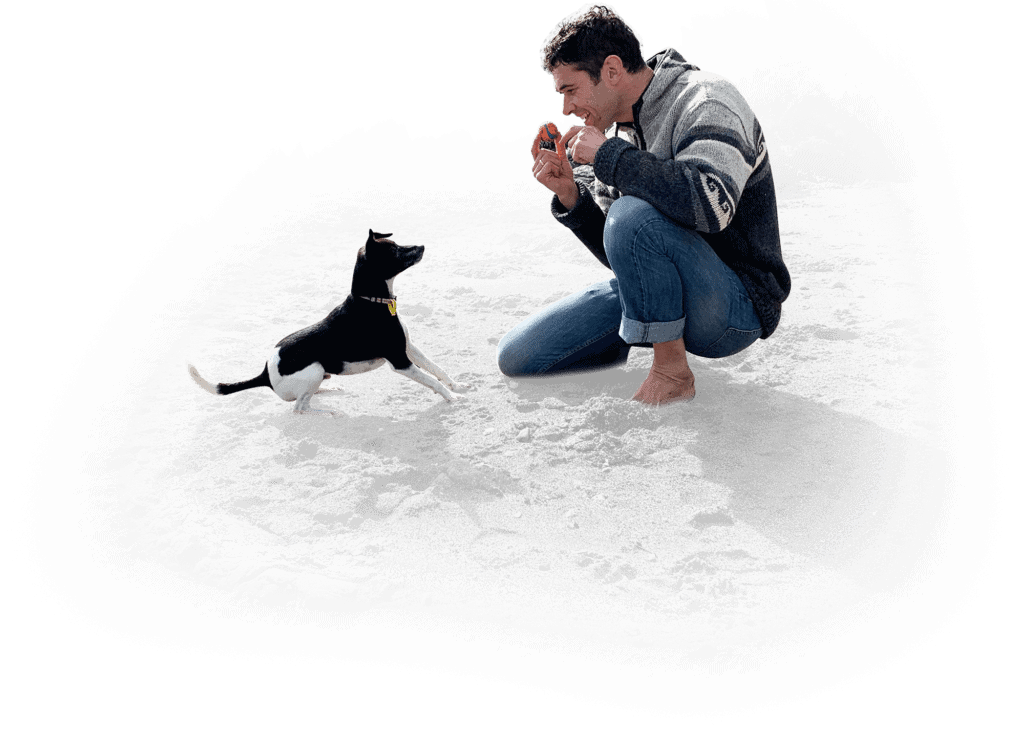
When a well-socialized dog suddenly turns reactive on playdates, it rarely means your past socialization failed. Instead, it’s a sign that there’s a subtle shift in your daily leadership dynamic that has pushed them past their threshold. When a dog feels a lack of clear, consistent leadership from their human in the moment, they will take matters into their own paws to protect their space.
BRING BACK THE CALM TO YOUR REACTIVE DOG. JOIN THIS WEBINAR NOW.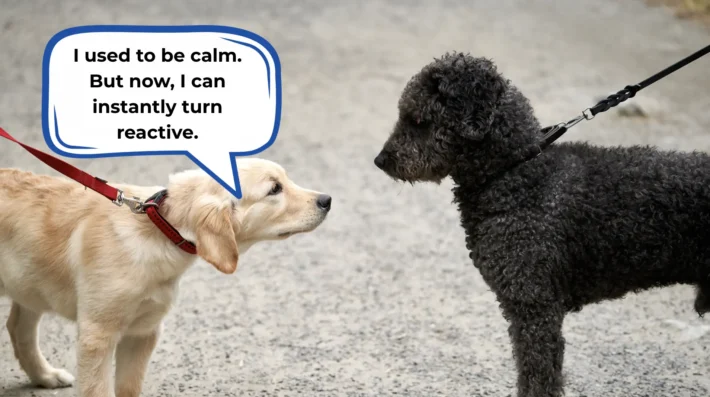
You've done everything right: you socialized your dog early, made sure they had playdates, and introduced them to other dogs, other people, and new environments. And for a while, it worked. Your dog was calm, friendly, and easy to manage around other dogs.
But lately, something has shifted.
Your dog, the one who used to run happily to other dogs at the park, is now snapping, lunging, or barking. They're tense during playdates, and they’re reactive in situations that never used to bother them. Now, you're left wondering: “What went wrong? We already did everything right.”
Here's what most dog owners don't realize: reactivity in well-socialized dogs almost always points to one deeper issue, one that goes beyond behavior, beyond training tricks, and beyond the surface level.
It points to a lack of leadership.
In this blog, we're going to go deeper than the usual answers. We're going to look at why your calm, well-socialized dog is suddenly reactive, what's really going on in their mind, and what you can do to bring back the calm that you know your dog is capable of.
Key Takeaways
- Reactivity indicates a leadership gap. Even a thoroughly socialized and trained dog can become reactive if their owner's commitment to daily leadership slips, causing the dog to anxiously step into a protective, dominant role.
- Subtle stress signals precede behavioral explosions. Reactivity does not happen instantly; dogs give early warning signs of discomfort—such as lip licking, yawning, looking away, and body stiffness—before escalating to barking, growling, or lunging.
- Progress requires consistent maintenance. Dog training and leadership are not one-time fixes but ongoing practices; regression can be reversed by calmly re-establishing boundaries and using structured routines to lower the dog's stress threshold.
The Story of Baxter: Why A Social Dog Turns Reactive
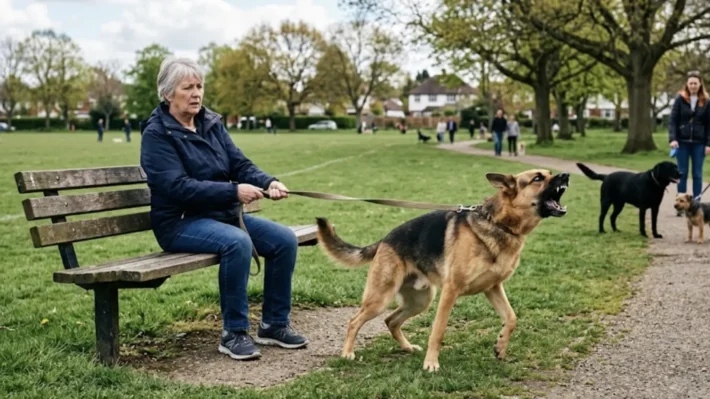
When I first met Baxter’s owners, they were at their wits' end, but mostly, they were just sad. They kept telling me how Baxter used to be this incredibly social, friendly dog. But over the course of about two years, that friendly pup had slowly vanished.
In his place was a dog whose reactivity had been building and building. It got to the point where Baxter was lunging, barking, and completely losing his mind at dogs all the way on the other side of the street. His owner looked at him and described him to me perfectly: “Dan, he’s just become an absolutely scaredy boy.”
And you know what? She was spot on.
Why Baxter Turned Into A Reactive Dog
When I watched Baxter, my read on him was the same as it is for so many reactive dogs. Baxter wasn't a bad dog. Not even close. He was just a frightened one.
What had happened over those two years was a classic case of role reversal. Without his owners realizing it, Baxter had taken on the heavy burden of being the pack protector. And because no one had stepped up to take that role away from him, he felt he had to handle every “threat” himself.
I told his owners this: “He doesn't mean to be bad. He's just not sure what he's meant to do. Right now, he's doing his best to protect the property and protect his owner.”
Think about how exhausting that must be for a dog. To go from loving life and loving other dogs, to suddenly feeling like you’re on high alert 24/7, responsible for the safety of your entire family. No wonder the poor guy was a scaredy dog—that’s a massive amount of pressure!
Why Baxter Turned Into A Reactive Dog
So, how did we help Baxter find his inner happy-go-lucky puppy again?
We didn't do it by shouting, punishing, or using force. That would only validate his fear. Instead, we started where I start with every dog: The Five Golden Rules.
Before we even attempted to look at another dog, we put these rules in place at home. By changing the daily routines around food, danger, and affection, we gently showed Baxter that his owners were the decision-makers. We communicated to him in a language he understood that the protector job was officially taken.
Once Baxter realized he could take direction from a calm, capable leader, you could almost see the weight lift off his furry shoulders.
He saw leadership, and he knew he no longer had to be in charge 24/7. After our training, it was evident that he was more relaxed than ever. He no longer barked or lunged at other dogs.
All he needed was leadership. When I gave him that, his demeanor completely changed! Soon enough, the sociable Baxter was back!
Signs Of Dog Reactivity: The Transition From Calm To Reactive
Here's what makes this situation so confusing: your dog doesn't go from zero to one hundred in an instant. The signs are there. Most of the time, dog owners just don't know what to look for.
Some dogs can appear completely calm one moment, and then suddenly snap, lunge, or bark at another dog during what should have been a friendly playdate. What you think is a sudden change is actually a transition, and it happens in stages.
The Subtle Warning Signs (Before The Explosion)
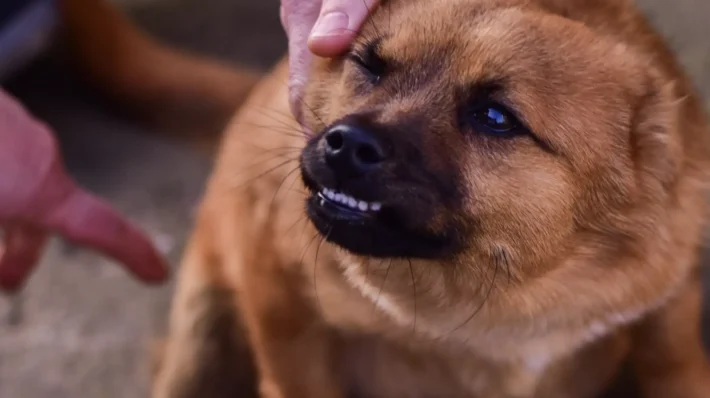
Lip Licking and Yawning
Before your dog reacts, they often try to manage their own discomfort. Lip licking and yawning are stress signals, your dog's way of self-soothing when they're feeling anxious or overwhelmed.
Looking Away
Averting their gaze is a calming signal. Your dog is trying to de-escalate tension, telling the other dog, “I don't want conflict.” If this signal is ignored by the other dog (or by you), the reaction can escalate quickly.
Stiff Body Language
A tense, rigid body is one of the earliest signs that your dog has moved from relaxed to alert. Watch for a stiff posture, a high and rigid tail, or flattened ears. These are signs your dog is no longer comfortable.
Intense Staring
When your dog locks onto another dog with a hard, fixed stare, they've shifted from “aware” to “focused.” This is the moment the energy meter starts climbing.
The Escalation
Once those subtle signs are ignored or go unaddressed, your dog moves deeper into reactivity.
Growling
An audible warning that your dog is uncomfortable and the situation is heading toward escalation. Growling is not bad behavior. It's communication.
Lunging and Nipping
At this stage, your dog has entered active defense mode. They're trying to create distance between themselves and whatever they've perceived as a threat, even if that threat is a dog they've played with before.
Barking
Non-stop barking is not just noise. It's your dog saying, “I am scared, I am stressed, and I need this to stop.” When your well-socialized dog is barking during an activity they used to enjoy, something deeper is going on.
Here's the key thing to understand: some dogs can appear perfectly calm right up until the moment they react. This is especially common in well-socialized dogs who have learned to suppress their stress signals over time. When the stress builds too high, even a dog who seems fine can suddenly snap.
This is what the Energy Meter helps explain. Your dog has a threshold. From calm, to aware, to alert, to locked on, to reactive. When the adrenaline kicks in above a certain level, it becomes very difficult to bring them back. The key is catching the signs before they reach that point, and understanding why their threshold is lower than it used to be.
Why A Lack Of Leadership Makes Your Calm Dog Reactive
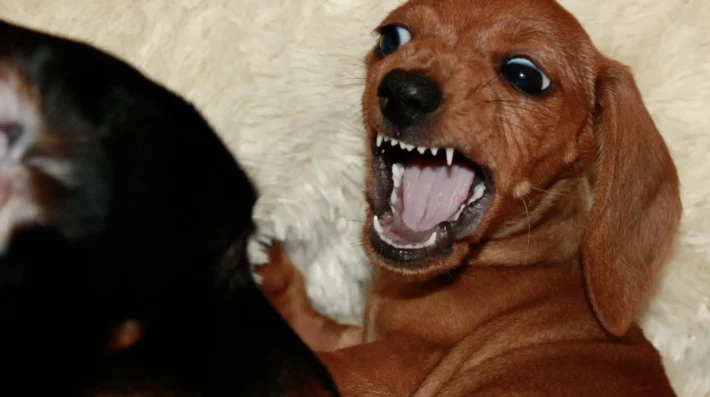
“Doggy Dan, I thought we already established leadership. Why is my dog snapping at other dogs again?”
This is one of the most common questions I hear, and I want to answer it honestly.
Establishing leadership is not a one-time event. It's not something you do for a few weeks and then set aside. Leadership is a constant commitment. And the moment that commitment slips, even subtly, your dog starts to feel the gap.
Here's why this matters so much.
Your dog is constantly reading the situation. Every single day, they're asking themselves: “Is someone in charge here? Is my leader handling this? Or do I need to step in?”
When you've been consistent, your dog feels safe. They can relax, and they don't have to be on guard because they trust that you've got it covered. Your dog can walk into a playdate and enjoy it, because in their mind, the leader is watching, assessing, and managing the situation.
But when leadership becomes inconsistent, even gradually, that trust begins to erode. Your dog starts to feel uncertain. And an uncertain dog is an anxious dog. An anxious dog is a reactive dog.
Think about it this way. If you had a manager at work who was confident and decisive for six months, and then suddenly started seeming distracted, inconsistent, and unsure, how long before you started feeling like you needed to step in and handle things yourself?
That's exactly what happens with your dog.
The commitment to leadership has to cover everything. Not just the walk, not just when things are going well, but all areas of your dog's life. The Five Golden Rules that I teach in The Dog Calming Code™ are built on this principle: being the leader when it comes to food, affection, responding to danger, the walk, and decision-making. All of it matters because they communicate to your dog whether or not you are a leader they can trust.
When we let those rules slide, when we start giving attention on demand again, when we stop leading the walk, when we let our dog push through the door ahead of us, we are quietly telling our dog, “I'm not as sure about this leadership thing anymore.”
And your dog notices. They always do.
So if your well-socialized dog is suddenly reactive again, the first question to ask is not “What's wrong with my dog?” The first question is: “Have I been consistent in my leadership lately?”
Can My Trained Dog Go Back To Being Reactive?
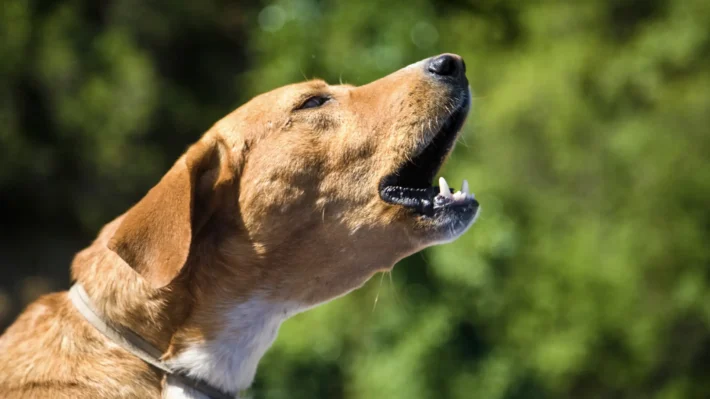
This is one of the hardest questions for dog owners to face, especially after putting in real time, effort, and heart into their dog's training.
The short answer? Yes. A trained dog can absolutely go back to being reactive.
And here's the important thing I want you to hear: it doesn't mean you failed or the training didn't work. It means that somewhere along the way, the foundation that established your leadership began to quietly slip.
Think of it like fitness. You spend months working out consistently. This makes you feel strong, healthy, and in great shape. And then life gets busy. The workouts get shorter, then less frequent, then barely there. A few months later, you notice you're not as strong as you used to be.
Did your hard work disappear? Not entirely. But without maintenance, the results will fade.
It's the same with your dog.
Here are the most common reasons a trained dog slides back into reactivity:
Changes In Routine or Environment
A new home, a new baby, a new pet, a change in your work schedule. Any significant shift in your dog's environment can unsettle the sense of security they've built. When the world starts to feel unpredictable again, your dog's anxiety rises, and with it, their reactivity.
Leadership That Became Inconsistent
This is the big one. Maybe you were consistent for a long time, and then life got in the way. The rules became a little looser. The walk became a little less structured, and the boundaries became a little blurry. Your dog noticed all of it, even if you didn't. And slowly, they started to wonder if the leader was still in charge.
A New Triggering Experience
Even a well-trained dog can be thrown off by one bad encounter: an aggressive dog charging at them during a playdate, an overwhelming situation where they felt cornered and unsupported. One experience like this can reset your dog's emotional response to situations they previously handled well.
Stress That Built Up Over Time
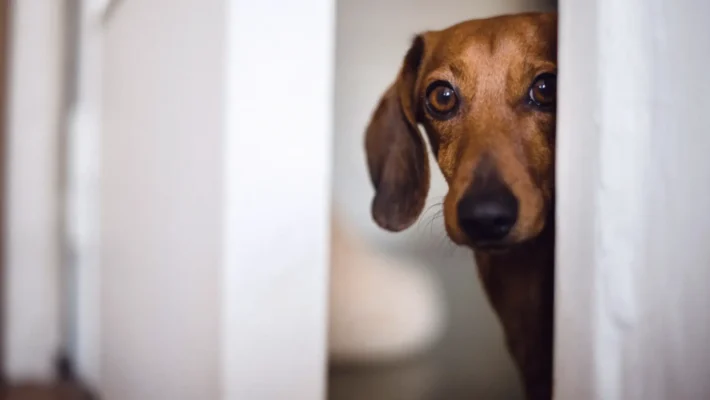
This one is easy to miss. Your dog doesn't have to have one dramatic bad experience to regress. Sometimes, it's caused by a trigger stacking – a slow buildup of smaller stressors. Individually, each stress is manageable. Together, they lower your dog's threshold until they're reacting to things that never used to bother them at all.
The “Set and Forget” Mistake
Some dog owners reach a place where their dog is calm and well-behaved, and they take their foot off the pedal entirely. Training stops. Leadership practices fade out. The Five Golden Rules get forgotten. And because the dog was so good for so long, the regression, when it comes, feels shocking.
Here's the truth that every dog owner needs to hold onto: progress is not permanent without maintenance. Your dog isn't choosing to “unlearn” what they were taught. They're responding to what the environment is telling them right now, and if the environment is telling them that no one is in charge, they will step up to fill that gap.
The good news? A dog that has been trained before can be brought back far more quickly than a dog that was never trained at all. The foundation is still there. They know what calm feels like, especially if they've experienced having a leader they can trust. You're not starting from scratch.
You're just reminding them of what they already know.
You can achieve this by going back to the basics, recommit to your leadership, revisit the Five Golden Rules, and rebuild the consistency that your dog is counting on.
Because when your dog truly believes that you have everything handled, they don't need to be reactive or be on guard. They can just relax and be a dog.
What Causes Dog Reactivity in Well-Socialized Dogs?
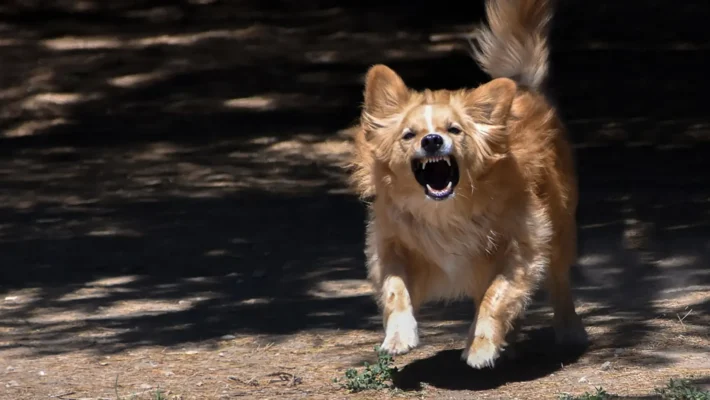
Even a dog with a great social history can become reactive. Here are the most common reasons why.
Lack of Consistent Leadership
A well-socialized dog who starts to feel that their owner is no longer a confident, capable leader will begin to take on the role of protector. And a dog in protection mode is always on guard, always scanning for threats, always one trigger away from reacting.
This is the root cause that underlies almost every case of sudden reactivity in dogs who were previously calm. They're not being “bad.” They're doing what they believe they have to do because they don't feel like someone else is handling it.
Bad or Overwhelming Experiences
Even one negative encounter can shift your dog's emotional response to other dogs. If your dog was ambushed by an aggressive dog during a playdate, or was overwhelmed by a dog that wouldn't respect their signals, they may have learned that social situations aren't as safe as they once seemed.
This is especially common when playdates happen without proper supervision, or when your dog is forced into interactions they weren't comfortable with.
Protectiveness (Because They No Longer See You As The Leader)
Here's a subtle but important point. When your dog starts to feel that they're in charge again, even slightly, they begin to perceive other dogs as potential threats to you and to the pack.
What looks like aggression toward another dog during a playdate is often your dog stepping into a protective role they were never meant to carry. They're not being mean. They're being a leader who sees a threat and is doing their job. The problem is, that job belongs to you.
Perceiving Other Dogs As a Threat
Well-socialized dogs can still develop reactivity toward specific dogs or types of dogs, especially if those dogs have been unpredictable, overly dominant, or have ignored their calming signals in the past.
Over time, if your dog has had enough negative encounters with particular types of dogs, they may begin to generalize and treat all similar dogs as potential threats.
Trigger Stacking and Stress Buildup
This one is often overlooked. Reactivity doesn't always come from one big event. Sometimes, it builds up over time through trigger stacking: multiple smaller stressors that accumulate until your dog's threshold is much lower than usual.
A loud noise on the way to the playdate or an unfamiliar environment. An inconsistent morning routine or a change in your energy. Each small stressor adds to the load, and by the time the playdate starts, your dog is already at a level five or six on the energy meter, when they'd normally begin at a two. It takes far less to push them over the edge.
Loss of Trust In Their Environment
Well-socialized dogs thrive when their world feels predictable and safe. When things start to feel uncertain, whether that's changes in routine, inconsistent leadership, or confusing social situations, they can lose that sense of security and start reacting to protect themselves.
What You Can Do To Calm Reactive Dogs
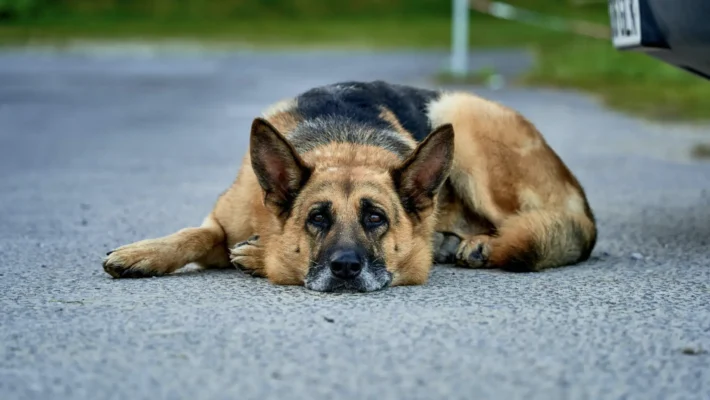
The good news is that reactivity in well-socialized dogs is absolutely something you can work through. Here's where to start.
Re-Establish Your Leadership (From The Ground Up)
Before anything else, go back to basics. Revisit the Five Golden Rules. Are you leading the walk? Are you controlling feeding, and are you the one deciding when affection is given? Do you calmly and consistently manage situations that your dog perceives as dangerous?
You don't have to start from scratch, but you do need to check every area. Leadership isn't just for the walk. It's for everything.
Watch The Energy Meter
Before playdates and walks, check in on your dog's energy level. A dog who is already at a seven before the playdate begins will be far harder to manage when things escalate. Keep them calm before you begin. If they're too wound up, wait. Don't push through when their energy is already high. That's not the time to train. That's the time to take a step back and let things settle.
Keep Playdates Calm and Structured
Don't just throw your dog into an off-leash free-for-all and hope for the best. Start in a calm, controlled environment. Keep early interactions short and positive. Give your dog the space to meet other dogs on their own terms, without being forced into close contact they're not comfortable with.
Watch For Early Warning Signs and Intervene Early
Use what you've learned about the transition from calm to reactive. When you see your dog starting to stiffen, stare, or show subtle stress signals, step in before the reaction escalates. You step in and calmly redirect your dog: “I saw it. I've got it handled. You don't need to do anything.”
Don't Punish The Reactive Moment
Punishing a dog in the middle of a reactive episode only adds fear and anxiety to an already overwhelming situation. It makes things worse, not better. Instead, calmly remove your dog from the situation, let them decompress, and address the root cause, which is leadership, not the moment of reaction itself.
Stay Calm Yourself
Your dog reads your energy constantly. If you tense up the moment another dog approaches, your dog feels that tension travel right down the leash. It confirms to them that yes, there IS something to worry about, and yes, they need to take charge.
Stay calm. Breathe. Show your dog through your body language that you've assessed the situation and you're not concerned.
Take Things Slowly
If your dog has had a bad experience or has started showing reactivity during playdates, don't rush to get back to normal. Take things slowly. Start with low-key environments. Build positive experiences one step at a time. Progress will come, but only if you're patient enough not to push past your dog's threshold too quickly.
Help Your Dog Overcome Reactivity With The Dog Calming Code™
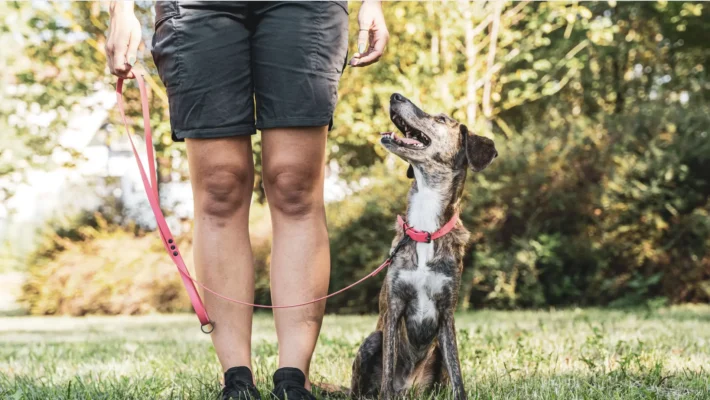
The reactivity itself isn't the problem; it’s just the symptom. The real issue is that somewhere along the way, your pup stopped feeling like you had everything under control, so they took on the protector job themselves. But carrying the weight of the world is exhausting and stressful. It’s exactly why a previously happy, social pup transforms into a stressed-out “scaredy dog.”
That’s exactly what The Dog Calming Code™ is designed to fix.
This isn't your standard, repetitive training program. It’s a gentle framework that shows you how to become the calm, capable leader your dog is desperately looking for. By putting the Five Golden Rules into practice, you’ll learn to communicate in a language your dog instinctively understands. Once they realize you’ve got things covered, they can finally let go of that heavy burden, relax, and walk past other dogs without exploding. They can just go back to being a dog.
This transformation is entirely possible—I’ve seen it happen with thousands of reactive dogs just like yours.
That’s why I’d love to invite you to join my upcoming free webinar, where you will learn the core foundations of The Dog Calming Code™ completely for free! I’ll walk you through how to lift that heavy weight off your dog's shoulders so you can finally get your peaceful walks back.
Spaces fill up fast, so click the link below to claim your free spot!
See you there!

~Doggy Dan 🙂