✨ Ask Doggy Dan AI About Your Dog Now  🐶
Dan's AI Chat Widget

Why Is My Well-Socialized Dog Suddenly Reactive During Playdates?

dog training to build a strong bond and better behavior.

Last Updated: July 2026

Last updated: July 2026

When a well-socialized dog suddenly turns reactive on playdates, it rarely means your past socialization failed. Instead, it’s a sign that there’s a subtle shift in your daily leadership dynamic that has pushed them past their threshold. When a dog feels a lack of clear, consistent leadership from their human in the moment, they will take matters into their own paws to protect their space.

BRING BACK THE CALM TO YOUR REACTIVE DOG. JOIN THIS WEBINAR NOW.
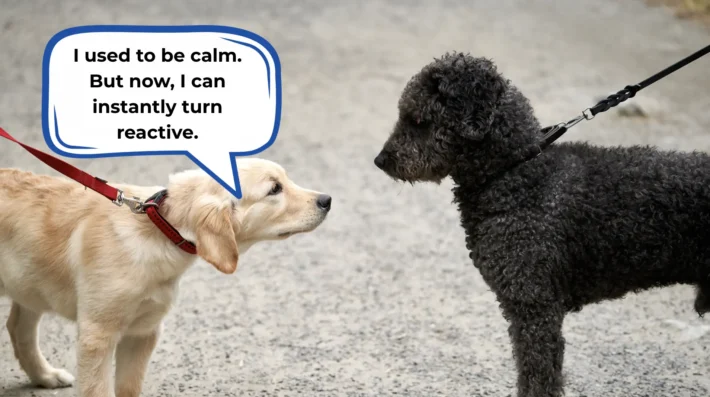
dog suddenly reactive during playdates

You've done everything right: you socialized your dog early, made sure they had playdates, and introduced them to other dogs, other people, and new environments. And for a while, it worked. Your dog was calm, friendly, and easy to manage around other dogs.

But lately, something has shifted.

Your dog, the one who used to run happily to other dogs at the park, is now snapping, lunging, or barking. They're tense during playdates, and they’re reactive in situations that never used to bother them. Now, you're left wondering: “What went wrong? We already did everything right.”

Here's what most dog owners don't realize: reactivity in well-socialized dogs almost always points to one deeper issue, one that goes beyond behavior, beyond training tricks, and beyond the surface level.

It points to a lack of leadership.

In this blog, we're going to go deeper than the usual answers. We're going to look at why your calm, well-socialized dog is suddenly reactive, what's really going on in their mind, and what you can do to bring back the calm that you know your dog is capable of. 

Key Takeaways

  • Reactivity indicates a leadership gap. Even a thoroughly socialized and trained dog can become reactive if their owner's commitment to daily leadership slips, causing the dog to anxiously step into a protective, dominant role.
  • Subtle stress signals precede behavioral explosions. Reactivity does not happen instantly; dogs give early warning signs of discomfort—such as lip licking, yawning, looking away, and body stiffness—before escalating to barking, growling, or lunging.
  • Progress requires consistent maintenance. Dog training and leadership are not one-time fixes but ongoing practices; regression can be reversed by calmly re-establishing boundaries and using structured routines to lower the dog's stress threshold.

The Story of Baxter: Why A Social Dog Turns Reactive
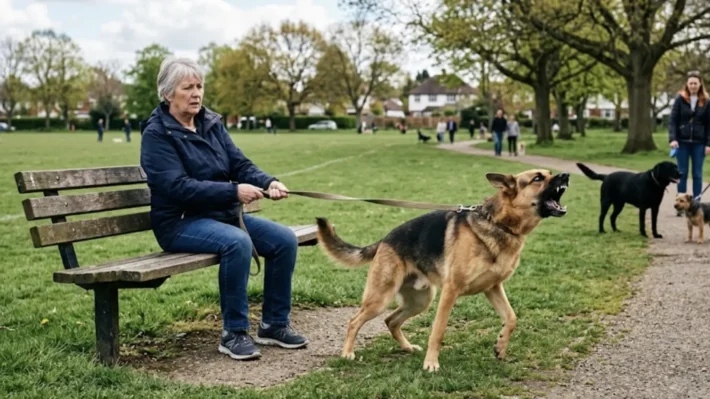
Signs of dog reactivity

When I first met Baxter’s owners, they were at their wits' end, but mostly, they were just sad. They kept telling me how Baxter used to be this incredibly social, friendly dog. But over the course of about two years, that friendly pup had slowly vanished.

In his place was a dog whose reactivity had been building and building. It got to the point where Baxter was lunging, barking, and completely losing his mind at dogs all the way on the other side of the street. His owner looked at him and described him to me perfectly: ā€œDan, he’s just become an absolutely scaredy boy.ā€

And you know what? She was spot on.

Why Baxter Turned Into A Reactive Dog

When I watched Baxter, my read on him was the same as it is for so many reactive dogs. Baxter wasn't a bad dog. Not even close. He was just a frightened one.

What had happened over those two years was a classic case of role reversal. Without his owners realizing it, Baxter had taken on the heavy burden of being the pack protector. And because no one had stepped up to take that role away from him, he felt he had to handle every “threat” himself.

I told his owners this: “He doesn't mean to be bad. He's just not sure what he's meant to do. Right now, he's doing his best to protect the property and protect his owner.”

Think about how exhausting that must be for a dog. To go from loving life and loving other dogs, to suddenly feeling like you’re on high alert 24/7, responsible for the safety of your entire family. No wonder the poor guy was a scaredy dog—that’s a massive amount of pressure!

Why Baxter Turned Into A Reactive Dog
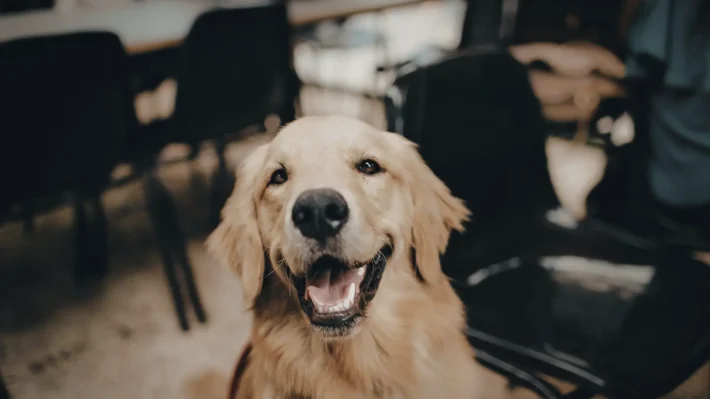
Calm dog reactive

So, how did we help Baxter find his inner happy-go-lucky puppy again?

We didn't do it by shouting, punishing, or using force. That would only validate his fear. Instead, we started where I start with every dog: The Five Golden Rules.

Before we even attempted to look at another dog, we put these rules in place at home. By changing the daily routines around food, danger, and affection, we gently showed Baxter that his owners were the decision-makers. We communicated to him in a language he understood that the protector job was officially taken.

Once Baxter realized he could take direction from a calm, capable leader, you could almost see the weight lift off his furry shoulders.

He saw leadership, and he knew he no longer had to be in charge 24/7. After our training, it was evident that he was more relaxed than ever. He no longer barked or lunged at other dogs. 

All he needed was leadership. When I gave him that, his demeanor completely changed! Soon enough, the sociable Baxter was back!

Signs Of Dog Reactivity: The Transition From Calm To Reactive

Here's what makes this situation so confusing: your dog doesn't go from zero to one hundred in an instant. The signs are there. Most of the time, dog owners just don't know what to look for.

Some dogs can appear completely calm one moment, and then suddenly snap, lunge, or bark at another dog during what should have been a friendly playdate. What you think is a sudden change is actually a transition, and it happens in stages. 

The Subtle Warning Signs (Before The Explosion)
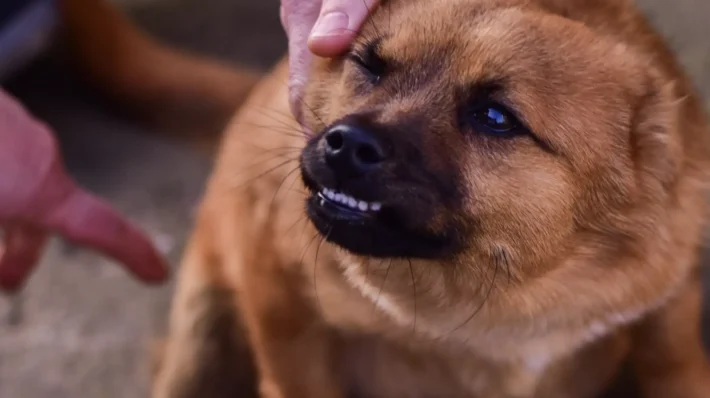
Calm reactive dogs

Lip Licking and Yawning

Before your dog reacts, they often try to manage their own discomfort. Lip licking and yawning are stress signals, your dog's way of self-soothing when they're feeling anxious or overwhelmed.

Looking Away

Averting their gaze is a calming signal. Your dog is trying to de-escalate tension, telling the other dog, “I don't want conflict.” If this signal is ignored by the other dog (or by you), the reaction can escalate quickly.

Stiff Body Language

A tense, rigid body is one of the earliest signs that your dog has moved from relaxed to alert. Watch for a stiff posture, a high and rigid tail, or flattened ears. These are signs your dog is no longer comfortable.

Intense Staring

When your dog locks onto another dog with a hard, fixed stare, they've shifted from “aware” to “focused.” This is the moment the energy meter starts climbing.

The Escalation

Once those subtle signs are ignored or go unaddressed, your dog moves deeper into reactivity.

Growling

An audible warning that your dog is uncomfortable and the situation is heading toward escalation. Growling is not bad behavior. It's communication. 

Lunging and Nipping

At this stage, your dog has entered active defense mode. They're trying to create distance between themselves and whatever they've perceived as a threat, even if that threat is a dog they've played with before. 

Barking

Non-stop barking is not just noise. It's your dog saying, “I am scared, I am stressed, and I need this to stop.” When your well-socialized dog is barking during an activity they used to enjoy, something deeper is going on.

Here's the key thing to understand: some dogs can appear perfectly calm right up until the moment they react. This is especially common in well-socialized dogs who have learned to suppress their stress signals over time. When the stress builds too high, even a dog who seems fine can suddenly snap.

This is what the Energy Meter helps explain. Your dog has a threshold. From calm, to aware, to alert, to locked on, to reactive. When the adrenaline kicks in above a certain level, it becomes very difficult to bring them back. The key is catching the signs before they reach that point, and understanding why their threshold is lower than it used to be.

Why A Lack Of Leadership Makes Your Calm Dog Reactive
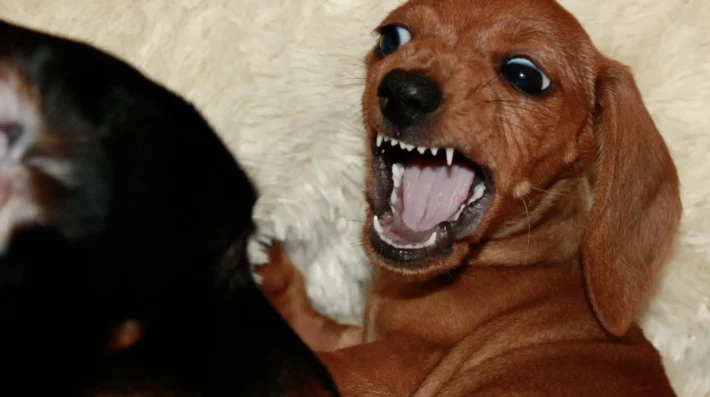
What causes dog reactivity

“Doggy Dan, I thought we already established leadership. Why is my dog snapping at other dogs again?”

This is one of the most common questions I hear, and I want to answer it honestly.

Establishing leadership is not a one-time event. It's not something you do for a few weeks and then set aside. Leadership is a constant commitment. And the moment that commitment slips, even subtly, your dog starts to feel the gap.

Here's why this matters so much.

Your dog is constantly reading the situation. Every single day, they're asking themselves: “Is someone in charge here? Is my leader handling this? Or do I need to step in?” 

When you've been consistent, your dog feels safe. They can relax, and they don't have to be on guard because they trust that you've got it covered. Your dog can walk into a playdate and enjoy it, because in their mind, the leader is watching, assessing, and managing the situation.

But when leadership becomes inconsistent, even gradually, that trust begins to erode. Your dog starts to feel uncertain. And an uncertain dog is an anxious dog. An anxious dog is a reactive dog.

Think about it this way. If you had a manager at work who was confident and decisive for six months, and then suddenly started seeming distracted, inconsistent, and unsure, how long before you started feeling like you needed to step in and handle things yourself?

That's exactly what happens with your dog.

The commitment to leadership has to cover everything. Not just the walk, not just when things are going well, but all areas of your dog's life. The Five Golden Rules that I teach in The Dog Calming Code™ are built on this principle: being the leader when it comes to food, affection, responding to danger, the walk, and decision-making. All of it matters because they communicate to your dog whether or not you are a leader they can trust.

When we let those rules slide, when we start giving attention on demand again, when we stop leading the walk, when we let our dog push through the door ahead of us, we are quietly telling our dog, “I'm not as sure about this leadership thing anymore.”

And your dog notices. They always do.

So if your well-socialized dog is suddenly reactive again, the first question to ask is not “What's wrong with my dog?” The first question is: “Have I been consistent in my leadership lately?”

Can My Trained Dog Go Back To Being Reactive?
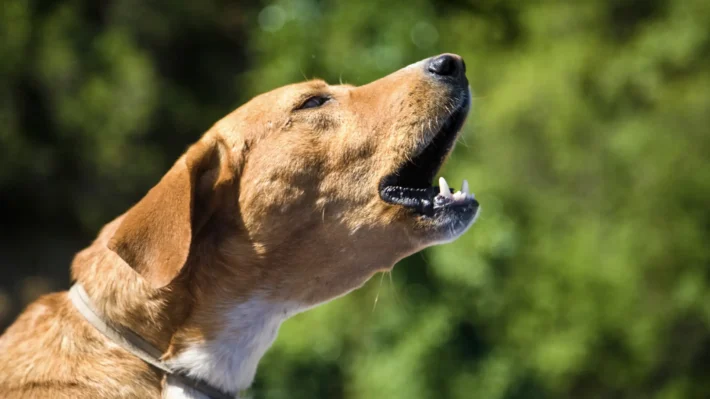
Dog suddenly reactive during playdates

This is one of the hardest questions for dog owners to face, especially after putting in real time, effort, and heart into their dog's training.

The short answer? Yes. A trained dog can absolutely go back to being reactive.

And here's the important thing I want you to hear: it doesn't mean you failed or the training didn't work. It means that somewhere along the way, the foundation that established your leadership began to quietly slip.

Think of it like fitness. You spend months working out consistently. This makes you feel strong, healthy, and in great shape. And then life gets busy. The workouts get shorter, then less frequent, then barely there. A few months later, you notice you're not as strong as you used to be.

Did your hard work disappear? Not entirely. But without maintenance, the results will fade.

It's the same with your dog.

Here are the most common reasons a trained dog slides back into reactivity:

Changes In Routine or Environment

A new home, a new baby, a new pet, a change in your work schedule. Any significant shift in your dog's environment can unsettle the sense of security they've built. When the world starts to feel unpredictable again, your dog's anxiety rises, and with it, their reactivity.

Leadership That Became Inconsistent

This is the big one. Maybe you were consistent for a long time, and then life got in the way. The rules became a little looser. The walk became a little less structured, and the boundaries became a little blurry. Your dog noticed all of it, even if you didn't. And slowly, they started to wonder if the leader was still in charge.

A New Triggering Experience

Even a well-trained dog can be thrown off by one bad encounter: an aggressive dog charging at them during a playdate, an overwhelming situation where they felt cornered and unsupported. One experience like this can reset your dog's emotional response to situations they previously handled well.

Stress That Built Up Over Time

Signs of dog reactivity

This one is easy to miss. Your dog doesn't have to have one dramatic bad experience to regress. Sometimes, it's caused by a trigger stacking – a slow buildup of smaller stressors. Individually, each stress is manageable. Together, they lower your dog's threshold until they're reacting to things that never used to bother them at all.

The “Set and Forget” Mistake

Some dog owners reach a place where their dog is calm and well-behaved, and they take their foot off the pedal entirely. Training stops. Leadership practices fade out. The Five Golden Rules get forgotten. And because the dog was so good for so long, the regression, when it comes, feels shocking.

Here's the truth that every dog owner needs to hold onto: progress is not permanent without maintenance. Your dog isn't choosing to “unlearn” what they were taught. They're responding to what the environment is telling them right now, and if the environment is telling them that no one is in charge, they will step up to fill that gap. 

The good news? A dog that has been trained before can be brought back far more quickly than a dog that was never trained at all. The foundation is still there. They know what calm feels like, especially if they've experienced having a leader they can trust. You're not starting from scratch.

You're just reminding them of what they already know.

You can achieve this by going back to the basics, recommit to your leadership, revisit the Five Golden Rules, and rebuild the consistency that your dog is counting on.

Because when your dog truly believes that you have everything handled, they don't need to be reactive or be on guard. They can just relax and be a dog.

What Causes Dog Reactivity in Well-Socialized Dogs?
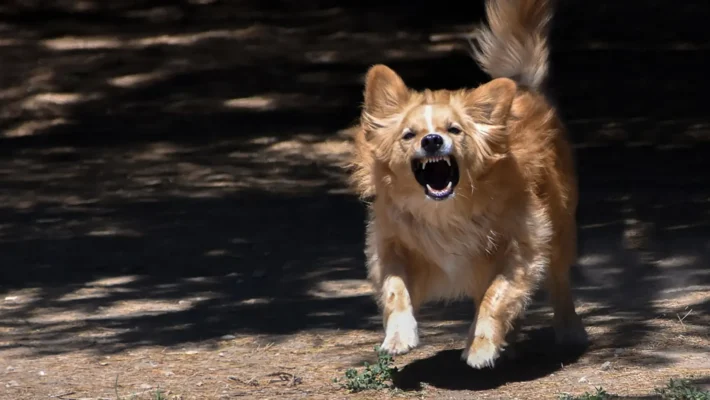
Calm dog reactive

Even a dog with a great social history can become reactive. Here are the most common reasons why.

Lack of Consistent Leadership

A well-socialized dog who starts to feel that their owner is no longer a confident, capable leader will begin to take on the role of protector. And a dog in protection mode is always on guard, always scanning for threats, always one trigger away from reacting.

This is the root cause that underlies almost every case of sudden reactivity in dogs who were previously calm. They're not being “bad.” They're doing what they believe they have to do because they don't feel like someone else is handling it.

Bad or Overwhelming Experiences

Even one negative encounter can shift your dog's emotional response to other dogs. If your dog was ambushed by an aggressive dog during a playdate, or was overwhelmed by a dog that wouldn't respect their signals, they may have learned that social situations aren't as safe as they once seemed.

This is especially common when playdates happen without proper supervision, or when your dog is forced into interactions they weren't comfortable with.

Protectiveness (Because They No Longer See You As The Leader)

Here's a subtle but important point. When your dog starts to feel that they're in charge again, even slightly, they begin to perceive other dogs as potential threats to you and to the pack.

What looks like aggression toward another dog during a playdate is often your dog stepping into a protective role they were never meant to carry. They're not being mean. They're being a leader who sees a threat and is doing their job. The problem is, that job belongs to you.

Perceiving Other Dogs As a Threat

Well-socialized dogs can still develop reactivity toward specific dogs or types of dogs, especially if those dogs have been unpredictable, overly dominant, or have ignored their calming signals in the past.

Over time, if your dog has had enough negative encounters with particular types of dogs, they may begin to generalize and treat all similar dogs as potential threats.

Trigger Stacking and Stress Buildup

This one is often overlooked. Reactivity doesn't always come from one big event. Sometimes, it builds up over time through trigger stacking: multiple smaller stressors that accumulate until your dog's threshold is much lower than usual.

A loud noise on the way to the playdate or an unfamiliar environment. An inconsistent morning routine or a change in your energy. Each small stressor adds to the load, and by the time the playdate starts, your dog is already at a level five or six on the energy meter, when they'd normally begin at a two. It takes far less to push them over the edge.

Loss of Trust In Their Environment

Well-socialized dogs thrive when their world feels predictable and safe. When things start to feel uncertain, whether that's changes in routine, inconsistent leadership, or confusing social situations, they can lose that sense of security and start reacting to protect themselves.

What You Can Do To Calm Reactive Dogs
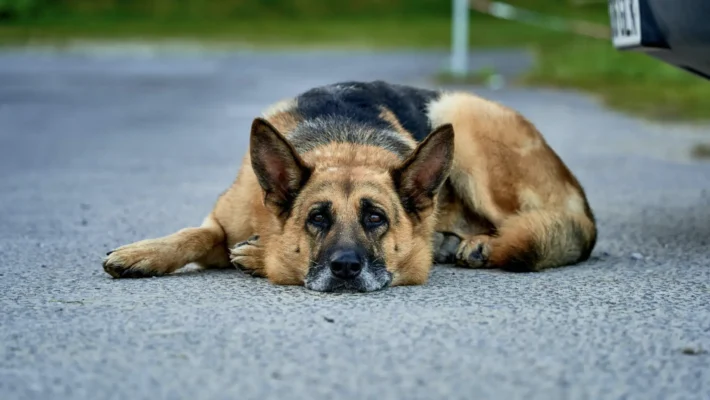
Calm reactive dogs

The good news is that reactivity in well-socialized dogs is absolutely something you can work through. Here's where to start.

Re-Establish Your Leadership (From The Ground Up)

Before anything else, go back to basics. Revisit the Five Golden Rules. Are you leading the walk? Are you controlling feeding, and are you the one deciding when affection is given? Do you calmly and consistently manage situations that your dog perceives as dangerous?

You don't have to start from scratch, but you do need to check every area. Leadership isn't just for the walk. It's for everything.

Watch The Energy Meter

Before playdates and walks, check in on your dog's energy level. A dog who is already at a seven before the playdate begins will be far harder to manage when things escalate. Keep them calm before you begin. If they're too wound up, wait. Don't push through when their energy is already high. That's not the time to train. That's the time to take a step back and let things settle.

Keep Playdates Calm and Structured

Don't just throw your dog into an off-leash free-for-all and hope for the best. Start in a calm, controlled environment. Keep early interactions short and positive. Give your dog the space to meet other dogs on their own terms, without being forced into close contact they're not comfortable with.

Watch For Early Warning Signs and Intervene Early

Use what you've learned about the transition from calm to reactive. When you see your dog starting to stiffen, stare, or show subtle stress signals, step in before the reaction escalates. You step in and calmly redirect your dog: “I saw it. I've got it handled. You don't need to do anything.” 

Don't Punish The Reactive Moment

Punishing a dog in the middle of a reactive episode only adds fear and anxiety to an already overwhelming situation. It makes things worse, not better. Instead, calmly remove your dog from the situation, let them decompress, and address the root cause, which is leadership, not the moment of reaction itself.

Stay Calm Yourself

Your dog reads your energy constantly. If you tense up the moment another dog approaches, your dog feels that tension travel right down the leash. It confirms to them that yes, there IS something to worry about, and yes, they need to take charge.

Stay calm. Breathe. Show your dog through your body language that you've assessed the situation and you're not concerned.

Take Things Slowly

If your dog has had a bad experience or has started showing reactivity during playdates, don't rush to get back to normal. Take things slowly. Start with low-key environments. Build positive experiences one step at a time. Progress will come, but only if you're patient enough not to push past your dog's threshold too quickly.

Help Your Dog Overcome Reactivity With The Dog Calming Code™
What causes dog reactivity

The reactivity itself isn't the problem; it’s just the symptom. The real issue is that somewhere along the way, your pup stopped feeling like you had everything under control, so they took on the protector job themselves. But carrying the weight of the world is exhausting and stressful. It’s exactly why a previously happy, social pup transforms into a stressed-out “scaredy dog.”

That’s exactly what The Dog Calming Code™ is designed to fix.

This isn't your standard, repetitive training program. It’s a gentle framework that shows you how to become the calm, capable leader your dog is desperately looking for. By putting the Five Golden Rules into practice, you’ll learn to communicate in a language your dog instinctively understands. Once they realize you’ve got things covered, they can finally let go of that heavy burden, relax, and walk past other dogs without exploding. They can just go back to being a dog.

This transformation is entirely possible—I’ve seen it happen with thousands of reactive dogs just like yours.

That’s why I’d love to invite you to join my upcoming free webinar, where you will learn the core foundations of The Dog Calming Code™ completely for free! I’ll walk you through how to lift that heavy weight off your dog's shoulders so you can finally get your peaceful walks back.

Spaces fill up fast, so click the link below to claim your free spot!

See you there!

Doggy Dan Signature
~Doggy Dan šŸ™‚

Frequently Asked Questions: Why Is Your Well-Socialized Dog Suddenly Reactive During Playdates?

If your dog was once calm and social but is now snapping, lunging, or barking during playdates, the most likely reason is a gradual erosion of leadership. Your dog is constantly reading the situation around them. When they sense that no one is confidently in charge, they step into the role of protector themselves. And a dog in protection mode is always on guard, always scanning for threats, and always one trigger away from reacting.

This doesn't mean your dog has suddenly become aggressive or that your training failed. It means your dog stopped feeling safe enough to relax because they no longer feel that someone else is handling the situation. The moment you re-establish consistent, calm leadership, your dog suddenly reactive during playdates behavior can shift dramatically.

The most important thing to understand about signs of dog reactivity is that they almost never come out of nowhere. There is always a transition happening, and if you know what to look for, you can step in before things escalate.

The early warning signs include lip licking, yawning, looking away, and a stiff or rigid body. These are your dog's way of communicating discomfort before the explosion happens. From there, the signs escalate to intense staring, raised hackles, growling, and eventually lunging, barking, or snapping.

One of the most important tools here is the Energy Meter.

Think of your dog's arousal on a scale from zero to ten. Once they cross the threshold into level seven or above, adrenaline kicks in and it becomes very difficult to bring them back down. The key to managing signs of dog reactivity is catching them early, at a two or three, not a nine.

Yes, absolutely. A calm dog can become reactive, and this is actually one of the most confusing and heartbreaking things dog owners experience. Your dog's calmness was never just about their personality. It was a reflection of the fact that they felt safe, secure, and that someone capable was in charge.

When leadership becomes inconsistent, even gradually, your calm dog reactive shift can happen quietly. Your dog starts to feel uncertain. They begin to wonder whether someone is really handling things. And an uncertain dog is an anxious dog. An anxious dog is a reactive dog.

It is also worth understanding trigger stacking. Your calm dog may have been managing smaller stressors for weeks or months, and one day the accumulation simply tips them over their threshold. What looks like a sudden change has actually been building for a long time.

This is one of the most common instincts dog owners have, and honestly, it comes from a good place. You want your dog to get along with others. In your mind, you still remember when they used to love other dogs. And so when they start reacting during a playdate, part of you thinks: “Maybe they just need to meet the dog properly. Maybe if I let them sort it out, they'll be fine.” 

I want to gently but clearly say: this approach can make things significantly worse.

When your dog is already reactive, already over threshold, already past level six or seven on the energy meter, forcing them into a face-to-face greeting is not giving them a chance to “work it out.” It is pushing a dog who is already overwhelmed into the exact situation they are desperately trying to get away from. And when a dog feels trapped, cornered, and overwhelmed with no exit, they don't suddenly relax. They escalate.

What you're actually doing in that moment, without meaning to, is confirming to your dog that their fears were right all along. The threat got closer. The situation got worse. And next time, their threshold will be even lower because their body remembers.

There is also something deeper going on here that most people miss.

A reactive dog who is in protection mode is not reacting because they want to make friends and don't know how. They are reacting because, in their mind, they are the leader of the pack, and that other dog is a potential threat to you. Forcing them into a greeting doesn't resolve that belief. It just adds more pressure to an already overloaded system.

So what should you do instead?

First, don't push the greeting at all when your dog is already reactive. Remove them from the situation calmly. Let them decompress. Remember, it takes a long time to drop from a nine to a seven on the energy meter, so give them the time and space they genuinely need.

Second, if you do want to introduce your dog to another dog during a playdate, set the conditions up for success before the meeting even begins. Start with both dogs calm. Make sure you start at a distance. Let them be aware of each other from far away without being forced into contact. Move closer only if both dogs remain relaxed and below threshold.

Third, and most importantly, address the root cause. A dog who sees you as their calm, capable leader does not need to take charge of the situation. They don't need to assess whether that other dog is a threat, because in their mind, you are already handling it.

The goal of a playdate is not to force your dog through discomfort and hope they come out the other side calmer. The goal is to set up the conditions where your dog never needs to reach that reactive state in the first place.

And that starts long before the playdate ever begins. It starts with your leadership, every single day.

This is such an important distinction, and honestly, most blogs get this wrong. Yes, fear is part of the picture. But when it comes to a well-socialized dog who suddenly becomes reactive during playdates, fear alone doesn't tell the full story.

Here is what is really happening.

Your dog's reactivity is often driven by responsibility, not just fear. When your dog no longer sees you as a capable, confident leader, they believe they have to step up. They become the one watching for danger. They become the one making the big decisions because they become the protector.

And here is the thing about a dog in a protective role: they don't need to be terrified to react. They just need to feel responsible. The moment another dog enters their space during a playdate, they're not thinking “I'm scared.” They're thinking “I need to handle this.” 

This is why some reactive dogs during playdates don't show obvious fear signals. They aren't cowering. They aren't trembling. They look almost confident, right up until they snap or lunge. 

What you're seeing is not a frightened dog. What you're seeing is an overwhelmed dog who has taken on a job that was never meant to be theirs.

That's the difference. And that difference matters enormously, because it means the solution isn't just about managing fear. It's about giving your dog permission to let go of that role by showing them, consistently and clearly, that you've got everything handled.

This is a question every dog owner needs to be honest with themselves about. Reactivity that goes unaddressed doesn't stay the same. It tends to build.

Here are signs that your dog's reactivity during playdates is escalating and needs to be taken seriously:

The triggers are getting smaller.
Your dog used to only react to dogs that came too close. Now they react the moment another dog appears across the yard. When the threshold keeps dropping, it's a sign that the underlying anxiety or leadership issue is growing, not shrinking.

The reactions are getting more intense.
There is a clear difference between a dog who growls as a warning and a dog who lunges and snaps without warning. If your dog's reactions have become faster, louder, or harder to interrupt, that escalation needs attention now. 

Recovery is taking longer.
After a reactive episode, how long does it take your dog to settle? If they used to bounce back in a few minutes and now they stay tense and wired for an hour, that is a sign their overall stress levels are significantly elevated. 

Reactivity is spreading beyond playdates.
If your dog started by reacting only during playdates but is now reactive on walks, in the yard, or at home, the issue has grown beyond the specific context of social interactions.

You're starting to avoid situations.
When you find yourself planning your walks, your schedule, and your dog's social life around their reactivity, that's a signal the problem has taken hold in a serious way.

The good news is that early intervention makes an enormous difference. The sooner you address the root cause, which is your dog's need for clear, consistent leadership, the faster and more completely your dog can recover.

Absolutely, and this is one of the most overlooked pieces of the puzzle. Your dog is reading you constantly. Every single moment of every single walk, every playdate, every outing, your dog is checking in. They're watching your body language and feeling your energy through the leash. They're listening to the tone in your voice. And what they find tells them everything about whether they need to be on guard.

Here is what happens when owners unknowingly make reactivity worse:

Tensing up when another dog appears.
The moment you see a dog and your shoulders rise, your grip tightens, and your breathing changes, your dog feels all of it. To them, your tension is a confirmation: “My owner is worried. That means there IS something to worry about. I need to take over.” 

Giving attention or comfort during a reactive moment.
It feels natural to want to soothe your dog when they're distressed. But stroking them, speaking softly to them, or pulling them close during a reactive episode actually reinforces the state they're in. You are communicating, “Yes, this is scary, and I agree you should feel this way.” 

Reacting with panic or frustration.
Shouting at your dog, yanking the leash, or showing visible frustration raises the energy of the whole situation. A reactive dog in an already heightened state does not calm down when the energy around them spikes higher.

What you can do instead:

Stay calm. Breathe deliberately. Keep your body loose. When another dog appears, your goal is to communicate through your posture and your energy: “I see it. I've assessed it. It's not a threat. I've got this.” 

That silent message, delivered through calm and confident body language, is one of the most powerful things you can offer your dog during a difficult moment. When your dog looks at you and sees a leader who is completely unworried, they have no reason to take matters into their own hands. 

Your calm is not just helpful. For a reactive dog, your calm is the whole point.

Gentle journey for your puppy.

Doggy Dan

Doggy Dan stands out through his “five golden rules” that focus on canine psychology rather than repetitive drills or force. Unlike traditional trainers, he teaches owners to become the “calm leader” their dogs need. Over the last two decades, his methods have helped transform over 136,934 dogs worldwide. As the founder of TheOnlineDogTrainer.com blog and podcast and creator of the Dog Calming Codeā„¢, he has become a trusted voice in dog psychology and training. His philosophy is simple: reactive dogs don’t need punishment or endless treats. They need a leader they can trust.

FREE TRAINING:

How to Solve Dog Reactivity WITHOUT Food Bribes, Tricks, or Force

Limited spaces!

FREE webinar:

How to Solve Dog Reactivity WITHOUT Food Bribes, Tricks, or Force

dog training to stop unwanted jumping and barking

Limited Spaces!

Recent Posts

Excellent rating
Based on 156 reviews
Google star 1Google star 2Google star 3Google star 4Google star 5
+0
Ridley is my 4th dog. After listening to and learning from Doggy Dan, I was happy to see that I did pretty well with my first 3 dogs while raising my kids and having my husband with me. Not perfect - but pretty good! Now I am raising a new dog by myself, and I feel like I'm not doing this really "alone." I really am so happy with all the information Dan has offered... and all his techniques work well!!
Carol Ann Ferrari Rogers profile picture
Carol Ann Ferrari Rogers
21 September 2026
Google star 1Google star 2Google star 3Google star 4Google star 5
Two months ago I adopted a 7 year old Morkie, a very nervous but loving little fellow. I tried several different training techniques and even purchased a program that was lengthy and very time consuming before I discovered Doggy Dan. I've been using his program for two weeks and am astounded by the change in my Dexter. He is calmer, more obedient and friendlier to others than I imagined possible. Dan's training is concise. It differs from others I found, Dan trains you to become the leader of your pack through a dog's perspective. I like that the training is specific yet compassionate. This is a program that works if you are consistent. Thanks Doggy Dan!
Kathy Fore profile picture
Kathy Fore
17 September 2026
Google star 1Google star 2Google star 3Google star 4Google star 5
+0
Susie in the UK. I am only 10 days in but took in a 9 yr old emergency rescue from Romania who had been in kennels for 6 years and then had 3 failed foster placements in the UK. Luca is a big powerful mixed breed with huge stress and anxiety and very reactive, he bounded into my home and took over - aggressive with my 2 others, and visitors and pulling and pushing on walks. I thought I couldn't handle him but saw an advert for Doggy Dan on line and signed up - we've had a wonderful turnaround and he is finally decompressing, being polite with my dogs and responds excellently to the time-out if reactive with guests. Walks are much better and all 5 rules are in place. I believe he will continue to improve but only if I remain 100% consistent with him for the rest of his life. He is 9 years old and deserves a happy old age being loved and looked after with no further upsets in his life so fingers and toes are crossed for him
SoBS Truro profile picture
SoBS Truro
15 September 2026
Google star 1Google star 2Google star 3Google star 4Google star 5
+2
I started. The course 3/4 weeks ago. As Dan says you have to work on things if you get stuck. I have a Staffordshire x cane corso who is now six months old. She is very intelligent but sometimes she just doesn’t listen. Doing the five codes I’m finding it’s going pretty well except trying to get her calm so I am persevering with it again with my own space. I have a trainer call shortly which I will ask for advice on this. It’s great also that you can ask anything you’re not sure of on line. It’s so great to have someone there to help. I’m looking forward to having a relaxed girl instead of hyper most of the time as she gets so excited about almost everything. I would truly recommend doggy Dan and just wished I would have come across him much earlier. Thanks again for everything so far.
Hazel Coad profile picture
Hazel Coad
12 September 2026
Google star 1Google star 2Google star 3Google star 4Google star 5
I ā¤ļø my dog. Such a good girl! 5 Golden rules, really work.
Victoria van Sommeren profile picture
Victoria van Sommeren
9 September 2026
Google star 1Google star 2Google star 3Google star 4Google star 5
+0
This program is amazing!. We have a VERY reactive rescue dog that has bitten his previous owner and as well, myself 3x and my husband 4 x's. He had never been around people or other animals, and had never been walked on a leash. (in fact never run off-leash either, just tied to the front steps). We began with traditional treat-based training with a professional, but the progress was frustrating. A reactive dog does not want treats; it wants comfort. With the 5 Golden Rules and and some of the other training we have received with our subscription, in just 3 weeks, we can let him off leash at the dog park, he has not growled at any stranger, and he has not attacked any other animals. He is still a work in progress, but we see progress!!!! He has become a cuddly, sweet dog and for a greyhound, he even has recall! This program is amazing to say the least. We were at our wits end, but now we have hope.
susan kent profile picture
susan kent
8 September 2026
Google star 1Google star 2Google star 3Google star 4Google star 5
Okay, he says it’s not magic, but the results and the peace in so little time with so little effort sure feels like magic! My 11 month old pup was a 60lb highly reactive, very loud disaster waiting to happen. Now we are both calm, the house is quiet and I don’t live in absolute fear of his reactivity towards others. There’s always still work/training to do of course, but wow are we in a much better place to get on with that!
Theresia Travers profile picture
Theresia Travers
8 September 2026
Google star 1Google star 2Google star 3Google star 4Google star 5
Just started with the 5 rules. It's only been a week and a half and I'm noticing less stress, and a reduction in reactivity. We still have a way to go. But finally something I can work with. I went for the online course.
Fiona Bower profile picture
Fiona Bower
31 August 2026
Google star 1Google star 2Google star 3Google star 4Google star 5
I watched the free Webinar and joined at the end. I am up to No.3 atm and I’m actually feeling hopeful 🤞🏼
Jackie Grimmer profile picture
Jackie Grimmer
29 August 2026
Google star 1Google star 2Google star 3Google star 4Google star 5
The program is great. I started to see the changes in my cocker spaniel from day one.
Joy Winnington profile picture
Joy Winnington
18 August 2026
Google star 1Google star 2Google star 3Google star 4Google star 5
+3
My Lab mix puppy and I are on Day 3 , but, I do feel a stronger connection. She appears calmer overall / looking forward to consistently following these five rules. Doggy Dan is clear, concise, comprehensive and compassionate . Very pleased with his program. Diane
Diane Patterson profile picture
Diane Patterson
16 August 2026
Google star 1Google star 2Google star 3Google star 4Google star 5
+0
We have an 8 month old Goldendoodle who has fear issues outside the home and gets easily overwhelmed going into panic/flee mode if several triggers coincide (people, loud dog barking and noises like motorcycles/construction). So pleased to find Doggy Dan and seeing positive changes after just two weeks. Feeding time is calm after using the gesture eating and "thank you" when he barks works a treat. I realized I'm babying my dog too much and trying to be his best pal instead of a leader so I'm working hard on that. We've changed to the no pull harness and love that. Doggy Dans video clips really help bring the philosophy together and I love his attitude. He is calm, clear, firm but so kind and loving with dogs and very down to earth and relatable. I've got great help too from the AI coach and the daily emails and videos help keep us on track and feeling positive. We've still got a mountain to climb with our pup but I finally feel hopeful and supported. We'd tried trainers, behavior specialists and all sorts before finding Doggy Dan and this is by far our best investment. Can't recommend you trying this highly enough. Photo of our boy.
Jackie Ward profile picture
Jackie Ward
13 August 2026
Google star 1Google star 2Google star 3Google star 4Google star 5
Absolutely amazing transformation in just a few days. Just need to stick to the 5 Golden rules 🙂
Martine Adkin profile picture
Martine Adkin
13 July 2026
Google star 1Google star 2Google star 3Google star 4Google star 5
+0
I couldn’t believe my dog’s problem resolved completely within a week! Easy but not easy if you are inconsistent with the 5 rules. I highly recommend this method! Somethings don’t seem important or relevant but they are!
Dawn McCordic profile picture
Dawn McCordic
13 July 2026
Google star 1Google star 2Google star 3Google star 4Google star 5
+0
I just started my training about 2 weeks ago, and I do mean MY training. My 2 girls are really responding to my changes in how I am relating to them better. Thank you Doggy Dan, I really needed this win, 2 reactive dogs and we have made progress with the 5 golden rules and we have not with anything else. Crystal Gayle the Red Heeler and Sadie the Border Collie.
Betty Nicholl profile picture
Betty Nicholl
11 July 2026
Google star 1Google star 2Google star 3Google star 4Google star 5
+3
For three years, I tried every treat-based method and expensive course to stop my large, powerful male dog from pulling on the leash, barking, and stressing out when his energy got too high on our walks. (So while he is a farm dog who enjoys total freedom off-leash on our farm most of the day, on-leash in the city, he totally lost it). He was practically hanging from the leash, two feet in the air (almost strangling himself), always demanding to walk in front and make all the decisions. Absolutely nothing worked—until I found Doggy Dan! 🏆 After just a couple of weeks implementing The 5 Golden Rules, the transformation is absolutely mind-blowing!!! By focusing on connection and calm leadership rather than rigid commands, my dog has FINALLY reconnected with his natural calmness (that has actually always been there inside him) ā¤ļøā¤ļø When we walk through town now, I look down at my dog walking in a perfect "heel." The leash hangs completely loose, and that loose leash really says it all 👍👍👍 He does not pull, bark, or growl AT ALL when other dogs bark at him!😱 Yes, he looks at them and is interested, but he remains completely calm. We pass shouting people, groups of kids on scooters, and dogs barking aggressively behind gates—he is interested, but he remains entirely unfazed. Just yesterday, we stopped in front of a fence with chickens walking in a garden, and he just stood there watching curiously, staying completely still. And as we walked across a large, grassy schoolyard, we suddenly crossed paths with two rabbits—when I told him to, he immediately sat down. Of course, he was highly interested, but he sat completely, utterly still! I constantly find myself thinking: This can NOT be my dog, LOL! 🐇🐓 Dan refers to himself as a dog trainer, but in my humble opinion he is a dog philosopher. The course is incredibly generous, filled with hundreds of real-life videos from every situation imaginable, offering a massive toolkit for an amazing price. I am so excited to continue this course, so happy about the progress, and so looking forward to the future with this beloved dog of mine. I HIGHLY recommend it! ⭐⭐⭐⭐⭐
Ingrid-Tove Astrup profile picture
Ingrid-Tove Astrup
8 July 2026
Google star 1Google star 2Google star 3Google star 4Google star 5
+0
I've only been working the program for a week and already are seeing some great improvements with an overexcitable, energetic, barking at everything, and fun Maltipoo. I'm focusing on the 5 golden rules and watching the training videos. Thanks Doggy Dan!
Rebecca Cheney profile picture
Rebecca Cheney
4 July 2026
Google star 1Google star 2Google star 3Google star 4Google star 5
In a matter of days my 5 year old Frenchie is calmer and seems happier, albeit not happy that I'm ignoring him but it works! I live alone so he thinks he should be boss and protect me from every visitor but he didn't even bark at the window cleaner yesterday, just followed him around each window. My life might be my own soon, thank you!
Shauna profile picture
Shauna
2 July 2026
Google star 1Google star 2Google star 3Google star 4Google star 5
+4
The Golden rules i now understand are NOT called GOLDEN RULES FOR NO REASON! WOW , JUST WOW, I WAS DOING ALL 5 WRONG !
Tim Waldner profile picture
Tim Waldner
2 July 2026
Google star 1Google star 2Google star 3Google star 4Google star 5
+0
We have adopted a Poodle and he us very high energy, anxious and insecure. I joined the online program after I watched the free online webinar about the 5 Golden Rules. While watching the webinar all 3 of my dogs ran off barking... I calmly called out "thank you" and they all came back to me.. from that moment I was hooked. I love the fact that we use minimal sound in this technique as I can become anxious and unsure in my tone. I have seen results with the new Poodle and I am exited about our future. Thanks Doggy Dan, you are a gem 👌🐾🐾🐾
Jane Uprichard profile picture
Jane Uprichard
22 June 2026
FREE webinar:

How to Solve Dog Reactivity WITHOUT Food Bribes, Tricks, or Force

dog training to stop unwanted jumping and barking

Limited Spaces!