Same-gender aggression is a leading trigger for serious fights between dogs living under the same roof. While this is a common concern, many dog owners struggle to stop this behavior because they treat individual outbursts rather than the underlying dynamic: a continuous power struggle over leadership in the household. Long-term peace requires addressing that structural hierarchy first—without it, the conflict will never truly disappear.
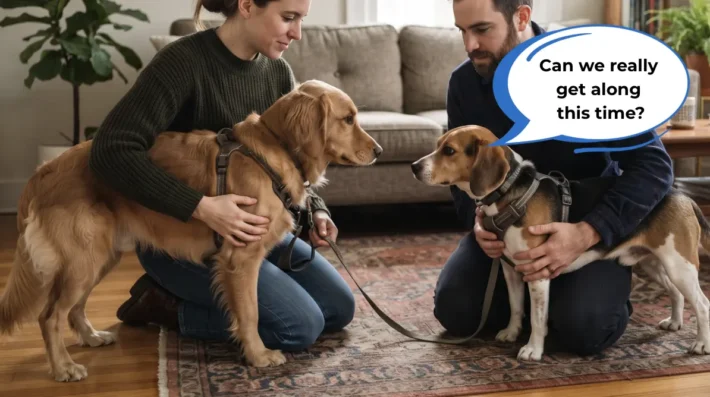
Watching two dogs you love turn on each other is one of the most heartbreaking experiences a dog owner can face. Maybe they used to curl up together, and now the tension is so thick you can feel it. Maybe there’s already been a fight — teeth, noise, perhaps even blood — and now you’re terrified of what comes next. And underneath all of it is a question you may be too frightened to say out loud: “Can they ever live together again? Or will I have to give one of them up?”
Here is the good news I want you to carry through this entire article: same-gender aggression is real, it’s common, and it is far more understandable — and far more fixable — than almost anyone will tell you.
Most of the advice out there stops at “separate them and see a behaviorist,” or worse, quietly suggests rehoming. I’m going to give you something different: the why behind the behavior, and a kind, hopeful path forward.
Read on, because this is going to change how you see your dogs forever.
Key Takeaways
- Same-gender aggression is a form of inter-dog aggression that most often appears between dogs of the same sex, both in the same household and toward unfamiliar dogs on walks. Research found that 79% of household dog-dog aggression cases involved same-sex pairs.
- The behavior isn’t caused by a bad dog. It’s driven by an anxious dog who believes they are responsible for leadership and safety, and who sees a same-sex housemate as a competitor for that role.
- You don’t have to choose between force and rehoming. There is a third way: becoming the calm, confident leader who removes the burden of “being in charge” from your dogs’ shoulders. Studies show structured leadership improved 89% of fighting pairs.
What Is Same-Gender Aggression in Dogs?
Same-gender aggression in dogs is a form of inter-dog aggression in which a dog shows growling, snapping, lunging, or fighting specifically toward other dogs of the same gender.
This aggression against the same gender most commonly shows up between two females or two males living in the same household, though it can also appear as reactivity toward same-sex dogs encountered outside the home.
In simple terms: it’s when two female dogs (or two male dogs) who share your home, or who meet on a walk, cannot peacefully coexist, and the tension repeatedly boils over into conflict.
This is different from general reactivity or a dog who simply hasn’t been socialized. The pattern is specific: the aggression targets dogs of the same sex, while dogs of the opposite sex are often tolerated or even welcomed.
How Common Is Same Gender Aggression In Dogs?
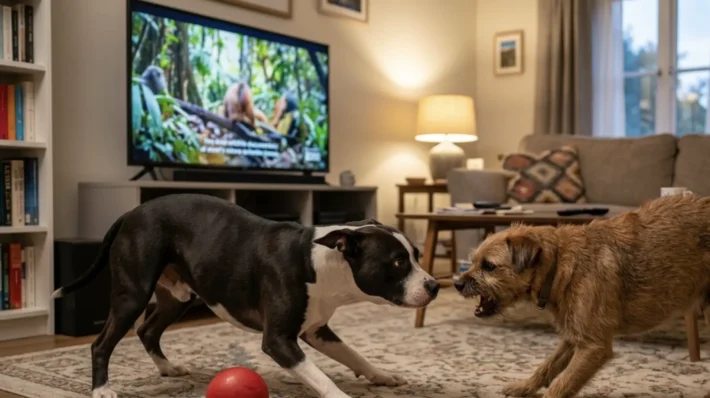
If you’ve been feeling like you and your dogs are some rare exception — you’re not. The data tells a very different story.
In a landmark study of household inter-dog aggression by researchers at Tufts University, 79% of the cases involved dogs of the same sex. Even more strikingly, 68% of cases involved at least one female, and fights between two female housemates were consistently found to be the most severe and the hardest to resolve.
The study also revealed something that answers the question nearly every owner asks: “Why is the newer dog the problem?”
In roughly 70–74% of cases, it was the newer or younger dog who instigated the conflict, often as they matured and began challenging the established household dynamic.
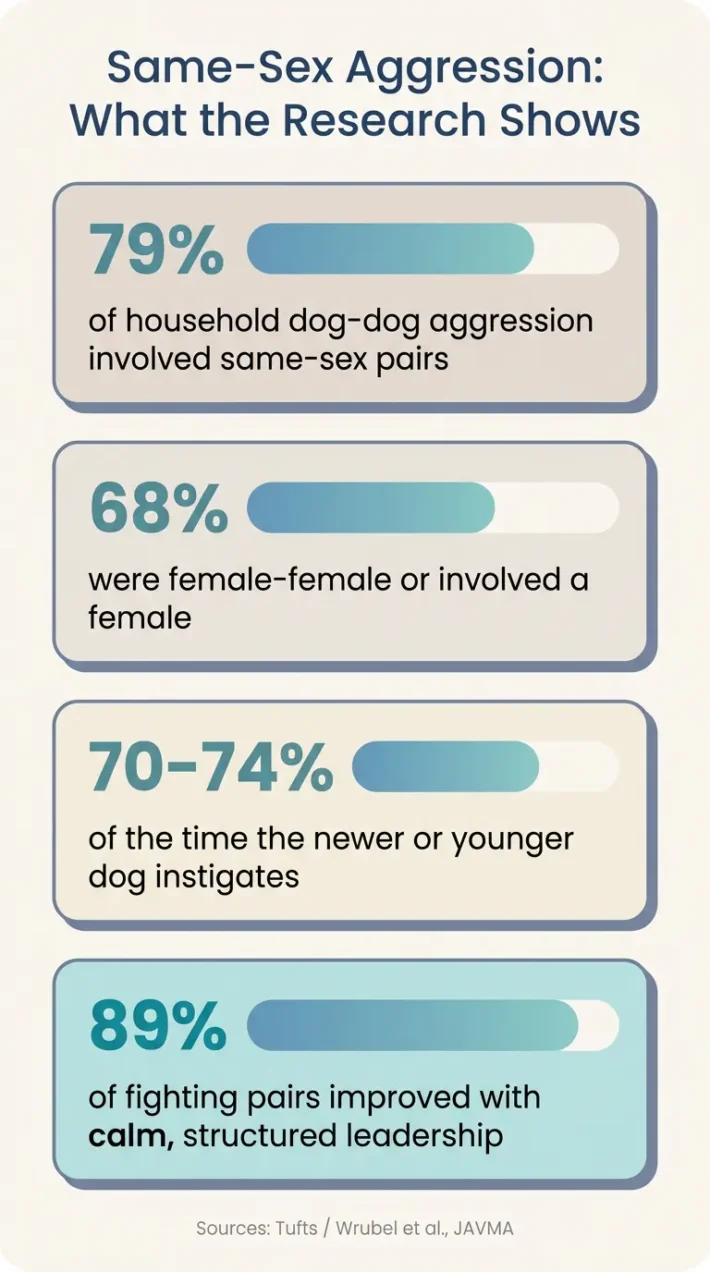
And here is the statistic I want you to hold onto most tightly: when owners implemented a structured, consistent leadership approach — the same principle at the heart of everything I teach — 89% of fighting pairs improved.
This data just shows that conflict between two dogs of the same gender is 100% solvable.
FREE WEBINAR: WHAT STOPS DOG AGGRESSION FOR GOODMale vs. Female Same Sex Aggression In Dogs: How They Differ
Same-sex aggression looks a little different depending on which dogs are involved.
Male same-sex aggression is often testosterone-facilitated, meaning intact (unneutered) males are more likely to posture, challenge, and compete with other males, particularly around social maturity. Male-male conflicts can be loud and dramatic, but they often involve more display and posturing than outright damage.
Female-female aggression, by contrast, is where the research becomes sobering. Fights between two female dogs in the same household are consistently reported as more severe, more likely to result in injury, and significantly harder to resolve. This is why searches like “female dogs fighting to death” carry such fear — female conflicts can escalate quickly and are less likely to resolve through normal canine appeasement signals.
So do female dogs fight more than males? Not necessarily more often. But when they do, the stakes tend to be higher. If you have two females in conflict, this isn’t a reason to panic, but it is a reason to take management seriously and get proper support.
Why Is This Happening? The Real Root Cause Of Dog Same Sex Aggression
Here’s where almost every article on this topic goes wrong. They give you a list of triggers like food, toys, doorways, and then leave it there. But triggers aren’t the cause. They’re just the flashpoints or sparks to set the fire off. To truly solve this, you have to understand what’s happening underneath.
Let me tell you the truth that changed everything for the 125,000+ dogs I’ve worked with: most same-sex aggression is not a fight about hierarchy for its own sake. It’s an expression of anxiety in a dog who believes they must be the leader. And that is a dog overwhelmed by that responsibility.
Think about it from your dog’s perspective.
In every group, someone has to make the big decisions like who eats first, who guards the door, and who keeps everyone safe.
If your dog believes that job is theirs, they live in a state of constant, exhausting vigilance.
Now add a second dog of the same sex who also believes they should hold that role. You don’t have two dogs being bad. You have two anxious dogs — convinced they’re responsible for running the show — locked in a stressful, unresolvable competition.
This is why the fighting so often erupts around resources like your attention, food, or doorways. These aren’t random. They’re exactly the moments when a leader would need to assert control.
Understanding the deeper reasons behind what makes a dog aggressive is the first step toward genuine, lasting change.
The solution, then, isn’t to punish aggression. It’s to remove the anxiety that’s driving it. By stepping into the calm leadership role yourself, you can stop this conflict between your dogs.
DISCOVER HOW CALM LEADERSHIP ENDS THE FIGHTING — FREE WEBINARThe Social Maturity Trigger (1–3 Years)
One of the most common questions I hear is: “They got along fine for a year — why did they suddenly start fighting?”
The answer is social maturity, which typically happens when a dog is between 18 and 36 months.
This is when a dog’s sense of their own role in the group solidifies. A puppy might defer to an older dog without question, but as they mature and gain confidence, they may begin to challenge the existing dynamic — especially if there’s a gap in the home.
This is exactly why so many owners describe the change as coming “out of nowhere.” It didn’t, really. It arrived right on schedule with your younger dog’s development. This is the same developmental fork in the road when a gentle puppy starts becoming reactive. Your dog matures, gains confidence, and, without clear leadership, steps into a role that overwhelms them.
Common Flashpoints (Triggers)
While leadership is the root cause, certain situations reliably spark conflict. In the Tufts research, the most common triggers were:
- Owner attention (46%) — jealousy and competition over you
- Food (46%) — bowls, chews, dropped scraps
- Excitement (31%) — arousal spilling over into aggression
- Toys or found items (26%) — a form of resource guarding
Doorways, narrow hallways, and the moment you walk through the front door are also classic flashpoints. Entering the door, going through hallways, and exiting the front door are moments a self-appointed leader would feel compelled to control.
JOIN OUR FREE WEBINAR AND LEARN WHAT REALLY STOPS DOG FIGHTSWarning Signs: The Ladder Before a Fight
Fights rarely come from nowhere.
Dogs almost always communicate their rising tension through a “ladder” of escalating body language before teeth ever get involved. Learning to read these signals is one of the most empowering things you can do because it lets you step in calmly and defuse the situation early.
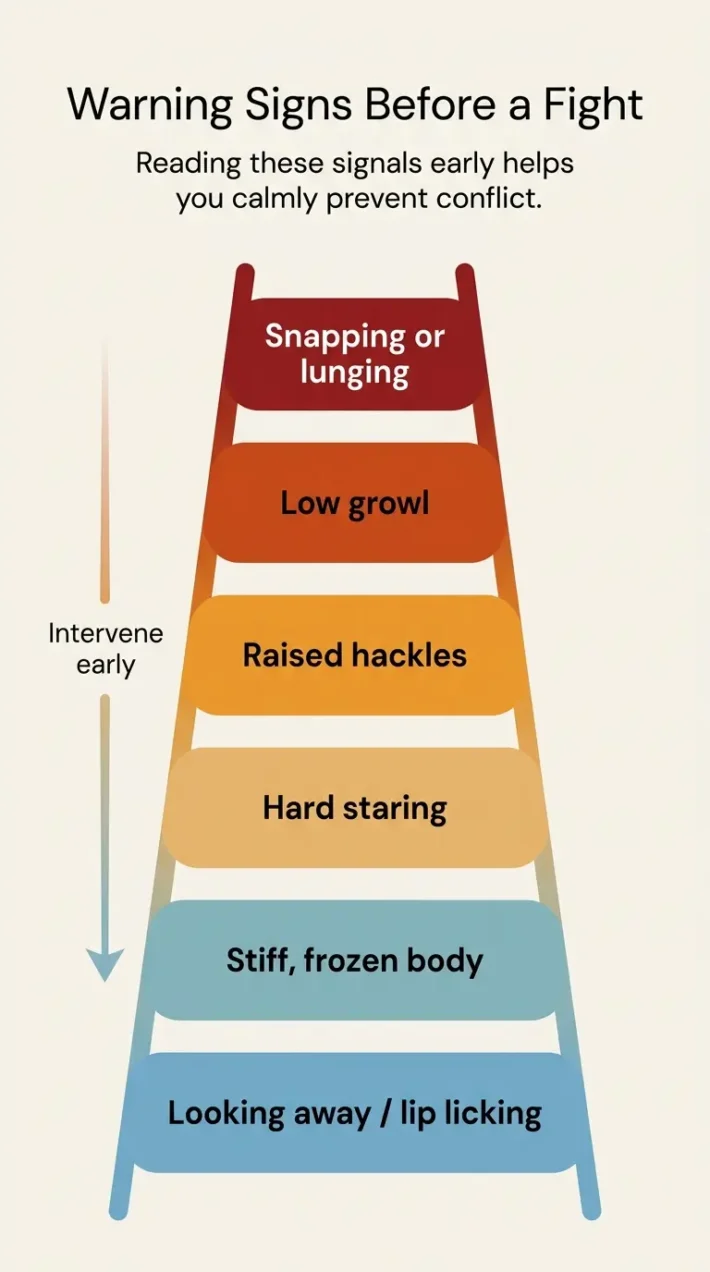
Watch for these signs, roughly from earliest to most serious:
- Lip licking, yawning, or “whale eye” (showing the whites of the eyes)
- A sudden stillness or freeze — one of the most important early warnings
- A stiff, tense body posture
- A hard, fixed stare at the other dog
- Raised hackles along the shoulders and back
- Low growling or a curled lip
- Snapping or lunging
The freeze and the hard stare are the rungs to watch most closely — they’re the quiet moment right before things escalate. Learning to read your dog’s body language turns you from a helpless bystander into a calm, proactive leader.
Does Spaying or Neutering Fix Aggression Between Dogs of The Same Sex?
This is one of the most common questions owners ask, and the honest answer is nuanced.
Spaying or neutering helps in roughly 60% of cases, particularly for testosterone-driven aggression between intact males. Removing the hormonal component can genuinely reduce the intensity of competition.
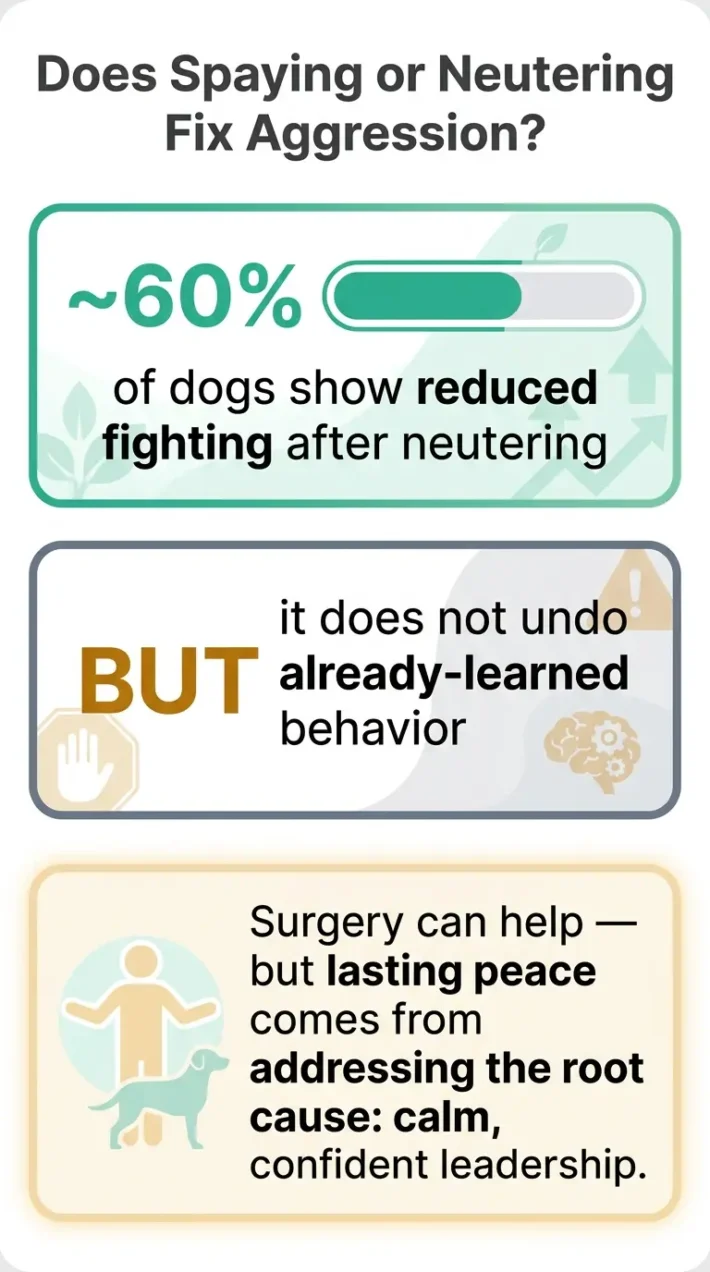
But — and this is crucial — fixing your dog will not undo learned behavior. If two dogs have already established a pattern of fighting, and if the underlying leadership anxiety hasn’t been addressed, the surgery alone won’t create peace. It’s also worth noting that for female-female aggression, spaying has a much less reliable effect and, in some cases, timing matters. If you’re weighing this decision, our guide on when to neuter your dog can help.
The bottom line: consider it a helpful piece of the puzzle, not a cure. Lasting change comes from addressing the root of the problem, which includes anxiety and the leadership dynamic.
What NOT to Do When You Have Dogs Who Are Aggressive To Each Other
Before we get to the solution, I need to steer you away from some common advice that will make things worse.
- Don’t use punishment, shock collars, or “alpha rolls.” Adding pain and fear to two dogs who are already anxious and on edge is like throwing fuel on a fire. It increases stress, damages trust, and can turn reactivity into full aggression. We never recommend shock collars — ever.
- Don’t use water pistols, air canisters, or foghorns. These startle and stress dogs without addressing anything. They may interrupt a moment, but they deepen the underlying anxiety.
- Don’t force the dogs together to “work it out.” They won’t. Flooding two dogs who are frightened of each other only intensifies the conflict and risks serious injury.
- Don’t punish growling. A growl is a warning — valuable communication. Punish it, and you teach your dog to skip the warning and go straight to biting.
How to Restore Peace: A Kind, Step-by-Step Path
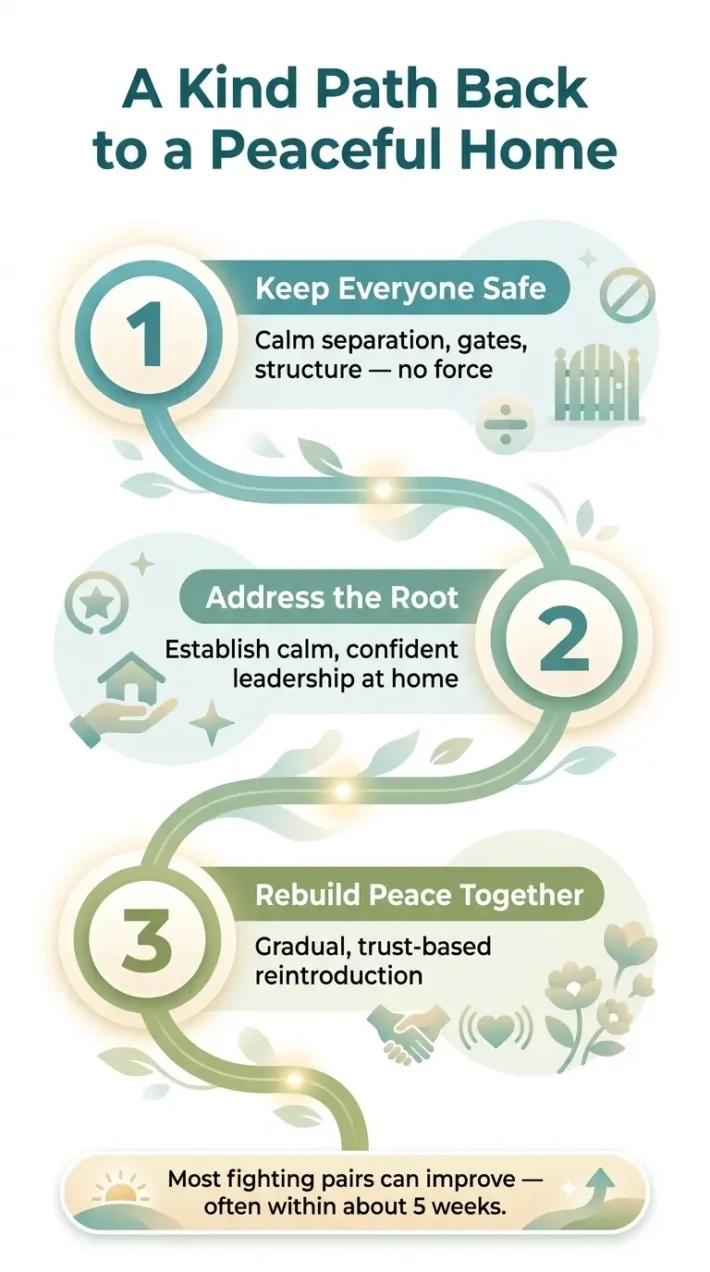
Now for the part you came here for: a hopeful path forward. This isn’t about domination or gadgets. It’s about becoming the calm, confident presence your dogs are desperately waiting for.
A quick note on safety: if your dogs have already caused injury, or if you feel unsafe, please don’t attempt reintroductions alone. Work alongside a professional to keep everyone protected.
Step 1: Keep Everyone Safe
Before any training, you must stop the fighting from continuing because every fight makes the pattern stronger.
- Separate the dogs using baby gates, crates, or rotating them between rooms. This gives everyone’s nervous system a chance to reset.
- Remove flashpoints. Feed the dogs completely separately, pick up high-value toys and chews, and manage doorways calmly.
- Consider basic muzzle training for reintroductions — framed kindly, as a safety tool, never a punishment. A well-fitted basket muzzle lets a dog pant and drink comfortably while keeping everyone safe.
Management alone won’t cure the problem, but it creates the calm, safe foundation on which real change can be built.
Step 2: Address the Root By Showing Calm, Confident Leadership
This is the heart of the solution.
Remember: your dogs are fighting because each believes they must be in charge, and that responsibility is drowning them in anxiety. Your job is to gently and consistently show both dogs that you are the calm decision-maker so neither of them has to carry that weight.
This is exactly what my Five Golden Rules and The Dog Calming Code™ are designed to do. Through small, consistent, everyday interactions — how you handle food, greetings, doorways, and moments of “danger” — you communicate one clear message to your dogs: “I’ve got this. You can relax. You don’t need to be in charge anymore.”
When both dogs genuinely believe you are the leader, the entire reason for their competition evaporates. There’s no longer a vacant leadership role to fight over. Remember that research showing 89% of fighting pairs improved with structured leadership? This is precisely why. The same principle applies whether the aggression is at home or when you’re learning how to introduce dogs when one is reactive on walks.
Be patient with yourself and your dogs — the Tufts research found improvement typically became noticeable after about five weeks of consistent effort. And even though the dog owners who learned The Dog Calming Code™ saw changes in under a week, training is still a consistent, daily effort. This isn’t an overnight fix, but it is a real one.
Can Dogs Live Together Again After Fighting?
I want to answer this honestly, because you deserve the truth, and the truth is hopeful.
Yes, in the great majority of cases, dogs who have fought can learn to live together peacefully again. The 89% improvement rate isn’t a fantasy figure because it reflects what happens when owners stop chasing symptoms and instead address the leadership dynamic at the root.
I’ve seen dogs who genuinely tried to hurt each other go on to share a home, a sofa, and a peaceful life. You can read one such transformation in our story of two dogs who overcame serious aggression. It takes commitment, consistency, and calm — but it is absolutely possible.
Please, before you ever let anyone talk you into believing rehoming or euthanasia is your only option, understand this: those are almost never the only choices. They are what people reach for when nobody has explained the real cause and given them a real path. You now have both.
BRING BACK THE CALM BETWEEN YOUR DOGS. JOIN THIS FREE WEBINAR.When to Get Expert Support
Some situations call for guidance, and there is no shame in seeking it. Consider expert support if:
- There has been a serious bite or injury
- The fighting is frequent or escalating
- You feel physically unable to manage the dogs safely
- You’ve tried management and structure but feel stuck
You don’t have to spend a fortune on in-person behaviorists (though a good one is always worth it). The kind, psychology-first approach I teach is available to you online, at your own pace, from your own home — the same method that has helped over 125,000 dog owners worldwide.
If you’re ready to stop walking on eggshells and start rebuilding peace in your home, my free webinar — “Solve Reactivity WITHOUT Food Bribes, Tricks, Or Force” — is the perfect place to begin. It’s watched by hundreds of thousands of dog owners for a reason: it explains the why and gives you the first practical steps.
You don’t have to figure this out alone, and you certainly don’t have to choose between force and giving up your dog.
Because even a misunderstood dog deserves a chance to change!
Click on the webinar link below to register!
JOIN THE FREE WEBINAR & BRING CALM BACK TO YOUR HOME
— Doggy Dan
FREQUENTLY ASKED QUESTIONS
Are same-gender dogs more aggressive?
Dogs of the same sex are statistically more likely to develop aggression toward one another within a household. Research found 79% of household dog-dog aggression cases involved same-sex pairs. This doesn’t mean same-sex dogs can’t live together happily. In fact, millions do. It means that when conflict arises, it’s more common between same-sex pairs, and the underlying cause is usually anxiety and a lack of clear leadership rather than the sex of the dogs alone.
What does same-sex aggression mean in dogs?
Same-sex aggression is a form of inter-dog aggression in which a dog behaves aggressively — growling, snapping, or fighting — specifically toward other dogs of the same gender. It’s most common between two females or two males, either in the same home or toward unfamiliar dogs on walks.
How do you stop same-sex aggression in dogs?
Start by keeping the dogs safely separated to prevent further fights, and remove common flashpoints like food and toys. Then address the true root cause: anxiety in dogs who each believe they must be the leader. By becoming a calm, consistent leader through a structured approach like The Dog Calming Code™, you remove the reason for the competition. Studies show 89% of fighting pairs improved with this kind of structured leadership. Avoid punishment, shock collars, and forcing dogs together — these make things worse.
At what age do dogs become aggressive toward same-sex dogs?
Same-sex aggression most often emerges at social maturity, between 18 and 36 months (1–3 years) of age. This is when a dog’s sense of their social “role” solidifies, which is why so many owners describe the fighting as starting “suddenly” after a period of peace.
Does spaying or neutering reduce same-sex aggression?
It can help — castration reduces fighting in around 60% of dogs, particularly for testosterone-driven male aggression. However, it does not undo already-learned aggressive behavior, and it’s less reliable for female-female aggression. Spaying or neutering is best viewed as one helpful piece of the puzzle, not a standalone cure. Lasting change comes from addressing the underlying leadership anxiety.
What dog breeds are most prone to same-sex aggression?
Certain breeds are more commonly associated with same-sex aggression, including some terriers, Dobermans, and livestock guardian breeds like Great Pyrenees, among others. However, breed is not destiny. Any dog of any breed can develop — or overcome — same-sex aggression. The dog’s individual temperament, early experiences, and above all the presence of calm leadership in the home matter far more than breed alone.
Can two female (or two male) dogs ever live together peacefully?
Absolutely. While female-female pairings can be more challenging, and same-sex conflicts do occur, the overwhelming majority of same-sex dog pairs live together in complete harmony. Even dogs who have already fought can be rehabilitated — 89% of fighting pairs improved with structured leadership. Peace is very much possible with the right understanding and approach.
Why did my dogs suddenly start fighting after years of getting along?
Sudden fighting between long-time housemates usually has an underlying cause that’s been building quietly. Common triggers include one dog reaching social maturity, a change in the household (a new pet, a move, a schedule change), an illness or pain in one dog, or a gradual leadership vacuum that finally reached a breaking point. It rarely comes truly “out of nowhere” — and identifying the root cause is the first step to resolving it. If the change is very abrupt, a vet check is wise to rule out pain or illness in either dog.