Ask Doggy Dan AI About Your Dog Now  🐶
Dan's AI Chat Widget

Is My Puppy Becoming Reactive? Why A Gentle Puppy Turns Into A Reactive Dog 

dog training to build a strong bond and better behavior.

Last Updated: July 2026

Last updated: July 2026

When owners witness the first signs of their gentle puppy becoming reactive, the question is almost always the same: “Can my sweet puppy really grow into a reactive dog?”

The reality is that a puppy’s temperament is not set in stone. As they mature and gain the confidence to explore their surroundings, their behavior undergoes a significant shift. Without a solid foundation of calm leadership, that developing confidence can quickly turn into a sense of misplaced responsibility. If the dog feels they must make the big decisions to keep the “pack” safe, your once charming puppy turns into a reactive dog as they struggle to control a world that feels increasingly overwhelming.
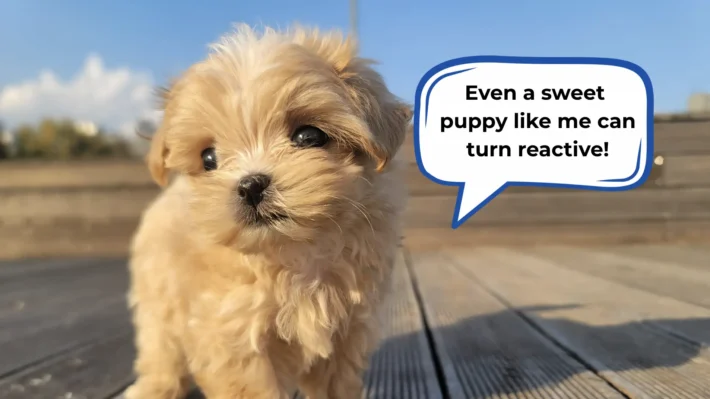
is my puppy becoming reactive
BRING BACK THE CALM TO YOUR REACTIVE DOG. JOIN OUR FREE WEBINAR NOW!

It is a common misconception that a dog’s personality is fully formed at birth. In reality, the transition from adolescence to adulthood often brings a “fork in the road” for their temperament. As your dog grows and their natural drive increases, they begin to look for a framework to help them navigate the world.

When a puppy becoming reactive catches you off guard, it’s often because they have stepped into a leadership vacuum.

Only you have the capacity to bring back your dog’s calm behavior. 

In this blog, I’m going to share what influences a change in behavior in your puppy, and how you can help them overcome reactivity in no time. 

Read on for the juicy bits!

Key Takeaways

  • Most reactivity isn't caused by a “bad” temperament, but by a dog who feels they must make the decisions. When a dog lacks a calm leader, they take on the stress of protecting the pack, which manifests as hyper-vigilance, barking, and lunging.
  • Traditional methods like treats or corrections often only address the “explosion.” By using the Five Golden Rules to establish yourself as the calm decision-maker at home, you remove the underlying stress that drives the behavior in the first place.
  • Whether you have a puppy becoming reactive or an adult dog who has already turned the corner, the best time to reset the dynamic is today. Shifting from “decision-maker” to “passenger” allows your dog to let go of their anxiety and return to their natural, relaxed state.

The Story of Cruz: A Tale Of A Puppy Becoming Reactive
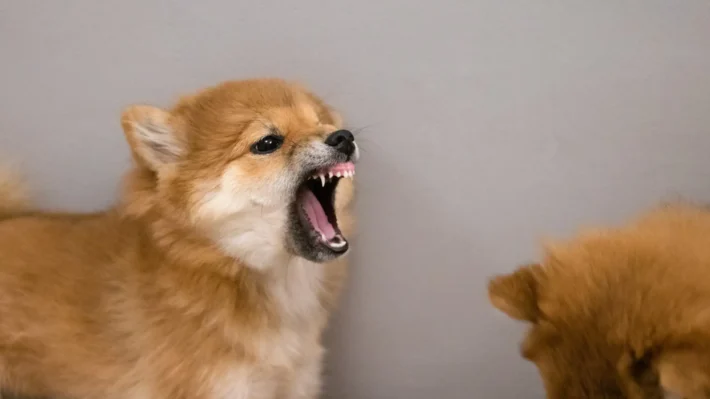
puppy turns aggressive

I remember meeting with a reactive dog named Cruz. 

He was a powerhouse of an American Bulldog—broad chest, heavy muscle, and about 18 months old. His owners told me that as a puppy, he was the life of the party. He was that “waggy-tail” dog everyone loved. But as he hit his first year, the friendly behavior stopped.

By the time I arrived for consultation, Cruz was aggressive toward strangers and highly reactive toward other dogs. For four months, his world had been shrinking. His owners were stuck in avoidance mode, crossing the street every time they saw another dog, hearts racing, white-knuckling the leash. They were managing the symptoms, but they were losing the dog they loved.

When I looked at Cruz, I didn't see a bad dog. I saw a dog that was exhausted. The moment I assessed him, I saw how on edge he was. 

It was evident that Cruz had been living in a leadership vacuum. Without a calm pack leader to show him the way, he had stepped up to fill the role himself. He truly believed it was his job to protect his owners, to assess every person on the sidewalk, and to neutralize every dog in the neighborhood. Imagine the stress of that! That massive weight of responsibility is what turned a happy puppy into an anxious, aggressive adult.

The transformation didn't happen by shouting at him or pinning him to the ground. In fact, the turning point was almost silent. I simply stepped in and applied the Dog Calming Code™. I communicated to Cruz—in his own language—that I was the one making the decisions. I was handling the danger.

Through my actions, I let him know that I was the pilot; he was just the passenger.

The change was visible: the tension in his shoulders melted away, and his breathing slowed. For the first time in months, he didn't have to scan the horizon for threats. When he realized I had everything under control, he did something his owners thought was impossible: he walked calmly right alongside other dogs.

It’s a powerful reminder: when your puppy turns aggressive, they aren't looking for a fight. They’re looking for a leader so they can finally go back to just being a dog.

Reactive Puppy Training: Reasons Why Your Puppy Is Becoming Reactive
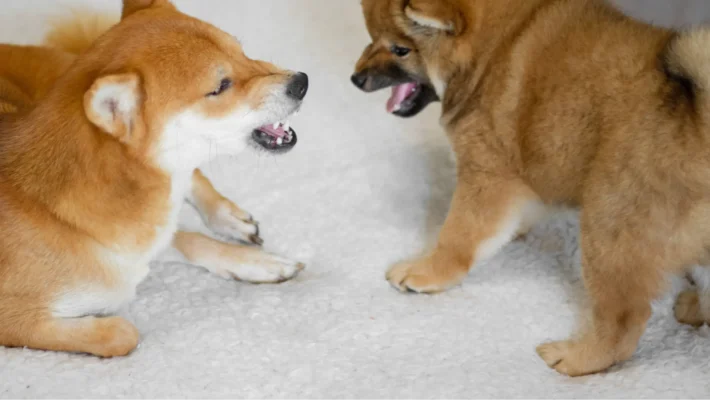
puppy turns into a reactive dog

There are two primary pathways that lead to a reactive dog, and understanding both is essential for any owner looking to raise a calm, confident companion.

The Gap in Early Socialization

The first and most common pathway is a lack of proper socialization. During those critical early months—specifically before the six-month mark—a puppy’s brain is like a sponge, categorizing what is safe versus dangerous. 

If they aren't thoughtfully introduced to a wide variety of dogs, people, and environments, the world begins to feel small and threatening as they mature. This lingering unfamiliarity eventually hardens into fear, and in the canine world, fear is almost always the reason why a puppy turns into a reactive dog.

The Burden of Decision-Making

The second pathway often catches dedicated owners by surprise: even a well-socialized puppy can become reactive if a solid leadership foundation is missing. We often see dogs who attended every puppy class and met every neighbor, yet still hit the one-year mark with significant behavioral issues.

The missing piece is clarity. When a dog grows up believing that the responsibility for safety and decision-making rests on their shoulders, they become hyper-vigilant. That weight of responsibility quickly manifests as chronic stress, which then boils over into reactive behavior. They aren't being bad; they are simply overwhelmed by a job they were never meant to have.

When Your Puppy Turns Into A Reactive Dog: Signs To Look Out For
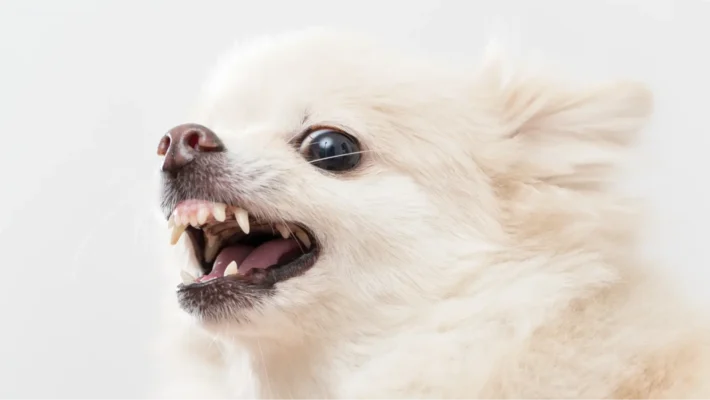
reactive puppy training

Reactivity rarely appears out of thin air; it usually begins as a series of subtle shifts in energy and focus. By learning to read these early signs, you can step in and provide guidance before a small habit becomes a deep-seated behavior.

Sign #1: Over-Excitement That Tips Into Stress

There is a profound difference between a puppy who is happily engaged and one who has tipped over their emotional threshold. High energy is fine, but stress-level excitement is a state where the dog has lost control of their own impulses. You’ll notice:

  • Heavy panting even in cool weather or when they haven't been physically active.
  • Eyes that look wide, strained, or bulging, showing the whites of the eyes.
  • Jumping, spinning, or climbing on you with a frantic intensity that feels “scattered” rather than playful.
  • Barking at triggers with an intensity they can’t seem to shake off, even after the trigger is gone.

A truly happy dog wags their tail and enjoys the moment, but they remain mentally present. When excitement shifts into stress, the dog is no longer having fun—they are struggling to cope.

Sign #2: Locking On and Mental “Tunnel Vision”

One of the most reliable early warnings is the “lock-on.” This happens when your puppy spots a trigger—a person, a bike, or another dog—and their entire world narrows down to that one point. You will see their body go stiff, their ears pitch forward, and their tail might freeze.

At this moment, the leash feels like a telegraph wire of tension. The most important thing to notice isn't just the staring, but the mental disconnect. If you call their name and they don't even flick an ear toward you, you’ve lost them mentally. They are no longer looking at the world; they are obsessing over a target.

Sign #3: Barking From Stress, Not Play

We often dismiss barking as just a puppy being vocal, but the tone matters. A play-bark is usually bouncy, rhythmic, and accompanied by loose body language. Stress barking, however, feels frantic and urgent. It is repetitive and sharp, sounding more like a siren than a greeting. If it takes your puppy a significant amount of time to find their breath and settle down after a barking episode, they aren't playing—they are sounding an alarm.

Sign #4: The Instinct to Take Charge

Watch how your puppy positions their body in social situations. Are they naturally looking to you for direction, or are they stepping into the buffer zone? If a puppy consistently places themselves between you and a perceived threat—leaning forward or angling their body toward a stranger—they are practicing protective behaviors. While it might look brave or even cute in a small puppy, it is actually the beginning of a heavy burden. They are starting to believe that decision-making is their job, and that responsibility is the primary driver of future aggression.

Sign #5: The Slow Recovery After Walks

After a walk or a new encounter, pay attention to how long it takes for your puppy to truly relax. A balanced puppy might be tired, but they can lie down and sleep shortly after getting home. A puppy trending toward reactivity often suffers from a stress hangover. They may continue to pace, pant, or react to small noises in the house long after the walk is over. This inability to come down suggests their nervous system is staying in a state of high alert.

How to Respond When You See the Signs
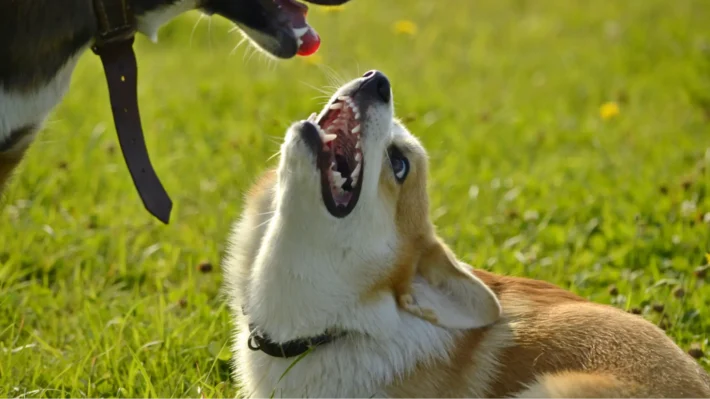
how to calm a reactive puppy

The most important rule is a hard one for many owners who want to do reactive puppy training: do not reinforce the state of mind. When we see our puppies anxious or over-excited, our human instinct is to soothe them with soft words, patting, or picking them up.

In the canine world, comfort and affection act as rewards. You are essentially telling them, “You are right to be frantic; I’m worried too.” This confirms their fear and reinforces the reactive cycle.

How to React To A Reactive Puppy

Embody Calmness

Your puppy takes their cues from your energy. If you remain indifferent and boring in the face of a trigger, they learn that the situation isn't worth their concern.

Intervene Early

Don’t wait for the explosion. The moment you see that lock-on or the stiffening of the body, change direction or create distance before the energy builds.

Establish Leadership

The goal is for your puppy to realize they are the passenger, not the driver. When they understand that you are the one navigating the world and making the big decisions, the weight of the world lifts off their shoulders. They don't need to be reactive because they trust that you’ve got it handled.

What Are The Common Scenarios Where A Puppy Can Turn Reactive
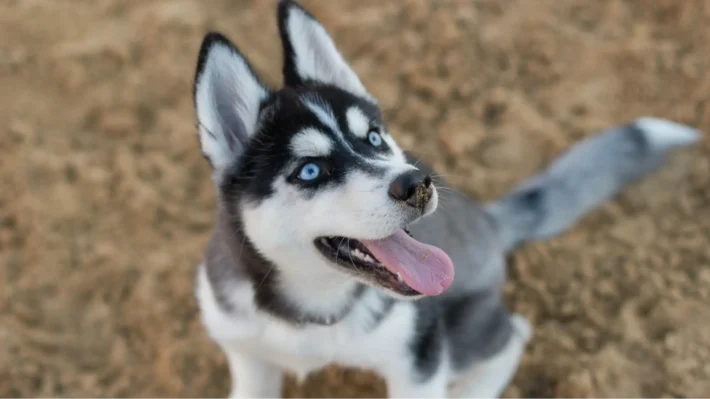
puppy turns aggressive

Reactivity is rarely the result of a bad dog; rather, it is a response to a world that feels unpredictable or overwhelming. While every puppy is an individual, most reactive behaviors can be traced back to one of these seven common scenarios.

1. The Frustration of the Lead

On-lead walks are the most frequent breeding ground for reactivity. When a puppy sees another dog, their natural instinct is to move toward them. If they start pulling, lunging, or barking and are occasionally rewarded by getting to “say hello,” they learn that high energy is the key to getting what they want. However, when the lead holds them back, that excitement curdles into intense frustration. Over time, this barrier frustration transforms into a full-blown reactive response every time they see another dog.

2. Chaotic or Overwhelming Socialization

There is a dangerous myth that more is better when it comes to socialization. Throwing a puppy into a frantic dog park or a chaotic daycare where energy isn't managed is not socialization—it’s an ordeal. If a young puppy feels overwhelmed and no one steps in to protect their space, they learn that other dogs are unpredictable and scary. The quality of the encounter is far more important than the quantity; one calm, controlled meeting is worth more than a dozen rowdy ones.

3. The Unfamiliarity Gap

Socialization has a biological clock. If a puppy doesn't experience a wide variety of sights, sounds, and people before the six-month mark, their brain begins to close the window of what they consider safe. After this point, anything they haven't encountered before—a person in a hat, a trash can on the curb, or a barking dog—is viewed as a potential threat. Fearful barking is often just a puppy’s way of trying to push the scary unknown away.

4. The Impact of Trauma

Sometimes, reactivity can be pinpointed to a single moment. A puppy might be playing happily until an older dog snaps, pins them, or bites. This event alone can be incredibly powerful; the puppy’s brain imprints the trauma as a survival mechanism. From that day forward, they may decide that the best defense is a good offense, barking and lunging at every dog they see to ensure they never get hurt again.

5. The Red Flag of Resource Guarding

Whether it’s a favorite bone, a toy, or even a spot on the sofa, resource guarding is a significant early warning sign. This behavior isn't just an issue about sharing, but about the puppy believing they are the one who decides who gets what. When a puppy feels they must defend their property – a bone, a toy, a random house object – it indicates a lack of trust in your leadership. This behavior usually spills over into guarding you or their territory on the street.

6. The Trap of Accidental Reinforcement

Our human instinct to nurture can often backfire with dogs. When a puppy is trembling, barking, or lunging out of fear, our natural response is to pick them up, pat them, and whisper, “It’s okay.” However, in dog language, you are essentially saying, “I agree with your fear; you are right to be upset.” By comforting the stress, you are unintentionally rewarding it, teaching the puppy that their reactive state is exactly what you want to see.

7. Sensitivity to Objects and Sounds

Reactivity isn't always about other living things. Some puppies become hyper-fixated on moving targets like bikes, skateboards, or vacuum cleaners. Without a calm leader to guide them through these experiences and show them that these objects are irrelevant, the puppy feels they must hunt or drive away the intruder. This builds a habit of hyper-vigilance that makes every walk a stressful scouting mission instead of a relaxing stroll.

The Foundation of Puppy Reactivity Training: Acknowledging Lack of Leadership
puppy becoming reactive

While these seven scenarios look different, they all share a single root cause: the puppy feels they are navigating the world alone.

When a dog doesn't have a calm, confident leader to look to for direction, they are forced to make their own decisions about what is dangerous and how to handle it. This responsibility is a massive burden for a young dog, and it almost always manifests as stress, fear, and reactivity.

The solution isn't just training away the barking. It’s more important to work on shifting the relationship so the puppy realizes they can hand over their protective burdens to you because YOU CAN handle them. When they trust that you’ve got everything under control, the need to react simply fades away.

How The Dog Calming Code™ Can Help You

Most traditional training methods focus on the moment of the explosion. They use treats to distract, corrections to punish, or avoidance to hide from the world. While these might offer a temporary band-aid, they are merely addressing the symptom. To truly transform a reactive dog, you have to address the root cause: the dog’s belief that they are responsible for the safety of the pack.

A reactive dog is often a dog under immense pressure. They believe it is their job to scan the horizon, identify threats, and decide how to neutralize them. This burden of leadership is exhausting, manifesting as chronic stress, hyper-vigilance, and eventually, the barking and lunging we see on walks. 

By implementing the Five Golden Rules taught in the Dog Calming Code™, you aren't just training your dog; you are shifting the hierarchy. You are lifting that heavy mantle of responsibility off their shoulders and assuming the role of the calm, capable decision-maker. When a dog realizes they are no longer in charge, they can finally do something they haven't done in a long time: relax.

How To Calm A Reactive Puppy With The Dog Calming Code™ 
puppy turns reactive

Each of these rules works silently in the background to reshape your dog's perception of who is leading the way.

Rule 1: Feeding

In the canine world, leadership is defined by resource management. Since food is a dog’s most vital commodity, whoever controls it ensures survival. By establishing yourself as the provider through structured mealtimes, you communicate leadership in a language your dog instinctively respects.

Rule 2: Handling Danger

This is the most critical rule for immediate reactivity. When a dog barks at the mailman or a noise in the street, they are flagging a potential danger. If you ignore them or yell at them to be quiet, they assume you don't see the threat, so they have to bark louder to handle it. Rule 2 teaches you to calmly acknowledge their alert, check the “danger” yourself, and then communicate that you’ve seen it and have it under control. 

Once the dog trusts that you are the one who decides what is a threat and what isn't, they no longer feel the need to go into reactive mode.

Rule 3: Holding Off Attention

Reactivity is fueled by high-arousal energy. If your arrival home is a high-energy event with frantic greetings and excitement, you are accidentally training your dog that the world is a stimulating, chaotic place. Rule 3 involves ignoring your dog until they have reached a state of total calm. This teaches them that calm is the only energy that gets rewarded. That emotional regulation then carries over to the sidewalk when they encounter a trigger.

Rule 4: Doing Everything On Your Terms

A reactive dog is often a dog that demands things—attention, play, or space—and gets them. This reinforces their belief that they are the one making the calls. Rule 4 shifts the dynamic so that you initiate all interactions. By deciding when affection starts and when it ends, you reinforce your position as the leader. This builds a dog that waits for your direction rather than taking matters into their own hands.

Rule 5: Managing The Walk

Reactivity usually peaks on the walk, but the problem starts at the front door. If a dog is spinning and whining at the sight of the lead, they are already “red-lining” before they even step outside. Rule 5 focuses on starting the walk from a place of absolute stillness. By insisting on a calm exit and maintaining that leadership throughout the journey, you ensure that your dog remains in a “following” mindset rather than a “scouting” mindset.

The Dog Calming Code™ Creates A Shift in Energy

reactive puppy training

When these rules are applied consistently, the transformation is often described as quieting the noise. Owners notice that their dogs are:

  • Sleeping more deeply and soundly.
  • Less likely to “patrol” the windows or doors.
  • Quicker to recover after seeing a trigger.
  • Looking to the owner for guidance in new situations.

Without the Dog Calming Code™, you are fighting an uphill battle against the dog’s own instincts. With it, the reactivity training becomes the finishing touch on a dog that is already predisposed to follow your lead.

In my webinar that tackles dog reactivity, I talk about the Dog Calming Code™ and the Five Golden Rules for free. Since then, thousands have reported back to me about the amazing changes in their puppies.

Join my free webinar and commit to the Five Golden Rules for at least two to three weeks. Consistency is the language of the dog. Once they see that you are consistently calm and capable, they will gladly resign from their security guard position and simply enjoy being your dog.

You’ll be amazed with the changes!

Doggy Dan Signature
~Doggy Dan 🙂

Frequently Asked Questions

Not automatically — but age does create a window where change becomes much more likely.

As a puppy grows, they naturally gain confidence. Around 6 months, they start noticing more of the world — barking at things outside, testing boundaries. Around 12–18 months, that confidence really kicks in and they start making more of their own decisions. If there's no calm leadership in place to channel that growing confidence, that's when behavior problems tend to surface.

But here's the key: age creates the conditions for change — it doesn't guarantee it. Two dogs the same age can be completely different. One may stay easy-going, another may become reactive. The difference almost always comes down to the foundation that's been put in place. A dog growing up with the Five Golden Rules in place is a fundamentally different dog at 18 months than one who hasn't had that structure. Get Off to the Right Start — Perfect Puppy Program

The most important thing is to see it coming and not be caught off guard.

The transition usually begins around 8–12 months. Your dog starts pushing boundaries more, may ignore commands they previously followed, and can suddenly become reactive or pushy in situations that used to be fine. This is normal — it's the dog equivalent of a teenager testing limits.

Here's what to do:

  • Don't ease off the rules — this is the exact moment to tighten them up, not relax them
  • Be consistent across the whole family — one person letting things slide undoes everyone else's work
  • Expect some pushback — some dogs actually get temporarily worse before they settle, which is normal
  • Take everything slowly — don't push your dog into situations they're not ready for

The rules you put in place now will shape who your dog is at 3, 5, and 10 years old. 

Consistency is the word that matters most here. Dogs pick up on the slightest inconsistency and will exploit any gap in the rules — not out of spite, but simply because they're always sensing whether the leadership position is vacant.

Here's what consistent leadership looks like day to day:

  • Everyone in the house follows the same rules — a dog gets mixed messages from a split household and takes matters into their own hands
  • You eat first, then feed your dog — a small daily signal with a big psychological impact
  • You initiate greetings and affection — don't reward excitement at the door
  • You respond to danger calmly — when your dog reacts to something, you step in quietly and show them there's nothing to worry about
  • The walk starts on your terms — calm before the lead goes on, calm before you leave

This is one of the most common questions — and the honest answer is: faster than most people expect, but slower than most people want.

Many owners notice changes within 48 hours of putting the Five Golden Rules properly in place. A dog that was barking at everything suddenly seems quieter, less on edge. Bigger shifts usually show within the first two weeks of consistent application.

The important caveat: it depends far more on what you're doing than on the dog's condition. A dog that's been reactive for a year can still turn around — but it takes patience and consistency. Rushing situations before the dog is ready always sets things back.

Yes — and this is one of the most overlooked parts of the whole process.

Your dog is reading everyone in the household. If you're applying the Five Golden Rules every day but your partner is letting your dog jump on them, feeding them scraps, or greeting them with big excited energy — your dog is getting a split message. And a split message means the leadership position stays uncertain in their mind.

Get everyone on the same page, ideally before you even start. Have an honest conversation. Agree to give it a genuine two-week trial together. The more unified your household is, the faster and more lasting the results will be. 

They can genuinely change — and many do dramatically.

My own dog, Inka, is a great example. When I first got her she was nervous and not particularly confident. With the right environment and leadership in place, she became a relaxed, happy, tolerant dog in almost every situation. Don't put a ceiling on how much your dog can change if they're given the right conditions to grow in.

Don't panic — and don't give up.

Bad days are part of the process. Dogs, like people, have days when they're more on edge. The progress isn't always linear. What matters is your response in those moments — stay calm, don't add energy to the situation, and quietly return to the basics.

You can't control your dog's behavior, but you can respond calmly and give the same consistent consequence to their actions. That calm, steady response — day after day — is what builds lasting change.

The most important thing when things go sideways is to ask yourself: are all Five Golden Rules still fully in place? In most cases where progress has stalled or gone backward, something has slipped. Going back to the Dog Calming Code™ and checking each rule honestly usually unlocks things again.

Gentle journey for your puppy.

Doggy Dan

Doggy Dan stands out through his “five golden rules” that focus on canine psychology rather than repetitive drills or force. Unlike traditional trainers, he teaches owners to become the “calm leader” their dogs need. Over the last two decades, his methods have helped transform over 125,000 dogs worldwide. As the founder of TheOnlineDogTrainer.com blog and podcast and creator of the Dog Calming Code™, he has become a trusted voice in dog psychology and training. His philosophy is simple: reactive dogs don’t need punishment or endless treats. They need a leader they can trust.

FREE TRAINING:

How to Solve Dog Reactivity WITHOUT Food Bribes, Tricks, or Force

Limited spaces!

FREE webinar:

How to Solve Dog Reactivity WITHOUT Food Bribes, Tricks, or Force

dog training to stop unwanted jumping and barking

Limited Spaces!

Recent Posts

Excellent rating
Based on 155 reviews
Google star 1Google star 2Google star 3Google star 4Google star 5
Two months ago I adopted a 7 year old Morkie, a very nervous but loving little fellow. I tried several different training techniques and even purchased a program that was lengthy and very time consuming before I discovered Doggy Dan. I've been using his program for two weeks and am astounded by the change in my Dexter. He is calmer, more obedient and friendlier to others than I imagined possible. Dan's training is concise. It differs from others I found, Dan trains you to become the leader of your pack through a dog's perspective. I like that the training is specific yet compassionate. This is a program that works if you are consistent. Thanks Doggy Dan!
Kathy Fore profile picture
Kathy Fore
17 September 2026
Google star 1Google star 2Google star 3Google star 4Google star 5
+0
Susie in the UK. I am only 10 days in but took in a 9 yr old emergency rescue from Romania who had been in kennels for 6 years and then had 3 failed foster placements in the UK. Luca is a big powerful mixed breed with huge stress and anxiety and very reactive, he bounded into my home and took over - aggressive with my 2 others, and visitors and pulling and pushing on walks. I thought I couldn't handle him but saw an advert for Doggy Dan on line and signed up - we've had a wonderful turnaround and he is finally decompressing, being polite with my dogs and responds excellently to the time-out if reactive with guests. Walks are much better and all 5 rules are in place. I believe he will continue to improve but only if I remain 100% consistent with him for the rest of his life. He is 9 years old and deserves a happy old age being loved and looked after with no further upsets in his life so fingers and toes are crossed for him
SoBS Truro profile picture
SoBS Truro
15 September 2026
Google star 1Google star 2Google star 3Google star 4Google star 5
+2
I started. The course 3/4 weeks ago. As Dan says you have to work on things if you get stuck. I have a Staffordshire x cane corso who is now six months old. She is very intelligent but sometimes she just doesn’t listen. Doing the five codes I’m finding it’s going pretty well except trying to get her calm so I am persevering with it again with my own space. I have a trainer call shortly which I will ask for advice on this. It’s great also that you can ask anything you’re not sure of on line. It’s so great to have someone there to help. I’m looking forward to having a relaxed girl instead of hyper most of the time as she gets so excited about almost everything. I would truly recommend doggy Dan and just wished I would have come across him much earlier. Thanks again for everything so far.
Hazel Coad profile picture
Hazel Coad
12 September 2026
Google star 1Google star 2Google star 3Google star 4Google star 5
I ❤️ my dog. Such a good girl! 5 Golden rules, really work.
Victoria van Sommeren profile picture
Victoria van Sommeren
9 September 2026
Google star 1Google star 2Google star 3Google star 4Google star 5
+0
This program is amazing!. We have a VERY reactive rescue dog that has bitten his previous owner and as well, myself 3x and my husband 4 x's. He had never been around people or other animals, and had never been walked on a leash. (in fact never run off-leash either, just tied to the front steps). We began with traditional treat-based training with a professional, but the progress was frustrating. A reactive dog does not want treats; it wants comfort. With the 5 Golden Rules and and some of the other training we have received with our subscription, in just 3 weeks, we can let him off leash at the dog park, he has not growled at any stranger, and he has not attacked any other animals. He is still a work in progress, but we see progress!!!! He has become a cuddly, sweet dog and for a greyhound, he even has recall! This program is amazing to say the least. We were at our wits end, but now we have hope.
susan kent profile picture
susan kent
8 September 2026
Google star 1Google star 2Google star 3Google star 4Google star 5
Okay, he says it’s not magic, but the results and the peace in so little time with so little effort sure feels like magic! My 11 month old pup was a 60lb highly reactive, very loud disaster waiting to happen. Now we are both calm, the house is quiet and I don’t live in absolute fear of his reactivity towards others. There’s always still work/training to do of course, but wow are we in a much better place to get on with that!
Theresia Travers profile picture
Theresia Travers
8 September 2026
Google star 1Google star 2Google star 3Google star 4Google star 5
Just started with the 5 rules. It's only been a week and a half and I'm noticing less stress, and a reduction in reactivity. We still have a way to go. But finally something I can work with. I went for the online course.
Fiona Bower profile picture
Fiona Bower
31 August 2026
Google star 1Google star 2Google star 3Google star 4Google star 5
I watched the free Webinar and joined at the end. I am up to No.3 atm and I’m actually feeling hopeful 🤞🏼
Jackie Grimmer profile picture
Jackie Grimmer
29 August 2026
Google star 1Google star 2Google star 3Google star 4Google star 5
The program is great. I started to see the changes in my cocker spaniel from day one.
Joy Winnington profile picture
Joy Winnington
18 August 2026
Google star 1Google star 2Google star 3Google star 4Google star 5
+3
My Lab mix puppy and I are on Day 3 , but, I do feel a stronger connection. She appears calmer overall / looking forward to consistently following these five rules. Doggy Dan is clear, concise, comprehensive and compassionate . Very pleased with his program. Diane
Diane Patterson profile picture
Diane Patterson
16 August 2026
Google star 1Google star 2Google star 3Google star 4Google star 5
+0
We have an 8 month old Goldendoodle who has fear issues outside the home and gets easily overwhelmed going into panic/flee mode if several triggers coincide (people, loud dog barking and noises like motorcycles/construction). So pleased to find Doggy Dan and seeing positive changes after just two weeks. Feeding time is calm after using the gesture eating and "thank you" when he barks works a treat. I realized I'm babying my dog too much and trying to be his best pal instead of a leader so I'm working hard on that. We've changed to the no pull harness and love that. Doggy Dans video clips really help bring the philosophy together and I love his attitude. He is calm, clear, firm but so kind and loving with dogs and very down to earth and relatable. I've got great help too from the AI coach and the daily emails and videos help keep us on track and feeling positive. We've still got a mountain to climb with our pup but I finally feel hopeful and supported. We'd tried trainers, behavior specialists and all sorts before finding Doggy Dan and this is by far our best investment. Can't recommend you trying this highly enough. Photo of our boy.
Jackie Ward profile picture
Jackie Ward
13 August 2026
Google star 1Google star 2Google star 3Google star 4Google star 5
Absolutely amazing transformation in just a few days. Just need to stick to the 5 Golden rules 🙂
Martine Adkin profile picture
Martine Adkin
13 July 2026
Google star 1Google star 2Google star 3Google star 4Google star 5
+0
I couldn’t believe my dog’s problem resolved completely within a week! Easy but not easy if you are inconsistent with the 5 rules. I highly recommend this method! Somethings don’t seem important or relevant but they are!
Dawn McCordic profile picture
Dawn McCordic
13 July 2026
Google star 1Google star 2Google star 3Google star 4Google star 5
+0
I just started my training about 2 weeks ago, and I do mean MY training. My 2 girls are really responding to my changes in how I am relating to them better. Thank you Doggy Dan, I really needed this win, 2 reactive dogs and we have made progress with the 5 golden rules and we have not with anything else. Crystal Gayle the Red Heeler and Sadie the Border Collie.
Betty Nicholl profile picture
Betty Nicholl
11 July 2026
Google star 1Google star 2Google star 3Google star 4Google star 5
+3
For three years, I tried every treat-based method and expensive course to stop my large, powerful male dog from pulling on the leash, barking, and stressing out when his energy got too high on our walks. (So while he is a farm dog who enjoys total freedom off-leash on our farm most of the day, on-leash in the city, he totally lost it). He was practically hanging from the leash, two feet in the air (almost strangling himself), always demanding to walk in front and make all the decisions. Absolutely nothing worked—until I found Doggy Dan! 🏆 After just a couple of weeks implementing The 5 Golden Rules, the transformation is absolutely mind-blowing!!! By focusing on connection and calm leadership rather than rigid commands, my dog has FINALLY reconnected with his natural calmness (that has actually always been there inside him) ❤️❤️ When we walk through town now, I look down at my dog walking in a perfect "heel." The leash hangs completely loose, and that loose leash really says it all 👍👍👍 He does not pull, bark, or growl AT ALL when other dogs bark at him!😱 Yes, he looks at them and is interested, but he remains completely calm. We pass shouting people, groups of kids on scooters, and dogs barking aggressively behind gates—he is interested, but he remains entirely unfazed. Just yesterday, we stopped in front of a fence with chickens walking in a garden, and he just stood there watching curiously, staying completely still. And as we walked across a large, grassy schoolyard, we suddenly crossed paths with two rabbits—when I told him to, he immediately sat down. Of course, he was highly interested, but he sat completely, utterly still! I constantly find myself thinking: This can NOT be my dog, LOL! 🐇🐓 Dan refers to himself as a dog trainer, but in my humble opinion he is a dog philosopher. The course is incredibly generous, filled with hundreds of real-life videos from every situation imaginable, offering a massive toolkit for an amazing price. I am so excited to continue this course, so happy about the progress, and so looking forward to the future with this beloved dog of mine. I HIGHLY recommend it! ⭐⭐⭐⭐⭐
Ingrid-Tove Astrup profile picture
Ingrid-Tove Astrup
8 July 2026
Google star 1Google star 2Google star 3Google star 4Google star 5
+0
I've only been working the program for a week and already are seeing some great improvements with an overexcitable, energetic, barking at everything, and fun Maltipoo. I'm focusing on the 5 golden rules and watching the training videos. Thanks Doggy Dan!
Rebecca Cheney profile picture
Rebecca Cheney
4 July 2026
Google star 1Google star 2Google star 3Google star 4Google star 5
In a matter of days my 5 year old Frenchie is calmer and seems happier, albeit not happy that I'm ignoring him but it works! I live alone so he thinks he should be boss and protect me from every visitor but he didn't even bark at the window cleaner yesterday, just followed him around each window. My life might be my own soon, thank you!
Shauna profile picture
Shauna
2 July 2026
Google star 1Google star 2Google star 3Google star 4Google star 5
+4
The Golden rules i now understand are NOT called GOLDEN RULES FOR NO REASON! WOW , JUST WOW, I WAS DOING ALL 5 WRONG !
Tim Waldner profile picture
Tim Waldner
2 July 2026
Google star 1Google star 2Google star 3Google star 4Google star 5
+0
We have adopted a Poodle and he us very high energy, anxious and insecure. I joined the online program after I watched the free online webinar about the 5 Golden Rules. While watching the webinar all 3 of my dogs ran off barking... I calmly called out "thank you" and they all came back to me.. from that moment I was hooked. I love the fact that we use minimal sound in this technique as I can become anxious and unsure in my tone. I have seen results with the new Poodle and I am exited about our future. Thanks Doggy Dan, you are a gem 👌🐾🐾🐾
Jane Uprichard profile picture
Jane Uprichard
22 June 2026
Google star 1Google star 2Google star 3Google star 4Google star 5
The training has been amazing. I've been training dogs in unprofessional situations since the mid 1970's. I've never heard of this philosophy! We have a 4-year-old Great Dane mix who is leash aggressive and hyper-reactive to any noises. This training has been incredible. In a week we've seen dramatic differences in his anxiety - just based on the 5 Golden Rules (we haven't even gotten to the Reactive Dog training yet). My only complaint is the persistent emails to sign up for the Canine Coaching Club - which is a monthly subscription. That's been a lot and it started immediately. Other than that, I highly recommend this training system.
Kristi Nay profile picture
Kristi Nay
15 June 2026
FREE webinar:

How to Solve Dog Reactivity WITHOUT Food Bribes, Tricks, or Force

dog training to stop unwanted jumping and barking

Limited Spaces!