
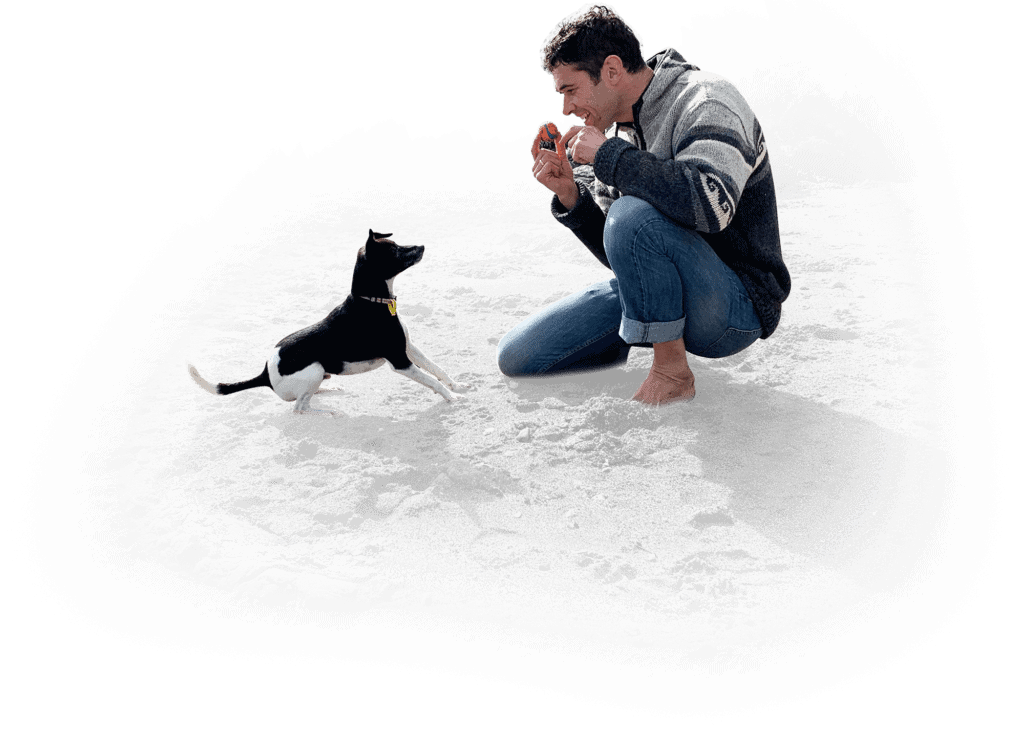
Do you ever wonder what it means when your dog nibbles other dog with front teeth? Today, I'll give you the most important facts related to this canine behavior…

Dog owners, ever seen your dog playfully “attack” another dog's neck and wondered if it was all in good fun or something more serious? Maybe you've felt a bit worried seeing two dogs roughhousing with lots of neck biting and weren't sure when to step in.
Well, you're not alone!
The goal of this blog is to clear up the difference between playful behavior and actual aggression, especially when it comes to a dog fight and their neck-biting business.
As dog owners, it's crucial to understand this because if you always stop it, you could accidentally make your dog less tolerant of other dogs and less able to socialize with them. But if you learn what's normal and let your dog play how they naturally do, they'll become super social and happy!
I explain more below. Let's dive in.
Key Takeaways
- Don't be alarmed if your dog engages in neck biting; it's an instinctive play behavior rooted in their ancestry, often a way to establish dominance. However, always watch their body language for signs of true aggression, such as stiffness or an intent to harm. If you're unsure, consult a vet or professional dog trainer.
- Socialization and Health Matter: Good socialization helps dogs learn appropriate play boundaries. Also, several reasons for sudden aggression can be health-related, like pain from dental issues. If your dog's play behavior changes suddenly, a vet visit is a good idea to rule out medical causes.
- Know When and How to Intervene: Step in if play becomes too intense, especially if there's a size difference or one dog seems distressed. Several reasons to intervene include excessive roughhousing. Strategies like exercise, “time-outs,” leash walks, or redirection with toys can help manage rough play and encourage calmer interactions.
Why Does a Dog Bite Another Dog's Neck?
Dogs bite another dog's neck as a way to establish dominance and assert their position in the social hierarchy. This behavior is instinctive and stems from their wolf ancestors, who used neck biting to pin down and control rivals. While modern dogs aren't usually trying to harm each other when they do this, it remains an ingrained behavior, a sort of “ancient ritual” that they play out.
Pinning another dog down by the neck, even in play, demonstrates a dog's strength and reinforces their position within the pack. It's a symbolic act that harkens back to their survival instincts and social structure, a game to show who's boss, even if they're just having fun.
Normal Dog Play Behavior
What is Normal Play?
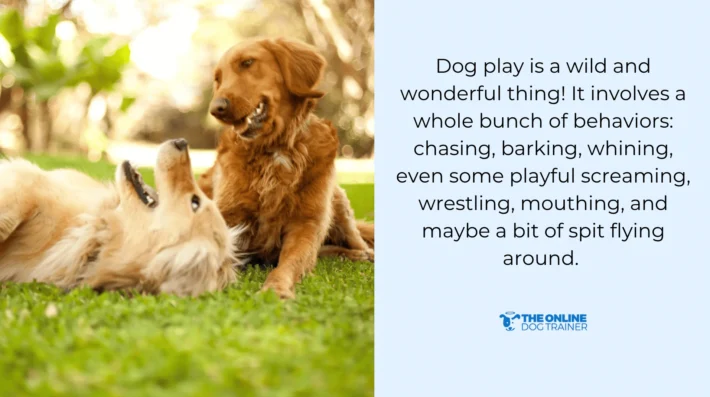
Dog play is a wild and wonderful thing! It involves a whole bunch of behaviors: chasing, barking, whining, even some playful screaming, wrestling, mouthing, and maybe a bit of spit flying around. You might even see a little bit of blood on their lips (don't worry, they usually don't even notice!).
Those big, strong breeds might have their mouths wide open, panting like crazy, and they'll still keep going. They absolutely love it!
One thing dogs do that we humans don't really do when we play is neck biting. It might look a bit scary, but it's often just a normal part of their games. It's kind of like how they would fight in a real situation, but they're not actually clamping down hard or trying to hurt each other. They might open their mouths wide, move towards the other dog, and give a little nip or hold.
Now, if the dogs involved start doing it too hard, then you do want to step in because things can escalate. Neck biting is something you don't want to encourage too much, especially with dogs that have powerful jaws, like Staffies or Rottweilers.
Body Language During Play
Just like with people, you can tell a lot about a dog's mood by their body language. Think about it: a person with relaxed shoulders, hands by their side, and a soft expression gives off a totally different vibe than someone with their hands raised, shoulders tense, and a sideways stance.
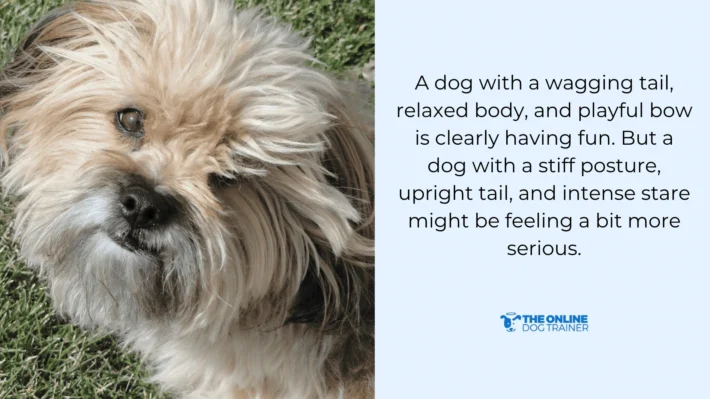
It's the same with dogs! A dog with a wagging tail, relaxed body, and playful bow is clearly having fun. But a dog with a stiff posture, upright tail, and intense stare might be feeling a bit more serious.
There are different levels of excitement and playfulness, just like with people. It's not always black and white. They might be super excited and bouncy but not actually trying to hurt the other dog. On the other hand, they might seem calm but be ready to nip if another dog gets too close.
The Role of Socialization in Play
Socialization is super important for dogs, and it starts when they're very young. Puppies usually begin playing with their siblings at around 6-8 weeks old. They roll around, wrestle, and learn how to interact with each other. This continues as they grow up.
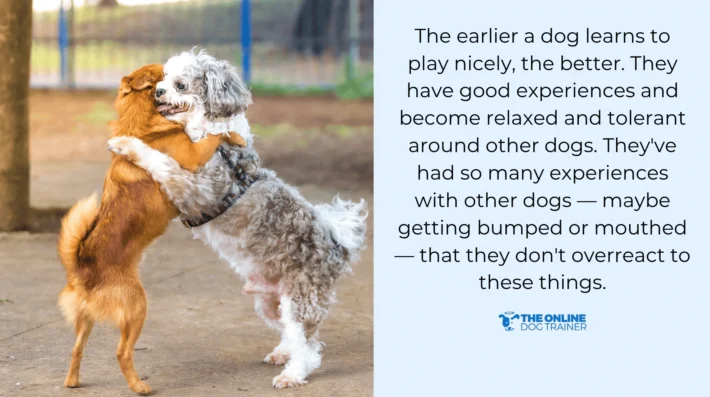
The earlier a dog learns to play nicely, the better. They have good experiences and become relaxed and tolerant around other dogs. They've had so many experiences with other dogs — maybe getting bumped or mouthed — that they don't overreact to these things. It's all familiar to them! Socialized puppies become calmer adult dogs.
Every dog is different, though, and they'll all react in their own way. The more experiences your dog has with other dogs, the better. This includes experiences with neck biting. That way, if another dog bites their neck, your dog won't freak out. It's actually a good learning experience for them! It's something you don't want to encourage too much, but it's not necessarily a bad thing.
Signs of Aggression in Dogs
What is Aggression?
Now, let's talk about what aggression actually means when it comes to dogs.
In my opinion, aggression is when a dog is truly trying to hurt another dog. They might be making a lot of noise and look like they're fighting, but if they're not actually trying to cause harm, it's still play.
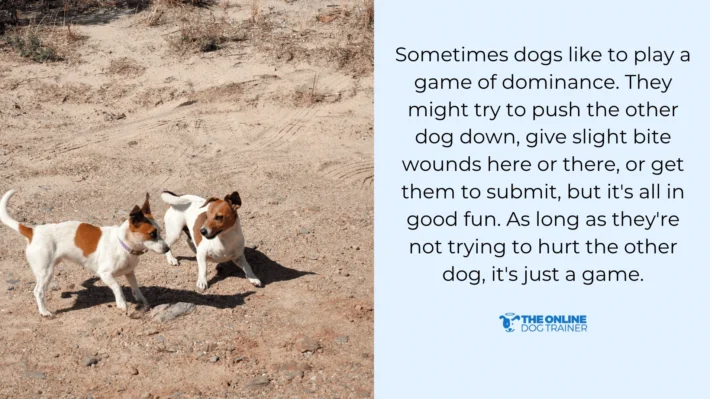
Sometimes dogs like to play a game of dominance. They might try to push the other dog down, or get them to submit, but it's all in good fun. As long as they're not trying to hurt the other dog, it's just a game. Some dogs can play this dominance game at a very intense level, but it's still play.
Think about it like this: have you ever seen men playing combat sports, or even rugby or American football? It can look incredibly rough, but they're not actually trying to injure each other. They're playing a game with rules. When it comes to dogs, true aggression means there are no rules, and they're trying to cause harm.
Body Language of Aggressive Dogs
So, how can you tell if a dog is being aggressive?
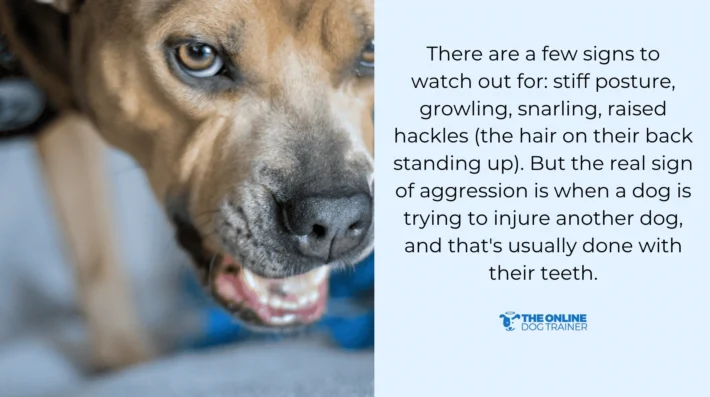
There are a few signs to watch out for: stiff posture, growling, snarling, raised hackles (the hair on their back standing up). But the real sign of aggression is when a dog is trying to injure another dog, and that's usually done with their teeth.
If a dog is making a lot of noise and trying to cause bite wounds and injure another dog, then they're being aggressive. But everything before that is usually just an escalation of dominance, and it might be getting out of control. If no one is injured and neither dog is trying to hurt the other, it's probably still okay.
Often, dogs will make a lot of noise and have a little scuffle, and it might look like they're fighting. But even after all that, there's no injury, and you realize neither dog was actually trying to hurt the other. It was just a display of dominance.
Common Triggers for Your Dog's Aggression and Cobbing Behavior

There are lots of things that can trigger aggression in dogs.
Maybe one dog is feeling nervous or doesn't like a certain breed of dog. They might be on their territory, guarding food, protecting their owner, or just having a bad day. Sometimes, they might be playing nicely, and then something happens that scares them, like a sudden noise or one dog accidentally hurting the other. This can cause them to become aggressive.
Another factor is underlying health issues. When your dog is in pain, they can slip to aggression. Look for skin issues, a serious skin condition, or dental problems. Consult a veterinarian as soon as issues arise.
When Neck Biting is a Concern
Recognizing Problematic Behavior
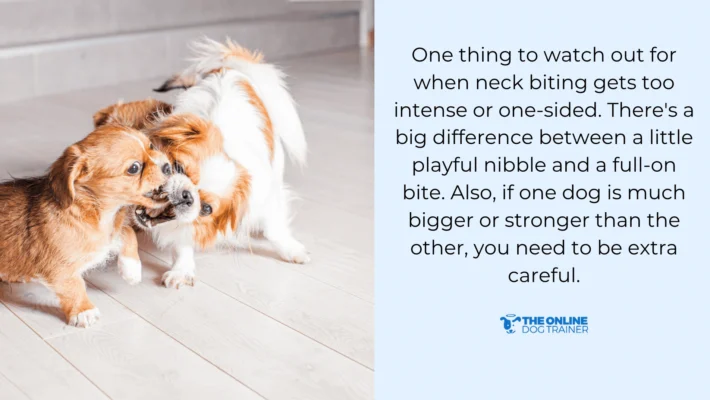
One thing to watch out for is when neck biting gets too intense or one-sided. There's a big difference between a little playful nibble and a full-on bite. Also, if one dog is much bigger or stronger than the other, you need to be extra careful. A big dog might not realize how fragile a smaller or older dog is.
For example, a German Shepherd or border collies playing with a Chihuahua, a strong Staffy with a weaker one, or even a large puppy with an older, smaller dog. You have to be very careful in these situations because a dog with a powerful jaw could easily injure a more fragile dog.
Impact on the Dog's Well-Being
If dogs are always wrestling and play fighting with a lot of neck biting, it can impact their well-being. Physically, they might become very strong and used to rough play. This can make them think that very intense neck biting is totally normal, even though it might not be okay with other dogs.
It's like two brothers who play fight all the time. They might think it's fine to jump on each other and wrestle roughly, but that doesn't mean it's okay with other kids. This is where doggy daycares can be helpful. Dogs can learn what's acceptable to other dogs and become more tolerant.
When to Intervene
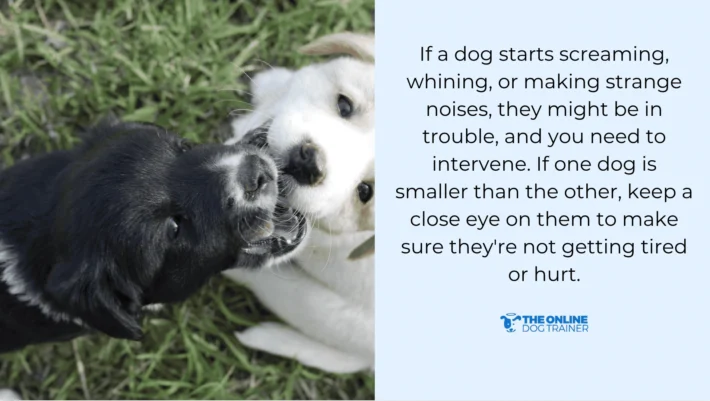
So, when should you step in and stop the neck biting? If a dog starts screaming, whining, or making strange noises, they might be in trouble, and you need to intervene. If one dog is smaller than the other, keep a close eye on them to make sure they're not getting tired or hurt.
You also want to pay attention to the energy of the play. If it's getting too intense, step in before anyone gets hurt. It's like when two kids are playing, and you can hear them getting louder and rougher. You want to calm things down before an accident happens.
Make sure your dogs have a safe space to get away if they need to, like a couch, a kennel, or under a table. You can also try putting the more dominant dog on a leash and see if the other dog wants to keep playing or if they try to hide. If they try to hide, it's time to separate them.
Also check if your dog cobbs at their own body; their excessive scratching may be a sign that they're removing a flea or a parasite.
How to Respond to Neck Biting and Dog Cobbing
Managing The Aggression When Your Dogs Play
#1: Exercise for Mental Stimulation
Ensure your dog gets plenty of exercise before playtime. A tired dog is less likely to play too rough and engage in behaviors like neck biting. Think of it like this: if you've been cooped up all day, you're more likely to be restless and energetic. The same goes for dogs! A good run, a brisk walk, or a game of fetch can help them burn off excess energy and promote calmer play.
#2: Time Out When Dog Shows Aggressive Biting
If things start to get heated during playtime, a short “time out” can be an effective way to de-escalate the situation. Separate the dogs for a few minutes to give them a chance to calm down. This break in the action can help reset their energy levels and allow them to return to play in a more relaxed state. Think of it as a reset button – sometimes everyone just needs a moment to cool off.
#3: Calm Freeze to Relieve Stress
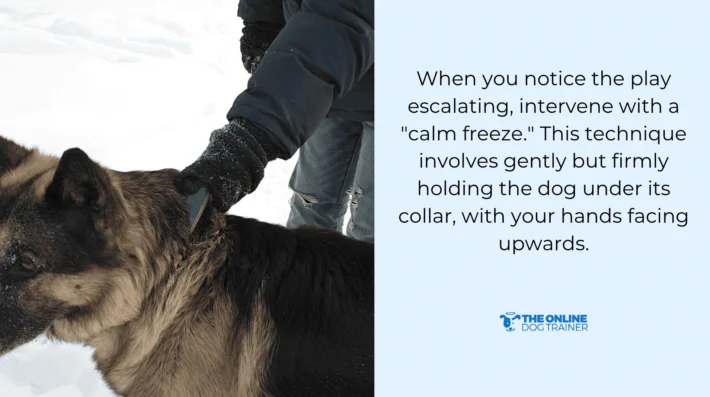
When you notice the play escalating, intervene with a “calm freeze.” This technique involves gently but firmly holding the dog under its collar, with your hands facing upwards. This provides a sense of security and helps the dog settle down. It's important to remain calm yourself during this process, as your dog will pick up on your energy.
#4: Leash and Walk
Another effective intervention is to use a leash. If a dog is getting overly excited or engaging in unwanted behaviors, calmly clip on a leash and take them for a short walk. This serves as a distraction and helps to redirect their focus. The change of scenery and your calm leadership can help them de-escalate.
#5: Redirection
Sometimes, a simple redirection can do the trick. If you see the play getting too rough, redirect their attention to a toy or a chew. This can help shift their focus and provide an outlet for their energy in a more appropriate way. Having a variety of engaging chew toys on hand can be helpful for this purpose.
#6: Establish Leadership
If you notice one dog consistently trying to dominate the other, it's important to address the underlying issue of leadership. Make sure your dog understands that you are in charge by being consistent with training, setting clear boundaries, and enforcing rules. This helps create a sense of structure and security for your dog.
#7: Consider a Training Program
For persistent dominance issues, consider a structured training program like “The Dog Calming Code.” This type of program is created with the experience I had as a professional dog trainer. A reliable trainer can provide you with the tools and techniques to effectively communicate your leadership role to your dog and help them understand their place within the household hierarchy.
#8: Bite Inhibition
Bite inhibition is a crucial skill for dogs, teaching them to control the force of their bites. This not only prevents accidental injuries during play but also fosters better social interactions with humans and other dogs. A dog with good bite inhibition understands limits, promoting a safer and more harmonious environment for everyone. It's a vital component of responsible dog ownership, building trust and confidence in your furry friend.
What Does It Mean When Dog Nibbles Other Dog With Front Teeth?
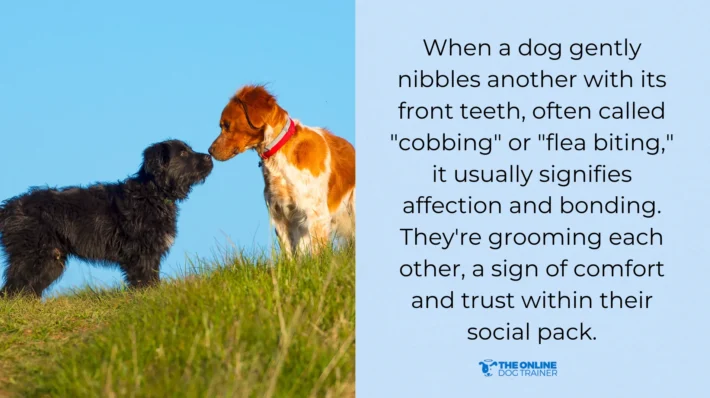
When a dog gently nibbles another with its front teeth, often called “cobbing” or “flea biting,” it usually signifies affection and bonding. This nibbling behavior means they're grooming each other, a sign of comfort and trust within their social pack.
It can also be a play invitation, a soft nudge to initiate fun, often seen with other playful body language. Sometimes, it's a self-soothing mechanism if a dog feels slightly anxious, or simply exploration, especially in puppies learning about their world. Less commonly, it might be an attempt to seek attention.
THIS FREE WEBINAR IS DESIGNED TO BRING BACK THE CALM TO AGGRESSIVE DOGS!What To Do Next To Stop Your Dog From Biting Another Dog's Neck
Hopefully, you now have a better understanding of why dogs bite each other's necks (or how to distinguish excessive cobbing) and how to tell the difference between playful and aggressive behavior. Remember, it's all about paying attention to their body language and the intensity of the play and giving them the right kind of socialization and training.
If you're ever unsure about your dog's behavior, don't hesitate to reach out to a professional dpg trainer or behaviorist. They can help you understand your dog better and give you the tools to manage their behavior.

~Doggy Dan 🙂




10 Responses
I have a German Shepherd and he was at the dog park and approached a husky that was by its owner and he seemed very uninterested and wanted nothing to do with my dog so my son who was right there grabbed our dog and guided him away from the husky. The husky is known according to people I’ve talked to just stay by himself and not interact with other dogs at the park. A short time later my son and the husky’s owner were talking and fire trucks went by the park with the siren and horns going off and my dog and the husky were about 5 feet behind them when a fight started between the two dogs. No one saw which dog started the fight. My dog was the larger more dominant dog and had ahold of the husky’s left side of the neck scruff and the husky was trying to bite my German Shepherd back but wasn’t able to. The husky owner intervened and grabbed my German Shepherd by the neck/harness with his right hand and then my son was on the other side on the dogs separating them. My German shepherd is being blamed for all of it right now and animal control is really focusing on the fact that he grabbed the husky’s neck. My dog has never shown aggression towards other dogs and never attacked another dog or done anything like this. He’s been with animal control for a week and the shelter staff are reporting that he is the sweetest dog and hasn’t had problems with any of the dogs or with them. The husky didn’t have any injuries and at first we were told both dogs were being taken in but that ended up not happening. My gut is telling me the husky should be observed around other dogs to see how it reacts around other dogs because I think it may have started the fight and my dog was just the bigger more dominant one and he wasn’t trying to kill him where he had the scruff on the side of his neck and he wasn’t injured. Because animal control says my dog had his neck though they are saying it’s serious and the husky owner and my son were bit separating the dogs by how they were bit and where I believe my dog did bite my son but it was the left hand of the husky owner and I think it was his dog based on hearing my sons account of how the dogs were and there was blood in the husky’s mouth but animal control is just saying they think the husky bit his tongue. Do you have any advice that may help my situation.
It is difficult to offer advice without ALL the facts sorry.
Yoy can check out my free webinar to learn a little more about dog psychology though.
The link for the webinar is here
https://theonlinedogtrainer.com/reactivity-ewebinar-register/
If you register you can watch it right away or at a time that suits you. Enjoy!
Very informative blog post. I feel much more comfortable watching my dog playing with another dog. I especially didn’t know that about neck biting. I didn’t know it was normal. Thank you for the information.
Yes it’s normal, but there are limits.
As in when the newly adopted dog has inflicted bites that have bled….not much, but have left scabs, so I can be sure it’s happened. I’ve had dogs for 40 years and have seen tons of play that looks terrifying, but is fine. The play escalated and got more and more aggressive; I didn’t want to overreact but am now sorry I didn’t intervene sooner. Looking for a local trainer.; wish me luck
Have you looked at my free webinar. It’s a great place to start. Before changing the behaviour It’s important to understand WHY it’s happening. This will explain. The link for the webinar is here
https://theonlinedogtrainer.com/reactivity-ewebinar-register/
If you register you can watch it right away or at a time that suits you. Enjoy!
I have mobility issues and a dog owner newbie, my 3 year old shelter born border collie mix, is a rough and tumble sort of player. He’s Mr Personality with people, but he has not been socialized properly with dogs and gets a too intense. One definite problem is he guards me, when I loose my calm he looses his. When I loose energy or need to sit down, he becomes more aggressive and tells the other dogs to stay away, he has aggressively rolled two dogs onto their backs. Your CCD training is helping (15 days in program) This summer he broke 2 prong collars, so I got him a jacket sort of harness. (Also used in a vehicle as a restraint) He stopped pulling as hard, now following your training “knee and go sniff” we enjoy our walks much more.
Glad he’s improving. You might want to use a front clip no pull harness. It makes it much easier. You’ll find them on my website https://www.theonlinedogtrainer.com
I’m a single disabled mom of two therapeutic assistive boys both rescues now 3 yrs shared time at both homes pt time with my 23 yr old daughter (who’s not speaking with me only about the boys) she uses shock n prong on the baby primarily hers who’ll be 4 in feb on every walk! and my boy elder with health issues will be 9 in a few days she still uses prong on every walk – I’m mortified in disbelief they should live like this on every walk with prong and the baby with shock for every walk! that’s the training she purchased and uses and she controls even me that I must also use these methods to walk the boys. I am heartbroken to believe they should ever have to endure such for every walk 3-5 walks a day I believe it’s horribly wrong and hurtful not teaching the boys different training for every walk. I put em on don’t use the shock much if ever but have it on him jic. Financially challenged and unable to help her see a different way as it comes from me – I am not qualified and this is humane for her
3-5 walks on a shock collar is worrisome. Check out the free webinar, you’ll love it! You can then share it with your daughter
The Reactivity Webinar happens weekly on Wednesday and Sunday at 3pm EST (USA time). The link for the webinar is here, and you can choose this week or the following week: https://theonlinedogtrainer.com/reactivity-webinar/
If you register, you’ll get the recording via email after the webinar