
Wondering how to stop dog aggression? This blog will help you stop your dog’s aggressive behaviors quickly with these proven tips from Doggy Dan.
Dog aggression between dogs living in the same home is an interesting topic for a number of reasons. The main one has to be the question, “Why would two dogs who have lived together, often for many years, suddenly attack each other?”
When you have two (or more) dogs fighting with each other, it’s easy to wish for it to end soon. And it’s valid — dog aggression should be addressed fast. However, most dog owners simply resort to shouting at or punishing the dogs. This strategy rarely resolves dog fights.
But what does? This is what you’ll learn in this blog.
Let’s dive in.
Key Takeaways
- A dog shows aggression in many ways, from subtle warnings like stiffening up to serious incidents involving dog bites. It’s vital to understand these signs and be aware that some dogs may attack without warning.
- Many factors can make a dog aggressive, including fear, past trauma, and even how owners react to their behavior. Figuring out the cause is essential to solving the problem.
- When a dog shows aggression, becoming a calm and confident leader can make a big difference. This helps your dog feel safe and understand that you’re in control.
Table of Contents
What is Dog to Dog Aggression?
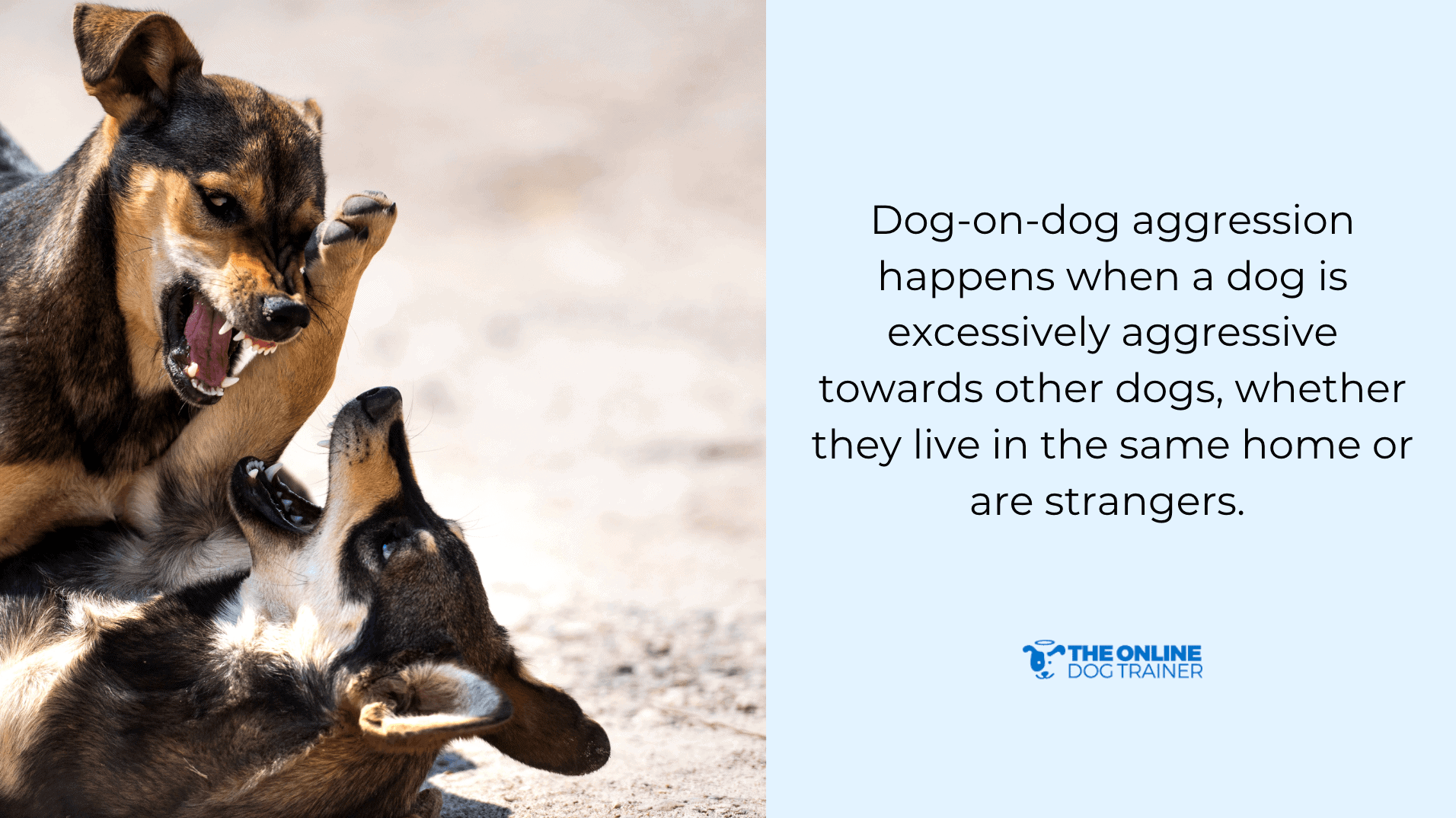
Dog-on-dog aggression happens when a dog is excessively aggressive towards other dogs, whether they live in the same home or are strangers.
While some canine aggression between dogs is normal, it can become a problem when it’s excessive. This is often seen in male dogs who haven’t been neutered, with signs typically emerging during puberty (6-9 months old) or social maturity (18-36 months old).
What Causes Aggression in Dogs?
There are many reasons why a dog might be overly aggressive. Here are some examples of reasons for your aggressive dog’s behavior.
Cause #1: Past experiences and trauma
Abuse, neglect, lack of socialization with other dogs as a puppy, or a traumatic encounter can all contribute to aggression. Dogs rescued from dog fighting are also more prone to aggression.
Cause #2: Owner Influence
Sometimes, an owner’s actions can unintentionally reinforce aggressive behavior. If an owner doesn’t know how to handle the main source of dog aggression, the problem will persist, even if you give rewards and punishments.
Cause #3: Fear and Anxiety
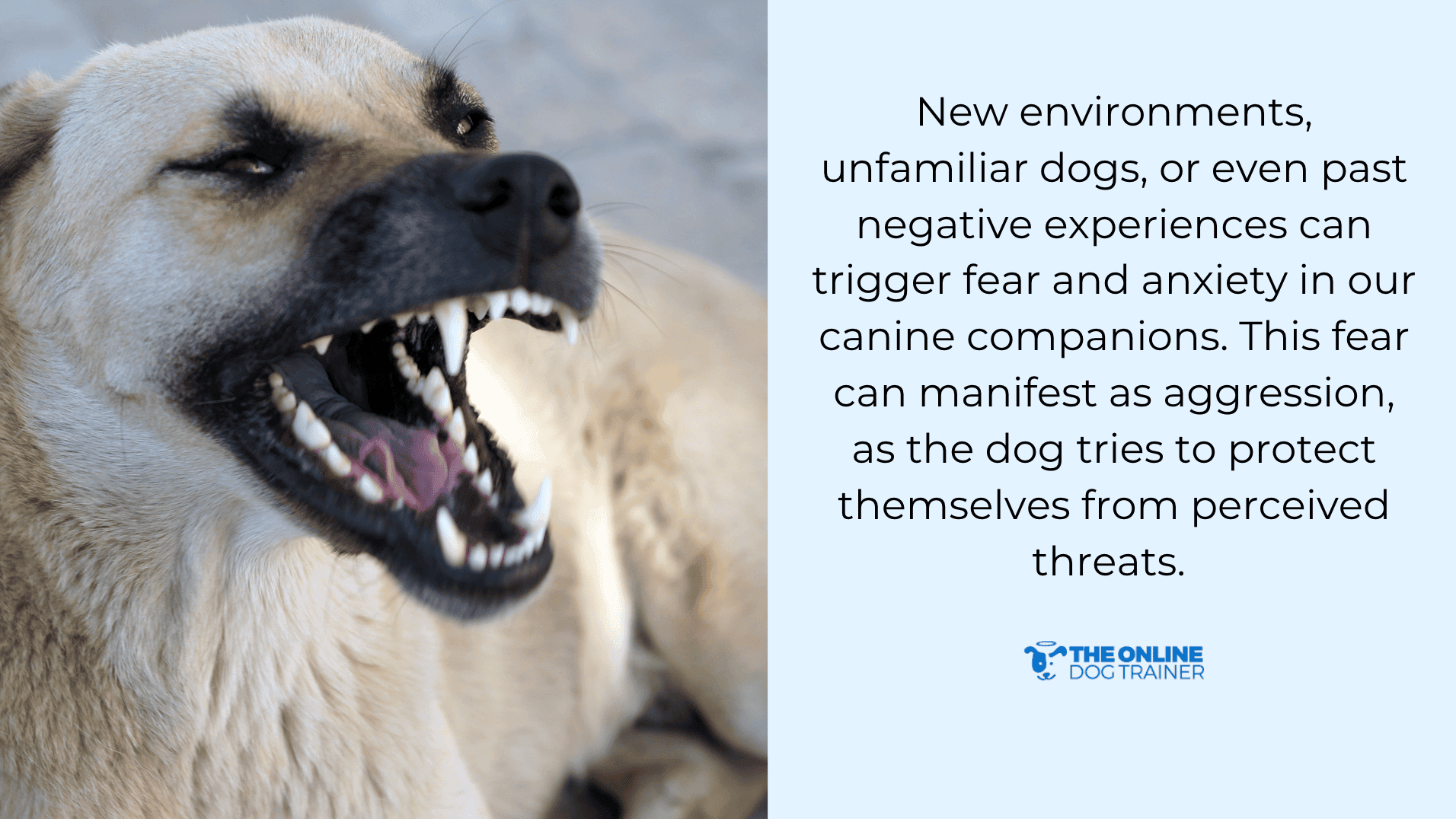
Imagine being in a new place surrounded by strangers. You might feel a bit nervous, right? Well, dogs can feel the same way! New environments, unfamiliar dogs, or even past negative experiences can trigger fear and anxiety in our canine companions. This fear can manifest as aggression, as the dog tries to protect themselves from perceived threats.
If your dog seems scared of other dogs, they might show it in a few ways. Their body language might be a giveaway — think cowering, tucking their tail, licking their lips a lot, yawning, or avoiding eye contact. They might also overreact by barking, lunging, or growling at other dogs, even friendly ones. Or they might simply try to avoid other dogs altogether by hiding behind you or pulling away. These are all signs that their aggression might be rooted in fear.
Cause #4: Feeling In Charge
Dogs are social creatures with a natural instinct for hierarchy. Sometimes, a dog might feel the need to be in charge, especially if they don’t see you as a confident leader. This can lead to them guarding resources (like food, toys, or even you!), trying to control other dogs, or reacting aggressively when they feel their “authority” is challenged.
Territorial aggression in dogs can also be traced back to a dog assuming the role as the leader and the protector in the household. When dog owners don’t rise up to assure their dogs that they got everything covered, they will continue to see persistent protective aggression in their dogs.
Cause #5: Reactivity
Dog reactivity is an exaggerated emotional response to specific triggers, like other dogs, people, or noises. Instead of a typical reaction, a reactive dog might bark excessively, lunge, or try to hide. This often stems from underlying fear, anxiety, or over-excitement.
Reactive dogs aren’t necessarily trying to be aggressive but are struggling to manage their intense emotions. Addressing reactivity involves understanding its cause and establishing calm leadership, which helps the dog feel safe and less likely to overreact.
JOIN MY FREE REACTIVITY WEBINARWhat Are the Signs of Aggressive Dog Behaviors To Look Out For
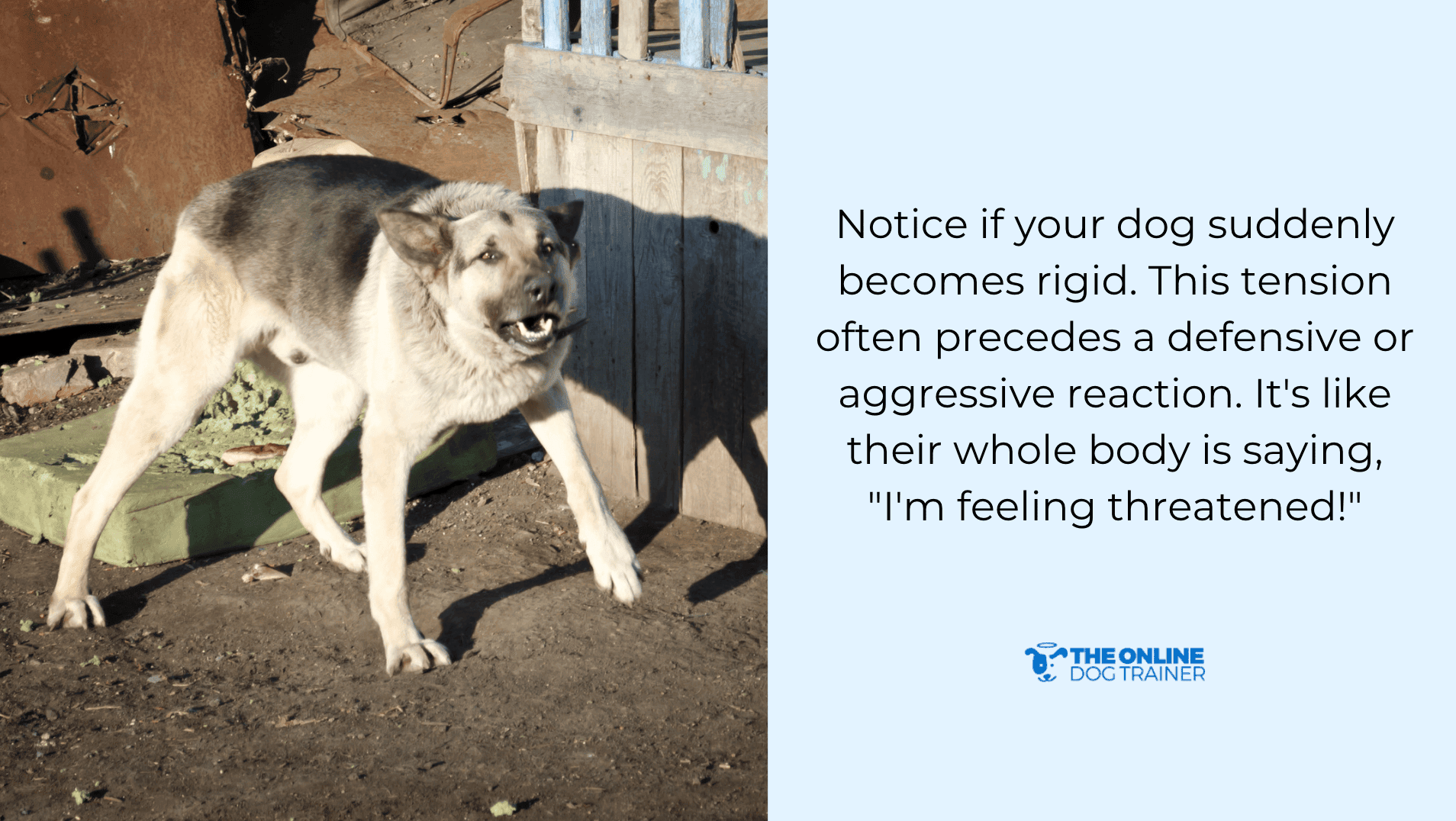
Body Stiffness
Notice if your dog suddenly becomes rigid. This tension often precedes a defensive or aggressive reaction. It’s like their whole body is saying, “I’m feeling threatened!”
Growling
A low growl is a clear warning signal. It’s your dog’s way of saying, “I’m uncomfortable; please give me space.” Never punish a growl, as it’s important communication.
Lunging without Making Contact
This is a more intense warning. Your dog may lunge towards another dog or person but stop short of actually biting. It’s a display of aggression, but they’re still giving a chance for the situation to de-escalate.
Showing Teeth
This is a very clear threat. When a dog bares their teeth, they’re communicating that they’re ready to bite if necessary.
Snarling
A snarl combines showing teeth with a wrinkled nose and often a lifted lip. It’s a more intense threat than just showing teeth and indicates a higher level of aggression.
Important Note
While these are common warning signs, remember that every dog is unique. Some dogs may bite without any warning at all. Always err on the side of caution and give dogs space, especially if they’re exhibiting any of these behaviors.
JOIN MY FREE REACTIVITY CLASSTypes of Aggression in Dogs
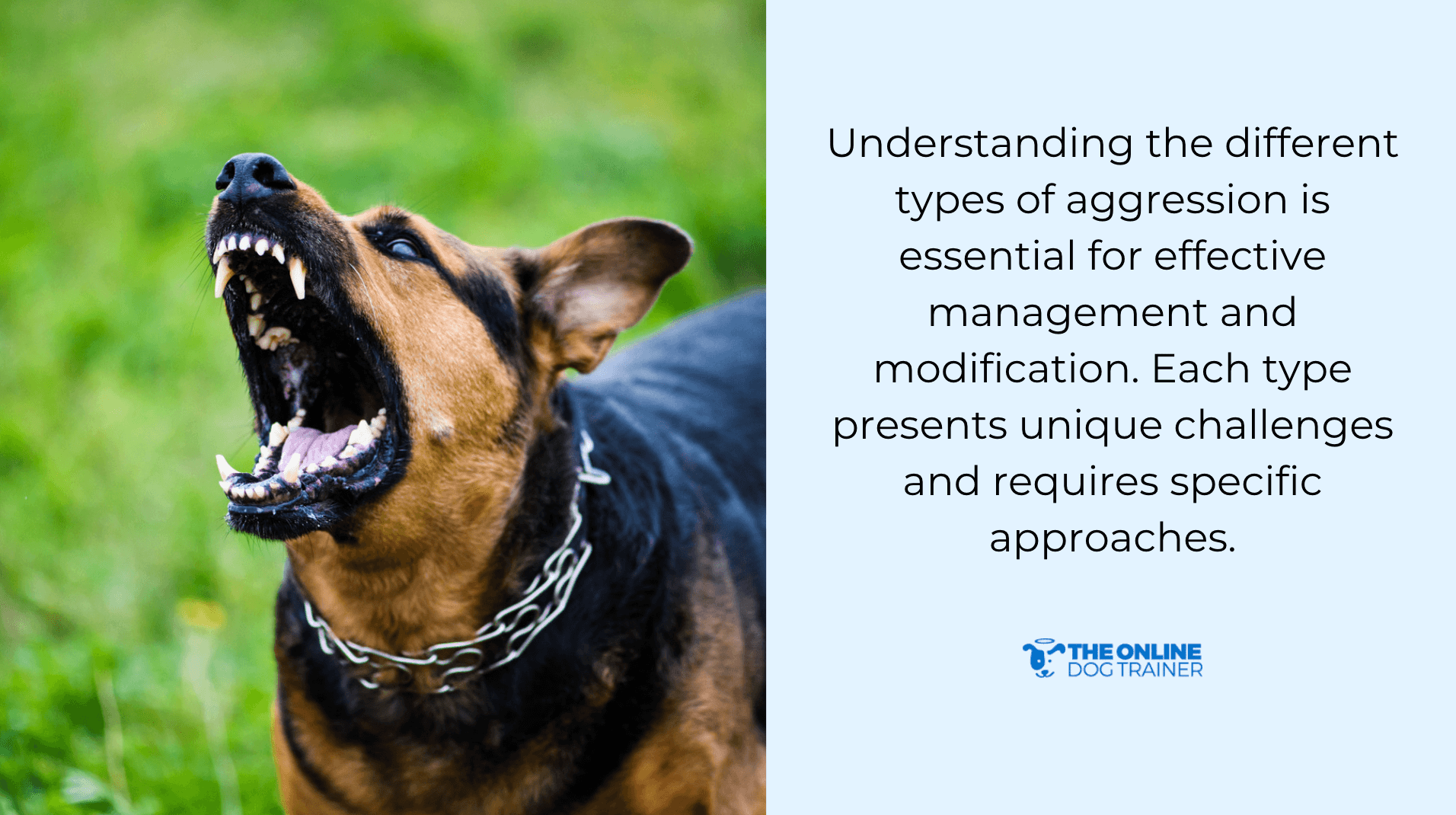
Understanding the different types of aggression is essential for effective management and modification. Each type presents unique challenges and requires specific approaches. By identifying the triggers and underlying causes, you can better address your dog’s needs.
#1: Predatory Aggression
This instinctual behavior stems from a dog’s hunting ancestry. Dogs displaying this type of aggression may stalk, chase, and attack smaller animals, objects, or anything resembling prey.
#2: Territorial Aggression
This defensive behavior involves a dog protecting its perceived territory, which could be an area, person, or position. It’s rooted in their pack instincts and the need to protect resources.
#3: Leash Aggression
This occurs when a typically non-aggressive dog becomes aggressive while on a leash, often directed towards other dogs. It can stem from frustration, fear, or a sense of restraint.
#4: Containment Aggression
Dogs confined to specific areas like crates or yards may develop aggression due to frustration, fear, or territorial instincts.
#5: Pain-Induced Aggression
Dogs experiencing pain or injury may react aggressively when touched or approached, even by familiar people.
#6: Conflict Aggression
This arises when dogs learn that assertive behaviors get them what they want. It’s often linked to inconsistent reinforcement and can escalate to lunging and biting.
#7: Resource Guarding Aggression or Possessive Aggression
This occurs when a dog perceives a threat to valued items like food, toys, or resting spots. It’s a natural instinct to protect resources.
By recognizing the type of aggression your dog is displaying, you can work with a veterinarian or certified dog behaviorist to develop a tailored plan to manage and modify their behavior.
FREE DOG AGGRESSION WEBINARLet’s explore: Why Do Dogs Tend to Be Aggressive With Other Dogs
Now, I should mention here that I am not talking about little squabbles, growls, and minor disagreements. This sort of behavior is commonplace and usually over in a matter of seconds with absolutely no damage or injuries to speak of. Over the years, you become used to hearing loud eruptions of noise in another room and sprint to the scene of the crime only to find all the dogs lying around quite happily looking at you as if to say, “What’s the problem? No dramas, we’ve sorted it out.”
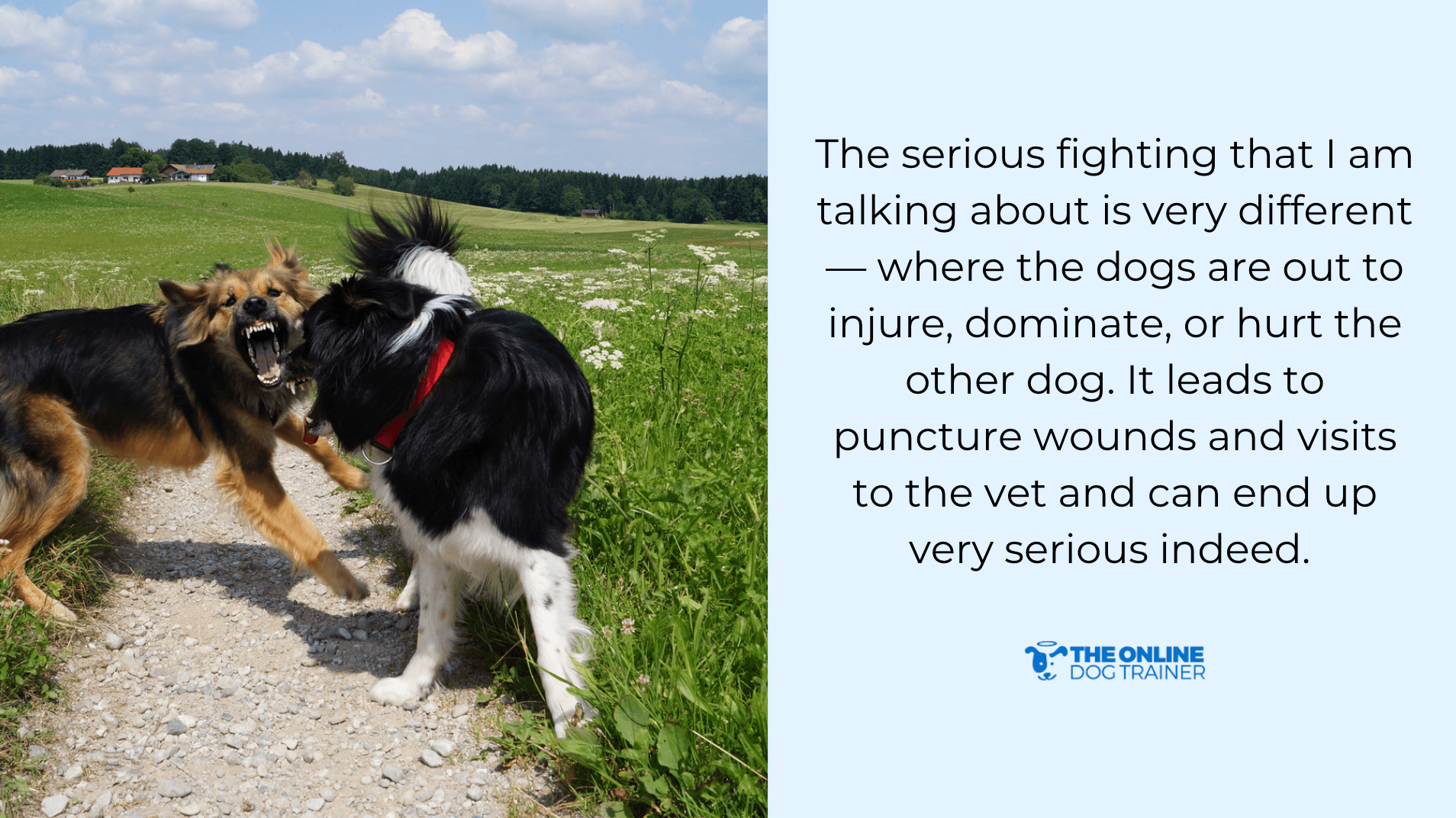
Serious Fighting
The serious fighting that I am talking about is very different — where the dogs are out to injure, dominate, or hurt the other dog. It leads to puncture wounds and visits to the vet and can end up very serious indeed. In this situation, it is clear that the dogs are not scared of each other, like they may be of an unknown dog that happens to pass by the property. After a fight, the dogs may be wary and display some signs of fear for one another, which generally subsides until the next flare-up. But this behavior still doesn’t explain why, after years of playing together, they have suddenly become arch-enemies.
Triggers are Not The Key
Even though there may be an obvious trigger that has set the dogs off, do not be fooled into thinking this is the cause of the problem. A bone, a ball, trying to receive pats or cuddles from an owner, or increased stressed levels in a home can all add to the chance of dogs fighting — but it’s not the cause. The real long-term solution does not lie in the trigger.
Power of the pack
To understand a dog, you need to recognize the power of the pack and have strong pack leaders. When they are not present, the dogs will do their best to fill the vacant position. With two dogs present and often only one position available, it is often a case that they will simply fight it out. Of course, every situation is different in the details, but in a nutshell, this is how the dogs see it, and the solution is no different. You need to become the pack leader. The solution is that simple.
Other factors have an impact
There are lots of other factors and details surrounding every situation. The personalities, characters, sex, age, size, and breed of the dogs, everything comes into it. And sometimes, it can play quite a big part in the pack dynamics. For example, a lady who has two male dogs is far more likely to struggle with fighting between them compared to a couple who have a neutered male and female. Why? Because in the pack,, there is a a male leader and a female leader, and if these two humans have assumed both these roles,, then there is nothing to fight for. No positions are vacant!
How Becoming the Pack Leader Calms Aggressive Dogs
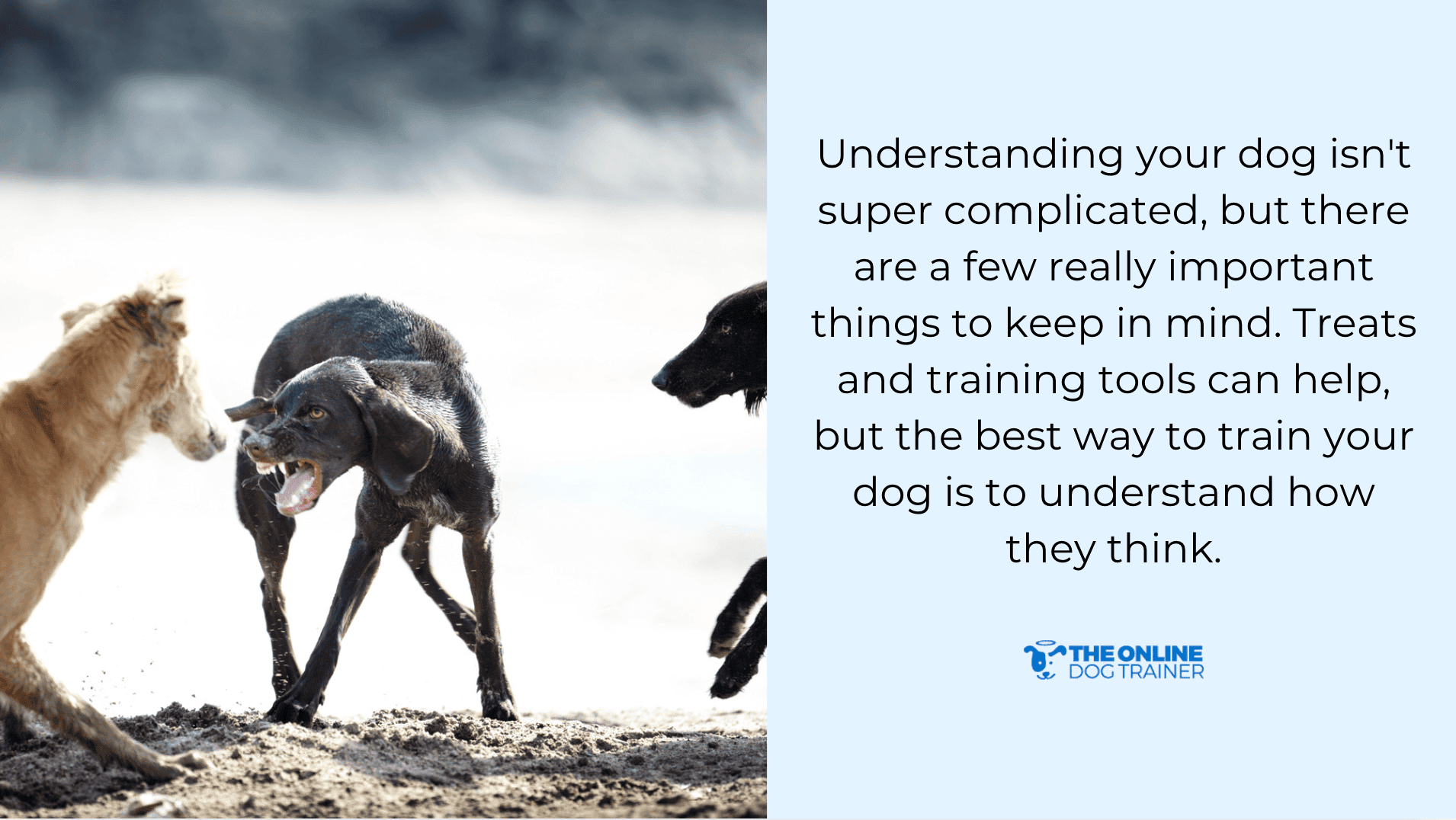
Understanding your dog isn’t super complicated, but there are a few really important things to keep in mind. Treats and training tools can help, but the best way to train your dog is to understand how they think.
Here’s the deal: just giving your dog treats or punishing them won’t fix aggression issues. You need to see the world from their point of view. A lot of dogs get aggressive because they think they’re the boss and it’s their job to protect you and your home. If they don’t see you as the leader, they’ll always be on guard, ready to fight.
That’s why being a good leader is so important. You need to show your dog, “Hey, I’m in charge, not you. I’ll keep us safe, so you can chill out.”
To help your dog with their aggression, you need to be a strong leader they can trust. Luckily, learning to be a pack leader isn’t that hard, and it makes everything else easier.
Want to learn how to help your dog relax and trust you to keep them safe? Check out my program, The Dog Calming Code!
GET THE DOG CALMING CODE FOR FREETop 8 Tips to Stop A Dog’s Aggression
Tip #1: Be a Calm and Confident Leader:
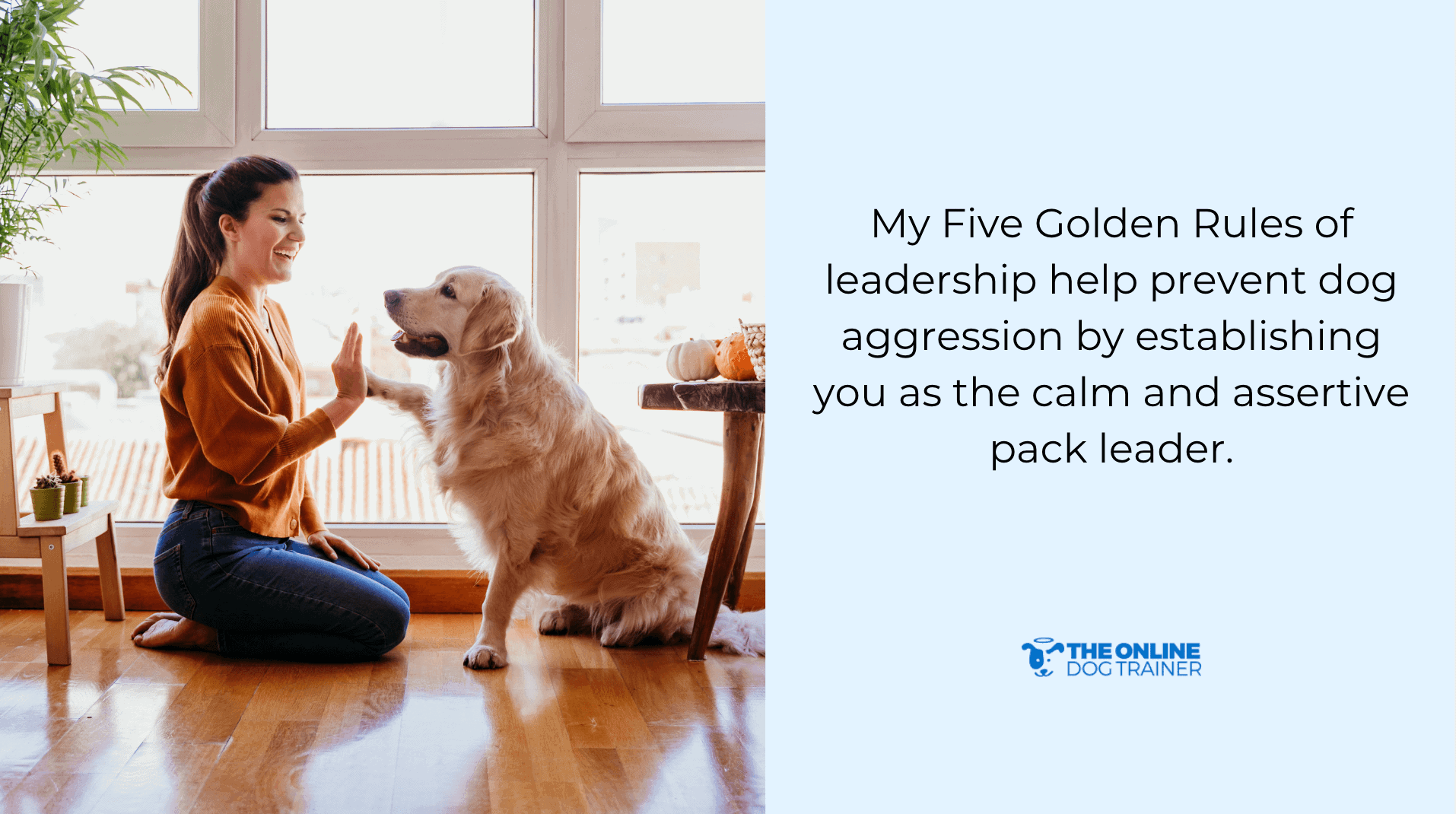
My Five Golden Rules of leadership help prevent dog aggression by establishing you as the calm and assertive pack leader. Controlling food and affection reinforces your authority, while initiating activities shows you make the decisions. Handling perceived threats assures your dog they don’t need to protect you, and controlling walks promotes calmness. These rules create security and clear expectations, reducing your dog’s need to act out aggressively. They learn to trust your leadership, resulting in a more balanced and relaxed dog.
Tip #2: Soothe Your Dog’s Fears
Sometimes, aggression stems from fear or anxiety. Just like us, dogs can feel insecure in certain situations. If your dog seems scared of other dogs, gradually introduce them to a safe and controlled environment. Start with short, positive interactions, rewarding your dog with praise and treats for calm behavior. This helps them build positive associations with other dogs and reduces their fear-based reactions.
Tip #3: Master the Walk
A relaxed walk is key! If your dog pulls on the leash, they’re more likely to feel stressed and react to other dogs. Practice loose-leash walking, rewarding your dog for staying by your side. This not only prevents pulling but also teaches your dog to focus on you and remain calm in the presence of other dogs.
Tip #4: Harsh Punishments Don’t Work
Scolding or punishing your dog for aggression usually makes things worse. It can increase their anxiety and damage their bond. Instead, focus on rewarding good behavior and redirecting unwanted behavior. For example, if your dog starts to growl at another dog, calmly redirect their attention with a treat or toy and praise them for focusing on you. Putting them in timeout also helps.
Tip #5: Socialize Your Dog
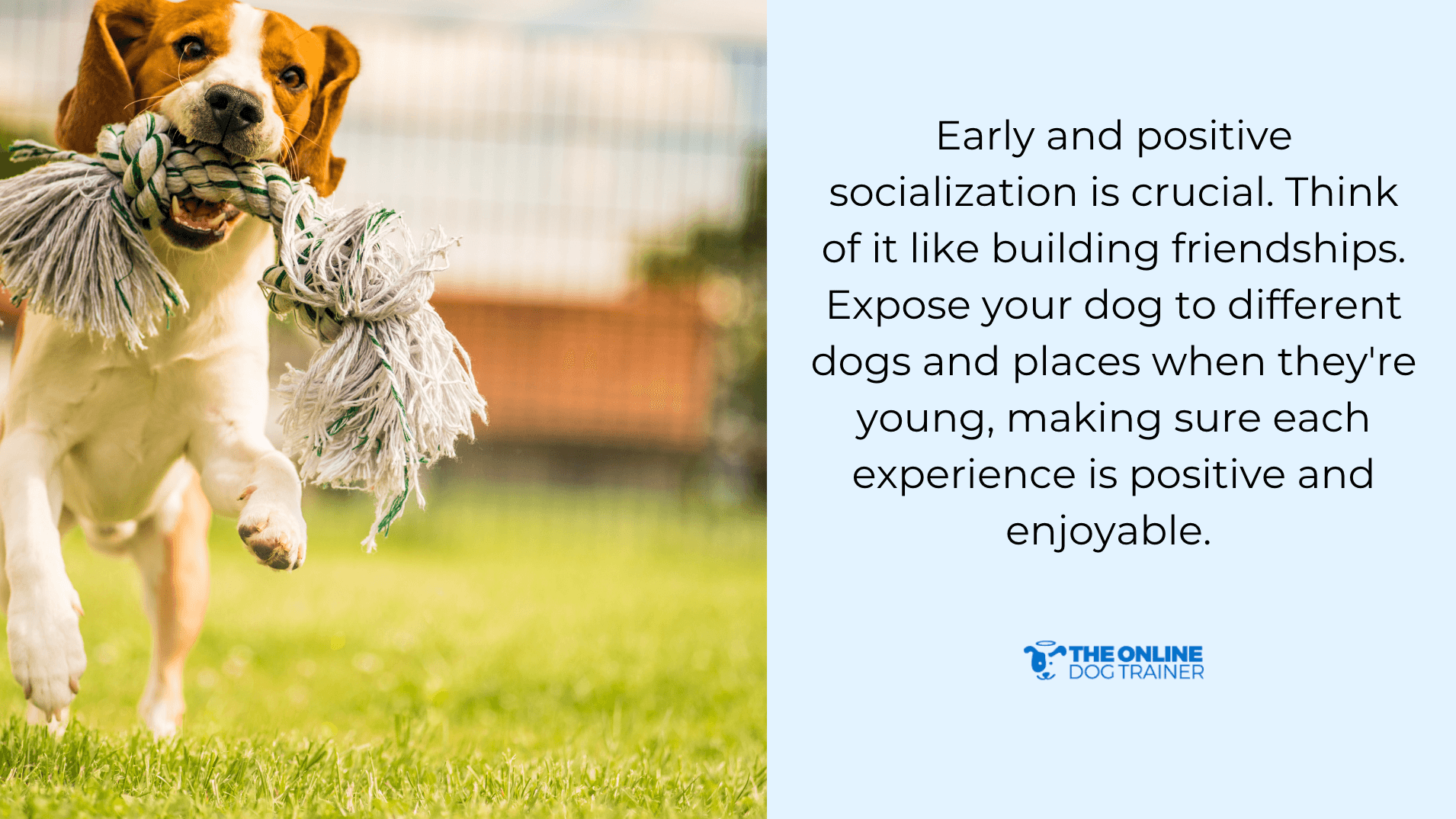
Early and positive socialization is crucial. Think of it like building friendships. Expose your dog to different dogs and places when they’re young, making sure each experience is positive and enjoyable. This helps them develop confidence and appropriate social skills, reducing the likelihood of aggression later on.
Tip #6: Create a Safe Space
If your dog feels overwhelmed, calmly step in front of them to block access to the other dog. This gives your dog a break and prevents things from escalating. It also shows your dog that you’re there to protect them and they don’t need to handle the situation themselves.
Tip #7: Get Expert Advice From a Professional Dog Trainer For Your Dog’s Behavior
Sometimes, it helps to have a little extra support. Don’t hesitate to reach out to a qualified dog trainer or behaviorist for personalized guidance. They can help you identify specific triggers and develop a tailored plan to address your dog’s aggression.
Tip #8: Use Positive Reinforcement
Positive reinforcement training works wonders! Reward your dog with praise, treats, or a favorite toy whenever they show calm and friendly behavior around other dogs. This helps them associate good things with positive interactions, encouraging them to repeat those behaviors in the future.
The Dog Calming Code Helps You Know What To Do When Your Dog Is Aggressive!
In your journey to helping your dog overcome aggressive behavior, always remember this: think like your dog. When you view training through the lens of dog psychology, you’ll know what really calms your dog.
My program, The Dog Calming Code, is created to help dog owners really understand their dogs. As a professional dog trainer, I know that it is in understanding and connecting with our dogs that training clicks.
You can learn more about The Dog Calming Code here. You can also join my FREE reactivity webinar to learn the Five Golden Rules of dog leadership for free.
JOIN MY FREE DOG AGGRESSION WEBINAR




8 Responses
I have a Yorkshire terrier wish is sweet until we want to put her in her pin while we eat or she gets a hold of something she isn’t suppose to have. I need help.
Check out the free webinar, you’ll love it!
The Reactivity Webinar happens weekly on Wednesday and Sunday at 3pm EST (USA time). The link for the webinar is here, and you can choose this week or the following week: https://theonlinedogtrainer.com/reactivity-webinar/
If you register, you’ll get the recording via email after the webinar
We have a rescue dog. She is a Shepard mix and just turned a year old. She’s a little skittish, but very loving. We’ve had her about seven months. She is fine with our sons dogs(basset hounds) and our neighbors dog and other smaller dogs. But she gets aggressive with larger dogs or strange dogs she sees walking. Today my husband left her out of the house to go to her fenced yard. She saw a dog walking by and started barking, growling then took off after the dog and grabbed it. Husband was able to get ahold of her and get her in the yard. The other dog wasn’t hurt. Thank god.
What do we do and how do we get her to not respond like that? Love her and don’t want to have to get rid of her. She has not been around children either and we have a new grandchild coming and I’m concerned with her behavior around some dogs.
Please help me!
Thank you
Hi Caro…dog on dog aggression is actually a really common behavioural issue, one that I help owners with a lot! The great news is that it is a behaviour that you can overcome, with the right information that is relevant to your dog. There is a reason she is doing it in her mind, so we need to bring you up to speed with what is motivating her and then how to address that motivation, most importantly in a way that makes sense to her!
My website TheOnlineDogTrainer.com has a course I developed to address this behaviour and it will show you very clearly how to overcome it! Maybe take a quick look and see what you think, All the Best Doggy Dan
mavansoest@yahoo.com
Hi Dan,
I have a 5 1/2 year old golden retriever/chow mix. When I first got her, from a rescue organization, she was 2 years old. Nothing was known of her history. She liked other dogs at first, but over the years she has become dog agressive. She goes wild when I walk her and she sees another dog. I used to take her off leash when I was at the river, but she has gotten dog agressive there too. I’m afraid to even take her to a dog park anymore-it’s been 2 years since I took her to one. She likes people (most of the time) and cats. I have spent a couple thousand dollars on trainers. It got worse. I love her but don’t know what to do. I’m 60 yrs. old and she is 53 lbs. Do you have any advice for us?
Thanks,
Margaret
Hi Margaret,
When dogs move to a new location is can really throw them out of their comfort zone because they aren’t familiar enough with their environment to know if they are safe or not. Other strange dogs are often viewed as one of these potential threats and some dogs can feel really vulnerable and over-react when in these situations. Essentially they panic and the aggression is based on fear! The solution to overcoming her behaviour and helping her feel a lot happier is not overly complicated but there are some changes you need to make to your behaviour as part of that process. My website TheOnlineDogTrainer.com shows you very clearly how to achieve this…maybe take a quick look…its a $1 trial for 3 days…all the best Doggy Dan
Hi Dan, still learning from your wonderful teaching. My five dogs are more settled and calmer but I still have to be aware of Rose with Rusty. They never put thier foot wrong when we both take them for a walk. Like the other morning Rose was going to have a serious go at Rusty but Terry just pulled her away and almost thru her out the door. She is very respectful of Terry. And yet its me that is doing all the training. Rose is perfectly ok when the new dog isnt around and Rusty (little dog) is ok with Rose. Rose became Rusty’s surrogate mother when we first brought him home, she loved him. He plays a lot more with Tim and thats what has upset her.
My other rescue 7yrs old bc from spca came with a barking problem, after teaching from you I have almost stopped it. We have had him for three years. Noise starts himoff. Grating a carrot he barks so I show him the carrot, let him siff and look at it, then I put my hand on the side of his face and hold him close to me, its only for a minute or less. He stops and walk away and dose’nt bark for ages. I just about have this this barking licked! dont talk to him.
We are moving house in three weeks and are building a new house on a bigger farm down the road. I wonder how the dogs will respond to that. I continue with your learning with many many thanks. Carole.
Hi Carole, good to hear from you that Rose and Rusty are much calmer, congratulations. Great thinking about how to stop him barking for a carrot, all the best with your move, Doggy Dan 🙂