“Doggy Dan, why is my dog reactive on leash but calm off leash?” The answer often lies in a shift of responsibility. When your dog is on a leash, they can feel trapped and restricted, seeing the lead as a barrier to their self-appointed job of protecting you. If a dog believes they are your primary guardian, being suddenly restrained causes them to panic. That barking and lunging you see is their way of shouting, “I can't do what I need to do! Release me so I can handle this!”
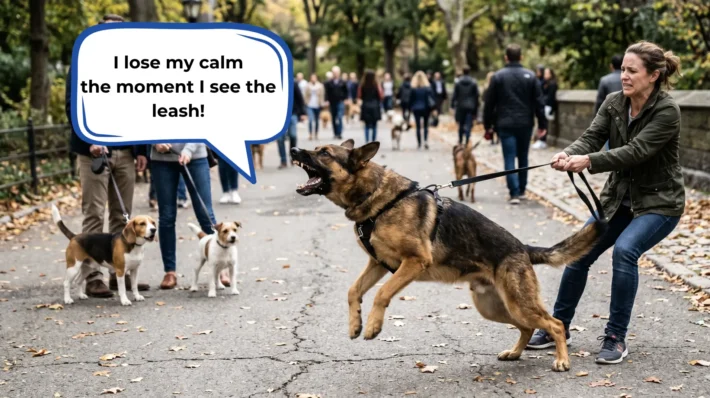
If this sounds familiar, take a breath and know you aren’t alone. Leash reactivity is one of the most common—and frankly exhausting—issues owners face. It’s confusing to see your social butterfly transform into a lunging mess the second the gear comes out, but there is a clear logic to it.
The leash isn't just a physical restraint – it’s actually more of a psychological one. Once you understand the root cause of the switch in your dog’s behavior, we can stop managing the symptoms and start fixing the issue.
Let’s dive into why the leash changes everything and how you can handle this challenge better.
Key Takeaways
- If a dog that believes they are your guardian is suddenly restrained, they often panic because they can't move freely to manage a perceived threat. That lunging and barking is a desperate plea for freedom
- Your dog is a mirror of your internal state. When you remain “unbothered” and keep a loose leash, you communicate to your dog that you are in control, allowing them to resign from their self-appointed role as “bodyguard.”
- Lasting change on the leash comes from establishing trust within the home. When you handle the “big decisions” at the dinner bowl and in the living room, your dog will naturally look to you for guidance when faced with triggers on the street.
Is My Dog Reactive On Leash? The Signs That Confirm They Are
Before we dive into why your dog lunges on leash, let's identify whether your dog is actually leash reactive. Understanding the signs of leash reactivity in dogs helps you catch reactivity early — before it escalates into a behavior that’s harder to manage.
The Early Reactivity Signs: Before You Put The Leash On
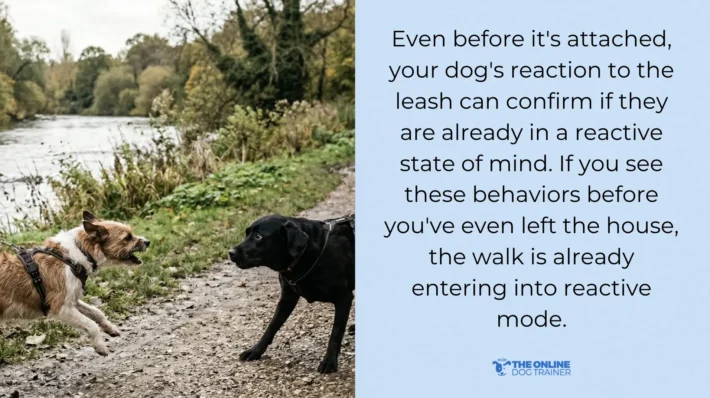
Don't wait until you’re outside to look for signs of reactivity. The leash test begins the moment the leash comes into view. Even before it's attached, your dog's reaction to its appearance can confirm if they are already in a reactive state of mind. If you see these behaviors before you've even left the house, the walk is already entering into reactive mode.
Here are the signs to look out for.
Early Sign #1: They Don’t Listen To You
If your dog suddenly stops listening to basic commands or won’t come when called as you prepare for a walk, they’ve already checked out mentally. Their thinking brain is being hijacked by excitement or anxiety, and they are no longer looking to you for direction.
Early Sign #2: They Are Restless When You Try To Put The Leash On
Does your dog pace, pant, or spin while you’re trying to clip the leash? This isn't just happiness to go outside; it’s a surplus of nervous energy. When you clip the leash onto a restless dog, you are effectively tethering yourself to that frantic state of mind.
Early Sign #3: They Bark and Lunge At The Leash
If your dog begins to bark or lunge at the leash itself, they are already perceiving the walk as a high-stakes event. They see the leash as a constraint that forces them into their “protective” role. At this point, their stress hormones (cortisol and adrenaline) are already spiking.
Signs of Dog Leash Reactivity While They’re On Leash
The Early Warnings: The Subtle Shift
Before the noise starts, your dog’s body language becomes loud in a different way. These are the moments where you still have a chance to turn around and keep their peace intact.
The Hyper-Fixated Stare
Your dog's eyes become round, showing more of the whites, and they “lock on.”
Take this example: you’re 50 feet away from another dog. You say their name or squeak a toy, but they don't even blink. They are mentally gone, entirely consumed by the presence of the other dog.
The Statue Pose
A sudden, total cessation of movement. One paw might even stay tucked up mid-air.
You may see this while walking, and your dog spots a person in a hat. They stop dead in their tracks, their muscles turning into stone. It looks like they are “waiting,” but they are actually bracing for a perceived conflict.
The Closed Mouth & Ear Shift
That happy, “smiley” dog face disappears. The mouth snaps shut into a tight line, and the ears pitch forward like radar dishes.
The Escalation: Physical Indicators of Stress
Once the dog's internal pressure starts to boil, you will see involuntary physical reactions.
Raised Hackles
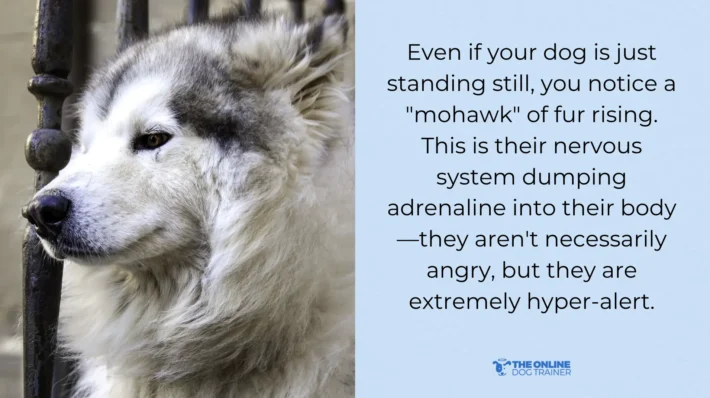
The hair along the neck and spine stands up (like human goosebumps). Even if your dog is just standing still, you notice a “mohawk” of fur rising. This is their nervous system dumping adrenaline into their body—they aren't necessarily angry, but they are extremely hyper-alert.
The Stiff Tail & Low Vibration
A tail held high and vibrating so fast it looks like a blur, or a low, rumbling growl you can feel vibrating down the leash.
The Threshold: Full “Fight or Flight” Mode
When your dog reaches this point, the “thinking brain” has completely shut down. They are acting on pure instinct to protect themselves.
Lunging and Plunging
Your dog is on their hind legs, throwing their full body weight against the harness. They look like they are trying to fly toward the trigger. In their mind, looking big and scary is the only way to keep the “threat” away.
The Frantic Bark
This isn't a “someone's at the door” bark. It’s a rhythmic, high-pitched, non-stop vocalization. They aren't listening to you because they literally cannot hear you over the sound of their own alarm system.
Redirected Energy
Frustrated because they can’t reach the other dog, your dog spins around and grabs the leash in their mouth, shaking it violently, or nips at your pant leg. This is a “system overload”—the stress has nowhere else to go, so it spills over onto whatever is closest.
Why Is There A Switch In My Dog's Personality When On Leash?
Here's the confusing part: your dog isn't a different dog. Their behavior is actually completely logical from their perspective.
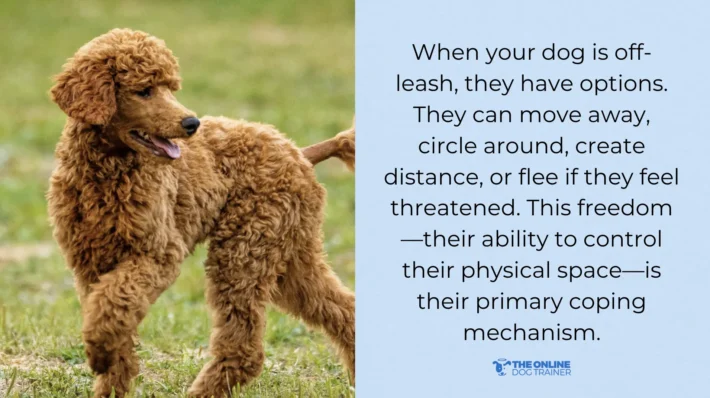
When your dog is off-leash, they have options. They can move away, circle around, create distance, or flee if they feel threatened. This freedom—their ability to control their physical space—is their primary coping mechanism.
But the moment you clip that leash on, one critical option is taken away: they can't run or move away.
For a dog that feels any level of anxiety, fear, or protective responsibility (which we'll get to in a moment), this loss of freedom becomes a pressure cooker. They're tethered to you, unable to escape or increase distance, so they resort to the only remaining option: offense—lunging, barking, and growling to make the threat (or what they perceive as a threat) go away.
The Real Reason For Leash Reactivity In Dogs: Your Dog Thinks They're In Charge
But here's what most dog owners miss: the real issue isn't the leash. It's that your dog doesn't see you as the leader.
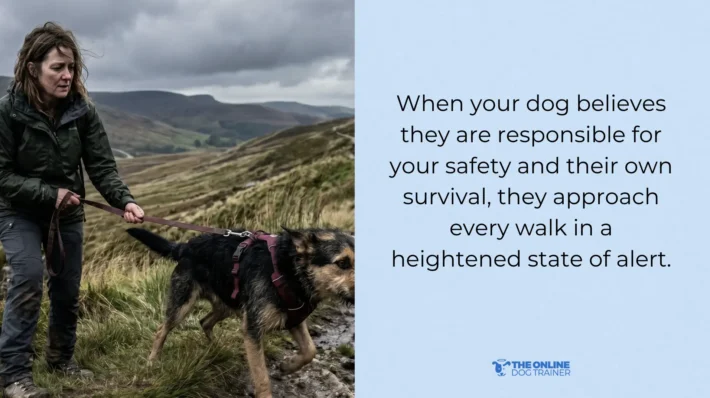
When your dog believes they are responsible for your safety and their own survival, they approach every walk in a heightened state of alert. They're scanning for threats, assessing danger, and preparing to act. Because they're leashed and can't physically lead you to safety or control the encounter, they feel trapped in their responsibility.
Think about it from your dog's perspective: I'm in charge of keeping us safe. But I'm attached to this human, and I can't move freely. How can I protect us if I'm restrained?
The answer, from your dog's logic: lunge, bark, and growl before the threat gets closer.
Using dog psychology and how your dog’s mind operates, their reactive behavior isn't aggression or stubbornness. It's a survival mechanism triggered by the belief that they are the pack leader and therefore responsible for your protection.
Dog Reactive On Leash: What Causes It
To truly understand why your dog lunges on leash, we need to look at three critical components that work together.
Reason #1: The Need to Protect and To Survive
Dogs are hardwired for survival. If your dog has taken on the role of pack leader in your household—because they don't perceive you as a capable leader—they believe it's their job to protect you from threats.
When another dog approaches while you're both on a leash, your dog feels:
- Trapped (they can't flee or lead you to safety)
- Responsible (they think they're in charge of your safety)
- Desperate (they have only one option left: offense)
So they lunge and bark to drive the threat away.
Reason #2: Your Dog Feels Restricted
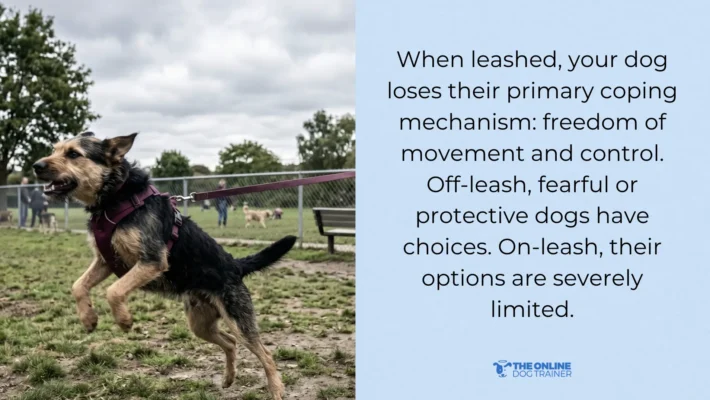
When leashed, your dog loses their primary coping mechanism: freedom of movement and control.
Off-leash, fearful or protective dogs have choices. They can move toward the trigger, away from it, circle around it, or create whatever distance they need. On-leash, their options are severely limited. If your dog is fearful or protective, the leash becomes a source of intense frustration and anxiety. They can't increase the distance between themselves and the other dog, and they can't flee if threatened.
They're stuck. They're restrained. And for a dog who thinks they're in charge, this is unbearable stress.
Reason #3: Your Dog Believes Lunging Is Their Best Defense
Reactive dogs often learn early in life that if they lunge, bark, growl, and show their teeth, animated objects (including other dogs) will move away.
From your dog's perspective, the lunging works. When they lunge and bark aggressively, the other dog often moves away or the other owner quickly changes direction. Your dog thinks: “If I lunge, the threat disappears, and I can protect my owner. I will do it again and again.”
Dog Training For Leash Reactive Dogs: Best Strategies
The solution isn't found in fancy equipment or punishment; it’s found in dog psychology and truly understanding the underlying cause for your dog’s reactive behavior while on leash.
Step 1: Win the Mind Before the Walk
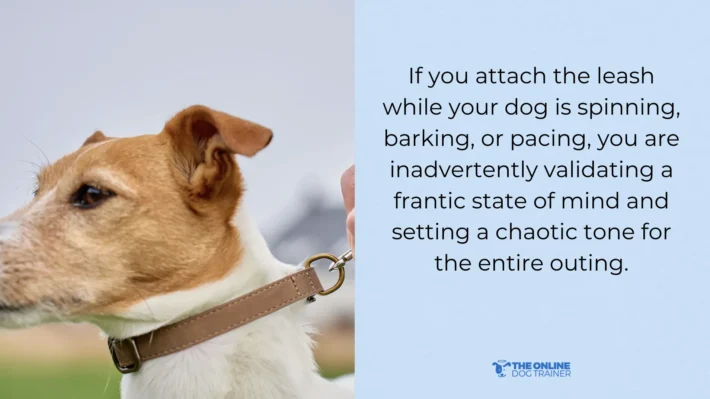
Successful dog training for leash reactive dogs begins long before you step outside; it starts the moment you reach for the gear in your hallway. If you attach the leash while your dog is spinning, barking, or pacing, you are inadvertently validating a frantic state of mind and setting a chaotic tone for the entire outing.
To shift this dynamic, you must implement a “threshold of calm.” If your dog becomes over-excited or anxious, simply place the leash back down and walk away. Avoid proceeding with the walk until your dog demonstrates a settled, neutral temperament.
By consistently pausing the process, you communicate a fundamental shift in the relationship: you are the one who makes the decisions. You determine when the walk begins and under what emotional conditions it continues. When a dog recognizes that you are firmly in control of the environment, they no longer feel the burden of “calling the shots.” This realization allows them to relinquish their hyper-vigilance and settle into a state of quiet confidence, trusting in your leadership rather than their own frantic impulses.
(I talk more about this in my blog about Golden Rule #5: How to Walk Your Dog)
Step 2: The Power of the Pause
Leadership is about being the eyes and ears for the pack. Watch for the “lock-on” stare or the stiff tail. The moment you see them gear up, stop.
When you see their reactive energy taking over because of a trigger, stop.
When they’re pulling and lunging at other dogs while on your walk, stop.
Don't worry about the neighbors, other dog owners, or your route. By taking a detour or simply standing still and waiting for them to check in, you are saying: “I see the struggle, and I’ve got this. You can relax.”
Step 3: Establish Leadership By Being Calm
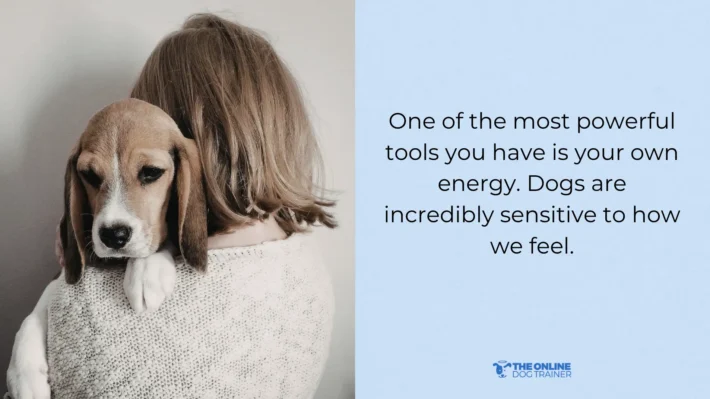
One of the most powerful tools you have is your own energy. Dogs are incredibly sensitive to how we feel. If you become tense, shorten your grip on the leash, or hold your breath when you see another dog, your dog feels that “electric” shot of anxiety through the lead. They think, “My owner is worried, so there must be a real danger!”
When you spot a potential trigger, take a deep, slow breath. Keep your shoulders relaxed and the leash loose. Talk to your dog in a soft, steady voice. You aren't just saying “it's okay”; you are showing them through your calm, unbothered energy that there is nothing to fear.
You want to send a clear message: “I see that dog over there, and I’m not worried, so you don't need to be either.” When you act as the brave leader who handles the “danger,” your dog can finally stop scanning the horizon for threats. They begin to trust that you have everything covered.
I often work with owners who are just as nervous as their dogs. I once helped a lady with a small, barking terrier. Every time a big dog approached, she would gasp and pull the leash tight. I taught her to simply ignore the other dog and keep humming a soft tune to herself.
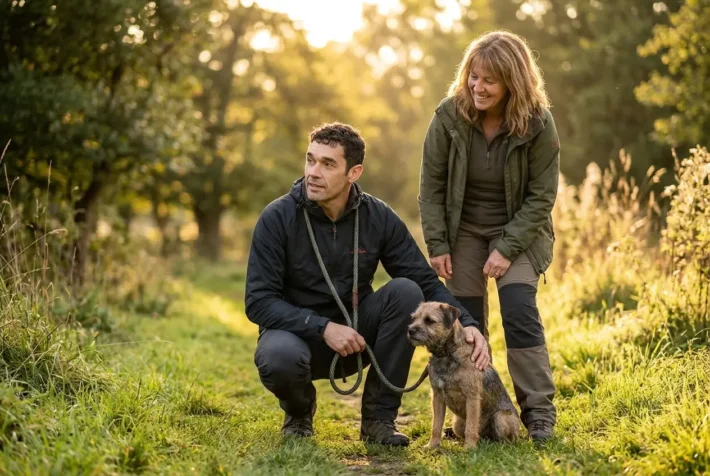
By staying “unbothered” and walking with a relaxed stride, she showed her terrier that the big dogs weren't a threat to their pack. Once she changed her energy, her dog stopped barking almost instantly. The dog was simply waiting for someone to tell him, “Relax, I’ve got this.”
Step 4: Choose the Right Tools
Avoid equipment that relies on pain or fear (choke, prong, or shock collars). These only add more stress to an already stressed dog.
Use a standard 5-6 foot leash and a front-clip harness. A front-clip harness provides leverage and control without making the dog feel constricted or “trapped” in their own skin.
I recommend that you get The Doggy Dan No Pull Harness. Most harnesses clip on the back, which actually triggers a dog’s opposition reflex — the natural instinct to pull harder against pressure (like a sled dog). This harness uses a front-clip design that gently redirects your dog's momentum back toward you the moment they surge.
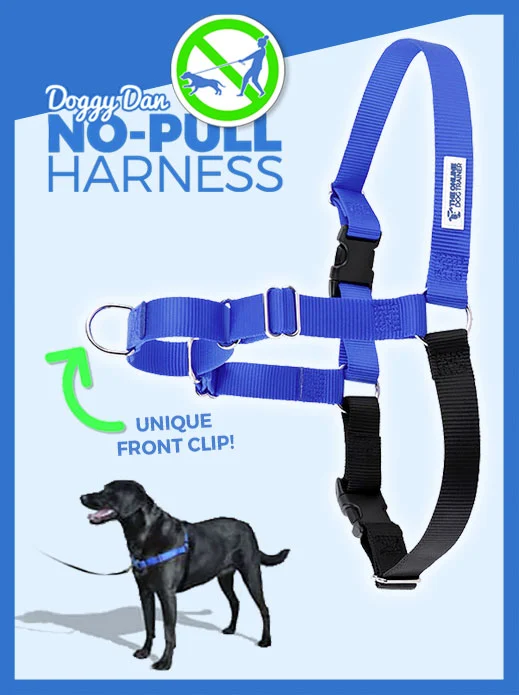
The Doggy Dan No Pull Harness is built to be lightweight and breathable rather than bulky. By removing the pressure from the throat and neck, it helps lower the dog's arousal levels, preventing the red-lining that leads to lunging and barking.
Step 5: Leadership is a 24/7 Job
You cannot expect your dog to trust your leadership on the walk if they don't see it at home. Confidence is built in the small moments: how you handle mealtime, how you initiate play, and how you set boundaries in the living room. When they see you handling life with calm authority, they will naturally resign from their “protective duty” on the leash.
How Doggy Dan’s Dog Calming Code Can Help
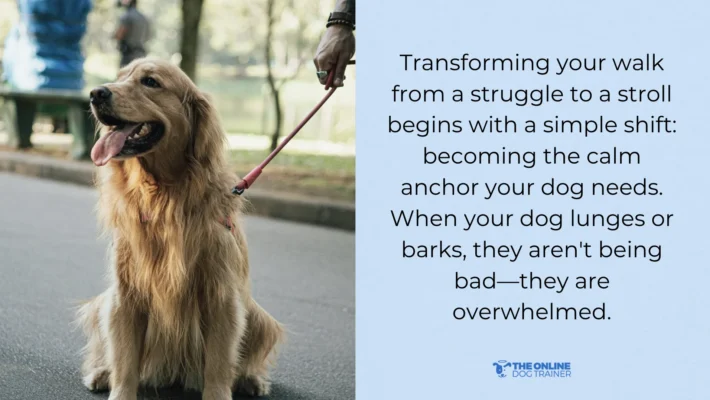
Transforming your walk from a struggle to a stroll begins with a simple shift: becoming the calm anchor your dog needs. When your dog lunges or barks, they aren't being bad—they are overwhelmed. They’ve taken on the role of protector because they don’t yet realize you are in charge of their safety.
The Dog Calming Code™ is designed to lift that burden. It’s not about force; it’s about a gentle leadership that speaks to your dog's heart.
Dogs are instinctual pack animals. If they don't see a calm, capable leader, they feel obligated to take the job themselves. The Dog Calming Code provides the certainty they crave. By speaking their natural language, you allow their brain to switch off “defense mode” and enter a state of relaxation.
Life-Changing Benefits When You Learn The Dog Calming Code
- Lowering stress hormones like cortisol leads to a happier, longer life for your dog.
- Enjoy walks past triggers without a scene, opening up new parks and adventures.
- Your dog moves out of fear and stays in their “thinking brain,” making them more responsive.
- Frustration disappears when your dog starts looking to you for guidance instead of fighting the leash.
Frequently Asked Questions
1. Does leash reactivity mean my dog is aggressive?
Not necessarily. While the barking and lunging look scary, they are often signs of frustration or fear rather than a desire to cause harm. Many dogs who are “reactive” on-leash are perfectly social and friendly when they are off-leash in a park. The leash simply prevents them from moving naturally, which causes them to “overreact” to communicate their stress.
2. Can my dog eventually “grow out” of leash reactivity?
Unfortunately, no. Without intervention, reactivity usually gets worse over time because the dog becomes more practiced at the behavior. The good news is that by changing your leadership and using the right techniques, you can help your dog learn to be calm. It is a process of “rewiring” their brain, not just waiting for them to get older.
3. Why does my dog only act this way when they see other dogs?
Your dog likely sees other dogs as a trigger. In their mind, an approaching dog represents a challenge they have to handle. If they don't trust that you are in control of the situation, they feel they must act big and loud to keep that threat away from the pack.
4. Should I pull the leash tight when I see another dog coming?
It’s a natural instinct to tighten your grip, but this actually makes things worse. A tight leash sends a telegram of stress straight to your dog, telling them that you are nervous too. This confirms their fear that something is wrong. Try to keep the leash loose and focus on your own calm, deep breathing.
5. Will treats work if my dog is already barking and lunging?
Once your dog has exploded, they have entered a state of survival where they can no longer learn or even taste treats. The secret is to use treats before the reaction starts—while they are still in their thinking brain. If they won't take a treat, it’s a sign that you are too close to the trigger and need to create more distance.
6. Is a harness better than a collar for a reactive dog?
Yes, especially a front-clip harness. Traditional collars put a lot of pressure on the neck and throat during a lunge, which can increase your dog's pain and agitation. A front-clip harness gives you better control over their body without causing discomfort, helping you gently steer them back toward you.
7. How long does it take to see results with the Dog Calming Code™?
Every dog is different, but many owners see a shift in “energy” within the first few days. While fixing the reactivity on the street can take several weeks of practice, establishing leadership at home often brings a sense of peace to the household almost immediately. Consistency is the key to lasting change.

~Doggy Dan 🙂