In this blog, you'll learn the difference between reactive dog vs aggressive dog behavior and how you can manage behavior issues more effectively.
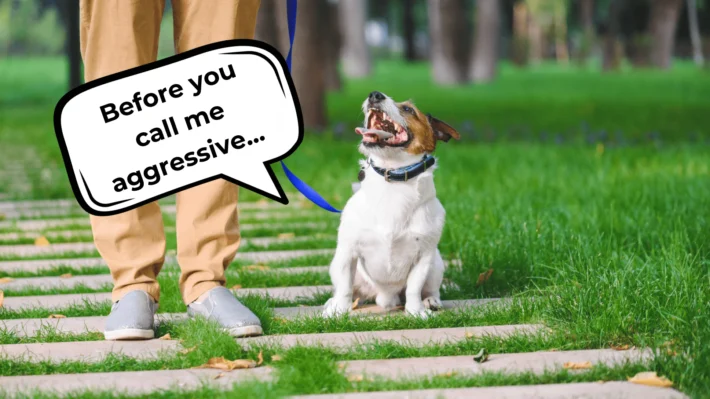
So, your dog behaves differently when they're on the leash. You can't help but ask: is my dog leash reactive or aggressive?
This blog talks about the difference between reactivity and aggression, and the best strategies to handle your dog's behavior.
Let's dive in.
Key Takeaways
- Recognize the signs of reactive and aggressive dogs: These include pulling on the leash, excessive barking or growling, body stiffening, sudden changes in behavior, difficulty focusing, and escalation of these behaviors. Early recognition is key to preventing the behavior from worsening.
- Understand the causes of dog aggression: Fear, frustration, lack of socialization, territorial behavior, past negative experiences, and even the owner's anxiety can all contribute to leash aggression. Addressing these underlying causes is crucial for modifying the behavior.
- Focus on positive reinforcement and leadership: Use positive association with the leash, introduce it slowly, and establish yourself as a calm and confident leader. Avoid punishment, which can worsen anxiety and reactivity. Instead, focus on building trust and creating a safe and predictable environment for your dog.
Table of Contents
Signs of a Reactive Dog to Look Out For
It's critical to know when your dog's stress levels are elevated so you can prevent any reactive behavior from getting worse.
Here are signs of reactivity to look out for.
- Pulling on the Leash as an Early Indicator:
- When a dog starts pulling on their leash, it's often an early sign that they're feeling uncomfortable or anxious about something in their environment. These pulls aren't usually immediate, full-blown reactions; instead, they often begin as subtle tugs, indicating that the dog is starting to feel stressed by a nearby “trigger” (like another dog, person, or object).
- Excessive Barking or Growling as a Leash-Specific Reaction:
- A dog that is normally calm but suddenly becomes very vocal (barking or growling) when put on a leash may be displaying leash reactivity. This behavior suggests that the leash itself, or the restriction it imposes, is a source of stress. Many dogs that are friendly and sociable off-leash can become reactive when leashed.
- Body Stiffening as a Sign of Tension:
- Observing a dog's body language is crucial. If a dog becomes stiff, rigid, or tense when the leash is presented or put on, it's a clear indication that the leash is a trigger for them. This physical tension reflects their underlying anxiety.
- Elevated Stress Signals and Sudden Behavioral Changes:
- Dogs exhibiting stress signals like panting, drooling, yawning, lip licking, or avoiding eye contact while on a leash are showing signs of anxiety. Additionally, sudden changes in behavior, such as becoming overly hyperactive, fearful, or aggressive in specific situations while leashed, are red flags for leash reactivity. These behaviors show the dog is having trouble coping with the environment while restricted by the leash.
- Difficulty in Focus or Training as a Result of Stress:
- Leash reactivity often makes it difficult for dogs to focus or respond to commands. The presence of triggers can easily distract them, causing them to ignore cues and become unresponsive. This lack of focus is a direct result of the stress and anxiety they're experiencing.
- Escalation of Behavior as Reactivity Progresses:
- If leash reactivity is not addressed, it can worsen over time. Mild signs of discomfort or agitation can escalate into more intense reactions, such as snapping, lunging aggressively, or attempting to bite. This escalation highlights the importance of early intervention and proper management.
Signs Leash Reactivity is Turning to Aggression
Because leash reactivity and aggression are hard to distinguish, most dog owners miss the cue when their reactive dog turns aggressive. Remember, reactivity CAN TURN to aggression when not managed immediately. This is not because your dog is naturally feral; their aggression is caused by fear or anxiety unaddressed.
Here are signs your reactive dog is turning aggressive.
Aggressive Dog Sign #1: Increased Intensity
Reactivity may escalate into aggression if the dog's responses become more intense over time, including more forceful pulling, louder barking, or displaying more threatening body language.
Aggressive Dog Sign #2: Lunging or Snapping
A reactive dog in defense mode can be ready for offense once their stress levels reach the red zone.
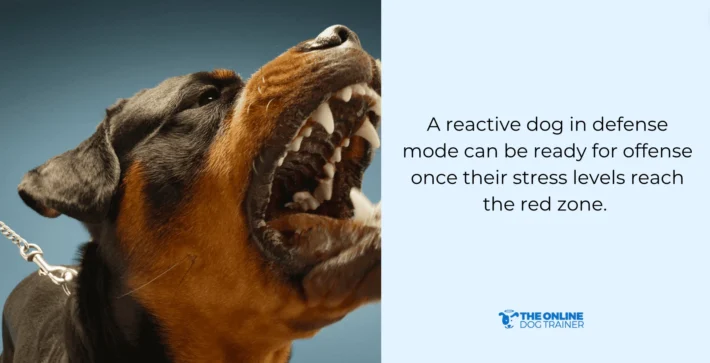
Your dog may start to lunge towards perceived threats or exhibit snapping behaviors, indicating a willingness to escalate confrontations physically. If the dog is leash aggressive, they are also posed to attack.
REACTIVITY MASTERCLASSAggressive Dog Sign #3: Elevated Agitation and Loss of Threshold Control
Aggression can manifest as heightened agitation from a fearful dog.
Your dog can exhibit more pronounced signs of stress, such as rapid pacing, panting, or trembling. When their stress has reached this point, they become so hard to control.
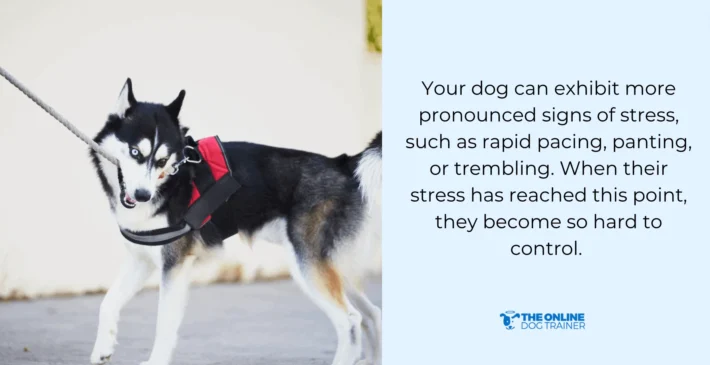
Dogs can also lose control over their threshold. Even the tiniest trigger — one that doesn't cause any significant reaction before — can cause aggression.
Aggressive Dog Sign #4: Increased Reactivity Frequency
If your dog's leash reactivity occurs more frequently or across a broader range of stimuli, it could signal a progression toward more aggressive responses. Once you see this happening, remove your dog from the situation.
Aggressive Dog Sign #5: Direct Eye Contact
Intense, prolonged eye contact with other dogs or people, accompanied by a rigid body posture, can indicate a readiness to escalate into aggressive behavior. They are posed to attack.
Aggressive Dog Sign #6: Snarling or Biting
The ultimate sign of aggression includes snarling, snapping, or biting, indicating that the dog perceives the situation as a direct threat and is willing to defend itself aggressively.
NO MORE WALKS FILLED WITH WORRY—JOIN THE FREE WEBCLASS TODAY FOR A STRESS-FREE DOGWhat Causes Leash Aggression
Before moving on to the specifics, I'd like to introduce this to you: an aggressive dog is a reactive dog, but not all reactive dogs are aggressive.
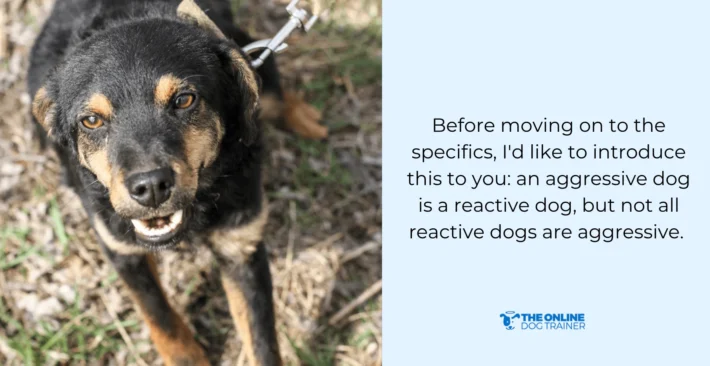
It's essential to put this out there so you won't get confused by these two different behaviors
A dog with leash aggression, distinct from one with leash reactivity, shows overtly aggressive behaviors such as lunging, growling, or snapping while on a leash.
Unlike leash reactivity, where a dog may display anxious or fearful responses, leash aggression typically stems from frustration, fear, or a desire to assert dominance.
The dog showing leash aggression may perceive other dogs or people as threats, leading to aggressive displays aimed at establishing boundaries, self-defense, or a show of dominance.
Reason #1: Fear and Frustration
What do you do when you can't flee? For dogs, the answer is to fight.
Your dog is smart, and they often use their senses to assess the danger of the threat. However, when dogs are on a leash, when they have restrained mobility, they become more frustrated and aggressive.
Fear of unfamiliar dogs, people, or your dog's environment can trigger aggressive responses when dogs feel threatened or cornered while on a leash.
Reason #2: Lack of Socialization
Lack of socialization in dogs is a big factor in leash aggression as a dog that's unfamiliar with other dogs, people, or other animals outdoors will always be on high alert, thinking everything is a threat.
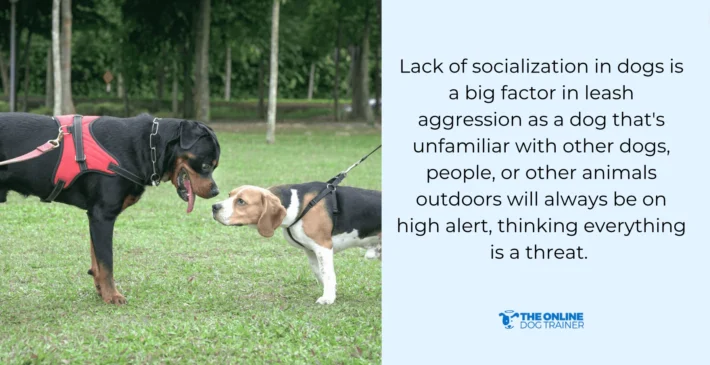
Leash aggression is evident in dogs lacking the social skills that should have been introduced starting at eight weeks.
Reason #3: Territorial Behavior Due to Negative Experiences
Leash aggression increases with territorial behavior because when a dog can't run, they know they have to protect whatever space they have. Territorial dogs, while on leash, are ready to fight any intruder to their space.
Reason #4: Previous Negative Experiences
Has your dog had negative experiences related to the leash? If yes, this can show in your training. Use these experiences as a guide to prevent reactivity from happening or from getting worse.
STOP THE BARKING, LUNGING & STRESS—FREE WEBINAR SHOWS YOU HOW IN UNDER A WEEKReason #5: Owner's Anxiety or Tension
Your dog is highly attuned to your emotions and may mirror your feelings of anxiety or tension, leading to increased reactivity and aggression while on a leash.
How to Deal with a Leash-Reactive Dog's Aggressive Behavior
#1: Know If Your Dog is Triggered by a Leash
Identify your dog's triggers which cause reactive behavior, whether it's other dogs, people, or specific stimuli. Start by looking at the pattern of what caused reactive behavior incidents in the past.
#2: Respect Your Dog's Boundaries
Avoid pushing your dog into situations that make them uncomfortable or stressed. Respect their need for space and distance from triggers.
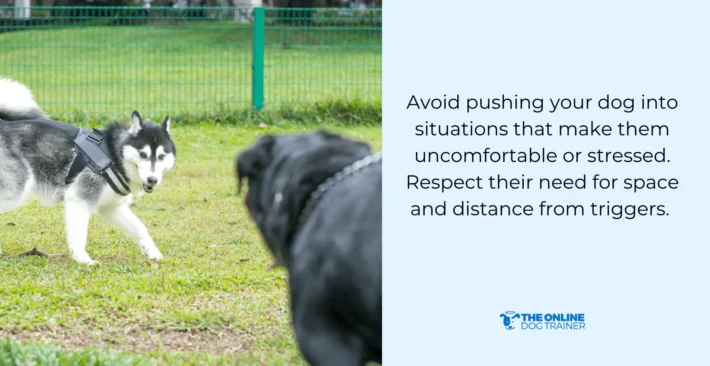
Space is essential for dogs. Once they feel their space is threatened, they can go to full-on defense mode.
Don't force your dog to socialize. Avoid making the dogs meet face-to-face, as this is not the norm (dogs prefer to meet side by side.)
When they're on the leash, avoid pulling them into spots, animals, or people that can cause them to freak out.
#3 Use Positive Association For the Leash and Introduce The Leash Slowly
You can trace back your dog's fear of the leash to the following factors including:
- They've been forced to socialize with other dogs.
- They weren't able to escape a threat because they were on a leash.
- There was forceful pulling involved in the past.
- The leash was used for fear-inducing control.
Exposure to scary stimulus can derail training. Help your dog associate the leash with something positive, like treats, praise, playtime, or attention. Sustain this association even when your dog has exhibited calm behavior on the leash.
#4 Introduce the Leash Slowly
I know it's tempting to get your dog to love the leash immediately. However, forcing your dog to get on the leash to speed things up will only increase their fear and anxiety.
Here are some things you can do instead:
- Start by introducing the leash in a non-forceful way. Assess your dog's threshold for the leash.
- Put your dog on the leash and see how they react for the first few minutes.
- Give treats or praise when they stay on the leash without panicking.
- Observe how long they can be leashed without reactivity. Start short and extend once your dog has acclimated to the leash.
I teach these principles through step-by-step videos you can find inside my program, The Dog Calming Code.
#5 Control the Walk Even Before Your Dog Walks Out the Door
You can take charge of leash reactivity before you even walk out the door.
This principle is part of my 5 Golden Rules of Dog Training.
Your dog has to know that you are in control of the walk, not them.
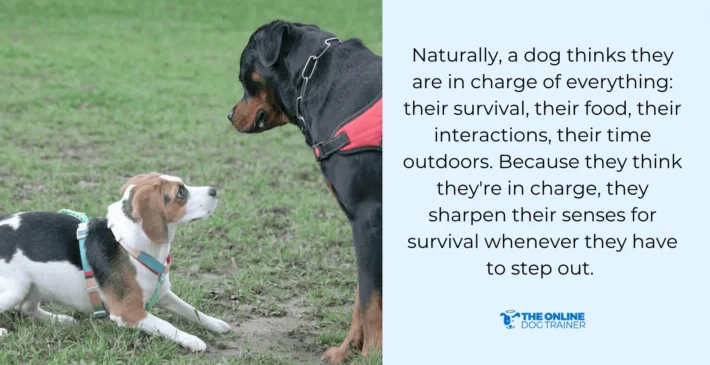
What does that have to do with reactivity?
Naturally, most dogs think they are in charge of everything: their survival, their food, their interactions, their time outdoors. Because they think they're in charge, they sharpen their senses for survival whenever they have to step out.
need for control manifests when your dog struggles when they're on the leash.
“I'm on the leash. I can't run. I can't defend myself. How can I survive?”
Before you spend time outdoors, it's important to let your dog know they're not in charge.
How? Become a leader they can trust.
Some of the ways to do this:
- Take control of the walk. Let your dog know you decide when to walk outside.
- You're the main decision maker on whether to continue or stop the walk once they show reactivity.
- Show them they can't pull on the leash. You can do this by pausing the walk whenever the pulling starts. Or you can quit the walk once reactivity doesn't stop.
Additionally, your dog has to see your leadership not only during your walk but also in all areas: food, interaction, playtime, timeouts, rewards and treats, and controlling danger.
I talk more about establishing leadership in your dog's eyes in my Doggy Dan Five Golden Rules series. You can check it out here.
FEEL PEACEFUL ON EVERY WALK—WATCH THE FREE DOG REACTIVITY WEBINAR NOW#6 Calm Your Dog Down and Be Aware of Their Energy Levels and Surroundings
A dog with an energy level of five before you walk out the door will only become more reactive unless you calm them down.
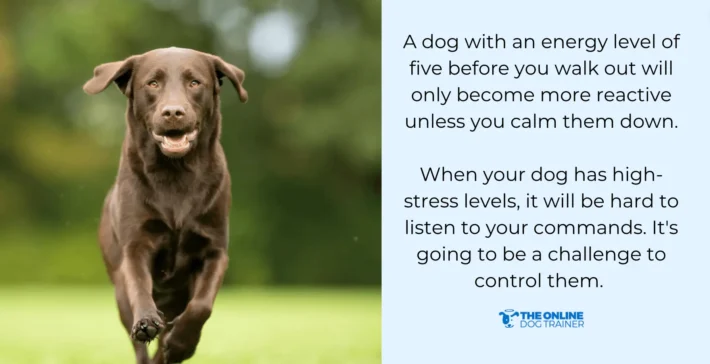
When your dog has high-stress levels, it will be hard to listen to your commands. It's going to be a challenge to control them.
So, I 100% suggest watching their energy levels before heading out. Even if your dog is testing you, the more appropriate response is to be calm. Physical exercise helps.
#7 Scan the Surroundings
Before leaving the house, assess the environment for potential triggers and plan your route accordingly to avoid known triggers whenever possible.
#8 Use A Muzzle
If your dog has a history of aggressive behavior or if you have a dog reactive to other dogs, consider using a basket muzzle as a safety measure during walks, ensuring both your dog's and others' safety.
#9 Be Calm and Observe Your Own Body Language, Use the Dog Calming Code
Your dog will hear your emotions so much they won't be hearing what you're saying. If you want to help your leash-reactive dog, be in tune with how you react as well. Your energy and emotions will affect your dog, and if you're stressed, the dog will be stressed, too!
Reactivity and aggression can be traced back to one factor: your dog thinks they're in charge; they're in control.
That is why they're always agitated, anxious, fearful, and protective. They think they need to always be alert to survive.
But you're there. You are their leader and protector. How do you help your dog understand that?
I created the Dog Calming Code exactly for this purpose: for your dog to know you got them and for them to trust you.
You can learn more about the Dog Calming Code here.
How to Select the Right Leash and Equipment Ideal for Leash Reactivity
How do you choose the best leash for reactive dog? Here are some points to consider!
Opt for a harness and a standard 5-6 foot nylon or leather leash instead of choke, prong, or shock collars and retractable leashes. These latter options can exacerbate reactivity issues and pose risks to your dog's well-being.
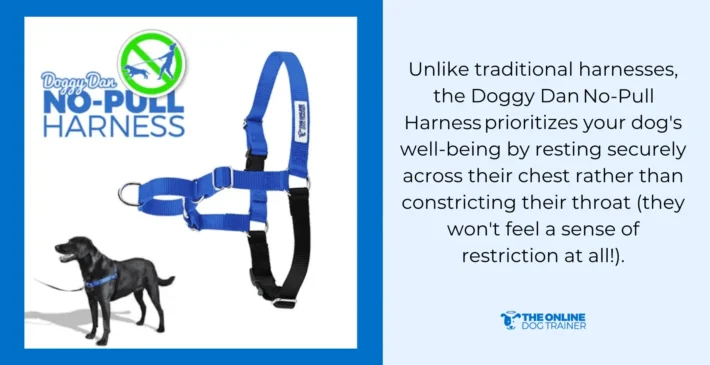
Look for a body harness that clips at the chest rather than the spine. This design allows for better control and redirection of your dog away from triggers, as it offers more strength and leverage from the front.
The No-Pull Harness offers a specialized front chest loop that effectively reduces pulling tendencies in your dog prone to leash reactivity. By gently guiding your dog's movements in alignment with your own, it mitigates the urge to pull without causing discomfort.
Unlike traditional harnesses, the Doggy Dan No-Pull Harness prioritizes your dog's well-being by resting securely across their chest rather than constricting their throat (they won't feel a sense of restriction at all!). This harness helps dogs feel guided AND safe so reactivity can be prevented.
Managing Leash Reactivity During Walks
Tip #1: Consider Your Dog's History and Potential Reasons They Can Be Triggered by the Leash
As tempting as it may be to let your dog dictate when it's time for a walk, especially when they're eagerly waiting by the door, it's essential to establish yourself as the leader of the pack.
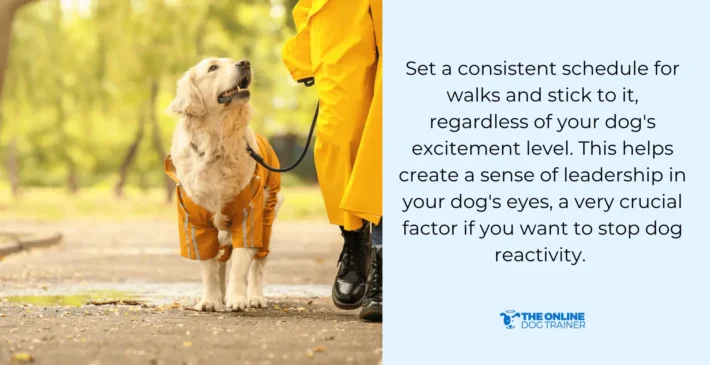
Set a consistent schedule for walks and stick to it, regardless of your dog's excitement level. This helps create a sense of leadership in your dog's eyes, a very crucial factor if you want to stop dog reactivity.
GET YOUR LIFE BACK—LEARN HOW 100,000 OWNERS CALMED THEIR DOG IN OUR FREE WEBCLASSTip #2: Control Their Energy, Don't Push Through When They're Very Reactive
When your dog is in the midst of a reactive episode, it's crucial to remain calm and avoid pushing through the situation. Make your dog feel you got everything under control.
Trying to force your way forward when your dog is highly reactive can escalate the behavior and make the situation more stressful for both of you.
Instead, take a step back, give your dog space to calm down, and wait until they're in a more relaxed state before continuing the walk.
Tip #3: Start Slowly
Training a leash-reactive dog takes time and patience, so don't rush the process. Start by introducing them to low-stress environments with minimal triggers, such as quiet streets or empty parks.
Gradually increase the level of exposure to triggers as your dog becomes more comfortable and responsive to training techniques.
Tip #4: Take Pauses When Needed
During walks, pay attention to your dog's body language and be prepared to take breaks or detours if they start to show signs of stress or agitation.
Taking pauses allows your dog to decompress and prevents them from becoming overwhelmed by their surroundings.
Tip #5: Be Wary of Triggers
Keep an eye out for potential triggers during walks, such as other dogs, cyclists, or loud noises.
Anticipating triggers allows you to proactively manage your dog's reactions and implement training techniques before they become overwhelmed.
By staying vigilant and prepared, you can help prevent reactive episodes and keep walks enjoyable for both you and your pup.
FROM STRESS TO CALM IN UNDER A WEEK—JOIN THE FREE REACTIVITY WEBCLASSTip #6: Let Other Dog Owners Know About Boundaries
When walking your leash-reactive dog, it's essential to communicate with other dog owners and establish boundaries to prevent unexpected encounters. Politely inform them about your dog's reactivity and ask for their cooperation in maintaining a safe distance.
Tip #7: Be Patient To Your Dog and Lead with Kindness
Think of leash reactivity this way: your dog struggles when they're on the leash. They need your help.
Hopefully, this should stop dog owners from hurting their dogs or rushing training. Your dog needs your understanding. Avoid punishing a leash-reactive dog because this only elevates their anxiety and, in turn, their reactivity.
From Leash-Reactive Dog to a Calm, Well-Behaved Dog: It Is Possible with the Dog Calming Code!
Dog parents, whether you're you're dealing with reactive or aggressive dogs, the experience can be both stressful AND heartbreaking! You ask, “Is there hope for my leash-reactive dog?”
Yes, there is. I've seen it in thousands of dog owners who decided to seek professional help for their dog's behavior modification.
Once you understand the psychology of dogs and how you can truly make them feel, they can cut down on their anxiety and excitement and let you handle the show; your dog will be less freaked out by the leash!
I teach this formula in my online dog training program, The Dog Calming Code. In this program, I talk extensively about the Five Golden Rules of dog leadership and how YOU can help your leash-reactive dog break free from the stress of the leash. It's the first step to overcoming reactive behaviour in dogs.
Learn more about this program here.

~Doggy Dan