✨ Ask Doggy Dan AI About Your Dog Now  🐶
Dan's AI Chat Widget

Why Does My Puppy Bark At Me: Playfulness vs Aggression

dog training to build a strong bond and better behavior.

Last Updated: August 2025

Last updated: August 2026

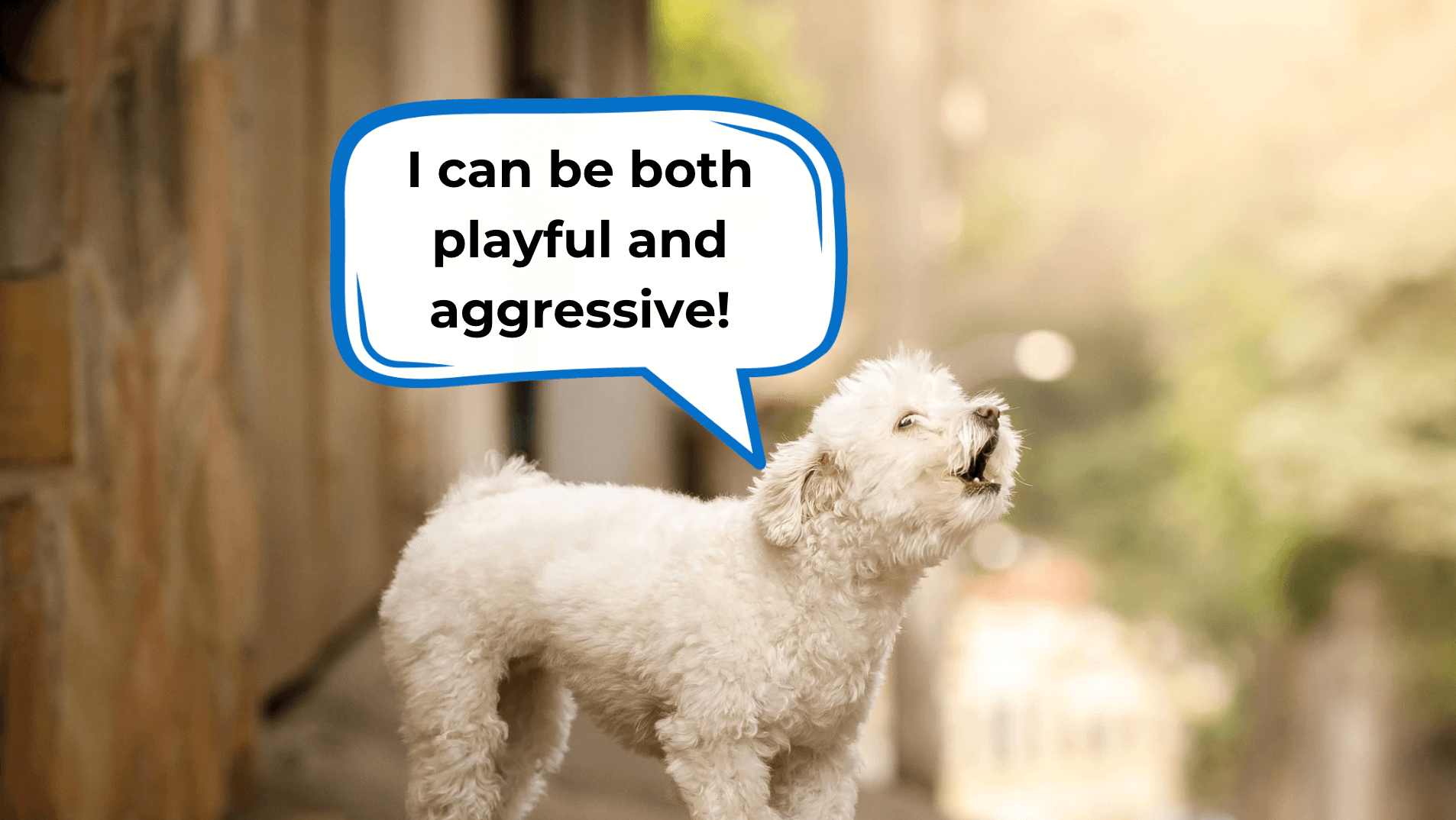
“Doggy Dan, why does my puppy bark at me?” In this blog, we're going to talk about the two kinds of puppy barking and how you can address both the right way.
why does my puppy bark at me
FROM REACTIVE TO OBEDIENT: FREE WEB CLASS TEACHES YOU THE PROVEN SECRETS TO CALMER PUPPIES

Many puppy owners become very concerned about their puppies barking for several reasons.

Firstly, it can be difficult to interpret whether a puppy is in trouble, needs help, or simply wants to play. Secondly, the noise can be quite distracting; puppies have loud, high pitched barks that readily grab attention. Thirdly, many people struggle to stop their puppies from barking, which can become a growing problem once puppies grow up. But what you need to know is that Puppies bark for many reasons.

However, there are a couple of key reasons, and I'd like to differentiate between those types. For example, one type of barking is when the puppy is very demanding, wanting to play, cuddle, be picked up, or fed.

Another type is when a puppy is scared, such as hearing a noise, seeing something new, or noticing cars on the street for the first time, triggering an alerting bark.

Puppy barking is a topic that needs to be understood before you can stop barking issues altogether.

Hi, I'm Doggy Dan, and this blog will tell you everything you need to know to deal with both playful barking and demand barking.

Read on!

Key Takeaways:

  • Decoding Barks: Puppies use barking to communicate needs and emotions; learn to distinguish playful from aggressive barks.
  • Early, Consistent Training: Address barking issues early with consistent methods like timeouts; avoid relying solely on treats.
  • Establish Leadership: Be a calm leader, meeting needs while setting boundaries to prevent manipulation and ensure a well-adjusted puppy.
THIS FREE WEBINAR WILL SAVE YOU FROM FEARING YOUR REACTIVE DOG AGAIN

Understanding Puppy Barking

different types of puppy barking

Canine Communication: Why Dog Barks

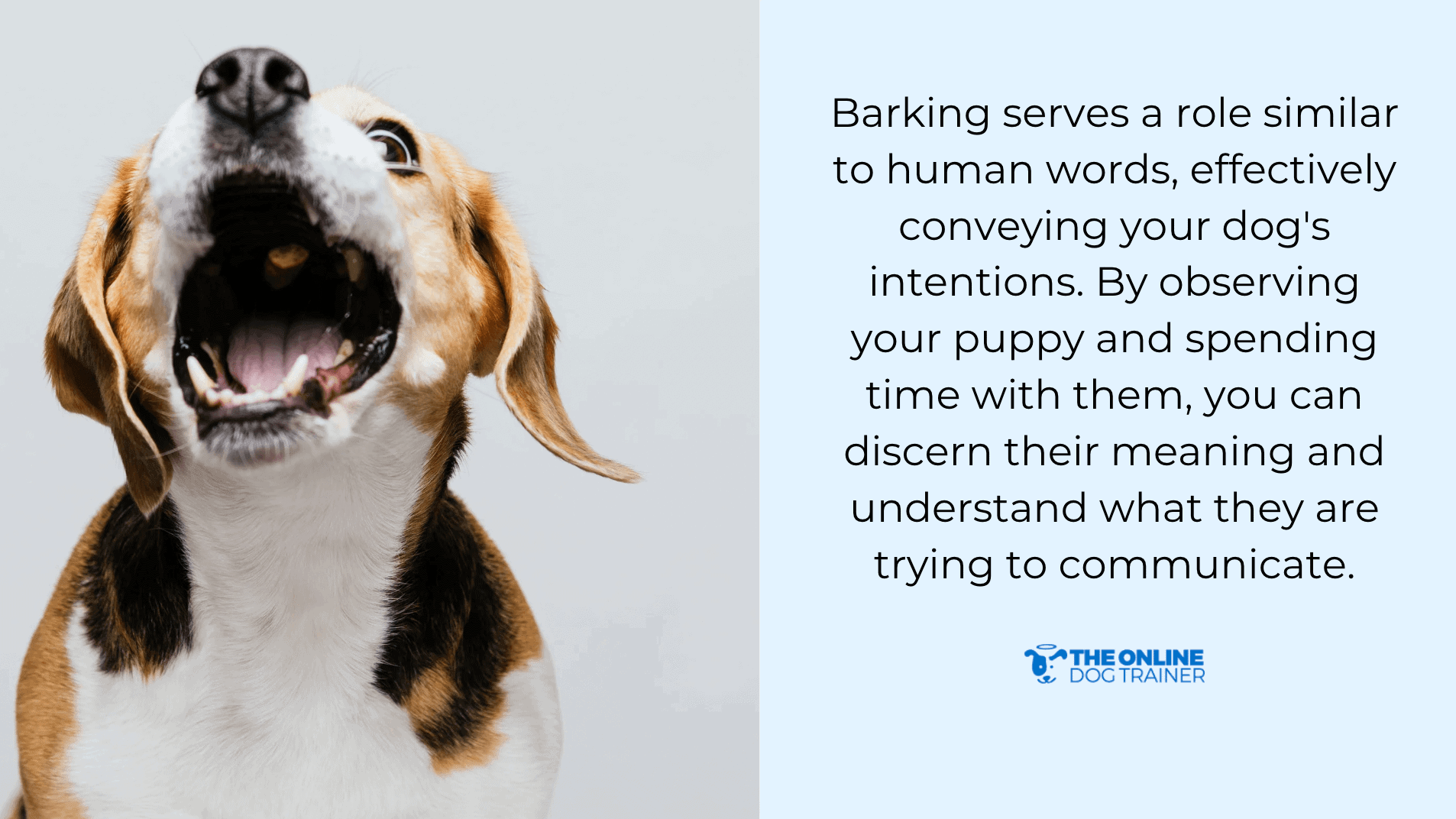
Barking serves a role similar to human words, effectively conveying your dog's intentions. By observing your puppy and spending time with them, you can discern their meaning and understand what they are trying to communicate. These sounds are not random; they express feelings and needs, such as wanting water, needing to go outside, desiring a walk, or seeking a cuddle. Puppies possess emotions similar to humans despite common beliefs against anthropomorphism. I have proven this true as a based my dog training in dog psychology.

Excessive Barking from Fear

Puppies bark when scared.

Their barks act as an alert or warning, much like a short, sharp bark can signal an alarm. The barking is similar to wild puppies alerting their pack. You can stop a pup's barking spree by making them understand that there is no threat. Since addressing fear-based barking becomes more challenging as puppies age, it's crucial that dog owners spend time in helping their dog understand that there's no real threat, and if there is, the owners will be the one to handle them.

(This training — helping dogs handle danger — is actually an important part of training, and is included in my Five Golden Rules for Dog Training. You can click this link to learn more about it.)

When someone comes to the front door, the puppy may bark louder and more aggressively if they feel the person is a threat or if they feel that your decision to allow the person entry is wrong.

Understanding and interpreting the reason for the bark is vital to stop and prevent barking. Feeling their emotions is important, too, when it comes to helping them overcome fears.

JOIN OUR FREE CLASS: TURN REACTIVE ANXIETY INTO CALM CONFIDENCE AND ENJOY A STRESS FREE PUPPY

Barking for Wants and Needs

positive reinforcement dog barking

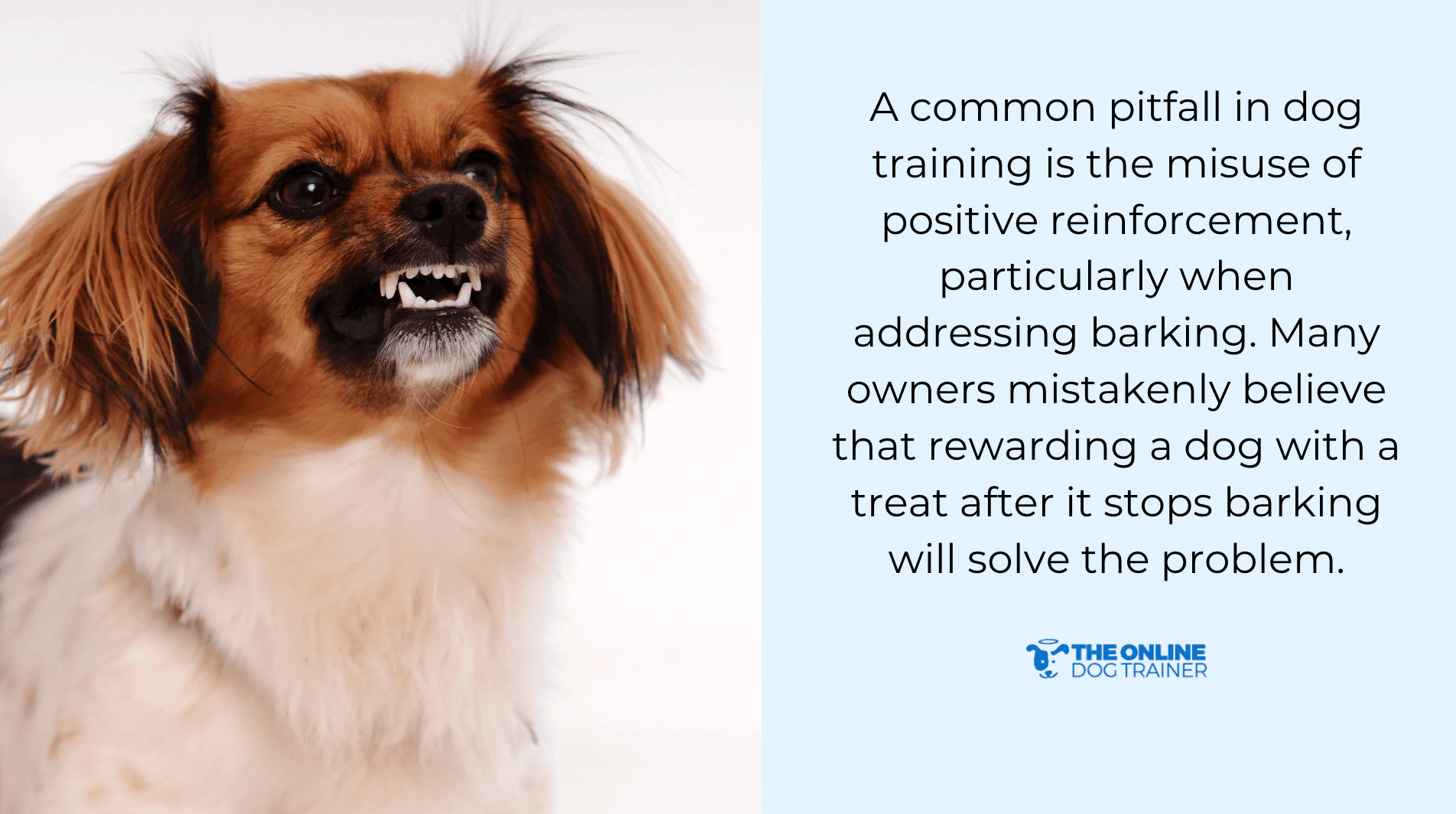
A common pitfall in dog training is the misuse of positive reinforcement, particularly when addressing barking. Many owners mistakenly believe that rewarding a dog with a treat after it stops barking will solve the problem. However, this often backfires due to improper timing.

Here's why: the dog barks, the owner commands ‘no barking,' and then presents a treat. The dog, upon seeing the treat, naturally ceases barking. But the dog associates the entire sequence—barking, being told to stop, and then receiving a treat—with the reward. This creates a logical loop in the dog's mind: barking leads to treats. Consequently, the behavior can escalate, especially in situations like someone approaching the door. This is a short-term fix that fails to address the underlying cause of the barking.

Instead, I recommend a simple ‘time-out' approach. This can be implemented gently and without aggression. Calmly guide the dog to a designated time-out area, either by picking it up or using a leash. Release the dog when it has calmed down.

Crucially, establish yourself as the leader of the household. Just as a well-structured family thrives when parents set clear boundaries, a dog benefits from understanding its place within the hierarchy. When the owner is perceived as the decision-maker, the dog feels secure and relaxed.

Allowing a puppy to believe it's in charge can lead to significant behavioral issues. While it's natural to want to pamper our adorable puppies, this can quickly result in aggression or persistent disobedience. If your puppy exhibits these behaviors, seek professional help. Look for a trainer who understands the importance of establishing a clear hierarchy and respecting the dog's natural inclination to follow a leader.

In my program, the ‘Dog Calming Code,' I delve into practical strategies for establishing this leadership role. The program offers straightforward methods for ensuring your puppy understands and respects your authority. Whether you choose online resources or in-person training, prioritizing this aspect is essential for a harmonious relationship with your dog.

FREE TRAINING: END REACTIVITY FEAR & FIND PEACE TOGETHER (7 DAYS TO ZERO REACTIVITY)

Signs of Playful Barking

stop dog barking

Signs of playful barking are numerous, with body language being a key indicator.

A wagging tail, specifically one that's in the middle, not too high or low, and wagging gently or quickly from left to right, is a strong sign of happiness and excitement. A relaxed body, perhaps with some wiggling, or the classic play bow, where the front of the body lowers and the rear rises, are also clear signs of playfulness. Bouncing and jumping, like a playful lamb, further confirm this. The tone and frequency of the bark help identify playfulness. High-pitched, short bursts of sound often indicate playfulness, especially in a safe space with toys.

Running around, “zoomies,” or grabbing toys are also signs. Frustration barking can occur when toys are withheld. If the barking stops when you engage in play, it's a clear demand for interaction.

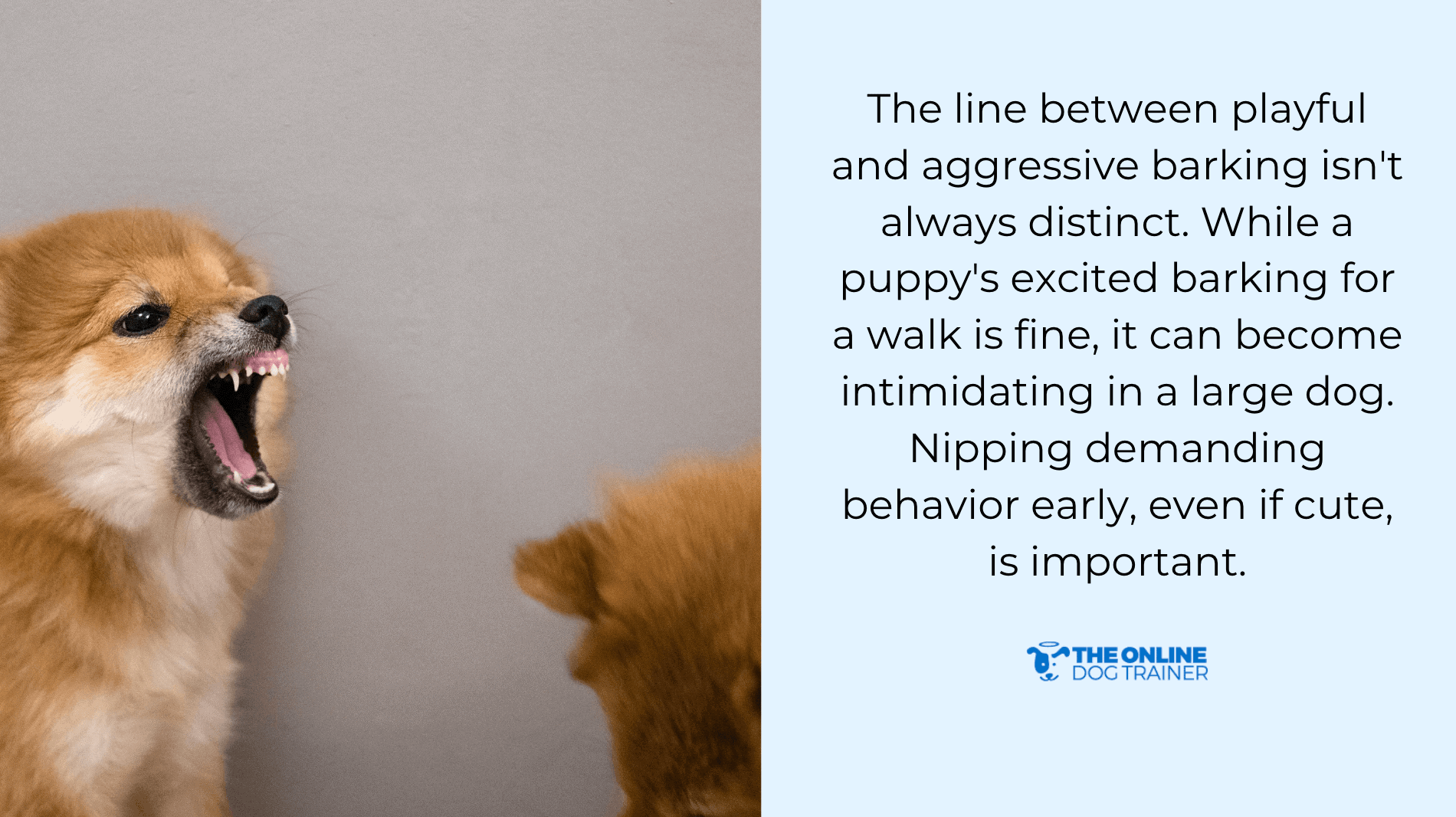
The line between playful and aggressive barking isn't always distinct. While a puppy's excited barking for a walk is fine, it can become intimidating in a large dog. Nipping demanding behavior early, even if cute, is important. A small puppy “bossing” you around can become problematic as they grow.

Signs of Aggressive Barking
common reasons aggressive barking in dogs

Aggressive barking is marked by distinct body language indicators.

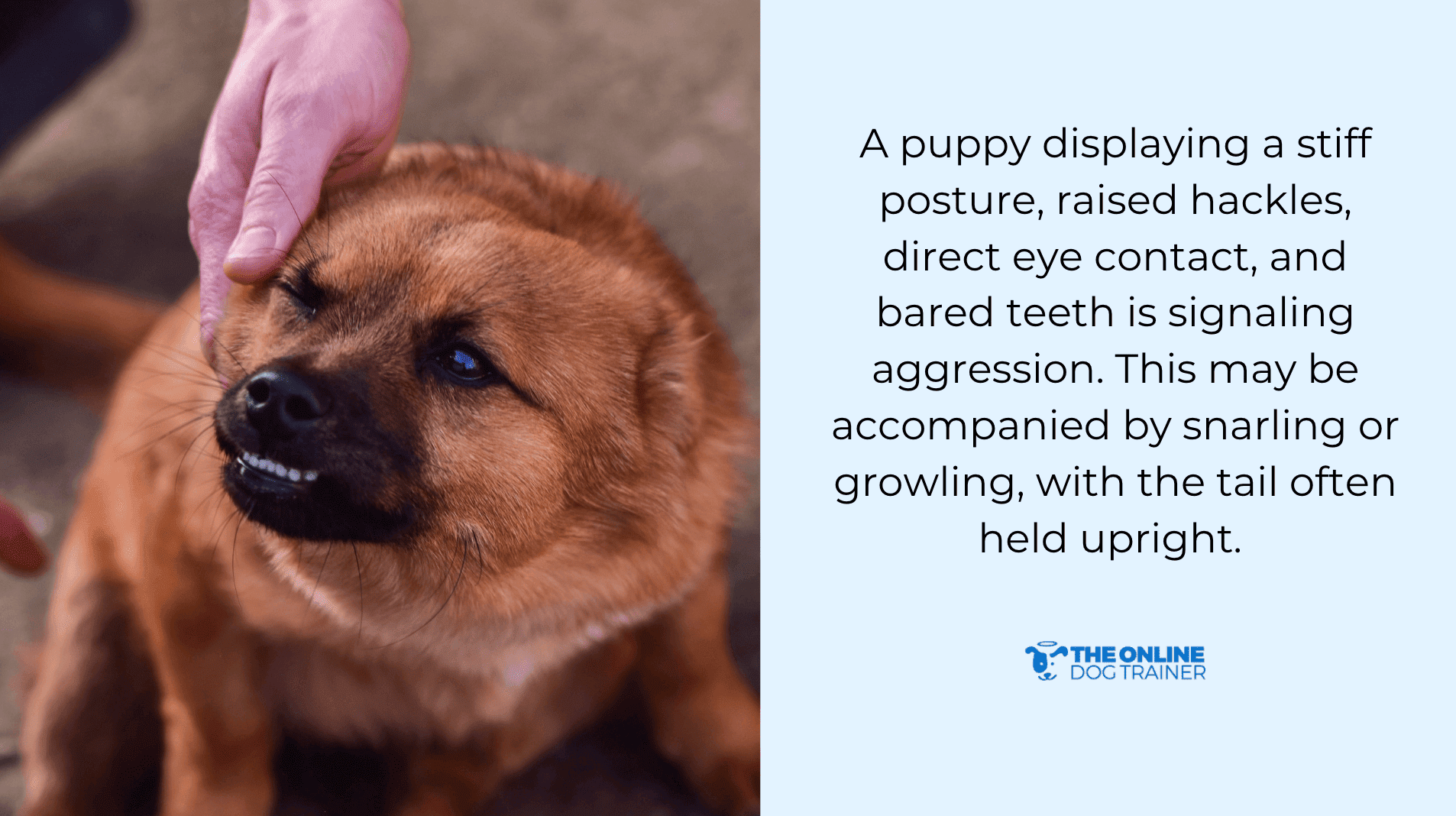
A puppy displaying a stiff posture, raised hackles, direct eye contact, and bared teeth is signaling aggression. This may be accompanied by snarling or growling, with the tail often held upright.

Their ears might be pinned back or forward in an aggressive stance, and they tend to be static, not bouncing around.

Assess the situation when gauging if your dog is exhibiting aggressive biting: what's the setup? If the dog barks louder and their barking is becoming more intense as someone approaches, especially with the door opening, trust your gut feeling — it's likely aggression. The tone and frequency are also telling; aggressive barking is typically low, deep, and continuous, escalating with intensity and rarely stopping without intervention. Lunging or snapping alongside the barking further confirms its aggressive nature.

FROM REACTIVE TO OBEDIENT: FREE WEB CLASS TEACHES YOU THE PROVEN SECRETS TO CALMER DOGS

Possible Reasons for Aggressive Barking

Aggressive barking can stem from various reasons, including fear or anxiety, such as feeling threatened. Resource guarding, where a puppy protects food, toys, or space, is another common cause. Overstimulation or frustration, like not getting what they want, can also lead to aggression. A lack of socialization and training can exacerbate these tendencies.

How to Respond to Playful vs. Aggressive Barking
aggressive barking puppies

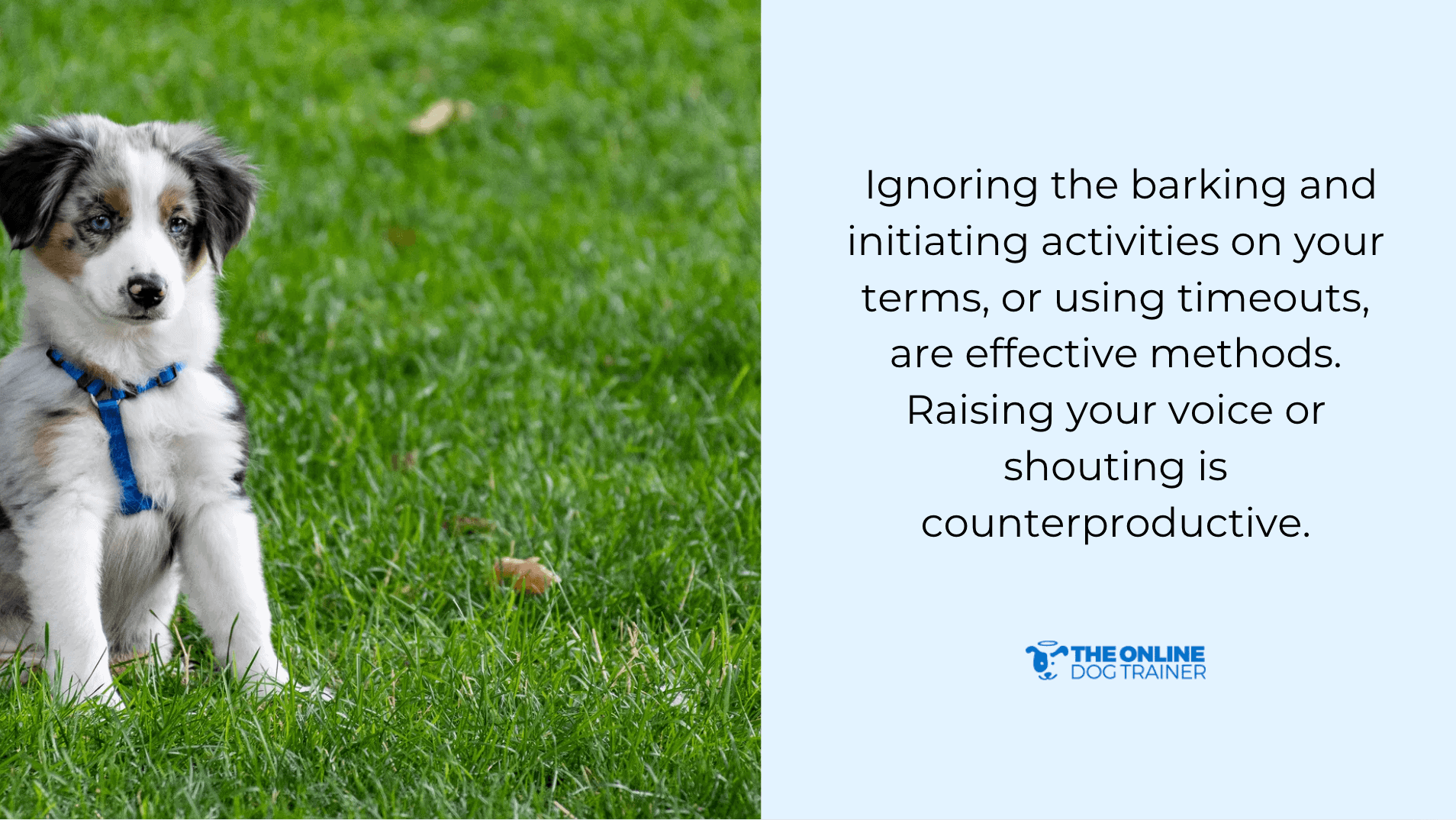
Playful barking is generally acceptable and can be encouraged in a positive way. Engage in interactive play, provide mental stimulation with toys and training, and step in early with calm hand hold, a leash walk, or a short time out if needed. Teach commands like “quiet” to manage excessive barking. Recognizing that puppies are logical, avoid reinforcing demanding behavior by immediately giving in to their barks. Ignoring the barking and initiating activities on your terms, or using timeouts, are effective methods. Raising your voice or shouting is counterproductive.

Addressing aggressive barking requires a different approach. Remain calm and do not react aggressively, as this usually worsens the situation. Negative attention is still attention. Identify and remove triggers whenever possible. Avoid relying on positive reinforcement with treats to stop aggressive barking, as this can backfire by associating barking with rewards. Accommodate physical exercise to help them burn those excess energy. Timeouts are a better approach. Establish yourself as the leader who sets the rules. If the aggression persists, seek professional help. Remember, allowing your puppy to believe they are in charge can lead to significant problems.

When to Be Concerned and Seek Professional Help to Stop Barking
how to teach puppies to stop barking

Pet parents, if you're struggling to understand your puppy's barking, it's best to seek help sooner rather than later. Trust your instincts and “feel into” the situation. Remember, early intervention is crucial for long-term behavior management. Many puppy barking issues can be resolved quickly, often within days or a week, with effective training, including powerful online resources like the dog calming code. Don't wait months hoping your puppy will outgrow the problem; persistent barking can become a systemic issue. If your puppy's barking persists, even when ignored, and you can't manage it within a few days or weeks, seek assistance.

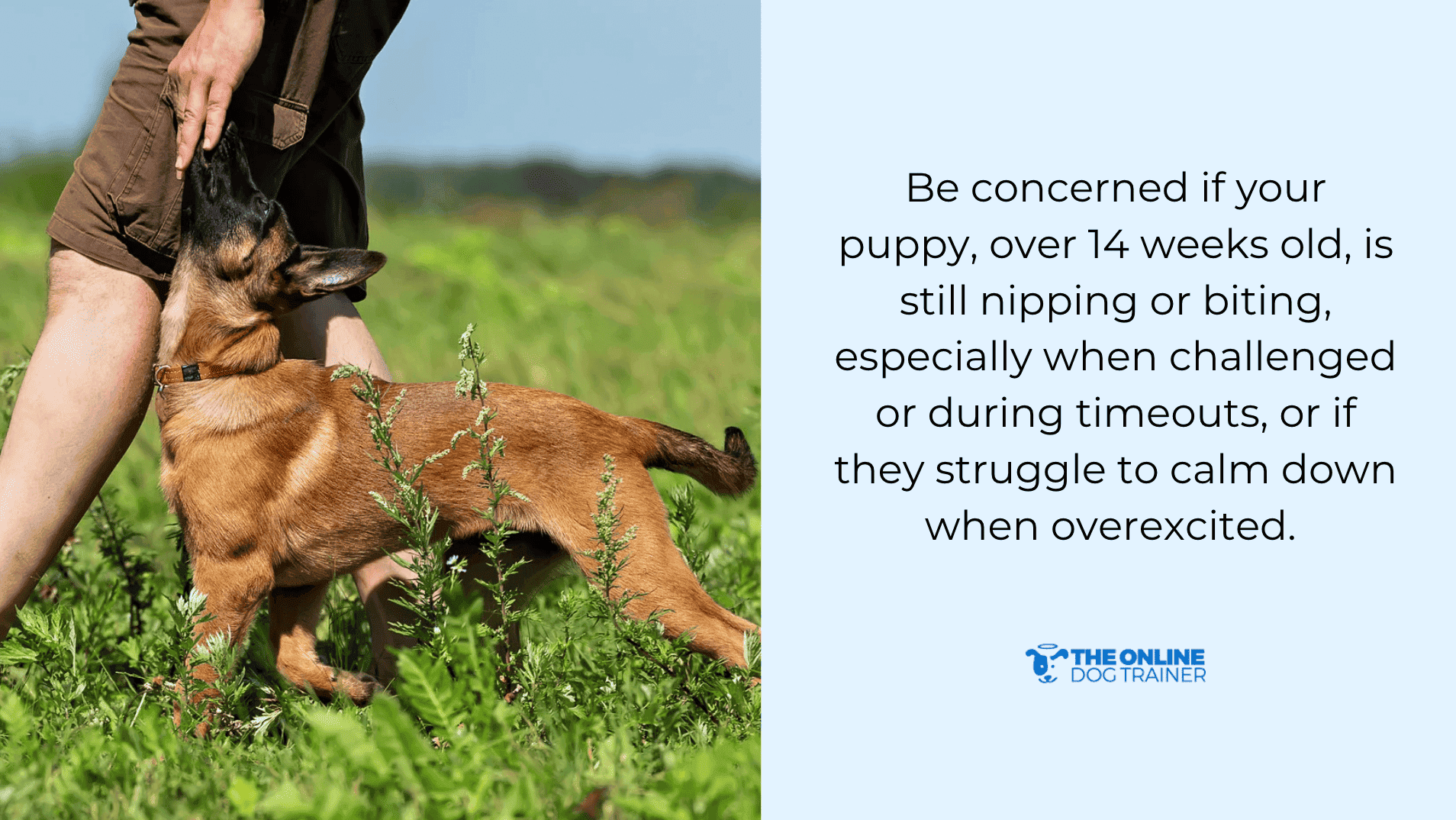
Be concerned if your puppy, over 14 weeks old, is still nipping or biting, especially when challenged or during timeouts, or if they struggle to calm down when overexcited. Consider consulting a trainer or behaviorist if you have a breed known for excessive barking, if you own a large breed dog exhibiting early signs of aggression, or if you have a high-energy dog prone to barking or aggression around people or other dogs. These dogs can be challenging to handle due to their speed and activity levels, so early intervention is vital.

Training a puppy can be challenging, especially when you love them and want to fulfill their desires. However, effective training involves doing what's right for your dog, even if it's difficult. Using timeouts or ending play sessions can be beneficial in the long run. Early intervention is essential for effective long-term behavior management. For those who find it tricky to diagnose their dog's behavior, some programs like The Online Dog Trainer allow people to send in video clips so a team of experts can diagnose exactly what is going on without any guesswork.

JOIN OUR FREE CLASS: TURN REACTIVE ANXIETY INTO CALM CONFIDENCE AND ENJOY A STRESS FREE PUPPY

Conclusion: You Can Stop Puppy Barking with The Dog Calming Code
fun way to train dogs

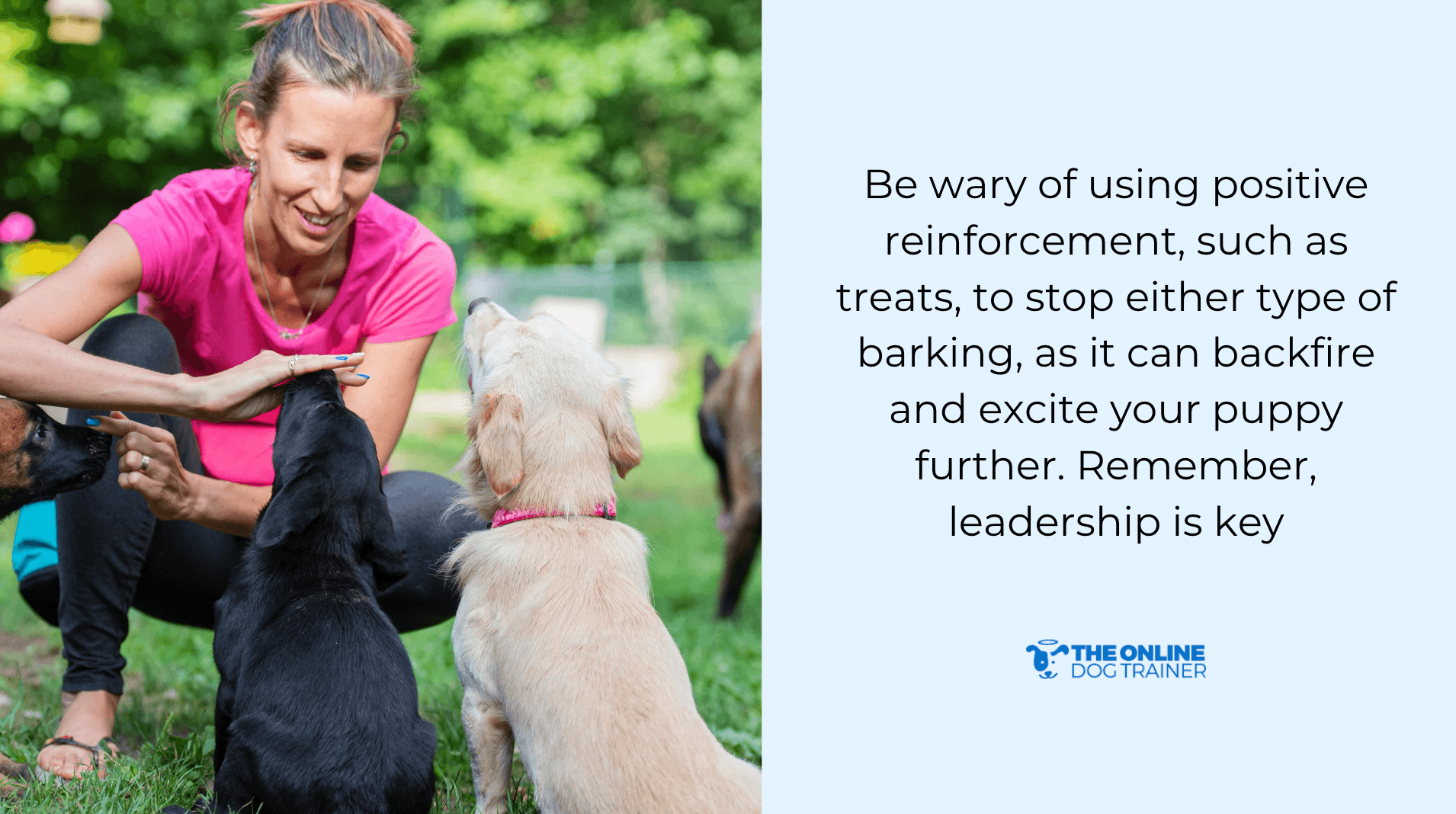
It's crucial to understand the distinct differences between playful and aggressive barking. Playful barking often involves happy, energetic behaviors, while aggressive barking is marked by stiff postures and threatening signals. Be wary of using positive reinforcement, such as treats, to stop either type of barking, as it can backfire and excite your puppy further. Remember, leadership is key. Gentle, loving leadership, where you set boundaries and show your puppy when enough is enough, is essential. Resources like the Dog Calming Code (DCC) should be considered to establish a healthy hierarchy.

Rest assured, nearly all puppy barking issues, especially in puppies under eight months, can be resolved quickly with the right training, often in just a few days or a week, as demonstrated by programs like the DCC.

Don't panic; if you're concerned, it's a sign you're a responsible owner seeking guidance. Trust your gut instinct. Ask yourself, “What's my best guess?” and “What's the situation?” Remember that training a puppy is about doing what's right for them, not always what's easy or what they want at the moment. Puppies are attention-seeking creatures, evolved to use their voice to get their needs met.

Be mindful that giving in to their barking can lead to manipulation and escalating demands. By stepping in as the leader and making decisions, you provide your puppy with a sense of security and happiness, freeing them from the burden of constantly assessing potential dangers.

You can learn more about the principles of stopping dog barking through my bestselling program The Dog Calming Code which can help many dogs and their owners overcome the barking issues in as fast as 7 days.

Doggy Dan Signature
~Doggy Dan šŸ™‚

Gentle journey for your puppy.

Doggy Dan

Doggy Dan stands out through his “five golden rules” that focus on canine psychology rather than repetitive drills or force. Unlike traditional trainers, he teaches owners to become the “calm leader” their dogs need. Over the last two decades, his methods have helped transform over 137,555 dogs worldwide. As the founder of TheOnlineDogTrainer.com blog and podcast and creator of the Dog Calming Codeā„¢, he has become a trusted voice in dog psychology and training. His philosophy is simple: reactive dogs don’t need punishment or endless treats. They need a leader they can trust.

FREE TRAINING:

How to Solve Dog Reactivity WITHOUT Food Bribes, Tricks, or Force

Limited spaces!

FREE webinar:

How to Solve Dog Reactivity WITHOUT Food Bribes, Tricks, or Force

dog training to stop unwanted jumping and barking

Limited Spaces!

Recent Posts

Excellent rating
Based on 157 reviews
Google star 1Google star 2Google star 3Google star 4Google star 5
So far, so good! We started the Calming Dog a few weeks ago and while we humans have not been perfect at it, we are seeing differences in our dog. He is an incredibly reactive and protective dog, so the changes we have had to date are a huge blessing. I'm impressed at the approach, the actual simplicity of it combined with the science of dog behavior. Thank you, Doggy Dan and team!
Kellie Fuller profile picture
Kellie Fuller
2 October 2026
Google star 1Google star 2Google star 3Google star 4Google star 5
+0
Ridley is my 4th dog. After listening to and learning from Doggy Dan, I was happy to see that I did pretty well with my first 3 dogs while raising my kids and having my husband with me. Not perfect - but pretty good! Now I am raising a new dog by myself, and I feel like I'm not doing this really "alone." I really am so happy with all the information Dan has offered... and all his techniques work well!!
Carol Ann Ferrari Rogers profile picture
Carol Ann Ferrari Rogers
21 September 2026
Google star 1Google star 2Google star 3Google star 4Google star 5
Two months ago I adopted a 7 year old Morkie, a very nervous but loving little fellow. I tried several different training techniques and even purchased a program that was lengthy and very time consuming before I discovered Doggy Dan. I've been using his program for two weeks and am astounded by the change in my Dexter. He is calmer, more obedient and friendlier to others than I imagined possible. Dan's training is concise. It differs from others I found, Dan trains you to become the leader of your pack through a dog's perspective. I like that the training is specific yet compassionate. This is a program that works if you are consistent. Thanks Doggy Dan!
Kathy Fore profile picture
Kathy Fore
17 September 2026
Google star 1Google star 2Google star 3Google star 4Google star 5
+0
Susie in the UK. I am only 10 days in but took in a 9 yr old emergency rescue from Romania who had been in kennels for 6 years and then had 3 failed foster placements in the UK. Luca is a big powerful mixed breed with huge stress and anxiety and very reactive, he bounded into my home and took over - aggressive with my 2 others, and visitors and pulling and pushing on walks. I thought I couldn't handle him but saw an advert for Doggy Dan on line and signed up - we've had a wonderful turnaround and he is finally decompressing, being polite with my dogs and responds excellently to the time-out if reactive with guests. Walks are much better and all 5 rules are in place. I believe he will continue to improve but only if I remain 100% consistent with him for the rest of his life. He is 9 years old and deserves a happy old age being loved and looked after with no further upsets in his life so fingers and toes are crossed for him
SoBS Truro profile picture
SoBS Truro
15 September 2026
Google star 1Google star 2Google star 3Google star 4Google star 5
+2
I started. The course 3/4 weeks ago. As Dan says you have to work on things if you get stuck. I have a Staffordshire x cane corso who is now six months old. She is very intelligent but sometimes she just doesn’t listen. Doing the five codes I’m finding it’s going pretty well except trying to get her calm so I am persevering with it again with my own space. I have a trainer call shortly which I will ask for advice on this. It’s great also that you can ask anything you’re not sure of on line. It’s so great to have someone there to help. I’m looking forward to having a relaxed girl instead of hyper most of the time as she gets so excited about almost everything. I would truly recommend doggy Dan and just wished I would have come across him much earlier. Thanks again for everything so far.
Hazel Coad profile picture
Hazel Coad
12 September 2026
Google star 1Google star 2Google star 3Google star 4Google star 5
I ā¤ļø my dog. Such a good girl! 5 Golden rules, really work.
Victoria van Sommeren profile picture
Victoria van Sommeren
9 September 2026
Google star 1Google star 2Google star 3Google star 4Google star 5
+0
This program is amazing!. We have a VERY reactive rescue dog that has bitten his previous owner and as well, myself 3x and my husband 4 x's. He had never been around people or other animals, and had never been walked on a leash. (in fact never run off-leash either, just tied to the front steps). We began with traditional treat-based training with a professional, but the progress was frustrating. A reactive dog does not want treats; it wants comfort. With the 5 Golden Rules and and some of the other training we have received with our subscription, in just 3 weeks, we can let him off leash at the dog park, he has not growled at any stranger, and he has not attacked any other animals. He is still a work in progress, but we see progress!!!! He has become a cuddly, sweet dog and for a greyhound, he even has recall! This program is amazing to say the least. We were at our wits end, but now we have hope.
susan kent profile picture
susan kent
8 September 2026
Google star 1Google star 2Google star 3Google star 4Google star 5
Okay, he says it’s not magic, but the results and the peace in so little time with so little effort sure feels like magic! My 11 month old pup was a 60lb highly reactive, very loud disaster waiting to happen. Now we are both calm, the house is quiet and I don’t live in absolute fear of his reactivity towards others. There’s always still work/training to do of course, but wow are we in a much better place to get on with that!
Theresia Travers profile picture
Theresia Travers
8 September 2026
Google star 1Google star 2Google star 3Google star 4Google star 5
Just started with the 5 rules. It's only been a week and a half and I'm noticing less stress, and a reduction in reactivity. We still have a way to go. But finally something I can work with. I went for the online course.
Fiona Bower profile picture
Fiona Bower
31 August 2026
Google star 1Google star 2Google star 3Google star 4Google star 5
I watched the free Webinar and joined at the end. I am up to No.3 atm and I’m actually feeling hopeful 🤞🏼
Jackie Grimmer profile picture
Jackie Grimmer
29 August 2026
Google star 1Google star 2Google star 3Google star 4Google star 5
The program is great. I started to see the changes in my cocker spaniel from day one.
Joy Winnington profile picture
Joy Winnington
18 August 2026
Google star 1Google star 2Google star 3Google star 4Google star 5
+3
My Lab mix puppy and I are on Day 3 , but, I do feel a stronger connection. She appears calmer overall / looking forward to consistently following these five rules. Doggy Dan is clear, concise, comprehensive and compassionate . Very pleased with his program. Diane
Diane Patterson profile picture
Diane Patterson
16 August 2026
Google star 1Google star 2Google star 3Google star 4Google star 5
+0
We have an 8 month old Goldendoodle who has fear issues outside the home and gets easily overwhelmed going into panic/flee mode if several triggers coincide (people, loud dog barking and noises like motorcycles/construction). So pleased to find Doggy Dan and seeing positive changes after just two weeks. Feeding time is calm after using the gesture eating and "thank you" when he barks works a treat. I realized I'm babying my dog too much and trying to be his best pal instead of a leader so I'm working hard on that. We've changed to the no pull harness and love that. Doggy Dans video clips really help bring the philosophy together and I love his attitude. He is calm, clear, firm but so kind and loving with dogs and very down to earth and relatable. I've got great help too from the AI coach and the daily emails and videos help keep us on track and feeling positive. We've still got a mountain to climb with our pup but I finally feel hopeful and supported. We'd tried trainers, behavior specialists and all sorts before finding Doggy Dan and this is by far our best investment. Can't recommend you trying this highly enough. Photo of our boy.
Jackie Ward profile picture
Jackie Ward
13 August 2026
Google star 1Google star 2Google star 3Google star 4Google star 5
Absolutely amazing transformation in just a few days. Just need to stick to the 5 Golden rules 🙂
Martine Adkin profile picture
Martine Adkin
13 July 2026
Google star 1Google star 2Google star 3Google star 4Google star 5
+0
I couldn’t believe my dog’s problem resolved completely within a week! Easy but not easy if you are inconsistent with the 5 rules. I highly recommend this method! Somethings don’t seem important or relevant but they are!
Dawn McCordic profile picture
Dawn McCordic
13 July 2026
Google star 1Google star 2Google star 3Google star 4Google star 5
+0
I just started my training about 2 weeks ago, and I do mean MY training. My 2 girls are really responding to my changes in how I am relating to them better. Thank you Doggy Dan, I really needed this win, 2 reactive dogs and we have made progress with the 5 golden rules and we have not with anything else. Crystal Gayle the Red Heeler and Sadie the Border Collie.
Betty Nicholl profile picture
Betty Nicholl
11 July 2026
Google star 1Google star 2Google star 3Google star 4Google star 5
+3
For three years, I tried every treat-based method and expensive course to stop my large, powerful male dog from pulling on the leash, barking, and stressing out when his energy got too high on our walks. (So while he is a farm dog who enjoys total freedom off-leash on our farm most of the day, on-leash in the city, he totally lost it). He was practically hanging from the leash, two feet in the air (almost strangling himself), always demanding to walk in front and make all the decisions. Absolutely nothing worked—until I found Doggy Dan! 🏆 After just a couple of weeks implementing The 5 Golden Rules, the transformation is absolutely mind-blowing!!! By focusing on connection and calm leadership rather than rigid commands, my dog has FINALLY reconnected with his natural calmness (that has actually always been there inside him) ā¤ļøā¤ļø When we walk through town now, I look down at my dog walking in a perfect "heel." The leash hangs completely loose, and that loose leash really says it all 👍👍👍 He does not pull, bark, or growl AT ALL when other dogs bark at him!😱 Yes, he looks at them and is interested, but he remains completely calm. We pass shouting people, groups of kids on scooters, and dogs barking aggressively behind gates—he is interested, but he remains entirely unfazed. Just yesterday, we stopped in front of a fence with chickens walking in a garden, and he just stood there watching curiously, staying completely still. And as we walked across a large, grassy schoolyard, we suddenly crossed paths with two rabbits—when I told him to, he immediately sat down. Of course, he was highly interested, but he sat completely, utterly still! I constantly find myself thinking: This can NOT be my dog, LOL! 🐇🐓 Dan refers to himself as a dog trainer, but in my humble opinion he is a dog philosopher. The course is incredibly generous, filled with hundreds of real-life videos from every situation imaginable, offering a massive toolkit for an amazing price. I am so excited to continue this course, so happy about the progress, and so looking forward to the future with this beloved dog of mine. I HIGHLY recommend it! ⭐⭐⭐⭐⭐
Ingrid-Tove Astrup profile picture
Ingrid-Tove Astrup
8 July 2026
Google star 1Google star 2Google star 3Google star 4Google star 5
+0
I've only been working the program for a week and already are seeing some great improvements with an overexcitable, energetic, barking at everything, and fun Maltipoo. I'm focusing on the 5 golden rules and watching the training videos. Thanks Doggy Dan!
Rebecca Cheney profile picture
Rebecca Cheney
4 July 2026
Google star 1Google star 2Google star 3Google star 4Google star 5
In a matter of days my 5 year old Frenchie is calmer and seems happier, albeit not happy that I'm ignoring him but it works! I live alone so he thinks he should be boss and protect me from every visitor but he didn't even bark at the window cleaner yesterday, just followed him around each window. My life might be my own soon, thank you!
Shauna profile picture
Shauna
2 July 2026
Google star 1Google star 2Google star 3Google star 4Google star 5
+4
The Golden rules i now understand are NOT called GOLDEN RULES FOR NO REASON! WOW , JUST WOW, I WAS DOING ALL 5 WRONG !
Tim Waldner profile picture
Tim Waldner
2 July 2026
FREE webinar:

How to Solve Dog Reactivity WITHOUT Food Bribes, Tricks, or Force

dog training to stop unwanted jumping and barking

Limited Spaces!