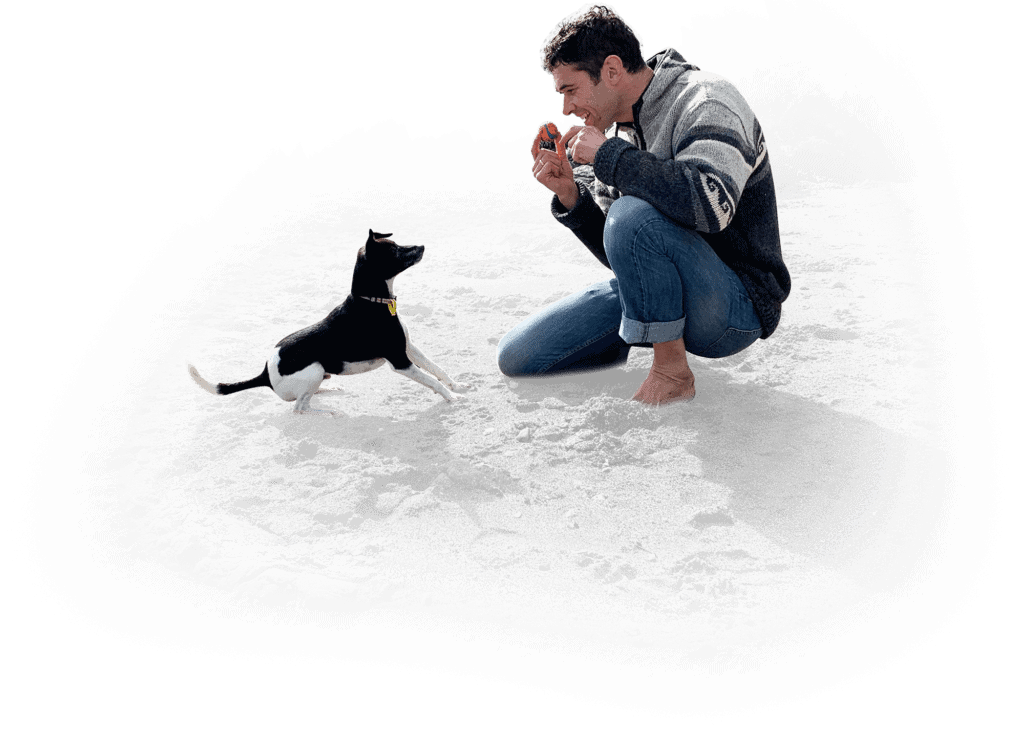
In this blog, I’m sharing the BIG tips on what is the first thing you should train your puppy on so you can set them up for success!
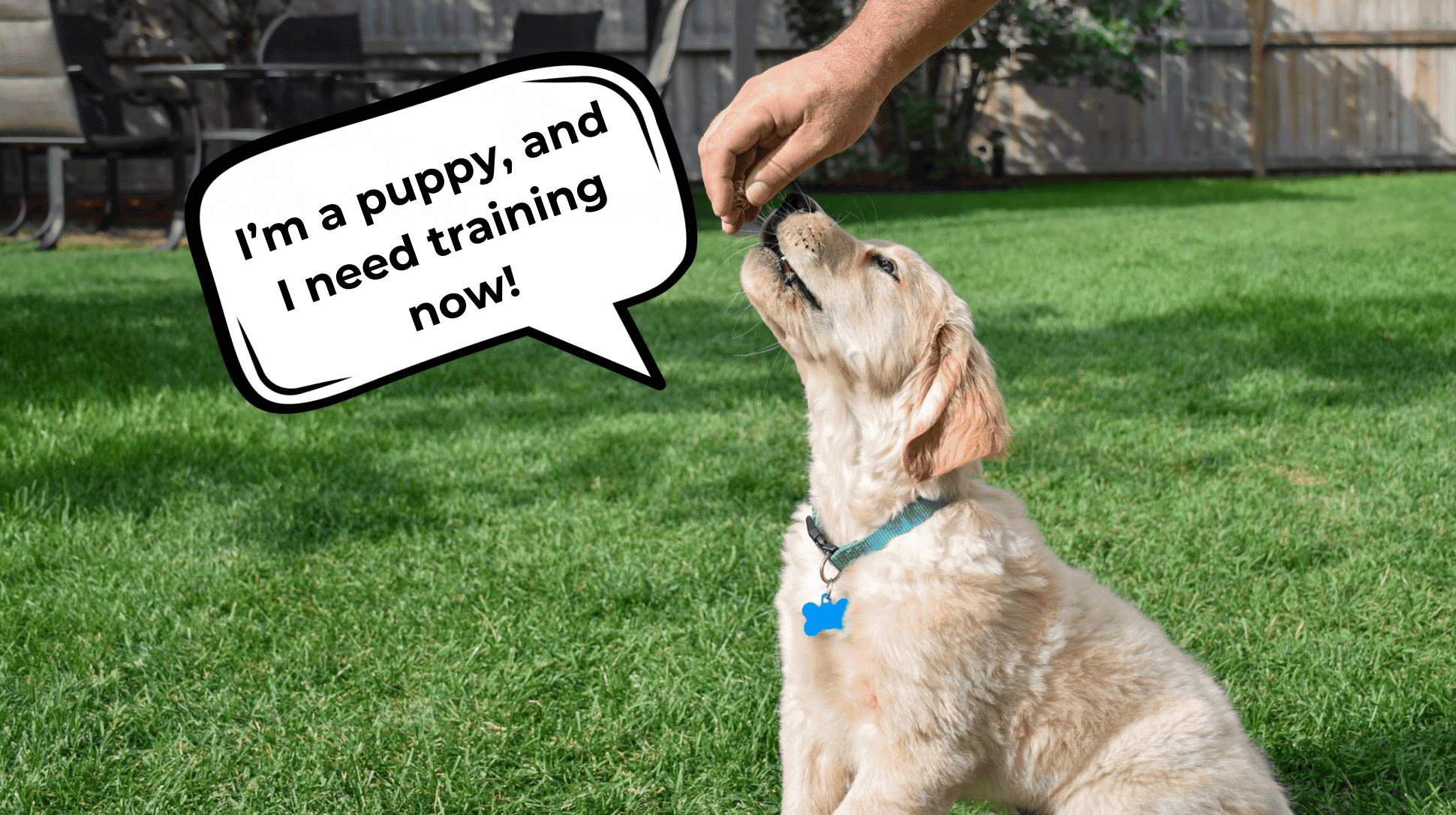
The training sessions your dog receives during the first few weeks of their life define what your puppy’s behavior is going to be.
A well-behaved puppy is trained, not born. This is why I encourage dog owners to teach puppy obedience training and correct behavior early on.
But how do you do it? Where do you start training?
Read on to learn more!
Key Takeaways
- Teaching essential commands like “sit,” “stay,” and “come” builds a foundation of obedience and communication between you and your puppy. This training not only makes your dog more manageable but also enhances their safety and strengthens your bond. Remember, consistency, positive reinforcement,and patience are crucial for successful command training.
- Teaching your puppy about loving leadership is paramount. It helps them understand their place in the family and prevents behavioral issues like jumping, barking, and resource guarding. By establishing yourself as a calm and confident leader, you create a secure environment for your puppy and ensure they look to you for guidance.
- No matter what type of training you’re doing, always use positive reinforcement techniques. Reward good behavior with treats, praise, and affection. Avoid punishment or harsh corrections, as these can damage your relationship with your puppy and hinder their learning. Remember, training takes time and patience. Celebrate every small victory and enjoy the process of building a strong bond with your furry companion.
What’s The First Thing You Should Teach Your New Puppy
I want to highlight something crucial about puppy training: some skills are more vital than others, and what’s truly important might surprise you. That’s why I urge every dog owners to start training their puppy immediately.
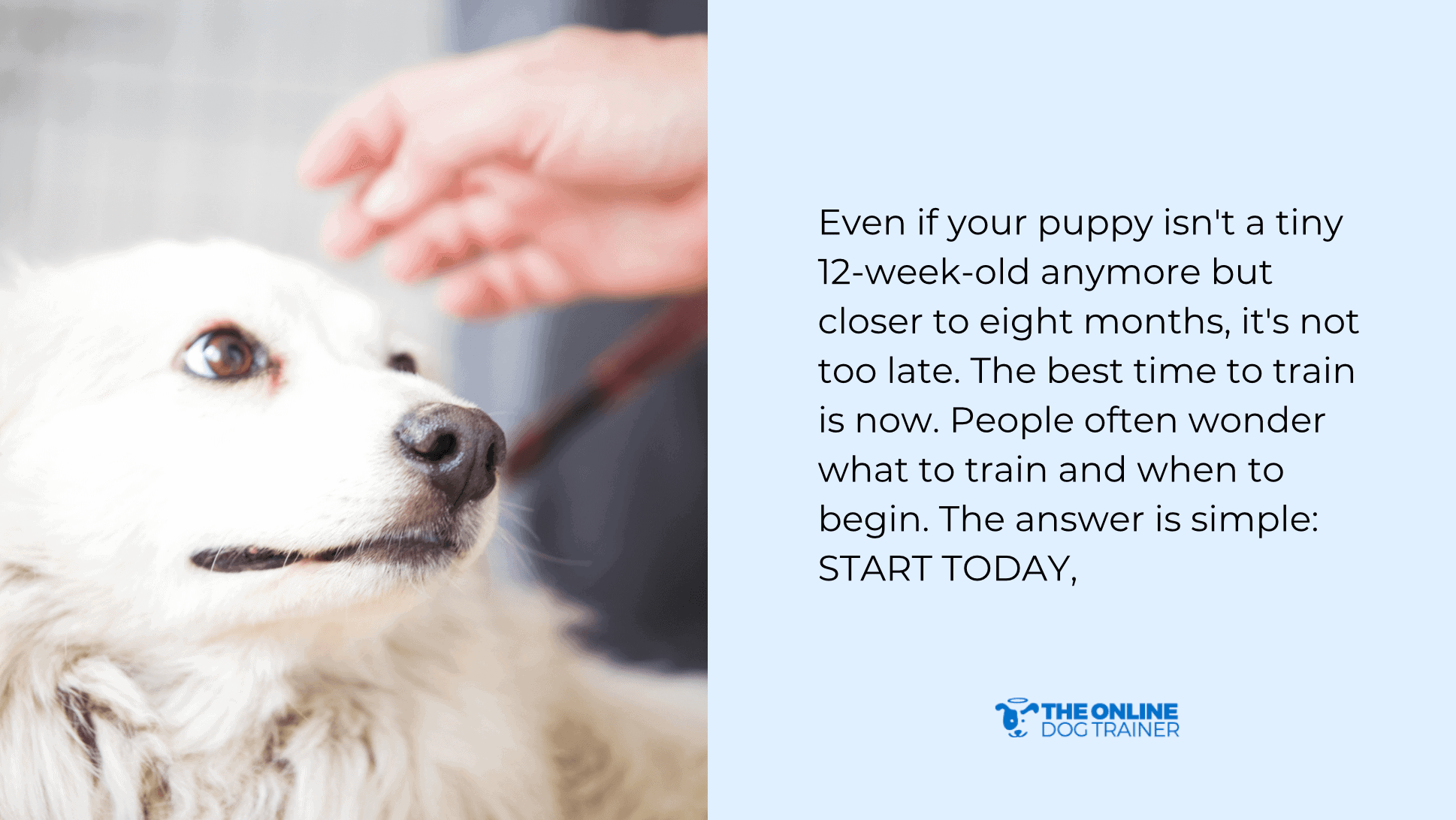
Even if your puppy isn’t a tiny 12-week-old anymore but closer to eight months, it’s not too late. The best time to train is now. People often wonder what to train and when to begin. The answer is simple: START TODAY.
Some training, if missed early on, has a bigger impact than others. It’s like with a child: they might not learn all the countries’ flags until they’re 14, and that’s okay. They can catch up later. But other things, like basic manners and how to interact with people, are crucial to learn early. Missing out on these can seriously hinder your child’s development.
Apart from potty training and following a consistent schedule, below are two of the most important things to teach your puppy early on.
Lesson Number One: Training Your Puppy For Basic Commands
Basic commands are crucial for building a strong foundation for future training. They help establish clear communication between you and your puppy, promoting obedience and preventing misunderstandings. Additionally, these commands are essential for ensuring your puppy’s safety and socialization.
Although I advocate to add teaching basic obedience training to your puppy training timeline, I will be the first to say that it’s not a guarantee that your puppy learns everything they need to be an obedient dog. I want you to remember this before you begin training.
Remember, teaching basic commands doesn’t guarantee your puppy’s life won’t have challenges. I’ve worked with countless dogs who knew commands perfectly, including “come.” Yet, sometimes, they’d ignore it outdoors. It wasn’t about understanding the command; something else was at play.
Think of command training like a child learning algebra. Just because they excel at math doesn’t guarantee good manners, respect for others, or healthy relationships.
Similarly, there are far more crucial aspects to focus on with your puppy beyond basic commands. Those commands are important, but they won’t make or break your dog’s development in the same way that other training will.
Lesson #2: Helping Your Puppy Learn Loving Leadership
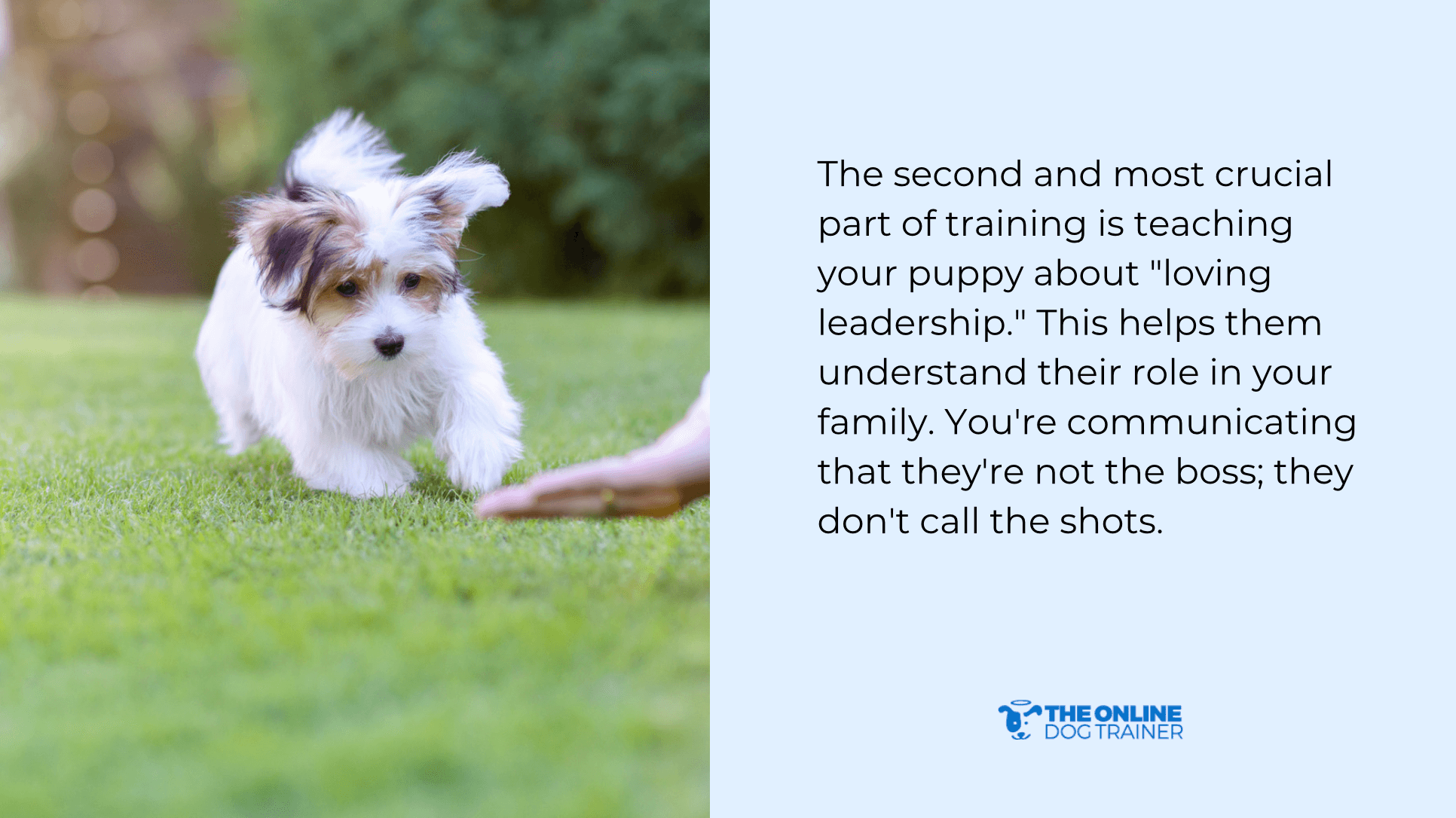
The second and most crucial part of training is teaching your puppy about “loving leadership.” This helps them understand their role in your family. You’re communicating that they’re not the boss; they don’t call the shots.
Early training in this area prevents issues and unwanted behavior as they grow. They won’t ignore you, steal food, bark at the door, jump on people, or act overly protective.
These problems all come from a puppy thinking they’re in charge. Think of it like a child who might not be the best student but has good manners, respects others, and is generally well-liked. That’s more important than acing math tests.
Command training is like math for puppies, and it’s easy to teach later if you have that foundation of respect and leadership established. Without it, puppies become overly confident or fearful, leading to dog behavior problems that worsen over time. No amount of command training can fix that.
So, we’ll cover basic commands, but remember, loving leadership is the key to a well-behaved dog.
The Three Basic Obedience Commands for Dog Training
The basic commands are important. They build a strong foundation for future training and help establish clear communication between you and your puppy. Basic puppy commands help promote obedience and prevent misunderstandings.
Additionally, these commands are actually useful. If you can have a puppy who comes when you call or who sits when you ask them to and stays put, then it can be useful. Basic commands come in handy when you’re getting stuff in and out of the car or you don’t want your dog to run out the front door when you’re kind of opening it.
Command training is also helpful if you want your dog to come because you’re locking the house and you want your dog to be with you. If the dog is jumping up or just being a general nuisance or you want them to stay put, just saying sit can be really useful. So, let’s have a look at these three powerful commands: sit, stay, and recall. I’ll also give you some basic approaches on how to put them in place.
The Three Types of Command Training
Command 1: Sit
What They Do: Dogs sit on their haunches with their front paws on the ground.
How it Works on Dogs:
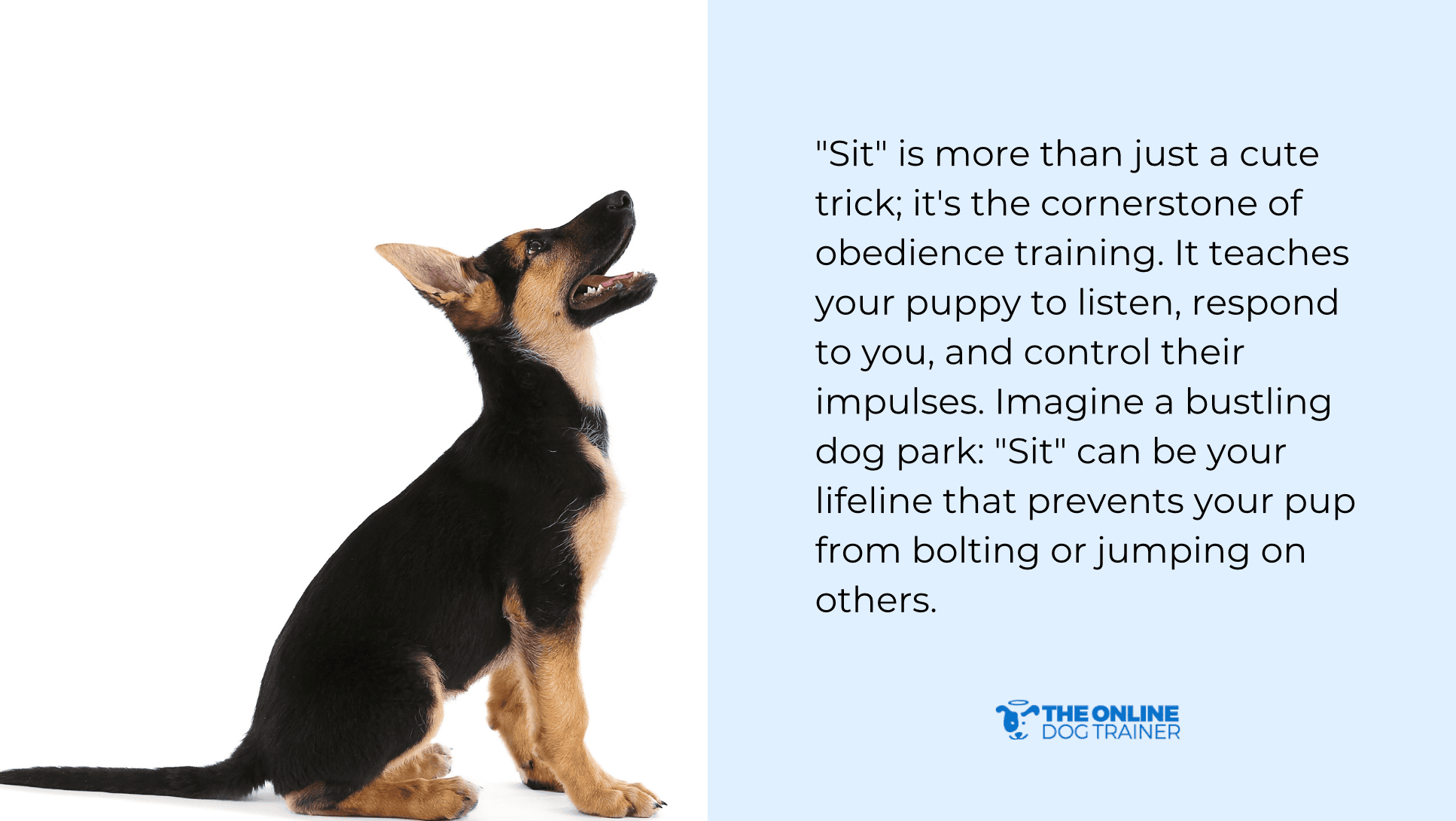
- “Sit” is more than just a cute trick; it’s the cornerstone of obedience training. It teaches your puppy to listen, respond to you, and control their impulses. Imagine a bustling dog park: “Sit” can be your lifeline that prevents your pup from bolting or jumping on others.
- The physical act of sitting has a calming effect on dogs. It shifts their focus from the exciting world around them to you, their leader. This is essential for managing hyperactivity and creating a sense of composure, especially in stressful situations.
- Teaching a strong “sit” can nip jumping problems in the bud. It offers an alternative behavior to excited leaps and bounds, fostering polite greetings with both people and other dogs.
Tips for Teaching “Sit”
- The Lure Technique: This uses the power of positive reinforcement. Hold a tasty treat close to your puppy’s nose and gently guide it upwards and back. As they follow the treat, their bottom will naturally lower into a sitting position. The moment they sit, say “Sit” clearly and give them the treat and enthusiastic verbal praise. This positive association makes sitting a rewarding experience.
- Managing the Backwards Shuffle: If your puppy tries to back away instead of sitting, gently guide them towards a wall or corner. This limits their movement and encourages them to sit. Remember, patience is key!
- The Importance of Treat Placement: Hold the treat at nose level to avoid tempting your puppy to jump up. The goal is to lure them into a seat and get your puppy’s attention (without leaping)!
- Treat Security: Hold the treat securely in your fist until your puppy sits. This prevents them from snatching it prematurely and reinforces that sitting earns the reward.
- Repetition and Positive Reinforcement: Practice makes perfect! Repeat the “lure and reward” technique several times in short, fun sessions. The more they practice, the faster they’ll associate the word “Sit” with the action and the reward.
- Expanding the Skill: Generalization: Once your puppy reliably sits in a quiet environment, start practicing in different locations with increasing distractions. This helps them understand that “Sit” means the same thing no matter where they are.
Command 2: Stay
What They Do: Dogs remain in a sitting or lying down position until released.
How it Works on Dogs:
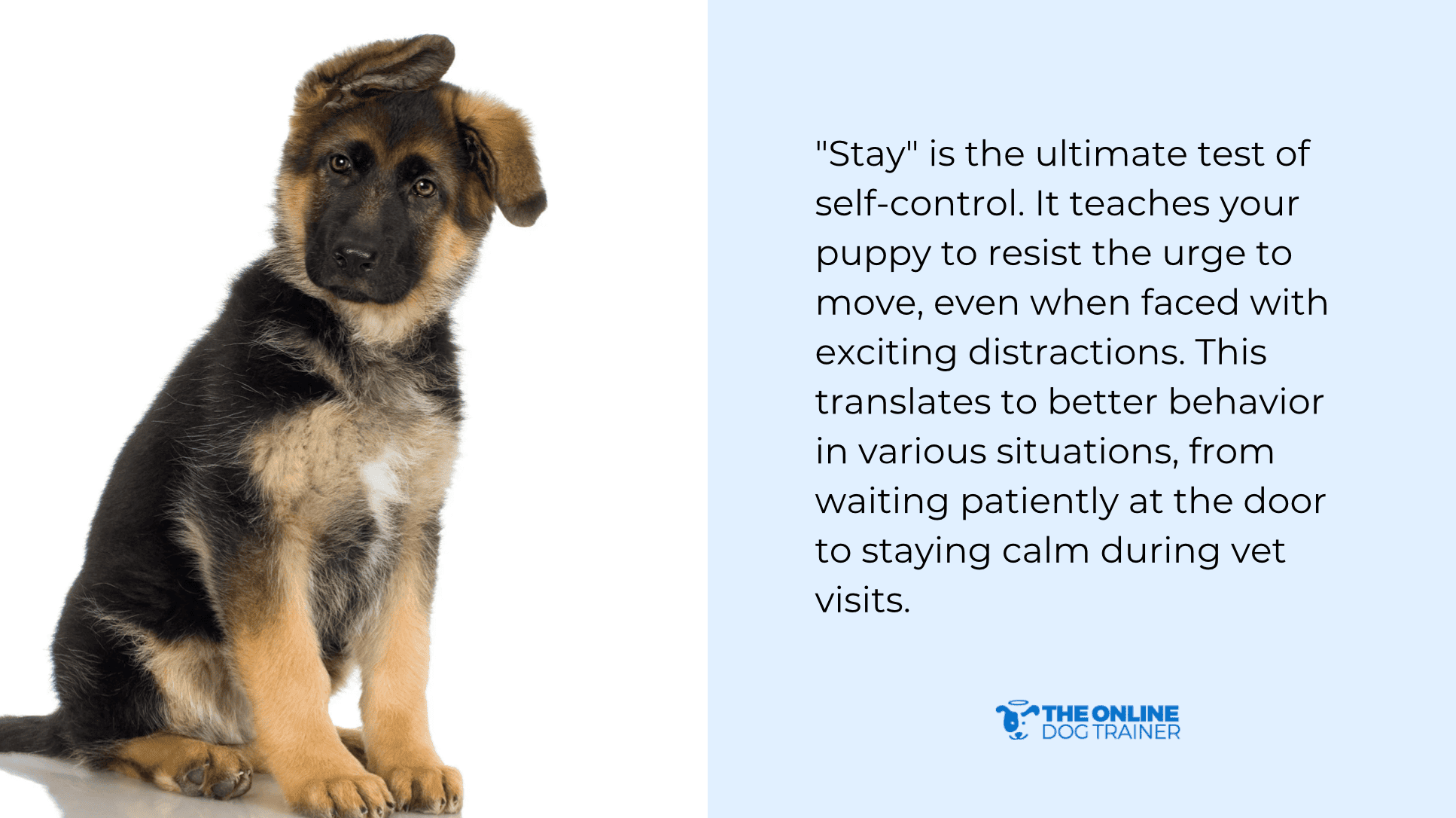
- Impulse Control and Patience: “Stay” is the ultimate test of self-control. It teaches your puppy to resist the urge to move, even when faced with exciting distractions. This translates to better behavior in various situations, from waiting patiently at the door to staying calm during vet visits.
- Managing Excitement and Preventing Chaos: Picture this: guests arrive, the doorbell rings, and your dog goes wild. A reliable “stay” can prevent them from jumping all over your visitors, creating a calmer and more welcoming environment. The same goes for mealtimes — teaching “stay” prevents your pup from begging or snatching food.
- Building Trust and Confidence: Mastering the “stay” requires trust. Your puppy learns to rely on you and wait for your cues, deepening your bond and boosting their confidence.
Tips for Teaching “Stay”
- The Foundation of “Sit”: Start with a solid “sit.” This ensures your puppy is already in a calm and controlled position before adding the “stay.”
- Clear Communication: Give the verbal cue “Stay” while holding your hand up in a stop signal. This clear visual cue reinforces the verbal command.
- Baby Steps: Initially, ask for a very brief stay, just a few seconds. As your puppy succeeds, gradually increase the duration.
- Distance is Key: Once your puppy can stay for a short time, start increasing the distance between you. Take a small step back, then return and reward them for staying put. Gradually increase the distance over time.
- Reward the Right Behavior: Only give the treat and praise if your puppy stays in position until you release them with a cue like “Okay” or “Release.”
- Slow and Steady Wins the Race: Don’t rush the process. If your puppy breaks the stay, calmly return them to the starting position and try again with a shorter duration or distance.
- Multiple Short Sessions: Keep training sessions short and frequent to avoid overwhelming your puppy.
- Timing is Everything: Train when your puppy is a little tired and hungry. This helps them focus and makes the treats more enticing.
Command 3: Come (Recall)
What They Do: Dogs sit on their haunches with their front paws on the ground.
How it Works on Dogs:
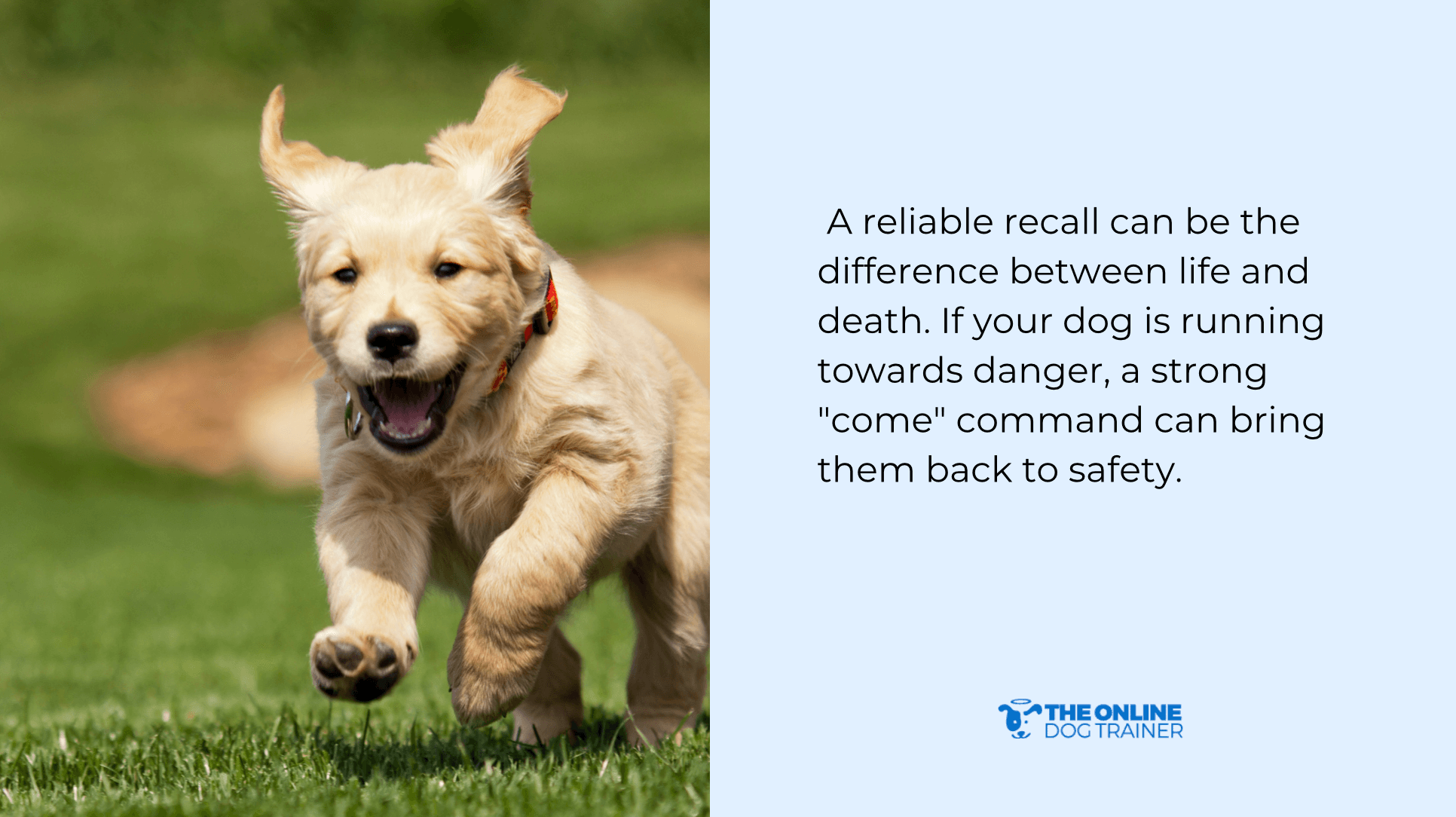
- The Ultimate Safety Net: A reliable recall can be the difference between life and death. If your dog is running towards danger, a strong “come” command can bring them back to safety.
- Strengthening the Bond: The recall command builds trust and reinforces the positive association between you and your dog. It shows them that coming to you leads to good things!
- Name Recognition: The recall command helps your puppy learn their name and associate it with your attention and affection.
Tips for Teaching “Come”
- Enthusiasm is Contagious: Use an excited and happy tone when calling your puppy’s name and saying “Come!” Your positive energy will make them want to come running.
- Body Language Matters: Crouch down, open your arms wide, and even take a few steps backward. This inviting posture makes you more appealing than whatever distraction your puppy is facing.
- The Jackpot: When your puppy comes, shower them with praise and a high-value treat. Make it a party! The more rewarding the experience, the more likely they’ll come back next time.
- Practice in Different Environments: Start in a quiet, familiar area and gradually increase the level of distraction. This helps your puppy generalize the command and respond even when there are exciting things happening around them.
- Train When They’re Energetic: A playful puppy is more likely to be eager to engage in training. Use their natural energy to your advantage.
- Call, Reward, Release: After your puppy comes, give them the treat and praise, then release them to play again. This positive association makes “Come” a fun game rather than a restriction.
- Start Simple: Master the recall in a controlled environment before adding distractions. Focus on building a strong foundation first.
How to Make Puppy Training Sessions Effective
Mastering basic commands with your puppy sets the stage for a well-behaved and happy companion. Here are some essential tips to make training effective and enjoyable for both of you:
#1: Consistency is King
Always use the same word for each command. If you say “Sit” one day and “Sit down” the next, your puppy will get confused.
Pair your verbal cues with consistent hand signals or body language. This visual reinforcement helps your puppy understand what you’re asking.
#2: The Jackpot Reward
Occasionally, reward your puppy with a “jackpot” – a handful of treats instead of just one. This unexpected bonus keeps them engaged and motivated.
Save those extra-special treats for training sessions. Think of small pieces of cooked chicken, cheese, or freeze-dried liver. The more enticing the reward, the more eager your puppy will be to learn.
#3: Positive Reinforcement is the Way to Go
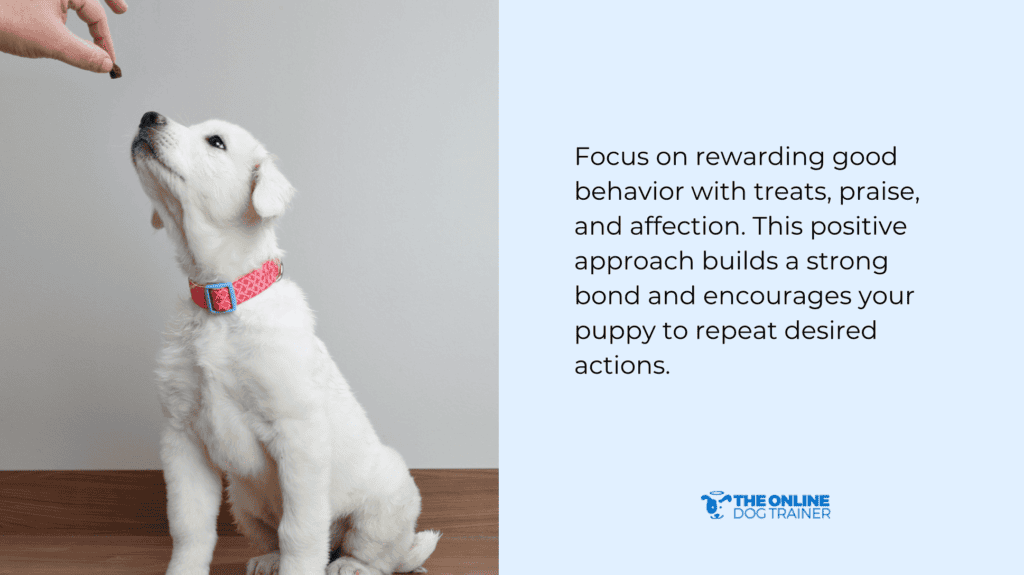
Focus on rewarding good behavior with treats, praise, and affection. This positive approach builds a strong bond and encourages your puppy to repeat desired actions.
Avoid punishment. Shouting or getting angry will only scare and confuse your puppy. Stay patient and focus on positive reinforcement.
#4: Keep Calm and Train On
If you feel frustrated, take a break. Your puppy will pick up on your emotions, and a stressed puppy won’t learn effectively.
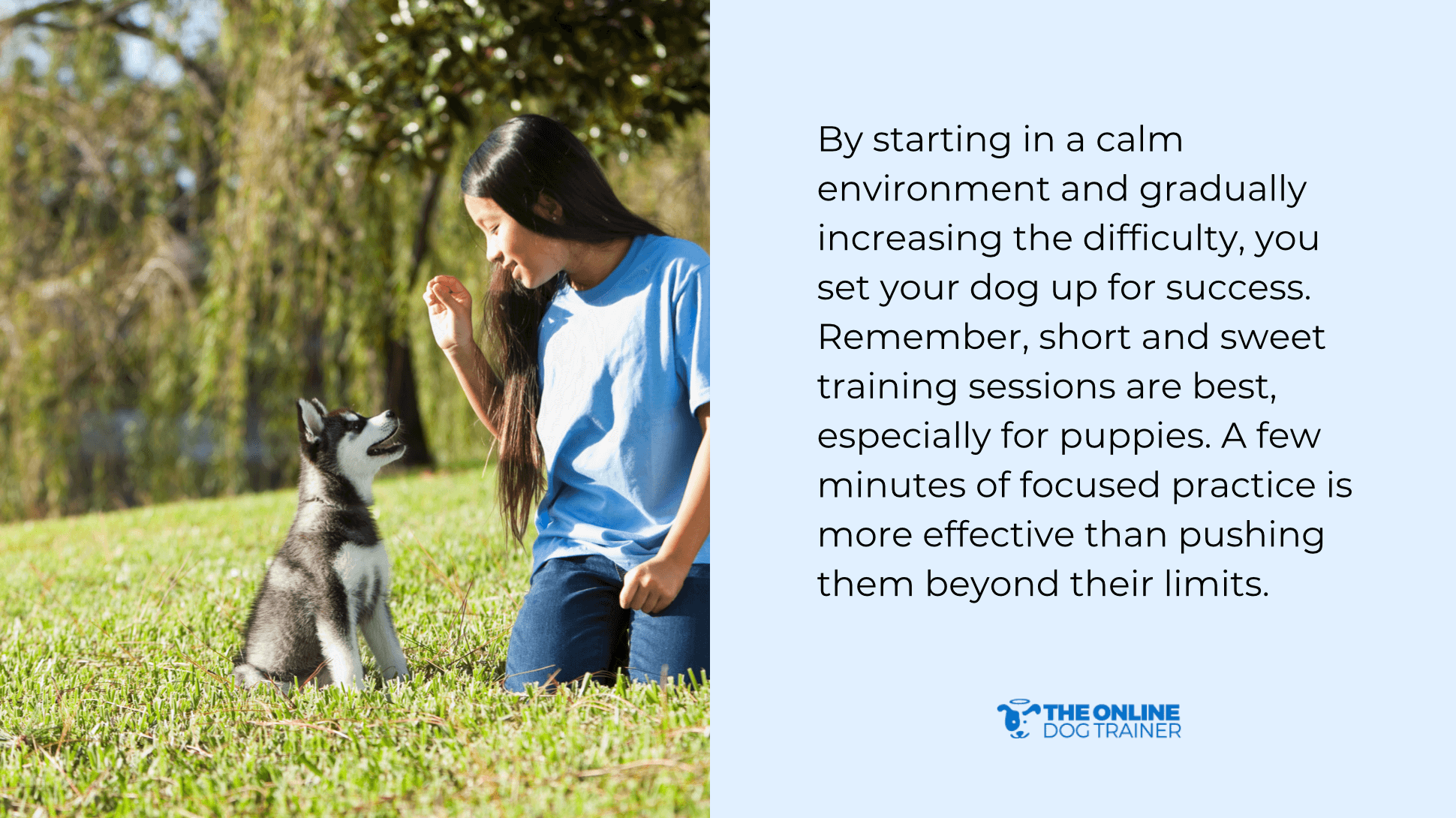
Set your puppy up for success by starting with simple tasks in a quiet environment. Gradually increase the difficulty as they progress.
#5: Short and Sweet Training Sessions
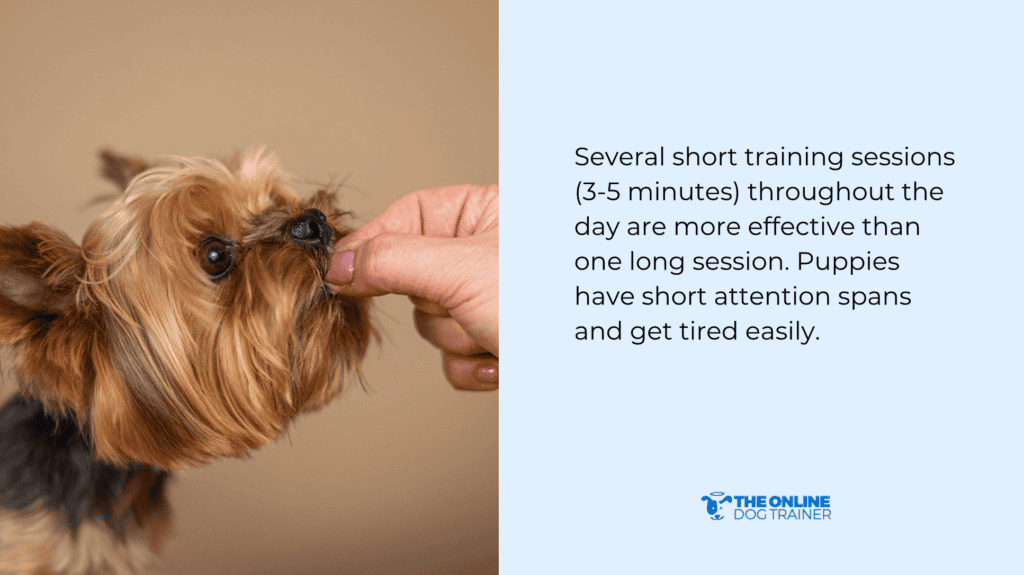
Several short training sessions (3-5 minutes) throughout the day are more effective than one long session. Puppies have short attention spans and get tired easily.
Keep training sessions fun and upbeat. Use a happy voice, play games, and make it an enjoyable experience for both of you.
#6: Patience and Persistence are Key
Training takes time and consistency. Don’t expect your puppy to learn everything overnight. Celebrate small victories and keep practicing.
Focus on teaching one or two new commands at a time. Avoid overwhelming your puppy with too much information at once.
#7: Train When Your Dog is Primed for Learning
A slightly tired and hungry puppy is more focused and motivated to work for treats. Avoid training right after a big meal or a long walk.
HOW TO STOP REACTIVITYLearn How to Train Your Puppy With Doggy Dan’s Online Programs
We offer an amazing program that combines both basic command training and loving leadership training. This comprehensive program addresses all the common puppy problems like mouthing, chewing, biting, and not sleeping through the night. It also includes tips on how to leave your puppy alone during the day and covers crate training as an optional extra.
You’ll get to watch me demonstrate these techniques with my own puppy and other puppies, including the ‘Contra Con’ command. If you want to see this in action and be amazed at the results, click on the link below.
There’s no better time to train your puppy than now. By establishing command training and loving leadership – what I call the “Dog Calming Code” – you’ll ensure your dog stays calm, relaxed, and focused on you, not on being the boss.
This program can be a life-changer for both you and your puppy. Click the link below and see for yourself!
GET THE DOG CALMING CODE FOR FREE
~Doggy Dan 🙂