✨ Ask Doggy Dan AI About Your Dog Now  🐶
Dan's AI Chat Widget

How to Stop Dog From Lunging At Other Dogs And You

dog training to build a strong bond and better behavior.

Last Updated: November 2025

Last updated: November 2025

A dog who lunges is a dog that must be trained… fast. In this blog, I share the best strategies how to stop dog from lunging at other dogs and you.
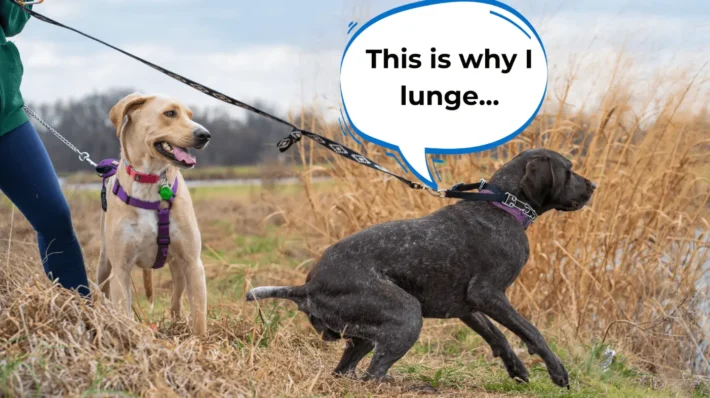
How to stop dog from lunging at other dogs
JOIN THIS CLASS TO STOP DOG LUNGING FROM GETTING WORSE!

What is dog lunging?

You can pinpoint this issue when your dog suddenly reacts with lunges and hyperactivity while on a leash. One moment, you could be walking with them calmly, and the next thing you know, they're already rushing forward and pulling hard on the leash trying to get somewhere in a hurry. 

There are multiple reasons for dogs lunging: it could be out of excitement, fear, anxiety, or territorial behavior. What I want dog owners to understand is that dog lunging can't be corrected by just treats or force. 

To solve dog lunging, you have to investigate the root cause, change your training plan, and be creative about letting your dog understand there's really no reason for them to react and lunge. 

Read on to learn more. 

Key Takeaways

  • Dog lunging has multiple root causes: It's not a one-size-fits-all behavior. Lunging can stem from excitement, fear, anxiety, territorial instincts, or lack of training/socialization. Understanding the specific cause for your dog is crucial for practical training.
  • Leadership and calm communication are critical: Dogs are pack animals who need clear guidance when it comes to barking and lunging. Establishing yourself as a quiet, confident leader through consistent training and clear communication helps your dog feel secure and less likely to lunge out of insecurity or fear.
  • Training should focus on long-term solutions, not quick fixes. Treats and force might temporarily suppress lunging, but they don't address the root cause. For lasting change, focus on building leadership, desensitizing your dog to triggers, and teaching impulse control.

Table of Contents

FREE WEB CLASS TO REVERSE DOG REACTIVITY IN 7 DAYS

What Dog Lunging Means

A lunging dog can be interpreted in two ways: they're so happy and excited (which is a good thing), or they're lunging because they feel threatened (which is not pleasant). 
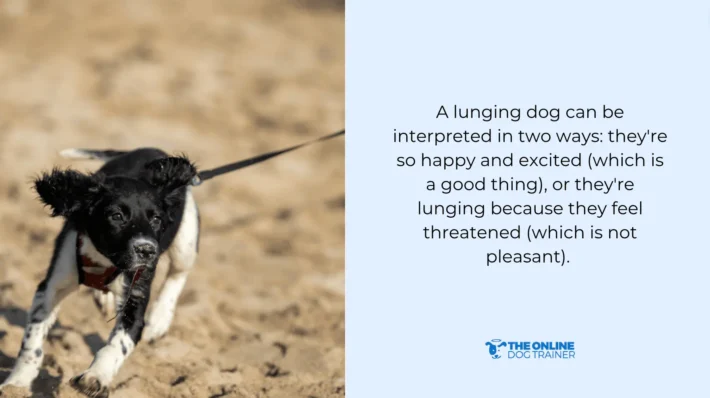
dog lunging

A Dog Lunge Can Be a Sign of Playfulness and Excitement

When a dog lunges towards other dogs, it could mean the following: 

  • They're excited
  • They want to play
  • They want to be closer to the other dogs.

They could also yelp and lunge at people because they love them and want to be affectionate. Lunging is also their way of saying, “I need to pee” or “I need to sniff that ball!” 

A Dog Lunge Can Also Be an Attack or Defense

A lunge accompanied by growling, tense body language, or an aggressive stance signifies displeasure. Dogs lunge when they're unhappy, threatened, scared, and fearful. The most important thing to do to stop your dog from lunging is to understand what's causing them to lunge. 

Dog Behavior: What Causes a Dog to Lunge?

Reason #1: Over Excitement and Heightened Emotional State

Think of children at a party bouncing off the walls with unbridled energy. Their excitement levels are through the roof, constantly fluctuating between a seven and a ten on a scale of 1 to 10. 

how to solve dog lunging

This heightened state makes them prone to overreacting to any additional stimulus. Similarly, dogs who are perpetually amped up, pulling on leashes with eyes wide and tongues lolling, are already operating at a high energy level. For a reactive dog, seeing another dog or any exciting trigger can quickly push them over the edge into adrenaline-fueled lunging.

FEEL PEACEFUL ON EVERY WALK—WATCH THE FREE DOG REACTIVITY WEBINAR NOW

Reason #2: Fear and Anxiety

On the flip side, fear and anxiety can also trigger lunging. Imagine someone watching a scary movie. The tension builds with each scene, priming them to react to even the slightest provocation. 

Dogs experiencing fear or anxiety are in a similar state, their bodies tense and ready to snap at any perceived threat. A person approaching too closely, an overly playful dog at a dog park, or an unexpected noise can act as the final straw, leading to a defensive lunge.

Reason #3: Dog Lunges Because of Territorial Behavior

Territorial behavior can also manifest as lunging. Your canine companion is naturally protective of you and their perceived territory. 

If they feel their space is being invaded, they may lunge as a warning to the intruder. This could happen when another dog approaches their owner on a leash or someone gets too close to their front door.

Reason #4: Lack of Training and Socialization to Other Dogs

Finally, a lack of training and socialization can contribute to lunging. Dogs who haven't been exposed to various stimuli may react fearfully or aggressively to unfamiliar objects or situations. Many dogs are anxious about socializing with others because they lack appropriate social experiences.

They haven't learned how to behave appropriately around strollers, cats, or people with umbrellas. This lunging can be addressed through patient and consistent training, gradually introducing the dog to new experiences in a calm and controlled environment.

STOP THE BARKING, LUNGING & STRESS—FREE WEBINAR SHOWS YOU HOW IN UNDER A WEEK

Reason #5: Leash Aggression

Leash aggression is a primary cause of dogs lunging. A leash-aggressive dog often feel trapped, unable to flee or greet freely, which can escalate their fear or frustration. This confined feeling often triggers a “fight” response, leading to sudden barking, growling, and lunging as they try to create distance. Recognizing this underlying stress is the first step in addressing the behavior.

How to Stop Dogs from Lunging: Loving Leadership

Before dog owners start training their dogs to overcome certain dog behaviors, I always remind them of the importance of loving leadership.

Dogs operate in packs, and therefore, they need a pack leader — this is how dog psychology works.

I have met dog owners that said “Well, I'm their owner. I'm automatically the one in charge, right?” 

The answer is no. If you want your dog to see you as the leader, you have to take certain steps to ensure that. My bestselling online program, The Dog Calming Code™️, aims to teach dog owners to be the leader in their dog's eyes. 

What's unique about The Dog Calming Code is it teaches leadership without shouting or using force. Instead, it helps dog owners use dog psychology to establish leadership. 

Remember, seemingly insignificant things can make your dog feel they're in charge instead of you. 

For example: 

These things are easy to overlook , which is why most dog owners struggle to train dogs to behave better. The Five Golden Rules of Leadership taught in The Dog Calming Code will help you let your dog know: “Hey, I'm in charge, not you.” 

If you have a dog who lunges all the time they're on the leash, you could have a dog who is stressed, anxious, or threatened because they've taken on the leadership role. 

The good news is you can now learn about The Dog Calming Code through my free webinar on dog reactivity. It's totally free, but it's value-packed! 

GET ACCESS TO DOGGY DAN'S BESTSELLING PROGRAM FOR FREE

How to Solve Dog Lunging: Tips From A Professional Dog Trainer

Establish Loving Leadership

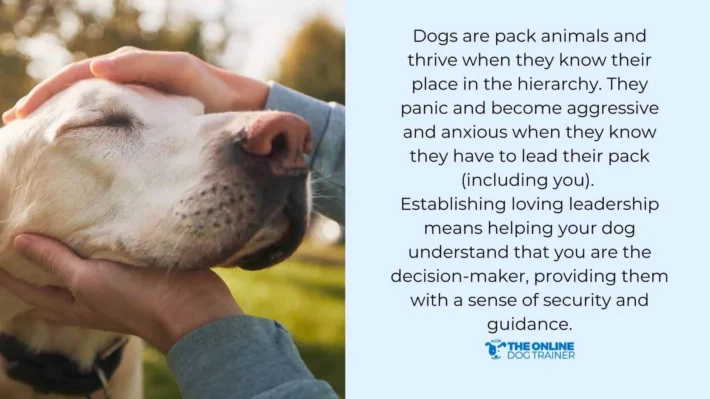
Dogs are pack animals and thrive when they know their place in the hierarchy. They panic and become aggressive and anxious when they know they have to lead their pack (including you). 
what causes dog lunging

Establishing loving leadership means helping your dog understand that you are the decision-maker, providing them with a sense of security and guidance.

When your dog thinks they're the leader, what matters to them is the survival of their pack (you included). They take on the role as the protector. They want to ensure everyone is safe! This desire to protect causes them to always be anxious, scared, on guard, and unable to calm down.

Taking on the role of the leader from your dogs helps them know you're the protector, and that you're there with them to help them be safe. Your dog will feel you don't need to be protected all the time. They will stay calm because they know they're not the ones making all the survival decisions anymore. 

Emphasize Leadership With Walk Exercises

I want each dog owner to understand that walking outdoors is synonymous with fighting for survival for your dog.

They're on the edge, on guard, and want to be safe. In your dog's head, they need to make the decisions because they think they know best how to survive. Reminding your dog of your role as their decision-maker and protector will help. 

Specific walk exercises can reinforce your leadership role and help your dog understand their place during walks.

GET IMMEDIATE RELIEF: SOLVE YOUR DOG'S REACTIVITY CHALLENGES TODAY

The One Yard Walk

Start by taking one step out the front door, immediately turning your dog around, and walking back inside. This exercise helps your dog understand that you're in charge of the walk and make all the decisions. The dog will resist at first, but when they understands that you control the walk, they will learn fast. 

Donut Walk

It's quick to lose control of the walk, especially when maneuvering the leash. By letting the dog go in front, you're already telling them they're in charge. 

group obedience class for leash reactive dogs

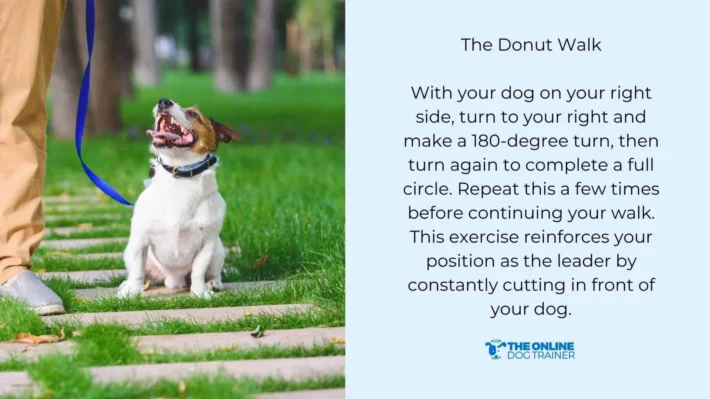
An exercise you can do to show your dog you're in charge is The Donut Walk. 

With your dog on your right side, turn in a full circle to the right, then another full circle to the right. This means you've turned twice in front of your dog, establishing your leadership. By walking in front when changing direction, your dog learns to follow your lead and decisions.

Follow Consistent Training

Consistency is vital in dog and puppy training. Reinforce basic commands like ā€œsit,ā€ ā€œstay,ā€ and ā€œheelā€ in your training classes to help your dog understand your expectations and improve their focus during walks.

Quick dog trainer tip: despite consistent training, there's a chance your own dog won't stop lunging immediately. Your dog's resistance to more progress isn't because the training plan doesn't work; your dog simply doesn't find a reason to obey you. 

They still think they're the leader, so why should they listen to you? 

I'd like to re-emphasize the power of leadership here. Once your dog knows you're the leader, they will listen to you and respect your leadership and capacity to make decisions for them. Training will be more effective. 

THE ONLY CLASS YOU'LL EVER NEED TO SOLVE REACTIVITY ISSUES

Choose the Right Leash

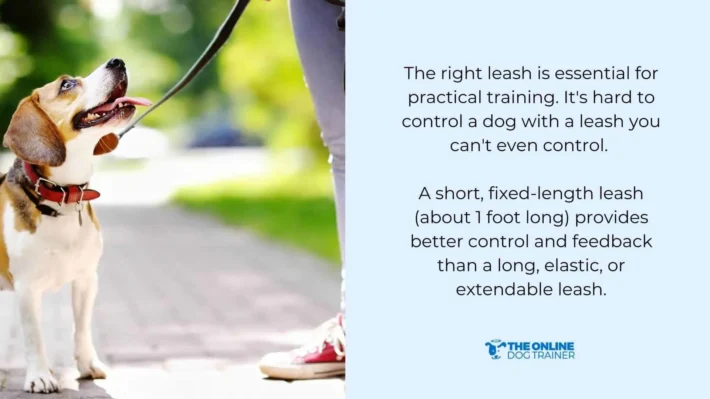
The right leash is essential for practical training. It's hard to control a dog with a leash you can't even control. 

A short, fixed-length leash (about 1 foot long) provides better control and feedback than a long, elastic, or extendable leash.

Leash designs I don't recommend: 

Overly long leashes

Too long leashes make it difficult to control your dog and encourage pulling. A shorter leash allows for better control and communication with your dog.

heel command in dog training

Leashes without adjustable length

Having the ability to adjust the length of your leash gives you more flexibility in different situations. Depending on the environment, a fixed-length leash might be too long or too short.

Spongy or elastic leashes

These leashes make it challenging to maintain a consistent connection with your dog. The give in the leash can create tension and encourage pulling, making it harder to teach your dog to walk nicely by your side.

Extendable leads

Similar to spongy leashes, extendable leads have a slight give, making it difficult to maintain control. Additionally, the sudden tightening of the leash can be jarring for both you and your dog.

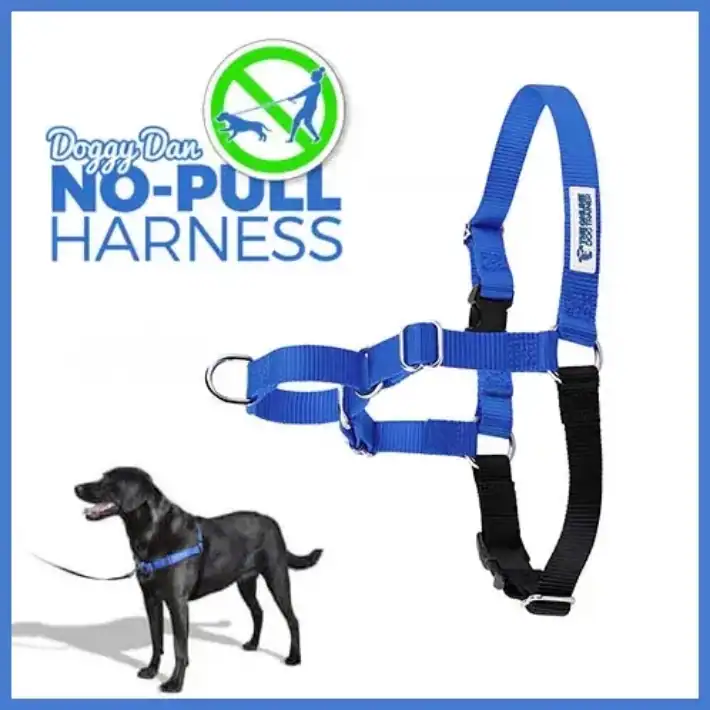
Doggy dan no pull harness

Looking at Harness and Collars

Choosing the right equipment is crucial. Avoid flat collars, head harnesses, and back clip harnesses, as they can cause discomfort or encourage pulling. 

Instead, opt for a front-clip harness like the Doggy Dan No Pull Harness, which discourages pulling and promotes a calmer demeanor.

FREE WEBCLASS THAT GUARANTEES TO BRING BACK PEACE TO YOUR HOME

Use Correct Walking Exercises

Incorporate exercises into your walks to reinforce desired behaviors and discourage lunging. Here are some things you can do.

Exercise with Treats and Toys

Use treats and toys to reward your dog for staying calm and focused during walks. Use food rewards and toys strategically to redirect your dog's focus from its triggers to you. 

Desensitization and Exposure

This technique involves gradually exposing your dog to triggers that usually cause them to lunge reactively. I've written a detailed blog post, “Seven Steps to Stopping Any Unwanted Behavior, “ which you might find helpful.

A crucial point here is to ensure you're rewarding your dog away from the trigger. Avoid giving treats when your dog is fixated on another dog and getting excited. I've seen many owners try to distract their dogs with treats while the dog is still focused on the trigger, but this only reinforces the excitement. Remember, a dog's energy follows their focus.

To reward calmness, first, get your dog's attention away from the trigger. You could use a tempting treat to lure them away or calmly guide them in another direction. Once you've created enough distance between your dog and the trigger, and they've calmed down, then you can reward them.

Watching Our Energy

Dogs are masters at reading our emotions. If you're stressed, anxious, or frustrated, your dog will pick up on it and may become more reactive. Practice relaxation techniques, maintain calm, and use a soothing voice when working with your dog.

No matter how much you tell them to calm down, your dog won't be able to obey your command or have a more relaxed body language if you're stressed. 

small dogs training lunging

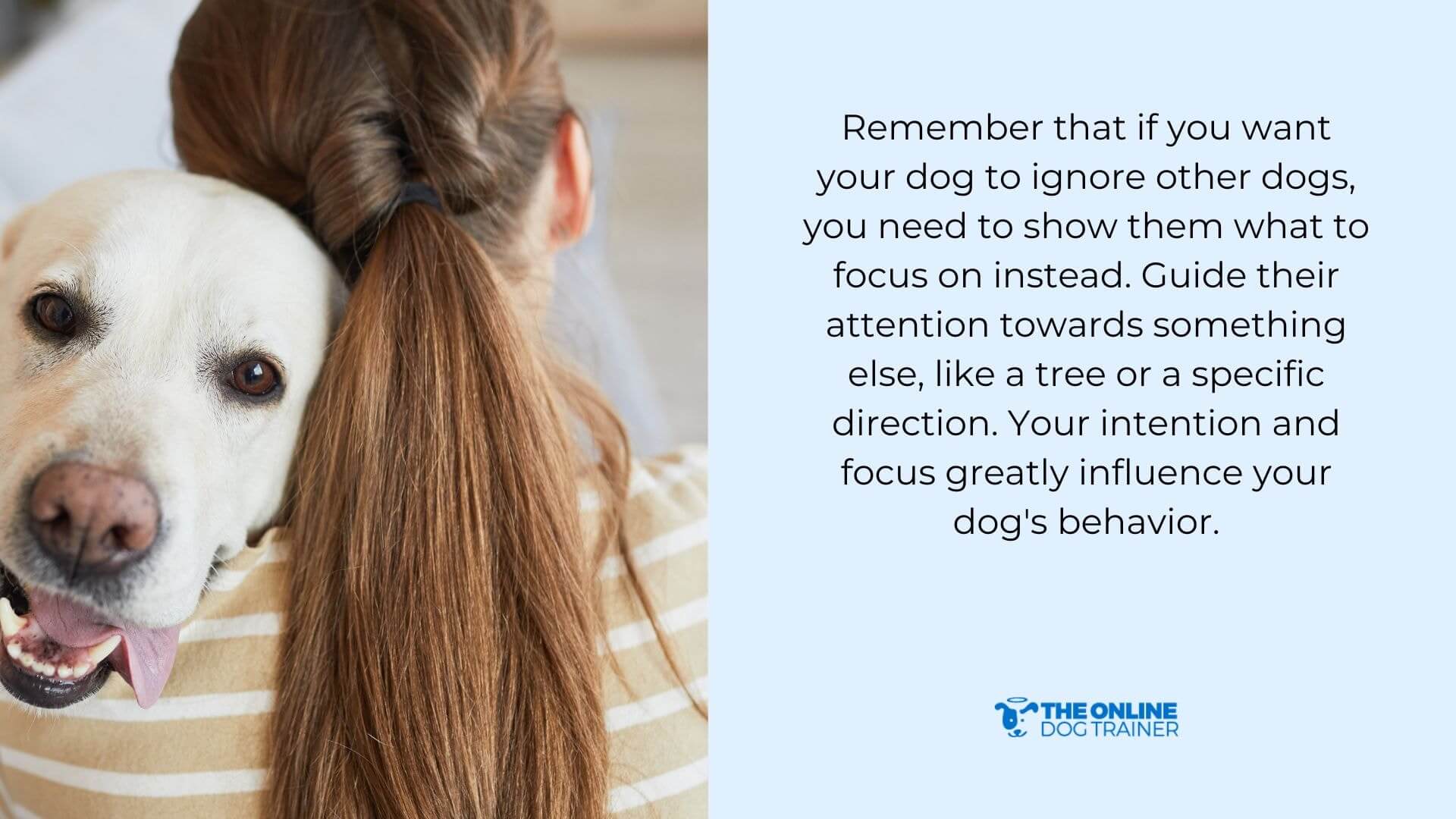
Remember that if you want your dog to ignore other dogs, you need to show them what to focus on instead. Guide their attention towards something else, like a tree or a specific direction. Your intention and focus greatly influence your dog's behavior.

Also, remember that less is more when it comes to communication. Stay calm and use fewer words, or even remain silent. Your actions, such as calmly turning your dog away, speak volumes. Even your breathing can have a calming effect on your dog.

JOIN THE FREE CLASS THAT CHANGED THE LIVES OF 100,000 DOGS!

Impulse Control

Practice exercises that teach your dog to control their impulses. 

For example, have them sit and wait before crossing the street or approaching another dog. This helps them develop self-control and patience.

Ask for Professional Help

Your dog's confidence and strength will continue to grow until they are about two years old. So, if you're facing challenges with your dog while they are young, it's crucial to address the issue promptly and seek professional help if needed.
what to do when a dog lunges

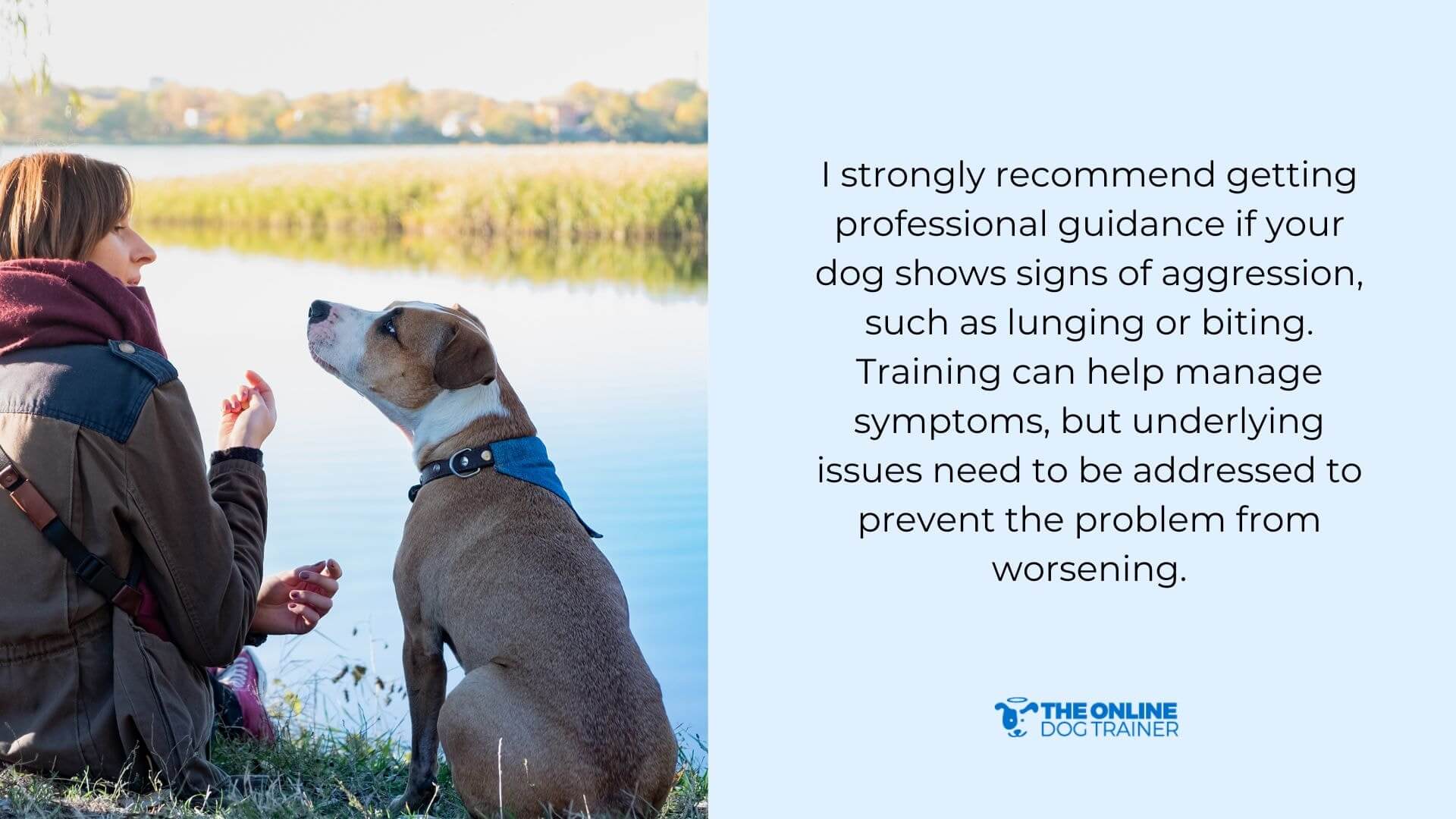
I strongly recommend getting professional guidance if your dog shows signs of aggression, such as lunging or biting. Training can help manage symptoms, but underlying issues need to be addressed to prevent the problem from worsening.

Understanding your dog's need for leadership and implementing a consistent structure is key to preventing and resolving behavioral issues. Even if your dog is older, establishing loving leadership and clear communication can make a significant difference.

I offer a free webinar on stopping dog reactivity without relying on food bribes or tricks. It's designed to teach you about loving leadership and address the root causes of reactivity, helping you prevent problems from escalating or even occurring in the first place. If you want a holistic approach to managing your dog's behavior, I encourage you to check it out.

THIS FREE WEBCLASS HELPS YOU END FRUSTRATING DOG AGGRESSION FAST!

Good Leadership + Reliable Strategies Will Stop Dog Lunging
It can feel overwhelming when your dog lunges, but hang in there! You can stop this bad behavior.

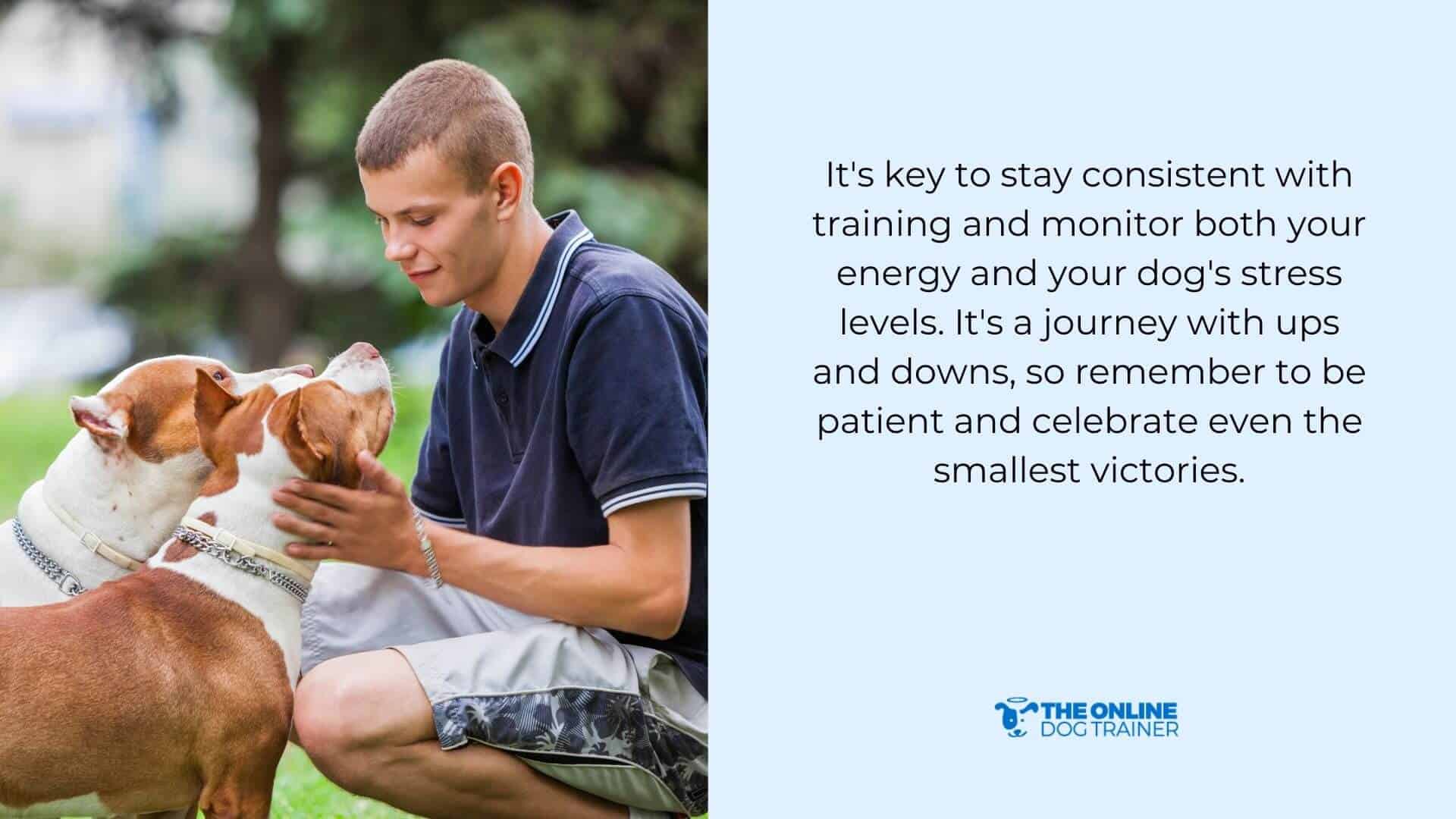
It's key to stay consistent with training and monitor both your energy and your dog's stress levels. It's a journey with ups and downs, so remember to be patient and celebrate even the smallest victories.

how to improve dog behavioural issues

Dogs thrive with a calm, confident leader, and you can be that for your pup. By using the right tools and techniques and getting help from a professional when you need it, you can stop dog lunging and have calmer, more enjoyable walks. Tackle this lunging challenge and look forward to more peaceful walks together. Don't lose hope – you and your dog can overcome lunging issues!

I talk more about issues like this one in my FREE REACTIVITY WEBINAR. I hope to see you there!

~Doggy Dan

Gentle journey for your puppy.

Doggy Dan

Doggy Dan stands out through his “five golden rules” that focus on canine psychology rather than repetitive drills or force. Unlike traditional trainers, he teaches owners to become the “calm leader” their dogs need. Over the last two decades, his methods have helped transform over 125,000 dogs worldwide. As the founder of TheOnlineDogTrainer.com blog and podcast and creator of the Dog Calming Codeā„¢, he has become a trusted voice in dog psychology and training. His philosophy is simple: reactive dogs don’t need punishment or endless treats. They need a leader they can trust.
FREE TRAINING:

How to Solve Dog Reactivity WITHOUT Food Bribes, Tricks, or Force

Limited spaces!

FREE webinar:

How to Solve Dog Reactivity WITHOUT Food Bribes, Tricks, or Force

dog training to stop unwanted jumping and barking
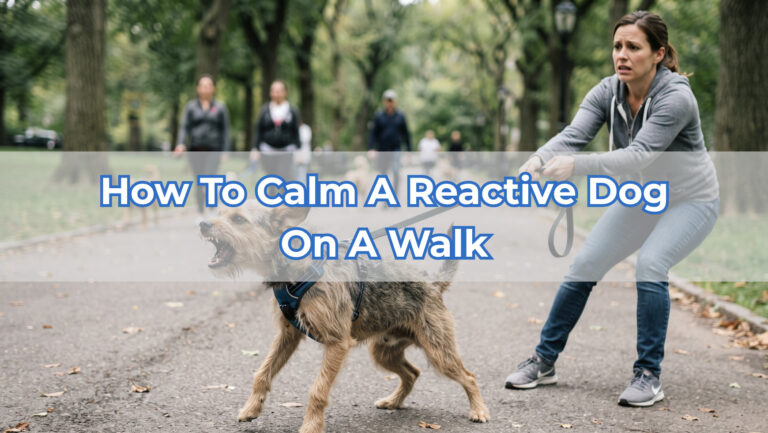
Limited Spaces!

Recent Posts

Excellent rating
Based on 156 reviews
Google star 1Google star 2Google star 3Google star 4Google star 5
+0
Ridley is my 4th dog. After listening to and learning from Doggy Dan, I was happy to see that I did pretty well with my first 3 dogs while raising my kids and having my husband with me. Not perfect - but pretty good! Now I am raising a new dog by myself, and I feel like I'm not doing this really "alone." I really am so happy with all the information Dan has offered... and all his techniques work well!!
Carol Ann Ferrari Rogers profile picture
Carol Ann Ferrari Rogers
21 September 2026
Google star 1Google star 2Google star 3Google star 4Google star 5
Two months ago I adopted a 7 year old Morkie, a very nervous but loving little fellow. I tried several different training techniques and even purchased a program that was lengthy and very time consuming before I discovered Doggy Dan. I've been using his program for two weeks and am astounded by the change in my Dexter. He is calmer, more obedient and friendlier to others than I imagined possible. Dan's training is concise. It differs from others I found, Dan trains you to become the leader of your pack through a dog's perspective. I like that the training is specific yet compassionate. This is a program that works if you are consistent. Thanks Doggy Dan!
Kathy Fore profile picture
Kathy Fore
17 September 2026
Google star 1Google star 2Google star 3Google star 4Google star 5
+0
Susie in the UK. I am only 10 days in but took in a 9 yr old emergency rescue from Romania who had been in kennels for 6 years and then had 3 failed foster placements in the UK. Luca is a big powerful mixed breed with huge stress and anxiety and very reactive, he bounded into my home and took over - aggressive with my 2 others, and visitors and pulling and pushing on walks. I thought I couldn't handle him but saw an advert for Doggy Dan on line and signed up - we've had a wonderful turnaround and he is finally decompressing, being polite with my dogs and responds excellently to the time-out if reactive with guests. Walks are much better and all 5 rules are in place. I believe he will continue to improve but only if I remain 100% consistent with him for the rest of his life. He is 9 years old and deserves a happy old age being loved and looked after with no further upsets in his life so fingers and toes are crossed for him
SoBS Truro profile picture
SoBS Truro
15 September 2026
Google star 1Google star 2Google star 3Google star 4Google star 5
+2
I started. The course 3/4 weeks ago. As Dan says you have to work on things if you get stuck. I have a Staffordshire x cane corso who is now six months old. She is very intelligent but sometimes she just doesn’t listen. Doing the five codes I’m finding it’s going pretty well except trying to get her calm so I am persevering with it again with my own space. I have a trainer call shortly which I will ask for advice on this. It’s great also that you can ask anything you’re not sure of on line. It’s so great to have someone there to help. I’m looking forward to having a relaxed girl instead of hyper most of the time as she gets so excited about almost everything. I would truly recommend doggy Dan and just wished I would have come across him much earlier. Thanks again for everything so far.
Hazel Coad profile picture
Hazel Coad
12 September 2026
Google star 1Google star 2Google star 3Google star 4Google star 5
I ā¤ļø my dog. Such a good girl! 5 Golden rules, really work.
Victoria van Sommeren profile picture
Victoria van Sommeren
9 September 2026
Google star 1Google star 2Google star 3Google star 4Google star 5
+0
This program is amazing!. We have a VERY reactive rescue dog that has bitten his previous owner and as well, myself 3x and my husband 4 x's. He had never been around people or other animals, and had never been walked on a leash. (in fact never run off-leash either, just tied to the front steps). We began with traditional treat-based training with a professional, but the progress was frustrating. A reactive dog does not want treats; it wants comfort. With the 5 Golden Rules and and some of the other training we have received with our subscription, in just 3 weeks, we can let him off leash at the dog park, he has not growled at any stranger, and he has not attacked any other animals. He is still a work in progress, but we see progress!!!! He has become a cuddly, sweet dog and for a greyhound, he even has recall! This program is amazing to say the least. We were at our wits end, but now we have hope.
susan kent profile picture
susan kent
8 September 2026
Google star 1Google star 2Google star 3Google star 4Google star 5
Okay, he says it’s not magic, but the results and the peace in so little time with so little effort sure feels like magic! My 11 month old pup was a 60lb highly reactive, very loud disaster waiting to happen. Now we are both calm, the house is quiet and I don’t live in absolute fear of his reactivity towards others. There’s always still work/training to do of course, but wow are we in a much better place to get on with that!
Theresia Travers profile picture
Theresia Travers
8 September 2026
Google star 1Google star 2Google star 3Google star 4Google star 5
Just started with the 5 rules. It's only been a week and a half and I'm noticing less stress, and a reduction in reactivity. We still have a way to go. But finally something I can work with. I went for the online course.
Fiona Bower profile picture
Fiona Bower
31 August 2026
Google star 1Google star 2Google star 3Google star 4Google star 5
I watched the free Webinar and joined at the end. I am up to No.3 atm and I’m actually feeling hopeful 🤞🏼
Jackie Grimmer profile picture
Jackie Grimmer
29 August 2026
Google star 1Google star 2Google star 3Google star 4Google star 5
The program is great. I started to see the changes in my cocker spaniel from day one.
Joy Winnington profile picture
Joy Winnington
18 August 2026
Google star 1Google star 2Google star 3Google star 4Google star 5
+3
My Lab mix puppy and I are on Day 3 , but, I do feel a stronger connection. She appears calmer overall / looking forward to consistently following these five rules. Doggy Dan is clear, concise, comprehensive and compassionate . Very pleased with his program. Diane
Diane Patterson profile picture
Diane Patterson
16 August 2026
Google star 1Google star 2Google star 3Google star 4Google star 5
+0
We have an 8 month old Goldendoodle who has fear issues outside the home and gets easily overwhelmed going into panic/flee mode if several triggers coincide (people, loud dog barking and noises like motorcycles/construction). So pleased to find Doggy Dan and seeing positive changes after just two weeks. Feeding time is calm after using the gesture eating and "thank you" when he barks works a treat. I realized I'm babying my dog too much and trying to be his best pal instead of a leader so I'm working hard on that. We've changed to the no pull harness and love that. Doggy Dans video clips really help bring the philosophy together and I love his attitude. He is calm, clear, firm but so kind and loving with dogs and very down to earth and relatable. I've got great help too from the AI coach and the daily emails and videos help keep us on track and feeling positive. We've still got a mountain to climb with our pup but I finally feel hopeful and supported. We'd tried trainers, behavior specialists and all sorts before finding Doggy Dan and this is by far our best investment. Can't recommend you trying this highly enough. Photo of our boy.
Jackie Ward profile picture
Jackie Ward
13 August 2026
Google star 1Google star 2Google star 3Google star 4Google star 5
Absolutely amazing transformation in just a few days. Just need to stick to the 5 Golden rules 🙂
Martine Adkin profile picture
Martine Adkin
13 July 2026
Google star 1Google star 2Google star 3Google star 4Google star 5
+0
I couldn’t believe my dog’s problem resolved completely within a week! Easy but not easy if you are inconsistent with the 5 rules. I highly recommend this method! Somethings don’t seem important or relevant but they are!
Dawn McCordic profile picture
Dawn McCordic
13 July 2026
Google star 1Google star 2Google star 3Google star 4Google star 5
+0
I just started my training about 2 weeks ago, and I do mean MY training. My 2 girls are really responding to my changes in how I am relating to them better. Thank you Doggy Dan, I really needed this win, 2 reactive dogs and we have made progress with the 5 golden rules and we have not with anything else. Crystal Gayle the Red Heeler and Sadie the Border Collie.
Betty Nicholl profile picture
Betty Nicholl
11 July 2026
Google star 1Google star 2Google star 3Google star 4Google star 5
+3
For three years, I tried every treat-based method and expensive course to stop my large, powerful male dog from pulling on the leash, barking, and stressing out when his energy got too high on our walks. (So while he is a farm dog who enjoys total freedom off-leash on our farm most of the day, on-leash in the city, he totally lost it). He was practically hanging from the leash, two feet in the air (almost strangling himself), always demanding to walk in front and make all the decisions. Absolutely nothing worked—until I found Doggy Dan! 🏆 After just a couple of weeks implementing The 5 Golden Rules, the transformation is absolutely mind-blowing!!! By focusing on connection and calm leadership rather than rigid commands, my dog has FINALLY reconnected with his natural calmness (that has actually always been there inside him) ā¤ļøā¤ļø When we walk through town now, I look down at my dog walking in a perfect "heel." The leash hangs completely loose, and that loose leash really says it all 👍👍👍 He does not pull, bark, or growl AT ALL when other dogs bark at him!😱 Yes, he looks at them and is interested, but he remains completely calm. We pass shouting people, groups of kids on scooters, and dogs barking aggressively behind gates—he is interested, but he remains entirely unfazed. Just yesterday, we stopped in front of a fence with chickens walking in a garden, and he just stood there watching curiously, staying completely still. And as we walked across a large, grassy schoolyard, we suddenly crossed paths with two rabbits—when I told him to, he immediately sat down. Of course, he was highly interested, but he sat completely, utterly still! I constantly find myself thinking: This can NOT be my dog, LOL! 🐇🐓 Dan refers to himself as a dog trainer, but in my humble opinion he is a dog philosopher. The course is incredibly generous, filled with hundreds of real-life videos from every situation imaginable, offering a massive toolkit for an amazing price. I am so excited to continue this course, so happy about the progress, and so looking forward to the future with this beloved dog of mine. I HIGHLY recommend it! ⭐⭐⭐⭐⭐
Ingrid-Tove Astrup profile picture
Ingrid-Tove Astrup
8 July 2026
Google star 1Google star 2Google star 3Google star 4Google star 5
+0
I've only been working the program for a week and already are seeing some great improvements with an overexcitable, energetic, barking at everything, and fun Maltipoo. I'm focusing on the 5 golden rules and watching the training videos. Thanks Doggy Dan!
Rebecca Cheney profile picture
Rebecca Cheney
4 July 2026
Google star 1Google star 2Google star 3Google star 4Google star 5
In a matter of days my 5 year old Frenchie is calmer and seems happier, albeit not happy that I'm ignoring him but it works! I live alone so he thinks he should be boss and protect me from every visitor but he didn't even bark at the window cleaner yesterday, just followed him around each window. My life might be my own soon, thank you!
Shauna profile picture
Shauna
2 July 2026
Google star 1Google star 2Google star 3Google star 4Google star 5
+4
The Golden rules i now understand are NOT called GOLDEN RULES FOR NO REASON! WOW , JUST WOW, I WAS DOING ALL 5 WRONG !
Tim Waldner profile picture
Tim Waldner
2 July 2026
Google star 1Google star 2Google star 3Google star 4Google star 5
+0
We have adopted a Poodle and he us very high energy, anxious and insecure. I joined the online program after I watched the free online webinar about the 5 Golden Rules. While watching the webinar all 3 of my dogs ran off barking... I calmly called out "thank you" and they all came back to me.. from that moment I was hooked. I love the fact that we use minimal sound in this technique as I can become anxious and unsure in my tone. I have seen results with the new Poodle and I am exited about our future. Thanks Doggy Dan, you are a gem 👌🐾🐾🐾
Jane Uprichard profile picture
Jane Uprichard
22 June 2026
FREE webinar:

How to Solve Dog Reactivity WITHOUT Food Bribes, Tricks, or Force

dog training to stop unwanted jumping and barking

Limited Spaces!