What is the 3 second rule in dog training? Check out this powerful blog before you begin training to ensure success along the way!
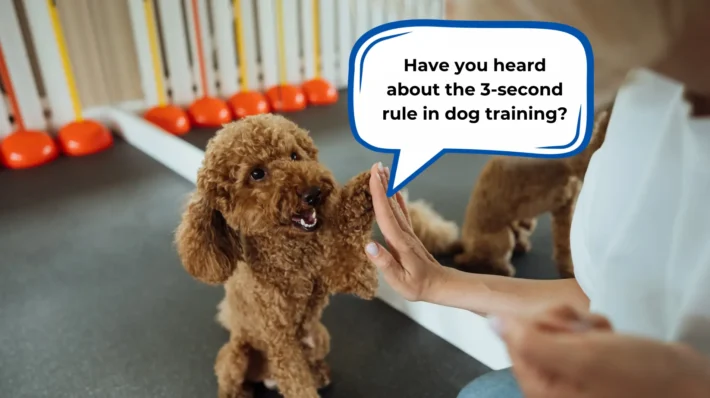
Have you ever wondered why your dog doesn’t respond the way you expect when you’re training them, no matter how hard you try? What I want to do now is introduce the importance of timing in dog training.
This article explains the 3-Second Rule, why it matters, and how to use it effectively. We’re going to look at when you’re rewarding a dog or correcting a dog’s behavior, how it can go wrong, and how you can change your approach to get a positive result.
REGISTER NOW FOR THE FREE WEB CLASS THAT TEACHES YOU HOW TO GET YOUR DOG TO LISTEN!Key Takeaways
- Never, ever punish your dog for coming back to you! Even if it took them ten minutes and a tour of the entire park to get there, the moment they arrive must be a positive one. This is the number one rule for recall.
- Stop calling your dog for things they hate. If “Come!” always means a bath or leaving the park, you’re accidentally poisoning the cue. Your dog will learn to associate that word with the end of their fun.
- Make yourself the most exciting thing in the environment. Your recall has to compete with squirrels and another dog. You have to be more fun! This means using high-value rewards and celebrating their return.
- Building a rock-solid recall is essential for their safety. When your dog sees you as a calm, confident leader who makes great decisions, they are far more likely to listen to you.
What Is The 3-Second Rule In Dog Training?
The definition of the 3-Second Rule is basically that you’ve got about three seconds to either reward your dog or correct dog behavior for it to be effective.
I want to make it clear: when I talk about “correction,” I’m not talking about anything like a shock collar or a prong collar, or hurting your dog, or causing them pain or fear.
However, sometimes I might say “NO” to a dog and make it very clear with a voice command. Or I may remove something from the dog, such as a treat, or put the ball in my pocket if they are not listening.
The concept here is that you’ve got three seconds to do it. If you do it much later than three seconds, the impact can lessen.
Lots of trainers have variations on this concept; it’s a well-discussed topic. But I want to be very clear that this is a guideline rather than some sort of rigid law. There’s nothing special about the number three. In some situations, with some dogs, it could be a lot later.
However, many dogs will respond very quickly to training if you can get it within three seconds. If you get it in one or two seconds, certain breeds, ages, and dogs who are just sharp will get it. For example, some Border Collies are so sharp, they are so quick. The quicker you can be, the quicker they will learn and change their behavior.
THIS FREE WEB CLASS HELPS YOU SAY GOODBYE TO DOG REACTIVITY FOR GOOD!Why Three Seconds Difference: Timing Equals Understanding

Think about how you, as a human, learn that something shouldn’t be touched. You don’t want to put your hand in a flame. The way you learn is by being given very quick feedback. You put your finger in the flame, and within half a second, you’re getting a burning feeling and you’ve moved your finger away. Your body learns very quickly not to do that. It’s the cause and effect principle, and it’s the same for a dog.
If a dog is barking, barking, barking for the ball and you immediately put the ball in your pocket, hide it, and walk away, your dog will very quickly get the idea that barking didn’t work. Dogs are actually far more logical than we realize. A lot of the time, what creates problems is that WE are not very logical. We confuse the dog by speaking a lot, and we’re very slow with our feedback.
Delayed Response = Loss of Control
Imagine a dog barks and barks, and then you put the ball in your pocket. This can be confusing because maybe you threw the ball a few times when they were barking before. If you miss the timing, especially with a young puppy or new dogs, it creates problems. If a puppy sits and you’re slow with the treat, the puppy thinks, “Oh, I thought you wanted me to sit, but clearly not,” and they’ll stand up. You’ve missed the opportunity.
This is one of the reasons I don’t like using clickers. If you have a clicker in one hand, a treat in the other, and a leash in the third hand (haha)… you’re going to struggle because you only have two hands! I’ve found removing the clicker simplifies things. Speed and timing are everything.
This is all about behavioral reinforcement. It’s about doing things at the right time to strengthen a desirable behavior or discourage an unwanted one. For example, if a dog jumps up on you and you immediately take them by the collar and walk them slowly into the bathroom for a little time-out, it doesn’t take long before the dog realizes that jumping up means being put in the bathroom. Very few dogs will jump on somebody more than three times if they know they’re going in the bathroom. Dogs are very smart!
How to Use the 3-Second Rule Effectively
Rewarding Good Behavior
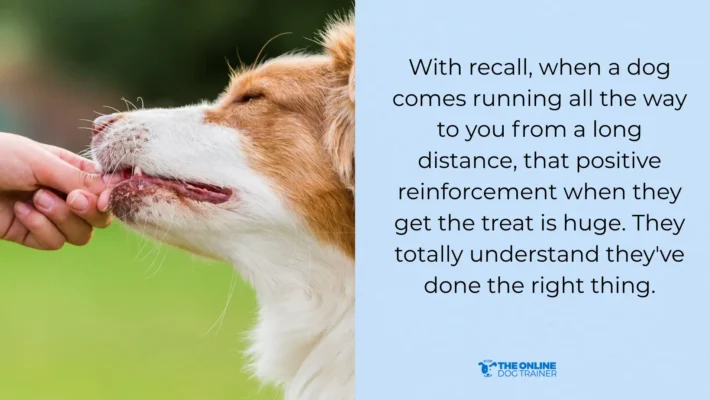
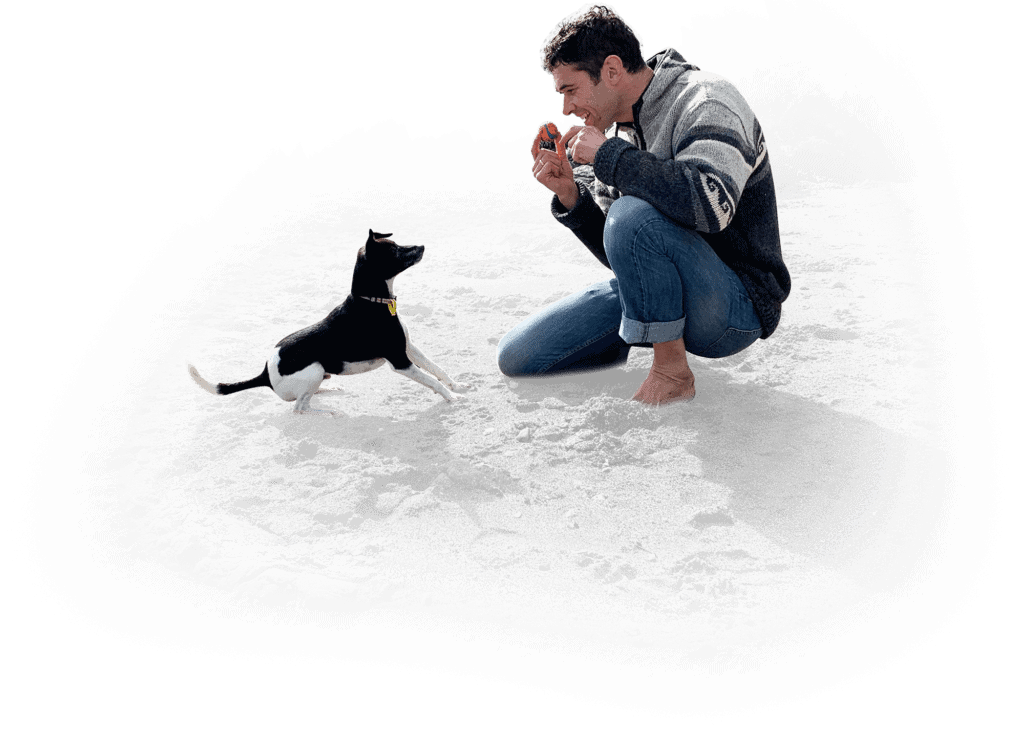
When rewarding good behavior, you can praise them with your voice or give the dog a treat right away after a sit, stay, or recall. With recall, when a dog comes running all the way to you from a long distance, that positive reinforcement when they get the treat is huge. They totally understand they’ve done the right thing.
I use the phrase: Call, Reward, Release. It all happens very quickly. The dog arrives at your feet, you say, “Good dog,” give them a treat, and let them go.
Correcting Unwanted Behavior
You need to calmly redirect the dog immediately. If a dog is jumping on you, whether during the initial greeting or along the way, put them in time-out right away. You can’t wait 30 seconds or a minute and a half; that would confuse the dog. They know what they are doing in that moment. If you wait, they could have stopped jumping and gone to lie down in their bed. If you put them in time-out then, they’ll be very confused and think, “Maybe I shouldn’t be lying in my bed right now.” Timing is everything.
Tips for Real-Life Scenarios
- At Home: If a dog is barking at the window, one of the final stages if they continue barking is to walk over, take them by the collar, and pop them in time-out. That’s so clear to a dog.
- During Play or Walks: If a dog is getting too silly, barking, or dominating another dog, just walk over, put a clip on them, and start doing what I call “Stop-Start, Change Direction.” You just walk the dog in little circles, calming them down without speaking. They will know they were taken away from the fun to calm their energy. It’s almost immediate. If you do it when the wrong behavior is happening, that’s even more powerful.
Four Common Mistakes to Avoid
Both you and your dog will benefit greatly if you remember these important tips while putting the 3-second rule to use.
- Waiting Too Long: This is the main one, whether for positive or negative reinforcement. If it’s too late, it’s no good.
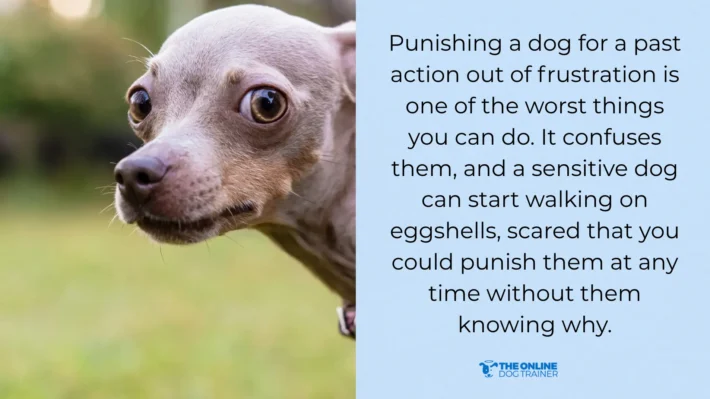
- Correcting After the Fact: Punishing a dog for a past action out of frustration is one of the worst things you can do for your relationship. It confuses them, and a sensitive dog can start walking on eggshells, scared that you could punish them at any time without them knowing why.
- Rewarding Bad Behavior by Mistake: I’ve seen this a lot: a dog does bad behavior after bad behavior, then kind of does a good behavior and gets a treat. For example, a dog barks and barks at the fence line, and ignoring you when you call. Then the person they were barking at disappears, so the dog runs over to you and gets a treat. You’ve just rewarded them for ignoring you and barking. All the dog thinks is, “Wow, I just scared that person away, and now my owner is giving me a treat!”
Tools and Techniques to Stay on Time
- Clicker Training vs. Verbal Markers: A clicker is simply a distinct sound that marks the behavior. You can achieve the same thing with a distinct verbal marker like a sharp “Yes!” or “Good dog!” in a high-pitched voice. Most dogs understand the energy of your voice, and you don’t have to fumble with a device. The sound simply tells the dog, “You’ve got it right, and a reward is coming.”
- Have Treats and Rewards Ready: Don’t have your treats zipped away in a pouch inside a bag. It can take too long to get them out. You need to have them in your hand, literally ready to present when your dog does something good.
- Stay Mentally Present: This is a huge one. If you’re walking your dog while on your phone, you’re not really dog training. 90% of your mind is on the phone call and not in your interaction with your dog. You have to have the mind space for training. Dogs have an incredible ability to know when you are with them and when you are not.
What If You Miss the 3-Second Window?
- Don’t Give Late Corrections: It’s far better that they get away with something than for you to damage the relationship by telling them off when they don’t understand why.
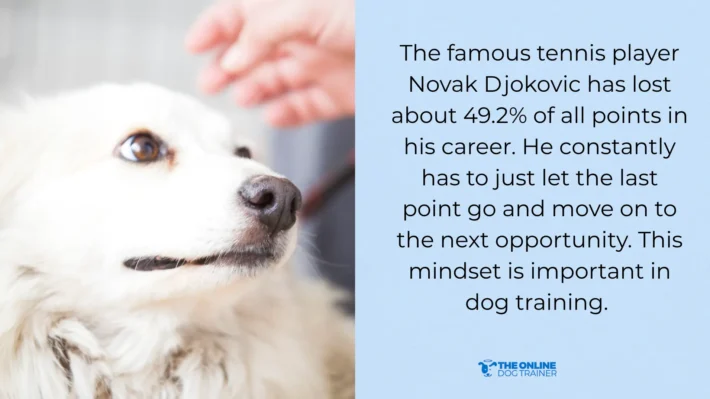
- Focus on the Next Opportunity: You’re going to make mistakes. Just let that one go. The famous tennis player Novak Djokovic has lost about 49.2% of all points in his career. He constantly has to just let the last point go and move on to the next opportunity. As a dog trainer, I always remind owners like you that this mindset is a really big thing when training your pet.
- Stay Patient and Consistent: Do your best and remember this is only a guideline. Eventually, you’ll understand your dog’s behavior better, the signs to look out for, and the cues to help you decide what you really need to do.
Frequently Asked Questions (FAQs)
- Is 3 seconds an absolute science? No, it is not. The 3-second rule is just something that sounds good. It might be 5 seconds, and it can vary with different dogs. Just don’t leave it for 20 seconds.
- Does it apply to all dog breeds and ages? Absolutely, yes. Just like with people, some dogs are quicker learners than others. You have to figure out how fast your dog responds and tailor your approach to them.
- Can I use it with older dogs or rescues? Absolutely. Just bear in mind that older dogs may be a bit slower to respond or might have arthritis. Rescue dogs are often just as sharp, fast, and keen to learn as any other dog.
- Is there anything else I can do to help my dog’s training? Yes. One of the main things you can do is make sure they understand that you are in charge. Establishing that loving leadership is more important than any of this training. That’s why I’m so passionate about putting the Dog Calming Code in place. This is where your dog calms down and starts focusing on you. Without that, all training is a little bit of a waste of time.
- How does the 3-second rule apply when I’m introducing two dogs, especially new dogs? What signs should I watch for during that first interaction? That’s an excellent question, as the first greeting is a crucial time to get it right. The 3-second rule is essential here. The process should begin on neutral ground, with both dogs on a loose lead. As the owners, your job is to watch the dogs’ body language, not each other. You’re looking for relaxed behaviour. A soft, sweeping wagging of their tails is a good sign. If you see concerning signs—like stiff bodies, a hard stare, or tails held high and rigid—you have three seconds to calmly step in, create space, and redirect their attention. Don’t wait for a growl. Stepping in early keeps you in control and prevents a negative interaction before it starts.
- I sometimes struggle to deliver a correction for bad behaviour within three seconds. Is it better to correct late, or should I just let it go as you mentioned earlier? As I said earlier, it’s far better to let it go. The entire purpose of the rule is to connect an action with an immediate consequence. A late correction is not just ineffective; it’s confusing. The dog has already moved on, and your correction won’t have its intended impact. It can damage trust because the dog won’t understand what it did wrong. Instead of worrying about a missed moment, focus on the next one. Being a fair and predictable leader is the most crucial part of this process.
- When I’m walking my dog, other owners sometimes let people approach to pet my dog on the head. How can I use this timing rule to better control the greeting process? This is a perfect scenario for proactive timing. The goal is to get in ahead of the interaction. The moment you see someone approach with the intent to pet your dog, that’s when your three seconds begin. Don’t wait for their hand to reach your dog’s head. Use your body to step between them and your dog, take firm control of the lead, and calmly say, “He prefers to be pet on the chest, not the head.” By stepping in early, you manage the interaction before it even starts, which is the best way to use this rule and advocate for your dog.
- Do wagging tails always mean a dog is friendly? I’m trying to read the signs from other dogs, but I’m not sure what to expect. This is one of the biggest myths in the dog world! Wagging tails simply mean the dog is emotionally aroused—it could be excitement, but it could also be nervousness or aggression. The key is to look at the rest of the dog. Is the body stiff or relaxed? Are the ears back or forward? A slow, stiff wag from a tense dog is a warning sign. As owners, it’s crucial to learn these different signs. If you can’t decide if the other dog is friendly, it’s always best to play it safe and create distance to maintain control.
- What are the most essential tools to have ready to enhance my timing and control during training? Honestly, the most essential tool is your focused mind—being present with your dog. But for physical tools, I recommend two things to enhance your timing. First, a standard, non-retractable lead. It gives you instant control and feedback that a long, flimsy lead can’t. Second, have your treats in your hand and ready to go. Fumbling in a pocket wastes those precious three seconds. These simple tools aren’t fancy, but they are what will allow you to deliver the clear, immediate feedback that this whole process is built on.
Final Thoughts: Training That Builds Trust
In summary, proper timing leads to faster, more reliable learning. However, the Dog Calming Code is the foundation. Without it, all the training can slide off, losing its impact if the dog doesn’t respect you as the one in charge.
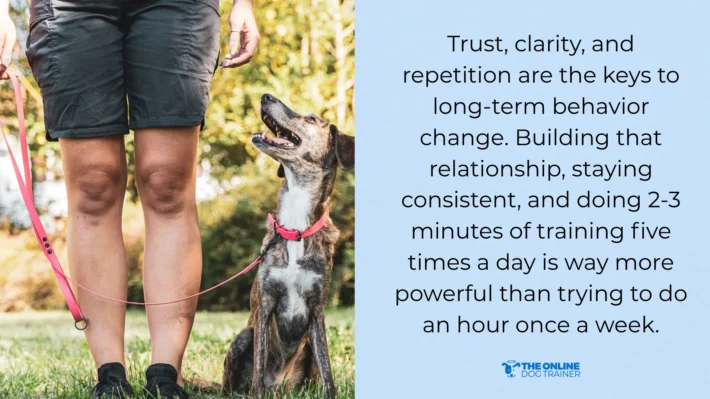
Trust, clarity, and repetition are the keys to long-term behavior change. Building that relationship, staying consistent, and doing 2-3 minutes of training five times a day is way more powerful than trying to do an hour once a week.
Parenting doesn’t just require finding the right bar of chocolate; rewards are not enough. There’s something bigger going on, and that’s winning their hearts and minds. It’s the same with your dog.
I invite you to try this rule, put it in place, and observe the results. But if you haven’t tried the Dog Calming Code yet, I encourage you to check it out. Let me know how it goes! If you’ve got any questions, ask the team—we’re happy to help.
JOIN HERE AND GET THE DOG CALMING CODE 100% FREE
~Doggy Dan 🙂