
If your dog shows aggression, don't waste a second resolving it. They don't get better on their own. If you find yourself wondering what to do about an aggressive dog, this guide is a game changer.
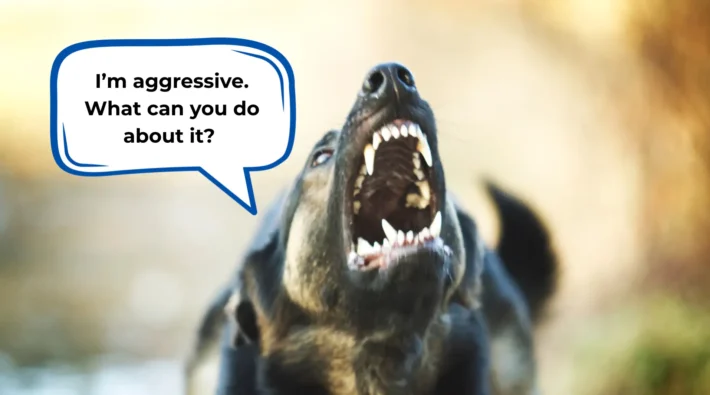
Dog aggression. It's one of the biggest reasons that people…
- Dump their dogs on the side of the road.
- Send their dogs to shelters.
- Have their dogs euthanized.
It's heartbreaking and tragic, but it happens every day.
Why? Because people truly don't believe that there is hope to change a dog's behavior. They fear that a dog's aggressive tendencies may put themselves or the people they love in danger.
Before we go any further, I want to say that I get it. And I don't blame anyone who takes preventative measures to ensure their safety.
If you've ever wondered what to do about an aggressive dog, I'm here to help. In this blog, you'll learn about what makes up a dog's aggressive behavior, and you'll understand how to address it properly.
Read on.
Key Takeaways:
- Understanding the root cause of why a dog might react aggressively is crucial. This aggression can stem from various factors, including fear. Recognizing if your dog is a fearful dog is first step in addressing the behavior effectively.
- While dog breeds aren't the primary determinant of aggression, understanding individual triggers and the context of the aggression, such as territorial aggression or dog-on-dog aggression within the same home, is vital for developing a management and training plan.
- Addressing canine aggression requires a multi-faceted approach that prioritizes safety, careful observation of triggers, veterinary evaluation, avoidance of stressors, and crucially, seeking guidance from qualified professionals. While training programs can be helpful, in some situations, rehoming might be the safest option for all involved.
You Can Fix Dog Aggression Of Your Own Dog
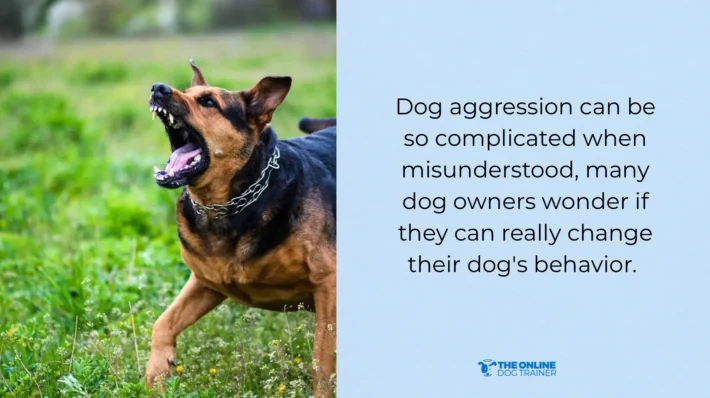
As a dog owner, I know that canine aggression is a serious issue for you, your family, and your dog. Canine aggression — when a dog displays a scary, alarming behavior — can escalate when left unresolved.
This behavior can be so complicated when misunderstood that many dog owners wonder if they can really change their dogs' behavior.
I have a family. And I would do anything to ensure my beautiful wife and children were kept safe from any harm that could come their way. I take safety concerns seriously.
Despite my wariness about aggression, I also know that dog aggression is an issue that can be fixed. With a little time and training, any aggressive dog can be given a second chance at living a safe, happy, and healthy life.
In fact, if you're looking for a quality program to help you get started, I highly recommend The Dog Calming Code.
I recommend starting with my Puppy Coach training program if you have a puppy.
These training programs will give you all the tools you need to help your dog calm down and relax so that aggression isn't an issue.
And there's one more thing I want to make clear…
REGISTER HERE AND DISCOVER WHY YOUR AGGRESSIVE DOG IS NOT HOPELESS; THEY CAN CHANGE!There Are Many Ways In Solving Aggressive Dog Behavior
In some cases, you'll be able to use the tips I give you and find success. In other cases, it might be necessary to rehome a dog, especially if you have small children or other at-risk animals.
Example: You may have a dog who is loving toward people, but hates cats. The cat's life is at risk if you can't curb this through behavior modification. This might mean you must find a new loving home for the dog with someone who does not own cats.
Indeed, the goal is to find a solution so the dog and cat can live peacefully, and it can be done! But if, after using mytraining techniques and consulting with a dog trainer, the behavior isn't changing, you may have to reevaluate your situation.
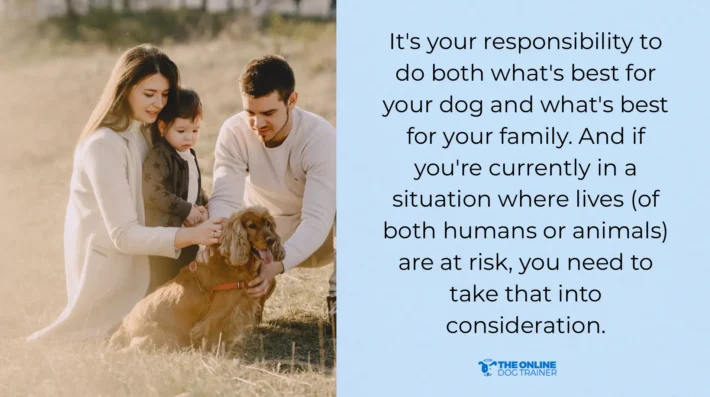
It's your responsibility to do both what's best for your dog and what's best for your family. And if you're currently in a situation where lives (of both humans or animals) are at risk, you need to consider that.
Why Is My Dog Aggressive?
It can be a puzzle sometimes when pet dogs that were previously gentle and sweet display aggression. But why does this happen? Here are several reasons.
Serious Injuries
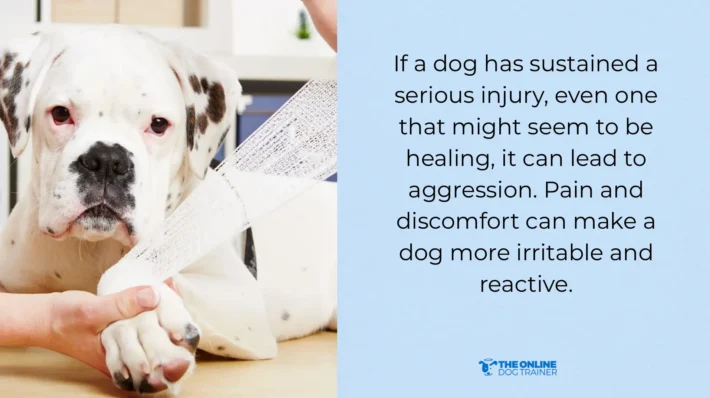
If a dog has sustained a serious injury, even one that seems healing, it can lead to aggression. Pain and discomfort can make a dog more irritable and reactive. An injured dog might display aggression to protect itself from further pain or unwanted handling of the affected area. They might snap or growl even at familiar people or other pets.
Predatory Aggression
This type of aggression is driven by the instinct to hunt and can be triggered by movement. While true predatory aggression towards humans involves dogs rarely biting with the intent to kill (it's often more of a chase and grab), it can still be dangerous, especially towards smaller animals. This instinct can be heightened in stimulating environments, so avoiding dog parks is often advised if your dog shows predatory tendencies towards other animals. Encounters with unfamiliar dogs in such settings can also trigger this drive.
Possessive/ Protective Aggression
This type of aggression arises from a dog's response to guarding resources they deem valuable. It's a dog's instinct to protect resources that help them survive. This could be their food, toys, sleeping area, or even a person. The aggressive behaviour here aims to keep others away from these perceived possessions. It can manifest as growling, snapping, or biting if someone approaches the protected item or individual.
Direct Aggression
Sometimes, aggression isn't related to protecting something or hunting. Direct aggression, which can affect aggression towards humans and other dogs, can stem from underlying issues like fear, anxiety, or even learned behaviors. This type of aggression can appear more “out of the blue” and might be triggered by things that make the dog feel threatened or uncomfortable, even without a clear resource being involved.
Sex Related Aggression
Hormones and reproductive instincts primarily drive sex-related aggression in dogs. This type of aggression is most often observed in intact male dogs who may challenge and fight with other males, even without a female present, due to competition for mates or establishment of social hierarchy. It can also manifest as maternal aggression in females.
FREE WEBINAR: LEARN THE TRAINING SECRET THAT STOPS ALL KINDS OF AGGRESSIONFear Aggression Training: The Amazing Ability To Change Aggressive Behavior in Dogs
I remember my mum telling me when I was young…
‘You know what I love about you, Dan? You always look after the kids who are weak and need help.' She wasn't talking about dogs then, but it's true.
And I guess I haven't changed!
My heart always wants to reach out and help. This morning, I was able to help a sea bird injured on the beach, and I often rescue honey bees that I find lying exhausted around the property. All they need is a little sugar solution and a place to rest before heading back to their hive in the morning.
I've always loved the underdog.
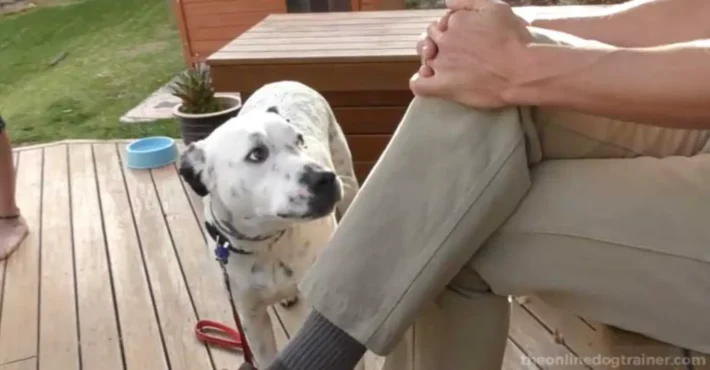
Buck, a dog I've had the privilege of working with, is one of those ‘underdogs' who captured my heart. He's one of the male dogs I learned much from…and I think you will too.
So, before you continue, check out this quick video clip of me working with Buck.
Now that you've watched the video, I thought I'd share a few things that come to mind as I look back at my time with Buck about dog aggression and a dog's ability to change.
Read the rest of Buck's story here.
Training Aggressive Dogs: Understanding Dominant and Fearful Aggression
Over the years, I've worked with thousands of unruly and aggressive dogs who were hostile to other dogs. And that's what this is about: understanding dog-on-dog aggression.
One encounter that sticks in my memory is a Great Dane Border Collie cross who weighed close to 80 kg and was so aggressive that when I brought him out of the car on a double leash my dogs hid in the bushes on the far side of the park.
On the other end of the spectrum, I've also seen tiny little dogs snap away at my biggest dog, Jack, whilst he calmly ignored them and carried on smelling the flowers!
And from these experiences, I've learned that size, breed, color, etc., tend to have nothing to do with why a dog is aggressive.
With that in mind, I know that when working with an aggressive dog, I have to answer a few questions…
‘Why did they do what they did?'
‘What was the goal of their aggression?'
‘What made them do it?'
If we can answer those questions, then we get a better understanding of where a dog is coming from and then can form an approach that will help him start to relax and overcome his aggression.
Clearly, there are many different reasons why a dog may be aggressive. He may have a fear of something happening. His aggression may be linked to some previous abuse. Or he may feel threatened of somebody or simply have a serious lack of confidence.
If I tried to go into all of those problems, we'd be here for days.
So, today my focus is going to be on how to better understand the difference between dominant and fearful aggression–two of the most common types of aggression. Then you'll be able to get an idea of what you can do to help aggressive dogs.
Keep reading to discover more about the different types of aggression.
KNOW THE #1 REASON WHY DOGS ARE AGGRESSIVE + THE ULTIMATE SOLUTION TO AGGRESSIONStop Dog-on-Dog Aggression At Home
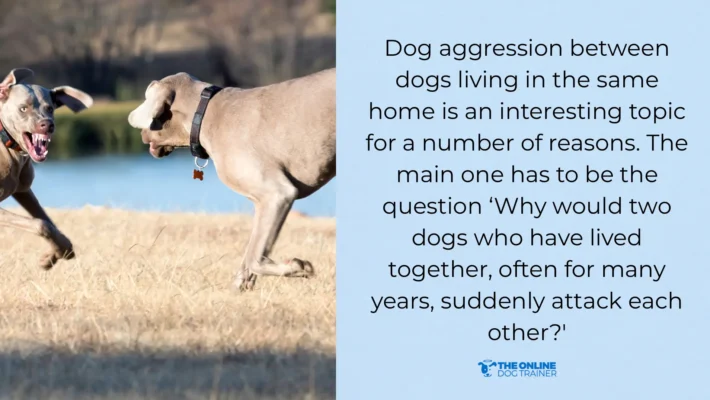
Dog aggression between dogs living in the same home is an interesting topic for a number of reasons. The main one has to be the question ‘Why would two dogs who have lived together, often for many years, suddenly attack each other?'
Let's explore: Why are my dogs fighting?
Now, I should mention here that I am not talking about little squabbles, growls and minor disagreements. This sort of behavior is commonplace and usually over in a matter of seconds with absolutely no damage or injuries to speak of.
Over the years you become used to hearing loud eruptions of noise in another room, and sprint to the scene of the crime only to find all the dogs lying around quite happily looking at you as if to say, ‘What's the problem? No drama, we've sorted it out.'
Serious Fighting
The serious fighting that I am talking about is very different where the dogs are out to injure, dominate or hurt the other dog. It leads to puncture wounds, visits to the vet and can end up very serious.
In this situation, it is clear that the dogs are not scared of each other, like they may be of an unknown dog that happens to pass by the property. And, after a fight, the dogs may be wary and display some signs of fear for one another, which generally subsides until the next flare-up. But, this behavior still doesn't explain why, after years of playing together, they have suddenly become arch-enemies.
Triggers Are Not The Key
Even though there may be an obvious trigger that has set the dogs off, do not be fooled into thinking this is the cause of the problem. A bone, a ball, trying to receive pats or cuddles from an owner or increased stress levels in a home can all add to the chance of dogs fighting–but it's not the cause. The real long-term solution does not lie in the trigger.
Power Of The Pack
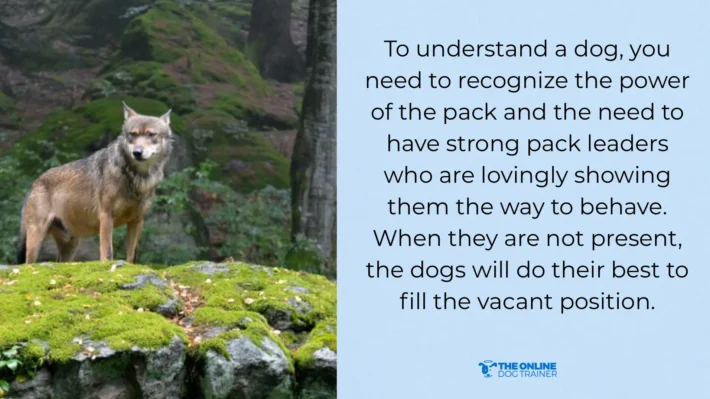
To understand a dog, you need to recognize the power of the pack and the need to have strong pack leaders who are lovingly showing them the way to behave. When they are not present, the dogs will do their best to fill the vacant position.
With two dogs present and no human filling the role of decision maker or leader, it is often a case that they will simply fight it out between them to see who will be in charge.
Of course, every situation is different in the details, but in a nutshell, this is how the dogs see it, and the solution is no different. You need to become the pack leader. The solution is that simple.
In-home fighting is not something that can be solved using pats, cuddles, positive reinforcement and treats alone. You need something more. I often say it's about understanding dog psychology and where the dog is coming from rather than just ‘training the dog'.
Continue reading to learn more about becoming the pack leader here.
GET DOGGY DAN’S MOST TRUSTED DOG TRAINING PROGRAM FOR FREEWhen Dogs Bite Their Owners: Why It Happens and How to Prevent It
Ever wondered why on earth a dog would bite his owner? Or maybe your question is even closer to home, such as, ‘why did my dog bite ME?'
Why did they do it? Was it random? Have they tasted blood? Is this the end? Can anyone help now? Is it too late?
When dogs bite it can be extremely stressful for all involved. The good news is that there is a solution, and it's not rocket science.
Read the rest of the post here.
Warning Signs That Your Dog Is Turning Aggressive
Here are 5 signs in your dog's body language that tell you they're escalating towards aggression. It's important to recognize these early on:
Sign #1: Hard Stare and Tense Body Language
Instead of a relaxed, soft gaze, an aggressive dog might give a direct, unwavering stare. Their body will often become stiff and tense, with their weight shifted forward. This is a sign of high arousal and potential intent to engage.
Sign #2: Snapping or Air Snapping
These are often quick, forceful movements of the mouth without making contact. They're a clear warning sign that the dog is uncomfortable and saying, “Back off!” Even if there's no actual bite, they indicate a willingness to use its teeth.
Sign #3: Growling
While sometimes a playful sound, a low, rumbling growl, especially when accompanied by other tense body language, is a serious warning. It's the dog's way of saying they feel threatened and may escalate if the perceived threat doesn't move away. If a dog growls when you come closer to their food bowl, take it as their warning.
Sign #4: Showing Teeth
When a dog pulls back their lips to expose their teeth, particularly the canines, it signals potential aggression. A wrinkled muzzle and a tense posture often accompany this.
Sign #5: Lunging with Barks or Snaps
A lunge forward is a significant escalation, especially when paired with aggressive barks or snaps. It indicates the dog is moving to close the distance and potentially make contact. This behavior needs to be taken very seriously.
THIS BESTSELLING DOGGY DAN PUPPY PROGRAM WILL CHANGE YOUR DOG!What To Do If Your Dog Starts to Show The First Signs of Canine Aggression
Understanding and addressing canine aggression is paramount for everyone's safety concerns. When a normally friendly dog begins to behave aggressively, it's crucial to examine the underlying causes from the dog's perspective. This behavior isn't always straightforward; it could stem from defensive aggression due to a perceived threat, or perhaps a form of possessive aggression over resources, sometimes even escalating to direct aggression if left unmanaged.
While predatory behavior might also be a factor in some instances, it's important to remember that such displays require careful assessment. Initiating obedience training is often a vital step, but for significant aggressive response issues, seeking professional help is highly recommended to ensure the dog's progress and the well-being of all family members.
Make Sure Everyone's Safe, Immediately
This is the top priority. If your dog is reactive, you need to prevent bites. That might mean separating it from the other dog right away, using its leash, or putting it in a different area.
Start Paying Close Attention To When It Happens And What Triggers It
Try to be like a detective and notice every little detail. Does it only happen with certain dogs? When they're on a leash? Around food or toys? Write it down so you can see patterns.
Get Your Dog A Check-up At The Vet
Sometimes, a dog's behavior can change because they're not feeling well or something else is occurring medically. It's important to rule out any health issues.
Do Your Best To Avoid The Situations That Set Them Off
Once you know what makes your dog aggressive, keep them away from those things for now. If they react to other dogs on walks, maybe walk them in quieter areas or at different times. Reducing their stress is important.
Reach Out To A Professional Dog Trainer Or A Veterinary Behaviorist
Dealing with dog aggression can be tricky, and getting expert help is usually best. A qualified professional dog trainer or a certified applied animal behaviorist can assess your dog's specific situation and create a training plan to help manage and improve their behavior.
FREE WEBINAR WILL TEACH PROVEN TECHNIQUES TO REDUCE YOUR DOG'S REACTIVITY FASTExcited and Aggressive Dog Greetings
‘So, is my dog aggressive, or is he just excited?’ This is the big question that many people (and often me) ask themselves as their dogs race up, bounding and barking at other dogs that they meet.
The answer is not simply one or the other; in most cases, it is a bit of both. As I explain in the podcast, the more excited your dog is, the greater the chance his behaviour may be interpreted as aggressive or threatening. The calmer your dog is, the better your chances of a quiet encounter.
What should you do when your dog is pulling and lunging?
Listen to my podcast to find out…
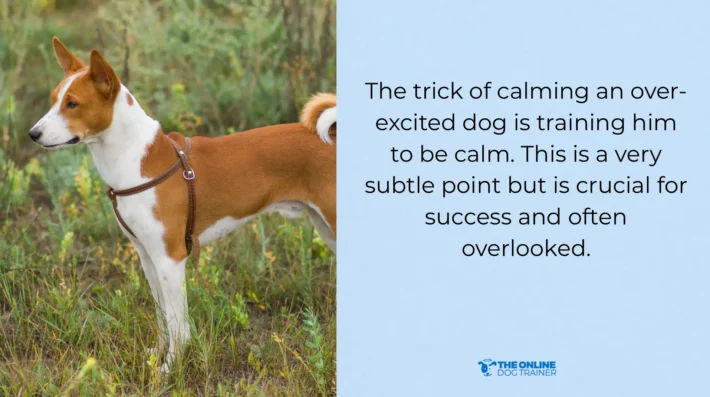
The trick to calming an overexcited dog is training him to be calm. This is a very subtle point, but it is crucial for success and often overlooked.
For my tips and tools on how to do this, read the rest of the article here.
I really hope that these tips and tools will help you help your dog overcome his aggression issues. Remember, there is always hope, no matter how bad the situation is.
Best of luck!

~Doggy Dan 🙂

8 Responses
Hi
i have a female mixed Pitbull and bull terrier.
she is very calm and loving with family members.
she has serious bitten 3 people already. i have been urged to put her down.
i dont want to do this,
please help
Hi Yunus,
The most important thing to do when dealing with dogs who bite or are aggressive towards people is to understand why they are behaving this way. Once you do you can put measures into place to address their behaviour and start to calm things down. For example some dogs don’t like being approached by strangers and having their personal space invaded, it can leave them feeling vulnerable, so asking people not to approach your dog will help if this is a contributing factor.
My website TheOnlineDogTrainer.com shows you how to overcome this behaviour…maybe take a quick look…we currently have a FREE trial for 3 days…all the best Doggy Dan
How do I deal with a dog who is aggressive when disciplined?
Hi Rene,
Addressing unwanted behaviours in our dogs should always be done in a way that allows the dog to learn what behaviours are expected of them. The best approach when doing this is to be really clear and calm in your actions so as not to add stress or excitement to the situations. The information you give your dog may need to be different depending on the behaviour and situation they are in. For example verbally scolding or getting angry or upset with a dog for their behaviour can actually be really counterproductive and make their behaviour worse. They need to be able to understand exactly which behaviour they need reign in and if you are not clear in doing this or providing the right environment for learning then it can lead to confusion and frustration on their part. We take a lot of care in providing owners with the strategies and techniques to help overcome a vast range of unwanted behaviours, effectively and for the long-term. Maybe take a quick look at my website TheOnlineDogTrainer.com …its a $1USD trial for 3 days…all the best Doggy Dan
Hi Dan, I have a 4 yo Shorkie who is so protective of me that he will bite my husband if he comes near me. If I am not home, Bullet loves him and sits in his lap. He even does it often when I am home. He doesn’t want anyone else to come near me but he doesn’t bite them. Is there hope?
Hi Phyllis, yes there is hope and believe it or not I have worked with quite a few dogs who were protective of their owner. In most cases it all boils down to your dog believing that he is entitled to keep other rival males from approaching his female. Sounds a bit odd I know but in the minds of our dogs it’s perfectly sensible! If your husband approaches you make sure that he ignores your dog, especially avoiding eye contact. If your dog growls at your husband as he approaches then I would recommend placing your dog out of the room for a minute or two, and only allow him back in when he is silent for a few seconds first. This is all about showing him that you decide who gets to approach you and if he tries to intervene then he will lose you. There is no need to tell him off or get upset, just let your calm and consistent actions do the work for you. He will learn that if he wants to stay with you then he had better behave appropriately!
My website TheOnlineDogTrainer.com goes into this in a lot more detail if you were interested…maybe take a quick look…its a $1USD trial for 3 days…all the best Doggy Dan
Hi Dan
My daughter has two mixed lab dogs who are 3-4 years old.One is a really good dog and the other is very aggressive towards other dogs in the home including her sister.We have tried timeout putting her in a different room and nothing seems to help,she also growls sometimes at people who try to touch her,any suggestions?
Hi Susan, it’s really hard to provide a detailed solution to any behavioural issue in a short Blog post. The best long-term approach is to deal with the cause of the behaviour so that dogs no longer feel the need to exhibit those behaviours in the first place. My website TheOnlineDogTrainer.com shows you very clearly how to achieve this as we have a very detailed section on Aggression…maybe take a quick look…its a $1 trial for 3 days…all the best Doggy Dan