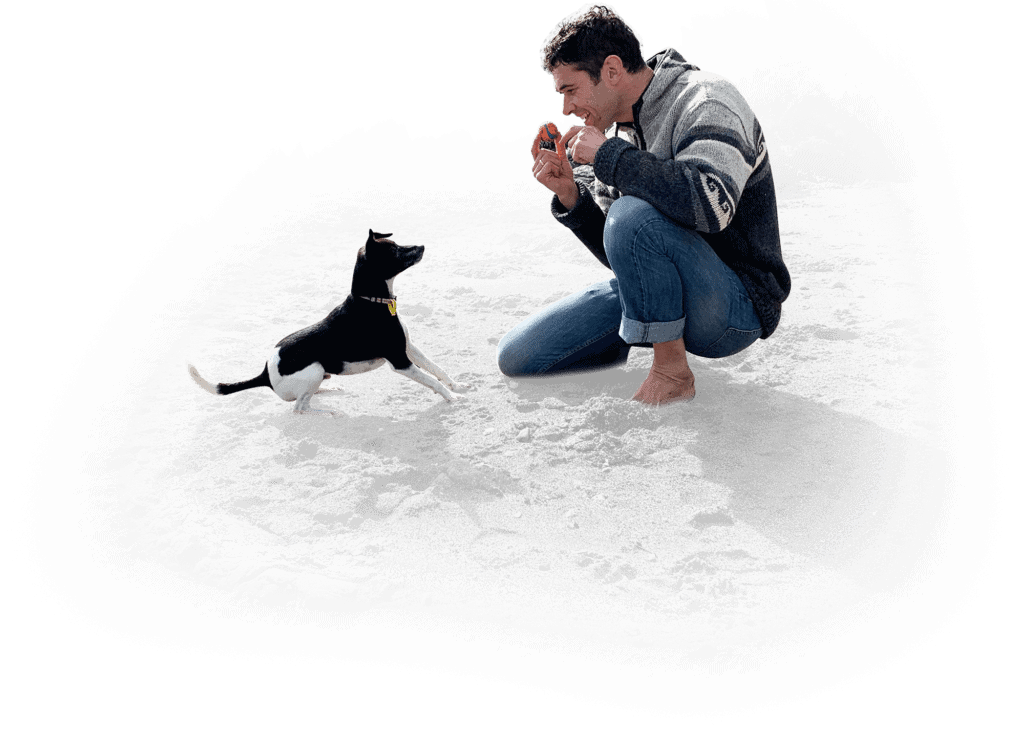
Dog communication is one of the impressive skills that seem to come naturally to dog owners.
I’m mind-blown by the idea that even though our dogs
do not talk, they have this amazing capacity to let their needs be known. Through their gestures, and actions, and sounds, our pets help us learn how dogs communicate.

Our dogs want us to understand them!
As a dog trainer, I always emphasize to dog owners that one of the best ways to raise and love a dog starts with understanding them.
In fact, I have included some of the best practices for communicating with dogs in my Dog Calming Code and Puppy Coach programs.
Dogs may not speak our language, but they have their own unique ways of telling us what they need. It's up to us as their owners to learn to read those cues and respond to them with love and compassion.
And this blog is here to help you with that.
Key Takeaways
- Our dogs communicate with us through small, easy-to-miss signals. Dog owners should be sensitive with dog communication.
- When your dog knows that you understand them, their trust towards you increases. In turn, your bond becomes stronger.
- Dogs communicate love, hunger, discomfort, anxiety, and frustration through different ways.
Jack Needs a Blanket: What My Dog Taught Me About Canine Communication
As an experienced dog trainer, I have seen countless instances where dog owners struggle to catch their dogs' messages, especially when their pets are uncomfortable.
It breaks my heart to see these dogs suffer in silence because there’s misunderstanding despite dog owners doing their best.
I myself have gone through a similar struggle.
My dog, Jack, is a big and tough Catahoula leopard dog. At one glance, you’d think that Jack can handle everything!
One winter day, despite his resilience, I noticed that he was shivering even though he was wearing his jacket.
At first, I couldn't understand what was wrong with him! After all, he had his coat on, right?
But then I realized that I needed to think like a dog to truly understand his needs.
I immediately got Jack a warm blanket, and as soon as he snuggled up in it, his shivering stopped.
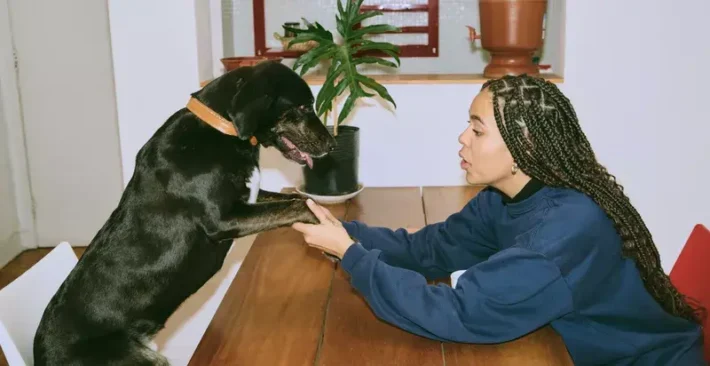
The look of relief on his face melted my heart, and I realized just how important it is to pay attention to our dogs' messages, especially when they're uncomfortable.
For me to understand Jack, I had to do something: communicate with a dog by thinking like a dog.
Understanding Dog Communication: Why It’s Important to Know How Dogs Communicate
Dogs communicate through a variety of non-verbal cues, such as body language, facial expressions, and vocalizations. Understanding these cues is essential for building a strong bond and trust with your dog.
Have you ever seen the eyes of your dogs lighting up when you get what they want to tell you?
Oh the wagging tails and the excited jumps that seem to say “Hurrah! You understand me!”
But apart from the joy of communicating with your dogs, there are also other big reasons why it’s crucial for you to know how dogs communicate.
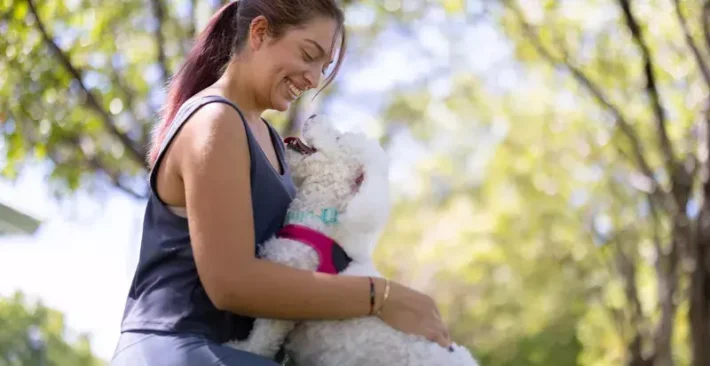
The list below includes several reasons why learning to understand dog communication is a skill every dog owner must have.
Knowing How Dogs Communicate Can Prevent the Negative Effects of Misunderstanding Dogs
Let’s take this example: your dog is thirsty and they want water. However, you read their actions as boredom.
So you pour toys in front of them, but no water. It’s going to be no surprise if your dog ends up feeling frustrated and desperate!
They’d probably say “Does mom/dad really get me?”
Misunderstanding your dog's communication can lead to frustration, confusion, and even aggression.
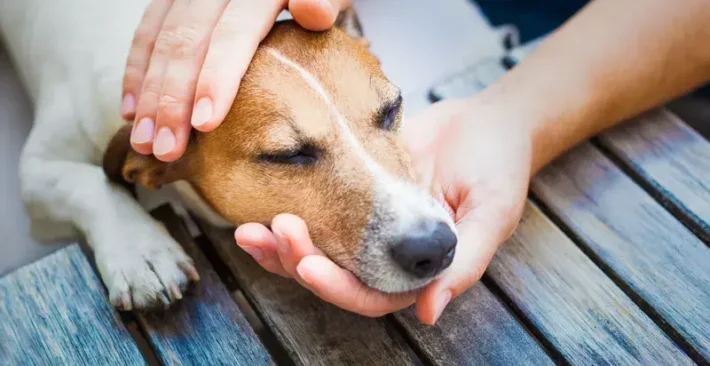
By learning to read your dog's body language and other signals, you can avoid misunderstandings and build a strong relationship and stronger trust.
Discover the powerful, force-free method that’s helped over 100,000 dog owners finally fix reactivity—without treats, tricks, or yelling.
Knowing What Your Dogs Truly Want to Communicate Can Help You Meet Their Needs
Dogs have different ways of expressing their needs and wants, and understanding their communication can help you provide for them better.
For example, a dog who is pacing and whining may need to go outside, while a dog who is cowering and avoiding eye contact may be feeling scared or anxious.
Providing the right help not only saves your pet from danger or discomfort, but also sends a message to your pet that they can trust you.
When Your Dogs Know That You Get Them, Your Training Improves
Communication AND trust are crucial in dog training.
Understanding your dog's body language can help you know when they are ready to learn, when they need a break, and when they are feeling overwhelmed.

Because dogs know you feel and care for them, this can make training more effective and enjoyable for both you and your dog.
When Your Dog’s Needs are Met, Your Bond Becomes Stronger
Dogs are social animals and thrive on connection with their owners.
When you understand your dog's communication, you are better able to meet their needs, build trust, and foster a deeper bond.
11 Canine Body Language Dogs Use to Talk to You
Are dogs hard to understand?
Quick answer: no, if you know these ten body language cues that dogs use to communicate with you.
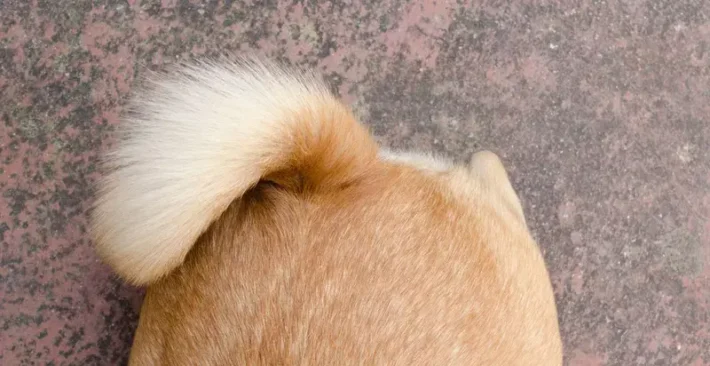
#1: Tail Wagging
Dogs wag their tails when they are happy or excited. The speed and direction of the tail wag can also convey different messages. For example, a slow wag may indicate uncertainty or caution.
On the other hand, fast wag may indicate excitement.
#2: Ear Position
Dogs use their ears to communicate their mood and intentions. Ears held forward and up can indicate attentiveness or alertness, while ears pinned back against the head may indicate fear or anxiety.
#3: Body Posture
A dog's body posture can communicate their mood and intentions. A relaxed dog will exhibit loose body posture. A tense posture may indicate aggression or fear.
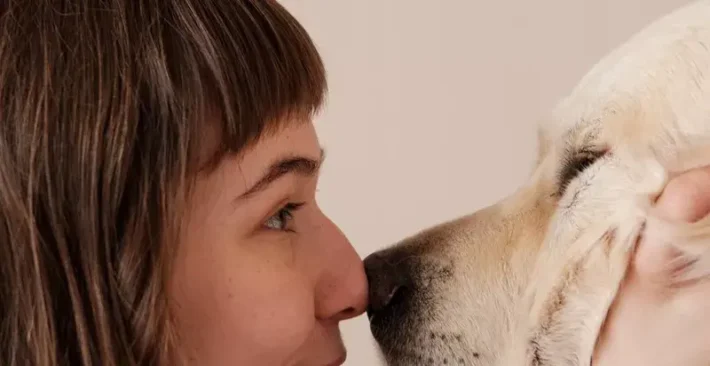
#4: Eye Contact
Dogs use eye contact to communicate with their owners. Direct eye contact can convey trust and affection, while avoiding eye contact may indicate fear or anxiety.
#5: Barking
Dogs bark to communicate a variety of messages, including excitement, warning, and distress. The tone and frequency of the bark can also convey different meanings.
#6: Licking
Dogs may lick their owners as a sign of affection, or to communicate a need, such as hunger or thirst. Moreover, licking is also a dog’s way to welcome or greet you.
#7: Yawning
Dogs may yawn when they are stressed or anxious. It can also indicate tiredness or boredom, too.
#8: Growling
Dogs growl as a warning sign, to communicate discomfort or aggression. Growling is also a way for dogs to communicate their feeling of being cornered.
#9: Sniffing
Dogs use their sense of smell to communicate with the world around them. Sniffing can also indicate curiosity or interest.
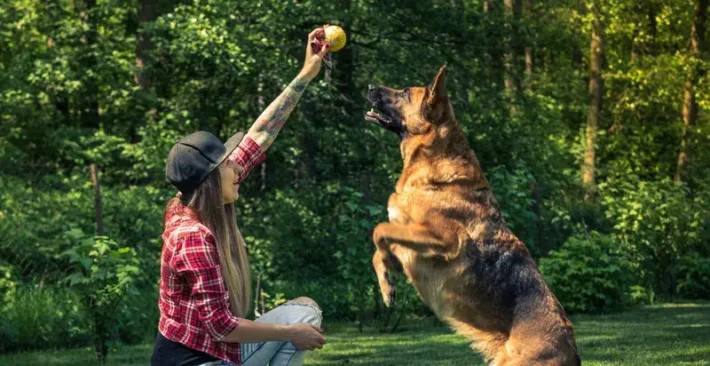
#10: Jumping
Dogs may jump up to greet their owners, or to communicate excitement or affection. However, it can also be a sign of dominance or aggression.
#11: Dog Facial Expressions
Beyond their eyes and ears, a dog's entire face can reveal their emotional state. A relaxed and happy dog might have a soft, open mouth that looks like a smile. Conversely, a stressed or anxious dog tends to pull their lips back tightly, lick their lips frequently, or show the whites of its eyes (known as “whale eye”). A wrinkled nose and bared teeth are clear warning signs of discomfort or aggression.
Dog Communication Through Vocalization
Dogs are highly vocal animals and use a range of vocalizations to communicate with us and other dogs.
Listen to barks, growls, howls, whines, and yelps because these are just some of the many ways dogs vocalize. Each sound has a specific meaning and can convey different emotions or intentions.
For example, a bark can indicate excitement, aggression, or alertness, while a whine can signal anxiety or distress.
Dogs also use their voices to express their wants and needs, such as when they're hungry or in need of attention.
As a dog owner, it's important that you pay extra attention when your dogs start to do vocalizations. We can use their different sounds as cues in order to better understand and communicate with them.
Does Their Personality Affect the Way Dogs Communicate?
Dog owners often ask me “Doggy Dan, does my dog’s personality affect the way they communicate?”
The quick answer is yes. Because their personality is a big factor on how they express themselves, their communication style can totally differ from other dogs.
How Confidence Level Affects Dog Communication
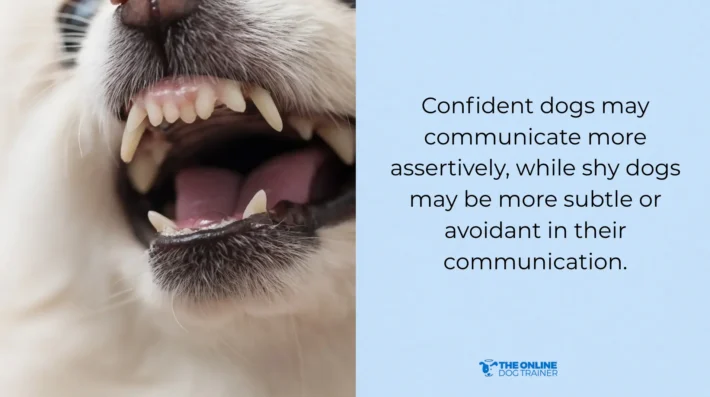
Confident dogs may communicate more assertively, while shy dogs may be more subtle or avoidant in their communication.
Energy Levels Influence Dog Communication
High-energy dogs may communicate more boisterously or use more physical gestures, while low-energy dogs may be more subdued.
History
Dogs who have had negative experiences in the past may communicate differently than those who have not, such as being more fearful or defensive.
Training and Socialization
Dogs who have received training and socialization may be more confident and communicative, while those who have not may struggle to express themselves clearly.
Understanding your dog's personality and how it affects their communication style can help you better interpret your dog's needs and behaviors.
Dog Communication Cues: Common Ways Dogs Communicate Anxiety
When you are adept at picking up signs of anxiety in dogs, you can take steps to help your dog feel more comfortable and secure.
Once your dogs communicate feelings of anxiety, you can offer techniques such as massage or aromatherapy, or seeking professional help if necessary.
Here are ways dog communicate anxiety.
Anxiety Cue #1: Pinned Back Ears
When a dog is anxious, they may pin their ears back against their head as a way of communicating their discomfort.
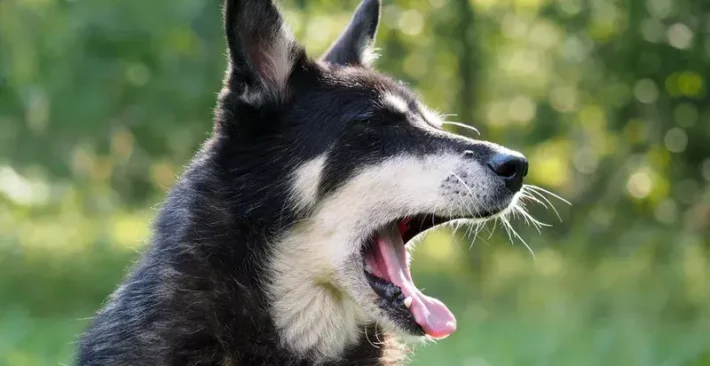
Anxiety Cue #2: Excessive Licking or Yawning
Dogs may lick their lips or yawn excessively when they're feeling anxious, which can be a way of communicating their stress.
Anxiety Cue #3: Tucked Tail
If your dog's tail is tucked tightly between their legs, this is often a sign that they are feeling threatened or scared. Be aware of this since aggressive behavior can start from this.
Anxiety Cue #4: Dogs Communicate By Avoiding Eye Contact
Your dog's eyes tell a lot about how they're feeling. Dogs may avoid direct eye contact when they're anxious, and instead may look away frequently or avert their gaze.
Anxiety Cue #5: Raised Hackles
When a dog's hair stands up along their spine and neck, it can indicate that they're feeling anxious or unsafe. This happens in new territory, around unfamiliar dogs, or with a perceived threat.
Dog Communication Cues: Common Ways Dogs Communicate Hunger
In my opinion, signs of hunger can be quite difficult to pick up. Unless your dog has a regular feeding routine, it’s important to take note of the common hunger cues from dogs.
Hunger Cue #1: Whining or Whimpering
Dogs may vocalize to indicate that they are hungry. Whining or whimpering sounds can be a way of communicating to their owners that they want food.
Hunger Cue #2: Pacing or Following
If a dog is hungry, they may pace back and forth or follow you around in the hopes of getting food.
Hunger Cue #3: Increased Activity Level
Some dogs may become more active when they're hungry, such as by running around more or playing with toys. This can be a way of signaling you that they need food.
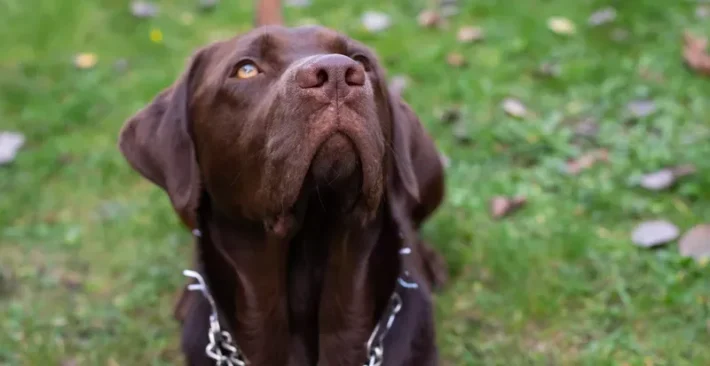
Hunger Cue #4: Begging
Dogs may beg for food by sitting near you and looking up to you with pleading eyes. They may also paw or nudge at you with their nose to get attention.
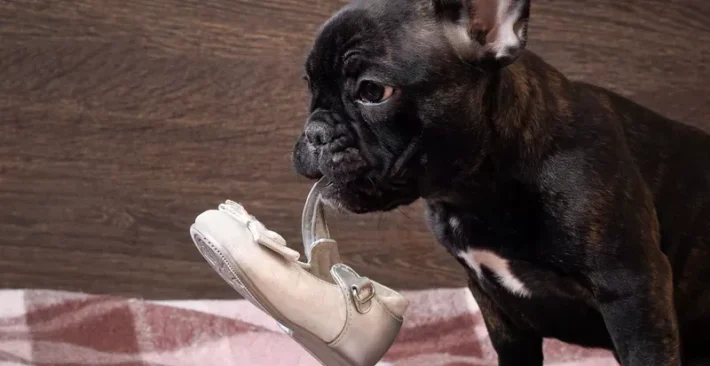
Hunger Cue #5: Eating Non-food Items
In some cases, dogs may eat non-food items when they're hungry or have a strong desire to eat. This behavior, known as pica, can be a sign that the dog needs more food or is not getting the proper nutrients in their diet.
Dog Communication Cues: Common Ways Dogs Communicate Discomfort
Discomfort in dogs can come in many forms, such as pain, hunger, cold, or itching. They may communicate this through various behaviors such as whining, whimpering, excessive licking or scratching, or avoidance of certain activities or areas.
Dog owners should pay attention to changes in their dog's behavior or routine and look for signs of discomfort, as addressing these issues promptly can improve their dog's overall health and well-being.
Discomfort #1: Pain
Dogs may whine, whimper, or cry when they are in pain. They may also limp or favor one side of their body if they are experiencing discomfort in a specific area. Deciphering this includes understanding of ear and eye position, body position, and facial expressions.
Discomfort #2: Hunger
Dogs may become restless, pace around, or even become vocal when they are hungry. They may also sniff around their food bowl or look towards their owner for food.

Discomfort #3: Cold
Dogs may shiver or shake when they are cold. They may also try to curl up in a warm spot or seek out a blanket or cozy spot.
Discomfort #4: Itchiness
Dogs may excessively scratch or lick certain areas of their body when they are itchy. They may also rub their body against furniture or carpet to try to alleviate the discomfort.
Dog Communication Cues: Common Ways Dogs Communicate Love
I always tell this to dog owners: dogs come with the biggest, purest love; and they want us to feel it! Us humans show love through human communicative gestures. The good news is, dogs also have a way to show their big affection for you.
Here are some ways that they tell you they love you!
Love Cues #1: Tail Wagging is How Dogs Communicate
Is your dog coming to you with a wagging tail? Take that as a sign of overflowing love! Dogs talk a lot with their tails!
A wagging tail is often a sign of happiness and excitement in dogs. When dogs smile and wag their tails, it can also mean that they are showing affection towards you, their owner.
Love Cues #2: Snuggling
One of the most common signs of “I love you, furmom and furdad” in dogs is the famous dog snuggle.
Dogs may snuggle up against you or lay their head on your lap as a way of showing love and affection. This physical contact can be comforting and reassuring for both the dog and you.

Love Cue #3: Eye Contact
Dogs often make eye contact as a way of showing love and trust. Direct eye contact with a soft, relaxed gaze can be a sign that your dog feels safe and connected to you.
Love Cue #4: Licking
Dogs may lick your face or hands as a way of showing affection. This behavior is often seen as a way for dogs to groom their pack mates and show affection. What’s more is that licking is a big sign that they’re at home with you.
Love Cue #5: Playfulness
Dogs may engage in playful behavior with their owner as a way of showing love and affection. This can include fetching a ball, playing tug-of-war, or running around in the backyard. When your dog is in a playful mood, they may do the “play bow” which is a clear signal that a dog wants to play. The dog lowers its front end to the ground while keeping its rear end raised in the air.
FREE WEBINAR
“Stop Dog Reactivity”
Discover the powerful, force-free method that’s helped over 100,000 dog owners finally fix reactivity—without treats, tricks, or yelling.
How to Have Better Communication With Your Dog: Dog Communication Tips
To truly say “I get you” to our dogs is a skill that’s worth mastering!
I’ve listed some examples below on how you can communicate with dogs that will truly connect and bond you with your beloved pet.
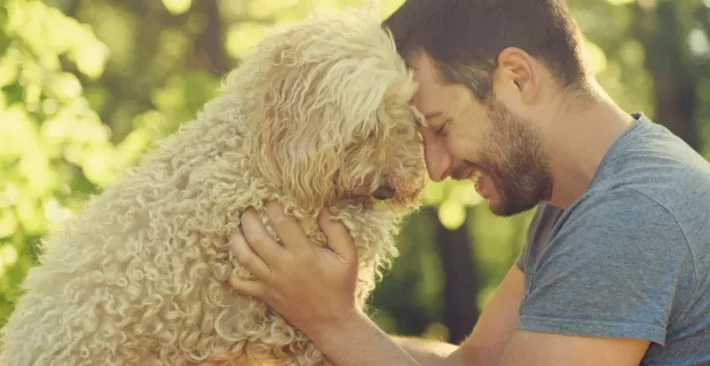
#1 Spend Quality Time With Your Dog
Regularly setting aside time to spend with your dog, whether it's playing, training, or simply hanging out together, can help build a strong connection and improve communication.
#2 Be Consistent
Consistency is key in communication with your dog. Use the same commands and gestures every time, and establish a routine to help your dog understand what is expected of them.
Moreover, follow a routine that works best for your puppies and dogs.
Listen to Your Dog
Pay attention to your dog's nonverbal cues and respond to their needs accordingly because this builds trust and strengthen your connection. Dogs want to talk to us, so let’s show them we’re listening.

Use Body Language
Dogs rely heavily on body language to communicate, so using your own body language, such as leaning forward or making eye contact, can help convey your own intentions and build a stronger connection with your dog.
Speak in a Calm, Reassuring Tone
Dogs can pick up on your tone of voice, so speaking in a calm, reassuring tone can help them feel relaxed and connected to you.
Exercise Together
Regular exercise with your dog, such as walking or running with your dog, can improve their physical and mental well-being, and also provide an opportunity for you to bond and communicate.

Be Patient and Understanding
Building a strong connection with your dog takes time and patience. Be understanding of their individual needs and personalities, and take the time to establish a strong bond based on mutual trust and respect.
Dog Communication: Small Gestures with a Big Message
When it comes to communicating with dogs, the message is in the little gestures.
A nudge.
A lick.
A snuggle.
A whimper.
These signals are easy to miss, so it’s essential that we know how to see this signals and instantly catch the message.
Because as dog owners, we’re the first people that our dogs will communicate to.
It’s just right that we send back a message that says “Don’t worry, bud. I totally get you.”

~Doggy Dan 🙂