The fastest way to calm a reactive dog on a walk is to create distance from the trigger before your dog reacts, redirect their attention back onto you, and stay calm yourself because your nervous system directly sets theirs. But here’s what most advice misses: none of these tactics will stick long-term unless the deeper issue of lack of leadership is addressed first.
If you’ve ever white-knuckled a leash while your dog lunges, barks, and completely loses the goal of the walk at the sight of another dog, a cyclist, or a child running past, you understand the frustration of dog owners with reactive dogs. You know the embarrassment, the panic, and the quiet dread that builds before every single walk.
If you have a reactive dog on a walk, you’re dealing with one of the most common and most misunderstood challenges in dog ownership. Once you understand what’s actually driving it, your dog can walk calmly.
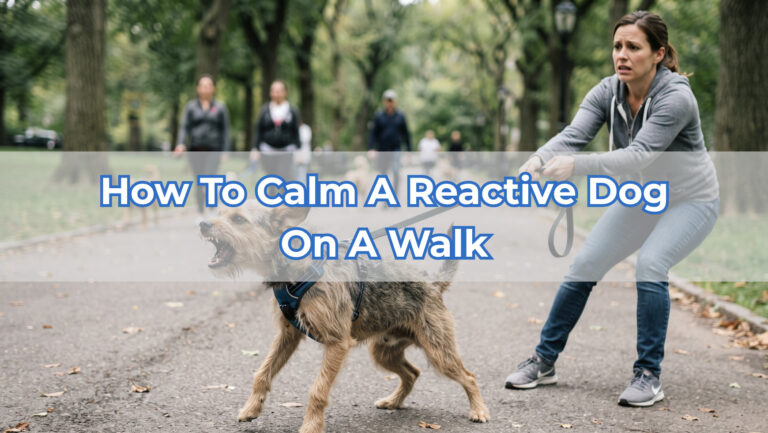
A reactive dog on a walk is almost always a dog who believes they’re in charge of keeping you safe. When a trigger appears (another dog, a jogger, a child), their nervous system fires up, their thinking brain goes offline, and they do the only thing that makes sense to them: they react.
The fastest way to calm a reactive dog on a walk:
- Create distance from the trigger before your dog reaches their threshold
- Redirect their attention back to you, not the thing they’re reacting to
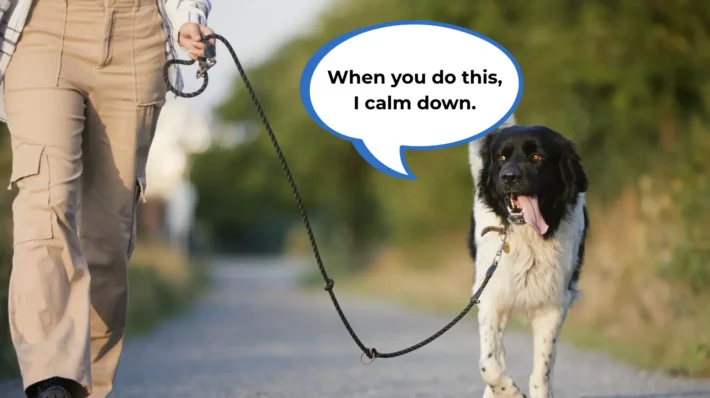
- Stay calm yourself because your nervous system sets theirs
- You set the energy of the walk long before you ever clip the leash on.
I’ll talk more in depth about this in this blog. Let’s dive in.
FREE WEB CLASS THAT’LL TEACH YOU THE BEST DOG TRAINING FOR REACTIVE DOGSKey Takeaways
- Your dog isn’t lunging, barking, or spinning out of control because they’re bad, broken, or aggressive. They’re doing it because they believe they are the one responsible for keeping you safe, and every walk is a high-stakes mission they’re terrified of failing.
- The leash is a telephone line. When you tense up, grip tighter, and brace for disaster the moment a trigger appears, that signal travels straight to your dog, and confirms exactly what they feared: danger is real, and my leader is scared too.
- Most owners think the walk starts at the front door. It doesn’t. It starts with who controls the energy in the hallway, who decides when the leash goes on, and whether your dog already sees you as the calm, capable decision-maker or whether they’ve quietly been running the show since breakfast.
- Build the leadership foundation at home first in the consistent, daily, small moments, and you will see the walk almost automatically.
What Is Walk Reactivity?
Before we talk about what to do, let’s talk about what’s actually happening.
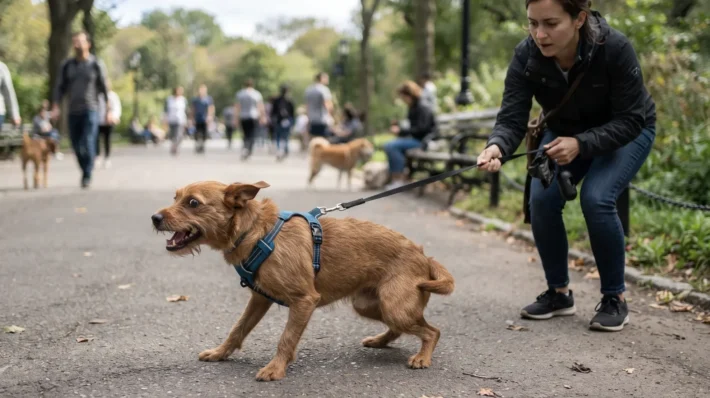
Reactivity on a walk looks like lunging, barking, freezing, pulling, spinning, or going completely rigid at the sight of a trigger. It can look aggressive, and terrifying. For most owners, it feels like a total loss of control.
But here’s the thing most people miss: reactivity is not aggression, and it’s also not disobedience.
Reactivity is an emotional response. When your dog catches sight of a trigger (whether it’s a distant dog, a skateboarder, or an unfamiliar person), the information hits their brain’s threat-processing center (the amygdala) at lightning speed.
Before the thinking, rational part of the brain (the prefrontal cortex) even has time to evaluate the situation, the survival brain already floods your dog’s system with adrenaline and cortisol!
When reactive energy fills their senses, a reactive dog can only hyperfocus on the trigger and nothing else.
The Three Types of Walk Reactivity
Fear reactivity
Your dog freezes, pulls backward, trembles, or goes completely rigid at the sight of something they perceive as a threat. They’re not being dramatic, and they’re not putting on a show. They are genuinely overwhelmed, and their nervous system has taken over entirely.
What you’re seeing in that moment is a dog whose survival brain has made a very clear decision: this is dangerous, and I need to deal with it. The thinking brain, the part that responds to your commands, recognizes your voice, and processes training, has gone offline.
Fear-reactive dogs often confuse their owners because the trigger seems so minor. A child on a bicycle. A man in a hat. A dog on the other side of the road. But size and logic don’t factor into a fear response. What matters to your dog is not what the trigger is… it’s what the trigger means to them. And for a dog carrying the weight of leadership, almost anything unfamiliar can mean one thing: a threat I have to deal with.
You’ll notice fear reactivity most in the early warning signs before the explosion:
- The sudden stillness.
- The jaw clamping shut.
- The ears pinning back flat against the head.
- The intense gaze hyperfocusing on a trigger.
These are the moments when your dog is deciding what to do. That is your window to step in and help them be calm.
Excitement Reactivity
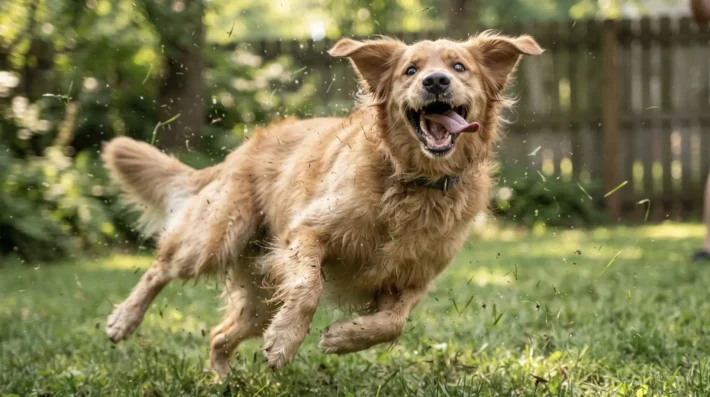
Your dog lunges toward the trigger, barking, pulling with everything they have, almost frantic to close the gap. This looks like aggression, but it is often something very different: frustrated excitement.
These are dogs who desperately want to get to the thing (another dog, a person, a child running past), and simply cannot. The leash stops them, the distance stops them, and the frustration of being held back when every instinct is saying “go!” creates an explosion of energy that has nowhere to go except outward.
This type of reactivity is particularly confusing for owners because the dog is often perfectly friendly off-leash. They greet other dogs beautifully at the park. They adore people. Put them on a leash, though, and they transform. The leash hasn’t changed their desire… it’s just removed their ability to act on it, and the gap between wanting and not being able to is where the reactivity lives.
The key insight here is the same as it is for fear reactivity: a dog who is confident in their leadership (who trusts that you are making the decisions on the walk) doesn’t feel the same desperate urgency to get to the trigger themselves. When you become the decision-maker, your dog stops feeling like they have to manage every encounter personally.
Barrier Reactivity
This one catches owners off guard more than almost any other type, because the dog seems fine until the leash goes on, or until they’re behind a fence, inside a car, or on the other side of a gate.
The moment they feel physically restricted, they explode. They start barking, lunging, snarling… sometimes at dogs or people they would completely ignore when free. Why? Because the leash doesn’t just restrict movement. It removes options. And for a dog operating in leadership mode, options are everything.
In the wild (and in your dog’s deeply wired instincts), a dog who senses a threat has two fundamental choices: flight or fight. Off-leash, flight is always available. They can move away, circle wide, create distance, and assess from safety. They have control.
On-lead, that option is gone.
Here’s what makes it a pressure cooker: if your dog already believes they are responsible for your safety (because they’ve taken the role of protector), then being physically tethered to you while unable to flee doesn’t just feel uncomfortable. It feels like being trapped with a responsibility they cannot fulfill.
The only tool left in their kit is to make themselves as large, loud, and frightening as possible in the hope that the threat will simply go away.
And when the other dog moves past, or when the cyclist disappears around the corner, your dog’s brain files that away as a success. I barked. The threat left. Barking works.
The pattern deepens with every repetition.
JOUR FREE WEBCLASS WILL CHANGE YOUR DOG'S BEHAVIOR FOR GOODWhat Causes Dog Reactivity On Walks?
Every case is different, but the root cause is almost always the same: your dog believes they are the one in charge.
This doesn’t happen because of a single incident or a specific failure on your part. It happens gradually, quietly, and usually without the owner realizing it at all.
A little extra freedom here. A missed boundary there. A dog who starts making small decisions — when the walk begins, which direction to go, whether a visitor is safe — and slowly, incrementally, takes on the full weight of leadership.
And here is what most people miss: that weight is exhausting. A dog who believes they are the pack leader doesn’t experience that role of power or confidence. They experience it as responsibility. Constant, relentless responsibility. Every walk is a mission. Every new smell is a potential threat to assess. Every stranger is an unknown quantity they must evaluate before you do.
The moment your dog perceives a trigger (and a dog in leadership mode perceives triggers everywhere), the survival brain takes over completely. The amygdala fires. The thinking brain shuts down. And in that state, your dog is no longer a companion on a walk. They are a dog on a mission, and they will complete it the only way they know how.
Add a tight leash (which is like a line of communication that tells your dog, “I’m worried, and we’re both trapped”) and you have a pressure cooker with no release valve.
The solution, as we’ll explore throughout this guide, is not to suppress the behavior. It’s to address what’s underneath it: a dog who has been waiting, often for years, for someone to take the leadership job off their shoulders.
The Story I Always Come Back To
I want to share a story I’ve never forgotten.
I was called in to work with a dog named Charlie. His owners, Sarah and Mark, were at their wits’ end.
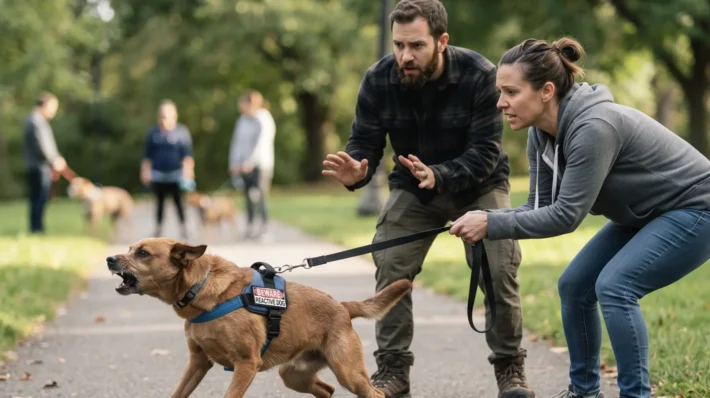
The moment Sarah picked up the leash, Charlie was already “red-lining.” He would be spinning, barking, and pulling toward the door.
During one walk, they encountered a neighbor’s dog about fifty yards away. Charlie exploded and started lunging, snarling, and standing on his hind legs, ready to fight. Sarah was pulling back with everything she had.
But here’s what I saw that Sarah didn’t: Charlie wasn’t dangerous. Charlie was exhausted. He’d been carrying the weight of leadership for so long. He’d been scanning every walk, managing every threat, and protecting his people. The moment he saw another dog, he had nothing left but panic.
So I did something that confused everyone. I said, “Let’s go back inside.”
We went back in. I sat down. I ignored Charlie… not unkindly, but completely. I made sure there was no eye contact, no commands, no reassurance. I simply waited, calmly, for his energy to drop. Ten minutes later, Charlie let out a long sigh and lay down. That was the moment I picked up the lead.
We went back outside. We saw the same dog. And this time, Charlie looked at the dog, then looked at me, then, for the first time in what felt like years for him, he looked away.
I turned to Sarah and said: “He wasn’t bad. He was just exhausted from trying to protect you.”
That is the heart of everything I’m going to share with you now.
The Three Fastest Techniques to Calm a Reactive Dog in the Moment
#1: Create Distance Before the Explosion, Not After
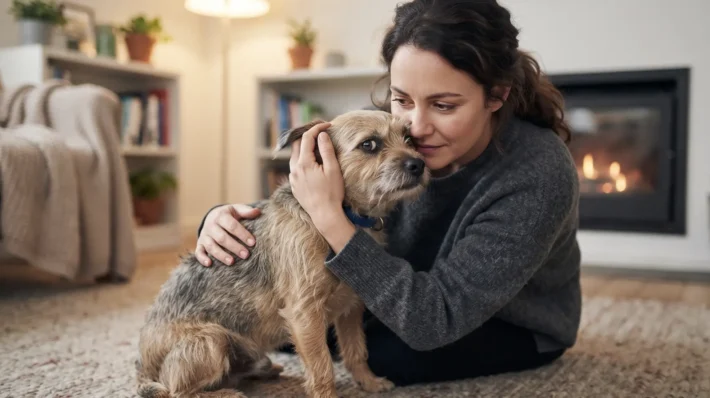
The single most effective thing you can do when you see a trigger is move away from it before your dog reacts.
This sounds obvious. It isn’t, because most owners wait, hoping the dog will hold it together, not wanting to seem like they’re avoiding things, hoping today will be different. By the time the dog reacts, the nervous system has already fired, the arousal is already through the roof, and you’re now trying to manage a crisis rather than prevent one.
Watch your dog, not the trigger. You’ll see the warning signs: the stiffening, the locked stare, the ears pitching forward, the jaw clamping shut. That’s your window. Before the explosion, not after.
Cross the street. Step behind a parked car. Turn down a different path.
Move with purpose, and do not panic. Hurried, jerky movements tell your dog the threat is real.
Thirty feet is often enough to bring arousal down. If thirty feet isn’t enough, go further. A dog whose arousal drops below their threshold can think again. A dog above threshold cannot.
Your only job in those first seconds is to get them back under the calm threshold.
#2: Redirect Attention By Getting Their Eyes on You, Not On The Trigger
Once you have distance, you need their focus. Not because you’re bribing them, but because you’re showing them: I’ve seen it. I’ve assessed it. Follow my lead.
This works best when you’ve practiced it before the walk, in low-distraction environments. A simple name response, a “watch me,” or even just a pattern interrupt that brings their eyes to yours. You want it automatic… something that fires before the thinking brain shuts down.
The moment you see the trigger (not when it’s five meters away, when it’s fifty), use your cue. Use something the dog genuinely loves. Give a piece of real food like cheese or chicken at the moment they engage with you.
Here is what you’re building, one repetition at a time:
Trigger appears. Dog looks at you. Something good happens.
Right now, their brain runs a different sequence: trigger appears → panic fires → explosion. It’s automatic and works faster than thinking.
What you’re doing, patiently and repeatedly, is installing a new one in its place. The trigger stops being the start of a panic response. It becomes the cue to look at you instead.
And the goal? It’s simpler than you think.
Your dog doesn’t need to like the trigger. They just need to walk past it.
#3: Stay Calm. Your Nervous System Sets Theirs.
When you tense up, when your shoulders rise, your grip tightens, your breathing shallows, that signal travels straight down the lead. And your dog, who is already scanning for confirmation that danger is real, receives it as: “My leader is scared. I was right to be worried.”
Staying calm is not about pretending. It’s a skill you develop, and it starts with understanding that your dog is looking to you to tell them whether something is a threat.
When you spot a trigger before your dog does, your body language should say: “I see it. I’m not bothered. Keep moving.”
This works so much better than saying, “it’s okay, it’s okay” in a high-pitched anxious voice.
Your dog reads you more than they read anything else on that walk.
BRING BACK THE CALM TO YOUR HOUSE: JOIN THIS FREE REACTIVITY CLASSSpecific Scenarios You’ll Face And What to Do
Scenario 1: A Dog Reactive to Cyclists, Joggers, and Skateboarders
These are moving triggers, and movement itself is the problem. The chase instinct fires before the thinking brain can intervene.
The key is timing. You need to redirect your dog’s attention before the cyclist is close. Not when they’re passing, and not when they’re five meters away.
Watch for the first sign of tracking: the body turns, the stare locks on.
When you see a jogger fifty meters away, and your dog starts tracking them, say their name, offer your focus cue, and move.
Don’t wait to see if they hold it together. They won’t… not yet. And every time they do react at close range, the pattern deepens.
With enough repetitions (redirecting early, creating distance, and rewarding attention on you), the nervous system starts to change its response. Chasing the trigger stops being the focus and becomes instead the cue to look at you.
Scenario #2: Dog Barking and Lunging at Children
Children trigger two things simultaneously: unpredictable movement and high-pitched sound. For a dog already on high alert, that combination is almost impossible to ignore.
The most important thing you can do around children is never let them approach unannounced. Even well-meaning children running up to say hello can tip a reactive dog over the threshold instantly. You don’t need to explain your dog’s full history to a six-year-old. You just need to say, “Thanks so much, but my dog needs a bit of space today.”
Stay especially calm in these moments. Children read anxiety on adults and escalate accordingly. Your calm body language is managing two species at once.
Scenario 3: Walking Two Reactive Dogs at the Same Time
Let me be honest with you about this one: two reactive dogs amplify each other. When one lunges, the other mirrors it. When one escalates, the other follows. You end up managing two nervous systems while your own is also firing… and that is simply too much for most people to hold.
Walk them separately until each dog can hold calm focus with you on their own. Build calm in each dog individually, then gradually reintroduce them as a pair on walks.
If circumstances mean you genuinely must walk both at once: use double leads, ensure maximum distance from triggers, and bring your calmest energy possible.
I’m Scared My Dog Will Hurt Another Dog
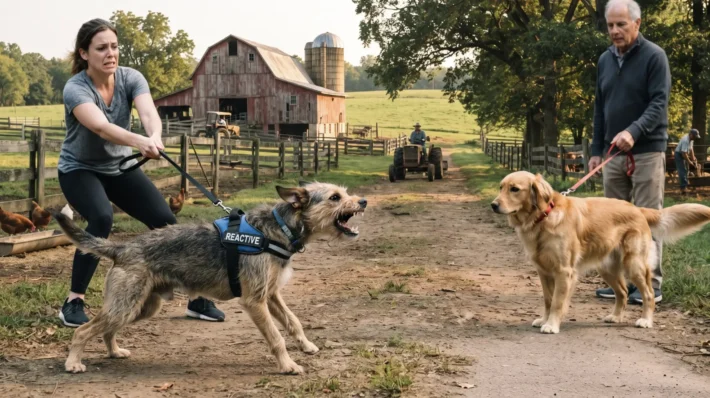
First, know that most reactive dogs do not bite. They are communicating fear and discomfort in the loudest way they know how. Reactivity and aggression are not the same thing, even when they look terrifyingly similar from the outside.
Second, and this is harder to hear: your fear shows up in your body. When you’re bracing for an attack every time another dog appears, your dog feels that. And a dog whose leader is convinced danger is coming will find danger… or manufacture it.
The shift here is from “I hope nothing bad happens” to “I’ve got this handled.”
This is not about using fake confidence but having enough real confidence built from having a system, from knowing what to do, and from having done the work. When you stop dreading the walk, your dog starts to relax on it.
What NOT to Do on a Reactive Walk
Don’t Use Punishment or Harsh Corrections
Punishing a reactive dog does not reduce reactivity; it adds another stressor to an already overwhelmed nervous system.
Shock collars, choke chains, shouting, and jerking the leash don’t teach your dog that the trigger is safe. They teach your dog that the trigger plus you means pain or fear. The reactivity often gets worse, not better. And the trust between you, which is the very thing you need to solve this, gets damaged in ways that take a long time to repair.
Don’t Force Exposure
“I’ll just walk him past it over and over until he gets used to it.” I know you mean well, but this is flooding, and it does the opposite of what you intend.
Desensitization requires working below your dog’s threshold, not through it. You don’t build calm by forcing proximity to the thing that terrifies them. You build calm by gradually, patiently reducing distance over many, many repetitions while staying below the point of reaction.
Don’t Rely on Treats as a Band-Aid Solution
Food is a tool. Used well, it’s a powerful one. But endless treats thrown at a reactive dog don’t build calm… they build a dog who is anxious and expecting cheese.
The goal is not a dog who is distracted from their fear. The goal is a dog who doesn’t feel the fear in the first place because they trust you to handle the walk. That trust is built through leadership, not treats.
The Long Game: Building a Dog Who Is Calm Before the Walk Starts
Everything I’ve described so far is in-the-moment management. It matters. But the real work happens off the walk.
Establish Loving Leadership at Home First
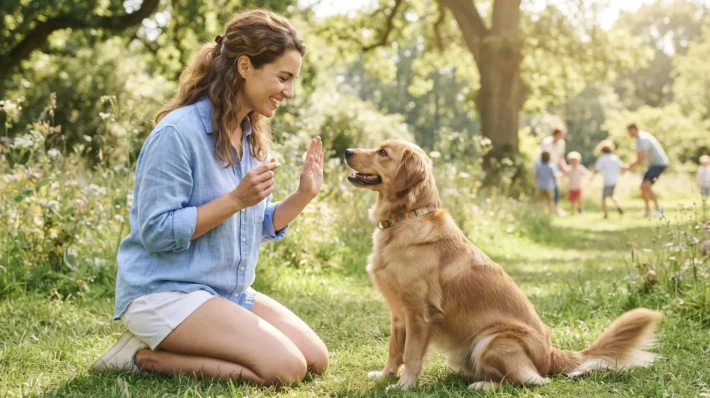
A dog who sees you as a calm, capable leader at home will follow your lead on the walk. A dog who doesn’t will spend every walk trying to manage the world themselves.
This isn’t about being dominant or strict. It’s about being someone your dog can genuinely relax around. It’s becoming someone who handles the food, controls the exits, manages visitors calmly, and makes the big decisions without drama or hesitation.
(This is why The Dog Calming Code™ is heavily recommended by dog owners because it makes dog transformation happen without any force!)
When your dog looks to you for guidance and stops running the show themselves, you’ll notice it on walks almost immediately. The scanning decreases. The reactivity threshold rises. Not because you’ve trained the walk, but because the job description has changed.
Desensitize Gradually, One Trigger at a Time
Choose one trigger. Start at a distance where your dog notices it but doesn’t react. Walk the same route, with the same trigger, at the same distance, repeatedly. Your dog’s nervous system will start to habituate. The threat response softens because the threat never materialized.
Then you decrease the distance slightly over weeks.
This is not exciting. It doesn’t make a great story. But it is what actually works, and it works because you are below the threshold the entire time, which means your dog’s thinking brain stays online, which means learning can actually occur.
Time Your Walks Strategically
If the early morning, quiet streets, and off-peak parks are better for your dog, choose to have the walk in this schedule. This is a strategy I definitely recommend.
You are not avoiding the problem. You are managing the environment while you build the foundation. Once that foundation is solid, you introduce harder environments. But you start where success is possible, not where failure is guaranteed.
OUR FREE WEBCLASS WILL CHANGE YOUR DOG'S BEHAVIOR FOR GOODWhen to Seek Professional Help
Some situations are beyond what self-guided work can address. Consider getting professional support if:
- The reactivity is escalating despite consistent management
- Your dog has made contact and caused injury
- You feel unsafe or genuinely unable to manage the behavior
- The anxiety is spreading to new triggers. Your dog is reacting to more things, not fewer
When you do look for help, look for someone who focuses on the dog’s psychology and your leadership, and not just the surface behavior. Someone who asks why before they ask how to stop it.
Change Is Possible For Your Dog And Your Walks
I want to leave you with something I said to Sarah and Mark after Charlie’s walk that day.
“You see? Charlie wasn’t bad. He was just exhausted from trying to protect you.”
That’s your dog too. They’re not inherently difficult or aggressive. They’re just a dog who’s been carrying a weight they were never meant to carry, and who is absolutely ready to put it down the moment they trust that you’ve got it.
Reactive walks don’t have to be the story of your relationship with your dog. For most owners, with the right foundation in place, they become the thing you look back on and say: “I can’t believe we used to dread that.”
This is the heart of my bestselling dog training program, The Dog Calming Code™. Once you have put the Five Golden Rules in place, change will happen. Not with force. Or with punishment. Or with endless treats.
Your leadership makes the change possible.
If you want a step-by-step guide to building that foundation, and understanding why Loving Leadership is the piece that makes everything else work, this free webinar is the place to start.
BRING BACK YOUR CALM DOG – THIS WEBINAR WILL HELP STOP REACTIVITY TODAY.
— Doggy Dan
FREQUENTLY ASKED QUESTIONS
Q: Can reactive dogs ever walk calmly past other dogs?
Yes. The vast majority of reactive dogs improve significantly, often dramatically, with consistent Loving Leadership, distance management, and proper desensitization. Some will always have a threshold at very close range, but most owners can manage that comfortably.
Q: How long will it take to see changes in walks?
Small shifts often appear in 2–3 weeks. Measurable improvement usually takes 8–12 weeks of consistency. Full change can take 6 months or more depending on the history. It’s a marathon, not a sprint, and the owners who get there fastest are the ones who stop looking for shortcuts.
Q: Is my reactive dog aggressive?
Reactivity and aggression are different things. Reactivity is an over-response to a trigger driven by fear, excitement, or overwhelm. Aggression is the intent to cause harm. Most reactive dogs are scared, not dangerous. That said, unmanaged reactivity can escalate if the underlying cause isn’t addressed which is why early action matters.
Q: What if I lose control and my dog lunges at something?
Stay calm. Regain the leash. Create distance. Don’t chase the situation with your energy. Take a breath, find space, assess. Most incidents resolve without injury when the human stays grounded. After it’s over, think about what you could have caught earlier next time, and use it.
Q: My dog is fine off-leash. Why is the leash the problem?
The leash removes your dog’s ability to flee or create distance. For a dog who believes they’re responsible for your safety, being attached to you while feeling trapped is incredibly stressful. The leash isn’t the cause; the leadership dynamic underneath it is. Fix that, and the leash stops being a trigger.
Q: Should I let other dogs approach my reactive dog to “socialise” them?
Not during active reactive training, no. Forced greetings when a dog is over threshold don’t teach positive associations; they reinforce the idea that other dogs mean stress. Socialisation comes later, gradually, when your dog is calm enough to benefit from it.