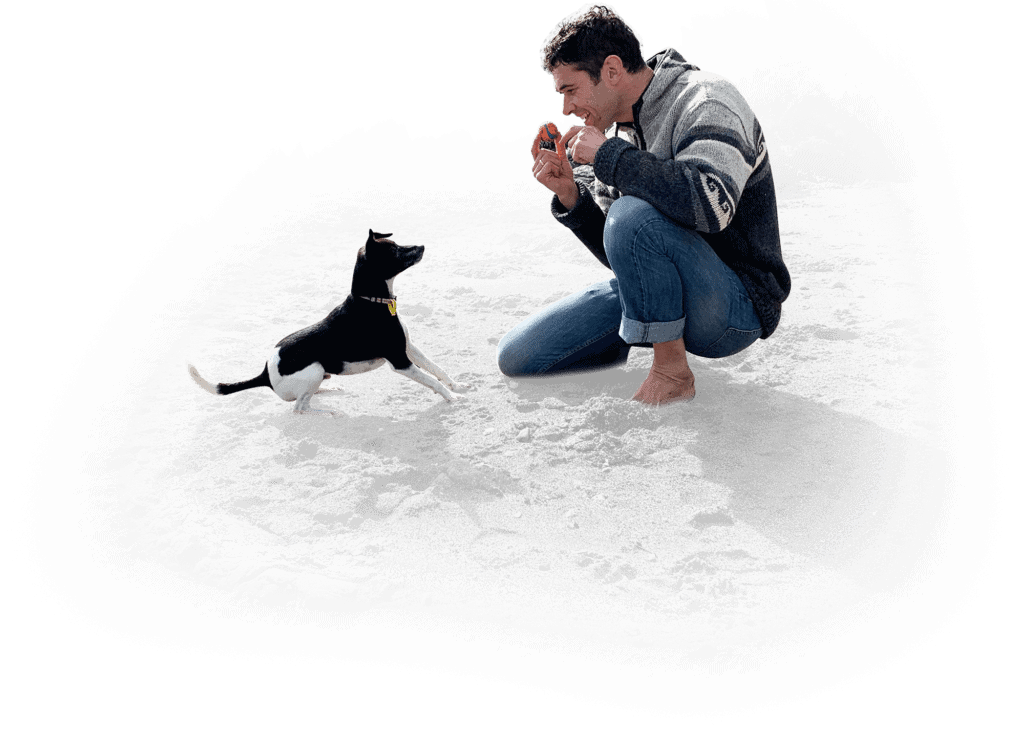
“Doggy Dan, teach me how to socialize a fearful dog?” A dog scared to socialize doesn’t have the emotional and mental capacity to do so because they’re stressed and on guard 24/7. They’ve taken on the role as your leader and protector, so socializing goes down the bottom of the list because protecting you and ensuring your survival is priority number one.
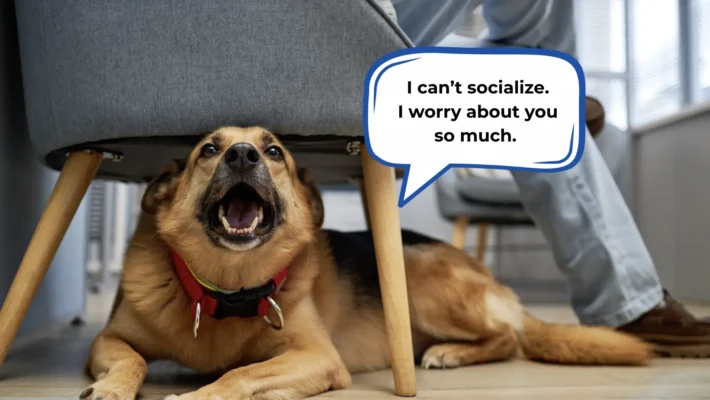
You’ve tried everything: encouraged your dog to approach other dogs, brought them to the park, and introduced them to friendly strangers. And yet, every single time, your dog retreats, shakes, hides, or barks like the world is ending.
It’s heartbreaking, especially when all you want is for your dog to enjoy life.
Here’s the truth most blogs won’t tell you: socializing a fearful dog isn’t just about exposure. It isn’t just about treats and patience (although those help). The real answer goes much deeper than that.
If you haven’t established yourself as your dog’s leader, socialization will always feel like an uphill battle. Why? Because in your dog’s mind, socializing isn’t the priority. Protecting you is. Guarding you is. Watching out for danger is.
And here’s the good news: once you understand this and put the right strategies in place, your dog can go from trembling in the corner of a dog park to becoming what I like to call the dog town’s social butterfly.
That transformation is absolutely possible, and I’ll show you exactly how to make it happen.
Read on, because this blog is going to change how you look at your fearful dog forever.
Key Takeaways
- A fearful dog isn’t just shy. They’re overwhelmed by the responsibility of keeping you safe. Leadership is the missing piece.
- Socializing a fearful dog starts at home, not at the dog park.
- Force never works. Calm, confident, consistent leadership does.
- Once your dog trusts you as their leader, they can finally relax around other people and dogs.
Socializing a Fearful Dog: Why They Shake When They Try to Socialize
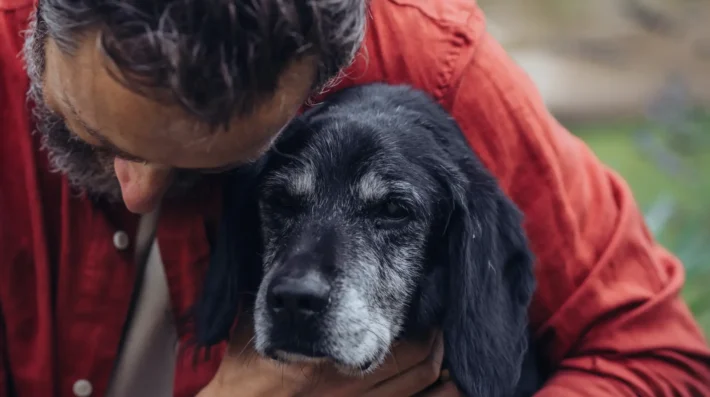
Let me start with this simple but powerful truth: a dog scared to socialize is not a broken dog. They’re a dog without a leader.
What does this mean?
When your dog steps outside, they’re not thinking, “Oh great, I can’t wait to meet new dogs and make friends!”
They’re thinking, “I need to keep an eye on everything. Protecting my owner comes first. No, I cannot cannot let my guard down.”
That, right there, is the cause of fearful behavior in dogs.
Your dog has taken on the role of your protector. They’ve assumed the responsibility of keeping you safe from any and all perceived threats. So when they see a stranger walking toward you, a new dog sniffing around, or even a child running in their direction, their immediate reaction isn’t curiosity.
It’s “Oh, we’re in danger.”
That is why socializing a fearful dog feels impossible if leadership isn’t addressed first.
When a dog thinks they’re the pack leader, their survival instincts completely take over. Each outing becomes a security mission, and every new person is a potential threat. Every unknown dog is a risk to the “pack” (which, in your dog’s mind, is you).
This is the reason your fearful dog shakes and shivers under the table. Their overprotectiveness makes them refuse to come out despite your commands and pleas. When your dog has entered this zone of protectiveness, no amount of gentle coaxing will get through to them.
In their mind, the world is not a safe place, because nobody has told them they don’t have to be the one in charge of safety.
Once you change that, everything changes.
Instead of approaching a new dog with “Here’s a threat, I will lunge and bark,” your dog begins to think, “My owner has this. I can relax. Maybe this dog is okay.”
That shift, from fear to calm curiosity, is the foundation of genuine socialization.
How to Socialize a Fearful Dog: The Story of Sandy
Let me tell you about Sandy.
Sandy was a three-year-old Golden Retriever, and by all accounts, she should have been one of the friendliest, most social dogs around. Her breed is practically famous for it. But every time her owner, Claire, brought her to the dog park, it was the same story.
Sandy would freeze the moment they walked through the gate. Her tail would drop and her body would tense up. And before Claire could even get her bearings, Sandy would be pressed against her legs, trembling, refusing to move.
The other dogs would trot over curiously, and Sandy would bark. Not playfully. Frantically. Like she was warning them off.
Claire was at her wits’ end. She’d tried treats, long exposure sessions, and she’d even tried ignoring the behavior, hoping Sandy would “figure it out.” Nothing worked. Every trip to the park ended the same way, with Claire apologizing to other dog owners and Sandy refusing to engage.
How I Helped Sandy Become More Confident To Socialize
One afternoon, I happened to be at the same park. I watched Claire and Sandy for a few minutes, and I could see exactly what was happening.
Claire was nervous. The moment they walked in, her grip on the leash tightened. Her shoulders tensed up. She was already anticipating the meltdown. And Sandy, picking up every single one of those signals, went straight into protection mode.
I walked over and introduced myself. Claire almost laughed when I told her what I observed.
“But I’m nervous because of her,” Claire said. “Not the other way around.”
“I understand that,” I told her. “But Sandy doesn’t know that. All she knows is that her owner is tense, which tells her the world outside is dangerous, and since no one else is stepping up to handle it, she has to.”
We talked for a while. I asked Claire some questions about Sandy’s behavior at home. Was Sandy the first one out the door? Did she bark at the doorbell or pace and fuss before walks?
The answer to every question was yes.
Sandy didn’t just think she was in charge at the park. She thought she was in charge everywhere.
The park wasn’t Sandy’s problem. Leadership was Sandy’s problem.
I encouraged Claire to start at home, not at the park. I told her to work on being the calm, confident presence that Sandy desperately needed. To establish the kind of leadership that would tell Sandy, without a single word, “I’ve got this. You can relax.”
A few weeks later, Claire sent me a message. Sandy had made her first dog park friend. It wasn’t perfect yet; she was still a little hesitant at times. But she wasn’t trembling, and she wasn’t barking. She was, for the first time, actually sniffing around and engaging.
That’s what leadership does. It doesn’t just change behavior, but it changes the entire world your dog lives in.
The Real Reason Your Dog Is Scared to Socialize: It’s Not What You Think
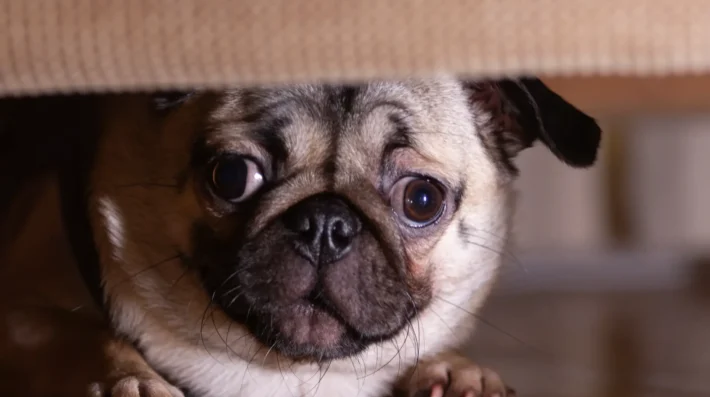
Most dog owners assume their fearful dog was either born timid or had a bad experience in the past. And while those factors can certainly play a role, they’re rarely the whole story.
Here’s what I’ve seen after training over 125,000 dogs: the most common reason a dog is scared to socialize is they believe it’s their job to keep you and your family safe.
Think about it from your dog’s perspective.
Every day, they wake up and the first thing on their mind is survival. Their own, yes, but more importantly, yours. Because in their mind, they are the leader of the pack.
Leaders don’t get to relax. In the wild, leaders don’t get to play. Pack leaders don’t get to sniff around and make friends because leaders are always, always on duty.
So when you bring your fearful dog to a social gathering full of unfamiliar faces and unknown dogs, you’re essentially bringing your security guard to a party and asking them to put down their radio and dance.
It’s not going to happen. Not until they trust that someone else has taken charge.
That someone needs to be you.
When your dog sees you as a calm, capable leader, they finally feel they can let their guard down. They feel safe. And a dog that feels safe is a dog that can finally, genuinely, socialize.
Why Force Never Works When Socializing a Fearful Dog
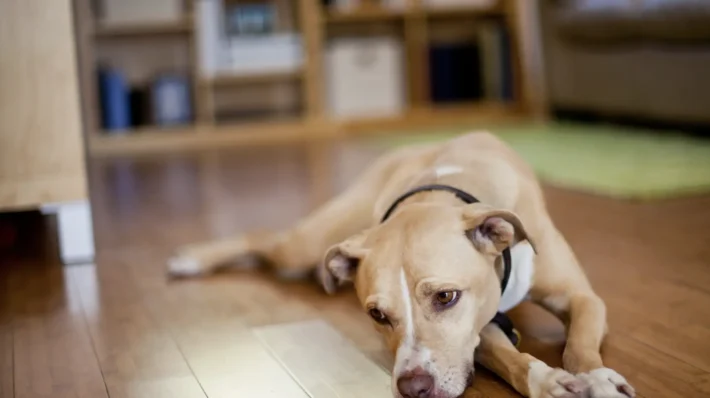
Before we get into what to do, I want to be very clear about what NOT to do.
Do not force your dog to socialize.
I know it’s tempting because you want to help them. You think that maybe if you just push them a little closer to that other dog, they’ll realize there’s nothing to be scared of. You pull the leash forward and nudge them gently. As an attempt to convince your dog, you stand right next to the other dog and say, “See? It’s fine.”
But here’s what your dog hears: “My owner is dragging me toward the threat. My owner is not protecting me. I have to protect myself.”
Forcing a fearful dog into social situations without the foundation of trust and leadership doesn’t teach them confidence. It teaches them that the world is scary and that their owner can’t be counted on to read the situation.
It makes things worse, not better.
The right approach is calm, patient, and rooted in leadership. And it starts long before you ever arrive at the dog park.
How to Socialize a Fearful Dog: Step-by-Step Strategies That Build Real Confidence
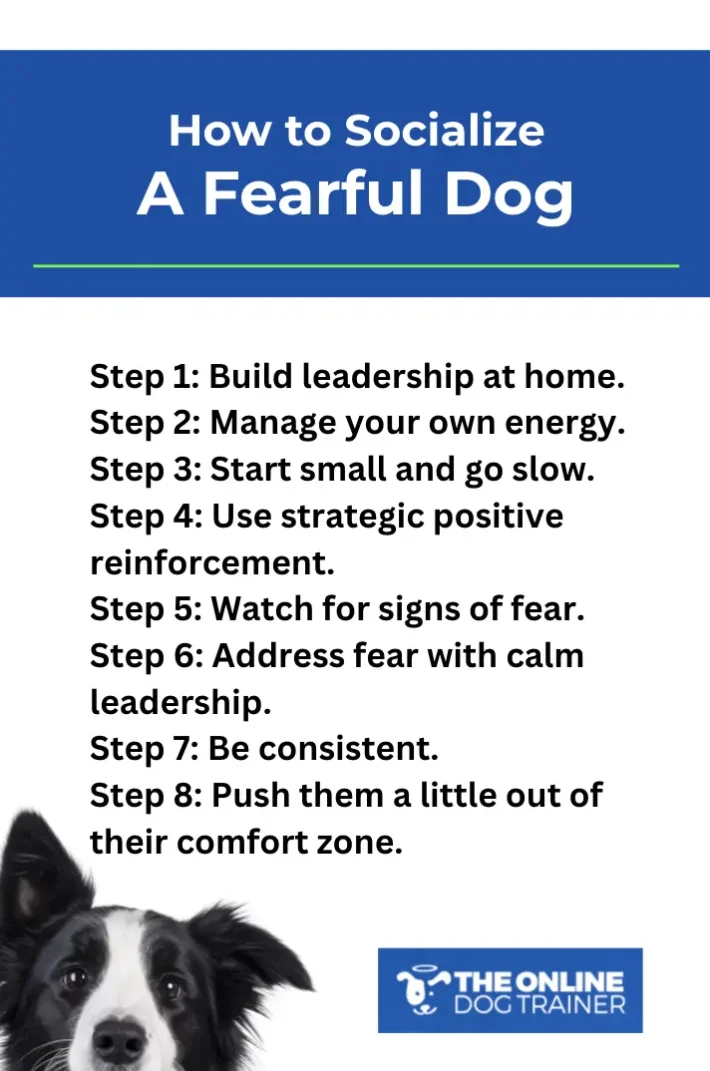
Step 1: Build Leadership at Home First
Here’s the thing most people miss: socialization doesn’t start at the park. It starts in your living room.
Before you can build your dog’s confidence around other dogs and people, your dog needs to trust you completely in the environment they already know: the home, your backyard, and your street.
Leadership means showing your dog, in every interaction, that you are calm, consistent, and capable of handling whatever comes your way. This includes:
- Feeding: You decide when and how your dog eats. Food is not left out all day. Mealtimes are structured.
- Affection: You choose when to give attention, not the other way around. Don’t reward anxious behavior with cuddles; it reinforces the idea that being fearful gets a response.
- Doorways: You go first. Every time.
- Responding to perceived danger: When your dog barks at the doorbell or a noise outsid, respond calmly and confidently. Don’t panic or rush to reassure them. You simply handle it.
- All the decisions connected to your dog. In essence, your dog should look at you as the decision maker.
Every one of these small moments communicates to your dog: “I’m in charge. You don’t need to be.”
When your dog feels this at home, they’ll start to carry it with them outside too.
I talk more about these strategies in my bestselling course, The Dog Calming Code™. Dog owners will learn how to become the leader their dog needs through the Five Golden Rules of dog leadership. These rules are simple but, when put in place, can solve all dog behavior issues.
Step 2: Manage Your Own Energy

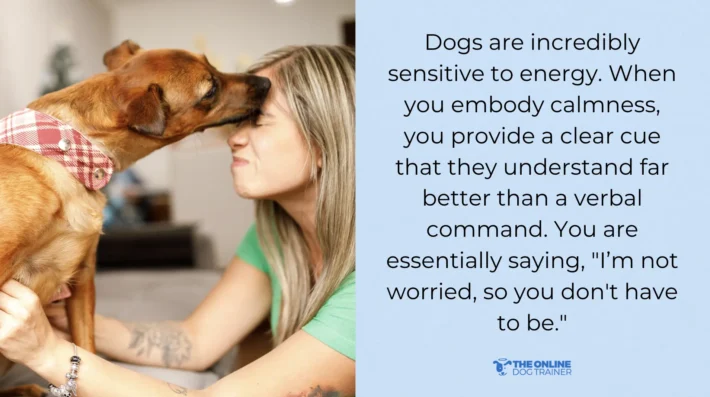
Here is something I cannot stress enough: your dog reads you like a book.
If you walk into the park tense and anxious, your dog will feel it. That tight hold on the leash every time another dog appears, your dog feels it. Your voice goes high and tight when you say “It’s okay!”? your dog knows it’s not okay.
You have to be the calm one first.
I know that can be hard, especially when you’ve been through many failed socialization attempts and you’re already bracing for the next one. But the anticipation of a problem creates tension, and that tension travels straight down the leash to your dog. Take a breath. Relax your shoulders. Loosen your grip on the lead. Walk with purpose and calm confidence.
Your dog will notice. And slowly but surely, they’ll begin to mirror your energy back to you.
Step 3: Start Small and Go Slow
Socializing a fearful dog is not a sprint. It’s a slow, steady walk in the right direction.
Don’t start at the dog park. The dog park is the final exam, not the first lesson.
Start in quiet, low-stimulation environments. A calm street. Your neighbor’s yard. A friend’s home with one well-behaved dog. Let your dog observe from a distance where they feel safe. Don’t push them closer until they show you, through their body language, that they’re ready.
Watch for the signs: a loose, relaxed body, a soft tail, curiosity without tension. These tell you your dog is in a good headspace to explore further.
If they stiffen, tuck their tail, or start to fixate, you’ve gone too far too fast. Take a step back, literally and figuratively.
The goal is not to expose your dog to as much as possible. It is to build one small moment of calm confidence at a time.
Step 4: Use Positive Reinforcement, But Strategically
Yes, treats work. But not in the way most people use them.
Don’t use treats to lure your dog toward something that terrifies them. That’s bribery, and it doesn’t actually change how your dog feels about the thing they’re scared of.
Instead, use treats to reward calm, confident behavior.
When your dog glances at another dog and then looks back at you, that’s calm leadership acknowledgment. Reward that. If your dog takes a curious step toward a new person without being prompted, reward that. When your dog sits calmly while another dog passes by, reward that.
You’re not rewarding the absence of fear, but rewarding the presence of trust.
That distinction matters enormously.
Step 5: Watch for the Subtle Signals
Leadership means being the eyes and ears for your dog. Before a situation escalates, you need to spot the early warning signs that your dog is becoming overwhelmed.
Look for:
- Stiff body posture
- Fixated staring at a trigger
- Tail tucked or raised rigidly
- Lip licking or yawning suddenly (stress signals)
- Leash pulling in the direction of, or away from, a trigger
When you see these signs, act. Step in front of your dog calmly. Change direction. Create distance from the trigger. Don’t wait for the meltdown.
By acting on the early signals, you’re telling your dog: “I see what you see. I’ve got this. You don’t need to react.”
Over time, your dog will start to trust that you’ll always step in. And when that trust is established, their reactivity and fear begin to soften.
Step 6: Don’t Comfort Fear, Address It With Calm Leadership
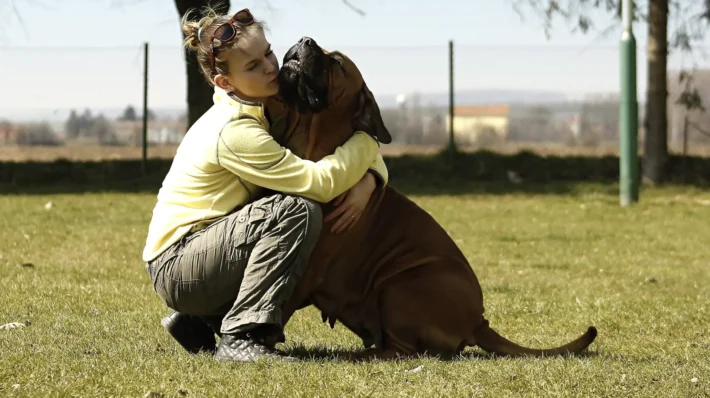
This one is hard for loving dog owners, but it’s important.
When your dog is trembling and scared, every instinct in you says “hold them, cuddle them, tell them it’s okay.”
But when you respond to fear with anxious reassurance, your dog interprets it as confirmation that there is indeed something to be scared of. You’re inadvertently saying, “Yes, you’re right to be afraid.”
Instead, respond with calm confidence. Stand tall. Breathe steadily. Move with purpose. Your composed presence is far more reassuring to your dog than any words you can say.
This is what real leadership looks like. And this is what truly builds confidence in a fearful dog.
Step 7: Be Consistent
Leadership isn’t something you switch on for the dog park and switch off when you get home. It’s a complete, 24/7 shift in how your dog sees you.
Every meal, every walk, every moment at the door, every time your dog barks at a noise, is an opportunity to reinforce or undermine your role as their leader.
Consistency is everything. The more consistently you show up as a calm, capable leader, the faster your dog will trust you enough to let go of their fears.
Step 8: Help Push Them a Little Out of Their Comfort Zone

Not forcing your dog to socialize does not mean you sit back and wait for socialization to magically happen on its own.
That’s not how this works.
The goal is to actively find opportunities for your dog to socialize, even just a little. Our keyword here is encourage, not force. And there is a very important difference between the two.
Forcing looks like this: dragging your dog toward another dog while they’re trembling, pulling their leash toward a group of strangers while they’re clearly overwhelmed, or pushing them into a situation they are absolutely not ready for.
Encouraging looks like this: reading your dog’s body language, assessing where they are emotionally, and when you see a window of calm, gently nudging them one small step forward.
That window of calm is your green light.
Assess Before You Act
Before you create any opportunity for socialization, you need to assess your dog’s readiness. Ask yourself:
- Is my dog’s body loose and relaxed, or stiff and tense?
- Is their tail neutral or soft, or is it tucked or rigidly raised?
- Are they looking around with curiosity, or are they fixating on a trigger?
- Are they breathing calmly, or are they panting with stress?
If the answers point to tension and anxiety, this is not the moment. Wait. Create more distance. Let your dog settle. Come back to it another day.
But if your dog is calm, relaxed… and looking around with soft eyes and a loose body… that is your moment.
Find the Opportunities
Socialization opportunities are everywhere, once you start looking for them.
It doesn’t have to be a full-blown dog park trip. In fact, I’d encourage you to think much smaller than that, especially in the beginning.
- A neighbor walking their calm, friendly dog down the street.
- Your friend visiting who loves dogs and knows how to approach them gently.
- The quiet corner of the park where one other dog is playing peacefully at a safe distance.
- A gentle stranger who asks if they can say hello to your dog.
These are golden opportunities and your job is to be ready for them, to be present enough to spot them, and to be calm and confident enough to guide your dog through them.
When the opportunity arises, don’t rush it. Let your dog observe first. Allow them to sniff the air. Let them take it in from a distance that feels safe to them. Then, when you see that soft curiosity starting to surface, encourage them. A calm step forward, or a gentle, confident cue from you. Let them know, through your energy and your leadership, that this is safe, you’ve assessed the situation, and it’s okay to take one small step closer.
That one small step is everything.
Introduce Socialization One Step At A Time
Here is what I want you to remember: you are not trying to turn your fearful dog into a social butterfly overnight.
You are stacking small wins.
A calm glance at another dog without reacting. Win.
One slow, relaxed sniff of a stranger’s hand. Win.
A moment of standing near another dog without trembling. Win.
Each of these moments tells your dog something incredibly important: “The world is not as scary as I thought. And my owner helped me figure that out.”
That is how real confidence is built, not in one dramatic breakthrough, but in dozens of quiet, small, successful moments that your dog carries with them.
Don’t let the fear of forcing your dog talk you out of creating opportunities. There is a middle ground between force and avoidance. That middle ground is gentle, leadership-led encouragement, and it is where transformation happens.
So go out there. Find the opportunities. Assess your dog. Lead with calm confidence. And when the moment is right, take that one small step forward together.
What Not to Do When Socializing a Fearful Dog
- Never force interactions. It backfires every time.
- Avoid flooding your dog with stimulation. Too much too soon pushes them over the threshold.
- Stop punishing fear. Punishment increases anxiety and makes the behavior worse. Reactivity Blog Creation Guide
- Don’t rely on treats alone. Treats won’t fix a leadership problem.
- Avoid skipping the foundation work at home. The dog park is not where socialization is built. Home is.
When to Ask for Professional Help
If your dog’s fear is severe, if they’re becoming aggressive or injuring themselves trying to escape triggers, it may be time to work with a professional dog trainer or behaviorist who understands dog psychology.
The key is finding someone who goes beyond surface-level training and addresses the real root cause: your dog’s need for calm, trustworthy leadership.
The Dog Calming Code™ Prepares Your Dog For Socialization
A dog scared to socialize isn’t a lost cause. They’re a dog who hasn’t yet felt safe enough to put their guard down.
Once you give them that safety, through consistent, calm, confident leadership, everything changes. The shaking stops. Their barking softens. Even the hiding gives way to curiosity. And slowly, one small interaction at a time, your dog begins to discover that the world isn’t something to be feared.
This is what The Dog Calming Code™ can do for your dog. Once you take the lead as their confident leader, your dog will become confident, too. You get to be there for every moment of that transformation.
Ready to take the first step? Join my reactivity class where I talk about The Dog Calming Code™ for FREE!

~Doggy Dan 🙂