✨ Ask Doggy Dan AI About Your Dog Now  🐶
Dan's AI Chat Widget

How to Introduce Dogs When One Is Reactive: A Complete Guide

dog training to build a strong bond and better behavior.

Last Updated: May 2026

Last updated: May 2026

In this blog, I’m going to teach you a quick, effective, and safe ways on how to introduce dogs when one is reactive.
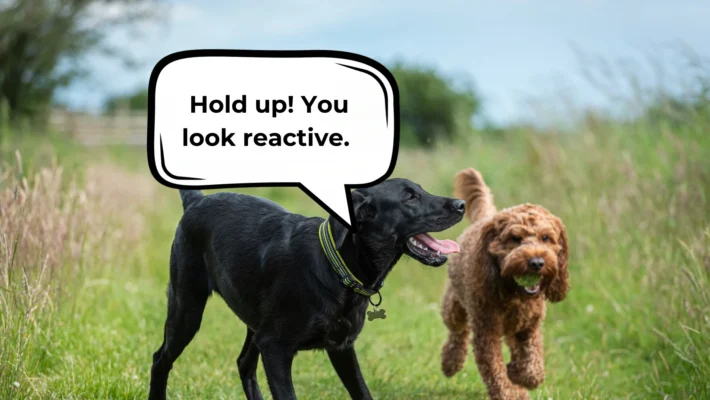
How to introduce dogs when one is reactive
LEARN THE BEST SOLUTION FOR DOG REACTIVITY FOR FREE!

Got a “too much” dog – too jumpy, too barky, too scared? That’s reactivity, and it makes dog introductions tricky. With reactivity in the mix, you and your dog will always be on the edge during introductions or socializations.

The secret to success isn’t managing chaos, it’s preventing it.

This guide is all about proactive calm. Trying to settle adult dogs together (when one of them is anxious and agitated) is like trying to catch smoke.

Instead, we’ll show you how to build a calm foundation before they even see another dog. Success starts at home, so setting your own dog up for positive interactions WORKS every time.

Key Takeaways:

  • Reactive behavior is often rooted in fear, not aggression. Understanding each and every individual dog is crucial for approaching introductions with empathy. The dog isn’t necessarily looking for a fight, but rather trying to protect itself or its owner. This understanding informs the entire training approach.
  • Leadership and trust are paramount. Basic commands are less effective than establishing yourself as a clear leader. When a dog trusts your leadership, they feel less pressure to react and are more likely to look to you for guidance in stressful situations. This foundation should be built before attempting introductions.
  • Controlled, gradual introductions are essential. Rushing the process can backfire. Starting with scent familiarization, moving to visual introductions at a distance, then gradual proximity, parallel walking, and finally a face-to-face meeting (if appropriate) allows the dog to acclimate at its own pace and builds confidence. Constant monitoring of canine body language and a willingness to retreat are critical.
JOIN OUR FREE WEBCLASS THAT'LL HELP YOUR DOG OVERCOME REACTIVITY FAST!

Understanding A Dog’s Reactive Behavior
how to help a reactive dog have dog friends

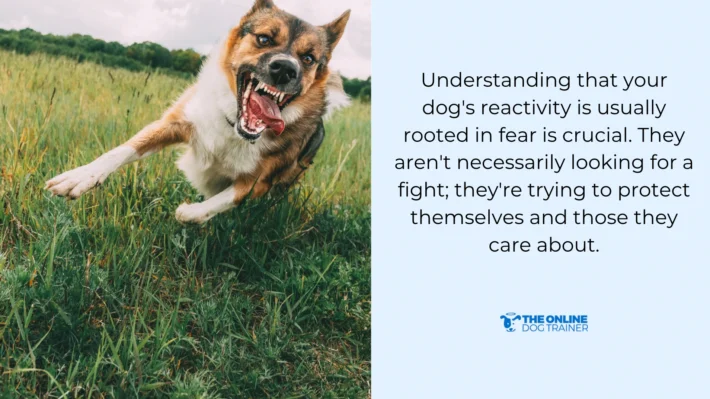
As mentioned earlier, reactive behavior in dogs can stem from various emotions: fear, excitement, aggression, or even over-enthusiasm. However, fear is often the underlying cause, driving dogs to react in ways they perceive as protective. They may fear being attacked themselves, or they may be trying to protect their owners. Some dogs react proactively, striking out first, while others are more hesitant, backing away and only reacting as a last resort.

Ultimately, understanding that your dog’s reactivity is usually rooted in fear is crucial. They aren’t necessarily looking for a fight; they’re trying to protect themselves and those they care about. This understanding helps us approach introductions with empathy and focus on building their confidence.

Preparing for the Introduction: Best Guide for Dog Owners
dog's advocate during socialization

I always tell dog owners to take any dog introduction gradually. Preparing two dogs before the actual meeting can minimize the problems that usually come up in introductions.

Here’s how you can do it.

Behavioral Preparation

While many dog trainers emphasize working on basic commands like ā€œsit,ā€ ā€œstay,ā€ and ā€œleave itā€ to manage reactivity, I’ve found that these commands often prove ineffective in the presence of triggers, especially if your dog’s reactivity is more than just mild. This is because when a dog is in a reactive state, they are in such a high state which makes them not respond to familiar cues. It’s like their brain is hijacked by their emotions!

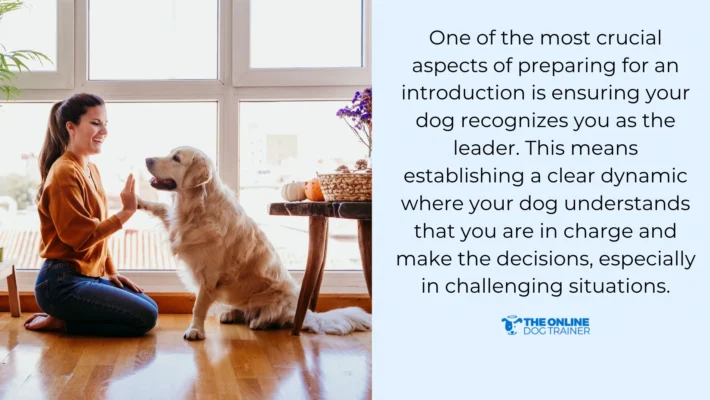
Instead, one of the most crucial aspects of preparing for an introduction is ensuring your dog recognizes you as the leader. This means establishing a clear dynamic where your dog understands that you are in charge and make the decisions, especially in challenging situations. When your dog trusts your leadership, they are more likely to overcome natural aggression, remain calm, and look to you for guidance when faced with potential triggers. This foundation of leadership and trust is best established at home, long before you head to the park for the introduction.

THIS FREE REACTIVITY CLASS WILL HELP CALM YOUR DOG IN A WEEK

Choosing the Right Location

training process for reactive dogs

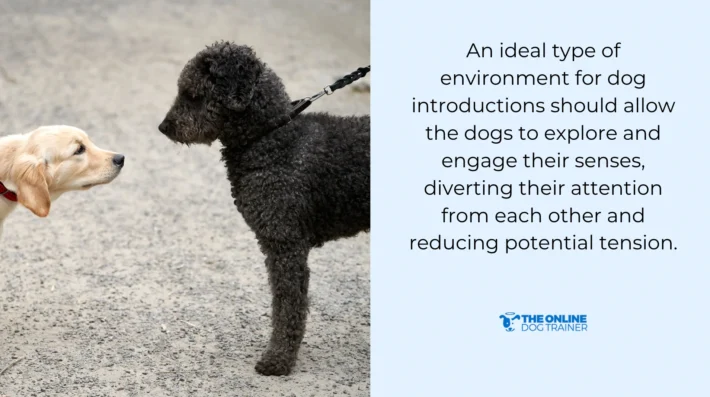
Another key element in preparing for a successful introduction between two or three dogs is choosing the right location. Ideally, you want an open space with plenty of distractions, such as a park with ample grass, interesting smells, and maybe even a water source. This type of environment allows the dogs to explore and engage their senses, diverting their attention from each other and reducing potential tension.

Avoid confined spaces or areas that might induce stress for either you or your dog. Remember, your dog starts to panic when they can sense your emotions, so if you’re feeling anxious or stressed, your dog will likely mirror those feelings. A calm and relaxed environment for both of you is crucial.

Gathering Tools

Before the introduction, gather the necessary tools:

  • Essentials: A well-fitted harness and a non-retractable leash are crucial for maintaining control over your dog during the introduction. Don’t immediately let your dog go off leash during the first meeting.
  • Muzzle (If Needed): If there’s a possibility of your dog biting, consider using a muzzle as a safety precaution. It’s better to be prepared and not need it than to need it and not have it!
  • High-Value Treats: Keep some high-value treats on hand for positive reinforcement and redirection. However, use treats cautiously, as they can sometimes increase excitement levels in some dogs.
  • Portable Barriers: Portable barriers like pens or fences can be invaluable for controlled introductions. They allow the dogs to see and smell each other without direct contact, which can help reduce stress and anxiety.
FREE MASTERCLASS: KNOW HOW TO ELIMINATE DOG REACTIVITY FOR GOOD

Step-by-Step Process for the Introduction

Before bringing your dog to a dog park for socialization, here are some important points to remember.

Step 1: Pre-Introduction Preparation

The first and most crucial step is pre-introduction preparation.

Before the dogs even meet, you need to establish a training plan that’ll highlight your clear leadership role. In your training sessions, make sure your dog understands that you are in charge and make the decisions, especially in potentially stressful situations. This is where ā€œThe Dog Calming Codeā€ comes in. It’s the foundation for creating a calm and balanced dog, and it’s often the missing piece in many dog training programs.

Dog reactive to new dog

When an aggressive dog believes they are in charge, they feel the need to protect themselves and their owners, which can lead to reactivity. By communicating clearly that you are the decision-maker, you take the pressure off your dog and allow them to relax and follow your lead. This shift in mindset can make a world of difference in their behavior.

Step 2: Controlled Visual Introduction

Once you’ve established a solid foundation of leadership with your own dog, you can move on to the next stage: a controlled, visual introduction. Start by letting the dogs become familiar with each other’s scent. You can do this by letting them sniff areas where the other dog has urinated or by exchanging blankets or toys.

Next, gradually bring the dogs closer, allowing them to see each other from a distance. A good starting point is around 100 meters apart, both on leashes. Be mindful of the wind direction, as dogs primarily rely on their sense of smell. Position yourselves so that both dogs can catch the other’s scent.

As you slowly reduce the distance, closely monitor your dog’s body language for any signs of stress. If your dog shows even slight signs of stress, immediately increase the distance or turn and walk away. This teaches your dog that you are in control and will keep them safe. If your dog remains calm, offer praise and maybe a small treat.

At this stage, avoid forcing any interaction or pulling your dog towards the other dog. Let them acclimate to each other’s presence at their own pace. Avoid rushing the introduction, as this can backfire and increase anxiety.

FREE REACTIVITY TRAINING THAT'LL TRANSFORM YOUR DOG IN 7 DAYS

Step 3: Gradual Proximity

If the initial visual introduction goes well, gradually decrease the distance between the dogs over several sessions. This could take half an hour, an hour, several days, or even longer, depending on your dog’s comfort level. Don’t make the mistake of immediately letting the dogs off leash!

Continue to observe your dog’s energy and body language. If they show signs of stress, move them further away. If they remain calm, keep working at that distance. You can use positive reinforcement, like praise or treats, to reward calm behavior. However, be mindful that treats can sometimes increase excitement, so use them judiciously.

Look for positive signs like sniffing the ground, tail wagging, and a relaxed posture. These indicate that your dog is feeling comfortable. Continue to lead your dog confidently, reinforcing that you are in control and making the decisions.

Step 4: Parallel Walking

Once the dogs are comfortable being in close proximity, start walking them parallel to each other, maintaining a safe distance of 10-20 meters. This mimics the natural behavior of dogs in a pack, where they often walk together in the same direction.

Gradually decrease the distance between them as they remain calm. This helps them get used to each other’s presence and movement without feeling threatened.

Step 5: Face-to-Face Meeting

The final step is the face-to-face meeting. This should only occur when both dogs are completely relaxed and comfortable around each other. Ideally, choose a neutral, fenced-off area for this interaction.

If there’s any concern about biting, use muzzles for safety. Even if the dogs have been getting along well, it’s best to be cautious during this initial close encounter.

Keep the leashes loose to avoid creating tension. Allow the dogs to sniff and interact, but keep the initial meeting short. Reduce your own energy and avoid adding to the excitement by speaking to the dogs or offering treats. Simply observe and let them interact naturally.

GET RID OF DOG REACTIVITY STRESS: THIS FREE CLASS WILL HELP YOU!

Monitoring and Managing the Interaction
what to look for when introducing dogs when one is reactive

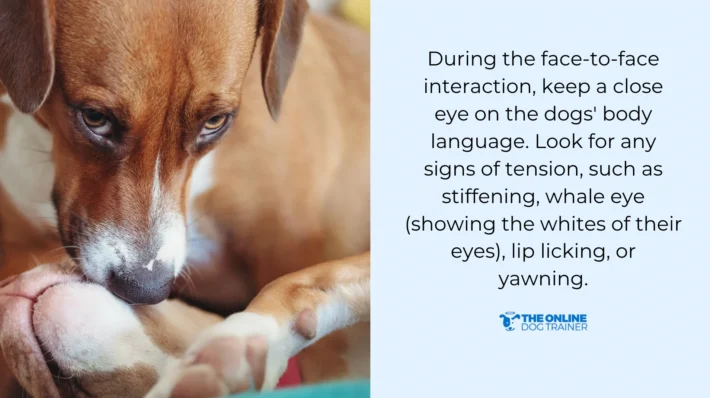
During the face-to-face interaction, keep a close eye on the dogs’ body language. Look for any signs of tension, such as stiffening, whale eye (showing the whites of their eyes), lip licking, or yawning.

Recognizing canine body language before tension or escalation, allows you to calmly intervene. Create distance or using a distraction. The key is to remain calm and assertive, reassuring your dog that you are in control.

Even if there’s a minor scuffle, don’t overreact. Most scuffles are just noise and posturing. End the session positively, and try again another day. With patience and consistency, the dogs will likely learn to interact peacefully.

Post-Introduction Tips

After a successful introduction, here are some tips to ensure continued harmony between the dogs:

  • Establish Routines: Creating consistent routines for feeding, playing, and resting can help the dogs coexist peacefully. A calm dog loves predictability, which can reduce anxiety and tension.
  • Monitor and Manage: Continue to monitor their interactions, even after the initial introduction. If one dog becomes overly excited, noisy, or starts to dominate the other, calmly intervene. You can use a slip leash to gently redirect the overly enthusiastic dog, giving the other dog some space.
  • Equal Playtime: Ensure both dogs have equal opportunities to play and interact. If one dog is more energetic, allow them to burn off some energy before interacting with the other dog. This can help prevent overexcitement and potential conflict.
  • Respect Individual Needs: Be mindful of each dog’s individual preferences and needs. If one dog seems less interested in playing at a particular moment, respect their boundaries and give them space. Recognizing canine body language can help stop any untoward incidents during the introduction.
GET ACCESS TO DOGGY DAN'S BESTSELLING PROGRAM FOR FREE

Common Challenges on Reactive Dog Training and How to Overcome Them
be patient to help dogs have a positive experience

Introducing reactive dogs can come with its fair share of challenges. Here’s how to navigate some common hurdles:

  • Barking and Lunging: If your dog barks or lunges during the introduction process, don’t see it as a complete failure. It’s simply a hurdle to overcome, a part of the journey.
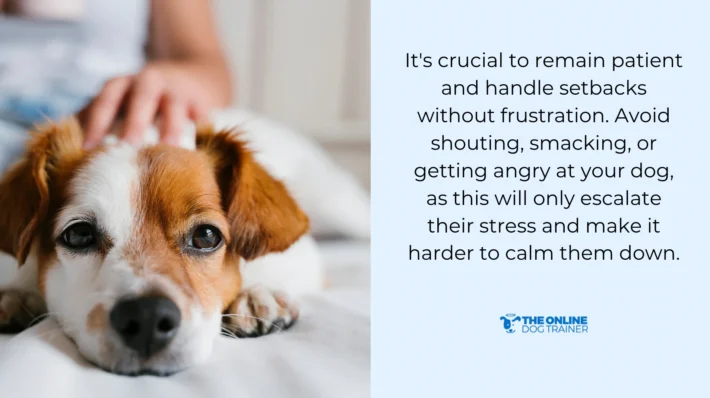
  • Staying Calm: It’s crucial to remain patient and handle setbacks without frustration. Avoid shouting, smacking, or getting angry at your dog, as this will only escalate their stress and make it harder to calm them down. Remember, your dog mirrors your emotions, so staying calm is key.
  • Environmental Factors: Be mindful of your surroundings. If you’re feeling stressed due to the environment (e.g., too hot, too cold, noisy), your dog will sense it. Sometimes, a simple change in the environment can make a big difference.
  • When to Seek Professional Help: If you’re truly struggling with true aggression, consider seeking professional help from a certified dog trainer or behaviorist. However, before you do, make sure you’ve established a clear leadership role with your dog. Many training programs focus on treating the symptoms of reactivity, but addressing the root cause, which is often a lack of clear leadership, is essential for long-term success.
JOIN HERE AND GET THE DOG CALMING CODE ABSOLUTELY FREE

Conclusion From The Dog Trainer: Be Consistent, Patient, and Use The Dog Calming Code

To conclude, the most important thing is to remain patient and consistent. Implementing the Dog Calming Code before you even leave the house can make a significant difference. By shifting your dog’s mindset— helping them understand their role, that they are not in charge of decision-making, and that they don’t have to assess danger —you change everything.

It’s also crucial to celebrate all the small successes you achieve with your dog. Remember, overcoming aggressive behavior takes time; it’s rarely an overnight transformation. With the Dog Calming Code, you can expect to see positive changes within one to two weeks.

If you’ve been working on dog training for a while and haven’t seen the desired results, it might be because the Dog Calming Code hasn’t been implemented, and your dog still believes they are in charge. To foster a harmonious relationship between your dog and other dogs, consider addressing this root cause. You can learn more about the Dog Calming Code and how it can help you by clicking on the link below. I’m here to guide you through the process and support you on your journey to a calmer, happier dog.

Doggy Dan Signature
~Doggy Dan šŸ™‚

Gentle journey for your puppy.

Doggy Dan

Doggy Dan stands out through his “five golden rules” that focus on canine psychology rather than repetitive drills or force. Unlike traditional trainers, he teaches owners to become the “calm leader” their dogs need. Over the last two decades, his methods have helped transform over 137,963 dogs worldwide. As the founder of TheOnlineDogTrainer.com blog and podcast and creator of the Dog Calming Codeā„¢, he has become a trusted voice in dog psychology and training. His philosophy is simple: reactive dogs don’t need punishment or endless treats. They need a leader they can trust.

FREE TRAINING:

How to Solve Dog Reactivity WITHOUT Food Bribes, Tricks, or Force

Limited spaces!

FREE webinar:

How to Solve Dog Reactivity WITHOUT Food Bribes, Tricks, or Force

dog training to stop unwanted jumping and barking

Limited Spaces!

Recent Posts

Excellent rating
Based on 157 reviews
Google star 1Google star 2Google star 3Google star 4Google star 5
So far, so good! We started the Calming Dog a few weeks ago and while we humans have not been perfect at it, we are seeing differences in our dog. He is an incredibly reactive and protective dog, so the changes we have had to date are a huge blessing. I'm impressed at the approach, the actual simplicity of it combined with the science of dog behavior. Thank you, Doggy Dan and team!
Kellie Fuller profile picture
Kellie Fuller
2 October 2026
Google star 1Google star 2Google star 3Google star 4Google star 5
+0
Ridley is my 4th dog. After listening to and learning from Doggy Dan, I was happy to see that I did pretty well with my first 3 dogs while raising my kids and having my husband with me. Not perfect - but pretty good! Now I am raising a new dog by myself, and I feel like I'm not doing this really "alone." I really am so happy with all the information Dan has offered... and all his techniques work well!!
Carol Ann Ferrari Rogers profile picture
Carol Ann Ferrari Rogers
21 September 2026
Google star 1Google star 2Google star 3Google star 4Google star 5
Two months ago I adopted a 7 year old Morkie, a very nervous but loving little fellow. I tried several different training techniques and even purchased a program that was lengthy and very time consuming before I discovered Doggy Dan. I've been using his program for two weeks and am astounded by the change in my Dexter. He is calmer, more obedient and friendlier to others than I imagined possible. Dan's training is concise. It differs from others I found, Dan trains you to become the leader of your pack through a dog's perspective. I like that the training is specific yet compassionate. This is a program that works if you are consistent. Thanks Doggy Dan!
Kathy Fore profile picture
Kathy Fore
17 September 2026
Google star 1Google star 2Google star 3Google star 4Google star 5
+0
Susie in the UK. I am only 10 days in but took in a 9 yr old emergency rescue from Romania who had been in kennels for 6 years and then had 3 failed foster placements in the UK. Luca is a big powerful mixed breed with huge stress and anxiety and very reactive, he bounded into my home and took over - aggressive with my 2 others, and visitors and pulling and pushing on walks. I thought I couldn't handle him but saw an advert for Doggy Dan on line and signed up - we've had a wonderful turnaround and he is finally decompressing, being polite with my dogs and responds excellently to the time-out if reactive with guests. Walks are much better and all 5 rules are in place. I believe he will continue to improve but only if I remain 100% consistent with him for the rest of his life. He is 9 years old and deserves a happy old age being loved and looked after with no further upsets in his life so fingers and toes are crossed for him
SoBS Truro profile picture
SoBS Truro
15 September 2026
Google star 1Google star 2Google star 3Google star 4Google star 5
+2
I started. The course 3/4 weeks ago. As Dan says you have to work on things if you get stuck. I have a Staffordshire x cane corso who is now six months old. She is very intelligent but sometimes she just doesn’t listen. Doing the five codes I’m finding it’s going pretty well except trying to get her calm so I am persevering with it again with my own space. I have a trainer call shortly which I will ask for advice on this. It’s great also that you can ask anything you’re not sure of on line. It’s so great to have someone there to help. I’m looking forward to having a relaxed girl instead of hyper most of the time as she gets so excited about almost everything. I would truly recommend doggy Dan and just wished I would have come across him much earlier. Thanks again for everything so far.
Hazel Coad profile picture
Hazel Coad
12 September 2026
Google star 1Google star 2Google star 3Google star 4Google star 5
I ā¤ļø my dog. Such a good girl! 5 Golden rules, really work.
Victoria van Sommeren profile picture
Victoria van Sommeren
9 September 2026
Google star 1Google star 2Google star 3Google star 4Google star 5
+0
This program is amazing!. We have a VERY reactive rescue dog that has bitten his previous owner and as well, myself 3x and my husband 4 x's. He had never been around people or other animals, and had never been walked on a leash. (in fact never run off-leash either, just tied to the front steps). We began with traditional treat-based training with a professional, but the progress was frustrating. A reactive dog does not want treats; it wants comfort. With the 5 Golden Rules and and some of the other training we have received with our subscription, in just 3 weeks, we can let him off leash at the dog park, he has not growled at any stranger, and he has not attacked any other animals. He is still a work in progress, but we see progress!!!! He has become a cuddly, sweet dog and for a greyhound, he even has recall! This program is amazing to say the least. We were at our wits end, but now we have hope.
susan kent profile picture
susan kent
8 September 2026
Google star 1Google star 2Google star 3Google star 4Google star 5
Okay, he says it’s not magic, but the results and the peace in so little time with so little effort sure feels like magic! My 11 month old pup was a 60lb highly reactive, very loud disaster waiting to happen. Now we are both calm, the house is quiet and I don’t live in absolute fear of his reactivity towards others. There’s always still work/training to do of course, but wow are we in a much better place to get on with that!
Theresia Travers profile picture
Theresia Travers
8 September 2026
Google star 1Google star 2Google star 3Google star 4Google star 5
Just started with the 5 rules. It's only been a week and a half and I'm noticing less stress, and a reduction in reactivity. We still have a way to go. But finally something I can work with. I went for the online course.
Fiona Bower profile picture
Fiona Bower
31 August 2026
Google star 1Google star 2Google star 3Google star 4Google star 5
I watched the free Webinar and joined at the end. I am up to No.3 atm and I’m actually feeling hopeful 🤞🏼
Jackie Grimmer profile picture
Jackie Grimmer
29 August 2026
Google star 1Google star 2Google star 3Google star 4Google star 5
The program is great. I started to see the changes in my cocker spaniel from day one.
Joy Winnington profile picture
Joy Winnington
18 August 2026
Google star 1Google star 2Google star 3Google star 4Google star 5
+3
My Lab mix puppy and I are on Day 3 , but, I do feel a stronger connection. She appears calmer overall / looking forward to consistently following these five rules. Doggy Dan is clear, concise, comprehensive and compassionate . Very pleased with his program. Diane
Diane Patterson profile picture
Diane Patterson
16 August 2026
Google star 1Google star 2Google star 3Google star 4Google star 5
+0
We have an 8 month old Goldendoodle who has fear issues outside the home and gets easily overwhelmed going into panic/flee mode if several triggers coincide (people, loud dog barking and noises like motorcycles/construction). So pleased to find Doggy Dan and seeing positive changes after just two weeks. Feeding time is calm after using the gesture eating and "thank you" when he barks works a treat. I realized I'm babying my dog too much and trying to be his best pal instead of a leader so I'm working hard on that. We've changed to the no pull harness and love that. Doggy Dans video clips really help bring the philosophy together and I love his attitude. He is calm, clear, firm but so kind and loving with dogs and very down to earth and relatable. I've got great help too from the AI coach and the daily emails and videos help keep us on track and feeling positive. We've still got a mountain to climb with our pup but I finally feel hopeful and supported. We'd tried trainers, behavior specialists and all sorts before finding Doggy Dan and this is by far our best investment. Can't recommend you trying this highly enough. Photo of our boy.
Jackie Ward profile picture
Jackie Ward
13 August 2026
Google star 1Google star 2Google star 3Google star 4Google star 5
Absolutely amazing transformation in just a few days. Just need to stick to the 5 Golden rules 🙂
Martine Adkin profile picture
Martine Adkin
13 July 2026
Google star 1Google star 2Google star 3Google star 4Google star 5
+0
I couldn’t believe my dog’s problem resolved completely within a week! Easy but not easy if you are inconsistent with the 5 rules. I highly recommend this method! Somethings don’t seem important or relevant but they are!
Dawn McCordic profile picture
Dawn McCordic
13 July 2026
Google star 1Google star 2Google star 3Google star 4Google star 5
+0
I just started my training about 2 weeks ago, and I do mean MY training. My 2 girls are really responding to my changes in how I am relating to them better. Thank you Doggy Dan, I really needed this win, 2 reactive dogs and we have made progress with the 5 golden rules and we have not with anything else. Crystal Gayle the Red Heeler and Sadie the Border Collie.
Betty Nicholl profile picture
Betty Nicholl
11 July 2026
Google star 1Google star 2Google star 3Google star 4Google star 5
+3
For three years, I tried every treat-based method and expensive course to stop my large, powerful male dog from pulling on the leash, barking, and stressing out when his energy got too high on our walks. (So while he is a farm dog who enjoys total freedom off-leash on our farm most of the day, on-leash in the city, he totally lost it). He was practically hanging from the leash, two feet in the air (almost strangling himself), always demanding to walk in front and make all the decisions. Absolutely nothing worked—until I found Doggy Dan! 🏆 After just a couple of weeks implementing The 5 Golden Rules, the transformation is absolutely mind-blowing!!! By focusing on connection and calm leadership rather than rigid commands, my dog has FINALLY reconnected with his natural calmness (that has actually always been there inside him) ā¤ļøā¤ļø When we walk through town now, I look down at my dog walking in a perfect "heel." The leash hangs completely loose, and that loose leash really says it all 👍👍👍 He does not pull, bark, or growl AT ALL when other dogs bark at him!😱 Yes, he looks at them and is interested, but he remains completely calm. We pass shouting people, groups of kids on scooters, and dogs barking aggressively behind gates—he is interested, but he remains entirely unfazed. Just yesterday, we stopped in front of a fence with chickens walking in a garden, and he just stood there watching curiously, staying completely still. And as we walked across a large, grassy schoolyard, we suddenly crossed paths with two rabbits—when I told him to, he immediately sat down. Of course, he was highly interested, but he sat completely, utterly still! I constantly find myself thinking: This can NOT be my dog, LOL! 🐇🐓 Dan refers to himself as a dog trainer, but in my humble opinion he is a dog philosopher. The course is incredibly generous, filled with hundreds of real-life videos from every situation imaginable, offering a massive toolkit for an amazing price. I am so excited to continue this course, so happy about the progress, and so looking forward to the future with this beloved dog of mine. I HIGHLY recommend it! ⭐⭐⭐⭐⭐
Ingrid-Tove Astrup profile picture
Ingrid-Tove Astrup
8 July 2026
Google star 1Google star 2Google star 3Google star 4Google star 5
+0
I've only been working the program for a week and already are seeing some great improvements with an overexcitable, energetic, barking at everything, and fun Maltipoo. I'm focusing on the 5 golden rules and watching the training videos. Thanks Doggy Dan!
Rebecca Cheney profile picture
Rebecca Cheney
4 July 2026
Google star 1Google star 2Google star 3Google star 4Google star 5
In a matter of days my 5 year old Frenchie is calmer and seems happier, albeit not happy that I'm ignoring him but it works! I live alone so he thinks he should be boss and protect me from every visitor but he didn't even bark at the window cleaner yesterday, just followed him around each window. My life might be my own soon, thank you!
Shauna profile picture
Shauna
2 July 2026
Google star 1Google star 2Google star 3Google star 4Google star 5
+4
The Golden rules i now understand are NOT called GOLDEN RULES FOR NO REASON! WOW , JUST WOW, I WAS DOING ALL 5 WRONG !
Tim Waldner profile picture
Tim Waldner
2 July 2026
FREE webinar:

How to Solve Dog Reactivity WITHOUT Food Bribes, Tricks, or Force

dog training to stop unwanted jumping and barking

Limited Spaces!