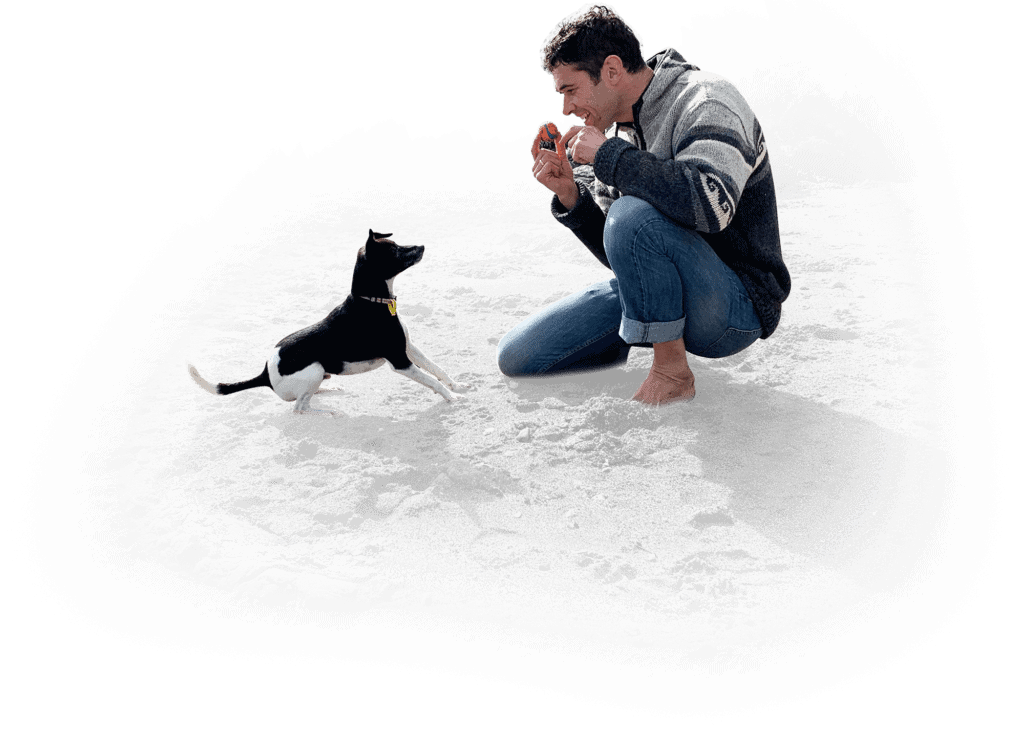
Effective reactive dog training starts with understanding dog psychology and establishing clear leadership. Follow these essential tips from Doggy Dan to see fast results and improve your dog's behavior today.
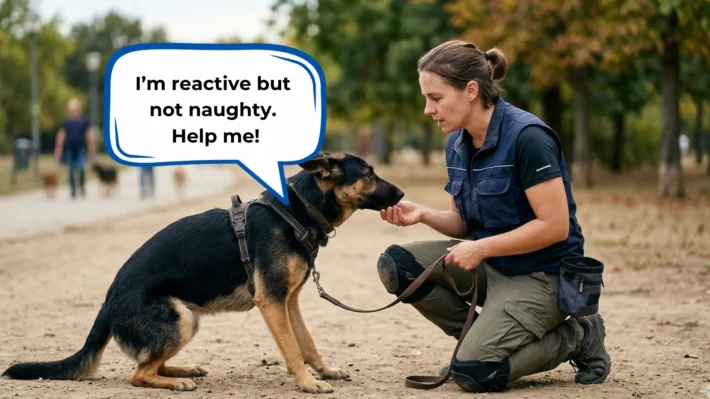
Reactive dogs affect millions of dog owners worldwide. Studies show that reactivity is one of the most common behavioral issues reported by dog owners, affecting anywhere from 72-99% of dogs to some degree.
Many owners find themselves stuck at home, avoiding walks, parks, and social situations because they're afraid of turning a casual outing into a stressful encounter.
The isolation is real. The frustration is real. And the feeling that your dog is “broken” or that you've failed as an owner—that's real too.
But here's what you need to know: your dog isn't broken, and this isn't your fault. What your dog is experiencing is an involuntary emotional overreaction to a trigger—and the good news is, it's absolutely addressable with the help of proven techniques.
If you want to stop your dog from turning from a reactive pup into an uncontrollable, aggressive dog, this blog is for you. I am combining my decades’ worth of actual training knowledge to provide:
Key Takeaways
- Reactivity isn’t “bad” behavior, but a physiological takeover where the emotional “Red Zone” overrides the thinking brain. This fight-or-flight reflex makes commands impossible to hear until the dog’s nervous system feels safe enough to stay calm and learn.
- Many dogs are hyper-vigilant because they believe they feel responsible for your safety. Without a clear leader, they stay in an exhausting state of high alert, reacting to every perceived threat because they believe your survival depends on them.
- Healing begins by using the Five Golden Rules to shift the dog's perception of who is in charge. By consistently handling “danger” yourself, you remove the burden of protection from your dog, allowing them to finally “stand down” and trust your guidance.
Is Your Dog Reactive?
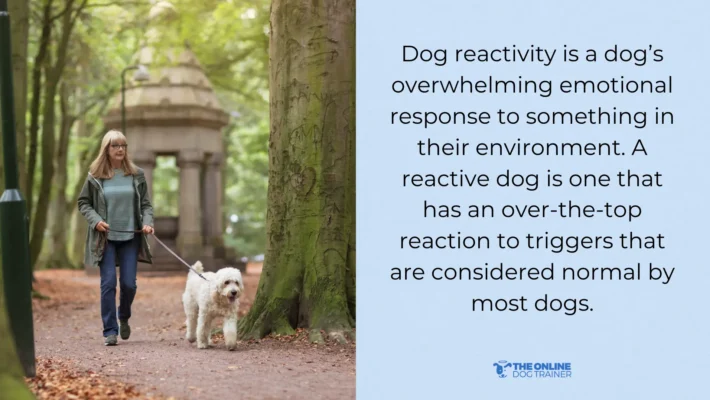
Dog reactivity is a dog’s overwhelming emotional response to something in their environment. A reactive dog is one that has an over-the-top reaction to triggers that are considered normal by most dogs.
Your dog sees a trigger—another dog, a person, a car—and instead of taking it in stride, they hit the turbo button on their emotions.
Here's what this actually looks like: You're on a peaceful walk when your dog spots another dog across the street. While a calm dog might acknowledge it and move on, a reactive dog locks in completely.
When reactivity takes over your dog, here are the signs that you will see.
Sign #1: Intense Barking That Won't Stop
One of the most obvious signs is excessive, intense barking. Your dog barks so hard and so persistently that it seems like nothing can stop them. This isn't just playful excitement—it's their way of saying, “I am using my voice to stop what overwhelms me.”
Barking is often defensive, not offensive. When your reactive dog barks, they're signaling distress, not aggression.
Sign #2: Lunging Forward Aggressively
A sudden lunge forward is your dog trying to warn the trigger to back off. They're not trying to attack—they're trying to escape or push the threat away.
Sign #3: They Can't Hear Your Commands
No matter how hard you call them, they can't hear you. Their focus locks onto the trigger completely. It's like you don't exist. This hyper-focus is a key indicator of reactivity—your dog's emotional brain has completely taken over their thinking brain.
When your dog is in this state, training becomes useless because their brain has prioritized safety over learning.
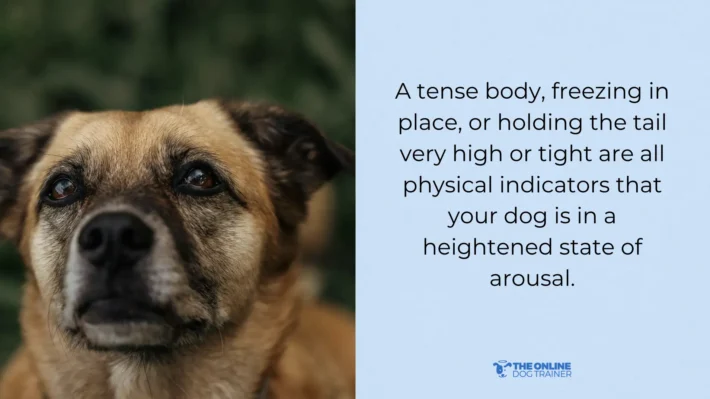
Sign #4: Wide Eyes and Rigid Body
Their eyes go wide. Their body goes rigid. It's like they've entered another world entirely.
This stiff, rigid posture is a stress response. A tense body, freezing in place, or holding the tail very high or tight are all physical indicators that your dog is in a heightened state of arousal.
Sign #5: Growling or Snarling
Growling is an audible warning—a signal that your dog is uncomfortable, and escalation is possible if the stressor remains. A fixed, intense stare directed at a trigger often accompanies this, indicating your dog has locked in and is no longer relaxed.
Sign #6: Lip Licking or Excessive Yawning
These are subtle stress signals you might easily miss. Dogs lick their lips or yawn as a self-soothing mechanism when they feel anxious or overwhelmed—even before a full reaction occurs.
Sign #7: Sudden, Out-of-Context Scratching
An easy sign to miss—sudden, out-of-context scratching is a displacement behavior. Your dog is redirecting internal anxiety into a physical action. It happens when they're nervous, or overwhelmed, or hyper-aware of everything around them.
Sign #8: Raised Hackles
The fur along your dog's back and neck stands on end. It's your dog's body's way of trying to appear larger and more intimidating—even though they're actually scared.
Sign #9: Whining or Yelping
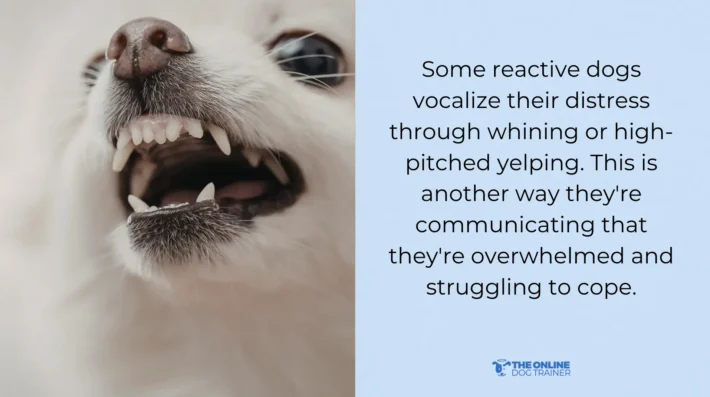
Some reactive dogs vocalize their distress through whining or high-pitched yelping. This is another way they're communicating that they're overwhelmed and struggling to cope.
Sign #10: Panting or Heavy Breathing
Stress signals include panting, sweating from the paws, or heavy breathing when no stressor should logically be present. These are physiological responses to the activation of their nervous system.
Sign #11: Redirected Aggression
Unpredictably, a reactive dog might turn their aggression onto the handler or another nearby pet. This happens when they're so overwhelmed that they don't know where to direct their stress response.
Sign #12: Taking a Long Time to Calm Down
After the trigger disappears, your reactive dog doesn't immediately settle. They take a long time to calm down—sometimes even longer than the actual trigger was present.
This is because their body is flooded with stress hormones like cortisol and adrenaline. It takes time for their nervous system to downregulate.
What Causes Dog Reactivity?
Here's what's really happening: your reactive dog has taken on the job of protecting you.
From their perspective, they're trying to handle a threat they believe is coming. They've decided that they're responsible for keeping you, your family, and your home safe.
So they're always watching. Always scanning. Always ready to react—because in their mind, their and your survival is priority number one.
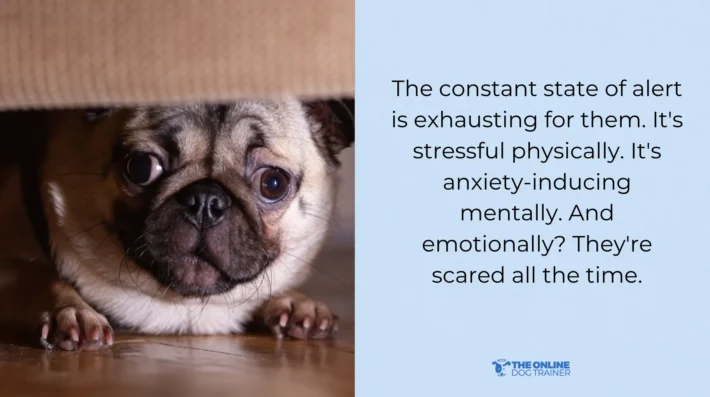
That constant state of alert is exhausting for them. It's stressful physically. It's anxiety-inducing mentally. And emotionally? They're scared all the time because they feel the weight of responsibility they've taken on.
What Goes On In Your Reactive Dog’s Mind?
Here's what most people miss: reactivity isn't primarily about fear or aggression. It's about who your dog thinks is in charge.
When a dog doesn't have a calm, confident leader they can trust, they step into that role themselves. They become the protector. They become hypervigilant. They scan the environment constantly, looking for threats—because they think that if you're not handling it, they have to.
Think about how exhausting that would be for you. Imagine being told that you are responsible for keeping your entire family safe from every possible danger. You'd be stressed. You'd be anxious. You'd be on high alert all the time.
That's your reactive dog's reality.
Is Stress Causing Your Dog To Be Reactive?
When a dog takes on the role of protector without real leadership, it manifests in three devastating ways:
Physical Stress
Your dog can't relax because resting feels like abandoning their post. They can't truly rest because what if something happens while they're sleeping? Their body stays tense, their muscles stay tight, and over time, their health suffers. They're always uneasy.
Mental Stress
Your dog is constantly anxious. They can't calm down because they're always on guard and alert. They’re always scanning the surroundings for threats. Their mind never gets a break.
Emotional Stress
Deep down, your dog is terrified. They feel the weight of responsibility. They believe they're the only thing standing between you and danger. That fear is constant, and it's crushing.
Do Genetics Cause Dog Reactivity?
Dog reactivity isn't entirely genetic, but genetics certainly plays a role.
Some dogs are born with temperaments that make them naturally more cautious, anxious, or reactive to stimuli. Certain breeds were originally developed for specific purposes—some to guard, some to hunt, some to herd—and those genetic predispositions can influence how they respond to triggers.
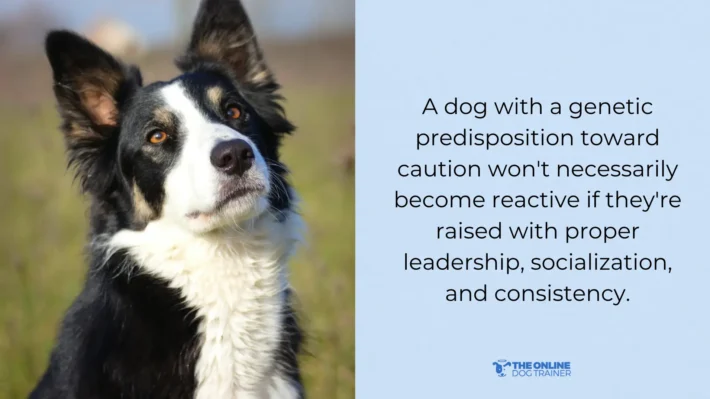
However, genetics alone doesn't determine whether your dog becomes reactive. A dog with a genetic predisposition toward caution won't necessarily become reactive if they're raised with proper leadership, socialization, and consistency. On the flip side, a dog from a calm genetic stock can become reactive if they lack these essential elements.
Think of genetics as a foundation. It sets the stage, but it doesn't write the whole story for your dog. Your dog's actual behavior—whether they become reactive or remain calm—is shaped by their experiences, your leadership, and how their world is managed.
The truth is, while genetics can make a dog more prone to anxiety or reactivity, it's not a life sentence. With proper training, consistent leadership on your end, and the right approach, you can help even genetically predisposed dogs overcome reactivity.
Does Pain Cause Reactivity?
Absolutely. Pain is one of the most overlooked causes of reactivity.
If your dog is experiencing chronic pain—from arthritis, hip dysplasia, dental disease, ear infections, or any other condition—they're already in a heightened state of stress and sensitivity. Add a trigger to that, and their reaction will be disproportionately intense.
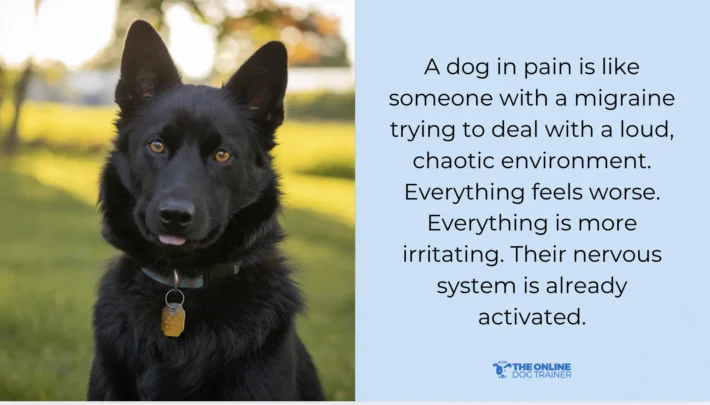
A dog in pain is like someone with a migraine trying to deal with a loud, chaotic environment. Everything feels worse. Everything is more irritating. Their nervous system is already activated.
This is why it's crucial to rule out medical issues before assuming your dog's reactivity is purely behavioral. If your dog has recently become reactive or if their reactivity has suddenly worsened, a veterinary check-up is essential.
Common painful conditions that can trigger or worsen reactivity include:
- Arthritis or joint pain
- Dental disease or tooth pain
- Ear infections
- Skin allergies or irritations
- Digestive issues
- Neurological problems
Once you've addressed the underlying pain, you may find that your dog's reactivity improves significantly. Pain management—whether through medication, supplements, or lifestyle changes—is often a critical first step in addressing reactivity.
Does Trauma Cause Dogs To Be Reactive?
Yes. Trauma is one of the most direct causes of reactivity.
A dog who has experienced abuse, neglect, abandonment, or frightening incidents will often develop reactive behaviors as a protective mechanism. Their brain has learned that certain situations or stimuli equal danger, and their body is primed to respond defensively.
Fear-based reactivity often stems directly from trauma. A dog that was hit by a hand might flinch or react defensively when they see hands moving quickly. A dog who was attacked by another dog might become reactive to all dogs. A dog who experienced abandonment might panic when separated from their owner.
The traumatized dog's nervous system remains in a heightened state of alert. They're essentially saying, “I've been hurt before, and I'm not letting it happen again.” That constant vigilance manifests as reactivity.
Here's the important part: trauma doesn't make a dog hopeless, but it does require extra patience, consistency, and leadership. A traumatized dog needs to learn, through repeated safe experiences and calm leadership, that the world is not as dangerous as their past taught them.
When you establish yourself as a calm, confident leader—someone your dog can trust to handle threats—their nervous system will tell them they are safe enough to relax. Recovery from trauma takes time, but it's absolutely possible.
Does Poor Socialization Cause Reactivity?
Yes, poor socialization can make a dog reactive, especially during times when they’re exposed to strangers and new dogs.
During a critical window in puppyhood—roughly 3 to 14 weeks of age—dogs need exposure to a wide variety of people, animals, environments, and experiences. This is when they learn what's “normal” and what's safe.
A puppy who misses this socialization window often develops fear and anxiety around unfamiliar stimuli. They never learned that other dogs come in different sizes, shapes, and temperaments. They never learned that strangers are generally harmless. They never experienced car rides, busy streets, or loud noises in a positive context.
And as protectors, they never know how to relax and snap bags.
When these under-socialized dogs encounter triggers later in life, they react with fear and intensity because the trigger is genuinely unfamiliar and therefore threatening.
Common reactivity patterns from poor socialization include:
- Dog-to-dog reactivity: The dog was never exposed to other dogs during the critical socialization period, so all unfamiliar dogs seem threatening.
- People reactivity: Limited exposure to different people means strangers trigger a fear response.
- Environmental reactivity: Unfamiliar sounds, vehicles, or situations feel genuinely dangerous because they're novel.
Here's the hopeful part: even adult dogs can improve with proper exposure and leadership. While it's easier to socialize puppies, adult dogs are still capable of learning that new experiences aren't dangerous—especially when they have a calm, confident leader helping them.
The key is moving slowly. Introduce new stimuli at a distance where your dog remains calm. Reward calm behavior. Let their nervous system gradually accept that these things are safe.
Poor socialization is a significant contributor to reactivity, but it's not a permanent limitation.
Is Dog Reactivity The Same as Dog Aggression?
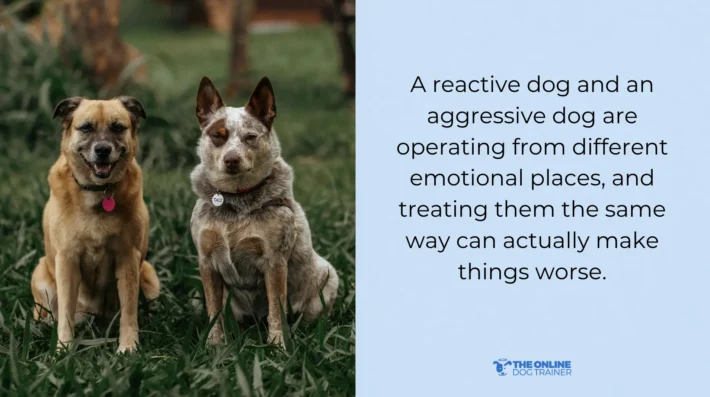
No—and this distinction is crucial to understanding your dog. Many people use these terms interchangeably, but they're fundamentally different. A reactive dog and an aggressive dog are operating from different emotional places, and treating them the same way can actually make things worse.
What’s The Difference Between Dog Reactivity and Dog Aggression?
A reactive dog is overwhelmed. An aggressive dog has intent.
That's the essential difference. When your reactive dog barks, lunges, or growls, they're not trying to hurt anyone. They're saying, “This is too much. Please make it stop. I need space.” It's a defensive response born from fear or frustration.
An aggressive dog, on the other hand, has made a different calculation. They're showing you they want to cause harm. Their body language is different. Their intentions are different. They're not just reacting—they're attacking.
Intent to Harm
A reactive dog barks, jumps, or lunges, but they're typically trying to create distance, not contact. If they make contact, it's usually incidental to their panic response.
An aggressive dog is actively trying to bite or injure. The contact is the goal, not a side effect.
Body Language
Watch closely, and you'll see the difference:
Reactive dogs show signs of anxiety and fear—they're trying to escape or push the trigger away. You might see a tucked tail, whale eyes (showing the whites of their eyes), or attempts to back away even as they're barking.
Aggressive dogs display confidence and control. Their bodies are stiff and tense. Their stance is forward-moving and purposeful. They're showing you they're ready to attack, not asking you to remove them from the situation .
The Warning System
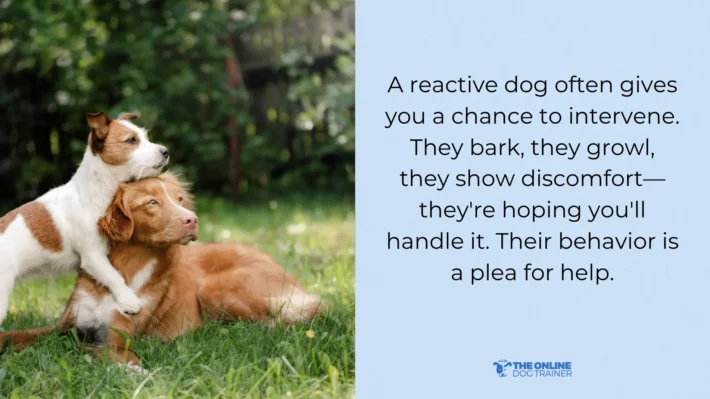
A reactive dog often gives you a chance to intervene. They bark, they growl, they show discomfort—they're hoping you'll handle it. Their behavior is a plea for help.
An aggressive dog may not give warnings. Or if they do, those warnings are brief. They're not negotiating. They're proceeding.
Let's paint a picture. Your friends arrive at your door for the first time. The doorbell rings.
A calm dog acknowledges the sound and settles.
A reactive dog barks frantically, runs in circles, jumps on you, and scratches at the door. But here's the thing—they're not trying to bite your friends. They're overwhelmed by the noise and the new people. They're trying to alert you – their pack – to what they perceive is danger . As soon as your friends are inside and the chaos settles, the dog often calms down.
An aggressive dog barks, lunges, and shows stiff, threatening body language. Their intent is clear: “I will bite you if you come through that door.” This isn't panic—it's a threat.
Can A Reactive Dog Become Aggressive?
“But Doggy Dan, can my reactive dog become aggressive?”
Yes—and this is important to understand. A reactive dog pushed too far, too often, or without proper support can escalate into aggression. If a dog feels trapped, believes they have no escape, or learns that aggression actually removes the threat, they can cross that line.
But that's exactly why addressing reactivity early matters. Your reactive dog is sending you a signal. They're saying they need help. If you ignore that signal—if you keep putting them in situations that overwhelm them—desperation can turn into aggression.
What Are The Different Kinds of Dog Reactivity?
Dog reactivity isn't one-size-fits-all. Your dog's reactivity shows up differently depending on their triggers, history, and emotional wiring. Understanding which type of reactivity your dog is experiencing is the first and most critical step toward choosing a training approach that actually works.
Leash Reactivity
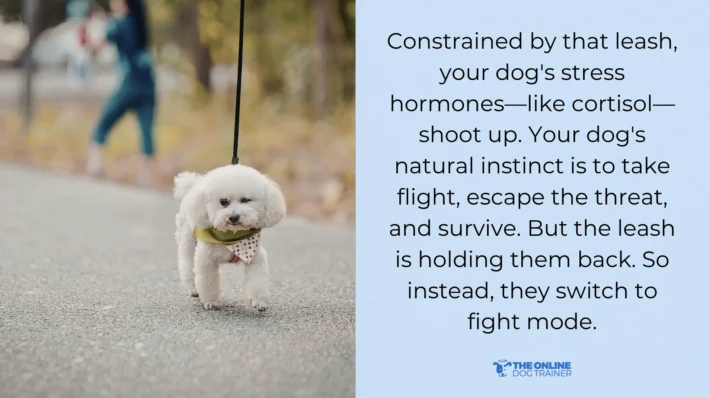
Imagine your dog transforms the moment the leash goes on. They're calm at home, but the second you clip that leash, they become uncontrollable. They bark, lunge, and pull with all their might—and the moment you take the leash off, they settle right back down,
That's leash reactivity, and it's more common than you might think.
Here's what's happening: your dog's instinctual fight-or-flight center in their brain gets triggered. Normally, dogs greet each other from the side—calmly, with a relaxed approach. But when a dog feels stressed, anxious, excited, scared, or frustrated, they approach head-on with intense eye contact. That's already a reactive state.
Now add the leash. Constrained by that leash, your dog's stress hormones—like cortisol—shoot up. Your dog's natural instinct is to take flight, escape the threat, and survive. But the leash is holding them back. So instead, they switch to fight mode. They can't run, so they bark. They can't escape, so they lunge. It's their body's attempt to manage the stress they're feeling.
The good news? Leash reactivity often improves dramatically when you establish calm leadership and work on building your dog's confidence in those moments. Your dog will feel that even if they’re on a leash, you will keep them safe and protected.
Fear-Based Reactivity
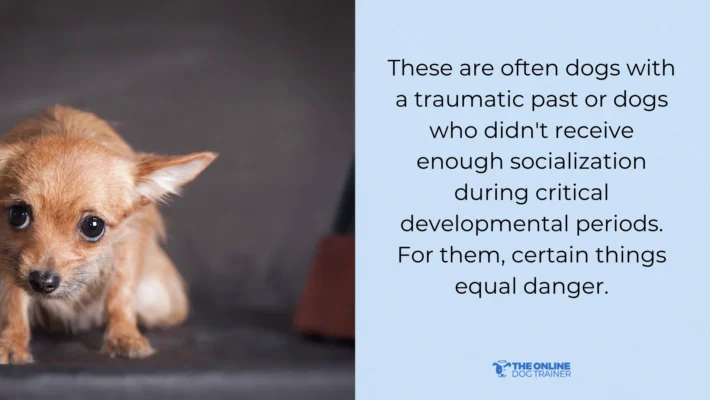
Fear-based reactivity is when your dog's reaction comes from apprehension linked to a person, another dog, or a specific situation.
These are often dogs with a traumatic past or dogs who didn't receive enough socialization during critical developmental periods. For them, certain things equal danger.
A dog who was abandoned might panic when they feel separated from you. A dog who experienced violence might react to any looming figure. Even unfamiliar dogs can trigger fear in a dog that has never learned how to interact with them.
Here's what makes fear-based reactivity tricky: fearful dogs are often misunderstood as aggressive. They bark intensely, they're restless, and their body posture can look threatening. But underneath all that noise is a dog trying to protect themselves, not attack.
A fearful dog goes into defensive mode. They try to dodge the situation or send out signals that they're uncomfortable. Lip licking, yawning, looking away—these are all their attempts to say, “I'm not okay with this.”
But here's the critical part: if those signals are ignored or missed, the fearful dog escalates. They're essentially saying louder and louder, “Hey, I'm not comfortable here!” If nothing changes, they may resort to more dramatic behaviors.
Dog-to-Dog Reactivity
Your dog might be perfectly calm around people, but the moment another dog appears, they lose it. This is dog-to-dog reactivity, and it's incredibly frustrating for owners.
There are several reasons this happens. Some dogs missed critical socialization during their puppy phase—the window when they should have learned how to interact with dogs of various shapes, sizes, breeds, and ages. Others had a negative encounter early on that frightened or overwhelmed them, and now they're reactive with all dogs.
But here's something important: most dogs with dog-to-dog reactivity are actually very protective, not fearful. They bark and lunge at another dog because they consider them as a threat that needs to go away.
Territorial Reactivity
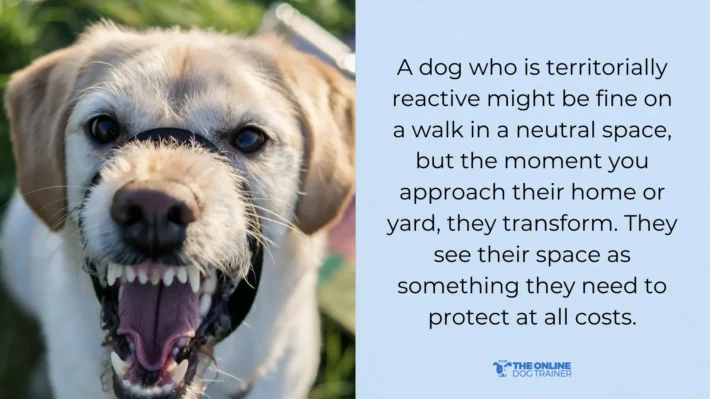
Some dogs become reactive when their space is invaded. For your dog, space is sacred. When you, another dog, or even a stranger steps into their territory, they can become very protective. Your dog guards their space because, in their mind, it's key to their safety and survival.
A dog who is territorially reactive might be fine on a walk in a neutral space, but the moment you approach their home or yard, they transform. They see their space as something they need to protect at all costs.
This is where leadership becomes especially important. Your dog needs to understand that you are the one protecting the space, not them. When you establish that calm authority, territorial reactivity often decreases significantly.
Noise Sensitivity and Excitement-Based Reactivity
Not all reactivity comes from fear or territoriality. Some dogs are simply overwhelmed by loud noises—fireworks, thunderstorms, or sirens—and their nervous system floods with stress.
Others are reactive because they're overstimulated and excited. They see another dog, and their arousal goes through the roof. They can't contain themselves. Their entire nervous system is in overdrive.
The Common Thread
What ties all these types together? Your dog is overwhelmed and believes they need to handle the situation themselves. Whether it's fear, frustration, territoriality, or excitement, your reactive dog has taken on a responsibility they were never meant to carry. They think they're in charge of managing the threat or the trigger instead of entrusting it to you.
That's where your leadership comes in. When your dog finally believes that you're handling it—that you're the one in charge—their reactivity begins to transform.
The type of reactivity your dog has matters. But what matters even more is understanding that, beneath whatever type it is, your dog is asking for help. They're asking for a leader they can trust.
How The Dog Calming Code Addresses All Kinds of Reactivity
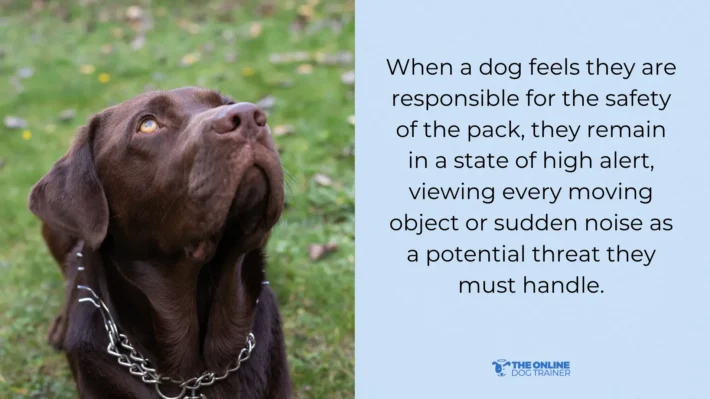
Whether your dog struggles with leash lunging, territorial barking, or intense fear of strangers, the underlying cause is almost always the same: a lack of perceived leadership. When a dog feels they are responsible for the safety of the “pack,” they remain in a state of high alert, viewing every moving object or sudden noise as a potential threat they must handle.
The Dog Calming Code addresses this at the root, providing a universal solution that works across all breeds and types of reactivity.
A Proven, Gentle Path to Change
You don't need to overpower your dog to earn their respect. In fact, force often confirms a reactive dog's fear that the world is a dangerous place. The Dog Calming Code has helped 125,000 dogs overcome reactivity by moving away from “old school” intimidation and moving toward psychological understanding.
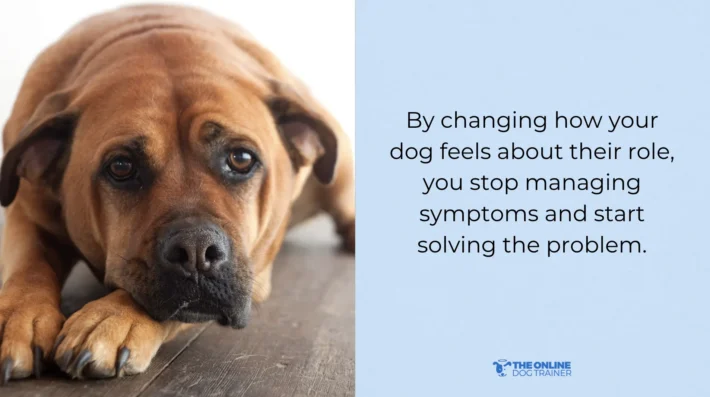
Unlike many modern methods that rely on an extreme, constant stream of treats—which often fails the moment a high-level trigger appears—this approach focuses on shifting the dog’s emotional state. By changing how your dog feels about their role, you stop managing symptoms and start solving the problem.
The Power of Your Leadership
At its core, the Dog Calming Code is about empowering you. It helps dog owners understand that leadership isn't about being “alpha” or aggressive; it’s about being a calm, consistent source of direction.
When you establish clear leadership through the Five Golden Rules, you bridge the communication gap. This transition turns a reactive, “hard-to-train” dog into one that truly listens. Once your dog realizes they are no longer the ones in charge of security, their hyper-vigilance fades, and they finally become capable of focus and learning.
The Foundation for Every Strategy
Think of the Dog Calming Code as the foundation of a house. You can try all the specialized training strategies in the world—counter-conditioning, distance work, or new commands—but if the foundation of leadership is missing, the “house” will eventually crumble under stress.
By implementing the Code first, you create a strong, permanent foundation. It lowers your dog's overall baseline stress, ensuring that any additional reactive training or strategies you use actually “stick.” When your dog trusts your guidance, they don't just behave better—they live better, more peaceful lives.
What Are The Best Training Tips for Reactive Dogs
Training a reactive dog isn't about quick fixes or punishment. It's about fundamentally changing how your dog sees their role and how they respond to the world. The key is understanding that your reactive dog believes they're in charge of keeping you safe. Your job is to gently, consistently show them that you've got this—so they can finally relax.
Start With These Foundational Steps
Identify Your Dog's Triggers
The first step is knowing what sets your dog off. Is it other dogs? People? Cars? Loud noises? Write these down. Understanding your dog's specific triggers helps you manage the situation before a reaction happens.
Maintain a Safe Distance
Once you know the triggers, keep your dog at a distance where they remain calm. This is crucial. You're not avoiding the trigger forever—you're creating a starting point where your dog's nervous system isn't already in overdrive. From this calm place, real learning can begin.
Counter-Condition the Trigger
Pair the trigger with something positive—high-value treats your dog loves. Over time, your dog's emotional response shifts. Instead of thinking, “That dog means danger,” they think, “That dog means good things happen.” This takes time and consistency, but it rewires how your dog feels about the trigger.
Reward Calmness, Not Reaction
Stop waiting for your dog to be perfect. Start rewarding calm behavior. When your dog sees a trigger and stays calm—even for a few seconds—that's the moment to reward. You're teaching your dog that calm behavior gets them what they want.
Avoid Trigger Stacking
Never expose your dog to multiple stressful situations at once. If your dog is already anxious about a vet visit, don't take them to a busy park on the same day. One trigger at a time. When your dog's nervous system is already activated, even small things feel enormous.
What Are Doggy Dan’s Five Golden Rules for Dog Training?
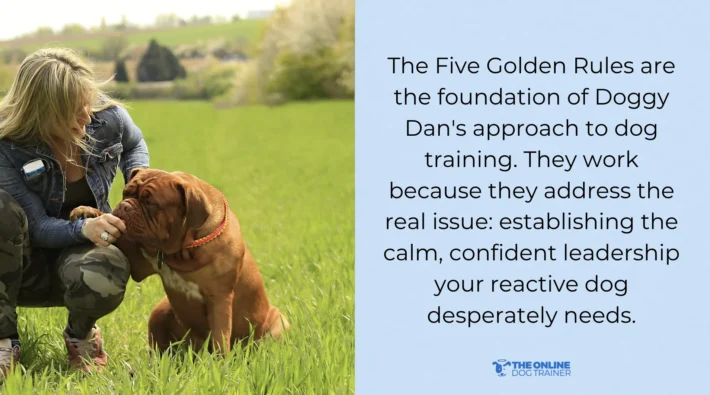
The Five Golden Rules are the foundation of Doggy Dan's approach to dog training. They work because they address the real issue: establishing the calm, confident leadership your reactive dog desperately needs.
Rule #1: Food Training
Your dog doesn't need constant treats, but they do need to understand that you control resources.
Food training establishes that you're the one who decides when and where eating happens. This subtle shift—where your dog looks to you for guidance—is the beginning of real leadership.
When your dog sees food as something you provide rather than something they take, they start to see you as the one in control. And a dog who trusts someone else is in control is a dog who can finally relax.
Rule #2: Delayed Acknowledgement
This is powerful and often overlooked. When your dog demands attention—barking, jumping, pawing—don't give it immediately. Wait. Only acknowledge your dog when they're calm.
This teaches your dog that you decide when interaction happens, not them. It's not about ignoring your dog—it's about being intentional. Your dog learns that staying calm gets your attention, while reactivity doesn't.
Rule #3: Do Everything In Your Terms
Your reactive dog needs to know where they stand. Are they allowed on the couch? Do they wait at doors? Can they pull on the leash? Consistent boundaries create predictability, and predictability creates calm.
When your dog knows the rules and they don't change, their anxiety decreases. They're not constantly testing to see what's allowed—they know. This clarity is deeply reassuring to a reactive dog.
Rule #4: Dealing With Danger (or Perceived Danger)
This rule teaches your dog that you handle dangerous situations—not them. When your dog sees another dog or perceives a threat and starts to react, your calm response is crucial.
Don't panic. Don't yell. Don't get frustrated. Your dog is looking to you to see how serious this is. If you're calm, they learn that you've assessed the situation and it's under control. This is when you can redirect, move away, or reward calm behavior. Your composure is teaching.
Rule #5: Walking Your Dog With Purpose
The walk isn't just exercise—it's a leadership opportunity. Your dog shouldn't pull you where they want to go. You lead. You decide the pace. You decide when to stop.
This matters because a reactive dog who pulls and drags you around is already in a state of control. They're taking charge. When you lead calmly and consistently, your dog shifts from “I'm in charge” to “I can trust this person.” And on walks, that's when you'll notice the biggest changes in reactivity.
How Can Calm Leadership Solve Dog Reactivity?
The Five Golden Rules work because they all point to the same truth: your dog needs a calm, confident leader they can trust to protect them.
When you apply these rules consistently—not perfectly, but consistently—your dog's nervous system begins to downregulate. They stop feeling like they have to manage everything. The mental, emotional, and physical stress they've been carrying starts to lift.
That's when the barking decreases. That's when the lunging stops. That's when you start to see a different dog emerge.
What Doesn't Work on Reactive Dogs
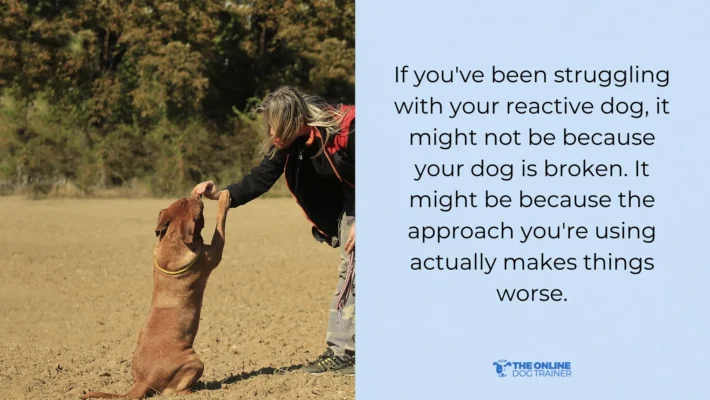
If you've been struggling with your reactive dog, it might not be because your dog is broken. It might be because the approach you're using actually makes things worse.
Force
Using force—whether it's yanking the leash, yelling, or physically correcting your dog—doesn't address reactivity.
When you use force on a reactive dog, you're confirming their worst fear: the world is dangerous and unpredictable. You're also taking away their ability to problem-solve. Your dog becomes more anxious, more defensive, and, yes, more reactive.
Force teaches fear. It doesn't teach calm. And a fearful dog will always choose to react before they can be hurt again.
Relying on Treats All The Time
Some trainers think reactivity can be solved by throwing treats at the problem. Treat, treat, treat. Every time there's a trigger, give a treat.
Here's the problem: treats alone don't change how your dog feels. They're a tool, not a solution. If you use treats without addressing the underlying anxiety and leadership gap, your dog will learn to associate triggers with treats—but they'll still be anxious. They'll just be anxious and expecting food.
Treats work best when they're part of a larger strategy that includes consistency, boundaries, and calm leadership.
Inconsistency
This might be the most damaging approach of all. When your rules change from day to day, when sometimes you let your dog pull on the leash, and sometimes you don't, when your boundaries shift, your dog becomes more anxious. The more you do this, the less they see you as a leader.
A reactive dog's nervous system is already activated. Inconsistency says, “I don't know what to expect, so I need to stay on high alert.” Your dog will react more because they can't predict what's coming.
Consistency, on the other hand, is deeply calming. Your dog knows what to expect, and that predictability allows their nervous system to relax.
Lack of Trust Due to Fear of You
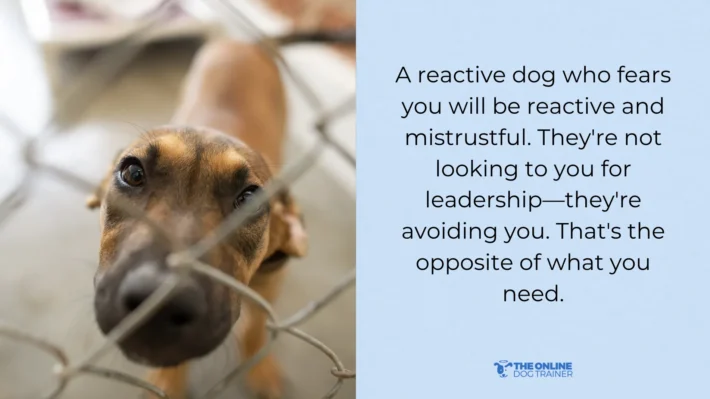
Some dog owners inadvertently create distance between themselves and their dogs through intimidation or harshness. The dog complies out of fear, but they don't trust.
A reactive dog who fears you will be reactive and mistrustful. They're not looking to you for leadership—they're avoiding you. That's the opposite of what you need, especially if you’re trying to help them see you as a leader they can trust.
Your dog needs to trust that you have their back, that you're calm, and that you understand them. Fear destroys that trust.
Not Establishing Your Leadership
This is the core issue. Most approaches to dog reactivity focus on managing the behavior—the barking, the lunging, the jumping. But they ignore the real problem: your dog doesn't believe you're in charge.
Without leadership, everything else fails. Treats don't stick. Boundaries don't hold. Consistency feels random because your dog is still waiting for you to actually take control.
A reactive dog needs a leader. Not a friend who sometimes disciplines. Not a parent who coddles. A calm, confident leader who makes decisions, sets boundaries, and manages the environment.
When you establish real leadership—the kind that comes from the Five Golden Rules and genuine calm confidence—your dog stops needing to be reactive.
How Dog Psychology Helps Reactive Dogs
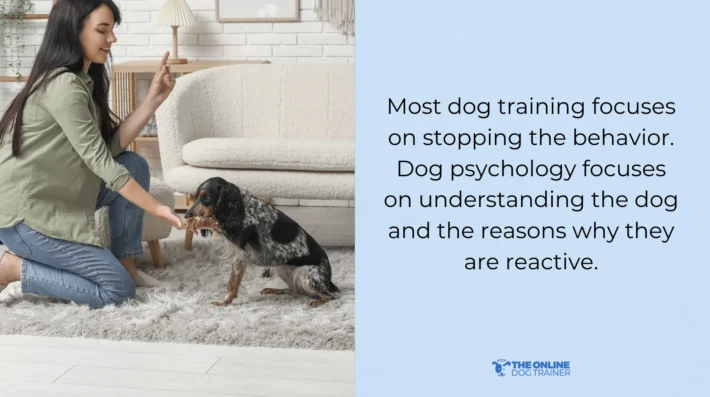
Here's a truth that changes everything: your reactive dog is communicating that they're scared, overwhelmed, and desperate for someone to take charge. Most dog training focuses on stopping the behavior. Dog psychology focuses on understanding the dog.
Understanding How Dogs Think
Your reactive dog isn't thinking the way you think. They're not planning to embarrass you on walks or trying to be difficult. They're operating from instinct, emotion, and their perception of what's necessary for survival.
Your reactive dog isn't thinking the way you think. They're not planning to embarrass you on walks or trying to be difficult. They're operating from instinct, emotion, and their perception of what's necessary for survival.
When you understand this—when you truly grasp that your dog isn't trying to be bad, they're trying to be good—your entire approach shifts. Instead of thinking, “How do I stop this behavior?” you start thinking, “How do I help my dog feel safe enough to stop needing to do this?”
That shift in perspective is where healing begins.
The Dog Calming Code
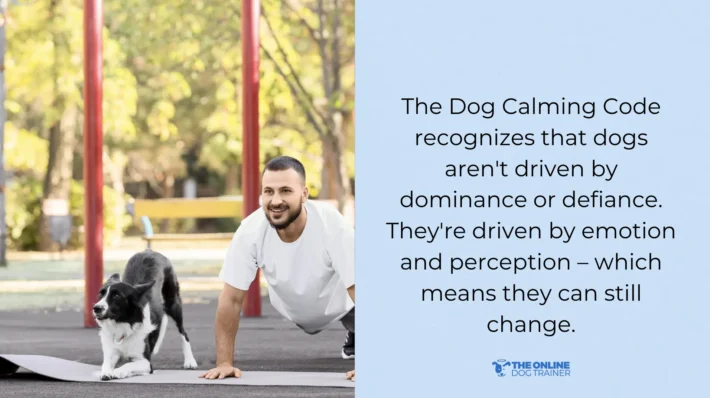
At the heart of helping reactive dogs is understanding the Dog Calming Code—the secret to training over 125,000 dogs.
The code recognizes that dogs aren't driven by dominance or defiance. They're driven by emotion and perception. A reactive dog perceives a world that's unsafe, unpredictable, and full of threats. Their reactivity is their attempt to manage that world.
The Dog Calming Code works by addressing the emotional state underneath the behavior. When you calm your dog's nervous system—through consistency, leadership, boundaries, and your own calm energy—the behavioral problems begin to solve themselves.
The Power of Emotional Understanding
Traditional dog training often misses something crucial: your emotional state directly affects your dog's emotional state.
If you're tense when you see another dog coming, your dog feels that tension through the leash, through your voice, through your body language. They think, “My human is worried. There must be danger.” And they react.
But when you're calm—genuinely calm, not fake-calm—your dog feels that too. Your calmness communicates safety. It says, “I've got this handled.” And when your dog believes you've got it handled, they don't need to.
This is why dog psychology is so powerful. It teaches you that training your dog actually starts with understanding and managing yourself.
Creating Security Through Leadership
From a psychological perspective, a reactive dog is a dog without security. They don't feel secure because they're in charge—that's terrifying. They need someone else to be in charge.
When you establish yourself as a calm, confident leader through the Five Golden Rules and genuine understanding, you're not just training your dog. You're giving them permission to stop being afraid. You're telling them, through your actions and your consistency, “You don't have to manage this. I will.”
That psychological shift—from “I have to handle everything” to “Someone I trust is handling this”—is when a reactive dog finally becomes calm.
The Transformation
At the heart of my training is helping dog owners understand dog psychology and its power in training.
Dog psychology recognizes that behavior change follows emotional change. You can't force a dog to be calm. But you can create the conditions where calm becomes possible.
When a reactive dog finally trusts their owner, when they believe their human is in charge, when their nervous system stops screaming danger at every sound and movement, that's when they transform.
That's not just behavior modification. That's healing.
This is what I teach dog owners, and this is what I taught to change the lives of over 125,000 dogs. Your dog can change, too.
Common Questions About Reactivity
Is Dog Reactivity the Same as Excitement?
No—though they can look similar. A dog that's overexcited and a dog that's reactive are operating from different emotional places.
An excited dog is enthusiastic and happy. A reactive dog is overwhelmed, fearful, or frustrated. While both might jump or bark, the underlying emotional state is completely different.
This matters because the training approach for each is different. With an excited dog, you're channeling their energy. With a reactive dog, you're helping them feel safe enough to calm down.
Why is My Dog Reactive to Everything?
Reactive dogs often struggle with multiple triggers—other dogs, people, vehicles, loud noises, and more.
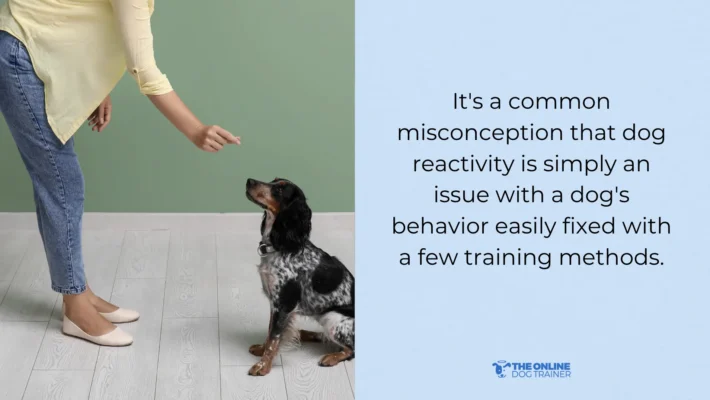
It's a common misconception that dog reactivity is simply an issue with a dog's behavior easily fixed with a few training methods. The real reason goes deeper: your dog has taken on the burden of protecting you, and they're under constant stress.
When a dog operates in this protective mode, their nervous system stays activated. They're always scanning for threats. In this heightened state, even small things feel like big deals. That's why they react to seemingly “everything”
What's the “Energy Meter” and Why Does It Matter?
The energy meter is a simple scale from 0 to 10 that measures your dog's energy level. Zero is sleep, and as the number increases, your dog becomes more alert, aware, focused, and eventually enters the “red zone”—anything above level 7.
At level 7, something critical happens: adrenaline kicks in. This is the “point of no return”. Once your dog crosses this threshold, their body floods with endorphins and stress hormones, making it very difficult for them to calm down.
When your reactive dog enters the red zone, it takes a long time to drop down—going from a 9 to an 8, or an 8 to a 7, is slow because all those endorphins are in their system.
This is why it's far easier to start training your dog when they're calm and keep them away from the red zone altogether. If you push your dog too quickly into stressful situations, you'll drive them into that red zone, and you'll undo all your progress.
Understanding the energy meter helps you recognize when to pull back, give your dog a break, and let their nervous system settle before progressing with training.
Do The Tools I Use Contribute or Stop Reactivity?
If your dog transforms from calm to chaotic the moment the leash goes on, the equipment you're using matters significantly
Standard collars, choke collars, and retractable leashes don't work for reactive dogs—they often make reactivity worse. When your dog is already stressed, a collar that constrains their throat only confirms their fear that the world is dangerous.
Opt for a harness with a front-clip design and a standard 5-6 foot leash. A front-clip harness clips at the chest rather than the spine, giving you better control and leverage to redirect your dog away from triggers without causing discomfort.
Why This Matters
Leash reactivity is an involuntary emotional struggle triggered by your dog's fight-or-flight response.
When constrained by a leash, their stress hormones spike. The right harness helps you manage the situation while your dog processes what they're feeling.
Introducing the Doggy Dan No-Pull Harness
The Doggy Dan No-Pull Harness is specifically designed for dogs struggling with leash reactivity.
Key Features:
- Front chest loop that gently redirects pulling without restriction.
- Rests securely across the chest rather than constricting the throat.
- Helps dogs feel guided AND safe, so reactivity can be prevented.
Unlike traditional harnesses, this design prioritizes your dog's well-being while giving you the control you need to manage triggers effectively. Combined with calm leadership and consistent training, the Doggy Dan No-Pull Harness can be transformative for leash-reactive dogs.
My Dog Is Reactive… What Do I Do Next?
If you feel exhausted, isolated, or like you’re constantly walking on eggshells with your dog, please hear this: There is hope. Your dog isn’t trying to make your life difficult; they are simply trying to keep you safe in a world they don’t yet understand. When you stop fighting the behavior and start healing the emotion, everything changes.
By stepping into your role as a calm, confident leader, you aren't just training your dog—you are giving them the greatest gift possible: the permission to relax. You don't have to do this alone, and you don't have to rely on force or frustration to see a transformation.
Step Into a New Way of Living
Are you ready to crack the code on your dog’s behavior and reclaim your peaceful walks? It all starts with the Dog Calming Code. This isn't just a training method; it’s a fundamental shift in how you and your dog communicate, helping them move from a state of “red zone” survival into a life of calm trust.
Ready to see it in action?
Join our Free Reactivity Webinar. In each session, we dive deep into the Dog Calming Code and show you exactly how to apply these principles to help your dog overcome reactivity for good.

~Doggy Dan 🙂