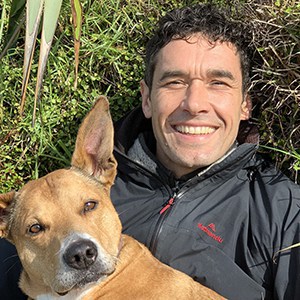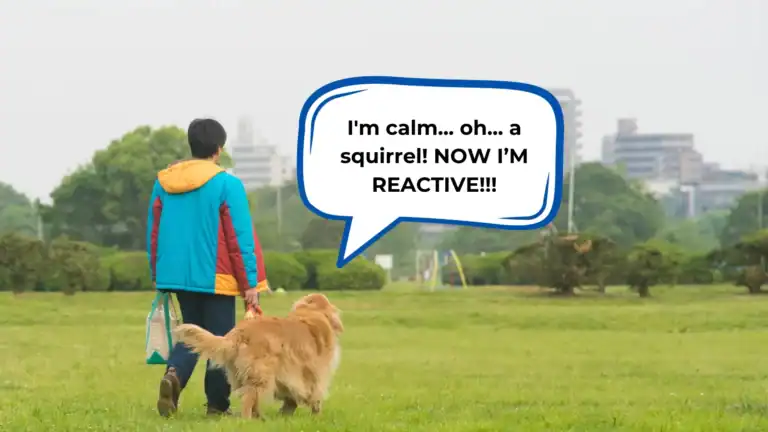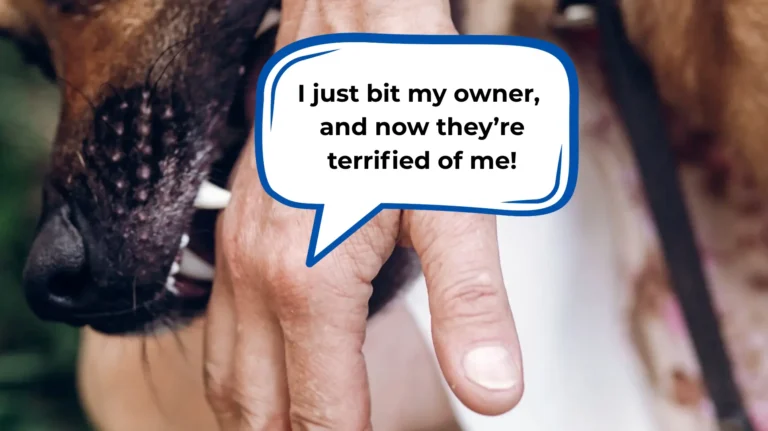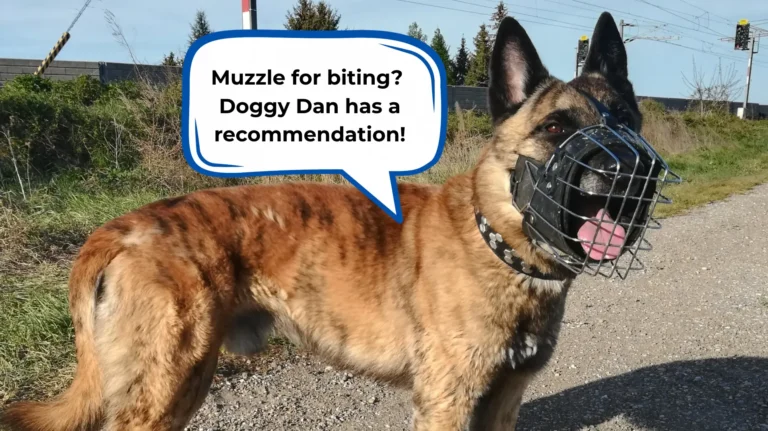
If dog anxiety is wearing your dog down, I want to let you know that there is a simple solution that works so your anxious dog can FINALLY relax.
Panting, pacing, endless barking, or even chewing on themselves — do these sound familiar? If your furry best friend is showing any of these signs, you're not alone. So many dogs struggle with anxiety, and it can be tough to figure out why.
But what if there was a revolutionary way to help? A method so powerful it's transformed over 100,000 dogs' lives online and helped 3,000 more in person? As a dog trainer, I have found a proven approach that works, and I'm going to share it with you in this blog.
Let's start.
Key Takeaways:
- Pet anxiety in dogs often stems from a lack of loving leadership, leading them to believe they are in charge and responsible, which is incredibly stressful and can manifest as various symptoms in dogs.
- Traditional methods like treats, clickers, shock collars, and even some calming products or desensitization techniques are often ineffective at addressing the root cause of anxiety. They may only temporarily mask behavior problems or lead to minor Physical discomfort.
- The most effective and recommended treatment plan for dog anxiety is “The Dog Calming Code,” which focuses on establishing loving leadership to help dogs relax and trust their owners, resulting in profound and lasting changes in their behavior.
A Different Approach to Dog Training: How to Treat Dog Anxiety

This isn't your typical dog training. Forget the old ways — no bribes with treats and clickers, and definitely no shock collars. I've never used them and never will. Why? Because there's a method that works without touching your dog, without food, and without force.
This is about dog psychology. When you understand the canine mind, you uncover the root of any problem, and everything just clicks.
Millions of dog owners struggle with anxious companions, from puppies to seniors. You might be wondering why your loyal dog is suddenly stressed, and what you can do about it. The good news is, you don't have to sacrifice your dog's well-being or your own peace of mind. It doesn't have to cost a fortune, and it's simpler than you think.
In this guide, we'll explore the root causes of dog anxiety, not just the triggers. You'll learn to spot the warning signs, your dog's symptoms, and discover proven solutions to bring calm back into your home, supporting your dog's long-term mental health.
DOGGY DAN TEACHES YOU HOW TO TRAIN ANXIOUS DOGS BETTER, FOR FREE!Understanding Your Dog's Behavior: What Is Dog Anxiety?
Dog anxiety is an intense, persistent state of fear or nervousness, often anticipating a perceived threat. Far beyond normal stress, it profoundly impacts a dog's well-being.
This anxiety can manifest through behavioral changes like excessive barking, destructive habits, or altered sleep, and physical symptoms such as panting, trembling, and house soiling.
Just like us, dogs experience stress and anxiety. While many factors can contribute, I've found that for 95% of dogs, the root cause is surprisingly consistent. My method for treating anxiety, stress, and reactivity is so effective that my core program is called The Dog Calming Code. It works for everything from mild stress to full-blown panic attacks in puppies and adult dogs.
A 2020 study in Scientific Reports revealed that over 70% of dogs show anxious or aggressive behavior, with noise sensitivity and separation anxiety being the most common.
Anxiety can surface in puppies or develop later in life due to sudden stressful events like a move or separation. However, it often stems from misunderstandings of dog psychology. Doing the wrong things early on can subtly worsen anxiety over time until symptoms become more obvious.
Managing Dog Anxiety: The True Cause of Your Dog's Anxiety Disorder
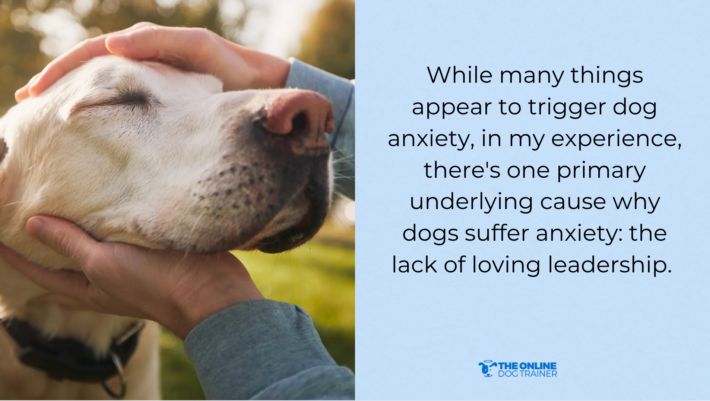
Let's be upfront: while many things appear to trigger dog anxiety, in my experience, there's one primary underlying cause why dogs suffer anxiety.
The Root Cause: Lack of Loving Leadership
The number one cause of dog anxiety is a lack of loving leadership. What does that mean?
Consider this analogy…
When I used to babysit, I'd get scared by noises outside once the TV stations went off. But the moment the homeowners returned, I'd immediately relax, even with the same noises. Why? Because I trusted them; they were in charge, understood the situation better, and knew if there was a real problem.
The problem with most dogs is that pet parents, out of love, often make their dogs the “leaders.” They give dogs what they want instead of what they need. When dogs perceive themselves as being in charge, they feel compelled to protect you and the property. This is incredibly stressful for them.
Just last week, at an expensive resort, I saw two incredibly nervous Balinese dogs. It was immediately clear they believed they were in charge of the busy resort, with constant new arrivals, departures, people with diving gear, and even cats.
They were overwhelmed trying to manage everything. I shared the principles of The Dog Calming Code with the owner — essentially, how to communicate, “You're not in charge. I am. Leave it to me.” The very next day, the dog's demeanor transformed. They relaxed, their body language softened, and the barking reduced by about 50%. It was astounding.
This principle holds true for countless issues. When you communicate, “Don't worry, I'm in charge,” dogs relax.
Just yesterday, I received a video of a Pit Bull, terrified of car rides for years, now happily sitting in the passenger seat after the owner implemented The Dog Calming Code. When you get the leadership piece right, you don't need to spend hours training your dog not to fear fireworks, separation, visitors, or other dogs. They simply relax.
So, the main cause of dog anxiety is dogs believing they are in charge. However, there are many triggers that can reveal this underlying issue.
FREE WEB CLASS: LEARN HOW TO BE A BETTER LEADER FOR YOUR DOGCommon Triggers of Dog Anxiety
While these may appear to be the cause, they are only your dog's triggers for the anxious behavior rooted in a lack of leadership:
When Dogs Are Left Alone (Separation Anxiety)
If your quick grocery runs make your dog anxious, they may have separation anxiety.
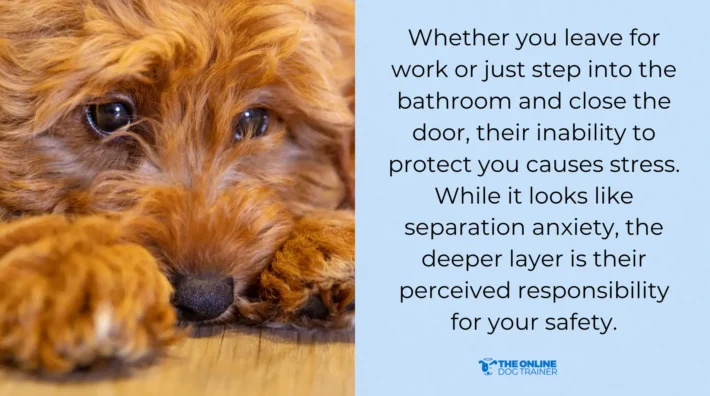
When you leave, dogs with separation anxiety are stressed because they feel they need to look after you, but can't. Whether you leave for work or just step into the bathroom and close the door, their inability to protect you causes stress. While it looks like separation anxiety, the deeper layer is their perceived responsibility for your safety. The Dog Calming Code helps resolve this by clarifying leadership.
Loud Noises and Stressful Situations (Thunderstorms, Fireworks)
Many dogs experience anxiety as an emotional response to loud noises because they are noise sensitive. While loud noises are triggers that set off barking or reactive behavior, the underlying issue is the dog feeling threatened and believing they must protect the property, you, or themselves. If the dog thinks they're in charge, these triggers become overwhelming.
A Change In Routine Or Environment
Unfamiliar situations can trigger nervous behavior because the dog can't understand what's happening. Examples include friends visiting, a change in your work schedule, moving house, visiting a dog park for the first time, or a partner leaving. These changes can trigger anxiety because the dog feels responsible for managing an unpredictable environment.
Past Trauma or Abuse
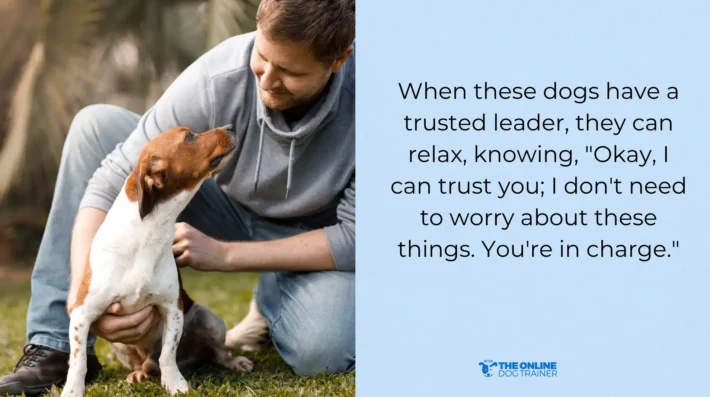
Your anxious dog's repetitive or compulsive behaviors might stem from past trauma or abuse, or they may simply have a nervous disposition. While these are certainly contributing factors, the real solution often lies in providing a strong leader. When these dogs have a trusted leader, they can relax, knowing, “Okay, I can trust you; I don't need to worry about these things. You're in charge.” It's incredible how quickly these changes can occur.
Age-related Anxiety
Many dogs develop some form of anxiety later in life, whether at two, five, or ten years old. This is much like how physical ailments in humans, caused by long-term unhealthy habits, may not become apparent until much later. Similarly, senior dogs may be struggling for a while before the symptoms of anxiety become obvious to us. Age-related anxiety can also be connected to environmental changes or a combination of factors, but age is often a catalyst.
A Change in Energy
Dogs are incredibly sensitive to human energy. If you become stressed due to work, arguments, financial worries, or simply carry a lot of tension, your dog can feel it. Dogs pick up far more from our magnetic fields and radiated energy than we realize. While it might be hard to believe this is a factor, once you learn to communicate to your dog, “I'm in charge, I've got this covered, and you don't need to worry,” they will calm down.
Ultimately, these triggers highlight the same root cause: dogs need loving leadership. When you establish the leadership dogs need, they calm right down, and it's not as hard as you might think when you use a program like The Dog Calming Code.
JOIN THIS FREE CLASS AND GET DOGGY DAN'S DOG CALMING CODE FOR FREEDog Anxiety Symptoms: How to Tell if Your Dog Has Anxiety
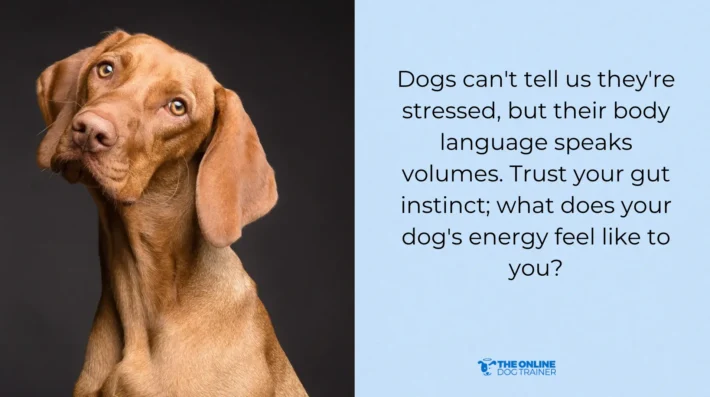
Dogs can't tell us they're stressed, but their body language speaks volumes. Trust your gut instinct; what does your dog's energy feel like to you? Are they happy, tired, or relaxed? Often, your intuition will accurately tell you if something is off.
Here are some common signs that your dog might be experiencing anxiety:
Excessive Barking or Howling
While a brief “woof” is normal, constant barking or howling for extended periods (5-20 minutes, multiple times a day) indicates distress. They should be silent and relaxed within 30 seconds of an initial alert.
Destructive Behavior
Occasional chewing or scratching is typical, but if it's excessive — like constant furniture destruction, door scratching, or digging — especially when you're not around, it's a clear sign of anxiety.
Pacing or Restlessness
While young dogs have lots of energy, continuous pacing, restlessness, or an inability to settle down indicates they're not relaxed.
Trembling or Hiding
These are undeniable signs of discomfort and fear. If your dog is trembling or frequently hiding, they are clearly not okay and need attention immediately.
Panting or Drooling (When Not Hot or Exercising)
Dogs pant to cool down, but if they're panting or drooling when it's cold or they haven't been exercising, it's a stress signal. They're likely trying to calm themselves down.
Sudden Aggression or Clinginess
If your dog abruptly becomes aggressive or starts constantly following you around the house, it's a strong indicator of stress, not relaxation.
Accidents in the House (After Being Potty Trained)
Urinating or defecating inside the house, especially when you're away, is often a sign of stress. They might be trying to mark the house, a behavior linked to separation anxiety, as if trying to help you find your way back home.
If you notice any of these behaviors are excessive or worsening over time, I highly recommend exploring The Dog Calming Code. It's the most powerful program I've ever created, and its five core rules have remained unchanged for almost two decades because they consistently work.
FREE MASTERCLASS: LEARN HOW TO TRAIN REACTIVE AND ANXIOUS DOGS BETTERThe Most Effective Approach to Managing Anxiety In Dogs
The Dog Calming Code
I'm placing The Dog Calming Code at the forefront because it truly stands alone. I've personally tried every popular method— Thunder Jackets, music, comfort toys, excessive exercise, treats, games, “safe spaces”— and nothing comes close. Thousands of testimonials confirm its instant and miraculous effectiveness.
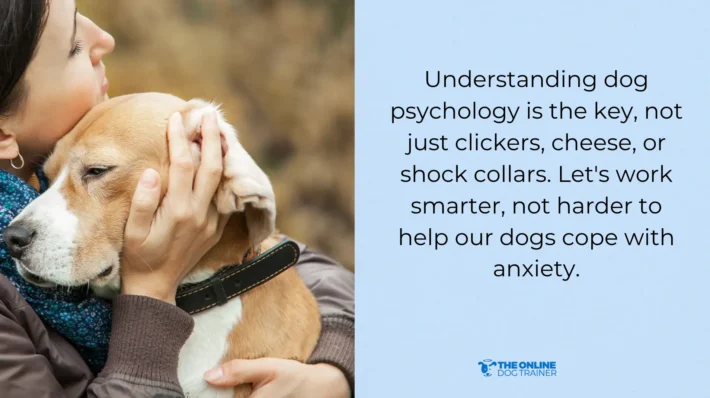
If you're struggling with a dog that has chronic anxiety, I wholeheartedly recommend implementing this program right away. If done properly and consistently by everyone in the household, you'll be blown away by the results in just a couple of days. Understanding dog psychology is the key, not just clickers, cheese, or shock collars. Let's work smarter, not harder to help our dogs cope with anxiety.
Other Approaches For Anxiety in Dogs and Their Effectiveness
While some methods offer temporary relief, they don't address the root cause. However, as you work on the main issue for canine anxiety, you can also incorporate these things to help reduce anxiety in your dogs.
Creating a Safe Space
This can definitely help, giving your dog a place to relax and feel secure, free from the perceived need to “keep an eye on you.” This might be a crate, a cozy corner with blankets, or a quiet room, perhaps with an item of your clothing or calming music. However, this is merely “icing on the cake.” Without The Dog Calming Code as the “cake,” these additions won't truly work.
Calming Products
There's a booming market for these, but many are gimmicky. While some might show minor results, my experience is that they offer mediocre to no real change. They only treat symptoms, not the underlying problem.
- ThunderShirt: This snug shirt applies gentle pressure, offering a “hug-like” comfort that might slightly calm the nervous system. But again, it addresses symptoms, not the root cause.
- CBD Oil for Dogs: I offer my own CBD product and recommend it as an add-on for extremely stressed dogs or if anxiety persists even after implementing The Dog Calming Code. It's a natural anti-anxiety supplement, but remember, it still treats symptoms. The Dog Calming Code targets the root cause; CBD oil can provide assistance.
- The Calming Effect of Calming Chews: These often contain ingredients like CBD oil. Always research the ingredients; some are not ideal. I prefer CBD oil due to its minimal side effects.
- Adaptil Diffusers: These release synthetic pheromones mimicking those of a mother dog. Their effectiveness and potential side effects are questionable. What I do know is that, like other symptomatic treatments, they cost a fortune and won't truly settle your dog because they don't address the core issue of dog psychology.
Desensitization and Counterconditioning
This involves trying to train away symptoms using treats. Contrary to popular opinion among many trainers, I don't believe this is the most effective approach for dog anxiety. I've seen countless trainers and owners spend vast amounts of time on this with nowhere near the powerful results achieved by addressing the root cause: the need for loving leadership.
Training with treats is like trying to raise children solely with sweets—it's not enough. While you can gradually expose dogs to low-volume recordings of triggers like fireworks, this method is slow and often ineffective. For instance, you can't truly mimic thunder's atmospheric pressure. When you establish your leadership, teaching your dog not to worry about thunder becomes simple. That's why I champion The Dog Calming Code.
Daily Exercise & Mental Stimulation
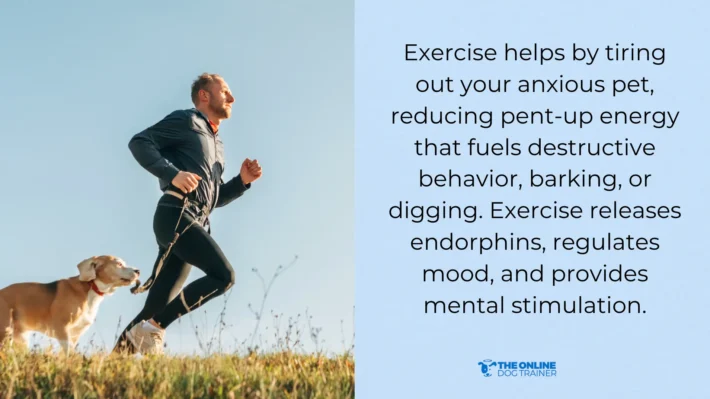
These can definitely help by tiring out your anxious pet, reducing pent-up energy that fuels destructive behavior, barking, or digging. Exercise releases endorphins, regulates mood, and provides mental stimulation, distracting them from worries.
Puzzle feeders, nose work games, and short training sessions are beneficial. A well-exercised dog is often a calmer dog. Even having a confident dog companion can help, as their strong presence provides the security a nervous dog needs – again, coming back to the principle of leadership.
Training and Behavioral Modification
If anxiety persists, working with a certified trainer or behaviorist can help, but only if they understand the root cause. Many trainers either rely on force (e-collars) or treat-based positive reinforcement, which I believe is insufficient for truly helping highly stressed dogs.
Dog Anxiety Medications
I do not recommend most common anxiety medications for dog anxiety. Firstly, it doesn't treat the root cause of anxiety-related behavior. Secondly, it can be addictive, leading to costly monthly prescriptions without resolving the underlying problem. Thirdly, there are often side effects. For the vast majority of dogs, anxiety is a solvable problem without resorting to drugs. Save your money and avoid pumping your dog full of medication.
THIS FREE WEBINAR TEACHES YOU HOW TO TREAT DOG ANXIETY FOR GOODHow to Support Your Dog's Long-Term Mental Health
Once anxiety improves with The Dog Calming Code, maintenance is key. Stick to the program daily. Keep an eye out for subtle behavioral changes; if things worsen, simply revisit the five basic rules. Make any other environmental or routine changes very slowly, as drastic shifts (like moving house or leaving your dog for an extended holiday) will likely cause stress.
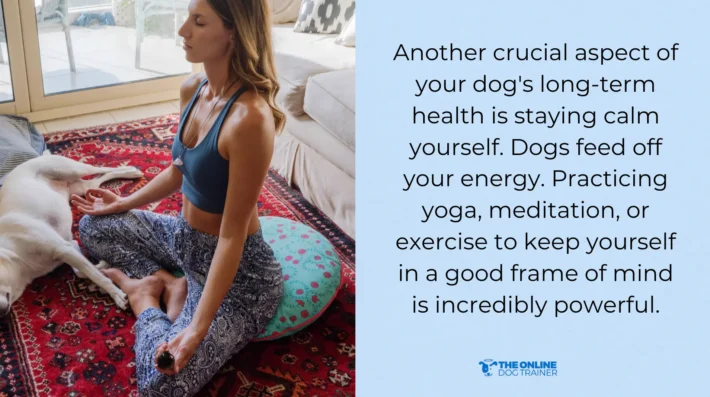
Another crucial aspect of your dog's long-term health is staying calm yourself. Dogs feed off your energy. Practicing yoga, meditation, or exercise to keep yourself in a good frame of mind is incredibly powerful.
Final Thought
You are not alone in this struggle. My mission is to revolutionize dog training. While my approach may seem to go against the grain, I wear that as a badge of honor. I've witnessed its undeniable power and will not compromise just to fit in. My stubbornness is for the dogs. This approach works, and if it didn't, I'd change it.
My final thoughts are simple: get The Dog Calming Code. Put it in place. Within a couple of days, you'll realize you've found something truly amazing. The five golden rules fix everything related to anxiety and reactivity. It's the foundational block upon which you can build.
FAQs About Dog Anxiety
Can dogs grow out of anxiety?
Very rarely. Unless you learn to adjust your behavior to communicate loving leadership, your dog will constantly feel the pressure of being “in charge” and remain stressed. Serious or trauma-based anxiety requires a deeper understanding than just treats or shock collars.
Can you train anxiety out of a dog?
Absolutely, with The Dog Calming Code. I've witnessed it thousands of times, both personally and through the phenomenal results reported by people online.
Will anti anxiety medications work on my anxious dog?
There's no guarantee that dog anxiety medications will work, won't have side effects, or won't be a lifelong necessity. I would never give my dog drugs for behavioral issues until I'd implemented The Dog Calming Code. This program teaches your dog that in this human world, which they perceive as full of threats, you've got them covered. You've got their back, allowing them to relax in a place of love with you leading, protecting, and making the big decisions. Anxiety and reactivity can be stopped easily when you give your dogs the right messages. Start by putting The Dog Calming Code in place today.

~Doggy Dan 🙂