Your dog ignores you outside because they don’t think you’re in charge. They assume they call the shots because they see themselves as the the pack leader. And nothing will change unless you address your dog’s leadership issues.
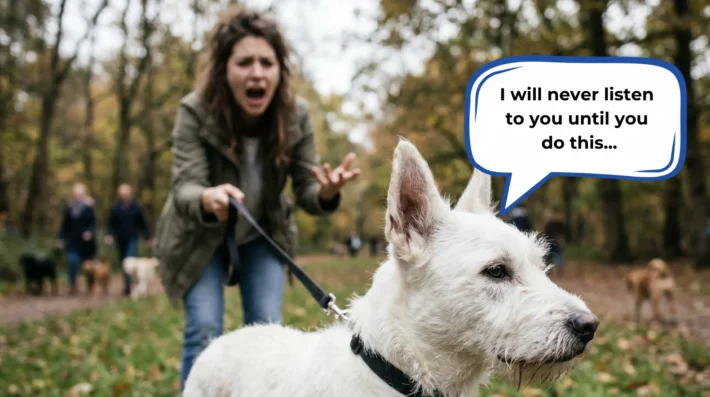
Does this sound familiar?
Your dog sits perfectly when you’re at home. They come when you call. They follow your commands without hesitation. They’re obedient, well-mannered, and the perfect companion indoors.
But the moment you step outside, it’s like a switch flips.
Your dog ignores your calls. They pull relentlessly on the leash. They act as if you don’t exist. That well-trained, obedient dog transforms into an independent, stubborn animal who seems completely unbothered by anything you say.
You find yourself thinking: “How can the same dog be so obedient inside but completely ignore me outside?”
If this frustrates you, you’re not alone. This is one of the most confusing behaviors dog owners experience, and it’s the reason so many frustrated owners reach out asking, “Why won’t my dog listen to me on walks?”
Here’s the truth most trainers miss: No amount of obedience training will fix a dog that thinks they’re the leader. No amount of treats, commands, or repetition will work if your dog believes they’re in charge of everything—including you, the walk, and protecting you from threats.
The confusion comes from focusing on the wrong problem. You’re trying to fix obedience when the real issue is leadership.
In this blog, I’m going to reveal what actually works—and once you address it first, everything will change.
Key Takeaways
- Your dog ignores you outside because they feel responsible for your safety; when they don’t see you as a confident leader, they assume the role of “pack protector” and tune you out to monitor threats.
- A calm walk begins inside the house. Establishing leadership through daily routines like feeding and playtime ensures your dog looks to you for guidance before you even step onto the pavement.
- High-value treats and loud commands can’t compete with a dog’s survival instinct. By staying relaxed and using the “power of the pause,” you prove you have the situation handled, allowing your dog to relax and follow.
Why Your Dog Ignores Commands Outside, According to Dog Psychology
Your dog doesn’t listen to you outside because they don’t see any reason to. This behavior isn’t disrespectful. It’s not stubbornness. Your dog simply sees you as a person to protect, not a leader to be relied upon or followed.
Let me use an analogy.
Imagine you’re traveling with your boss in your company. In the right order of things, it’s your boss who’s going to make a decision. Even if you raise your voice and make a scene, your boss still has the authority to have the final word.
Your boss won’t immediately listen to you because they know the hierarchy. They are in charge. They call the shots.
The same dynamic is happening with your dog.
Here’s what’s really going on: the moment you step outdoors, your dog assumes the role of the one in charge of the walk. They take on the responsibility of:
- Protecting you from perceived threats
- Directing where you go
- Deciding the pace and route
- Dealing with other dogs, people, or attractions they consider dangerous
And because they believe this is their job, they naturally ignore your commands. Why would they listen to you when, in their mind, they’re the one responsible for keeping you safe?
No matter how loud your voice is, no matter how many high-value treats you offer, if your dog’s perception of you hasn’t changed, the behavior will continue.
What Factors Cause Your Dog to Ignore You on Walks?
Understanding why your dog ignores you outside requires looking at several interconnected factors—all of which point back to one central issue.
Factor #1: You Have Not Established Yourself As Their Trustworthy Leader
When your dog doesn’t see you as a capable leader, they sharpen their senses for survival whenever they step outside. They become hypervigilant. They feel the burden of responsibility for your safety.
Your dog has a primal need: survival. If your dog believes they’re responsible for your safety, they approach every walk as a mission to identify and eliminate threats. They can’t ignore these threats even if you command them to—their survival instinct is screaming that they need to take charge.
The deeper psychological reason is this: If your dog doesn’t feel like there’s a leader in charge, they will take over. It’s hardwired into their DNA. Someone has to lead. Someone has to decide. Someone has to call the big shots. If that someone isn’t you, your dog fills the void.
Factor #2: Your Dog Is Not Trained to Explore the Outdoors
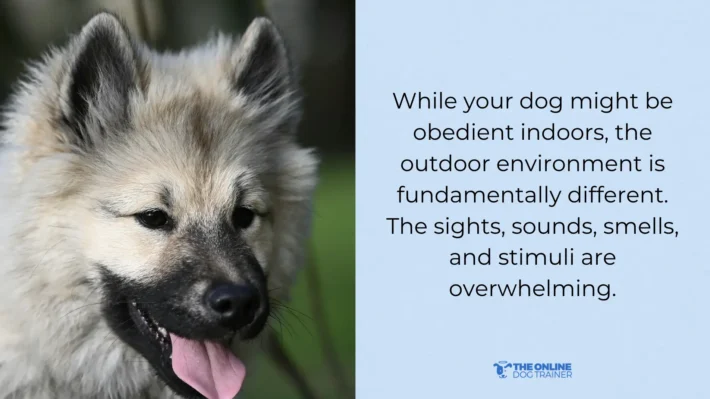
While your dog might be obedient indoors, the outdoor environment is fundamentally different. The sights, sounds, smells, and stimuli are overwhelming. Your dog has never learned that you are the guide through this chaotic world.
They haven’t been taught that following your lead outside keeps them safe. They haven’t experienced the calm confidence that comes from trusting you to navigate the external world.
So when they’re overwhelmed, they default to their instinct: to take control and handle the dangers and threats.
Factor #3: Your Dog Is Too Distracted and Overwhelmed
A reactive dog’s mind operates in a state of high arousal, where the brain’s emotional center (amygdala) hijacks the cognitive, thinking center (prefrontal cortex). This triggers an automatic, involuntary survival response—fight, flight, or frustration.
When your dog is in this state, they literally cannot process your commands. The brain prioritizes safety over learning or obeying commands, rendering training useless in the moment.
Their sensory overload makes your voice just background noise.
Factor #4: You Miss the Important Cues During the Walk
Leadership means being the eyes and ears for the pack. You need to spot the tension before the explosion happens.
Most dog owners miss the subtle signs that their dog is gearing up to ignore them. They don’t notice the stiff tail, the fixated stare, or the locked shoulders until it’s too late. By then, your dog is already in “protection mode” and convinced you can’t handle the situation.
Factor #5: Your Dog Is Scared
Fear is a powerful motivator. If your dog is anxious about the outside world, they won’t trust you to keep them safe. Instead, they’ll take matters into their own paws.
Why Your Dog Thinks They’re In Charge: Understanding the Pack Leader Mindset
Many leash-reactive dogs have taken on the role of pack leader in your household. They believe it’s their job to protect you from threats. When another dog approaches, when a person gets too close, or when anything unexpected happens, your dog feels trapped in their responsibility to protect you.
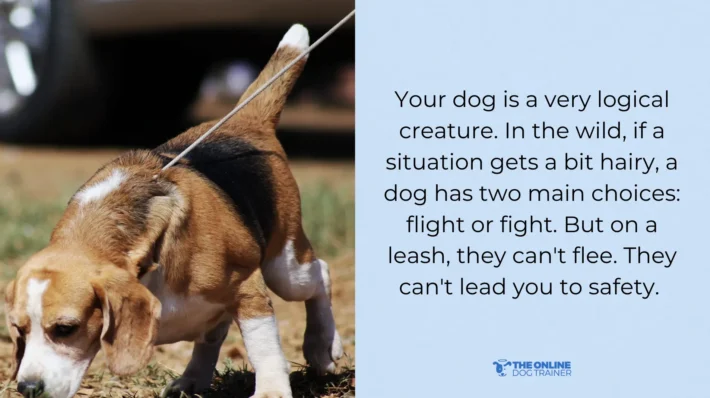
This is where the problem starts.
Your dog is a very logical creature. In the wild, if a situation gets a bit hairy, a dog has two main choices: fight or flight.
When they’re running free, they have the “Flight” option. If something feels dangerous, they can simply trot away.
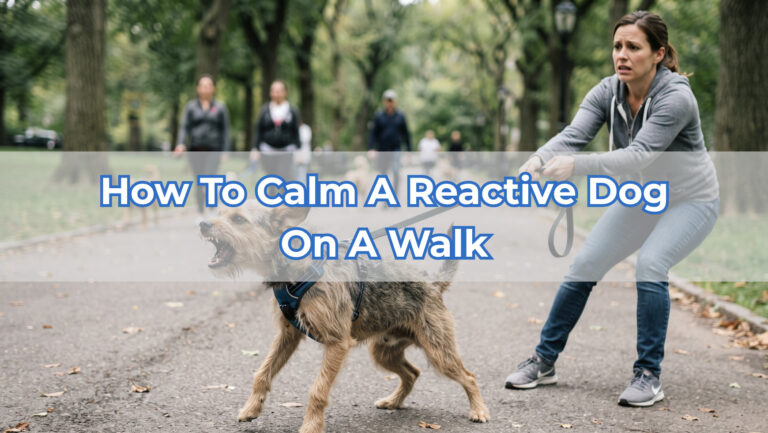
But on a leash, they can’t flee. They can’t lead you to safety. They can’t let the other dog get closer to their “pack member” (you). So they do the only thing they can think of: they lunge, bark, or simply ignore your commands because they’ve already decided what needs to happen to keep you safe.
And here’s the kicker: your dog sees your tension on the leash as confirmation that you CAN’T handle the situation. When you pull tight on the lead, you’re sending a telegram straight down the line: “I’m nervous, and we’re definitely trapped!”
This tells your dog: “See? I knew I was right. We need me to be in charge.”
How Becoming a Leader Changes Dog Leash Reactivity
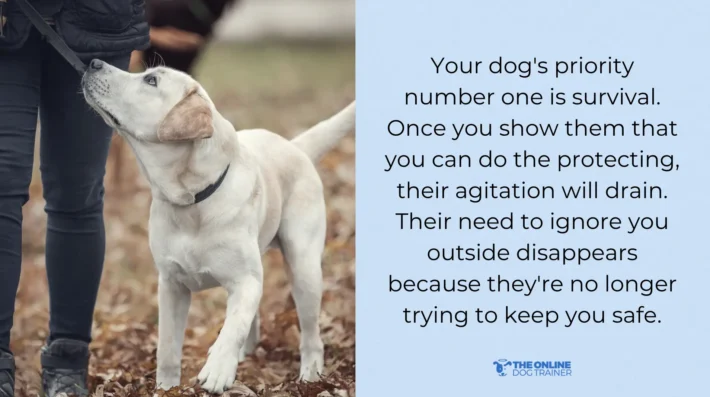
When you establish yourself as a true leader, your dog’s entire worldview shifts. Instead of seeing you as someone they need to protect, they see you as someone who protects them. Instead of feeling the anxiety and pressure of being in charge, they feel relief. They feel safe. They feel free from the burden of leadership.
When your dog realizes they no longer have to be the “police” of the neighborhood and can trust their owner to handle threats, the tension drains out of their shoulders. The leash goes slack. They look away from triggers because they know you’ve got it handled.
Here’s the psychological shift that happens:
Your dog’s priority number one is survival. Once you show them that you can do the protecting, their agitation will drain. Their need to ignore you outside disappears because they’re no longer trying to keep you safe.
They’re not panicking. They’re not on high alert. They can finally just be a dog.
When you establish leadership, your dog stops ignoring you because they stop needing to be in charge. It’s that simple—and that powerful.
The Three Key Components On How To Make Dogs Listen
Component #1: Win the Mind Before You Leave the House
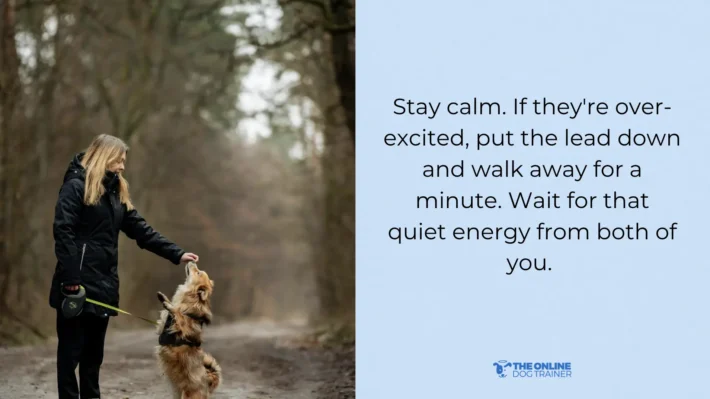
Most people think the walk starts when you hit the pavement, but it actually starts in your hallway. If your dog is spinning in circles and barking the moment you grab the lead, and you clip it on anyway, you’ve just told them: “Your frantic energy is in charge!”
Show them you’re the leader before you go out the door.
Stay calm. If they’re over-excited, put the lead down and walk away for a minute. Wait for that quiet energy from both of you. When you lead the way out of the house with a calm mind, your dog realizes they’re following your adventure, not dragging you along on theirs.
This single step—winning their mind before the walk—transforms everything.
Component #2: Be the Eyes and Ears on the Walk
Leadership means knowing the signs when a behavior begins to escalate before and during the walk. Watch for the stiff tail or the fixated stare.
When you see your dog starting to gear up, stop. Don’t feel pressured by the path or what neighbors think. By choosing to take a detour or even calling off the walk entirely if things get too much, you’re asserting your role as a capable leader.
You’re telling your dog: “I see you’re struggling, so I’m letting you know I control this. You don’t need to protect us; I’ve got this.”
This is real leadership. With leadership in place, you no longer have to push your dog to do things your way – they will simply follow.
Component #3: Establish Calm, Confident Energy
Your dog is highly attuned to your emotions and may mirror your feelings of anxiety or tension, leading to increased reactivity while on a leash. The anticipation of a problem tends to cause human tension, which is transmitted down the leash to the dog, effectively making the lunging behavior worse.
You have to be the calm one first.
Your dog will hear your emotions so much that they won’t hear what you’re saying. If you want to help your dog, be in tune with how you react as well. Your energy and emotions will affect your dog, and if you’re stressed, the dog will be stressed too.
When you radiate calm confidence, your dog mirrors it back. They relax because you’ve proven you can handle whatever comes your way.
How to Make Dogs Listen While On Walks
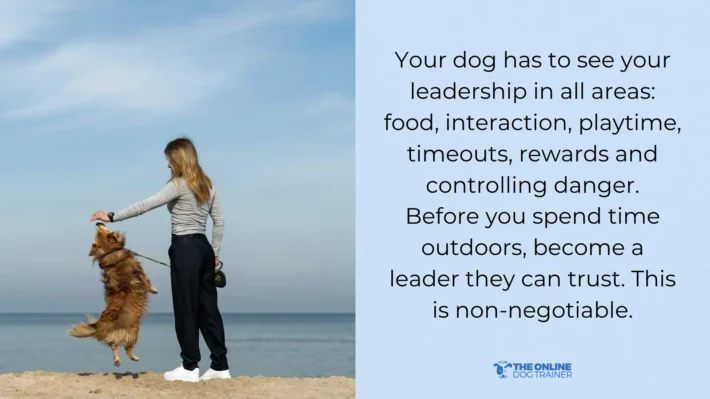
The journey from an ignoring, independent dog to a calm, attentive companion starts with one fundamental shift: establishing yourself as the leader your dog desperately needs.
Step 1: Understand That Leadership Is the Foundation
Everything—and I mean everything—starts with leadership. Your dog doesn’t need more treats. They don’t need complicated training techniques. They need to know that you’re in charge, that you’re capable, and that they can trust you to handle whatever comes their way.
Your dog has to see your leadership not only during your walk but also in all areas: food, interaction, playtime, timeouts, rewards and treats, and controlling danger.
Before you spend time outdoors, become a leader they can trust. This is non-negotiable.
This is the heart of my bestselling program, The Dog Calming Code. Through this program, I help dog owners like you know what to do to make your dog say, “Oh, so you’re really my leader!” The program is guided by dog psychology, so any change you’ll get from it will change behavior issues for good.
Step 2: Identify Your Dog’s Specific Issues
Before you can fix the problem, you need to understand it. Is your dog ignoring you because:
- They’re fearful and trying to protect themselves?
- They’re frustrated and trying to control situations?
- They’re territorial and protecting their “pack”?
- They’re overwhelmed by the stimulation?
Understanding the root cause will determine your training strategy.
Step 3: Use the Power of the Pause
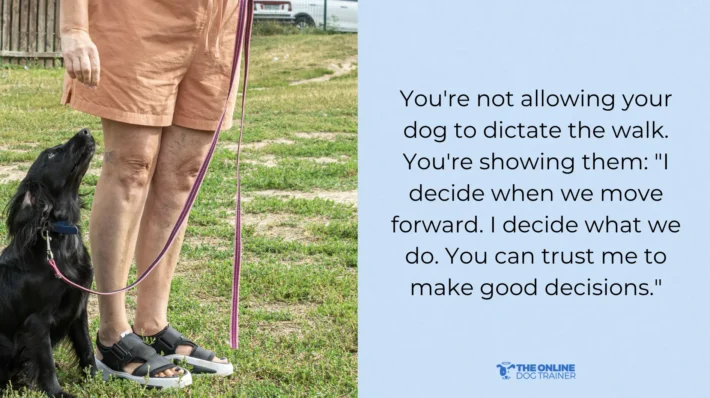
When you see your dog starting to ignore you or gear up for reactive behavior, stop. Don’t feel pressured to keep walking. By choosing to pause or change direction, you’re asserting your role as a leader.
You’re not allowing your dog to dictate the walk. You’re showing them: “I decide when we move forward. I decide what we do. You can trust me to make good decisions.”
This simple technique is extraordinarily effective because it shifts the entire dynamic of power on the leash.
Step 4: Manage Energy Levels Before and During Walks
A dog with a high energy level before you walk out the door will only become more reactive unless you calm them down. When your dog has high-stress levels, it will be hard for them to listen to your commands.
Start in quiet environments where success is easy. Let your dog experience what it feels like to follow your lead when there are minimal distractions. As they build confidence in you, gradually increase the difficulty.
Step 5: Use Positive Reinforcement Strategically
By using positive reinforcement techniques, you can actually change the way your dog feels about a certain situation for the better and therefore change their emotional and behavioral response.
But here’s the key: don’t use treats to compete with the outdoors. Use them to reinforce following your lead.
When your dog looks at you instead of the trigger, when they walk beside you instead of pulling, when they make the choice to trust you—that’s when you reward.
Step 6: Respect Your Dog’s Boundaries While Building Confidence
Don’t push your dog into situations that make them uncomfortable. Respect their need for space. As you establish yourself as a leader, their confidence in you will grow, and they’ll be willing to venture further.
What NOT to Do When Your Dog Ignores You Outside
Don’t Punish Your Dog
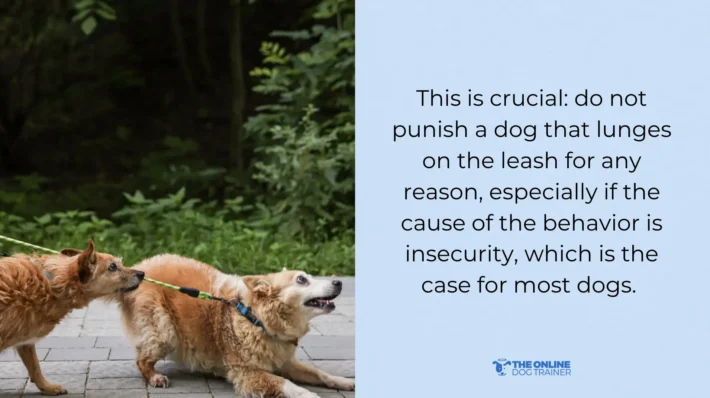
This is crucial: do not punish a dog that lunges on the leash for any reason, especially if the cause of the behavior is insecurity, which is the case for most dogs. Shouting, hitting, or shocking serves to suppress behavior at that moment, but does not help change the way a dog feels about a trigger.
In fact, punishment reinforces the belief that the outside world is dangerous—and that they need to be in charge.
Don’t Increase Leash Tension
When you see another dog and pull that lead tight, you’re sending a telegram straight down the line to your dog saying: “I’m nervous, and you’re definitely trapped!”
It creates a pressure cooker environment. Your dog feels the tension, realizes they have zero room to move, and they ignore you because they’ve already decided to take over.
Don’t Use Retractable Leashes
Retractable leashes send mixed signals. Sometimes you’re allowing your dog to lead, sometimes you’re not. This confusion only reinforces the idea that they need to be in charge to stay safe.
Don’t Skip the Foundation Work
Some dog owners assume they only need to show their authority and leadership during the walk, and what happens before or after the walk doesn’t matter.
I 100% encourage you to take charge of everything—from feeding to giving affection to controlling timeouts. Leadership isn’t compartmentalized. It’s a complete shift in how your dog sees you.
Don’t Rush the Process
Training a dog that ignores you outside takes time and patience. Don’t rush the process. Start by introducing them to low-stress environments with minimal triggers, such as quiet streets or empty parks. Gradually increase the level of exposure as your dog becomes more comfortable and responsive to leadership.
Frequently Asked Questions on Dogs Ignoring Commands Outside
Q1: Why does my dog listen to me inside but ignore me outside?
A: Inside, the environment is controlled and familiar. Your dog has learned that house rules apply there. Outside is chaotic and unpredictable. If your dog doesn’t see you as a capable leader who can navigate this chaos, they’ll assume the leadership role themselves.
Your dog thinks: “The house is safe because of the rules. The outside world is dangerous, so I need to be in charge to keep us safe.”
The solution is establishing yourself as a leader in the outdoor environment, specifically.
Q2: Will obedience training fix my dog ignoring me outside?
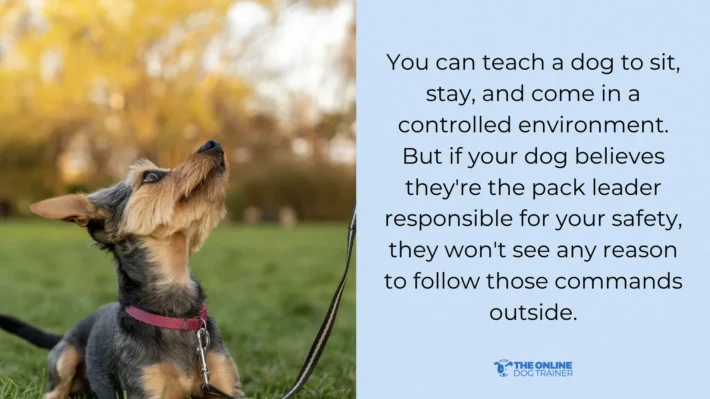
A: Not without addressing the leadership issue first. You can teach a dog to sit, stay, and come in a controlled environment. But if your dog believes they’re the pack leader responsible for your safety, they won’t see any reason to follow those commands outside.
It’s like asking someone to follow your orders when they believe they’re the boss. The command means nothing if the hierarchy is unclear.
Q3: How long does it take for a dog to start listening outside?
A: Change happens in stages. Some dogs begin to respond within days when their owners establish immediate, consistent leadership. Others take weeks or months, depending on how long they’ve believed they were in charge.
The key is consistency. Every interaction—every walk, every pause, every moment of calm leadership—is teaching your dog something new about your relationship.
Q4: What if my dog ignores me even with high-value treats?
A: If your dog is ignoring treats, they’re operating in survival mode. Common Question…vity Blogs Their brain’s emotional center has hijacked their thinking center. Treats are irrelevant when they’re in this state.
This is a sign that the environment is too stimulating or that your dog is too anxious. The solution isn’t more treats—it’s reducing the trigger and establishing calm leadership.
Q5: Can a scared dog learn to listen to me outside?
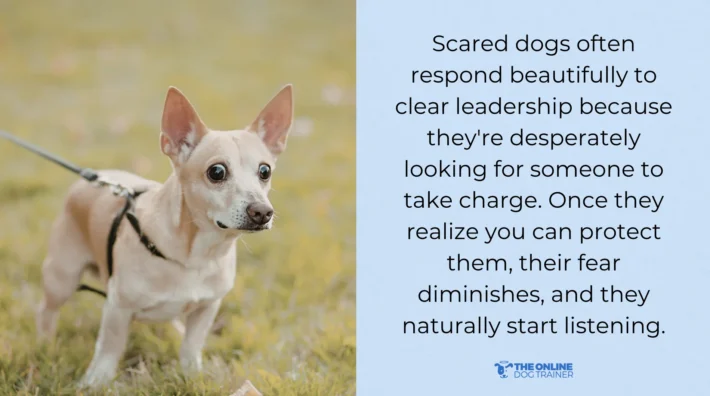
A: Absolutely. In fact, scared dogs often respond beautifully to clear leadership because they’re desperately looking for someone to take charge. Once they realize you can protect them, their fear diminishes, and they naturally start listening.
The key is patience and consistent calm confidence.
Q6: What’s the difference between my dog ignoring me and my dog being stubborn?
A: There’s no such thing as a stubborn dog. There’s only a dog that doesn’t see a reason to listen because they don’t see you as the leader.
When your dog thinks they’re in charge, they’re not being deliberately difficult. They’re reacting this way because they’ve taken on the role of protector—your protector. And that’s the real issue we need to address.
Q7: How can the Dog Calming Code improve my dog’s behavior?
The real power of The Dog Calming Code is that it changes your dog’s psychology, not just their behavior. Once your dog knows you’re in charge and capable, their agitation drains away, and they stop feeling the burden of responsibility for your safety. Instead of constantly being on high alert and trying to protect or control situations, they can relax and trust that you have everything handled.
When your dog realizes that following your lead keeps them safe, listening to you becomes their natural instinct. The program teaches practical techniques like how to gain control by using food, and how to handle danger, so your dog will trust you.
By addressing the root psychological issue rather than just the symptom, The Dog Calming Code creates lasting change. Your dog stops ignoring you not because of a trick or a treat, but because their entire worldview shifts—they finally understand that you’re worth listening to because you’re the capable leader they’ve been desperately seeking all along.
The Transformation: From Ignoring to Attentive
Once you understand that your dog isn’t ignoring you to be difficult—they’re ignoring you because they don’t see you as their leader—everything changes.
You stop taking it personally. You stop trying to out-shout or out-treat their instincts. You stop fighting against their nature.
Instead, you align with it. You become the leader they’re wired to follow.
When your dog knows, without a doubt, that you’re in control, that you’re capable, and that you can handle whatever comes your way, they finally feel safe enough to let go of that burden. They can relax. They can trust. And they can listen to you—because following you becomes the safest choice.
The transformation is possible. Thousands of dog owners have made this journey from frustrated, ignored-by-their-dog walks to peaceful, connected ones.
And you can too—but it all starts with understanding that your dog isn’t being bad. They’re trying to keep you safe. And once you prove you can do that job yourself, they’ll finally listen.
Get The Dog Calming Code For Lasting Change
Your dog’s refusal to listen outside isn’t a training problem. It’s a leadership problem.
No more treats. No more commands shouted louder. No more frustration.
Instead, establish yourself as the calm, capable leader your dog is desperately seeking. The Dog Calming Code will help you with this. Follow the program, and you won’t have to fight for your dog’s attention on walks anymore. They’ll be looking to you for guidance because you’ve proven you deserve to be followed.
That’s when the real transformation happens.

~Doggy Dan 🙂