“Doggy Dan, why does my dog lunge at other dogs only on leash?” It’s incredibly frustrating when a calm pet – one that’s well behaved at home and while off leash – suddenly transforms the moment the leash clicks on. If you’re wondering why your pup acts out, you aren’t alone—this is one of the most baffling behaviors for any owner to witness.
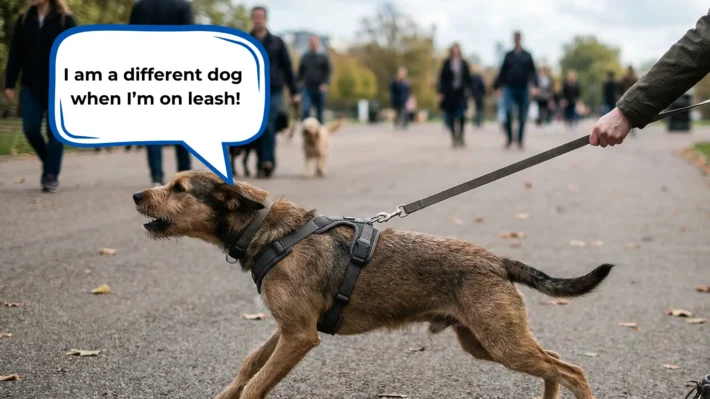
When a dog lunges while on leash, it’s rarely about random aggression; it’s usually a reaction to feeling restrained while trying to maintain control or protect you. Understanding that this behavior stems from a survival instinct—not just stubbornness—is the first step toward fixing it.
When your dog is leashed, they lose their ability to escape or create distance, so they resort to the only option left: offense. They lunge, bark, and growl, hoping the other dog (or person) they consider a threat will go away.
But here’s what most dog owners miss: your dog isn’t being deliberately difficult. They’re reacting this way because they’ve taken on the role of protector—your protector. And that’s the real issue we need to address.
If you’re reading this, you’ve probably experienced the frustration of walking your dog on a leash, only to have them explode the moment another dog appears. One second, your dog is calm and content. The next second, they’re lunging, barking, snapping, and pulling with all their might.
It’s embarrassing. It’s stressful. And it makes you wonder: “Why does my dog do this when they’re usually fine at the dog park?”
The confusion is real, and you’re not alone in this struggle. Leash reactivity is one of the most common behavior issues that dog trainers see, and it leaves countless dog owners feeling helpless, frustrated, and sometimes even questioning whether their dog is aggressive or dangerous.
The truth is far more revealing—and once you understand it, everything changes.
Most dog owners miss the deeper reason behind leash lunging. They focus on the behavior itself (the lunging, barking, and pulling) without understanding the psychology driving it. And because they miss the real cause, they struggle to fix it. Punishment doesn’t work. Training tricks don’t stick. The behavior gets worse, not better.
But there is hope. And it starts with understanding that your dog isn’t trying to be aggressive—they’re trying to protect you.
In this blog, I’m going to take you beyond the surface-level explanations and show you exactly why your dog lunges on a leash — the real reason that most trainers and owners overlook.
More importantly, I’ll show you what you can do about it. Because once you understand the deeper psychology at play, you’ll finally be able to address the problem at its root and transform your walks from stressful to peaceful.
Let’s dive in.
Key Takeaways
- Leash reactivity is rarely random aggression; it is a survival response. When a dog is leashed, they lose their “flight” option. Feeling trapped and unable to move away from a perceived threat, they resort to “offense” (barking and lunging) to drive the threat away.
- Many dogs lunge because they believe they are the “pack leader” responsible for your safety. Because they don’t see the owner as a capable leader, they feel high-alert and pressured to identify and eliminate threats, leading to an explosion of protective behavior when they feel restrained.
- Solving reactivity requires shifting the dog’s psychology rather than punishing the behavior. By establishing calm leadership at home and using techniques like the “Power of the Pause” and “Winning the Mind Before the Walk,” owners can show their dogs that they are in control, allowing the dog to relax and “quit” the job of being the protector.
What Is Leash Reactivity?
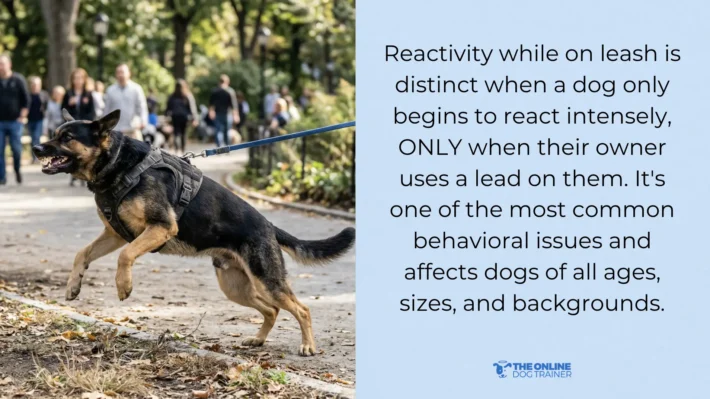
Leash reactivity is the extreme, over-the-top behavior of a dog when they’re on a leash. I use this label for a combination of behaviors that can include barking, whining, growling, lunging, and jumping when your dog is put on a leash.
Reactivity while on leash is distinct when a dog only begins to react intensely, ONLY when their owner uses a lead on them. It’s one of the most common behavioral issues and affects dogs of all ages, sizes, and backgrounds.
Here’s what makes it so confusing: many dogs that display severe leash reactivity are perfectly friendly and well-behaved off-leash. They play beautifully at the dog park. They greet other dogs calmly in neutral settings. They might even be social butterflies when the leash comes off.
But the moment you clip that leash on, everything changes. It’s like a switch flips, and your once-calm dog transforms into a reactive, aggressive-seeming version of themselves.
This dramatic difference is what leaves so many owners bewildered. It doesn’t make logical sense to them. How can the same dog be perfectly calm without a leash but absolutely uncontrollable with one?
The answer lies in understanding what that leash really represents to your dog.
What Causes Your Dog To Lunge At Other Dogs On Leash? Three Main Factors
To truly understand why your dog lunges on leash, we need to look at three critical components that all work together: the root cause, the physical environment, and your dog’s response.
The Need To Protect To Survive
When your reactive dog starts lunging while on leash, remember that your dog is fighting for their most important priority: survival for both them and you.
Survival has always been important to dogs. This is why they hoard food. This is why they’re territorial. And this is also why they become reactive the moment you put them on a leash.
A leash-reactive dog does not fear the leash per se; they are afraid because they can’t do much when restrained. They can’t protect themselves or you.
Many leash-reactive dogs have taken on the role of pack leader in your household, which means they believe it’s their job to protect you from threats. When another dog approaches while you’re both restrained by a leash, your dog feels trapped. They can’t flee, they can’t lead you to safety, and they can’t let the other dog get closer to their “pack member” (in this case: you). So they do the only thing they can think of: they lunge and bark to drive the threat away.
This is a dog who thinks they’re in charge. And when a dog thinks they’re in charge, they’re always on high alert, always protective, always ready for the next threat… even while they’re on a leash.
Your Dog Feels Restricted
When a dog is on-leash, an option is taken from them. They can’t run or move away because they’re tethered to you. The freedom of movement—their primary coping mechanism—is gone.
Off-leash, dogs have all kinds of options when they think a trigger may be a threat against you. They can move toward the trigger, move away from it, circle around it, or create whatever distance they need. They have control. But on-leash, their options are severely limited.
If your dog is fearful or protective, the leash becomes a source of frustration and anxiety. They can’t increase the distance between themselves and the other dog, and they can’t flee if they feel threatened. They’re stuck. They’re restrained. And for a dog who thinks they’re in charge of keeping you safe, this is incredibly stressful.
Your Dog Feels That Lunging Is The Best Defense
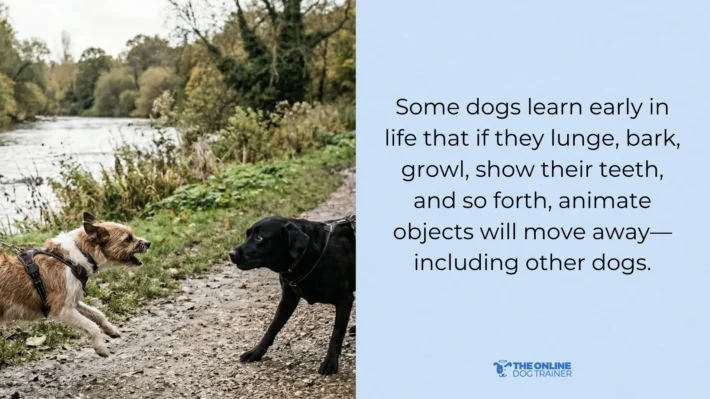
Reactive dogs frequently use the offense-is-the-best-defense strategy when they feel threatened by someone or something. Some dogs learn early in life that if they lunge, bark, growl, show their teeth, and so forth, animate objects will move away—including other dogs.
From your dog’s perspective, the lunging works, so they make it their primary mode of defending themselves and you. When they lunge and bark aggressively, the other dog often moves away, or the other owner quickly changes direction. For your dog, the affirmation of this behavior tells them “Success! You have just learned that lunging achieves its goal! It increases distance and keeps the perceived threat away.”
How The Dog Calming Code Solves Leash Reactivity
When I first arrived, Charlie was a whirlwind of energy. The moment Sarah grabbed his leash, he was already “red-lining”—spinning, barking, and dragging her toward the door. To Sarah, it looked like excitement. To me, I saw a dog who was frantically trying to take charge of a situation he couldn’t handle.
On our first attempt at a walk, we saw a neighbor’s dog about fifty yards away. Charlie exploded. He was lunging, snarling, and standing on his hind legs. Sarah was pulling back with all her might, her face full of stress. That’s when I stepped in, ready to teach them The Dog Calming Code.
Step 1: I Changed the Energy Before the Door
I told Sarah, “Let’s go back inside.” She was confused, but I explained that we can’t expect a calm walk if the “pack” is in a frenzy before they even leave the house.
I sat down and ignored Charlie. I didn’t pet him, I didn’t shout. I simply waited. Every time he brought me a toy or barked for attention, I looked away. I was showing him—calmly and silently—that I was the one who decided when the “adventure” began. After ten minutes, Charlie let out a big sigh and lay down. That was the moment I picked up the lead. No fuss, no “good boy” in a high-pitched voice. Just calm.
Step 2: I Proved I Was the Eyes and Ears
We made it to the sidewalk. When Charlie tried to bolt ahead, I didn’t yank him. I simply changed direction. I became the leader of the journey.
Then, we saw the trigger—the neighbor’s dog again. I felt Charlie’s body stiffen. I saw his ears pitch forward. Before he could shout, I used the Power of the Pause. I stopped, turned my body slightly away from the other dog, and stood tall and relaxed.
I wasn’t looking at the other dog; I was showing Charlie, “I see him, and I’ve decided he’s not a threat. I’ve got this handled, so you don’t have to.”
Step 3: The Lightbulb Moment
Charlie looked at the other dog, then he looked at me. He was waiting for me to panic. When I didn’t, he did something he hadn’t done in years: he looked away. He realized that for the first time in his life, he didn’t have to be the “police” of the neighborhood. He could just be a dog.
I saw the tension drain out of his shoulders. The leash went slack. We walked right past that other dog, and while Charlie was alert, he remained silent.
The Lesson for Sarah and Mark
I turned to his owners and said, “You see? Charlie wasn’t ‘bad.’ He was just exhausted from trying to protect you.” By the time I left, the atmosphere in that house had completely shifted. Sarah and Mark realized that leadership wasn’t about being “tough” or using fancy equipment; it was about being the calm leader that Charlie was desperately searching for.
What Are The Signs of Leash Reactivity in Dogs?
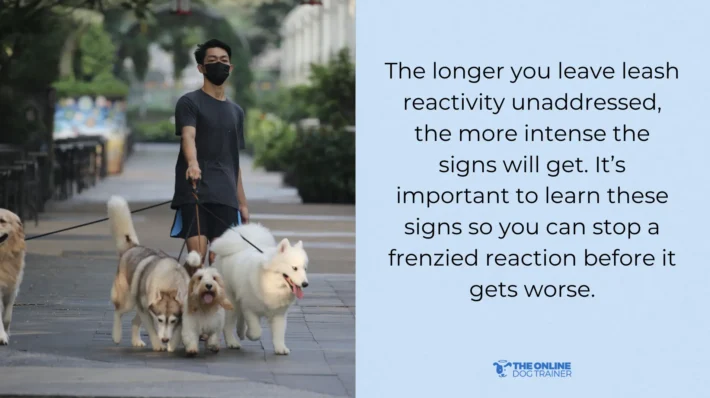
The signs of reactivity range from a hyperfixed stare to a full-blown lunging and plunging action. The longer you leave leash reactivity unaddressed, the more intense the signs will get. It’s important to learn these signs so you can stop a frenzied reaction before it gets worse.
The Warnings
These are the subtle shifts in body language. If you catch these, you can prevent reactivity from becoming worse!
- The Hyper-Fixated Stare: Your dog locks on to another dog or person. Their eyes become hard, and they won’t look away, even if you offer a treat or a whistle.
- The Statue Pose: The body goes completely stiff. They might freeze mid-step. This is your dog processing a threat and deciding what to do next.
- The Closed Comm: A relaxed dog usually has a soft face and a panting tongue. A reactive dog will suddenly clamp their mouth shut, showing tension in the jaw.
- The Ear Shift: Their ears will often pitch forward sharply toward the target, or pin back flat against the head if they’re feeling trapped and fearful.
The Pressure
At this stage, your dog is starting to feel like they must take action because they think you aren’t handling the situation.
- Raised Hackles (Piloerection): That line of hair along the spine stands up. It’s like goosebumps—it’s an involuntary sign that their arousal levels are through the roof.
- The Low Vibration: This is a growl that you might feel through the leash before you even hear it. It’s a clear “Stay back!” warning.
- The Stiff Tail: A wagging tail doesn’t always mean happy! A reactive dog will have a high, stiff tail that flags or vibrates quickly. It’s a sign of high tension, not friendship.
The Full Explosion (The Shouts)
This is where the dog has completely lost their cool and is in full “Fight or Flight” mode.
- Lunging and Plunging: They throw their full weight into the collar or harness. They’re trying to create distance by looking as big and scary as possible.
- The Frantic Bark: This isn’t a “hey, come play” bark. It’s sharp, rhythmic, and aggressive. It’s designed to tell the other dog to “Clear off!”
- Redirected Energy: Sometimes, the dog is so frustrated by the leash holding them back that they’ll turn and nip at the lead or even your leg. They aren’t trying to hurt you—they’re just short-circuiting from the stress.
What Causes a Dog to Lunge on Leash? The Psychology Behind Leash Reactivity
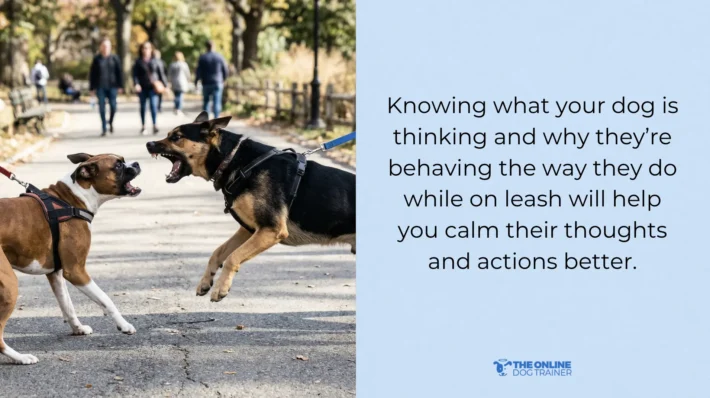
Training leash-reactive dogs requires a great understanding of dog psychology. Knowing what your dog is thinking and why they’re behaving the way they do while on leash will help you calm their thoughts and actions better.
Your Dog Thinks They’re In Charge So They Call The Shots
I’ve said it before, and I’ll say it again: if your dog believes they are the pack leader when you step out that front door, they’re going to take that job very seriously. And unfortunately for us, a dog in charge is a dog that feels they have to make all the big decisions.
When your dog is “calling the shots,” they aren’t just being naughty—they’re actually under a lot of pressure! Think about it:
- The Stay on Track Tantrum: They see a spot they want to sniff, and if you don’t head there immediately, they lunge. In their mind, the leader decides the route, and you’re just not following orders.
- The Social Stress: When they see another dog and start barking or acting restless, it’s often because they feel it’s their responsibility to handle that “intruder.” They’re trying to control the encounter before it even happens. The same is true for dogs they consider as friendly. They need to get to those dogs soon, so they pull and lunge to get you to move.
- The Control Crumble: This is the big one. Your dog becomes a frantic, reactive mess because they’ve lost the one thing a leader needs: total control. Because they’re attached to a leash (and to you), they can’t get to where they want to go or “deal” with that squirrel across the street.
Context-Specific Reactivity
Another type of leash reactivity can be context-specific.
If a dog learns that being approached by other dogs while on-leash doesn’t end well for them (if an off-leash dog runs up and gets aggressive, for example) but that same dog has a decent history of good off-leash play with other dogs, they may learn that dogs are safe off-leash (where they can easily flee or run away if they feel threatened) but not safe on-leash (where they are “trapped” by the leash being attached to their human).
This type of reactivity is typically made much worse with tight leashes and the inability for the dog to move about freely.
Owner Anxiety and Tension
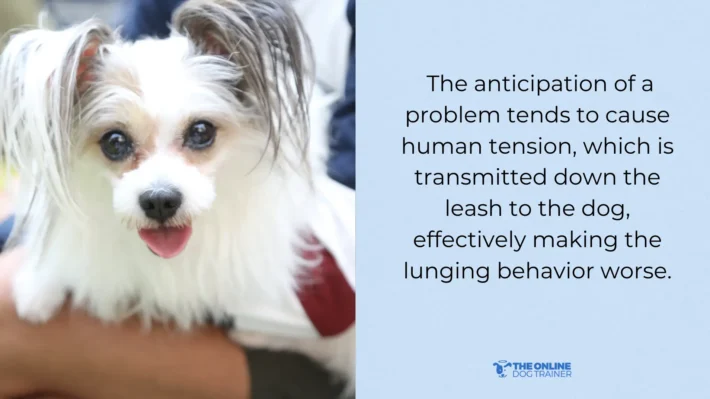
Your dog is highly attuned to your emotions and may mirror your feelings of anxiety or tension, leading to increased reactivity while on a leash. The anticipation of a problem tends to cause human tension, which is transmitted down the leash to the dog, effectively making the lunging behavior worse.
The dog and guardian are then locked in a vicious cycle of tension and leash lunging that becomes hard to change.
Lack of Leadership
But all of these factors come back to one central issue: your dog doesn’t see you as the leader. When your dog thinks they’re in charge, they sharpen their senses for survival whenever they step outside. They become hypervigilant. They become protective. They become reactive.
Because your dog believes they’re responsible for your safety, they approach every walk as a mission to identify and eliminate threats. Another dog isn’t just another dog—it’s a potential threat to the pack. And if you’re on the leash, your dog feels trapped in their responsibility to protect you.
Your dog is a very logical creature. In the wild, if a situation gets a bit hairy, a dog has two main choices: Flight or Fight.
When they’re running free, they have the “Flight” option. If another dog gets a bit too pushy or aggressive, your dog knows they can simply trot away. They’ve got space. They feel safe because they have an exit strategy.
This is why a tight leash is your worst enemy. When you see another dog and pull that lead tight, you’re sending a telegram straight down the line to your dog saying, “I’m nervous, and you’re definitely trapped!”
It creates a pressure cooker environment. Your dog feels the tension, realizes they have zero room to move, and they explode. To stop the lunging, we have to change the way they feel about being “attached” to us. We need to show them that we’ve got the situation under control so they don’t feel they have to fight their way out of a corner.
How to Establish Leadership To Stop Dog From Lunging While On Leash
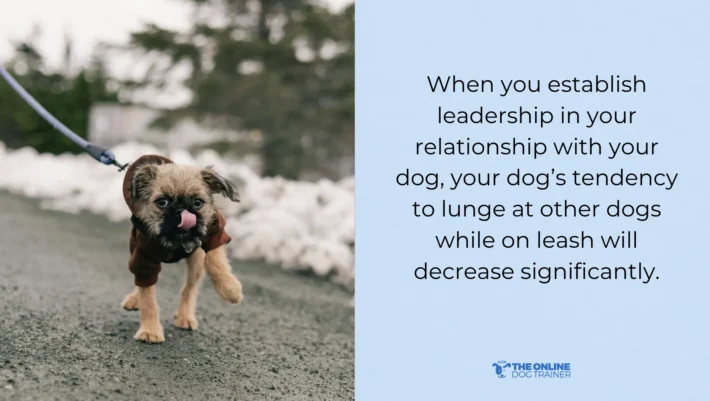
When you establish leadership in your relationship with your dog, your dog’s tendency to lunge at other dogs while on leash will decrease significantly. Here are ways you can show your dog that you’re the leader, and you’re in charge.
Step 1: Win the Mind Before the Walk
Most people think the walk starts when you hit the pavement, but it actually starts in your hallway. If your dog is spinning in circles and barking the moment you grab the lead, and you clip it on anyway, you’ve just told them, “Your frantic energy is in charge!” Show them you’re the leader before you go out the door. Stay calm. If they’re over-excited, put the lead down and walk away for a minute.
Wait for that “quiet confidence” from both of you. When you lead the way out of the house with a calm mind, your dog realizes they’re following your adventure, not dragging you along on theirs.
One of my Five Golden Rules aims to help dog owners win the walk (aka be in charge of the walk) every time.
Step 2: Use the Power of the Pause
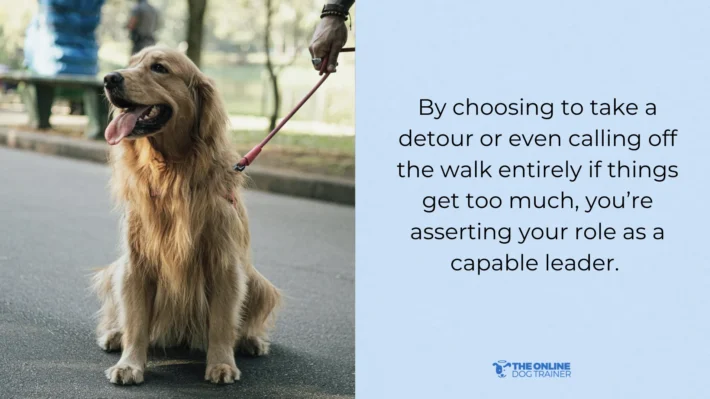
Leadership means being the eyes and ears for the pack. You need to spot the tension before the explosion happens. Watch for the stiff tail or the fixated stare.
When you see your dog starting to gear up, stop. Don’t feel pressured by the path or what the neighbors think. By choosing to take a detour or even calling off the walk entirely if things get too much, you’re asserting your role as a capable leader. You’re telling your dog, “I see you’re struggling, so I’m letting you know I control this. You don’t need to protect us; I’ve got this.”
Step 3: Honor Their Energy and Be Patient
If a reactive moment happens, don’t get angry—that just adds fuel to the fire. Honor their energy. If they’re overwhelmed, stop and take a breath. Give them the space they need to find their “calm” again.
Remember, leadership is a gift of patience. Start in the quietest spots—the sleepy streets or vacant parks—where it’s easy for your dog to succeed. There’s no rush. As you prove you can handle the small stresses, your dog will naturally start to trust you with the big ones. When they see you handling the world for them, they can finally let go of the “job” of being in charge and just be a dog again.
How to Train a Dog That Lunges on Leash
The journey from a lunging, reactive dog to a calm, well-behaved companion starts with one fundamental shift: establishing yourself as the leader your dog needs.
Step 1: Understand That Leadership Is the Foundation
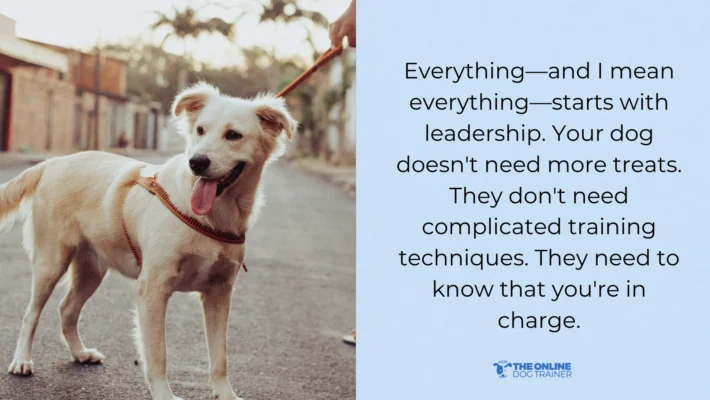
Everything—and I mean everything—starts with leadership. Your dog doesn’t need more treats. They don’t need complicated training techniques. They need to know that you’re in charge, that you’re capable, and that they can trust you to handle whatever comes their way.
Your dog has to see your leadership not only during your walk but also in all areas: food, interaction, playtime, timeouts, rewards and treats, and controlling danger.
Before you spend time outdoors, become a leader they can trust.
You build this confidence in your dog way before you exit the door. (My Five Golden Rules of dog leadership is designed to help dog owners cement their leadership at home and outdoors.)
This means taking control of the walk and letting your dog know you decide when to walk outside. You’re the main decision maker on whether to continue or stop the walk once they show reactivity. You show them they can’t pull on the leash by pausing the walk whenever pulling starts or quitting the walk once reactivity doesn’t stop.
Step 2: Identify Your Dog’s Root Cause
Before you can fix the problem, you need to understand it. Is your dog lunging because of fear? Frustration? Territoriality? Protective instinct? Start by looking at the pattern of what caused reactive behavior incidents in the past.
Understanding whether your dog is a fearful reactor, a frustrated greeter, or a protective leader will determine your training strategy.
Step 3: Respect Your Dog’s Boundaries
Avoid pushing your dog into situations that make them uncomfortable or stressed. Respect their need for space and distance from triggers. Space is essential for dogs; once they feel their space is threatened, they can go to full-on defense mode.
Step 4: Create Positive Associations with the Leash
Help your dog associate the leash with something positive, like treats, praise, playtime, or attention. Sustain this association even when your dog has exhibited calm behavior on the leash.
You can trace back your dog’s fear of the leash to factors including:
- They’ve been forced to socialize with other dogs,
- They weren’t able to escape a threat because they were on a leash,
- There was forceful pulling involved in the past,
- The leash was used for fear-inducing control.
Step 5: Introduce the Leash Slowly
Forcing your dog to get on the leash to speed things up will only increase their reactivity and anxiety. Instead:
- Start by introducing the leash in a non-forceful way and assess your dog’s threshold.
- Put your dog on the leash and see how they react for the first few minutes.
- Give treats or praise when they stay on the leash without panicking.
- Observe how long they can be leashed without reactivity and start short, extending once your dog has acclimated.
Step 6: Manage Energy Levels Before and During Walks
A dog with a high energy level before you walk out the door will only become more reactive unless you calm them down. When your dog has high-stress levels, it will be hard for them to listen to your commands.
Even if your dog is testing you, the more appropriate response is to be calm. Physical exercise helps, but timing matters.
Step 7: Scan the Surroundings and Plan Routes
Before leaving the house, assess the environment for potential triggers and plan your route accordingly to avoid known triggers whenever possible. This proactive approach sets your dog up for success.
Step 8: Use Positive Reinforcement Techniques
By using positive reinforcement techniques, you can actually change the way your dog feels about a certain situation for the better and therefore change their emotional and behavioral response.
Here’s an effective technique that works well for dogs that are uncertain about another dog or for a dog that is social yet frustrated:
- When your dog sees another dog in the distance and is curious but not yet uncomfortable or frustrated, bring out their favorite toy or food and play with them or feed them.
- Allow your dog to look at the trigger.
- When they look at it, say ‘yes’ and throw a high-value treat on the ground.
- This will immediately turn their head away from the trigger and enable them to do a seeking activity.
- Repeat this process a few times so that the consequence for looking at and looking away from the trigger is the opportunity to seek something good on the ground.
- Make sure you do this at a distance where your dog is comfortable, and if they are doing well you can try the same exercise, getting a bit closer.
This exercise is not about getting your dog to the point where they can actually greet another dog unless they are really dog social—it’s about getting them to the point where they can walk past another dog without reacting.
Step 9: Do Not Punish Your Dog
This is crucial: do not punish a dog that lunges on the leash for any reason, especially if the cause of the behavior is insecurity, which is the case for most dogs. Shouting, hitting, or shocking serves to suppress behavior at that moment, but does not help change the way a dog feels about a trigger.
Put the emphasis on giving your dog something else to do at that moment instead of using punishment.
Step 10: Choose the Right Equipment
Opt for a harness and a standard 5-6 foot nylon or leather leash instead of choke, prong, or shock collars and retractable leashes. These latter options can exacerbate reactivity issues and pose risks to your dog’s well-being.
For the most effective management, choose a harness that clips at the chest rather than the spine. A front-clip design provides superior leverage, allowing you to gently redirect your dog’s focus and guide their body back toward you during tense moments.
The Doggy Dan No-Pull Harness is specifically designed for both control and comfort. Unlike traditional harnesses that can press against the throat, this design rests securely across the chest to ensure your dog never feels constricted. By eliminating that sense of being trapped, the harness reduces reactions driven by fear or frustration, keeping you firmly in charge of a peaceful walk.
Step 11: Maintain Calm Body Language and Emotions
Your dog will hear your emotions so much that they won’t be hearing what you’re saying. If you want to help your leash-reactive dog, be in tune with how you react as well. Your energy and emotions will affect your dog, and if you’re stressed, the dog will be stressed, too.
Step 12: Be Patient and Lead with Kindness
Training a leash-reactive dog takes time and patience, so don’t rush the process. Start by introducing them to low-stress environments with minimal triggers, such as quiet streets or empty parks. Gradually increase the level of exposure to triggers as your dog becomes more comfortable and responsive to training techniques.
Think of leash reactivity this way: your dog struggles when they’re on the leash. They need your help. This should stop dog owners from hurting their dogs or rushing training. Your dog needs your understanding.
Frequently Asked Questions On Leash Reactivity
1. How do I stop my dog from reactive lunging?
To stop the lunging, you must address the root psychological cause rather than just the behavior.:
- Establishing Leadership: Show your dog you are the “pack leader” so they don’t feel the burden of protecting you.
- Winning the Mind Before the Walk: Ensure your dog is calm before you leave the house. If they are frantic at the door, wait for “quiet confidence” before clipping the lead.
- The Power of the Pause: If you see your dog fixating on a trigger, stop or change direction. This shows your dog that you have the situation handled.
- Positive Reinforcement: Use high-value treats to create a positive association with triggers from a safe distance.
2. Is leash pulling a dominance issue?
It is a leadership and protection issue. When a dog pulls or lunges, it is often because they believe they are in charge of the “adventure” and responsible for the safety of the pack. Because they are restrained by a leash, they feel they cannot escape or lead you to safety, so they resort to an “offense-is-the-best-defense” strategy to drive perceived threats away.
3. How to tell if a dog is leash reactive?
Leash reactivity is characterized by over-the-top behavior that occurs only or primarily when the dog is on a lead. Signs include:
- Hyper-fixated staring, a stiff “statue” pose, or ears pitched sharply forward.
- Raised hackles (hair standing up), low-vibration growling, or a high, stiff tail.
- Lunging, plunging into the collar, frantic barking, or even nipping at the leash out of frustration.
4. Why is my dog suddenly becoming leash reactive?
Reactivity often stems from a dog feeling trapped and responsible. Common triggers for a sudden shift include:
- A Lack of Leadership: The dog feels they must “call the shots” and protect you because they don’t see you as a capable leader.
- Negative Experiences: A past encounter where they felt threatened while restrained.
- Owner Anxiety: Dogs are highly attuned to your emotions; if you tighten the leash or get nervous when you see another dog, your dog mirrors that tension.
5. Do reactive dogs ever calm down?
Yes. Transformation is possible once the issue of control is addressed. When a dog realizes they no longer have to be the “police” of you, and can trust their owner to handle threats, the tension drains away. By using the The Dog Calming Code, owners can shift the dog’s psychology so they can “finally let go of the job of being in charge and just be a dog again.”
Conclusion: Establish Your Leadership And Your Reactive Dog Will Follow
Your dog doesn’t lunge on-leash because they’re aggressive, stubborn, or “bad.” They lunge because they’ve taken on a responsibility they were never meant to carry: protecting you. Without clear leadership from you, your dog believes it’s their job to keep you safe from threats—and when they’re restrained by a leash, they feel trapped in that responsibility.
The biggest solution isn’t punishment, fancy equipment, or complicated training tricks. The lasting solution is proving your leadership (something The Dog Calming Code offers!). When your dog knows, without a doubt, that you’re in control, that you’re capable, and that you can handle whatever comes your way, they finally feel safe enough to let go of that burden. They can relax. They can trust. And they can walk calmly beside you.
The transformation is possible. Thousands of dog owners have made this journey from stressed, frustrated walks to peaceful, enjoyable ones. And you can too—but it all starts with understanding your dog.

~Doggy Dan 🙂