Learning how to train your dog to behave in public starts with helping them understand that you’re their leader, their protector, and the one handling the danger. Without putting solid leadership in place, your dog’s proper behavior inside the house can easily unravel the moment you step out.
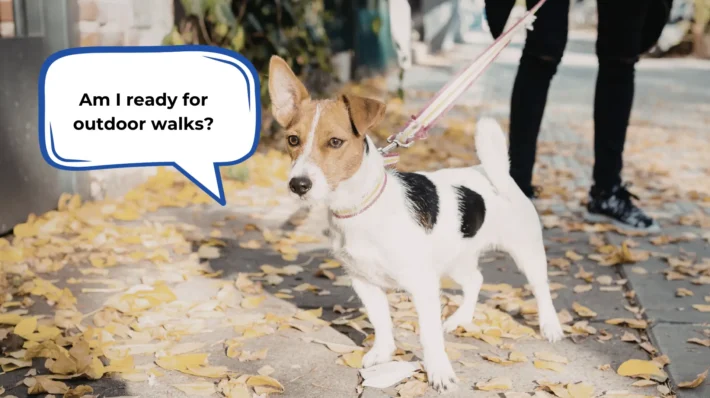
So you’ve spent weeks training your dog at home. They sit on command, they stay, they come when you call them. You’re proud — and rightfully so. Your dog is a star student within the four walls of your home.
Then you step out and you see that your dog acts differently outside the house.
Suddenly, that well-behaved dog is gone. They’re pulling the leash, barking at strangers, trembling at the sound of a distant truck, or completely ignoring every command you give. It’s like someone swapped your dog for a completely different animal.
Sound familiar?
You’re not alone — and your dog isn’t broken. What you’re experiencing is one of the most common and misunderstood challenges in dog training: the gap between indoor obedience and real-world readiness.
In this blog, I’m going to walk you through why this happens, what’s really going on in your dog’s mind when they fail outdoors, and — most importantly — what you can actually do to stop this from happening to your dog.
Let’s dive in.
Key Takeaways
- Dogs don’t automatically generalize indoor obedience to the outside world. To stop your dog from flipping into “survival mode” outdoors, you must establish yourself as a calm, trustworthy leader at home first. If they don’t trust you to handle “danger” in the living room, they won’t trust you outside.
- Allowing your dog to lead and sniff at will puts the burden of protection on their shoulders, often leading to reactivity. By practicing structured walks—where you decide the pace, direction, and “sniff breaks”—you relieve your dog of the leadership role, allowing them to relax and follow your guidance.
- When a dog is overwhelmed by sensory input, their “thinking brain” shuts down and their “survival brain” takes over. Success depends on keeping your dog under threshold by starting in low-distraction areas and staying calm yourself; if you panic when they react, you confirm to your dog that there is indeed something to fear.
Why Is My Dog’s Public Behavior Different From How they Act Indoors?
Here’s something most dog trainers won’t tell you: a dog that behaves perfectly indoors is not automatically ready for the outside world.
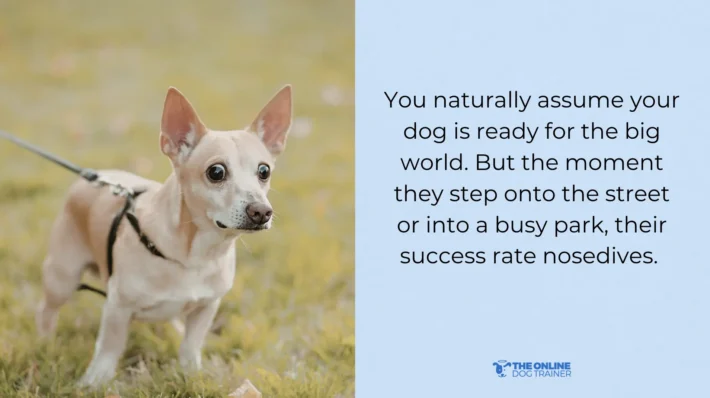
I call this the false confidence trap. Your dog has been doing so well at home — in the living room, the backyard, even the garage — that you naturally assume they’re ready for the big world. But the moment they step onto the street or into a busy park, their success rate nosedives.
Your dog might be 90-95% behaved inside the house, but once you cross that threshold into the real world, you can experience what feels like a 90% failure rate. Suddenly, your calm dog turns reactive. The dog that listens to your commands seems not to hear anything.
Why does this happen? Understanding the why is what will actually help you fix it.
You Have Not Established Yourself As A Trustworthy Leader
Your dog obeys your commands and follows your instructions. Does this mean they already see you as their leader? Unfortunately, this isn’t always the case. In fact, some dog owners are surprised to realize this only when they consult with me. It always puzzles them to know that their dog doesn’t acknowledge their leadership. In their dog’s eyes, they’re not the trustworthy leader and protector they should listen to.
This lack of leadership is what makes your dog react differently while outdoors. They still feel the one in charge of their survival when they step out of the house.
(This principle is what I teach with The Dog Calming Code™. I have worked with over 125,000 dogs, and I have seen that leadership starts the change!)
The Safe Zone Problem
Your home is your dog’s safe zone. Everything there is familiar — the smells, the sounds, the people, the layout. Your dog has learned the rules of that environment deeply and consistently. They know what to expect and, more importantly, they feel safe there.
The outside world is a completely different story.
Outside, nothing is predictable. The rules your dog learned in the living room don’t automatically transfer to the street corner, the dog park, or the pet store. Dogs don’t generalize training the way humans do. Just because they’ve mastered “sit” in the kitchen doesn’t mean they understand that “sit” applies everywhere — especially when the outside world is flooding their senses with information they’ve never encountered before.
Why Your Dog Acts Differently Outside the House
Environmental Distractors You Can’t Control
Think about how quiet and controlled your home environment is compared to the outside world.
Your dog acts different outside because they are bombarded by an entirely new sensory landscape. There are whispering leaves catching the wind, squirrels darting through trees, the distant sound of children playing, unfamiliar people walking by, strange vehicles making sudden noises.
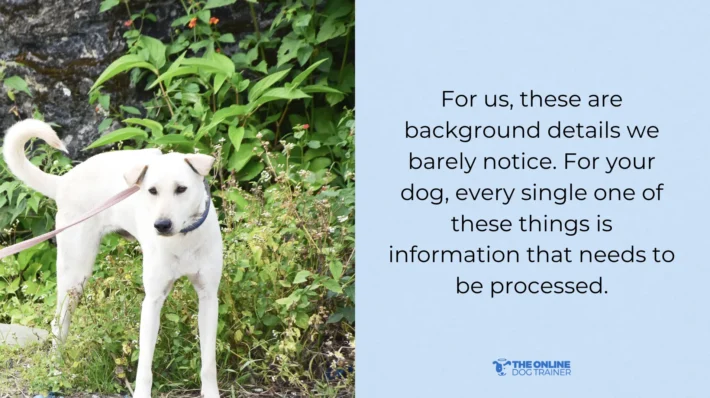
For us, these are background details we barely notice. For your dog, every single one of these things is information that needs to be processed. And depending on how your dog is wired, each of these distractions can pull their attention completely away from you.
Your Dog Can Sense Everything With Their Nose
Here’s something that will blow your mind.
Your dog’s sense of smell is estimated to be anywhere from 10,000 to 100,000 times more powerful than ours. What does that mean in practical terms? It means your dog can detect the scent of another dog — or any number of other animals and people — long before you can see, hear, or sense anything at all.
Imagine going for a walk where you could sense what was happening miles before it actually appeared. That’s your dog’s reality every single time they step outside. Every blade of grass tells a story. Every fire hydrant is a message board. Every gust of wind carries information that you can’t even begin to perceive.
This is why your dog seems like they “lose focus” so quickly outdoors — they’re not losing focus at all. They’re hyperaware of everything around them. And for a dog who thinks they’re the one in charge of their survival, all of that sensory input can be completely overwhelming.
Anxiety Triggers: When Noise Becomes a Threat
Here’s something that surprises many dog owners.
A dog that seems completely calm and relaxed at home can suddenly become a trembling, terrified animal the moment they hear an unexpected noise outside — a truck reversing, a car backfiring, construction equipment, a load of boxes being dropped nearby.
Why? Because at home, your dog has context. They know those sounds. They’ve heard the dishwasher and the TV and the family talking, and they’ve learned that none of those things are a threat.
But outdoors, a sudden, unfamiliar noise carries no context. For a dog that hasn’t built real-world confidence, that noise can register as genuine danger — something they need to react to immediately.
And when that happens, training goes out the window.
Why Your Dog Stops Listening Outside
Why Your Leadership Matters The Most
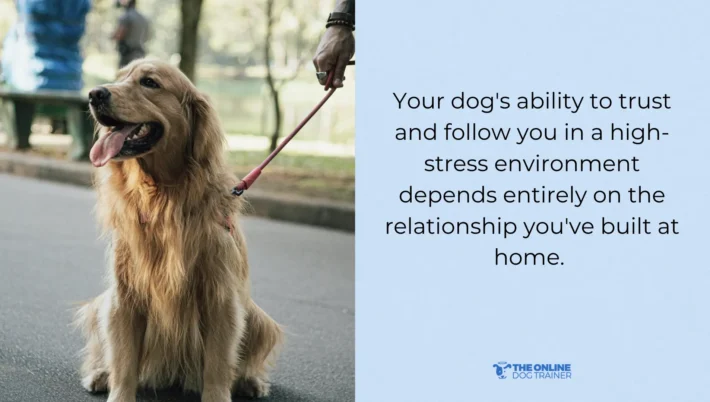
Here’s the critical insight that a successful dog training approach is built on: your dog’s ability to trust and follow you in a high-stress environment depends entirely on the relationship you’ve built at home.
If your dog doesn’t see you as a calm, capable, trustworthy leader before you step outside, they will feel responsible for managing everything themselves — every threat, every strange sound, every unfamiliar person or animal. And a dog that feels responsible for protecting everything is a dog that is always on edge, always reactive, always overwhelmed.
Your dog is not misbehaving outside because they’re disobedient. They’re struggling because they don’t feel safe — and they don’t have a leader they trust to handle the chaos for them.
Understanding the Autonomic Nervous System
This is the part that most dog training advice completely misses. And once you understand it, your dog’s outdoor behavior will make so much more sense.
When your dog encounters something they perceive as a threat — whether it’s an unfamiliar noise, an oncoming dog, or a chaotic environment — their autonomic nervous system kicks in. This fact is in your dog’s biological need to survive. This is especially evident in a dog that thinks they’re in charge.
The autonomic nervous system is your dog’s built-in survival mechanism. Its entire job is to keep your dog alive. And when it decides that your dog is in danger, it does something very specific: it shuts down higher-order thinking and switches the brain into survival mode.
In scientific terms, the brain’s emotional center — the amygdala — hijacks the thinking center — the prefrontal cortex. Your dog’s brain is no longer processing information, weighing options, or listening to commands. It has one priority and one priority only: “I’m in danger. I need to get out of here because no one will save me except for me.”
At that moment, it doesn’t matter how many weeks you’ve spent training. The fact that your dog is obedient doesn’t count. You simply cannot override a survival response with a practiced command.
This is why reactive dogs can appear completely fine one moment and completely out of control the next. The trigger flips a switch, and rational behavior goes offline.
The Leadership Foundation: How To Train a Dog To Behave Outside
Why Outdoor Success Starts Indoors
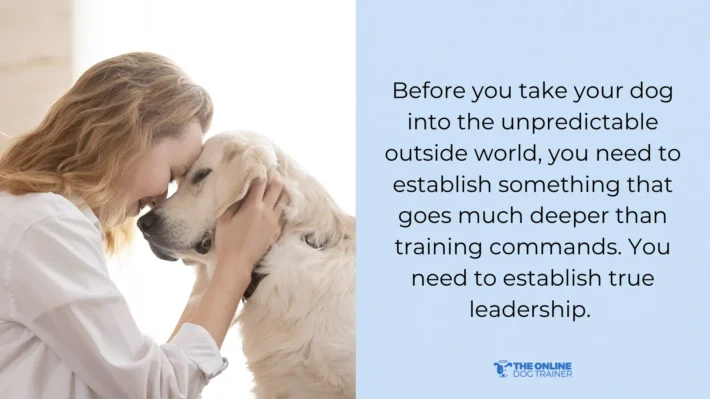
Before you take your dog into the unpredictable outside world, you need to establish something that goes much deeper than training commands. You need to establish true leadership. Showing you’re a capable leader is the secret on how to train a dog to behave outside.
Not dominance. Not control. Leadership.
A true leader, in your dog’s eyes, is someone who makes decisions calmly and confidently. Someone who handles threats without panicking. A leader that your dog can hand the responsibility of keeping the pack safe over to.
When that leadership is genuinely in place at home — when you can see it in your dog’s attitude, in the way they’re respectful, calm, and trusting around you — only then are you ready to start extending that relationship into the outside world.
Think of it this way: if your dog doesn’t trust that you’ve got things handled at home, why would they trust you to handle things when the world becomes loud, unpredictable, and overwhelming?
What Real Leadership Looks Like
True leadership isn’t just about training sessions. It’s about how you interact with your dog in every moment of every day — how you handle feeding time, how you greet your dog when you come home, how you respond when your dog barks at something, and yes, how you manage the walk.
Your dog is constantly reading you. They’re watching how you respond to the world around them, and they’re making a decision: “Is this person in charge? Can I relax and trust them? Or do I need to step up and take control?”
When your dog consistently sees you as the calm, capable decision-maker in every area of life, something remarkable happens: they stop feeling the need to be in charge. And a dog that isn’t carrying the weight of leadership is a dog that can finally relax — even outside.
This is why I recommend dog owners to check out The Dog Calming Code™ because it’s the program that teaches how to really be the leader in a dog’s eyes.
How to Prepare Your Dog for the Outdoors
Step 1: Build the Leadership Foundation Before You Go Outside
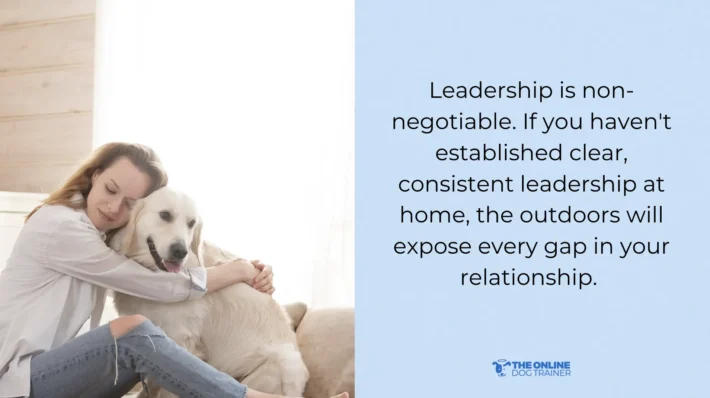
This is non-negotiable. If you haven’t established clear, consistent leadership at home, the outdoors will expose every gap in your relationship.
Here’s what establishing leadership at home really means — and why every part of it matters.
Your dog is constantly asking one question: “Who is in charge here?” They’re looking for the answer in everything — in how food is given, in how you react when something scary happens, in how you greet them when you walk through the door, in who decides when the walk begins, and where it goes.
When you show up as the confident decision-maker in all of those moments — not just during training — your dog gets an answer they can trust. They don’t need to take over. They don’t need to stay on guard. They don’t need to manage the world themselves.
That is what leadership looks like. And that is precisely what your dog has been waiting for.
You’ll know leadership is truly in place when you see a genuine shift in your dog’s attitude — a calmness, a respectfulness, a willingness to look to you for guidance rather than pulling ahead or making their own decisions.
Don’t rush this step. The time you invest here will determine everything that happens outside.
Step 2: Understand the Difference Between a Structured Walk and a Social Walk
This distinction is one of the most important things I can share with you if you want to know how to train a dog to behave outside.
Many dog owners take their dogs on what I call a “social walk” — the dog leads, the leash is long and loose, and the dog decides where to go, what to sniff, and when to stop.
It feels kind because it’s like you’re giving your dog freedom. But what you’re actually doing is handing them the leadership role the moment you step outside. A dog that’s in charge of the walk is not a dog that can relax. They’re a dog with responsibilities. They have to make decisions. They have to manage threats. They have to figure out what all of those overwhelming distractions mean and how to respond to them.
A structured walk is completely different. On a structured walk, you make the decisions. You decide when to start. You decide when to stop. You decide which direction you go. You decide when your dog gets to sniff.
This isn’t about being strict or rigid. It’s about giving your dog the gift of not having to be in charge. When your dog understands that you are managing the walk, they can follow — and following is far less stressful than leading.
Step 3: Start Small — The Front Door and the Curb
Before you take your dog to the dog park or down a busy street, start with what I call “controlled walks.” This means you teach a dog to behave outside using structured movement in a low-distraction environment — around the front door, down the front steps, to the curb and back. These short, intentional outings let you practice leadership in a manageable setting.
The key here is who makes the decisions. If there’s something interesting to sniff, you decide when that happens. You stop, you give the signal, you allow it. Then you move on when you decide it’s time. This might feel small, but it’s enormously powerful. Every time you make a calm, confident decision on that walk — even a tiny one — you’re reinforcing to your dog: “I’ve got this. You don’t need to worry.”
Step 4: Gradually Increase the Challenge
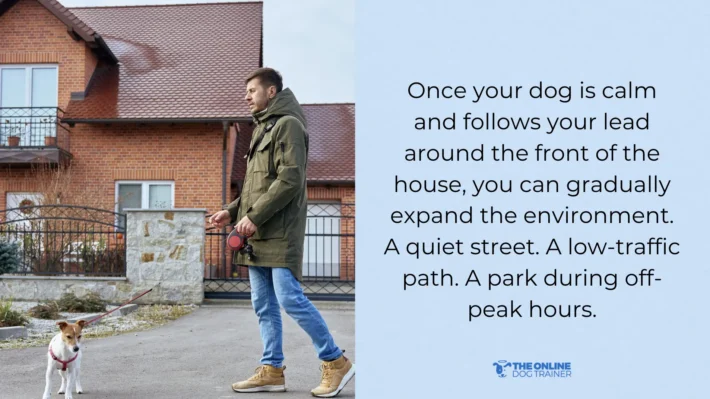
Once your dog is calm and follows your lead around the front of the house, you can gradually expand the environment. A quiet street. A low-traffic path. A park during off-peak hours.
The goal is to always stay within a zone where your dog can still think and respond to you — what trainers call “under threshold.” The moment your dog goes over threshold — the moment that survival switch flips — learning stops. So you always want to work just below that point, building your dog’s confidence and trust in you one small step at a time.
If your dog reacts, don’t panic. Calmly redirect. Create distance from the trigger. And remember: your dog is not trying to be difficult. They’re telling you they’re overwhelmed, and they need you to lead them through it.
Step 5: Stay Calm When Your Dog Reacts
This one is deceptively simple — and incredibly difficult at the moment.
When your dog reacts outdoors, every instinct you have might tell you to tighten the leash, raise your voice, or pull them away in a hurry. But here’s the thing: your dog is reading your reaction.
If you respond to their panic with your own panic, you’ve just confirmed their fear. You’ve told them, in body language they understand perfectly, “Yes, this IS something to be afraid of.”
When you stay calm — when you take a breath, soften your posture, and respond with quiet confidence — you send a completely different message: “I see it. I’ve assessed it. It’s not a threat. We’re fine.”
That calmness, consistently shown over time, is what gradually teaches your dog that the outside world is manageable — because you are managing it.
Dog’s Public Behavior: How To Know If They’re Ready To Go Out
Before you take your dog out into the big, unpredictable world, it’s worth asking a question that most owners skip: “Is my dog actually ready for this — emotionally?” Your dog can’t tell you with words. But they tell you every single day through their behavior. Here’s what to look for.
Sign #1: They’re No Longer “On Guard” All the Time
A dog that carries the weight of leadership is never truly relaxed. They’re always watching, always scanning, always waiting for the next threat to show up.
But when your dog has genuinely handed that responsibility over to you — when they trust that you’ve got it covered — something shifts. You’ll notice they spend more time resting. Their eyes are soft, not darting. Their body is loose, not tense.
That shift from “always on guard” to “genuinely at ease” is one of the most powerful signs that your dog is emotionally ready to face the outside world with you.
Sign #2: Unexpected Sounds Don’t Send Them Into Panic
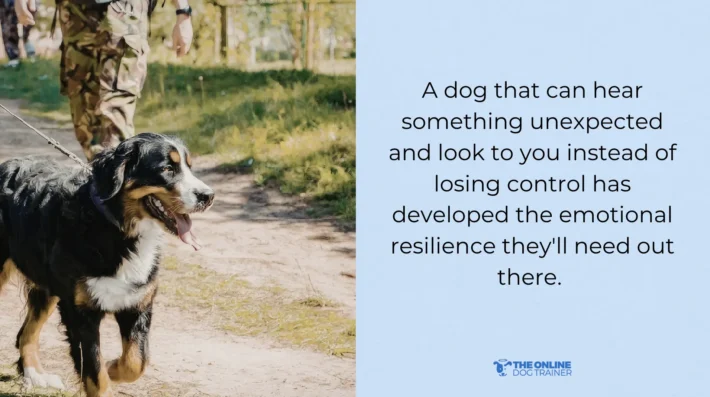
At home, does your dog flinch and spiral every time the doorbell rings, a car backfires, or someone drops something in the kitchen? Or do they startle briefly — and then look to you, take their cue from your calm response, and settle back down?
The ability to recover quickly from an unexpected sound is a huge green flag. Outside, sudden noises are everywhere — trucks, construction, kids, other dogs. A dog that can hear something unexpected and look to you instead of losing control has developed the emotional resilience they’ll need out there.
Sign #3: They Can Be Around Mild Distractions Without Fixating
Open a window. Let some outside sounds and smells drift in. Does your dog notice — and then let it go? Or do they lock in, fixate, and become impossible to redirect? A dog that can acknowledge a distraction without being consumed by it is showing you something important: their brain is still online. They haven’t gone over the threshold. They can still hear you, process your guidance, and make a reasonable decision.
That ability to stay “under threshold” even in the presence of mild distractions is exactly what they’ll need on the street, at the park, and beyond.
Sign #4: They Trust You to Handle “Danger”
Here’s a deeply telling test. When something in your home environment causes your dog concern — an unusual noise, a stranger at the door, an unfamiliar smell — what do they do?
Do they take matters into their own hands — barking, pacing, refusing to back down? Or do they look to you, allow you to assess the situation, and follow your lead?
A dog that trusts you to handle perceived danger at home will trust you to handle it outside, too. And that trust is not something you can fake or force — it has to be built, day by day, through consistent and calm leadership.
Sign #5: You Feel Calm About Taking Them Outside
This one surprises people — but it matters more than you think.
Your dog can feel your energy.
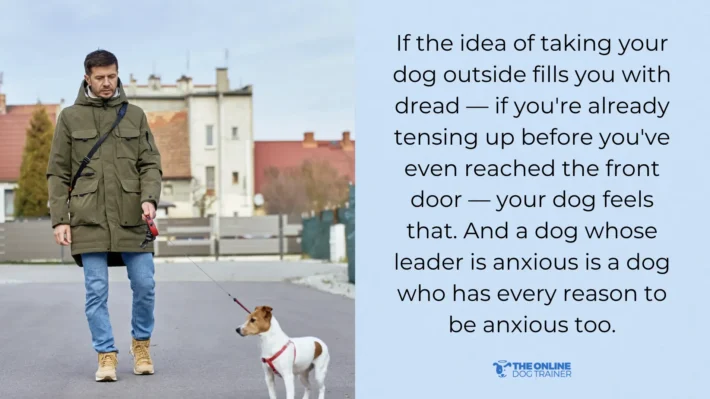
If the idea of taking your dog outside fills you with dread — if you’re already tensing up before you’ve even reached the front door — your dog feels that. And a dog whose leader is anxious is a dog who has every reason to be anxious too.
When your leadership foundation is solid and your dog’s behavior at home gives you genuine confidence, you’ll notice something change in you as well. The walk will stop feeling like a battle to survive and start feeling like something you can actually look forward to.
How to Teach A Dog To Behave Outside the House: Doggy Dan Will Help You
If your dog acts differently outside the house, it’s not always because they’re stubborn, untrained, or difficult. They’re struggling because the outside world triggers a survival response that no amount of indoor training can automatically override — and because without a strong leadership foundation, they feel responsible for handling all of that overwhelming sensory input themselves. The path forward isn’t more commands. It’s deeper trust.
Before you teach a dog to behave outside the house, build the leadership foundation at home. Make every walk a structured experience where you are calmly, confidently in charge. Start small, build gradually, and stay calm when things get hard.
Follow my program The Dog Calming Code™ for more instructions on how to make your dog a total angel inside and outside the house.
Frequently Asked Questions
1. Why does my dog listen to me perfectly at home but completely ignore me in public?
This is what we call the “false confidence trap.” Your home is a controlled “safe zone” where your dog feels secure and understands the rules. However, dogs don’t generalize behavior easily. To your dog, “sit” in the kitchen is a different task than “sit” on a busy street corner where their senses are being flooded by new smells, sounds, and sights. Without a strong leadership foundation, their brain switches from “obedience mode” to “survival mode” the moment they step outside.
2. How can I tell if my dog is “over threshold” during a walk?
A dog is over threshold when their autonomic nervous system takes over, shifting them into a fight-or-flight response. Signs include:
- Fixation: Staring intensely at a distraction and unable to look away.
- Physical tension: A stiff body, tucked tail, or raised hackles.
- Lack of focus: Completely ignoring commands they usually know.
- Panic: Trembling, lunging, or frantic barking. Once a dog is over this threshold, they are no longer capable of “learning”—their only priority is survival.
3. What is the difference between a “social walk” and a “structured walk”?
In a social walk, the dog often leads the way on a long leash, choosing where to sniff and when to stop. While this feels like freedom, it actually puts the burden of leadership on the dog, making them feel responsible for managing every “threat” they encounter.
In a structured walk, you make the decisions. You decide the pace, the direction, and when it is time to stop and sniff. This allows your dog to relax into a follower role, which is far less stressful for them. This is the most important walk to master if your dog acts differently outside.
4. My dog is reactive to loud noises outside. How should I react?
It is vital that you stay calm if you are trying to teach a dog to behave outside. If you tighten the leash, gasp, or shout, you are confirming to your dog that the noise is indeed a threat. Your dog reads your energy to gauge safety. By maintaining a soft posture and a calm demeanor, you send the message: “I’ve assessed the situation, and we are safe.” Over time, your dog will learn to mirror your composure rather than spiraling into panic.
5. How do I know when my dog is truly ready for more crowded public spaces?
Your dog is likely ready to increase the challenge when they display these signs at home and in quiet outdoor areas:
- They recover quickly from unexpected sounds (startling briefly, then looking to you).
- They no longer stay “on guard” or scan the room constantly for threats.
- They look to you for guidance when they encounter something new or “dangerous.”
- They can notice a distraction without fixating on it.
6. If I teach a dog to behave outside the house, should I start inside?
Absolutely. You cannot expect your dog to trust you to handle a chaotic park if they don’t see you as a leader in the living room. Establishing yourself as a calm, trustworthy decision-maker during everyday activities—like feeding time or greeting guests—creates the foundation of trust. If the leadership isn’t settled at home, it will almost certainly crumble in public.

~Doggy Dan 🙂