
Hey there,
Doggy Dan here.
Today I’m going to tell you a little bit about doggy recall…and why your dog might be the picture-perfect student inside your house but pretend you don’t exist the moment you get outside.
Because I know how frustrating it can be when your dog ignores you in the moments it matters most…
…maybe you’re late to work (AGAIN!) because your dog didn’t want playtime to be over at the dog park…
…or your dog got too close to a skunk, ignoring your calls to come, and now you have a smelly problem on your hands.
It all comes down to the way you communicate with your dog (and how your dog understands that communication)!
What I see over and over again is that people expect dogs to communicate like we do as humans…and that’s just not how dogs are wired.
You see, dogs are inherently hard-wired to be both curious and protective. If they see something (especially something that’s running), they’ll want to either investigate what it is or protect you from that perceived threat (even if it isn’t posing any threat to you at all).
So let’s first understand a little bit more about why dogs don’t come when called.
Reason #1 Your Dog Doesn’t Come When Called: Too Many Distractions
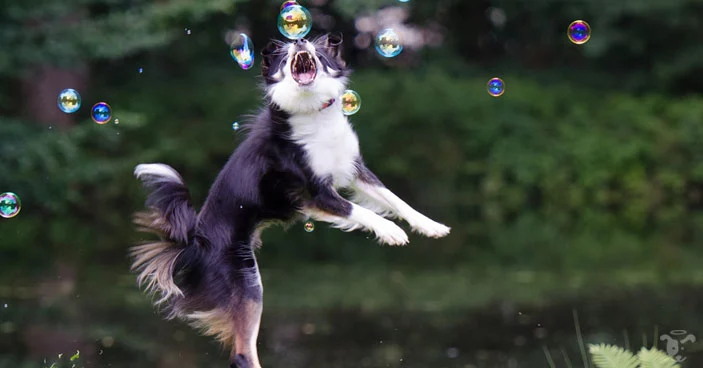
Your dog might be the picture-perfect listener inside your home. And for good reason! When there are no distractions and in a confined space it’s easy for your dog to obey your commands.
But out and about there are so many distractions – smells, sounds, and sights – that spark your dog’s interest.
The cars driving past, a squirrel running around in the distance, the smell of a bakery nearby…
All of these things are WAAAAY more interesting than you!
So it becomes hard for them to listen to your call when they’re hyper focused on chasing that squirrel.
Especially if they discover that the reward of chasing that squirrel is way more enjoyable than what you’re offering. If you’re calling them to leave but they’re having too much fun playing chase, they’re going to prioritize that game of chase over coming to you.
This is also known as active disobedience.
And this can be amplified when your dog is not accustomed to being around so many distractions. When you’re working on recall training with your dog you can’t just go from 0 to 100 (0 being in a quiet house with no distractions; 100 being at a noisy park filled with children, animals, and countless other distractions).
You’ll want to slowly add in distractions so you don’t unintentionally overwhelm your dog into disobedience.
Reason #2 Your Dog Doesn’t Come When Called: Leadership Issues
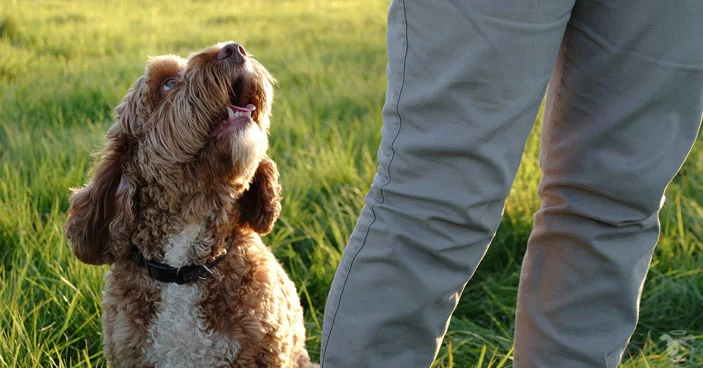
You might have heard before that dog training is all about repetition. But repetition can only go so far when the dog doesn’t think that you are in charge.
The bigger issue at play is that the dog believes he is the leader in your relationship and thinks that he is in charge and can do whatever he wants.
So when he sees something off in the distance and wants to investigate, he can go ahead and do that because he is the boss.
No matter how much time and money you invest in training, it won’t get down to the root cause of why your dog doesn’t come when you call.
Because YOU need to show the dog that you are in charge. When you become the pack leader, the dog will respect you and listen to you.
And something magical will happen…
You will notice other behavioral issues will just go away.
Because your dog will no longer shoulder the responsibility of being in charge. They can lean on you and trust that all they need to do is listen.
Reason #3 Your Dog Doesn’t Come When Called: Lack of Consistency

Dogs don’t speak our language, so it’s important to be consistent so that they understand what we’re trying to say to them.
Recall simply doesn’t work when doggy parents aren’t consistent with their commands. Maybe sometimes you say the word “come” but then others you call their name and expect them to come.
If you’ve already shown them that the word “come” is for recall, using their name just won’t work. Your dog will just be confused.
This consistency extends to your dog training technique as well. You have to always use the same training method so that your dog is clear on what is being asked of them and what will happen when they listen and when they don’t.
This is why consistency in praise and penalty is so important too.
Your dog needs to receive lots of praise when they listen. That consistency should also be used when they don’t listen. For example, you go to the dog park and your dog doesn’t listen to your command to come, then they get put on a short leash or get a time-out or have to go home. You should have the same consequence each time so your dog understands what will happen if they don’t listen.
Please note that when I say consequence, I’m not endorsing punishment of any kind. Rather I’m suggesting that you teach your dog that if they don’t listen, the fun is over.
Dogs don’t understand language in the same way we do, so commands to them are context specific. They don’t have the ability to understand that a specific word means something in different settings, unless you practice consistency in your commands.
Most times, your dog isn’t TRYING to be defiant; they just haven’t generalized the command yet. This is why practicing in different environments over time is so important in recall training for dogs.
Reason #4 Your Dog Doesn’t Come When Called: Fearfulness

Unfortunately, I’ve seen many people use forceful training methods to get their dog to come when called, or discipline the dog if they don’t listen when called. As I’ve already discussed, there are a variety of reasons why your dog isn’t coming when you call them…
…and it’s not always that they’re being intentionally defiant.
Many times, it’s a miscommunication between a doggy and their human that causes recall issues.
And if you resort to unkind training methods, your dog will fear that if they come to you they will be punished.
This will make them want to run in the other direction when you tell them to come.
Even if you’ve embraced other non-fear-based dog training methods, that training could be affecting your dog’s recall.
Why Prior Dog Training Methods Aren’t Working in These Situations
I ALWAYS encourage kind and gentle methods for training your dog, but sometimes those may not work when you’re working on recall.
Positive reinforcement training, or treat training, focuses on using a high-value treat to reinforce good behaviours.
The idea is that if a dog is consistently rewarded for good behaviour, they will continue that behaviour.
The issues with this type of training arise when distractions are present, or when you don’t have any treats readily available. Say you’re in the park and your dog sees a squirrel. At that moment, they probably think chasing the squirrel is more valuable than the treat you’re holding.
Or they may be too far away to even realize you have a treat!
And then all your training goes out the window when you don’t have treats available. All of a sudden their incentive to listen to you is gone.
If you use other, fear-based training methods, you might be frightening your dog into obeying you. This is not a long-term solution and will eventually make your dog fearful of you. Learn more about this in one of my previous blog posts.
If you’re struggling with recall don’t give up on your dog just yet!
I’ve got something that will transform your relationship with your dog and have you communicating like old friends in no time.
So…How Do You Fix Your Dog’s Recall Abilities?

First, I want to call out a study that was just released that shows that pups are eager to communicate with humans shortly after birth!
This is so interesting to me because it shows that dogs really do want to interact with people, and I can show you how to communicate effectively…
…because it’s all about understanding how to win their mind and get them to focus on you (even when distractions are everywhere around you).
This is exactly what my Dog Calming Code™ program is all about!
This program focuses on building your relationship with your dog in a kind and gentle way. So you can have a safe and enjoyable time EVERY TIME you venture out with your four-legged friends….
…and trust that they will come when you call them.
The Dog Calming Code™ is not just MORE training, it’s about building your relationship with your dog.
Because right now you’re not on the same page…
…you may not even be reading from the same book!
So let me help you understand your dog, so you can get your dog to understand you.
It starts with the Dog Calming Code™, my program that addresses the root cause of your dog’s behaviour.
So no matter where you are or what’s going on around you, your dog will ALWAYS come when called.
Are you ready to have a dog that will listen in any situation?
That will turn away from a squirrel and turn toward you the instant you say, “come”?
Then don’t run away from the program that can help your dog run towards you…
Cheers,

~ Doggy Dan




6 Responses
I am so impressed with you Dan. I have raised all my fir babies with kindness, love, and gentleness.
Every person I run into, I am telling them to check you out.
Right now, I am search for a dog psychologist or someone who can help Angel.
I am continuing with the courses, and I am so glad you are there.
I don’t want to give up on her, as she will be a gentle giant if I can get through to her. I have gotten all kinds of unsolicited advice from many different people, and they are telling me I am doing everything wrong. That’s why I trust your teaching. I hate it when people butt in and try to train her all the while defeating the whole purpose and creating the idea that she is bad dog, and that I am a horrible human to my baby.
I did take a small break from the courses but I am going to start again.
As a teacher, I give you 10/10. Keep up the good work.
Yasmin
Thanks for your lovely feedback Yasmin. There is no doubt that some dogs require more patience than other….they can be complex, just like human beings! The most important thing in helping Angel reach her full potential is that she knows instinctively that she can trust you with her life. That means that any challenges she may come across will see her look to you for direction, for reassurance and security. Your role, is to be as consistent as you can with the information you give her and try to work at her pace…..we cannot force learning, we can only provide an environment conducive to learning and that allows a dog to calmly process that information. I have no doubt that under your care Angel will live a happy and stress-free life! All the Best, Doggy Dan
Hi dogggy Dan can you help me please
I have bought the “dog calming code “
Last year I think. The issues I am having are:
I have 2 jack Russel’s who are from the same litter a female and male 4 /1/2 years old. My issues are they both get so stressed when we take off in our home which is a 40ft. Bus. They shake and pant all the time we are moving. The funny thing about it is they love travelling in our little car (which we tow behind us.) I was wondering if you have any advice for me please. I have a large carry case I have now placed them in. No change. I have tried sedation still no good.
Hi Maria,
The first thing to ensure is that you are consistently applying The Dog Calming Code with both dogs. A change in routine and environment can be really unsettling for a dog and it may be that they see the bus as related to that. The best way you can help them to feel more secure is to make sure they both understand that it’s your role to keep them both safe…..no matter where they are going. We also have a topic relating to anxiety in vehicles, and it may be worth revisiting to view the techniques and strategies I recommend in this scenario. All the Best, Doggy Dan
Hi,
I have a 5 yr old rescue dog ( had her for 3 yrs), she is a very sweet gentle girl with one major fault —she will not come when called even inside the house, she just looks at you and ignores the command. She is not food oriented, so snacks don’t work.
Would your programme work for her?
Thanks,
Glennis
This is a common story Glennis! When dogs have unreliable recall, especially when there are no distractions, we ween to consider whether the dog feels it should or needs to respond when asked. When a dog feels they have a level of responsibility or importance in their family then they may feel that they can choose whether they respond or not. So to tackle recall we also need to change a dog’s mind about this level of responsibility and importance. That’s not to say that our dogs aren’t important in our lives, i’m not aiming to change that in any way, just to start to show our dogs that they can trust us to carry all the responsibility. I may have confused you a bit more than I intended (sorry)…but my website TheOnlineDogTrainer.com shows you very clearly how to achieve this…maybe take a quick look…its a $1USD trial for 3 days…All the Best, Doggy Dan