If you've ever asked “Why is my dog yelping for no reason?” this blog will answer that and offer quick solutions for this puzzling dog behavior.
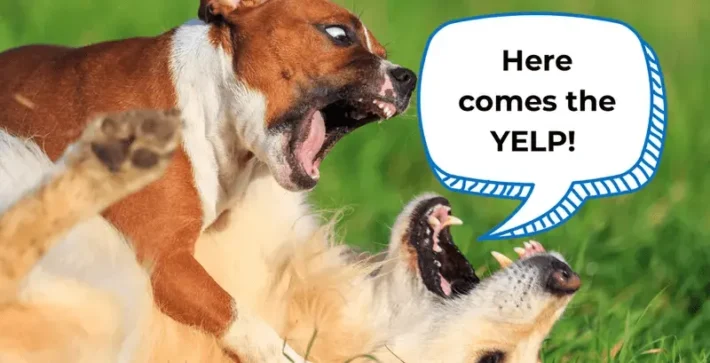
Dogs don't always say what they're feeling, so it's understandable why we want to know the reason why dogs yelp.
Each sound our dog makes is crucial; it can signify hunger, distress, and pain.
So it's no surprise our dogs' sudden yelping sounds can make us spring into protective, worrying mode.
Yes, a yelping dog can be a dog in pain. But a dog letting out a high-pitched, petrifying sound isn't always a pained dog… and it's an essential truth owners should understand.
If this behavior constantly worries you and makes you wonder what's wrong with your dog, this blog will help you get better understanding.
Let's start.
Key Takeaways
- A yelping dog requires immediate investigation to determine the underlying cause, with pain being the top priority. If the yelp is sudden and accompanied by physical symptoms like limping or reacting even when barely touched, a veterinary attention is crucial to address potential health problems that could impact your dog's life.
- Yelping is a complex communication tool in a dog's life. Beyond pain, the underlying reason could be behavioral, such as seeking attention, expressing fear, or strategically signaling surrender during a confrontation with another dog to say, “You win.”
- Understanding the context behind the yelp is essential. By acting as a calm observer, you can differentiate between a cry of pain and a form of communication, allowing you to respond appropriately and effectively manage your dog's well-being and social interactions.
Why A Dog Yelps: What You Need to Know
“Why is my dog yelping?” It's a sound that can go right through you, can't it? Makes you stop in your tracks. Let's get to the bottom of it, because understanding why is the first step.
First off, we always need to check for genuine pain. If that yelp is sudden, sharp, and maybe your dog is now limping, won't let you touch a certain spot, or doesn't want to move, then something is likely hurting them. That's not a training issue; that's a clear signal to get them to the veterinarian immediately for a proper check-up. Don't delay on that one.
Now, if you've ruled out pain, we can look at the other reasons. A yelp can simply be normal behavior or a dog's way of saying, “Whoa, you gave me a fright!” or “I'm a bit scared right now!” It's all about context. What was happening right at that moment?
And then, of course, there's the clever dog who's learned that a little yelp gets a big result! This is especially common with puppies. They learn very quickly that when they make that sound, you come running. It's not them being naughty; they've just figured out what works to get your attention.
So, the key is to be a calm detective. Observe the situation. Is it pain, fear, or a smart pup looking for some attention? Once you understand the cause, you can respond in the right way.
The Other Reason Why Dogs Yelp: For Dogs, It's All About Leadership
Here's a truth I truly embrace: dogs are all about the hierarchy. Knowing who leads and who follows is business #1.
When dogs meet, they first sort out leadership because dogs are BIG on leadership.
(Thus, the reason for the creation of my popular course, The Dog Calming Code™️ , which you can learn more about below.)
If you can observe two dogs that just met at the park, there's a high chance you'll catch them growling and seemingly testing the other.
Eventually, they will engage in a brawl, a classic way of challenging one another.
After a few minutes of commotion, everything gets back to normal. The two dogs fighting earlier will start to interact without any aggression.
When two dogs stop fighting or challenging each other, they have already settled who the leader is and who the follower is.
THIS FREE CLASS IS FOR DOG OWNERS WHO WANT TO SOLVE DOG FIGHTING FAST!Why Do Dogs Yelp During an Intense Interaction With Other Dogs
Where does yelping come in?
Somewhere during the brawl, one of the dogs might let out a sharp cry. (Think: loud, human shriek). It's a sound that can make any dog owner spring to their feet.
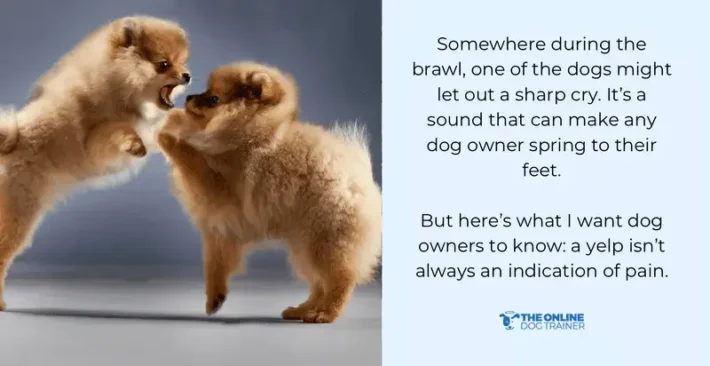
But here's what I want dog owners to know: a yelp isn't always an indication of pain.
Of course, keep an eye on the dog fight and intervene when physical harm is involved.
However, I encourage you to also assess the situation BEFORE immediately getting between two dogs.
Because yelping can also mean two things:
a.) It's a sound of conceding.
b.) it's a shock factor to tell other dogs, “Stop chasing me. You win.”
Why Dogs Yelp Reason #1: Yelping is a Sound of Conceding
Dogs understand the value of leadership more than they show.
Because of this reason, a dog will not back down until they've established themselves as the leader.
However, the screaming will start when a dog sees they're at a disadvantage.
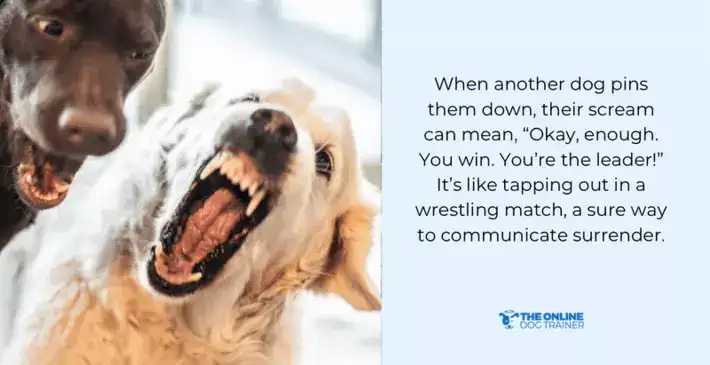
The scream that they let out isn't always a scream of sudden pain.
When another dog pins them down, their scream can mean, “Okay, enough. You win. You're the leader!”
It's like tapping out in a wrestling match, a sure way to communicate surrender.
JOIN OUR FREE CLASS AND CHANGE REACTIVE DOG BEHAVIOR IN 7 DAYSWhy Dogs Yelp Reason #2: Yelping is a Shock Factor to Make the Other Dog Stop Charging
To explain this part, I'm sharing the story of my two kids, Stanley and Sage.
Like what children normally do, Stan and Sage would have really intense playtime that could end up in shrieks and cries.
There was this one time where Sage, out of nowhere, let out a blood-curdling shriek.
Of course, I was very worried. I dropped what I was doing and charged inside the house.
“Sage, what did he do to you?” I asked my daughter.
She simply said “Oh, nothing. I just didn't want him to catch me.”
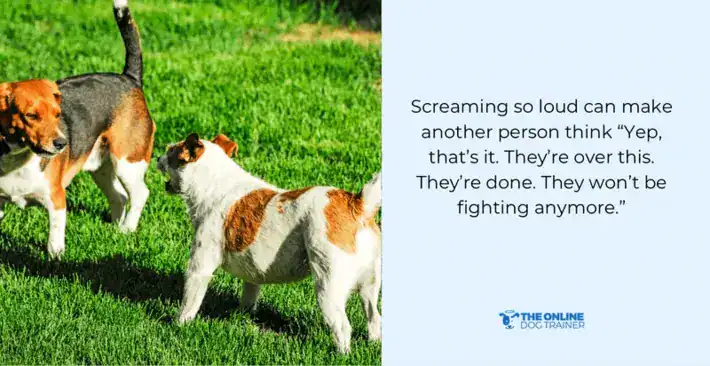
And it made sense to me!
Screaming so loud can make another person think “Yep, that's it. They're over this. They're done. They won't be fighting anymore.”
It's the same with dogs!
A dog uses loud sounds to ward the other dogs off or to stop fights.
An intense sound from your dog is not always an indication of pain, but a way to communicate defense against their strong opponent.
OUR FREE CLASS HELPS DOG OWNERS SOLVE REACTIVITY ISSUES FOR GOOD!Why Dogs Yelp Reason #3: A Dog's Pain and Discomfort
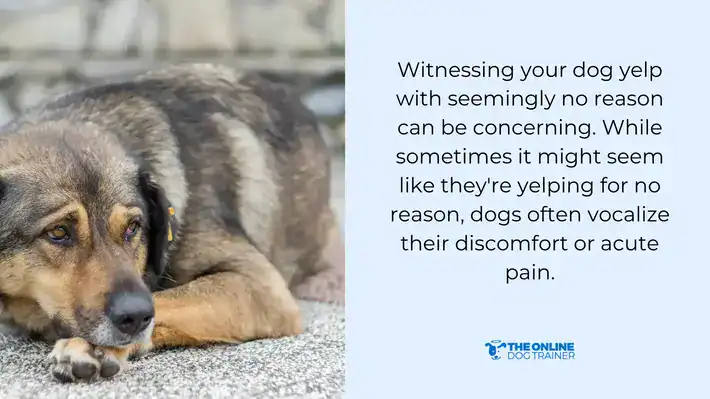
Witnessing your dog yelping in pain randomly for no reason can be concerning. While sometimes it might seem like they're yelping for no reason, it can also be a pain response. This could be due to various underlying issues and health problems, ranging from something as simple as a prick from a hidden thorn to more serious conditions like abdominal pain, internal injuries, neck pain, or joint or muscle problems. Although you can use an ice pack to alleviate the pain, it's important to have your dog checked to rule out any other issue.
If your dog is yelping persistently or showing other signs of distress, it's crucial not to dismiss it. This is especially important for active breeds prone to getting themselves hurt. Bring your dog for immediate medical attention and diagnostic tests.
A yelp communicates acute pain. Check for an unusual head posture or any sign of spinal pain. In such cases, it's always best to consult your vet immediately to rule out any serious medical concerns, underlying health conditions, or to get pain meds for ongoing pain. Depending on the diagnosis, the vet might prescribe pain medication or other treatments to address the root cause of your dog's discomfort. Check your pet insurance if it covers chronic pain issues.
Why Dogs Yelp Reason #4: A Dog's Anxiety and Fear
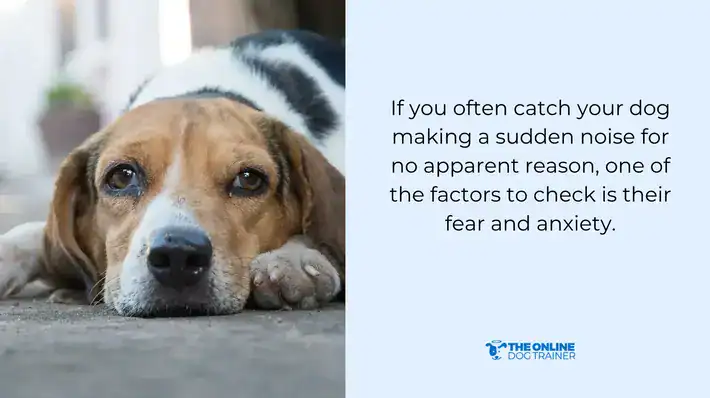
Pet parents, if you often catch your dog making a sudden noise for no apparent reason, one of the factors to check is their fear and anxiety.
Perhaps another dog at home is asserting their dominance. Perhaps a loud noise is causing to become more agitated than ever. Perhaps it's separation anxiety. Knowing this can help you give the appropriate treatment for your dog. Anti inflammatory
Why You Should Not Immediately Intervene Between Two Dogs in a Rumble
When your dog starts yelping, checking in on them and stopping the fight is — YES — the most sensible thing to do.
I totally recommend intervening in a dog fight when signs of harm are evident (for example: blood and scratches).
HOWEVER, YOU DON'T ALWAYS NEED TO GET IN THE WAY OF A DOG FIGHT.
“But why, Doggy Dan?”
It's because dogs ALWAYS want to sort out who leads the pack and who follows. (Sorting this out can help your dog calm down).
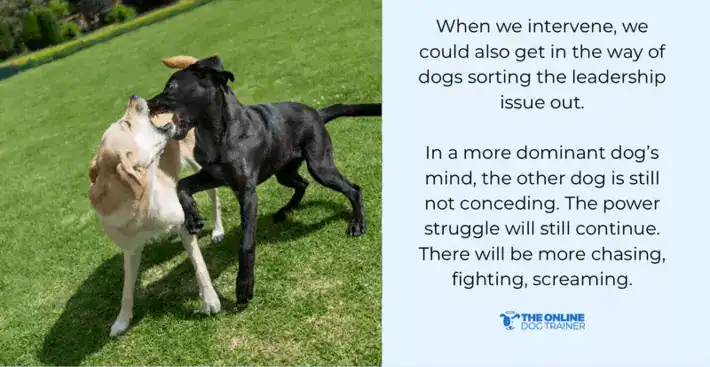
When we intervene, we could also get in the way of dogs sorting the leadership issue out.
In a more dominant dog's mind, the other dog is still not conceding. The power struggle will still continue. There will be more chasing, fighting, screaming.
Dealing with Dog Rumbles: When Do I Step In?
If you're dealing with more frequent dog rumbles, I recommend being quick in observing the severity of the dog fight.
We don't always need to get involved in the middle of the fight, BUT we still have to keep an eye on when the rumble becomes serious.
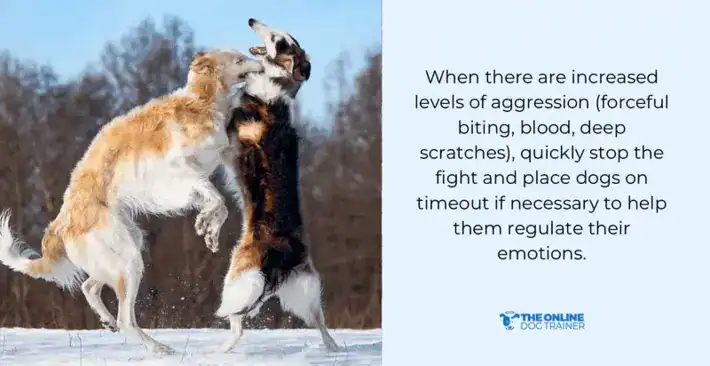
When there are increased levels of aggression (forceful biting, blood, deep scratches), quickly stop the fight and place dogs on timeout if necessary to help them regulate their emotions.
JOIN OUR FREE CLASS THAT'LL CALM YOUR AGGRESSIVE DOG IN JUST A WEEK!Why You Should Trust The Dog Calming Code When Training Dogs
Here are some dog owners with rescue dogs who trusted The Dog Calming Code and saw astounding results!
A Miracle!
Hollie, my traumatised rescue collie had such bad reactivity to other dogs and sometimes to people, I couldn’t take her out anywhere. Now she is very obedient and walks mostly without pulling & is quite calm most of the time. Her severe separation anxiety has lessened and in time, I am optimistic she will improve even more. Even her 1-1 doggy day care has seen a difference, so it’s definitely working, although NOTHING else has EVER helped her like this programme, it’s like watching a miracle unfold. I am deeply grateful my pup and I can relax and enjoy life at long last, she so well-deserves to – not only for all she’s been through – but also she now has early-stage cancer.
There’s been no ‘worst’ moments I can think of, thankfully. Her response to the changes has been very heart-warming.
I can’t thank you enough, wish I’d found your programme when I first got her in December 2020. Keep up the good work!
Woof!
Hannah N.
🇬🇧 GB
This is really working!
I rescued a four year old German Shepherd and she is very anxious due to her past. I also have a black lab that still had issues with polite greetings. Both dogs are calming down. I love that it actually takes less energy from me than other methods. Staying chill is freeing for me and the dogs are definitely responding. More work to do, but seeing improvements!
Linda B.
🇺🇸 US
Amazing Program!
Thank you so much for providing a program that is based on loving guidance for our pets instead of punishment. I am going through each step of the program slowly and am so loving the results!
My rescue dog, Sammy, goes ballistic when animals appear on TV. He barks, jumps, and lunges at the TV determined to vanquish the intruder. After practicing the second rule of the Dog Calming Code for one day, I saw dramatic results. Instead of having to continue with two thank yous and then a time out, Sammy stopped barking after the first thank you and settled on the sofa where he quietly watched the show with me. Incredible!!
Sylvia M.
🇺🇸 US
Knowing the other reason for a dog's yelp can help you not panic whenever you hear them make that sound.
But here's the thing: if we can do away with that sound, it's so much better, right?
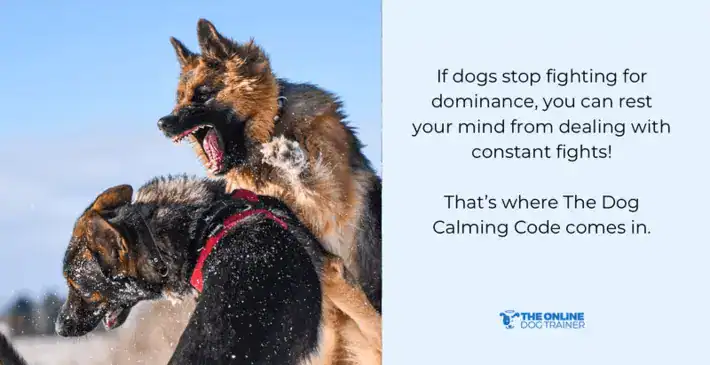
If dogs stop fighting for dominance, you can rest your mind from dealing with constant fights!
That's where The Dog Calming Code comes in.
In your household, one leader should be in your dogs' eyes: YOU.
When they see you wearing the hat of leadership, any aggression towards other dogs to establish dominance will be minimized.
I know that because I have seen tens of thousands of dog owners get over the problems involving dog fights and dogs hurting each other.
All because the owners truly showed they are capable, strong, confident leaders their dogs can trust.
Your dogs will no longer have to vie for leadership; with The Dog Calming Code, you already got it covered.
If you want to learn more about The Dog Calming Code, click here.

~Doggy Dan 🙂