
Can you believe that it’s the new year already?!
And while we humans are busy making our new year’s resolutions and starting off the new year by getting healthier, shouldn’t we be doing the same for our pets?
This is the perfect time to start thinking about your pup’s overall health and identify areas where you might help them be even healthier.
Which leads me to a trending topic right now…leaky gut in dogs.
Leaky gut syndrome can lead to so many other health issues like arthritis, food sensitivities, IBS, fatigue, inflammation, and auto-immune conditions.
A healthy dog starts with a healthy gut!
I want you to learn all about leaky gut…what causes it, what to look for, and how to deal with it so you can keep your pup healthy all year long.
The truth is that leaky gut syndrome is often misdiagnosed, so it’s important to understand exactly what you should be looking for so you don’t begin treating the wrong condition…
…which will only make your problem worse.
Let’s get down to the nitty-gritty…
What is Leaky Gut Syndrome in Dogs?
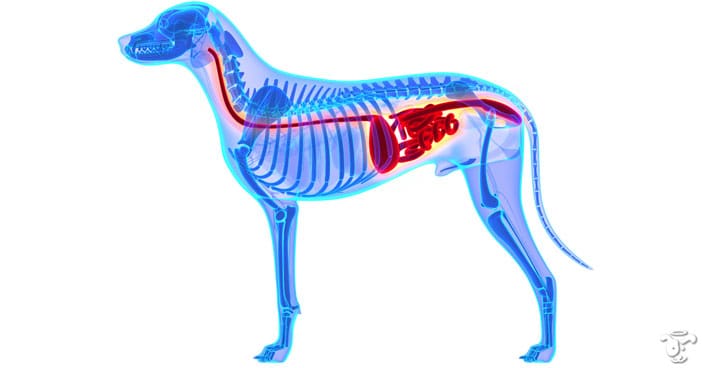
Simply put, Leaky Gut means that the lining in your dog’s gut stops working properly. Without this barrier, undigested food, other bacteria, and viruses can flow directly into your dog’s bloodstream.
It is sometimes referred to as intestinal permeability.
Your pup’s gastrointestinal (GI) tract contains everything your dog consumes on a daily basis – from food to water to pieces of your chewed up couch (which should be dealt with another time). And their digestive system decides what goes into the bloodstream (healthy nutrients) and what should be kept out (that expensive fabric from your couch).
We all know dogs don’t typically practice discretion when they’re out and about…they’ll drink dirty water from a puddle or pick up that piece of roadkill while on a walk without thinking twice. The GI tract and gut wall protect your dog from the harmful (or bacteria-ridden) things they consume.
When the GI tract and gut wall stop working properly, the things that are normally kept out are allowed into your dog’s system, causing all sorts of havoc.
Common Signs of Leaky Gut Syndrome

Leaky gut syndrome is commonly misdiagnosed, and for good reason.
That’s because the signs of leaky gut syndrome are the same signs that point to food allergies or intolerance. For that reason, leaky gut often goes untreated for years and continues to cause even more health issues for your pup.
Remember that leaky gut means that proteins and food particles leak out before they’re digested, causing all the same symptoms as your dog not being able to digest the proteins.
So one of the most common signs of a leaky gut is food intolerance.
When particles leak through your dog’s gut, your dog’s body thinks that bacteria or a virus is present and mounts an immune response. Those immune consequences are common signs that your dog might have a leaky gut, like:
- Autoimmune disease
- Arthritis and joint pain
- Allergies and skin issues
- Digestive issues
- Bowel disease
- Liver, kidney, pancreas, and gallbladder disorders
- Thyroid issues
Leaky gut syndrome results in chronic inflammation, which is why so many organs can be affected. Obviously only one of these issues is possibly an isolated incident and probably doesn’t point to leaky gut.
If your dog suffers from several of these issues, there’s a good chance that your dog has a leaky gut. The next step? Identify if your dog has been in contact with any of the stressors, or causes, of leaky gut.
What Causes Leaky Gut Syndrome?
Stresses to your gut are often the culprit behind leaky gut syndrome. While it’s difficult to diagnose, you can look at the things your dog has been exposed to so you can determine if any of these might be the cause of your pup’s apparent leaky gut.
Some of the biggest stressors that cause leaky gut include:
- Antibiotics (which rid your dog’s gut of the good bacteria that keeps his digestive system healthy)
- Drugs (like NSAIDs, steroids, heartworm, flea and tick medications, or antihistamines)
- Vaccines
- Stress
- Abdominal trauma
- Age (as your dog gets older, the amount of healthy gut bacteria begins to decrease)
- Diet
I want to touch briefly on that last bullet point…diet.
A slew of diet-related stressors can cause leaky gut syndrome, and some of them might be right in the food you feed your dog.
Glyphosate is an herbicide, but it’s also an antibiotic. Glyphosate is present in nearly all dog foods that contain grains or legumes. Check your dog’s food for ingredients like non-organic oats, wheat, soy, potatoes, and legumes (peas, chickpeas, lentils, beans, and peanuts).
Lectins are proteins found in plants that protect them from predators, but they also attack the lining of your dog’s gut, causing leaky gut. Look for beans, peas, soybeans, lentils, and other legumes in your dog’s food to identify if your dog is consuming lectins regularly.
Mycotoxins grow on grains, legumes, and other starchy plants, and they are also known to cause cancer. They are not found in specific ingredients, but all grains and legumes likely carry these bad toxins, which have been linked to leaky gut.
You may not know this, but most dogs don’t produce lactase, which is the enzyme that aids in digesting the lactose found in dairy products. For this reason, any food containing dairy can cause inflammation and lead to leaky gut.
If your dog is exposed to any of these ingredients regularly or if they are taking medications or under a high amount of stress, and if your dog experiences the health issues I outlined above, it’s time to look into what might be the underlying cause…leaky gut.
Once you suspect your dog has leaky gut, it’s time to start treating it.
How to Treat Leaky Gut Syndrome

The first step you’ll want to take if you suspect your dog has leaky gut syndrome is to focus on gut health. Note every single thing that goes into your dog’s body, including supplements, medications, and vaccines, and analyze if they could be contributing to your dog’s leaky gut.
Consult with your vet and stop any drugs and antibiotics.
Yes, even if you’re treating another condition.
If you stop what’s causing leaky gut and prioritize gut health, it may get to the bottom of your dog’s existing health issues.
Start feeding a raw food diet or, at the very least, a diet made from raw, whole foods. Be sure to also ditch the treats that include dyes, preservatives, or fillers.
Check out a recent blog post I did on feeding your dog raw dog food.
Next, you’ll want to reduce anything that’s causing your dog stress. Any stress they experience triggers the release of cortisol, which only causes more inflammation and contributes to leaky gut.
If your dog gets stressed in new situations or busy streets, try avoiding those places so your dog can repair and rebuild their gut wall and get back to being healthy.
Talk to your vet about adding supplements, prebiotics, or probiotics to your dog’s regimen to help support and strengthen their gut.
What your dog consumes on a daily basis is EXTREMELY important to their overall health. If one of your goals is to get healthy this year…do the same for your dog.
Even if your dog doesn’t have leaky gut, the tips I’ve shared here can also be great for preventing leaky gut, so your dog can live their best life in 2022.
Happy [Healthy] New Year!

~ Doggy Dan







2 Responses
I would like to have more information about angelo oil, my dog is over 12 year old and have the symptoms I saw in the photos. My dog is a Kelpie alwas very obedient. I keep you in my list on the internet, because I am going to have another dog. Kind regards Maree Paz
Hi Maree, I have quite a bit of information on my website about the benefits of Angel oil for a variety of issues. The link below talks about the benefits for our more senior dogs.
http://theonlinedogtrainer.com/cbd-oil-for-senior-dogs/
All the Best, Doggy Dan