The answer to “How do I make my dog listen to me during walks?” comes down to one thing: whether or not your dog sees you as their leader — the one who calls the shots. In dog psychology, a dog only follows the commands of someone they consider to be in charge. If that’s not you, your dog will always give you a hard time the moment you step outside. The best among the tips for easier dog walks? Letting your dog know you’re the leader.
If your dog doesn’t see you as their leader, they simply won’t listen.
Here’s what makes this so frustrating: your intentions are good. All you want is to keep your dog safe. You call them to steer them away from danger, and guide them so they don’t run into trouble. But no matter what you do, it feels like your dog has completely tuned you out. They ignore your calls, pull against the leash, do exactly what they want — and nothing you say seems to matter.
I’ve seen this play out countless times. When I spot a dog owner and their dog locked in an obvious power struggle on the street, I already know what’s happening before I even get close: the dog believes they are the one in charge, and the owner is simply along for the ride. It doesn’t matter how loudly the owner raises their voice. The dog won’t listen — because in their mind, why should they? This is what I call the leadership gap. And here’s the truth: no training tip, no leash technique, and no amount of treats will fix this problem until that gap is closed.
The good news? It can be closed. And once it is, everything changes.
So how do you establish yourself as the leader — especially when you’re already outside and the walk is already underway? That’s exactly what I’m going to walk you through. Read on.
Key Takeaways
- If you’re asking “How do I make my dog listen to me during walks?” the most important thing out of all dog walking tips is this: your dog will only follow the commands of someone they see as their leader. If that’s not you, no leash technique, training tip, or treat will fix the problem — because the real issue isn’t obedience, it’s leadership. Once your dog sees you as their calm, capable guide, everything changes.
- The Structured Walk is your most powerful tool. Before your dog can enjoy the freedom of a Social Walk, they need to understand that you call the shots outdoors. The Structured Walk is what communicates this — it reduces leash pulling, reactivity, overexcitement, and outdoor anxiety by giving your dog the one thing they desperately need: a leader they can trust.
- Master the Structured Walk first, and the Social Walk becomes the reward. Skipping structure and jumping straight to freedom tells your dog they’re in charge — and a dog who thinks they’re in charge is a dog that can’t calm down. Start with structure, prove your leadership consistently, and your dog will not only enjoy the Social Walk more — they’ll earn it with a calm, relaxed, and trusting mindset.
How To Walk Your Dog: The Most Common Dog Walking Mistake Owners Make
Here’s something I see time and again: a dog owner lets their dog roam freely on walks, thinking they’re doing right by their pet. Their heart is in the right place — they love their dog and want them to be happy. But unintentionally, they’re creating a bigger problem down the road.
When your dog hasn’t yet recognized your leadership, letting them wander and do as they please on walks sends a very clear message in their mind: “I’m the one in charge here.” And once a dog believes they’re the leader, they stop listening to you — not out of spite, but out of instinct.
Here’s the truth I want every dog owner to hear: No matter what walking technique you try, if your dog doesn’t see you as their leader, they will be anxious, restless, and stubborn during a walk. The solution isn’t harsher commands or stricter gear. It’s communicating to your dog — clearly and consistently — that you are their guide, their protector, and the one who calls the shots on every walk.
Dog Walking Tips: The Structured Walk vs. The Social Walk
Getting the most out of your dog walks means understanding that there isn’t just one way to walk your dog. In fact, one of the biggest breakthroughs dog owners have is realizing there are two distinct walking styles — and knowing when to use each one makes all the difference.
The Structured Walk
The Structured Walk is the most important walk you need to know if you’re just learning how to walk your dog. This type of walk will help you figure out the question “How do I make my dog listen to me during walks?” Knowing this will come in handy especially if your dog is still learning to see you as their leader.
During a structured walk, your dog walks on a leash and you are in complete control of the entire walk. You give the commands, decide the direction, set the pace. You determine what your dog can and cannot do — and your dog is expected to follow your lead.
This is the walking style that sends a powerful message: “I am in charge of the walk. I make the decisions. You listen to me.”
Think of it as laying the groundwork. Before your dog can enjoy freedom outdoors, they first need to understand that freedom is something you grant — not something they simply take.
The Social Walk
Now, this is the walk your dog loves.
The Social Walk is the more relaxed, free-flowing style where your dog can roam, sniff around, explore interesting spots, and enjoy themselves. There’s less structure, and your dog has the freedom to engage with their environment in a natural, joyful way.
Here’s the key: the Social Walk is a reward — something your dog earns once they understand and respect your leadership during the Structured Walk.
Tips For Easier Dog Walks: What the Structured Walk Teaches Your Dog
Walking your dog the structured way sends them this essential message: you’re in charge of the walk, not them.
And that single message solves more problems than most owners realize.
The Structured Walk is a direct answer to the most common walking struggles.
Leash Pulling
This behavior becomes a thing of the past once your dog stops trying to lead the walk. When your dog understands that you are the one calling the shots, they no longer feel the need to drag you along — because in their mind, there’s no longer a race to be won.
Aggression and Reactivity
Reactivity begins to fade when your dog genuinely trusts you as their leader. A dog who believes you are capable of handling threats no longer feels the pressure to protect you from every dog, person, or distraction you encounter on the walk. That constant state of high alert — the lunging, the barking, the tension — begins to ease because your dog finally feels safe enough to stand down.
Overexcitement
This behavior is something many owners struggle with, but it almost always traces back to a lack of structure. When a walk has clear boundaries and a calm leader guiding it, that frantic, out-of-control energy has nowhere to thrive. Structure creates calm, and calm creates a dog that can actually focus on you.
Outdoor Anxiety
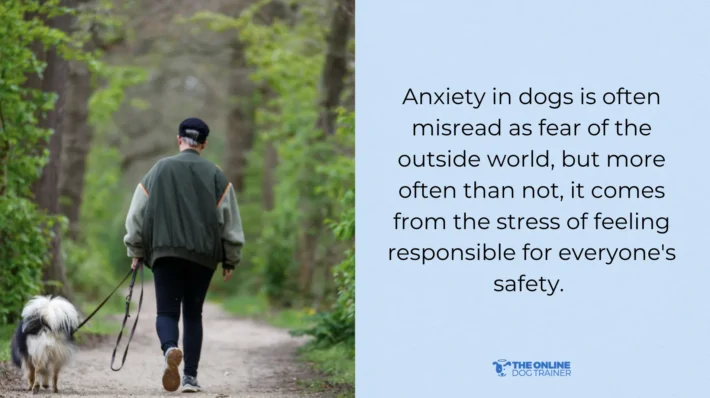
Your dog’s tendency to be anxious outdoors decreases significantly once they’re no longer carrying the weight of being in charge. Anxiety in dogs is often misread as fear of the outside world, but more often than not, it comes from the stress of feeling responsible for everyone’s safety. The moment your dog realizes that job belongs to you, they can finally exhale — and enjoy the walk the way it was meant to be enjoyed.
When your dog truly understands that you make the calls on a walk, something remarkable happens. They relax. The tension drops from their body. They stop scanning for threats. They start looking to you for guidance — which is exactly what you want.
As I always say: when your dog knows they don’t make the calls, they calm down. And a calm dog is a dog that listens.
How to Walk Your Dog: Why The Structured Walk Is Important to Master First
I want to be upfront with you: both walking styles have their place, and I genuinely love seeing dogs enjoy a Social Walk. Watching a dog run free, sniff everything in sight, and just be a dog — that’s one of the best things in the world.
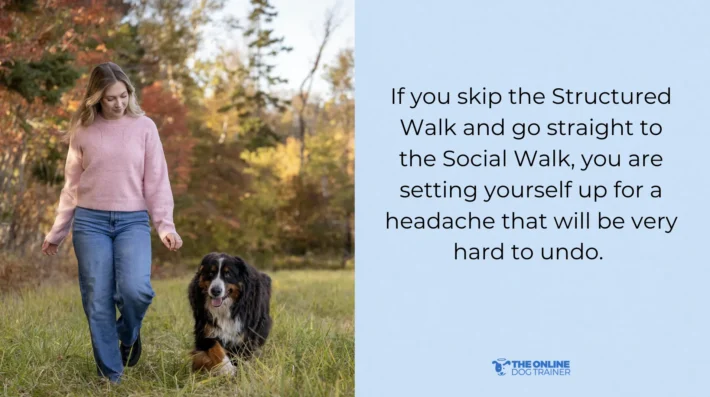
But here’s what I’ve learned after years of helping dog owners transform their walks: if you skip the Structured Walk and go straight to the Social Walk, you are setting yourself up for a headache that will be very hard to undo.
It’s like this: imagine handing a new employee total freedom on their first day at work — no orientation, no guidelines, no introduction to how things are done. They’d be confused. They’d make their own rules. And by the time you tried to establish structure, they’d already be set in their ways.
That’s exactly what happens when you skip the Structured Walk.
When your dog hasn’t yet been shown that you’re the one leading the walk, giving them the freedom of a Social Walk actually reinforces the belief that they are in charge. And once that belief takes hold, every walk becomes a negotiation — one you’re likely to lose.
The Structured Walk Establishes Your Leadership
By mastering the Structured Walk first, you are communicating something essential to your dog: “I am the leader here. I decide the pace, the direction, and what we do.” Why Does My Dog…On Leash? That message, delivered consistently, is what makes every future walk — including the Social Walk — so much easier and enjoyable.
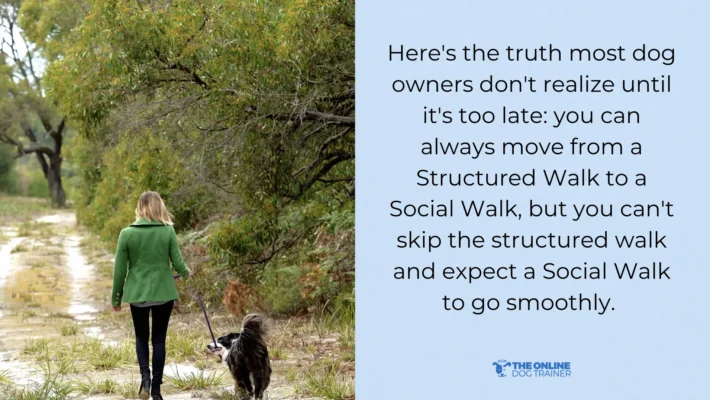
Here’s the truth most dog owners don’t realize until it’s too late: you can always move from a Structured Walk to a Social Walk, but you can’t skip the structured walk and expect a Social Walk to go smoothly. The Structured Walk earns the Social Walk. It’s the foundation that makes the freedom of the Social Walk actually work.
Once your dog understands that you lead and they follow, everything shifts. The pulling stops. The anxiety drops. The reactivity fades. And when you finally do transition into a Social Walk, your dog enjoys it with a calm, relaxed mind — because they trust that you’ve got everything under control.
So yes, the Social Walk is wonderful. But master the Structured Walk first — and I promise you, you’ll never dread a walk again.
Dog Walking Tips: How To Master The Structured Walk
If you live in a city or area where free-roaming space is limited, most of your walks will naturally be structured walks. But even if you have wide-open spaces available, I always recommend:
- Using the first 5–10 minutes of every walk as a structured walk before giving your dog more freedom.
- Starting and ending every walk with structure to establish — and re-establish — your leadership role.
Before you transition from a Structured Walk to a Social Walk, ask yourself these questions:
- Is my dog coming to me when I call them?
- Do they have spiked-up energy levels right now?
- Are they showing signs of aggression or overexcitement?
- Do they understand the boundaries we’ve set?
- Have I established clear walking commands with my dog?
If safety is a concern — for your dog or others around you — stay with structured walks until you’re confident it’s safe to offer them more freedom. There’s no rush.
How to Train A Dog To Walk Using The Structured Walk
Let’s be honest — we can’t expect our dogs to walk perfectly in a structured style for the entire duration of every outing. They’re outdoors! They want to explore, run, sniff, and play.
That’s healthy. That’s natural. And that’s exactly why both walking styles matter.
But here’s what the Structured Walk gives you that nothing else can: it builds the trust and respect your dog needs to follow you.
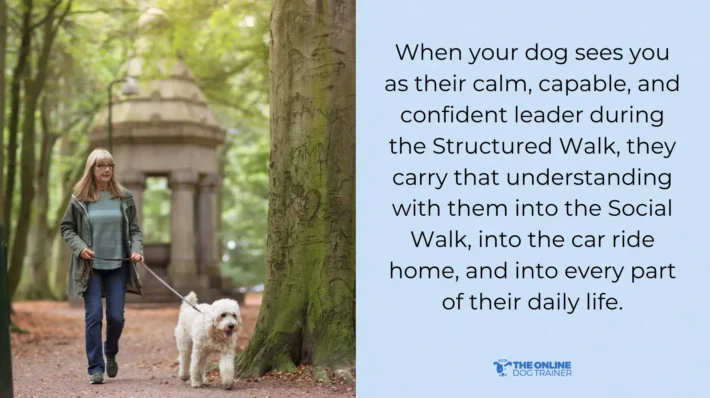
When your dog sees you as their calm, capable, and confident leader during the Structured Walk, they carry that understanding with them into the Social Walk, into the car ride home, and into every part of their daily life.
The walk isn’t just exercise. It’s one of the most powerful opportunities you have to communicate your leadership to your dog — and once that communication is clear, everything changes.
How The Dog Calming Code™ Helps You Master Both Walks
Understanding the difference between a Structured and Social Walk is only half the battle—the rest is about leadership.
The Dog Calming Code™ helps you bridge that gap by teaching your dog to see you as a calm, confident leader. When your dog trusts your guidance, walks shift from a stressful power struggle to an effortless bonding experience.
How the Program Transforms Your Walks:
- Master the Structured Walk: Learn how to establish consistent leadership in all areas of life, ensuring your dog looks to you the moment the leash clips on.
- Perfect the Transition: Stop guessing. Learn to read your dog’s headspace so you know exactly when they are ready for the freedom of a Social Walk.
- Enjoy Every Outing: By removing the weight of “being in charge” from your dog’s shoulders, you create a relationship built on trust and exploration rather than dread.

~Doggy Dan 🙂